

Pacemaker Market Size, Share, and Trends 2026 to 2035
 Status Published
 Category Healthcare


Content
Pacemaker Market Size and Growth 2026 to 2035
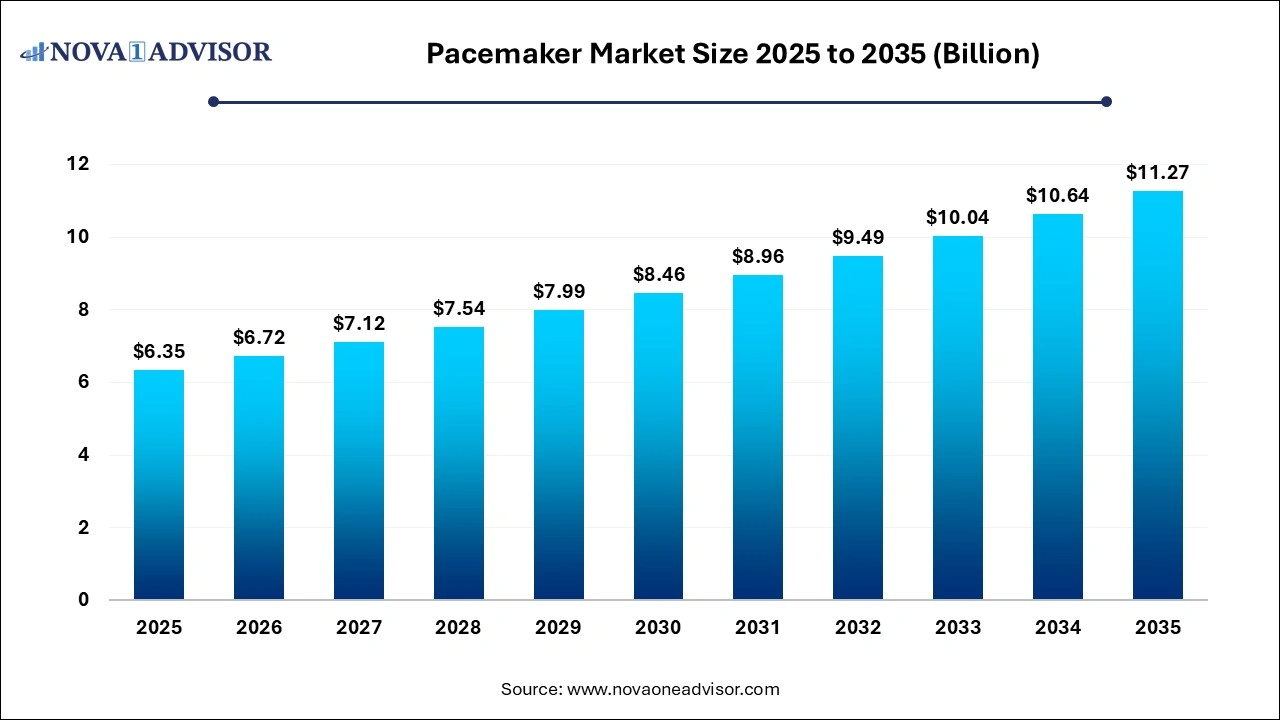
The global pacemaker market size was valued at USD 6.35 billion in 2025 and is projected to grow from USD 6.72 billion in 2026 to USD 11.27 billion by 2035, at a CAGR of 5.9% from 2026 to 2035. North America dominated the market, accounting for a revenue share of 44.0% in 2025.
Key Takeaway
- By product, the implantable pacemakers segment dominated the market with the largest share in 2025 and is expected to grow at the fastest CAGR over the forecast period.
- By application, the bradycardia segment dominated the market with the largest share in 2025.
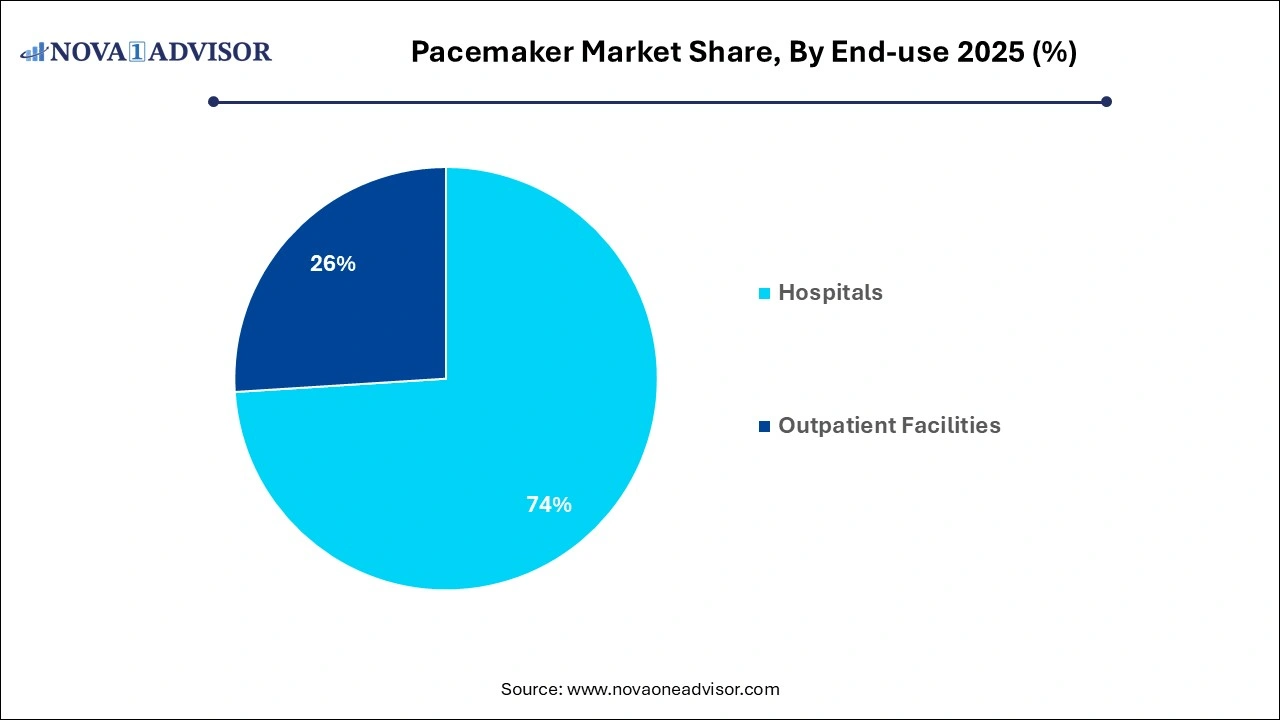
- By end use, the hospital segment dominated the market with the largest share of 74.0% in 2025.
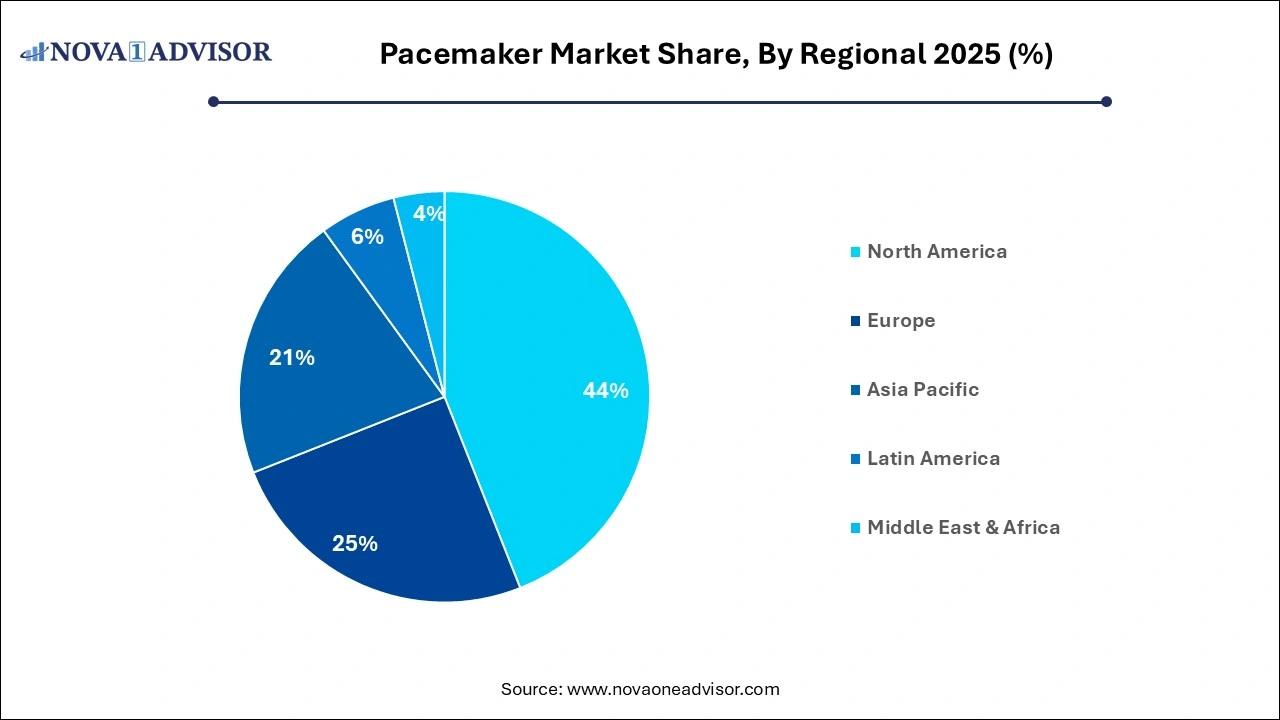
- By region, North America dominated the market with the largest share of 44.0% in 2025.
Market Overview
The global pacemaker market is driven by the growing need for cardiac rhythm management among aging populations and patients with bradyarrhythmias and conduction disorders. The market includes conventional transvenous, leadless, temporary, and digitally monitored pacing systems.
Technological innovation is shifting the industry toward smaller, longer-lasting, leadless, MRI-compatible, and remotely monitored devices. Abbott’s AVEIR and Medtronic’s Micra demonstrate the growing adoption of leadless pacing, while improved battery longevity is helping reduce repeat interventions.
Remote monitoring and digital technologies are further enhancing device management by enabling clinicians to track battery status, cardiac activity, and device performance. Despite these advances, stringent regulatory requirements, safety concerns, software risks, and long-term device reliability remain important market challenges.
Market Outlook
- Market Growth Overview: The pacemaker market is expected to grow significantly between 2025 and 2035, driven by the increasing incidence of cardiovascular diseases across the globe.
- Sustainability Trends: Sustainability trends involve growing emphasis on extending battery longevity and biocompatible materials.
- Major Investors: Major investors in the market are Medtronic, Abbott Laboratories, and Boston Scientific.
How is AI Impacting The Pacemaker Market?
Artificial intelligence (AI) is revolutionizing the market by transitioning devices from passive tools to smart and adaptive systems along with the personalized therapy adjustments. Furthermore, artificial intelligence analyzes high-volume data streams generated by connected medical devices, hence minimizing false positive alerts and propelling the clinical triage of high-risk patients.
AI algorithms can analyze ECGs and longitudinal cardiac data to identify bradyarrhythmias, conduction abnormalities, and other rhythm patterns, helping physicians improve patient selection and risk stratification. AI can also analyze remote pacemaker transmissions, including battery status, pacing activity, sensed events, and device performance, to prioritize patients requiring clinical review.
Predictive analytics may further help identify early changes in battery impedance, pacing thresholds, or device performance, supporting proactive maintenance and reducing unexpected complications. AI is also being explored for personalized pacemaker programming, cardiac modeling, digital twins, and optimization of pacing strategies.
Leadless pacemakers could benefit particularly from AI because their compact architectures combine sensing, pacing, communication, and embedded electronics. However, direct AI-controlled pacing faces significant challenges related to safety, validation, cybersecurity, explainability, and regulatory approval.
Overall, AI's near-term impact is expected to be strongest in remote monitoring, diagnostics, predictive maintenance, programming support, clinical workflow optimization, and pacemaker development, while physician oversight remains essential.
Pacemaker Market Report Scope
| Report Coverage | Details |
| Market Size in 2026 | USD 6.72 Billion |
| Market Size by 2035 | USD 11.27 Billion |
| Growth Rate From 2026 to 2035 | CAGR of 5.9% |
| Base Year | 2025 |
| Forecast Period | 2026 to 2035 |
| Segments Covered | By Product, By Application, By End use, By Region |
| Market Analysis (Terms Used) | Value (USD Million/Billion) or (Volume/Units) |
| Regional Scope | North America; Europe; Asia Pacific; Central and South America; the Middle East and Africa |
| Key Companies Profiled | Abbott Laboratories, BIOTRONIK, Boston Scientific Corporation, Lepu Medical, Livanova, MEDICO SpA, Medtronic, Oscor Inc., Osypka Medical GmbH, and Shree Pacetronix. |
Market Driver: Rising Burden of Bradyarrhythmias and Aging Population
The growing prevalence of bradyarrhythmias and conduction disorders, particularly among older adults, is a major pacemaker market driver. Age-related degeneration of the cardiac conduction system increases the need for pacing therapy. Improved ECG monitoring, wearables, hospital telemetry, and electrophysiology services are also helping identify previously undiagnosed rhythm abnormalities. Meanwhile, expanding cardiovascular infrastructure in Asia-Pacific and Latin America is bringing advanced rhythm-management services to more patients. Innovation in leadless systems, including Abbott's AVEIR dual-chamber technology, is further broadening treatment options.
Market Restraint: High Device and Procedure Costs and Regulatory Requirements
High overall treatment costs remain a key restraint, covering the device, implantation, hospitalization, diagnostics, programming, monitoring, and future replacement. Limited insurance coverage and uneven access to electrophysiology infrastructure can restrict adoption in emerging markets. Strict regulatory requirements also increase development and compliance costs because pacemakers require extensive safety, reliability, clinical, and post-market evaluation. Device advisories further highlight the importance of battery performance, software reliability, and long-term safety.
Market Opportunity: Expansion of Dual-Chamber Leadless and Next-Generation Pacing
The expansion of leadless pacemakers beyond single-chamber applications presents a significant growth opportunity. Abbott's AVEIR DR uses two leadless devices that communicate wirelessly to coordinate atrial and ventricular pacing, potentially expanding leadless technology to a broader patient population. Further opportunities include longer battery life, conduction-system pacing, MRI compatibility, AI-supported programming, remote monitoring, and secure wireless communication. Growing cardiac-care infrastructure and specialist services in emerging economies could further expand adoption of next-generation pacemakers.
Segmental Insights
By Product
Why did the implantable pacemakers segment dominate the pacemaker market?
The implantable pacemakers segment dominated the market with the largest share in 2025 and is expected to grow at the fastest CAGR over the forecast period. The dominance and growth of the segment can be attributed to the increasing demand for these devices for treating arrhythmias and heart failure. In addition, advanced chemical compositions and optimized discharge management systems substantially extend operational lifespans and minimize the frequency of required replacement procedures.
By Application
Why did the bradycardia segment dominate the pacemaker market?
The bradycardia segment dominated the market with the largest share in 2025. The dominance of the segment can be linked to its extensive prevalence, especially in the geriatric population and increasing cardiovascular disease rates. Developed economies feature robust medical insurance frameworks that provide comprehensive coverage for both initial permanent pacemaker implantations and subsequent device replacements.
How did the arrhythmias segment expected to hold the significantly growing pacemaker market in the coming years?
The arrhythmias segment is expected to grow at the fastest CAGR over the forecast period. The growth of the segment can be driven by the increasing incidence of abnormal heart rhythms needing intervention and surgery in the elderly population. The integrated application of pacemakers and catheter ablation procedures provides an advanced clinical approach for the comprehensive management of complex cardiac arrhythmias.
By End-Use
Why did the hospital segment dominate the pacemaker market?
The hospital segment dominated the market with the largest share in 2025. The dominance of the segment is owing to the increasing prevalence of cardiovascular disease and surge in patient volume for more complex surgeries. Furthermore, the high presence of highly trained cardiologists, electrophysiologists, and specialized surgical teams within hospital networks establishes these institutions as the most trusted environments for critical cardiac interventions.
How did the outpatient facilities segment expected to hold the significantly growing pacemaker market in the coming years?
The outpatient facilities segment is expected to grow at the fastest CAGR during the study period. The growth of the segment is due to its ability to provide quicker recovery times and minimally invasive procedures. Completely endovascular delivery systems reduce the requirement for surgical pocket formation and traditional leads, which enhances procedural safety to a level suitable for outpatient environments.
By Regional
Why did the North American region account for the largest share in the pacemaker market?
North America dominated the market with the largest share in 2025. The dominance of the region can be attributed to the growing adoption of cutting-edge technologies such as MRI-compatible pacemakers and the presence of robust healthcare infrastructure. In addition, efficient regulatory pathways established by agencies such as the U.S. Food and Drug Administration (FDA) boost market entry for advanced cardiovascular instruments.
U.S. Pacemaker Market Trends
The growth of the market in the country can be driven by the growing adoption of cutting-edge devices such as leadless and Bluetooth-enabled systems. Also, comprehensive insurance policies and established Medicare and Medicaid reimbursement facilities minimize financial obstacles for patients receiving expensive surgical devices.
Why did the Asia-Pacific region become the fastest-growing pacemaker market during the forecast period?
Asia Pacific is expected to grow at the fastest CAGR over the forecast period. The growth of the region can be credited to the increasing burden of cardiovascular diseases and ongoing innovations in healthcare infrastructure across major countries such as India and China. Furthermore, both public and private healthcare networks are currently making substantial capital investments to modernize their cardiac care units and ambulatory surgical centers.
China Pacemaker Market Trends
The market in the country is growing due to a surge in domestic production innovations and rapid urbanization in major cities. Moreover, the increasing adoption of MRI-compatible systems, dual-chamber units, and emerging leadless pacemakers enhances per-implant economic value and expands clinical treatment options.
Key Players in the Pacemaker Market
- Biotronik: A prominent German-based innovator specializing in remote patient monitoring and automatic daily monitoring technologies integrated into high-longevity pacemakers.
- Medtronic: It offers advanced traditional and leadless pacing systems such as the Micra™ VR2 and Micra™ AV2 lines, along with AI-enabled remote diagnostics.
- Abbott Laboratories: A major leader following its acquisition of St. Jude Medical, known for its AVEIR™ family of leadless pacemakers and MRI-compatible implantable options.
Recent Developments
- In October 2025, Abbott India Ltd (NSE: ABBOTINDIA) has introduced its dual-chamber leadless pacemaker system in the Indian market, establishing a significant benchmark in cardiac rhythm management through the provision of wireless synchronization for dual intracardiac micro-pacemakers.
Segments Covered in the Report
This report forecasts revenue growth at country levels and provides an analysis of the latest industry trends in each of the sub-segments from 2021 to 2035. For this study, Nova one advisor, Inc. has pacemaker market.
By Product
- External pacemakers
- Single Chamber
- Dual Chamber
- Implantable pacemakers
- Conventional
- Single Chamber
- Dual Chamber
- Biventricular Chamber
- Leadless
- Single Chamber
- Dual Chamber
- Conventional
By Application
- Bradycardia
- Acute Myocardial Infarction
- Arrhythmias
- Atrial Fibrillation
- Heart Block
- Long QT Syndrome
- Congestive Heart Failure
- Others
By End use
- Hospitals
- Outpatient Facilities
By Region
- North America
- Europe
- Asia-Pacific
- Latin America
- Middle East & Africa (MEA)
FAQ's

Proceed to Buy
Instant PDF delivery on confirmation

 Request Customization
 Download Sample

Get a Sample of this Report
Pacemaker Market