

Phototherapy Market Size, Share, and Trends 2026 to 2035
 Status Published
 Category Healthcare


Content
Phototherapy Market Size and Growth 2026 to 2035
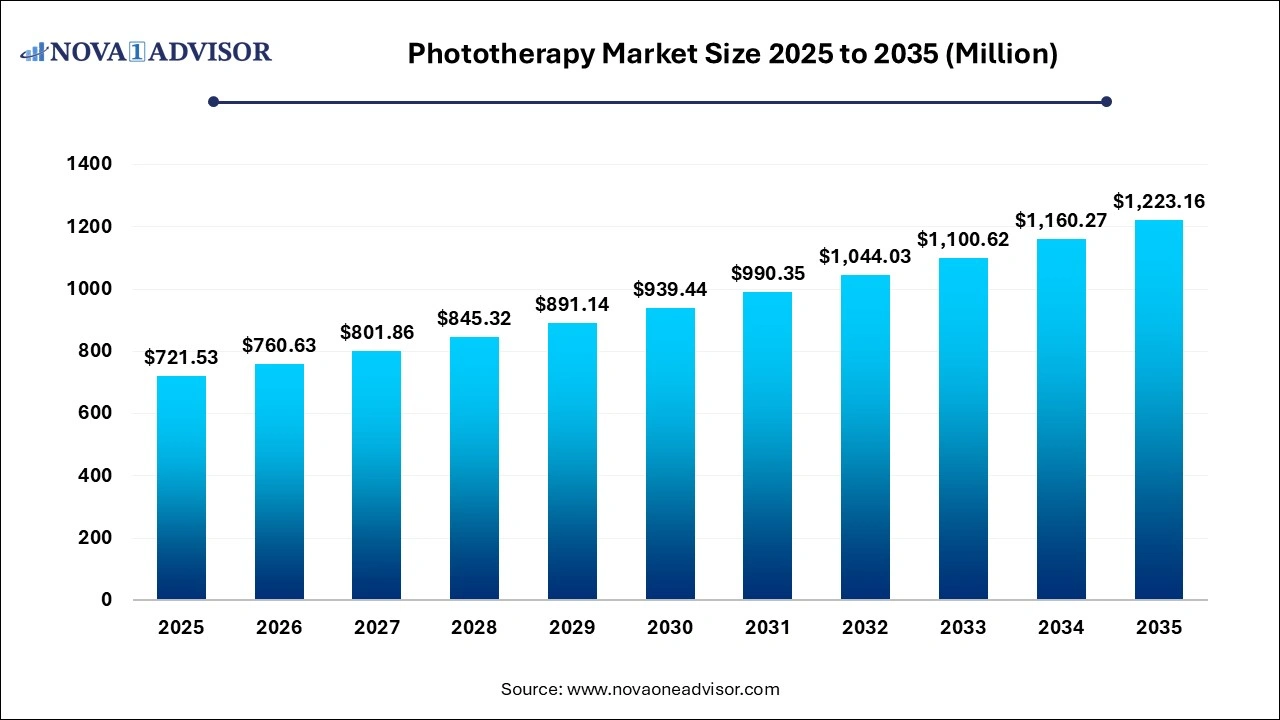
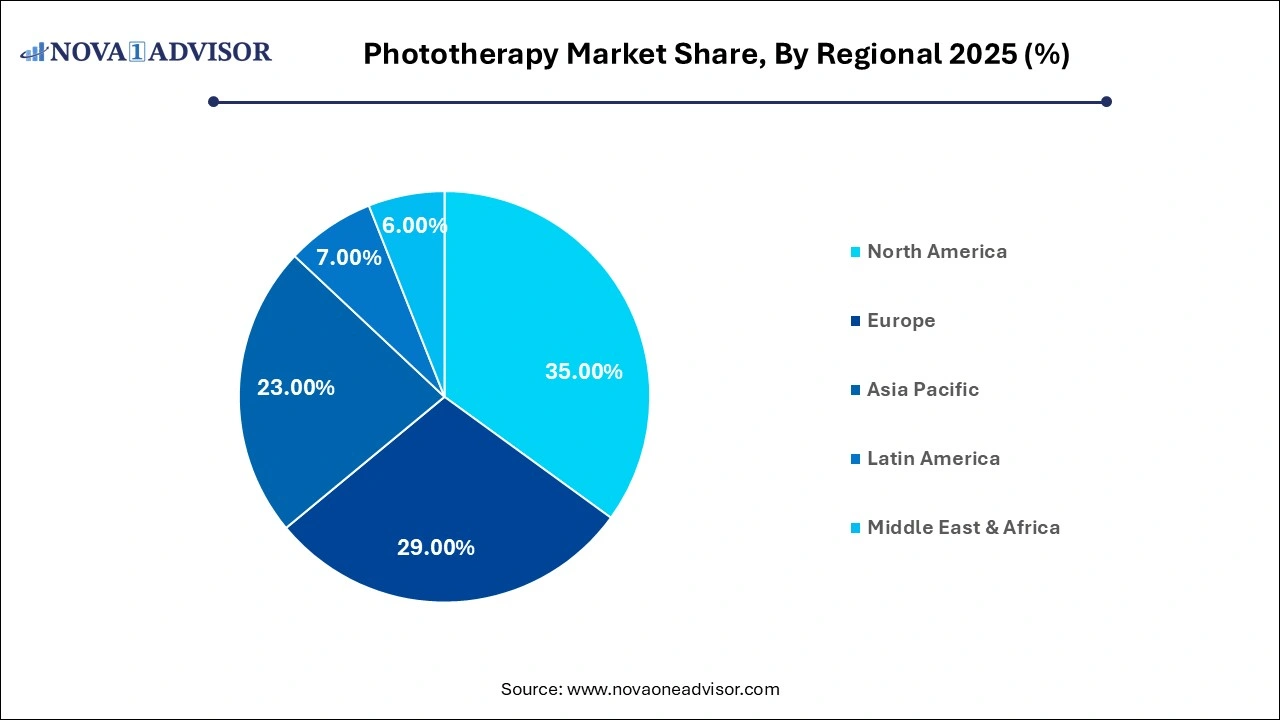
The global phototherapy market size was valued at USD 721.53 million in 2025 and is projected to grow from USD 760.63 million in 2026 to USD 1,223.16 million by 2035, at a CAGR of 5.42% from 2026 to 2035. North America dominated the market, accounting for a revenue share of 35.0% in 2025.
Key Takeaway
- By product, the LED phototherapy equipment segment dominated the market with the largest share in 2025.
- By product, the fiberoptic phototherapy equipment segment is expected to grow at the fastest CAGR over the forecast period.
- By radiation, the UVB segment dominated the market with the largest share in 2025.
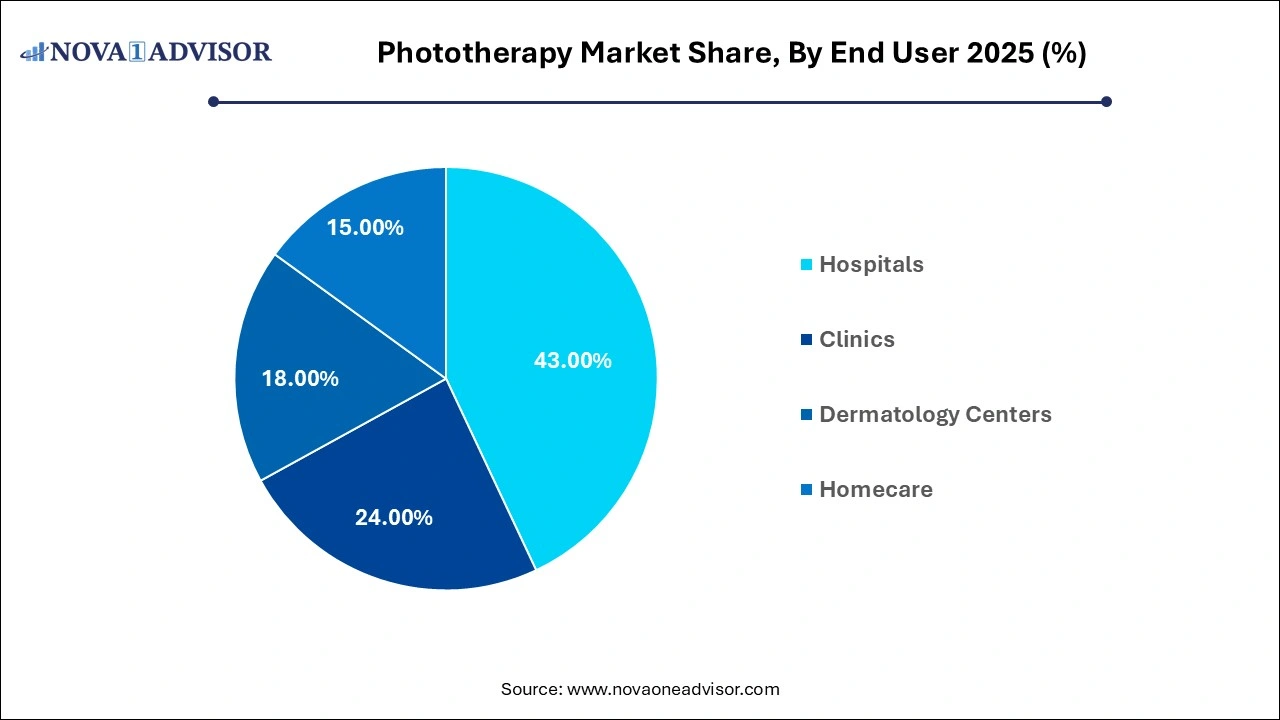
- By end user, the hospitals and clinics segment dominated the market with the largest share of 43.0% in 2025.
- By region, North America dominated the market with the largest share of 35.0% in 2025.
Market Overview
The global phototherapy market covers medical equipment, light sources, accessories, and digital technologies used primarily in neonatal care and dermatology. Phototherapy is widely used to manage neonatal jaundice and treat conditions such as psoriasis, vitiligo, eczema, and atopic dermatitis.
The market is shifting from conventional systems toward LED-based, portable, wearable, and connected solutions. LED technology offers targeted wavelengths, lower energy consumption, longer operating life, and improved portability. Companies such as Natus and Daavlin illustrate the growing availability of neonatal and dermatological phototherapy solutions for hospitals, clinics, and selected homecare settings.
Market Outlook
- Market Growth Overview: The global phototherapy market is expected to grow significantly between 2025 and 2035, driven by the increasing incidence of neonatal jaundice and psoriasis across the globe.
- Sustainability Trends: Sustainability trends involve an increasing emphasis on shifting from high-energy fluorescent bulbs to highly energy-efficient LED systems.
- Major Investors: Major investors in the market include GE HealthCare, Philips, Natus Medical, Drägerwerk, and Atom Medical Corporation.
How is AI Impacting The Global Phototherapy Market?
Artificial intelligence (AI) is reshaping the market by improving image-based lesion tracking, automating dosing, and allowing smart home care devices. Furthermore, advanced predictive modeling enables the forecasting of patient response trajectories such as neonatal bilirubin trends and psoriasis clearance rates by propelling prognosis from conventional months to a few weeks.
Connected devices may also track treatment duration, intensity, adherence, and patient response. In neonatal care, integrating bilirubin measurements with treatment data could further support individualized treatment decisions. However, successful AI adoption will require diverse clinical datasets, regulatory validation, cybersecurity, and clinician oversight.
Phototherapy Market Report Scope
| Report Coverage | Details |
| Market Size in 2026 | USD 760.63 Million |
| Market Size by 2035 | USD 1,223.16 Million |
| Growth Rate From 2026 to 2035 | CAGR of 5.42% |
| Base Year | 2025 |
| Forecast Period | 2026 to 2035 |
| Segments Covered | By Product, By Radiation, By End-User, By Region |
| Market Analysis (Terms Used) | Value (USD Million/Billion) or (Volume/Units) |
| Regional Scope | North America; Europe; Asia Pacific; Central and South America; the Middle East and Africa |
| Key Companies Profiled | GE Healthcare (UK), Koninklijke Philips N.V. (Netherlands), Natus Medical Incorporated (U.S.), Beurer GmbH (Germany), Herbert Waldmann GmbH & Co. KG (Germany), PhotoMedex, Inc (U.S.), MTTS ASIA (Vietnam), VIA Global Health (U.S.), and others. |
Key Market Driver
Rising demand for neonatal and dermatological treatment: Neonatal jaundice remains an important recurring application for phototherapy, while chronic skin disorders such as psoriasis, eczema, and vitiligo require repeated treatment for many patients. Healthcare investments in neonatal infrastructure and dermatology services are therefore supporting demand for reliable phototherapy equipment.
Key Market Restraint
Treatment burden and safety requirements: Dermatological phototherapy often requires repeated clinic visits, which can affect patient adherence. UV-based treatment also requires appropriate dosing, calibration, monitoring, and protective measures. High upfront costs for advanced equipment can further limit adoption among smaller healthcare facilities.
Key Market Opportunity
Expansion of portable and home-based phototherapy: Portable UVB devices, wearable neonatal systems, and connected phototherapy equipment can reduce hospital visits and improve treatment convenience. Combining these systems with digital monitoring, automated treatment records, and remote clinical supervision could create new opportunities for home-based care.
Segmental Insights
By Product
Why did the LED phototherapy equipment segment dominate the global phototherapy market?
The LED phototherapy equipment segment dominated the market with the largest share in 2025. The dominance of the segment can be attributed to its low heat emissions, high efficacy, and energy efficiency. In addition, contemporary LED configurations combine intelligent controls, adjustable intensity, and digital monitoring systems to optimize therapeutic efficacy, leading to segment growth soon.
How did the fiberoptic phototherapy equipment segment expected to hold the significantly growing global phototherapy market in the coming years?
The fiberoptic phototherapy equipment segment is expected to grow at the fastest CAGR over the forecast period. The growth of the segment can be credited to its suitability and compact designs for home care, particularly for neonates with jaundice. There is a growing market demand for compact, lightweight fiber-optic pads that allow neonatal jaundice treatment outside traditional neonatal intensive care unit (NICU) settings.
By Radiation
Why did the UVB segment dominate the global phototherapy market?
The UVB segment dominated the market with the largest share in 2025. The dominance of the segment can be linked to its efficiency in treating skin conditions such as vitiligo and psoriasis with fewer side effects. Also, validated home-protocol trials demonstrate that managed at-home NB-UVB treatments achieve clinical efficacy comparable to traditional facility-based care, which drives increased consumer adoption.
- In June 2026, Solius Labs introduced a personalized at-home ultraviolet B (UVB) medical device designed to calibrate phototherapy according to individual dermatological profiles. This innovation addresses widespread vitamin D insufficiency in the United States.
How did the UVC segment expected to hold the significantly growing global phototherapy market in the coming years?
The UVC segment is expected to grow at the fastest CAGR over the forecast period. The growth of the segment can be driven by its germicidal abilities in disinfection and sterilization applications, mainly in lab and hospital settings. Healthcare facilities are increasingly adopting automated, non-chemical UVC systems and ultraviolet cabinets. These technologies effectively disinfect physical therapy modalities, treatment surfaces, and room air during patient turnover.
By End User
Why did the hospitals and clinics Segment dominate the global phototherapy market?
The hospitals and clinics segment dominated the market with the largest share in 2025. The dominance of the segment is owing to its growing adoption rates in dermatology and NICU departments for cutting-edge phototherapy equipment. Furthermore, healthcare organizations are strategically implementing specialized physical medicine and rehabilitation units to deliver comprehensive, multidisciplinary interventions for chronic pain management.
How did the homecare segment expected to hold the significantly growing global phototherapy market in the coming years?
The homecare segment is expected to grow at the fastest CAGR during the study period. The growth of the segment is due to increasing accessibility of portable phototherapy devices and an ongoing transition towards at-home treatment options, especially for dermatological conditions. Moreover, the integration of compact electrotherapy units, wearable sensors, and motion-tracking technologies facilitates both self-administered and guided home-based rehabilitation.
By Region
Why did the North American region account for the largest share of the global phototherapy market?
North America dominated the market with the largest share in 2025. The dominance of the region can be attributed to the increasing incidence of skin diseases and high healthcare spending in major countries such as the U.S. and Canada. In addition, robust insurance coverage and reimbursement frameworks, which facilitate patient access to non-invasive phototherapy, can fuel market growth further.
U.S. Global Phototherapy Market Trends
The growth of the market in the country can be driven by the increasing incidence of skin diseases such as psoriasis and vitiligo along with the surge in newborn jaundice rates. Also, overhead light-emitting diode (LED) phototherapy systems and fiber-optic blankets constitute the standard first-line therapeutic interventions used across hospitals and neonatal intensive care units (NICUs) in the United States.
Why did the Asia-Pacific region become the fastest-growing global phototherapy market during the forecast period?
Asia Pacific is expected to grow at the fastest CAGR over the forecast period. The growth of the region can be credited to the growing awareness regarding neonatal jaundice and the surge in access to healthcare facilities in developing countries such as China and India. Furthermore, the growth of the middle-class population across South and East Asia has facilitated an increase in both out-of-pocket and insured expenditures on advanced, non-invasive therapeutic treatments.
China Global Phototherapy Market Trends
The market in the country is growing due to the growing need for neonatal jaundice treatments and increasing middle-class spending on advanced healthcare facilities. Moreover, significant capital investment in hospital infrastructure and nationwide healthcare expansion programs have rapidly boosted the integration of advanced medical technologies within China's primary urban centers.
Key Players in the Global Phototherapy Market
- Natus Medical Incorporated (U.S.): A global leader specialized in newborn care, offering comprehensive LED and conventional phototherapy units.
- Herbert Waldmann GmbH & Co. KG (Germany): A prominent European player focused heavily on dermatological skin disease treatment systems.
- The Daavlin Company & National Biological Corporation (U.S.): It specialized leaders in full-body and targeted ultraviolet (UV) phototherapy cabinets for psoriasis and vitiligo.
Recent Developments
- In February 2026, Natus Sensory, a preeminent enterprise in neonatal and sensory care solutions, formally announced its acquisition of TheraB Medical, a medical technology firm specializing in advanced, wearable phototherapy systems for neonatal jaundice.
Segments Covered in the Report
This report forecasts revenue growth at country levels and provides an analysis of the latest industry trends in each of the sub-segments from 2021 to 2035. For this study, Nova one advisor, Inc. has phototherapy market.
By Product
- Conventional Phototherapy Equipment
- LED Phototherapy Equipment
- Fiberoptic Phototherapy Equipment
- Germicidal Lamps
- Accessories
By Radiation
- UVA
- UVB
- UVC
By End User
- Hospitals
- Clinics
- Dermatology Centers
- Homecare
By Region
- North America
- Europe
- Asia-Pacific
- Latin America
- Middle East & Africa (MEA)
FAQ's

Proceed to Buy
Instant PDF delivery on confirmation

 Request Customization
 Download Sample

Get a Sample of this Report
Phototherapy Market