

Resuscitation Devices Market Size, Share, Forecast Report, 2026-2035
 Status Published
 Category Healthcare


Content
Resuscitation Devices Market Size, Growth and Trends 2026 to 2035
The global Resuscitation devices market market size was estimated at USD 9.13 billion in 2025 and is expected to reach USD 14.72 billion by 2035, growing at a CAGR of 4.9% from 2025 to 2035.
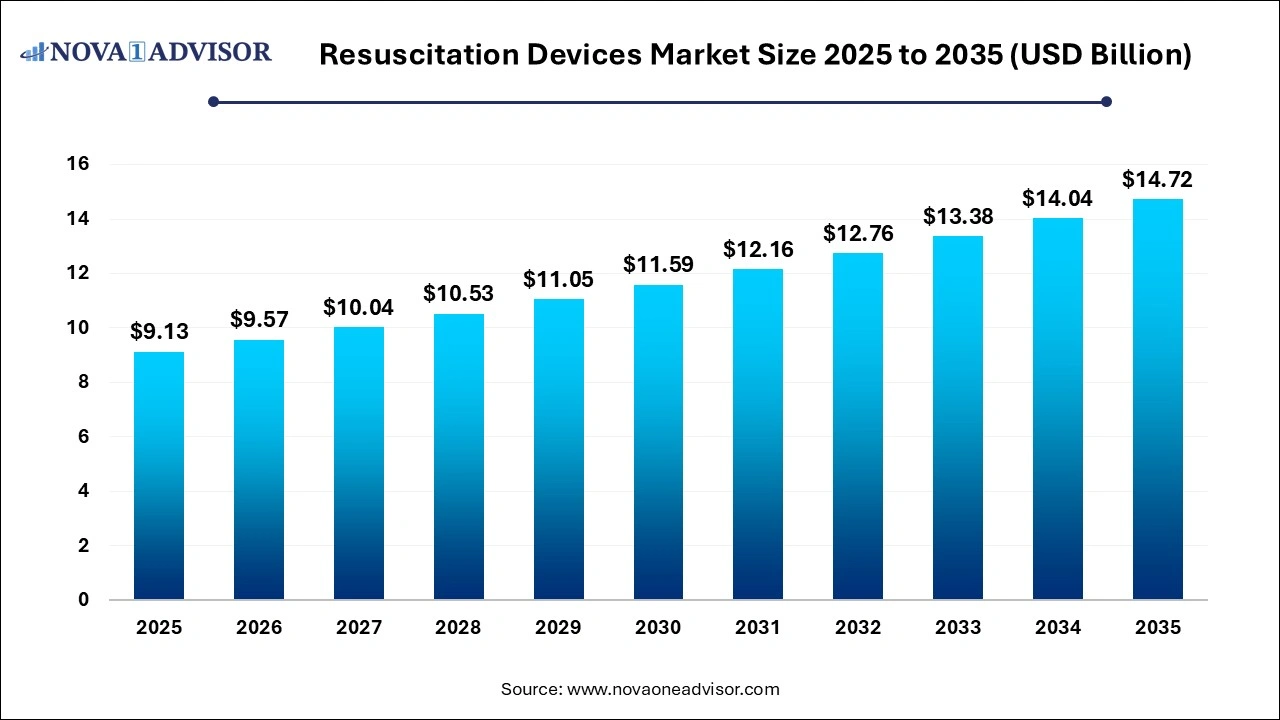
Resuscitation Devices Market Outlook
- Market Growth Overview: The temperature management systems market is expected to grow significantly between 2026 and 2035, driven by the integration of IoT, wireless connectivity, and AIpowered analytics allow for realtime, remote monitoring, improving accurancy in patient care and industrial applications, stringent regulatory compliance, and growing industrial cooling needs.
- Sustainability Trends: Sustainability trends involve energyefficient and green technology, sustainable materials in thermal management, and eco-frindly refrigerants.
- Major Investors: Major investors in the market include 3M Company, Medtronic, Stryker Corporation, ZOLL Medical Corporation (Asahi Kasei Corporation), and BD (Becton, Dickinson and Company).
Report Scope of Resuscitation Devices Market
| Report Coverage | Details |
| Market Size in 2026 | USD 9.57 Billion |
| Market Size by 2035 | USD 14.72 Billion |
| Growth Rate From 2026 to 2035 | CAGR of 4.9% |
| Base Year | 2025 |
| Forecast Period | 2026 to 2035 |
| Segments Covered | By Product, By By Patient Type, By End User |
| Market Analysis (Terms Used) | Value (USD Million/Billion) or (Volume/Units) |
| Regional scope | North America, Europe, Asia Pacific, Latin America, MEA |
| Key Companies Profiled | ZOLL Medical Corporation, Koninklijke Philips N.V., ResMed Inc, Medtronic plc |
Resuscitation Devices Market Segment Insights
By Product Insights
How did the Airway Management Devices Segment Dominate the Resuscitation Devices Market?
The airway management devices segment is driven by rising chronic illness, airway management is a critical component of CPR and, importance in ensuring open airway for effective ventilation. Innovation in products, AI-integrated devices, and supraglottic tools have improved first-pass success rates, enhancing adoption rates.
How did the Ventilators Segment Expect to Hold the Fastest-Growing Resuscitation Devices Market in the Coming Years?
The ventilators segment is driven by shift toward AI-driven, turbine-based systems that offer automated, real-time lung protection. The surging global demand for portable and transportable devices essential for continuous care during high-acuity EMS transport and within the burgeoning home-based respiratory sector. As chronic conditions like COPD and asthma proliferate, massive infrastructure investments in India and China are rapidly increasing ICU bed capacities and the adoption of sophisticated long-term support systems.
By Patient Type Insights
How did the adult patients segment account for the largest share in the Resuscitation Devices Market?
The adult patients segment is driven by the high prevalence of chronic conditions, such as COPD and cardiovascular diseases in an aging global population, necessitating the consistant use of sophisticated respiratory and cardiac support systems. The integration of AI-powered defibrillators and automated CPR devices specifically calibrated for adult physiology is significantly improving resuscitation success rates in high-volume emergency and clinical settings.
How did the paediatric patients segment expect to hold the fastest-growing Resuscitation Devices market in the Coming Years?
The paediatric patients segment is driven by the integration of AI-enabled, miniaturized devices specifically engineered for neonatal physiology, providing non-invasive monitoring and automated lung protection for preterm infants. The revised global neonatal resuscitation program (NRP) guidelines are mandating the use of these sophisticated, high-precision tools to reduce under-5 mortality rates. The transition toward smart, pediatric-specific intervention kits is establishing this niche as the market's primary engine for innovative, life-saving technical evolution.
By End-User Insights
How did the hospitals segment account for the largest share in the Resuscitation Devices Market?
The hospitals segment is driven by the immense volume of emergency admissions and critical care interventions that necessitate immediate resuscitation readiness. This leadership is reinforced by their role as primary adopters of automated CPR devices and integrated code-blue systems, which are essential across diverse high-acuity departments like the ICU, OR, and trauma centres. The continuous infrastructure upgrades and the mandatory transition toward standardised, AI-driven resuscitation protocols ensure a consistent, bulk-purchasing cycle for high-end life-support technology.
How did the pre-hospital care settings segment expect to hold the fastest-growing Resuscitation Devices Market in the Coming Years?
The pre-hospital care settings segment is driven by the rising incidence of out-of-hospital cardiac arrests (OHCA), which has shifted clinical focus toward immediate, on-site intervention to maximize survival rates before hospital arrival. The massive government funding into EMS modernization across emerging regions is driving the procurement of lightweight, machine-learning-enabled ventilators and AEDs. The transition toward a decentralized, high-tech emergency response infrastructure is establishing pre-hospital settings as the primary engine for accessible, life-saving innovation.
Key Players in the Resuscitation Devices Market
- Koninklijke Philips N.V. : Philips contributes as a leader in resuscitation by providing advanced automated external defibrillators (AEDs) and monitoring solutions like the HeartStart Intrepid, designed for both hospital and public access.
- Medtronic plc: Medtronic drives the market through a strong focus on R&D, delivering innovative airway management devices and advanced cardiac monitoring tools.
- ZOLL Medical Corporation: As a specialist in critical care, ZOLL offers a comprehensive portfolio including, but not limited to, advanced defibrillators, the LifeVest wearable defibrillator, and AutoPulse non-invasive cardiac support devices.
- ResMed Inc.: esMed contributes to the broader resuscitation and acute care market by specializing in advanced, non-invasive ventilation technologies that are crucial for respiratory intervention.
Market Outlook
- Market Growth Overview: The resuscitation devices market is expected to grow significantly between 2026 and 2035, driven by the rising chronic diseases and emergencies, innovation in automated, portable, and increasing public awareness and trainings.
- Sustainability Trends: Sustainability trends involve circular economy and material recovery, expansion of single-use device reprocessing, and eco-friendly and PVC-free materials.
- Major Investors: Major investors in the market include Philips, ZOLL Medical (Asahi Kasei), Medtronic, Stryker, Ambu A/S, and Drägerwerk.
Segments Covered in the Report
By Product
- Airway Management Devices
- Ventilators
- ICU Ventilators
- Portable Ventilators
- Endotracheal Tubes
- Resuscitators
- Tracheostomy Tubes
- Laryngeal Mask Airways
- Laryngoscopes
- Nasopharyngeal Airways
- Oropharyngeal Airways
- Ventilators
- External Defibrillators
- Semi-automated External Defibrillators
- Fully Automated External Defibrillators
- Wearable Cardioverter Defibrillators
- Convective Warming Blankets
- Other Resuscitation Devices
By Patient Type
- Adult Patients
- Pediatric Patients
By End User
- Hospitals, Ambulatory Surgical Centers, and Cardiac Centers
- Pre-hospital Care Settings
- Other End Users
By Region
- North America
- US
- Canada
- Europe
- Germany
- France
- UK
- Italy
- Spain
- Rest of Europe
- Asia Pacific
- China
- India
- Japan
- Australia
- Rest of Asia Pacific
- Rest of the World

Proceed to Buy
Instant PDF delivery on confirmation

 Request Customization
 Download Sample

Get a Sample of this Report
Resuscitation Devices Market