

Rigid Plastic Packaging Market by Raw Material (PE, PET, PP, PVC, EPS, PS, Bioplastics), Type (Bottles & jars, Trays, Tubs, Cups & Pots), Production Process (Extrusion, Injection Molding), Application- Global Industry Analysis, Share, Growth, Regional Outlook And Forecasts, 2026-2035
 Status Published
 Category Chemical and Material


Content
Rigid Plastic Packaging Market Size and Growth 2026 to 2035
The global Rigid Plastic Packaging market gathered revenue around USD 273.31 Billion in 2025 and market is set to grow USD 527.68 Billion by the end of 2035 and is estimated to expand at a modest CAGR of 6.8% during the prediction period 2026 to 2035. The market is expected to witness significant growth in the future due to its multiple applications in end-use industries such as beverage, food, and healthcare. The global rigid plastic packaging market is driven by factors such as strong demand in major Asia-Pacific markets such as India and China and increasing demand from food & beverage packaging industries.
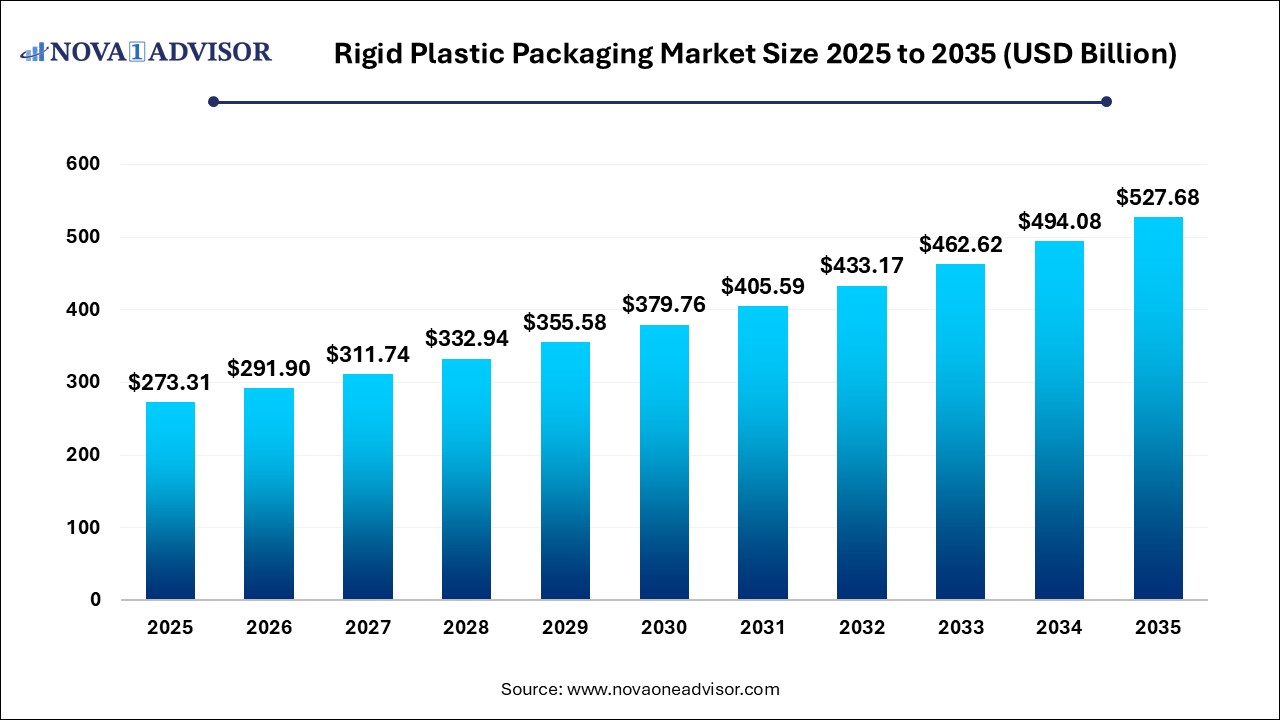
Market Key Takeaways
- The rigid plastic packaging market is experiencing steady growth driven by demand from food, beverage, healthcare, and personal care industries.
- Bottles & jars remain the dominant product segment due to their widespread use in beverages and household products.
- Polyethylene terephthalate (PET) is the most widely used raw material owing to its recyclability and strength.
- Blow molding is the leading production process due to its efficiency in manufacturing bottles and containers.
- The food and beverage sector accounts for the largest share of demand globally.
- Asia Pacific is the fastest-growing regional market, fueled by urbanization and rising consumption patterns.
- Sustainability concerns and regulatory pressure are accelerating the shift toward recyclable and bio-based plastics.
Market Overview
The rigid plastic packaging market forms a critical component of the global packaging industry, offering durable, lightweight, and cost-effective solutions across a wide range of applications. Rigid plastic packaging includes products such as bottles, containers, trays, tubs, and bulk storage units that maintain their shape under stress and provide enhanced protection for goods during transportation and storage.
The market is driven by the increasing demand for packaged goods, particularly in emerging economies where urbanization and changing lifestyles are influencing consumption patterns. For instance, the rapid growth of organized retail and e-commerce platforms has significantly increased the demand for durable packaging solutions that ensure product safety and shelf appeal.
In the food and beverage sector, rigid plastic packaging plays a vital role in preserving product quality, extending shelf life, and maintaining hygiene standards. PET bottles are widely used for soft drinks, water, and juices due to their transparency, strength, and recyclability. Similarly, polypropylene containers are commonly used for ready-to-eat meals and dairy products.
The healthcare industry is another major contributor to market growth. Rigid plastic packaging is extensively used for pharmaceutical bottles, medical device packaging, and sterile containers. The need for tamper-proof and contamination-resistant packaging has further increased the adoption of rigid plastics in this sector.
Technological advancements in manufacturing processes such as injection molding and blow molding have enhanced production efficiency and design flexibility. Companies are now able to produce lightweight yet strong packaging solutions with improved aesthetics and functionality.
However, environmental concerns related to plastic waste have prompted regulatory authorities and consumers to demand sustainable alternatives. This has led to increased investments in recycling technologies and the development of biodegradable and bio-based plastics.
Market Outlook
- Market Growth Overview: The rigid plastic packaging market is expected to grow significantly between 2025 and 2034, driven by the growing demand for eco-friendly, recyclable, and bio-based plastics, the rapid expansion of e-commerce, and increasing consumption in the food and beverage sectors.
- Sustainability Trends: Sustainability trends involve the post-consumer recycled content, light weighting material efficiency, and bio-based and biodegradable plastics.
- Major Investors: Major investors in the market include Amcor Plc, Berry Global Inc., ALPLA Group, Silgan Holdings Inc., Sonoco Products Company, and Plastipak Holdings, Inc.
Major Trends in the Market
- Growing adoption of recycled plastics (rPET, rPP) in packaging
- Increasing demand for lightweight and cost-efficient packaging solutions
- Rising popularity of bio-based and biodegradable plastics
- Expansion of e-commerce driving demand for durable packaging
- Integration of smart packaging features such as QR codes and tracking
- Shift toward reusable and refillable packaging systems
- Technological advancements in molding and thermoforming processes
- Increased regulatory pressure on single-use plastics
- Rising consumer preference for sustainable and eco-friendly packaging
Rigid Plastic Packaging Market Report Scope
| Report Coverage | Details |
| Market Size in 2026 | USD 291.90 Billion |
| Market Size by 2035 | USD 527.68 Billion |
| Growth Rate From 2026 to 2035 | CAGR of 6.8% |
| Base Year | 2025 |
| Forecast Period | 2026 to 2035 |
| Segments Covered | By Type, By Raw Material, By Production Process, By Application, Region |
| Market Analysis (Terms Used) | Value (USD Million/Billion) or (Volume/Units) |
| Regional Scope | North America; Europe; Asia Pacific; Central and South America; the Middle East and Africa |
| Key Companies Profiled | Amcor (Switzerland), Berry Global Group Inc. (US), Pactiv LLC (US), Silgan Holdings (US), Sonoco Products Company (US), ALPLA-Werke (Austria), SABIC (Saudi Arabia), and Plastipak Holdings (US). |
Market Driver: Rising Demand from Food and Beverage Industry
The primary driver of the rigid plastic packaging market is the increasing demand from the food and beverage industry. With changing lifestyles, urbanization, and growing disposable incomes, consumers are increasingly opting for packaged and convenience foods.
Rigid plastic packaging offers several advantages such as durability, lightweight properties, and resistance to moisture and contamination. For example, PET bottles are widely used for bottled water and carbonated beverages due to their ability to maintain product integrity and carbonation levels.
The growth of quick-service restaurants and online food delivery platforms has further fueled the demand for rigid packaging solutions such as trays, tubs, and containers. These packaging formats ensure safe transportation and maintain food quality during delivery.
Additionally, the increasing demand for ready-to-eat and frozen foods has created a need for packaging that can withstand extreme temperatures. Polypropylene and polystyrene containers are commonly used for microwaveable and freezer-safe packaging.
Emerging markets such as India, China, and Brazil are witnessing significant growth in the food and beverage sector, further boosting the demand for rigid plastic packaging. The expansion of retail chains and supermarkets in these regions is also contributing to market growth.
Market Restraint: Environmental Concerns and Regulatory Pressure
One of the major restraints facing the rigid plastic packaging market is the growing environmental concern associated with plastic waste. Governments and regulatory bodies across the globe are implementing stringent regulations to reduce plastic usage and promote sustainable alternatives.
For instance, several countries have introduced bans or restrictions on single-use plastics, which directly impact the demand for certain rigid plastic products. The European Union has implemented directives aimed at reducing plastic waste and increasing recycling rates.
Consumers are also becoming more environmentally conscious and are demanding eco-friendly packaging solutions. This shift in consumer preference is forcing manufacturers to rethink their product offerings and invest in sustainable materials.
The recycling infrastructure in many developing countries is still underdeveloped, leading to challenges in managing plastic waste effectively. This creates a negative perception of plastic packaging and may hinder market growth.
Moreover, the transition to sustainable materials often involves higher costs and technological challenges. Companies need to invest in research and development to create packaging solutions that meet both performance and environmental standards.
Market Opportunity: Growth of Sustainable and Recyclable Packaging
The increasing focus on sustainability presents a significant opportunity for the rigid plastic packaging market. Companies are actively investing in the development of recyclable, reusable, and bio-based packaging solutions to address environmental concerns.
For example, the use of recycled PET (rPET) in beverage bottles has gained significant traction. Many global beverage companies have committed to using a higher percentage of recycled content in their packaging to reduce their carbon footprint.
Bioplastics derived from renewable sources such as corn starch and sugarcane are also emerging as viable alternatives to traditional plastics. These materials offer similar performance characteristics while being more environmentally friendly.
Another opportunity lies in the development of closed-loop recycling systems, where used packaging is collected, recycled, and reused in the production of new packaging. This approach not only reduces waste but also lowers the demand for virgin plastic.
Innovations in packaging design, such as lightweighting and refillable containers, are further contributing to sustainability efforts. For instance, refill stations for household products are gaining popularity in developed markets, reducing the need for single-use packaging.
Segmental Insights
By Type
How did the bottles and jars segment dominate the Rigid Plastic Packaging market?
The bottles and jars segment is driven by its unmatched versatility across high-volume sectors, such as beverages, pharmaceuticals, and cosmetics. These containers leverage the material advantages of PET and HDPE to provide lightweight, durable, and recyclable solutions that align with global sustainability mandates. The rapid urbanisation in emerging markets continues to drive a surge in demand for packaged goods that require superior barrier protection and high shelf appeal.
How did the tubs, cups, and pots segment expect to hold the fastest-growing Rigid Plastic Packaging market in the coming years?
The tubs, cups, and pots segment is driven by utilizing advanced injection moulding and thermoforming techniques, and manufacturers are producing cost-effective, lightweight containers that meet the high-volume needs of modern retail. The strategic shift toward recyclable mono-materials and PCR content ensures these formats align with both consumer convenience and global sustainability mandates.
By Raw Material
How did the polyethylene (PE) and polyethylene terephthalate (PET) segment account for the largest share in the Rigid Plastic Packaging market?
The polyethylene (PE) and polyethylene terephthalate (PET) segment is driven by its exceptional transparency, strength, and chemical resistance, making them the gold standard for bottles and jars. The integration of advanced recycling technologies ensures that PET and HDPE remain the primary drivers of sustainable, high-volume packaging innovation. The lightweight and cost-effective nature significantly reduces logistical overhead while meeting the rigorous safety standards of the food and pharmaceutical industries.
How did the bioplastics segment expect to hold the fastest-growing Rigid Plastic Packaging market in the coming years?
The bioplastics segment is driven by the rising consumer consciousness, forcing manufacturers to prioritize eco-friendly packaging to maintain brand equity. With Europe leading the transition through robust policy support, bioplastics are emerging as the fastest-growing material segment in the pursuit of a circular economy. The global push for sustainability and regulatory compliance is accelerating the transition from conventional plastics to bio-based alternatives like PHA and PLA.
By Production Process
How did the injection molding segment account for the largest share in the Rigid Plastic Packaging market?
The injection molding segment is driven by its unmatched ability to mass-produce complex, high-precision components, such as caps and closures, with consistent quality. By offering low labor costs and high production speeds, this process provides the operational efficiency required for large-scale manufacturing across the food, beverage, and healthcare sectors. Its versatility across a wide range of materials ensures it meets the rigorous durability and safety standards of medical devices and thin-wall packaging.
How did the thermoforming segment expect to hold the fastest-growing Rigid Plastic Packaging market in the coming years?
The thermoforming segment is driven by its superior energy efficiency, lower tooling costs, and rapid prototyping capabilities, making it ideal for high-volume, lightweight packaging solutions. The shift toward rPET and sustainable materials to meet environmental regulations, while the Asia Pacific region drives growth, particularly in the food and pharmaceutical sectors.
By Application
How did the food and beverages segment account for the largest share in the Rigid Plastic Packaging market?
The food and beverages segment is driven by the shift toward ready-to-eat convenience in emerging economies, such as China and India positions food and beverages as the foundational driver of high-volume rigid packaging growth. The continuous innovation in lightweighting and barrier technology allows manufacturers to reduce transportation costs and material waste without compromising on branding or durability.
How did the healthcare segment expect to hold the fastest-growing Rigid Plastic Packaging market in the coming years?
The healthcare segment is driven by the rise in chronic disease management, and an aging population necessitates high-performance, stable materials like barrier-enhanced PET to protect sensitive pharmaceutical formulations. These innovations ensure that rigid plastics remain the essential foundation for sterile, secure, and compliant healthcare delivery on a global scale. The global expansion of healthcare infrastructure and the rapid growth of the rigid medical packaging sectors.
By Region
Dominating Region: Asia Pacific
Asia Pacific dominated the market due to its large population, rapid urbanization, and growing demand for packaged goods. Countries such as China and India are major contributors to market growth.
The expansion of retail and e-commerce sectors in the region has significantly increased the demand for rigid plastic packaging. Additionally, the presence of a strong manufacturing base supports market growth.
Fastest Growing Region: Latin America
Latin America is the fastest-growing region due to increasing economic development and rising consumer demand for packaged products. The growth of the food and beverage industry in countries such as Brazil and Mexico is driving the demand for packaging solutions.
Key Players in the Rigid Plastic Packaging Market
- Amcor
Amcor is a global leader in developing and producing responsible rigid packaging, utilizing advanced material science to create lightweight, recyclable PET bottles and jars for the food, beverage, and pharmaceutical industries.
- Berry Global Group Inc.
Berry Global is a major manufacturer of custom rigid plastic packaging, offering a comprehensive portfolio including bottles, closures, and containers that focus on material efficiency and lightweighting.
- Pactiv LLC
Pactiv, part of Pactiv Evergreen, is a premier manufacturer of rigid thermoformed plastic packaging, largely serving the food service and food packaging markets with containers, cups, and trays.
- Silgan Holdings
Silgan Holdings is a leading supplier of rigid packaging, focusing on dispensing and specialty closures, along with custom PET and HDPE containers for consumer goods and healthcare. They contribute significantly through high-performance, specialized closures and durable, tailored container solutions designed for product safety and sustainability.
Rigid Plastic Packaging Market Segments
By Type:
- Bottles & Jars
- Rigid Bulk Products
- Trays
- Tubs, Cups, & Pots
- Others
By Raw Material
- Polyethylene (PE)
- Polyethylene Terephthalate (PET)
- Polystyrene (PS)
- Polypropylene (PP)
- Polyvinyl Chloride (PVC)
- Expanded Polystyrene (EPS)
- Bioplastics
- Others (PC, Polyamide)
By Production Process
- Extrusion
- Injection Molding
- Blow Molding
- Thermoforming
- Others
By Application
- Food
- Beverages
- Healthcare
- Cosmetics & Toiletries
- Industrial
- Others
By Geography
North America
- U.S.
- Canada
Europe
- Germany
- France
- United Kingdom
- Rest of Europe
Asia Pacific
- China
- Japan
- India
- Southeast Asia
- Rest of Asia Pacific
Latin America
- Brazil
- Rest of Latin America
Middle East & Africa (MEA)
- GCC
- North Africa
- South Africa
- Rest of Middle East & Africa
FAQ's

Proceed to Buy
Instant PDF delivery on confirmation

Rigid Plastic Packaging Market Size to Hit USD 527.68 Billion by 2035
 Request Customization
 Download Sample

Get a Sample of this Report
Rigid Plastic Packaging Market