

Scaffold-free 3D Cell Culture Market Size, Share, and Trends 2026 to 2035
 Status Published
 Category Healthcare


Content
Scaffold-free 3D Cell Culture Market Size and Growth 2026 to 2035
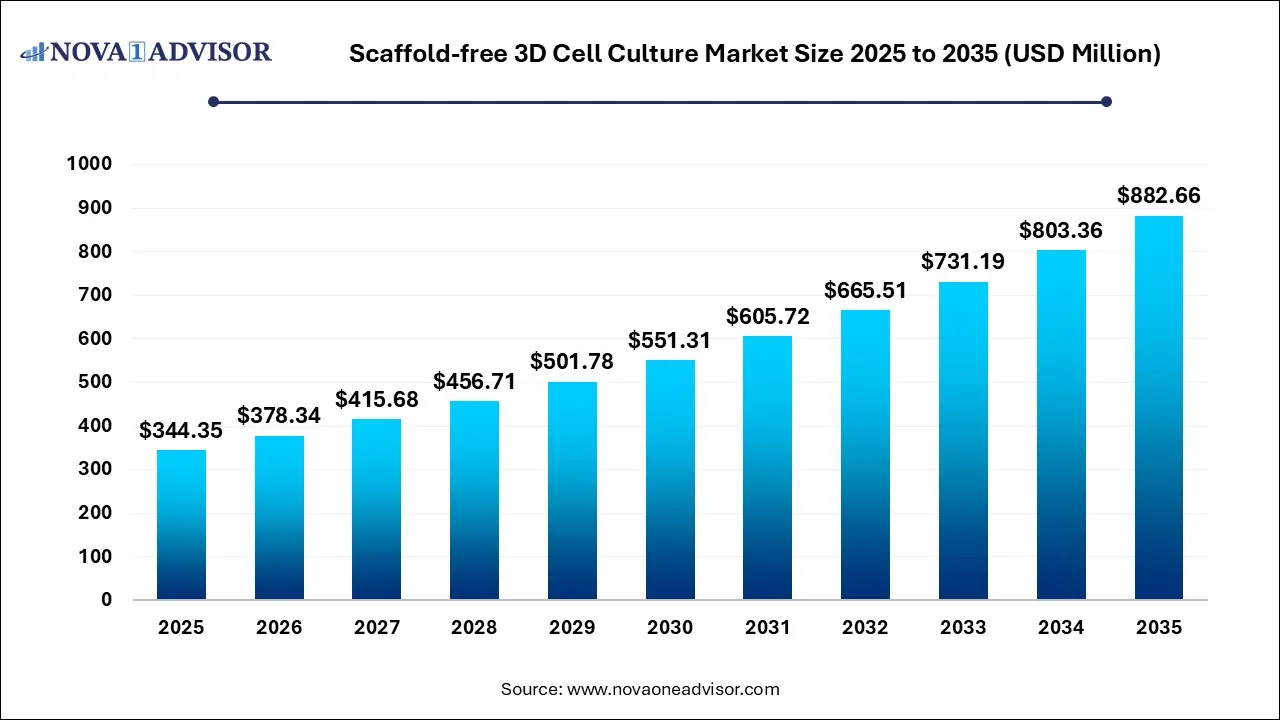
The global scaffold-free 3D cell culture market was estimated at USD 344.35 million in 2025 and is projected to hit USD 882.66 million by 2035, growing at a CAGR of 9.87% over 2026-2035. The market growth is driven by the increasing demand for specialized cancer models to study diseases mechanism and test therapies, increased research funding, research and development in biotechnology, and advancement in cell culture technologies, and growing interest in personalized medicine.
Scaffold-free 3D Cell Culture Market Key Takeaways
- By region, North America held the largest share of the Scaffold-free 3D Cell Culture market in 2025.
- By region, Asia Pacific is expected to experience the fastest growth between 2025 and 2035.
- By technology, the hanging drop microplates segment led the market in 2025.
- By technology, the spheroid microplates with ultra-low attachment (ULA) coating segment is expected to expand at the highest CAGR over the projected timeframe.
- By Application, the stem cell research & tissue engineering segment led the market in 2025.
- By application, the cancer research segment is the fastest growing in the Scaffold-free 3D Cell Culture market.
- By end use, the biotechnology & pharmaceutical companies segment led the market in 2025.
Market Overview:
The scaffold-free 3D cell culture market comprises a rapidly evolving sector focused on creating 3D cellular structures without exogenous, synthetic supporting materials. This technique promotes natural cell-cell interaction and self-assembly, closely mimicking in vivo human physiological environments, which significantly enhances viability, differentiation, and tissue-specific functions compared to 2D cultures. The market growth is driven by the increasing demand for high-fidelity human disease models and regulatory pressure to reduce animal testing. The rise of personalized medicine, technological advancements in automated spheroid formation, and significant, sustained investment by pharmaceutical firms in R&D.
- Sustainability Trends: Sustainability trends are an intense focus on regulatory pressure and ethical concerns, which are driving a major shift away from animal models towards human-relevant scaffold-free 3D models, increased focus on high throughput screening to make 3D models efficient and cost-effective for pharmaceutical and toxicity studies, and incorporation of automated, user-friendly, and reproducible systems reduces manual error and improves material usage efficiency.
- Major Investors: Major investors in the market include Thermo Fisher Scientific, Mark KGaA, Corning Incorporated, Lonza, and specialized firms like inSphero. The heavily investing in research and development for advanced spheroids and leveraging statergic partnership to expand high-throughput screening applications in drug discovery. By launching specialized, high—reproducibility plates and advanced bioreactors, while also supporting preclinical research through collaborations with biotech and pharma companies.
- Startup Economy: The startup economy in the market contains new AI-driven automation that simplifies complex protocols, reducing time-to-market for therapeutics, as shown in products such as CELLXpress.ai. Companies are creating patient-derived organoids and 3D tumor models, driving the demand for precise drug testing, and advancing solutions such as micro-patterned surfaces and automated spheroid systems that improve the reliability of cell studies.
Artificial Intelligence: The Next Growth Catalyst in Scaffold-free 3D Cell Culture
AI and ML are accelerating the scaffold-free 3D cell industry by enhancing the precision of spheroid and organoid formation, enabling automated, high-throughput production of uniform tissue constructs. ML algorithms optimize culture conditions and predict optimal cell-aggregation parameters, which significantly improve reproducibility and consistency while reducing costly trial-and-error experiments. AI-powered computer vision systems allow for real-time monitoring of cell-to-cell interaction and tissue sheet formation, improving quality control by detecting anomalies early in the process.
Scaffold-free 3D Cell Culture Market Report Scope
| Report Attribute | Details |
| Market Size Value in 2026 | USD 378.34 Million |
| Revenue Forecast in 2035 | USD 882.66 Million |
| Growth Rate | CAGR of 9.87% From 2026 to 2035 |
| Base Year for Estimation | 2025 |
| Forecast Period | 2026 - 2035 |
| Quantitative Units | Revenue in USD Million/Billion, and CAGR from 2026 to 2035 |
| Segments Covered | Technology, Application, End use, Region |
| Regional Scope | North America; Europe; Asia Pacific; Latin America; MEA |
| Key Companies Profiled | Thermo Fisher Scientific Inc.; Merck KGaA; Corning Incorporated; Lonza Group AG; Greiner Bio?One International GmbH; InSphero AG; REPROCELL Inc.; Nano3D Biosciences, Inc.; PromoCell GmbH; Tecan Trading AG |
Market Dynamics
Drivers
Growing Need For Physiological Relevance
The surge in need for enhanced physiological relevance in drug discovery and disease modeling is a primary driver for the scaffold-free 3D cell culture industry. The traditional 2D monolayers, scaffold-free technologies, such as spheroids and organoids, enable cells to self-assemble into complex, tissue-like structures that accurately mimic in vivo conditions. This enhanced biological accuracy leads to more reliable drug testing and better predictions of toxicity, reducing reliance on costly and ethically scrutinized animal testing.
High-Throughput Screening
The enabling the rapid, automated analysis of thousands of compounds on physiologically relevant microtissues, such as spheroids, without using expensive, labor-intensive solid scaffolds. The need for personalized medicine encourages the use of these platforms to create patient-specific tumor spheroids for tailored drug screening. The high demand for fast, efficient, and cost-effective drug development, combined with regulatory pressure to reduce animal testing, directly accelerates the market expansion for scaffold-free technologies.
Restraint
High Costs and Complexity
The market growth is hindered by creating barriers to widespread adoption, particularly for academic labs and smaller biotech firms. The requirement for specialized equipment, such as low-attachment plates, bioreactors, and advanced imaging systems, alongside expensive, proprietary reagents, increases initial capital investment and operational expenses. The scaffold-free techniques, such as magnetic levitation or advanced hanging drop methods, are often labor-intensive and demand a higher level of technical expertise compared to conventional 2D cultures.
Opportunities
Personalized Medicine
The high demand for patient-specific tissue models for tailored drug testing and treatment planning. Scaffold-free techniques, such as spheroids and organoids, allow researchers to cultivate patient-derived tumor cells without external scaffolds, better mimicking the natural tumor microenvironment and genetic heterogeneity. These patient-derived models provide superior accuracy in analyzing anti-cancer drug efficacy, resistance, and safety, which is essential for determining the most effective therapy for an individual.
Rehabilitative Medicine Expansion
The market is creating immersive opportunities by growing demand for advanced 3D tissue engineering methods that avoid exogenous materials. Scaffold-free 3D cell culture technologies, such as cell sheets and spheroids, are ideal for this, as they preserve natural cell–cell interactions and maximize ECM production, increasing stem cell survival after transplantation.
How Macroeconomic Variables Influence the Scaffold-free 3D Cell Culture Market?
Economic Growth and GDP
Economic growth and rising GDP generally lead to positive growth. By increased R&D investments in pharmaceutical and biotechnology industries. Favorable economic conditions provide government and private funding for biotechnology infrastructure, which in tum enhances the adoption of advanced in vitro models for drug discovery, regenerative medicine, and personalized healthcare.
Inflation & Drug Pricing Pressures
It can drive the growth of the scaffold-free 3D cell culture market by intensifying the need for cost-effective, high-throughput, and physiologically accurate preclinical models that accelerate drug discovery and reduce failures. While rising expenses for lab reagents and equipment create inflationary pressures, they simultaneously force pharmaceutical companies to adopt advanced, efficient technologies like spheroid models that offer better predictive accuracy than 2D cultures.
Exchange Rates
Exchange rate fluctuations can negatively affect, by introducing volatility in the import costs of specialized, high-tech lab consumables and equipment. Significant currency fluctuations can disrupt global supply chains, making essential products from leading producers in North America or Europe more expensive for research institutes in developing regions, thereby hindering adoption.
Segment Outlook
Technology Insights
Why Did the Hanging Drop Microplates Segment Dominate the Scaffold-free 3D Cell Culture Market in 2025?
The hanging drop microplates segment dominated the market with the largest share in 2025. This is due to its ability to produce highly uniform, reproducible spheroids through gravity-driven aggregation. The high-throughput compatibility for automated drug screening makes it the gold standard for pharmaceutical R&D. Its cost-effective, scaffold-free workflow delivers superior clinical correlation in oncology research without the interference of synthetic materials.
The spheroid microplates with ultra-low attachment (ULA) coating segment is expected to grow at the fastest CAGR during the projection period, driven by enabling precise, automated spheroid generation that significantly accelerates pharmaceutical research pipelines. Their specialized coatings prevent cell adhesion, forcing the self-assembly of dense, in vivo-like tumor models crucial for predictive toxicity testing. By simplifying workflows from formation to imaging within a single platform, they reduce labor costs while increasing throughput for high-demand clinical studies.
Application Insights
How Does the Stem Cell Research & Tissue Engineering Segment Lead the Scaffold-free 3D Cell Culture Market in 2025?
The stem cell research & tissue engineering segment led the scaffold-free 3D cell culture market in 2025 due to the increasing focus on creating functional tissues for heart, skin, and nerve repair. The adoption is further driven by high-throughput drug testing and advancements in cell-repellent ULA plates that ensure consistent stem cell aggregation. The regulatory support for replacing animal testing with stem cell-derived organoids is rapidly expanding the market growth.
The cancer research segment is projected to grow at the highest CAGR in the coming years. This is mainly because of providing superior physiological relevance, mimicking hypoxic gradients and natural cell interactions without artificial interference. Its high-throughput compatibility with automated careening makes them indispensable for pharmaceutical anti-cancer drug development. The use of patient-derived organoids drives precision medicine by delivering high predictive value for personalized treatment strategies.
End Use Insights
How Does the Biotechnology & Pharmaceutical Companies Segment Lead the Scaffold-free 3D Cell Culture Market in 2025?
The biotechnology & pharmaceutical companies segment led the scaffold-free 3D cell culture market in 2025 due to significantly reducing preclinical costs and experiment failures through improved screening accuracy. Its seamless integration into automated high-throughput screening (HTS) systems makes it indispensable for rapid pharmaceutical R&D workflows. The heavy investment in personalized medicine and strategic industry collaborations is expanding specialized portfolios to meet the rising demand for patient-specific therapies.
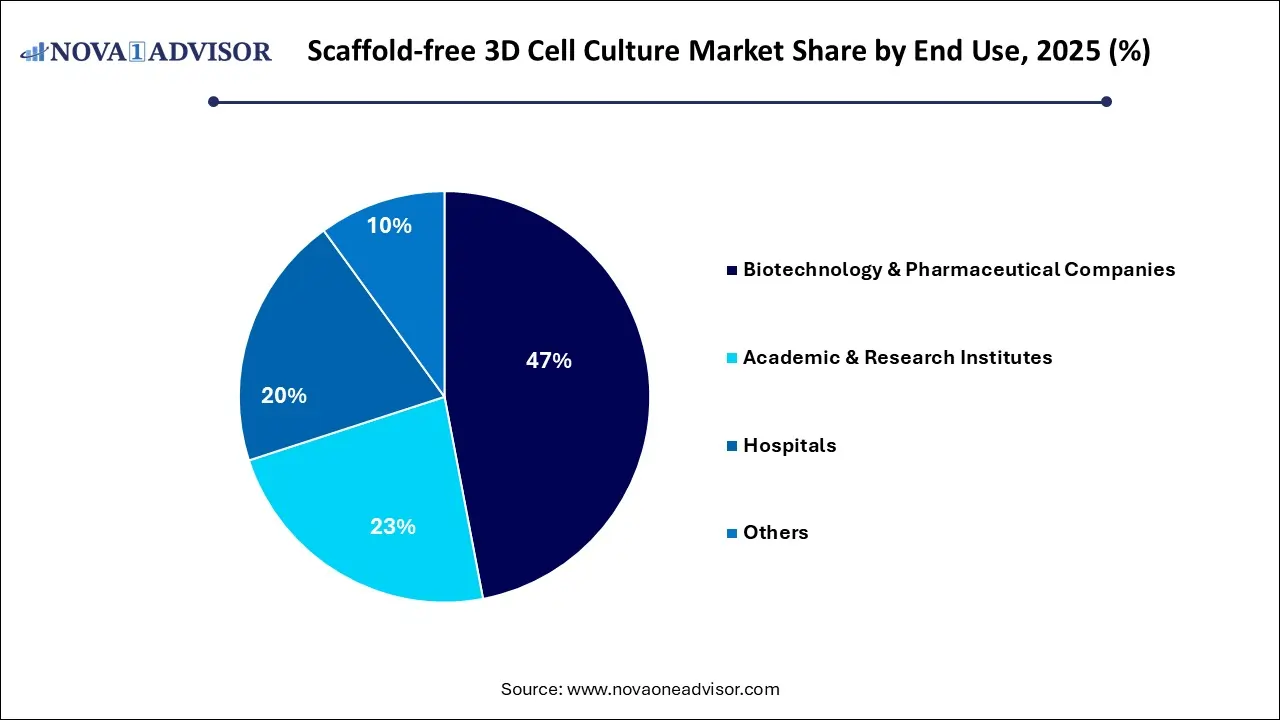
The academic & research institutes segment is projected to grow at the highest CAGR in the coming years. This is mainly because adopting cost-effective, scalable scaffold-free models like tumor spheroids for high-throughput cancer research. These platforms, specifically ULA and hanging drop plates, provide the physiological accuracy needed for complex disease modeling without the high costs of hydrogels. The strategic academic-biotech partnerships have successfully standardized these technologies, making reproducible results accessible for large-scale personalized medicine studies.
Regional Analysis
What Made North America the Dominant Region in the Scaffold-free 3D Cell Culture Market?
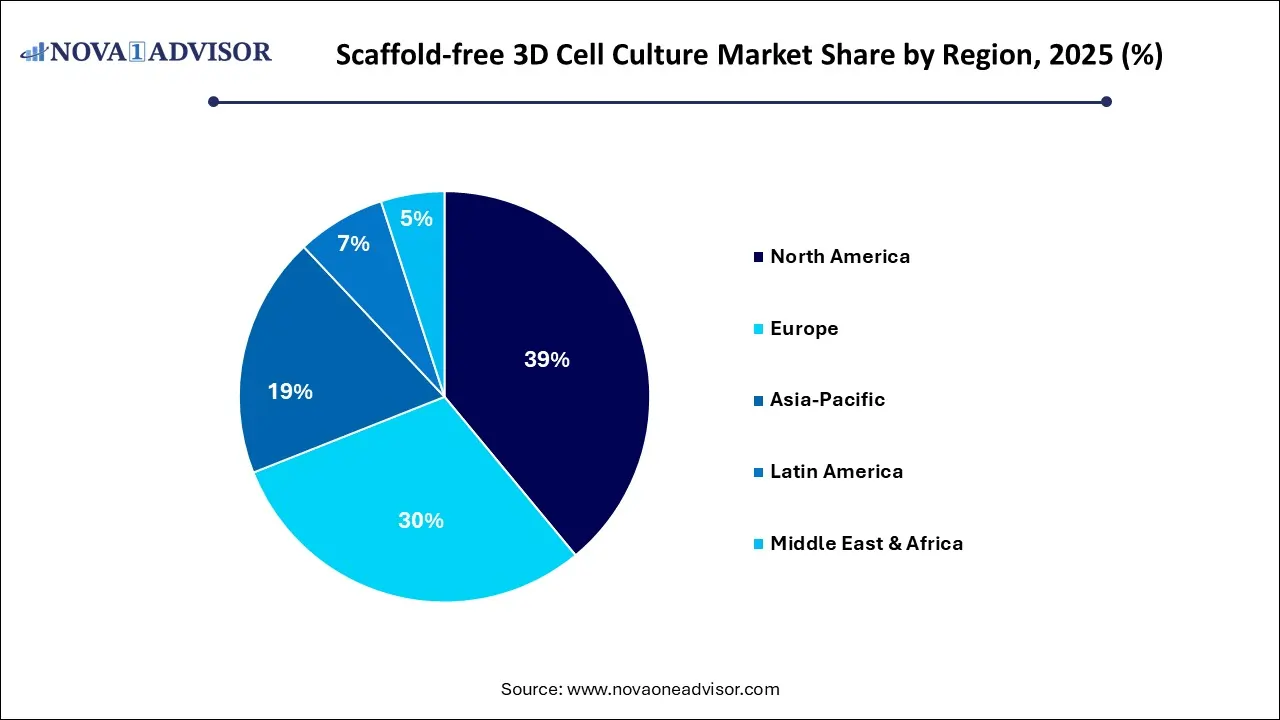
North America maintained dominance in the scaffold-free 3D cell culture market while holding the largest share in 2025. The region’s dominance is attributed to the extensive adoption of scaffold-free technologies for high-throughput drug discovery and toxicity testing within its robust pharmaceutical sector. The supportive FDA initiatives, phasing out animal testing, and substantial funding, such as the American Cancer Society’s multi-million dollar research grants. The presence of major industry leaders and cutting-edge AI-driven imaging systems solidified the region's position as the primary hub for 3D culture innovation.
U.S. Scaffold-free 3D Cell Culture Market Trends
The U.S. is a major contributor to the market in North America due to high R&D investment and a robust infrastructure that supports the rapid adoption of hanging drop and ULA microplate technologies. These scaffold-free methods are the preferred choice for modeling complex tumor microenvironments, offering superior cell-to-cell interaction for high-throughput cancer and stem cell research.
What Makes Asia Pacific the Fastest-Growing Area in the Market?
Asia Pacific is expected to grow at the fastest rate in the coming years. This is due to massive pharmaceutical and biotech investments aimed at reducing preclinical drug failure rates through 3D screening. The strong government support in China and Japan for regenerative medicine, and the rapid adoption of high-throughput spheroid technologies. An expanding biotechnology infrastructure and the urgent shift toward predictive, non-animal toxicity testing solidified the region as a primary market for scaffold-free systems.
China Scaffold-free 3D Cell Culture Market Trends
China is a key player in the Asia Pacific scaffold-free 3D cell culture market due to its unmatched precision in modeling cancer and drug reactions through consistent spheroid formation. China’s surging oncology and personalized medicine sectors are providing a more accurate human-tissue replica than traditional 2D cultures. The massive government investment and expanding R&D facilities have allowed pharmaceutical firms to drastically improve toxicology assessments while reducing preclinical costs and animal testing.
How is the Opportunistic Rise of Europe in the Scaffold-free 3D Cell Culture Market?
Europe is experiencing a strategic growth in the market due to EMA-supported regulatory pressure to adopt new approach methodologies (NAMs) that replace traditional animal testing. High demand for patient-derived organoids in oncology and immunology further drove the preference for scaffold-free techniques like hanging drop and ULA plates. These technologies successfully mimic in vivo environments without foreign interference, while robust academic-industrial partnerships accelerated their commercialization across the continent.
United Kingdom Scaffold-free 3D Cell Culture Market Trends
The United Kingdom is leading the market in Europe due to a heavy investment in personalized medicine and pharmaceutical innovation. Dominant adoption by biotech firms for high-accuracy spheroid assays significantly reduced preclinical drug testing costs while improving physiological relevance in cancer and organ disease modeling. The national funding initiatives and strong academic-industrial collaborations accelerated the commercialization of self-assembly technologies like low-attachment plates over traditional artificial scaffolds.
Scaffold-free 3D Cell Culture Market Supply Chain Analysis
- R&D and Product Development
This stage involves the fundamental research and engineering of specialized cultureware, such as ultra-low attachment (ULA) plates, hanging drop microplates, and micro-patterned surfaces that enable cell self-assembly.
Key Players: Corning Incorporated, Thermo Fisher Scientific, Merck KGaA, InSphero AG, REPROCELL Inc.
- Raw Materials and Consumables Supply
Providers at this stage supply high-quality basal media, specialized cell repellant coatings (such as BIOFLOAT), growth factors, and serum-free media essential for sustaining 3D cultures. These inputs are critical to prevent cell adhesion to the vessel and promote cell-to-cell interaction.
Key Players: Merck KGaA (Sigma-Aldrich), Lonza Group, PromoCell GmbH, Greiner Bio-One International GmbH, STEMCELL Technologies
- Distribution and Marketing
Key players utilize global logistics networks to supply laboratory consumables to pharmaceutical companies, CROs, and academic institutions. Specialized distribution partners are often utilized for specific 3D technology platforms to provide technical support.
Key Players: Thermo Fisher Scientific, Avantor, Inc., VWR, Greiner Bio-One
Scaffold-free 3D Cell Culture Market Companies
- Thermo Fisher Scientific Inc.: Offers comprehensive 3D cell culture products, including advanced microplates and bioreactors that support scaffold-free spheroid formation.
- Merck KGaA: Supplies specialized cell culture media and innovative cultureware for cultivating 3D spheroids without scaffolds. They focus on scaling up these platforms for pharmaceutical applications in disease modeling and drug development.
- Corning Incorporated: Specializes in Elplasia® technology, providing microplates that allow rapid, large-scale scaffold-free spheroid production. Their products enable high-resolution imaging and easy access for sampling, supporting tumor spheroid applications.
- Lonza Group AG: Provides specialized media solutions tailored for 3D cell growth, including specialized nutrients to maintain scaffold-free spheroids. They support the market by focusing on optimizing cell viability and functionality for complex modeling.
- Greiner Bio-One International GmbH: Produces CELLSTAR® cell cultureware with special surface coatings designed to encourage cell aggregation and prevent scaffold adhesion. Their products facilitate the creation of uniform spheroid models for reliable testing.
- InSphero AG: Focuses specifically on scaffold-free technology by developing and commercializing organotypic 3D spheroid models, such as liver and tumor models. They provide comprehensive testing services and specialized, scalable platforms for high-throughput pharmacological testing.
Recent Developments
- In January 2025, Sydney-based Inventia Life Science officially launched RASTRUM™ Allegro, a next-generation 3D cell culture platform specifically engineered to bridge the gap between biological complexity and industrial scalability. They are addressing the traditional "trade-off" where researchers previously had to choose between highly complex models and high-speed throughput.
- In September 2025, Advanced Biomed Inc. (Nasdaq: ADVB) launched A+PerfusC™, a compact, automated, and integrated perfusion 3D cell culture system designed to mimic human physiological conditions for drug discovery and personalized medicine. The platform, which supports 12 days of hands-free operation and produces up to 4,800 tumor spheroids per plate, is currently moving into mass production following successful internal validation.
- In April 2025, the U.S. Food and Drug Administration (FDA) announced a historic paradigm shift in drug regulation by releasing a formal roadmap to phase out mandatory animal testing for monoclonal antibodies and other therapeutics.
Exclusive Analysis on the Scaffold-free 3D Cell Culture Market
The global scaffold-free 3D cell culture market is leveraging the high-throughput screening demands, with spheroids and hanging drop plates emerging as dominant, cost-efficient technologies. Cancer research and drug discovery represent the largest application segments, fueled by superior physiological relevance compared to traditional cultures. North America leads in market share, although the Asia Pacific region is expanding rapidly due to advancements in biotechnology. Increasing adoption by pharmaceutical companies for personalized medicine is significantly boosting market demand.
Segments Covered in the Report
By Technology
- Hanging Drop Microplates
- Spheroid Microplates with ULA coating
- Magnetic Levitation
By Application
- Cancer Research
- Stem Cell Research & Tissue Engineering
- Drug Development & Toxicity Testing
- Others
By End Use
- Biotechnology & Pharmaceutical Companies
- Academic & Research Institutes
- Hospitals
- Others
By Regional
- North America
- Europe
- Asia Pacific
- Latin America
- Middle East & Africa
FAQ's

Proceed to Buy
Instant PDF delivery on confirmation

Scaffold-free 3D Cell Culture Market Size to Hit USD 882.66 Million by 2035
 Request Customization
 Download Sample

Get a Sample of this Report
Scaffold-free 3D Cell Culture Market