

Scar Removal Treatment Market Size, Share, Growth, Report 2026 to 2035
 Status Published
 Category Healthcare


Content
Scar Removal Treatment Market Size and Growth 2026 to 2035
The global scar removal treatment market size was valued at USD 32.85 billion in 2025 and is projected to grow from USD 35.91 billion in 2026 to USD 79.94 billion by 2035, at a CAGR of 9.3% from 2026 to 2035. North America dominated the market, accounting for a revenue share of 36.0% in 2025.
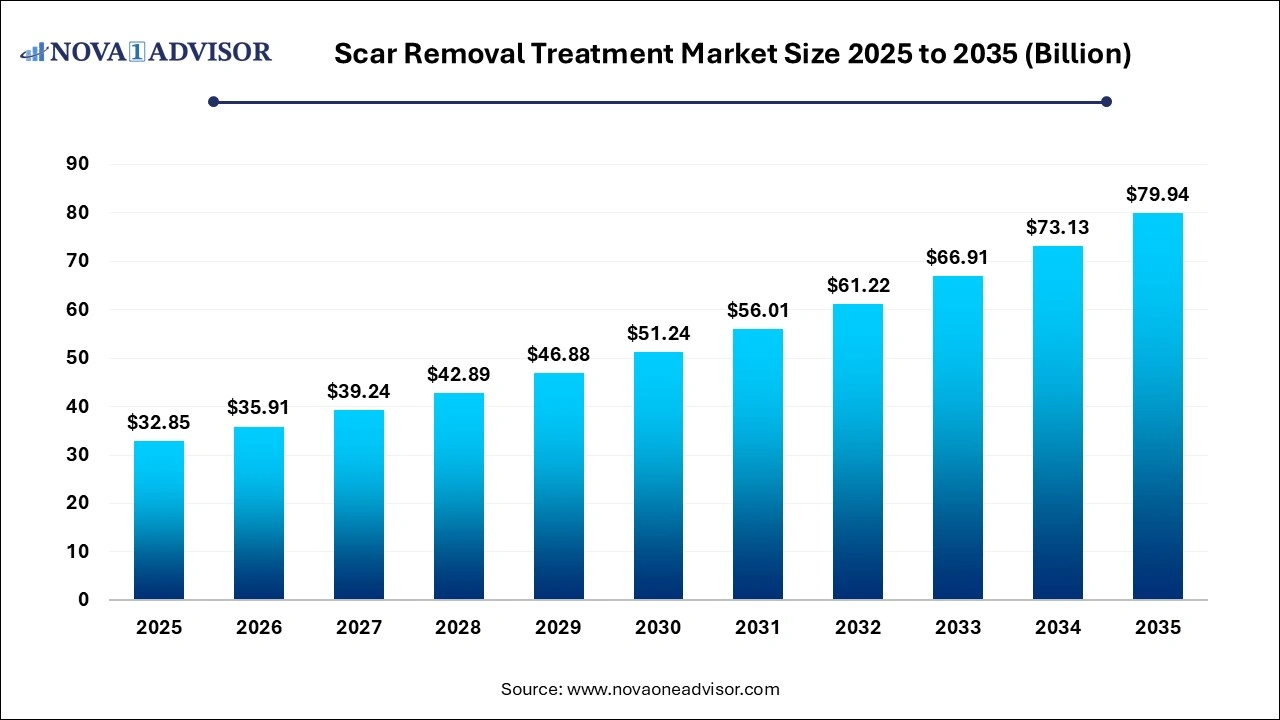
Key Takeaway
- By application, the acne scars segment dominated the market with the largest share in 2025.
- By application, the keloid scars segment is expected to grow at the fastest CAGR over the forecast period.
- By retreatment type, the laser therapy segment dominated the market with the largest share in 2025.
- By end user, the dermatology clinics segment dominated the market with the largest share of 38.0% in 2025.
- By region, North America dominated the market with the largest share of 36.0% in 2025.
Market Overview
The global Scar Removal Treatment Market is growing steadily due to increasing demand for advanced aesthetic and dermatological treatments. Rising cases of acne, surgical procedures, burns, and trauma-related injuries are driving the need for effective scar management solutions. Consumers are increasingly seeking minimally invasive treatments that improve skin appearance, texture, and overall confidence.
Technological advancements such as laser therapy, microneedling, platelet-rich plasma (PRP) therapy, and regenerative medicine are delivering better treatment outcomes with shorter recovery times. Growing medical tourism, greater awareness of cosmetic dermatology, and the influence of social media are further supporting market expansion. Additionally, ongoing innovations in biotechnology and AI-assisted dermatology are expected to accelerate the long-term growth of the global scar removal treatment market.
Market Outlook
- Market Growth Overview: The global scar removal treatment market is expected to grow significantly between 2025 and 2035, driven by increasing consumer awareness regarding aesthetic appearance.
- Sustainability Trends: Sustainability trends involve a growing transition towards sustainable manufacturing and clean-label topical formulations.
- Major Investors: Major investors in the market include Smith & Nephew, Merz Pharma, Lumenis, Mölnlycke Health Care, Sonoma Pharmaceuticals, Perrigo Company, and Cynosure.
How AI is Impacting the Global Scar Removal Treatment Market?
Artificial intelligence is transforming the scar removal treatment market by enhancing diagnostic accuracy, personalized treatment planning, and patient monitoring. AI-powered imaging systems analyze scar depth, pigmentation, texture, vascularity, and skin elasticity with greater precision than traditional visual assessments. Machine learning algorithms classify different scar types and recommend customized treatment plans using laser therapy, microneedling, chemical peels, topical medications, or surgical revision based on individual patient characteristics. AI also optimizes laser procedures by automatically adjusting treatment parameters such as pulse duration, energy levels, and treatment depth according to skin type and scar severity, improving safety and clinical outcomes. In addition, computer vision and teledermatology platforms enable remote monitoring of scar healing through smartphone images, while AI-powered virtual assistants provide personalized skincare guidance and treatment reminders. As precision dermatology continues to advance, AI is improving treatment effectiveness, patient satisfaction, and innovation across the global scar removal treatment market.
Scar Removal Treatment Market Report Scope
| Report Coverage | Details |
| Market Size in 2026 | USD 35.91 Billion |
| Market Size by 2035 | USD 79.94 Billion |
| Growth Rate From 2026 to 2035 | CAGR of 9.3% |
| Base Year | 2025 |
| Forecast Period | 2026 to 2035 |
| Segments Covered | By End User, By Application, By Treatment Type, By Region |
| Market Analysis (Terms Used) | Value (USD Million/Billion) or (Volume/Units) |
| Regional Scope | North America; Europe; Asia Pacific; Central and South America; the Middle East and Africa |
| Key Companies Profiled | Absolute MS (S) Pte Ltd., Asclepion Laser Technologies GmbH, Avita Medical, Biodermis, Cynosure Inc., Enaltus LLC., Merz Pharma, Revitol.com, Scarguard Labs, LLC, Suneva Medical, Inc., TorquePharma, WONTECH, Z-Roc Dermatology, and others |
Market Driver
Growing Demand for Aesthetic Procedures Drives Market Growth
The increasing demand for aesthetic treatments and skin rejuvenation is a major driver of the scar removal treatment market. Growing awareness of skincare, rising disposable incomes, and the influence of social media and beauty trends are encouraging more consumers to seek scar revision procedures. The rising prevalence of acne scars, surgical scars, burns, and trauma-related injuries is further boosting demand for advanced treatment options. Technological advancements such as fractional laser resurfacing, microneedling, chemical peels, platelet-rich plasma (PRP) therapy, and regenerative skin treatments have improved treatment outcomes while reducing recovery time. Additionally, the expansion of specialized dermatology clinics and greater access to cosmetic procedures continue to support market growth.
Market Restraint
High Treatment Costs and Multiple Sessions Limit Market Expansion
The high cost of advanced scar removal treatments remains a key challenge for market growth. Procedures such as laser therapy, microneedling, chemical peels, and regenerative treatments often require multiple sessions to achieve noticeable results, increasing the overall treatment cost. Since many cosmetic procedures are not covered by health insurance, patients must pay significant out-of-pocket expenses, limiting accessibility for price-sensitive consumers. Furthermore, treatment outcomes vary depending on scar type, skin condition, and individual healing responses, which may affect patient satisfaction and treatment adoption.
Market Opportunity
Personalized Regenerative Dermatology Creates New Growth Opportunities
Advancements in regenerative medicine and precision dermatology are creating significant opportunities in the scar removal treatment market. Emerging therapies using stem cells, growth factors, platelet-rich plasma (PRP), bioengineered collagen, and tissue regeneration technologies are improving wound healing and minimizing scar formation. AI-powered skin analysis is enabling personalized treatment plans based on scar characteristics, skin type, age, and genetic factors, leading to better clinical outcomes. In addition, increasing investments in aesthetic healthcare, expanding medical tourism, and growing access to dermatology services in emerging economies are expected to create substantial opportunities for market participants over the coming years.
Segmental Insights
By Application
Why did the acne scars segment dominate the global scar removal treatment market?
The acne scars segment dominated the market with the largest share in 2025. The dominance of the segment can be attributed to the growing aesthetic consciousness and rising need for minimally invasive procedures. In addition, increased purchasing power within emerging regional markets facilitates more access to discretionary cosmetic dermatology procedures.
How did the keloid scars segment expected to hold the significantly growing global scar removal treatment market in the coming years?
The keloid scars segment is expected to grow at the fastest CAGR over the forecast period. The growth of the segment can be credited to the growing burn and trauma cases and growing aesthetic awareness. Social media and digital platforms increasingly widen public awareness regarding early therapeutic and aesthetic scar management, driving segment growth further.
By Treatment Type
Why did the laser therapy segment dominate the global scar removal treatment market?
The laser therapy segment dominated the market with the largest share in 2025. The dominance of the segment can be linked to the increasing need for minimally invasive aesthetic surgeries and technological innovations such as fractional CO₂.. Patients increasingly preferred energy-based devices because they provide effective collagen remodelling, reduced discomfort, and shorter recovery periods compared to conventional surgical interventions.
How did the chemical peels segment expected to hold the significantly growing global scar removal treatment market in the coming years?
The chemical peels segment is expected to grow at the fastest CAGR over the forecast period. The growth of the segment can be driven by the increasing incidence of acne and its lower downtime as compared to laser resurfacing. There is a growing patient preference for non-surgical, outpatient dermatological procedures that deliver significant improvements in skin texture while requiring minimal downtime.
By End User
Why did the dermatology clinic segment dominate the global scar removal treatment market?
The dermatology clinics segment dominated the market with the largest share in 2025. The growth of the segment is owing to the increasing consumer demand for innovative aesthetic procedures and advancements in energy-based and laser devices. Furthermore, the accessibility of specialized dermatological care is significantly enhanced by rising disposable incomes, along with the robust expansion of private clinics.
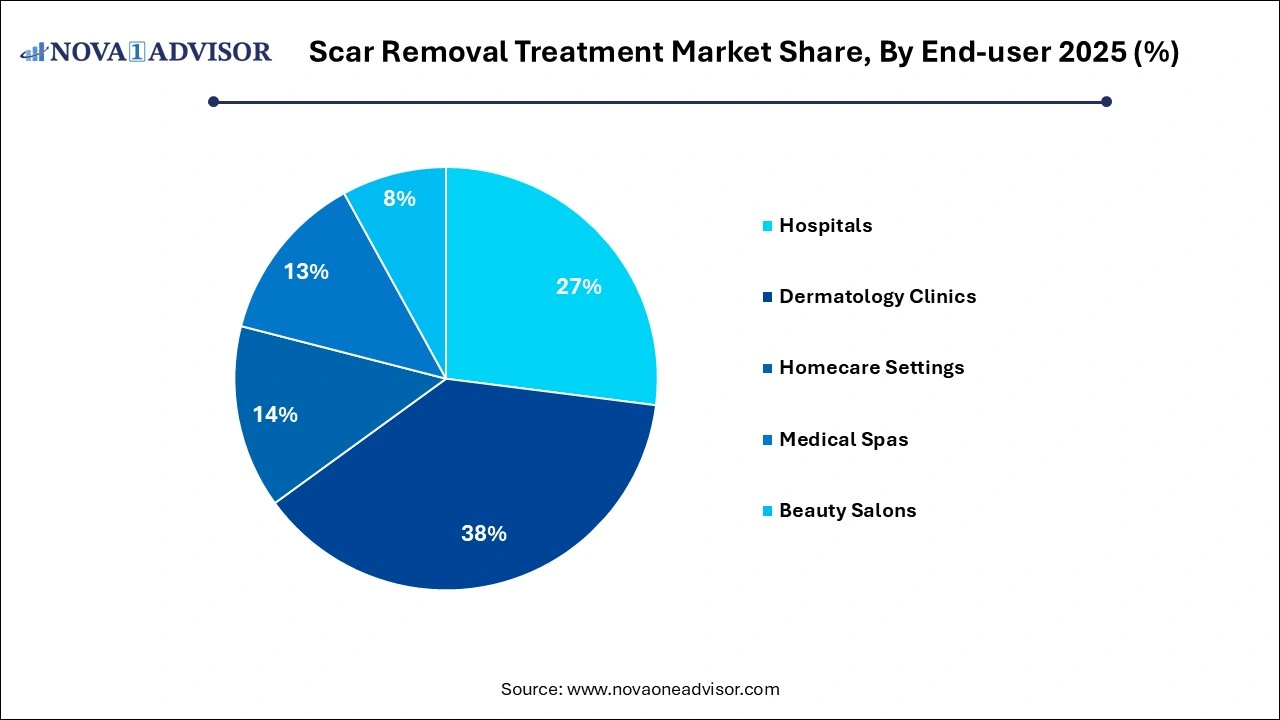
How did the homecare settings segment expected to hold the significantly growing global scar removal treatment market in the coming years?
The homecare settings segment is expected to grow at the fastest CAGR over the forecast period. The growth of the segment is due to increasing aesthetic awareness and growing consumer preference for self-administration. There is a growing consumer preference for non-invasive, cost-effective home health care options. These alternatives effectively cut the need for travel and high costs.
By Regional
Why did the North American region account for the largest share in the global scar removal treatment market?
North America dominated the market with the largest share in 2025. The dominance of the region can be attributed to the increasing disposable incomes and rise in aesthetic awareness across major countries. In addition, the dense presence of premier pharmaceutical and medical technology firms across North America facilitates the greater market penetration of innovative medical interventions.
U.S. Global Scar Removal Treatment Market Trends
The growth of the market in the country can be driven by the growing consumer spending on personal grooming and aesthetic improvements. Also, increased consumer awareness of physical appearance, coupled with social-media-driven aesthetic standards, significantly boosts the market demand for blemish-free and scar-free skin.
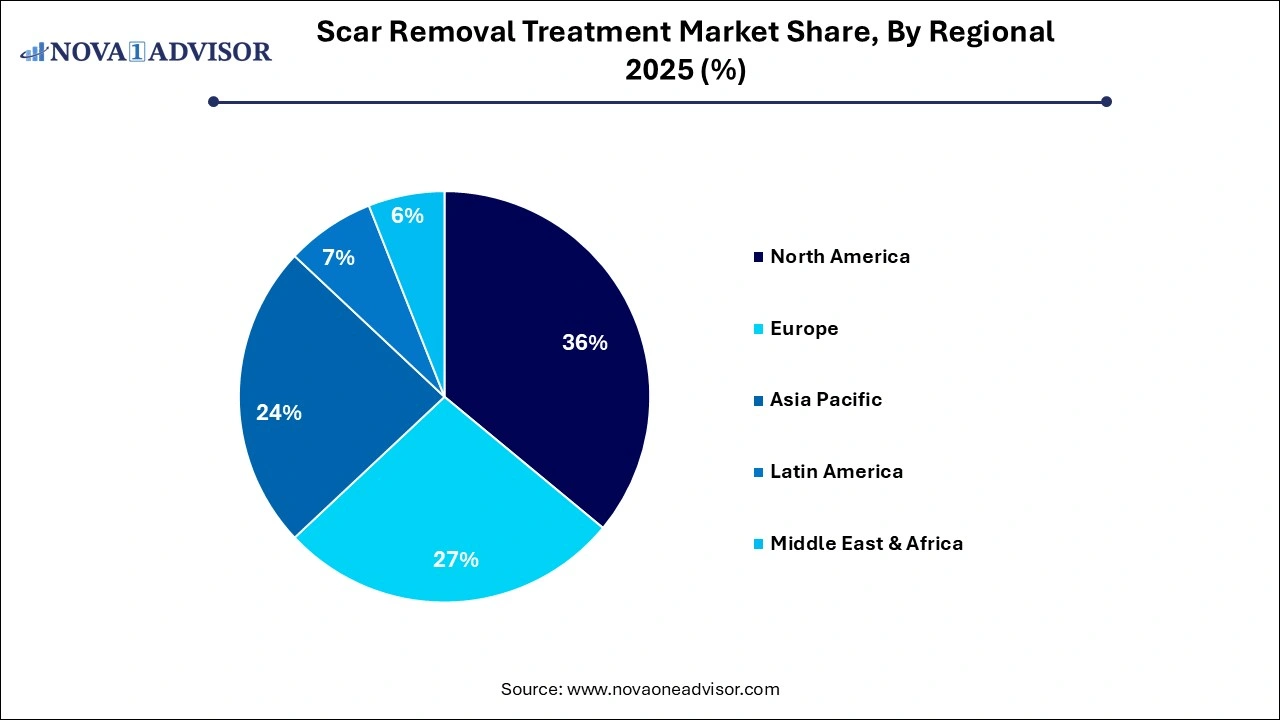
Why did the Asia-Pacific region become the fastest-growing global scar removal treatment market during the forecast period?
Asia Pacific is expected to grow at the fastest CAGR over the forecast period. The growth of the region can be credited to the increasing disposable incomes and growing awareness around aesthetic appearance across emerging nations. Furthermore, the region offers highly cost-effective, premium-tier dermatological and surgical interventions, drawing a significant volume of both domestic and international patients.
China Global Scar Removal Treatment Market Trends
The market in the country is growing due to rapid urbanization, growing disposable incomes, and a surge in acne and trauma cases in major cities. Moreover, the rapid proliferation of digital retail pharmacies significantly enhances consumer accessibility to cost-effective topical gels, silicone sheeting, and dermatological creams.
Key Players in the Global Scar Removal Treatment Market
- Smith & Nephew: A major global medical technology enterprise providing advanced wound-care management products, sheets, and functional scar-healing solutions.
- Lumenis: It is a prominent pioneer in energy-based aesthetic systems, offering fractional CO₂ and multi-technology platforms designed for deep skin resurfacing.
- Cynosure (Hologic / Cynosure Lutronic): Focuses on high-performance laser systems utilizing picosecond and fractional technology for targeted collagen remodeling and scar reduction.
Recent Developments
- In January 2026, BIOCORNEUM®, a leading brand in scar treatment widely recommended by U.S. plastic surgeons, has officially announced the launch of SiliSilk™. This clinically proven, non-SPF silicone gel is engineered to provide patients with advanced, versatile options for post-surgical and trauma scar recovery.
Segments Covered in the Report
This report forecasts revenue growth at country levels and provides an analysis of the latest industry trends in each of the sub-segments from 2021 to 2035. For this study, Nova one advisor, Inc. has scar removal treatment market.
By End User
- Hospitals
- Dermatology Clinics
- Homecare Settings
- Medical Spas
- Beauty Salons
By Application
- Surgical Scars
- Acne Scars
- Burn Scars
- Keloid Scars
- Stretch Marks
By Treatment Type
- Topical Treatments
- Laser Treatments
- Surgical Procedures
- Chemical Peels
- Microneedling
By Region
- North America
- Europe
- Asia Pacific
- Latin America
- Middle East & Africa

Proceed to Buy
Instant PDF delivery on confirmation

Scar Removal Treatment Market Size to Hit USD 79.94 Billion by 2035
 Request Customization
 Download Sample

Get a Sample of this Report
Scar Removal Treatment Market