

Sentinel Node Biopsy Market Size, Share, Forecast Report, 2026-2035
 Status Published
 Category Healthcare


Content
Sentinel Node Biopsy Market Size and Growth 2026 to 2035
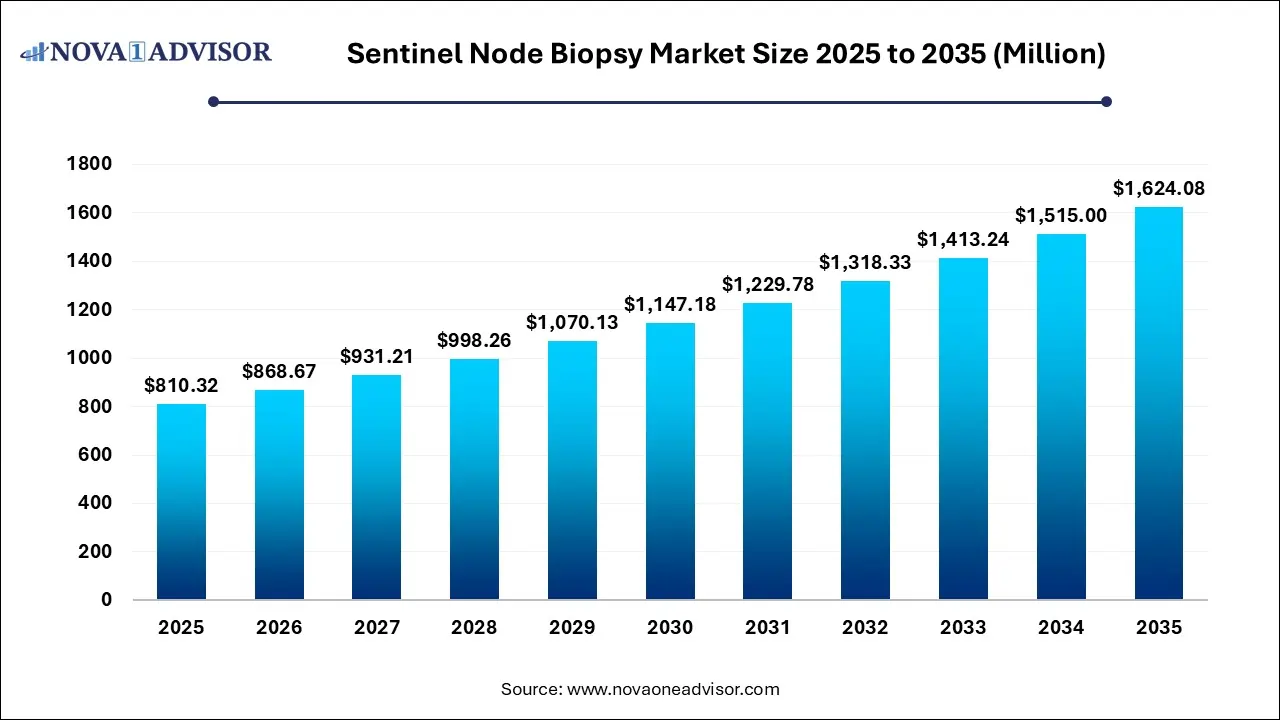
The global sentinel node biopsy market size was valued at USD 810.32 million in 2025 and is projected to grow from USD 868.67 million in 2026 to USD 1,624.08 million by 2035, at a CAGR of 7.2% from 2026 to 2035. North America dominated the market, accounting for a revenue share of 40.0% in 2025.
Key Takeaway
- By product, the surgical instruments segment dominated the market with the largest share in 2025 and is expected to grow at the fastest CAGR over the forecast period.
- By application, the breast cancer segment dominated the market with the largest share in 2025.
- By procedure, the open surgery segment dominated the market with the largest share in 2025.
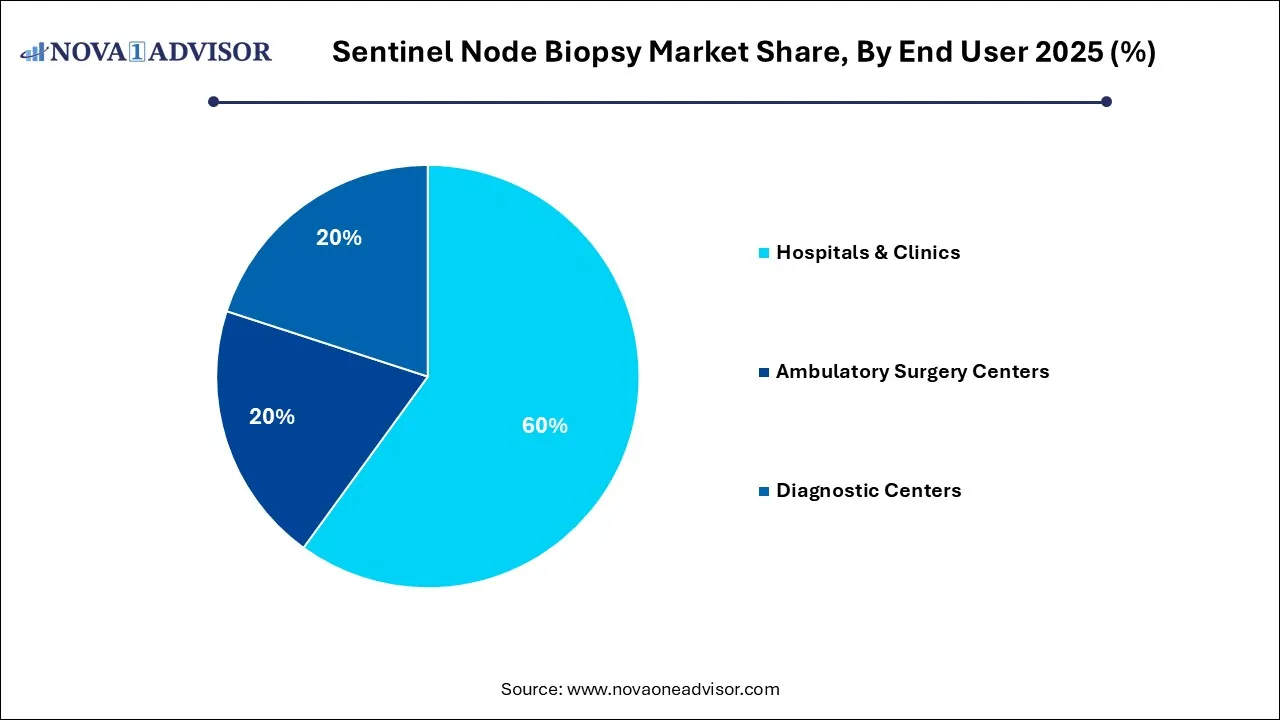
- By end use, the hospitals & clinics segment dominated the market with the largest share of 60.0% in 2025.
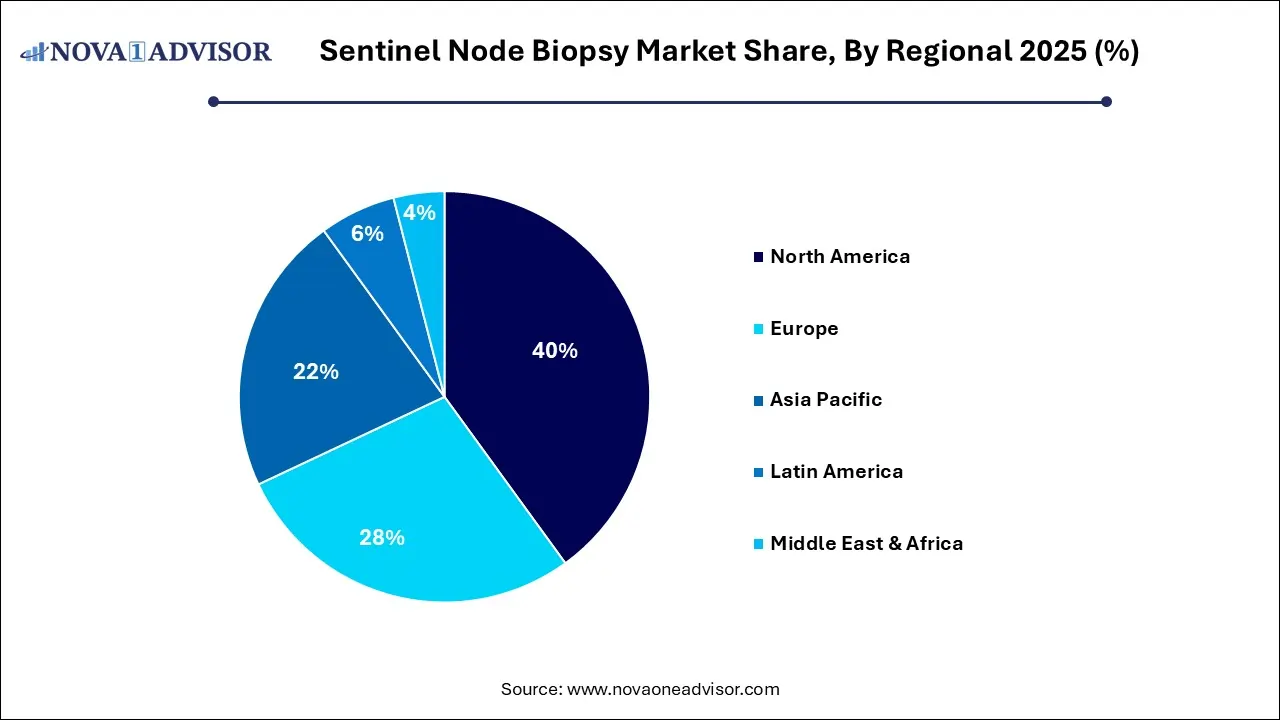
- By region, North America dominated the market with the largest share of 40.0% in 2025.
Market Overview
The sentinel node biopsy market has become an integral part of modern cancer diagnosis and treatment, enabling physicians to accurately determine whether cancer has spread to nearby lymph nodes while avoiding unnecessary lymph node removal. Compared with conventional lymph node dissection, the procedure minimizes surgical complications, reduces recovery time, and improves patients' quality of life.
Rising cancer incidence worldwide, particularly breast cancer, melanoma, colorectal cancer, and gynecological malignancies, continues to drive demand for accurate lymphatic staging techniques. As healthcare increasingly adopts precision medicine, sentinel node biopsy plays a critical role in guiding personalized treatment decisions, including the need for surgery, chemotherapy, radiation therapy, or targeted therapies.
Technological advancements such as fluorescence-guided imaging, near-infrared visualization, hybrid tracers, portable gamma probes, robotic-assisted surgery, and AI-enabled surgical navigation are improving procedural accuracy and clinical outcomes. These innovations are enhancing lymph node detection while reducing false-negative results and operative time.
Healthcare systems are also recognizing the economic benefits of sentinel node biopsy, including fewer postoperative complications, shorter hospital stays, and lower overall treatment costs. Meanwhile, expanding oncology infrastructure, favorable reimbursement policies, and increasing investments in comprehensive cancer care across emerging economies are accelerating market adoption.
Overall, the market is evolving beyond a conventional surgical procedure into a technology-driven precision oncology solution supported by advanced imaging, digital pathology, and multidisciplinary cancer care.
Market Outlook
- Market Growth Overview: The global sentinel node biopsy market is expected to grow significantly between 2025 and 2035, driven by the growing incidence of various types of cancers such as breast cancer, melanoma, and colon cancer globally.
- Sustainability Trends: Sustainability trends involve minimizing environmental impact while keeping clinical precision and reducing single-use plastic waste in the operating room.
- Major Investors: Major investors in the market include Stryker, Hologic, KUBTEC, SurgicEye GmbH, and Navidea Biopharmaceuticals.
How AI is Impacting the Global Sentinel Node Biopsy Market?
Artificial intelligence is enhancing the accuracy and efficiency of sentinel node biopsy by improving imaging analysis, lymphatic mapping, surgical navigation, and pathology evaluation. AI-powered algorithms help identify sentinel lymph nodes more precisely using MRI, PET/CT, ultrasound, and fluorescence imaging, enabling better surgical planning and reducing diagnostic errors.
AI also supports real-time surgical guidance, automates the detection of micrometastases in digital pathology, and provides predictive insights for personalized cancer treatment. Additionally, healthcare providers use AI to optimize clinical workflows and resource management. As AI integrates with robotic surgery and advanced imaging technologies, it is driving more precise, efficient, and patient-centered oncology care.
Sentinel Node Biopsy Market Report Scope
| Report Coverage | Details |
| Market Size in 2026 | USD 868.67 Million |
| Market Size by 2035 | USD 1,624.08 Million |
| Growth Rate From 2026 to 2035 | CAGR of 7.2% |
| Base Year | 2025 |
| Forecast Period | 2026 to 2035 |
| Segments Covered | By Product, By Application, By Procedure, By End-User, By Region |
| Market Analysis (Terms Used) | Value (USD Million/Billion) or (Volume/Units) |
| Regional Scope | North America; Europe; Asia Pacific; Central and South America; the Middle East and Africa |
| Key Companies Profiled | Devicor Medical Products, Inc., part of Leica Biosystems. (Germany), C. R. Bard, Inc. (U.S.), INTRAMEDICAL IMAGING LLC (U.S.), Hilfe Engineering Corporation (India), Surgic Eye (Germany), KUB Technologies, Inc. (U.S.), Navidea Biopharmaceuticals, Inc.(U.S.) and others |
Market Driver
Rising Global Cancer Incidence Driving Demand for Accurate Disease Staging
The growing global prevalence of cancer is a major driver of the sentinel node biopsy market. Increasing cases of breast cancer, melanoma, colorectal cancer, and other malignancies have heightened the need for precise lymph node staging. Sentinel node biopsy enables early detection of cancer spread while avoiding unnecessary lymph node removal, supporting personalized treatment decisions and improving patient outcomes. Its inclusion in clinical guidelines and the increasing focus on minimally invasive cancer care continue to boost market demand.
Market Restraint
High Cost of Advanced Imaging Technologies and Specialized Infrastructure
The high cost of advanced imaging systems, gamma probes, fluorescence-guided equipment, and nuclear medicine infrastructure remains a key challenge for market growth. In addition, the procedure requires specialized expertise and strict regulatory compliance for handling radioactive tracers, making adoption difficult for smaller hospitals and healthcare facilities, particularly in developing regions. Limited reimbursement in some countries further restricts widespread implementation.
Market Opportunity
Expansion of Precision Oncology Creating New Growth Opportunities
The rapid adoption of precision oncology is creating significant opportunities for the sentinel node biopsy market. Growing use of molecular diagnostics, AI, robotic-assisted surgery, fluorescence imaging, and digital pathology is enhancing the accuracy and clinical value of sentinel node biopsy. Expanding applications across multiple cancer types, combined with rising investments in oncology infrastructure and cancer screening programs in emerging economies, are expected to drive long-term market growth.
Segmental Insights
By Product
Why did the surgical segment dominate the global sentinel node biopsy market?
The surgical instruments segment dominated the market with the largest share in 2025 and is expected to grow at the fastest CAGR over the forecast period. The dominance and growth of the segment can be attributed to the growing prevalence of cancers such as breast and an ongoing transition towards minimally invasive procedures. In addition, the incorporation of advanced modalities, such as gamma detection probes and near-infrared (NIR) fluorescence imaging, has enhanced the precision of sentinel lymph node (SLN) localization.
By Application
Why did the breast cancer segment dominate the global sentinel node biopsy market?
The breast cancer segment dominated the market with the largest share in 2025. The dominance of the segment can be credited to the surge in prevalence of breast cancer and technological innovations for accurate diagnostics. Surgeons and patients strongly prefer sentinel lymph node biopsy (SNB) over axillary lymph node dissection (ALND) due to its association with significantly lower incidences of lymphedema and tissue swelling.
How did the other segment expected to hold the significantly growing global sentinel node biopsy market in the coming years?
The other segment is expected to grow at the fastest CAGR over the forecast period. The growth of the segment can be linked to the growing global prevalence of skin and gynaecological cancers along with the surge in adoption of MIS procedures. Ongoing clinical trials and oncological studies continue to validate the safety and efficacy of sentinel lymph node biopsies in the management of non-breast solid tumours.
By Procedure
Why did the open surgery segment dominate the global sentinel node biopsy market?
The open surgery segment dominated the market with the largest share in 2025. The dominance of the segment is owing to the extensive utilization of sentinel node biopsy in the treatment of various cancers such as lung and breast. Continuous innovations in handheld gamma probes and radiotracers significantly enhance the sensitivity and reliability of sentinel lymph node mapping.
How did the minimally invasive surgery segment expected to hold the significantly growing global sentinel node biopsy market in the coming years?
The minimally invasive surgery segment is expected to grow at the fastest CAGR over the forecast period. The growth of the segment can be driven by its various benefits, such as a shorter hospital stay, reduced trauma, and more rapid recovery times. The rapid growth of Ambulatory Surgical Centers (ASCs) continues to drive this adoption, as they allow patients to receive minimally invasive biopsies and return home on the same day.
By End Use
Why did the hospitals & clinics segment dominate the global sentinel node biopsy market?
The hospitals & clinics segment dominated the market with the largest share in 2025. The dominance of the segment is owing to the surge in the presence of skilled medical professionals and innovative technological instruments in hospital facilities. Hospitals possess greater financial capacity to acquire and maintain capital-intensive diagnostic technologies, such as gamma detection systems.
How did the ambulatory surgery center segment expected to hold the significantly growing global sentinel node biopsy market in the coming years?
The ambulatory surgery center segment is expected to grow at the fastest CAGR over the forecast period. The growth of the segment is due to favorable outpatient reimbursement policies and their ability to perform these surgeries safely. Furthermore, conducting biopsies within an ambulatory surgery center (ASC) significantly reduces patient out-of-pocket expenses and minimizes provider overhead costs relative to conventional hospital environments.
By Regional
Why did the North American region account for the largest share in the global sentinel node biopsy market?
North America dominated the market with the largest share in 2025. The dominance of the region can be attributed to the growing prevalence of cancer such as melanoma and breast cancer along with the cutting-edge healthcare infrastructure presence. In addition, organizations such as the American Cancer Society and the National Comprehensive Cancer Network (NCCN) routinely update their clinical protocols to support this procedure.
U.S. Global Sentinel Node Biopsy Market Trends
The growth of the market in the country can be driven by the rapid innovations in tracing and imaging agents like superparamagnetic iron oxide (SPIO) nanoparticles, which enhance accuracy and help reduce conventional radiation handling hurdles. Also, surgeons and patients increasingly prefer sentinel lymph node biopsy over radical dissection because it reduces lymphedema risks and boosts recovery.
Why did the Asia-Pacific region become the fastest-growing global sentinel node biopsy market during the forecast period?
Asia Pacific is expected to grow at the fastest CAGR over the forecast period. The growth of the region can be credited to the ongoing healthcare infrastructure modernization and surge in government initiatives for early diagnosis and treatment. Furthermore, emerging economies in the Asia-Pacific region, such as India and Thailand, are increasingly establishing themselves as major hubs for medical tourism by offering highly cost-effective yet high-quality oncological care.
China Global Sentinel Node Biopsy Market Trends
The market in the country is growing due to increasing disposable incomes for premium diagnostics and robust government support and funding for precision medicines. Advanced diagnostic and surgical procedures are becoming increasingly accessible in tier-2 and tier-3 Chinese cities, fueled by the expansion of hospital networks and increased healthcare expenditure.
Key Players in the Global Sentinel Node Biopsy Market
- Hologic, Inc.: A dominant leader in women’s health and breast cancer diagnostics, providing a wide array of surgical and imaging equipment utilized in biopsy procedures.
- Stryker: A global leader in medical technologies, offering advanced surgical navigation and fluorescence imaging systems that aid in pinpointing sentinel nodes.
- Navidea Biopharmaceuticals, Inc.: Focuses heavily on precision biopharmaceutical diagnostics, notably manufacturing imaging agents like Lymphoseek for accurate lymphatic mapping.
Recent Developments
- In March 2026, SkylineDx announced the publication of new clinical data authored by Dr. Wesley Yu et al., which confirms that the Merlin CP-GEP test successfully identifies a clinically significant, high-risk cohort within T1a melanoma patients.
Segments Covered in the Report
This report forecasts revenue growth at country levels and provides an analysis of the latest industry trends in each of the sub-segments from 2021 to 2035. For this study, Nova one advisor, Inc. has sentinel node biopsy market.
By Product
- Surgical Instruments
- Needles
- Probes
- Others
- Imaging Agents
- Radioactive Tracers
- Fluorescent Dyes
- Contrast Agents
- Diagnostic Kits
- Equipment
- Reagents
By Application
- Breast Cancer
- Colon Cancer
- Esophageal Cancer
- Others
By Procedure
- Open Surgery
- Minimally Invasive Surgery
By End Use
- Hospitals & Clinics
- Ambulatory Surgery Centers
- Diagnostic Centers
By Region
- North America
- Europe
- Asia Pacific
- Latin America
- Middle East & Africa
FAQ's

Proceed to Buy
Instant PDF delivery on confirmation

Sentinel Node Biopsy Market Size to Hit USD 1,624.08 Million by 2035
 Request Customization
 Download Sample

Get a Sample of this Report
Sentinel Node Biopsy Market