

Skin Biopsy Market Size, Share, and Trends 2026 to 2035
 Status Published
 Category Healthcare


Content
Skin Biopsy Market Size and Growth 2026 to 2035
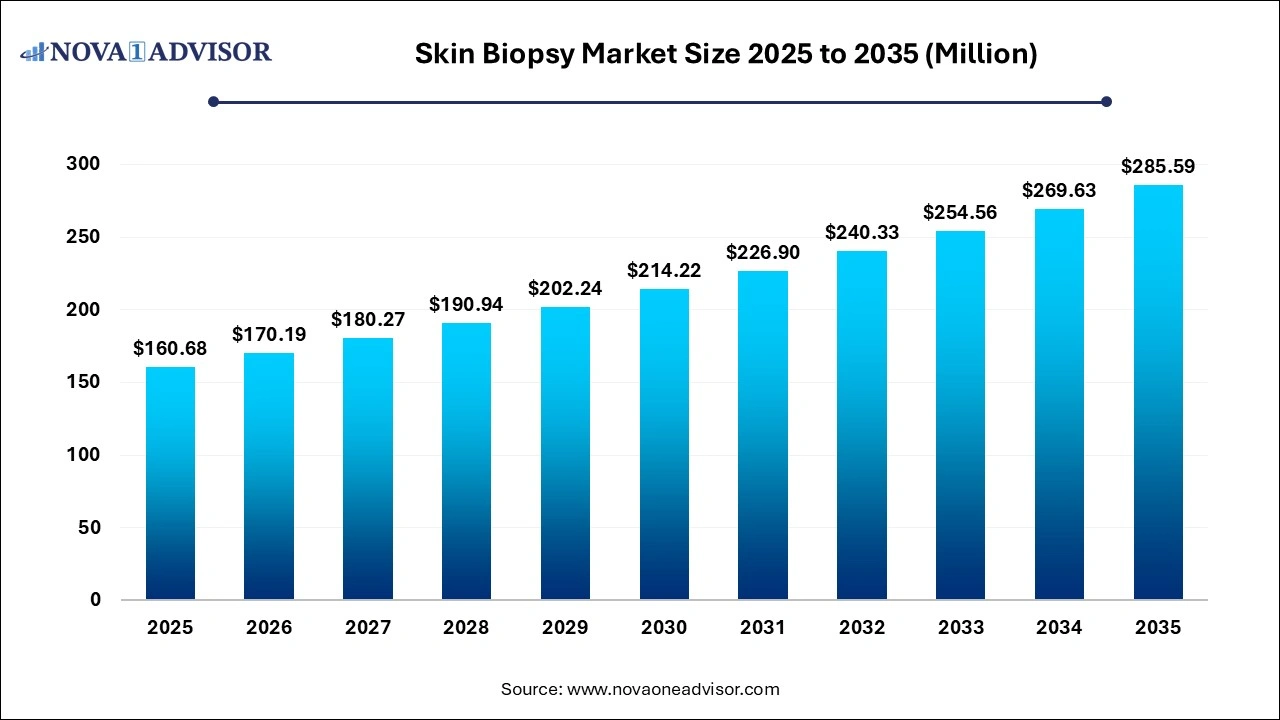
The global skin biopsy market size was valued at USD 160.68 million in 2025 and is projected to grow from USD 170.19 million in 2026 to USD 285.59 million by 2035, at a CAGR of 5.92% from 2026 to 2035. North America dominated the market, accounting for a revenue share of 39.0% in 2025.
Key Takeaway:
- By application, the diagnostic segment dominated the market with the largest share in 2025.
- By application, the therapeutic segment is expected to grow at the fastest CAGR over the forecast period.
- By type, the excisional biopsy segment dominated the market with the largest share in 2025.
- By end use, the hospitals segment dominated the market with the largest share of 46.0% in 2025.
- By region, North America dominated the market with the largest share of 39.0% in 2025.
Market Overview
The global skin biopsy market is experiencing steady growth due to the rising prevalence of skin cancer, chronic dermatological disorders, and increasing demand for accurate diagnostic procedures. Skin biopsy remains the gold standard for diagnosing a wide range of conditions, including melanoma, basal cell carcinoma, squamous cell carcinoma, inflammatory skin diseases, autoimmune disorders, and infections. Growing awareness of early skin cancer detection, coupled with expanding dermatology services, is driving the adoption of skin biopsy procedures across hospitals, specialty clinics, and diagnostic laboratories.
Technological advancements have significantly improved biopsy procedures through the introduction of minimally invasive punch and shave biopsy devices, advanced surgical instruments, and improved wound closure techniques that enhance patient comfort and procedural efficiency. At the same time, digital pathology, molecular diagnostics, immunohistochemistry, and genomic analysis are enabling more precise disease diagnosis and supporting personalized treatment strategies.
The market is also benefiting from increased investments in dermatology infrastructure, specialized skin cancer centers, and teledermatology services that improve access to diagnostic care. In addition, the growing elderly population, rising exposure to ultraviolet radiation, environmental pollution, and increasing incidence of chronic skin conditions are contributing to higher demand for skin biopsy procedures. Looking ahead, innovations in artificial intelligence, digital pathology, precision medicine, and minimally invasive diagnostic technologies are expected to further improve diagnostic accuracy, streamline clinical workflows, and support the long-term growth of the global skin biopsy market.
Market Outlook
- Market Growth Overview: The global skin biopsy market is expected to grow significantly between 2025 and 2035, driven by the technological innovations in biopsy techniques.
- Sustainability Trends: Sustainability trends involve reducing energy consumption in diagnostics and minimizing medical waste.
- Major Investors: Major investors in the market include Beckton, Dickinson and Company; Boston Scientific Corporation; Cardinal Health; Cook Medical; Hologic; Leica Biosystems (Danaher Corporation); and Integra Life Sciences.
How is AI Impacting The global Skin Biopsy Market?
Artificial intelligence is transforming the global skin biopsy market by improving the accuracy, speed, and efficiency of skin disease diagnosis. AI-powered dermoscopy and imaging systems analyze clinical images to detect suspicious skin lesions by evaluating characteristics such as asymmetry, border irregularity, pigmentation, color variation, and lesion evolution. These tools help dermatologists identify high-risk lesions more accurately, enabling earlier biopsy decisions and improving the detection of melanoma and other skin cancers.
AI is also playing a significant role in digital pathology by assisting pathologists in analyzing high-resolution biopsy slides. Machine learning algorithms can identify abnormal cellular structures, inflammatory changes, tumor margins, and other microscopic features associated with benign and malignant skin conditions. By reducing interpretation variability and prioritizing suspicious cases for review, AI enhances diagnostic consistency while improving laboratory efficiency and reducing turnaround times.
In addition, AI supports personalized patient care by combining biopsy findings with clinical history, medical imaging, genetic information, and treatment records to predict disease progression and recommend tailored treatment strategies. AI-powered telepathology platforms also enable remote sharing and analysis of digital biopsy slides, expanding access to expert dermatopathology services in underserved regions. As digital pathology and precision medicine continue to evolve, AI is expected to make skin biopsy diagnostics more accurate, efficient, and accessible, ultimately improving patient outcomes worldwide.
Skin Biopsy Market Report Scope
| Report Coverage | Details |
| Market Size in 2026 | USD 170.19 Million |
| Market Size by 2035 | USD 285.59 Million |
| Growth Rate From 2026 to 2035 | CAGR of 5.92% |
| Base Year | 2025 |
| Forecast Period | 2026 to 2035 |
| Segments Covered | By End User, By Application, By Type, By Region |
| Market Analysis (Terms Used) | Value (USD Million/Billion) or (Volume/Units) |
| Regional Scope | North America; Europe; Asia Pacific; Central and South America; the Middle East and Africa |
| Key Companies Profiled | Boston Scientific Corporation (U.S.), COOK Medical (U.S.), BD (U.S.), DTR Medical Ltd (U.K), Devicor Medical Products, Inc. part of Leica Biosystems. (U.S.), Gallini Srl (Italy), Hologic, Inc. (U.S.), and Cardinal Health (U.S.). |
Market Driver
Rising Incidence of Skin Cancer and Chronic Dermatological Disorders Driving Market Growth
The growing incidence of skin cancer and chronic dermatological disorders is a key driver of the global skin biopsy market. Increasing cases of melanoma, basal cell carcinoma, and squamous cell carcinoma, driven by prolonged ultraviolet exposure, aging populations, environmental factors, and lifestyle changes, are significantly increasing the demand for accurate diagnostic procedures. Since skin biopsy remains the gold standard for confirming skin cancer, healthcare providers are expanding screening programs and encouraging early diagnosis to improve treatment outcomes. Additionally, the rising prevalence of chronic skin conditions such as psoriasis, eczema, lupus, vasculitis, and pemphigus has increased the need for histopathological confirmation, supporting sustained growth in biopsy procedures worldwide.
Market Restraint
Procedure-Related Anxiety and Limited Access to Specialized Pathology Services Limiting Market Growth
Patient concerns regarding pain, scarring, bleeding, infection, and the possibility of a cancer diagnosis continue to limit the adoption of skin biopsy procedures. Fear of invasive testing often leads to delayed medical evaluation, reducing the benefits of early disease detection. In addition, many regions face a shortage of experienced dermatopathologists and advanced pathology laboratories, resulting in longer diagnosis times and delayed treatment. Limited access to specialized diagnostic services, particularly in developing countries, remains a significant challenge for market expansion despite ongoing improvements in digital pathology and telemedicine.
Market Opportunity
Digital Pathology and Precision Dermatology Creating Strong Growth Opportunities
The rapid advancement of digital pathology and precision dermatology is creating significant opportunities for the global skin biopsy market. Technologies such as whole-slide imaging, artificial intelligence, molecular diagnostics, and genomic profiling are enabling more accurate disease classification, biomarker identification, and personalized treatment planning. At the same time, the expansion of teledermatology and remote pathology consultation is improving access to expert diagnostic services in underserved areas. Growing demand for precision oncology, targeted dermatology therapies, and companion diagnostics is expected to further increase the need for high-quality skin biopsy services, supporting long-term growth for diagnostic laboratories, healthcare providers, and medical technology companies.
Segmental Insights
By Application
Why did the diagnostic segment dominate the global skin biopsy market?
The diagnostic segment dominated the market with the largest share in 2025. The dominance of the segment can be attributed to the growing incidence of skin cancer and the occurrence of chronic skin disorders such as psoriasis and dermatitis. In addition, recent technological advancements in punch, shave, and needle biopsy instruments have significantly enhanced procedural precision while minimizing tissue trauma and patient recovery times.
How did the therapeutic segment expected to hold the significantly growing global skin biopsy market in the coming years?
The therapeutic segment is expected to grow at the fastest CAGR over the forecast period. The growth of the segment can be credited to the advent of precision medicines and personalized treatment planning. The rising incidence of both melanoma and non-melanoma skin cancers needs precise histopathological analysis to optimize the selection of targeted therapies and immunotherapies.
By Type
Why did the excisional biopsy segment dominate the global skin biopsy market?
The excisional biopsy segment dominated the market with the largest share in 2025. The dominance of the segment can be linked to the growing skin cancer and melanoma cases along with the surge in the geriatric population across the globe. This procedure yields a full-thickness specimen of the cutaneous lesion, which pathologists use to accurately assess the depth of tumor infiltration.
How did the punch biopsy segment expected to hold the significantly growing global skin biopsy market in the coming years?
The punch biopsy segment is expected to grow at the fastest CAGR over the forecast period. The growth of the segment can be driven by growing preference for minimally invasive tools and much superior device designs. Moreover, punch biopsies are heavily selected over shave techniques for deep-tissue examination, as they are essential for the accurate detection of deep, invasive cutaneous pathologies.
By End Use
Why did the hospitals segment dominate the global skin biopsy market?
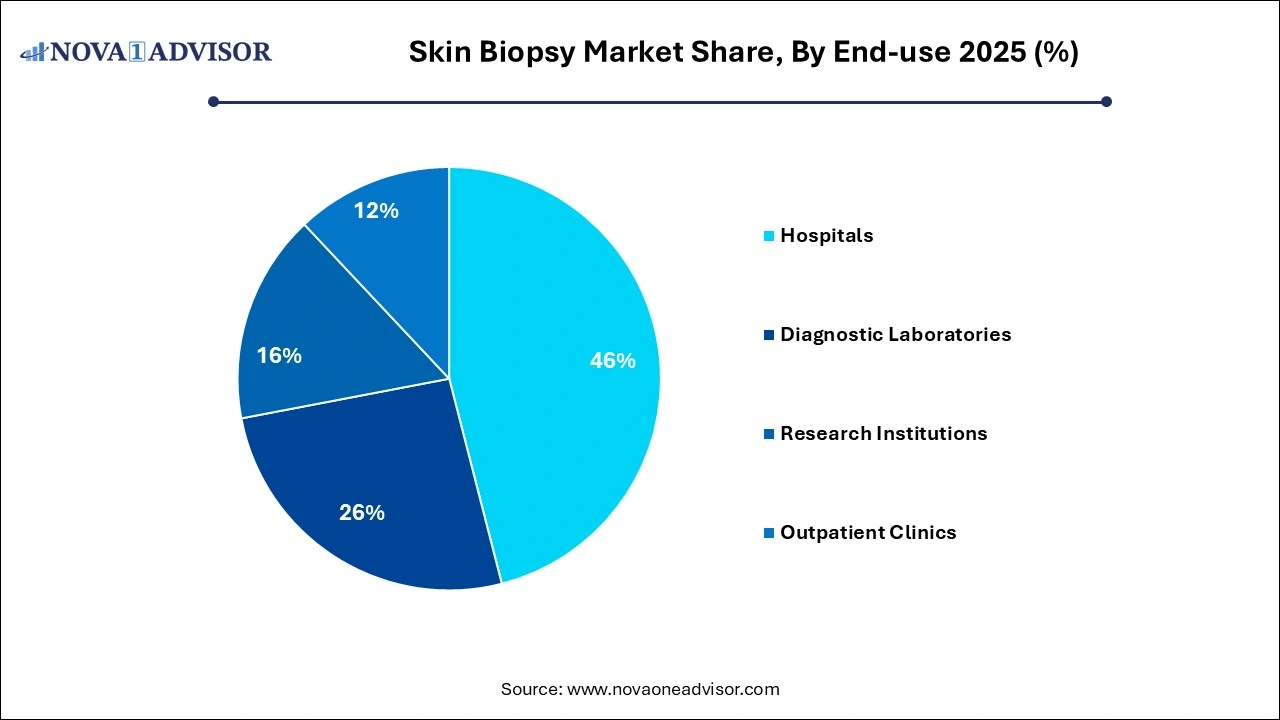
The hospitals segment dominated the market with the largest share in 2025. The dominance of the segment is owing to the growing availability of specialized dermatologists, the surge in skin cancer rates, and large-scale equipment procurement. Furthermore, premier medical networks, such as the Mayo Clinic and Johns Hopkins Hospital, incorporate proprietary digital dermoscopy and artificial intelligence-enabled pathology systems.
How did the diagnostic laboratories segment expected to hold the significantly growing global skin biopsy market in the coming years?
The diagnostic laboratories segment is expected to grow at the fastest CAGR during the projected period. The growth of the segment is due to the ongoing transition towards out-of-hospital specimen routing and growing adoption of digital pathology. Independent diagnostic networks provide cost-effective processing solutions relative to the substantial capital expenditures required for proprietary hospital infrastructure.
By Regional
Why did the North American region account for the largest share in the global skin biopsy market?
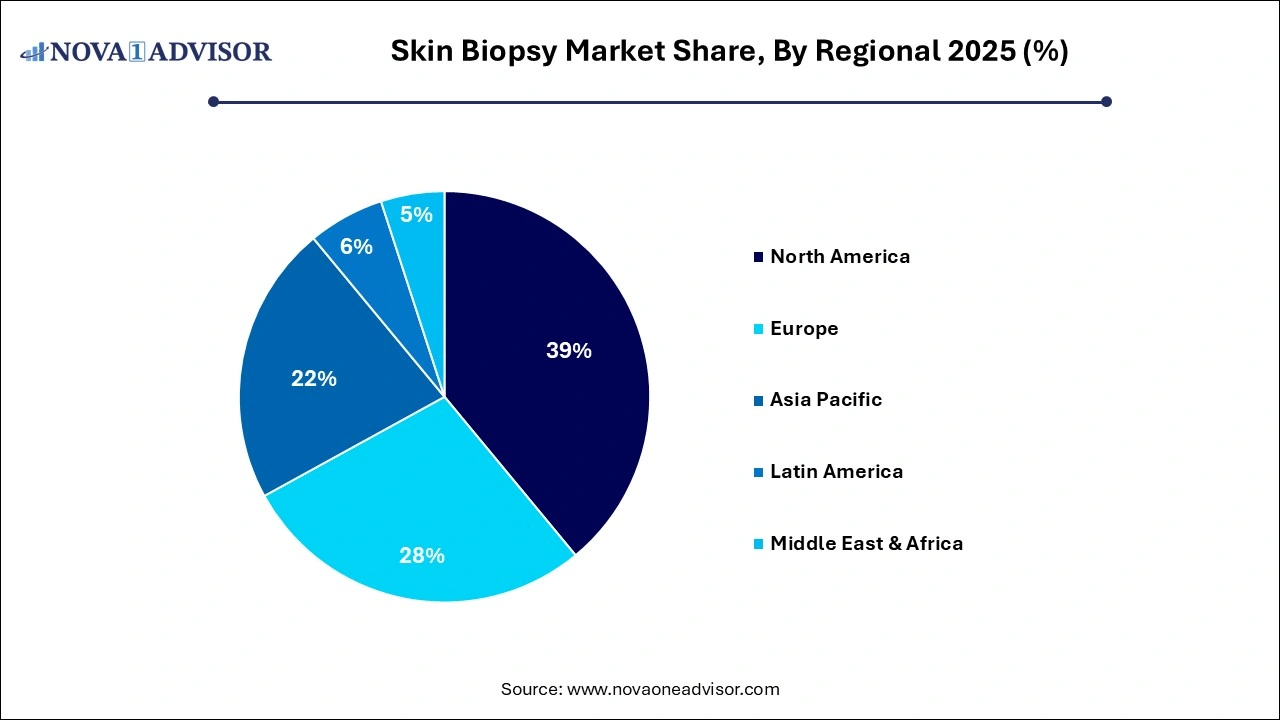
North America dominated the market with the largest share in 2025. The dominance of the region can be attributed to the extensive patient awareness regarding early detection and preferred reimbursement frameworks. In addition, the continuous deployment of advanced modalities, including AI-assisted dermatological imaging, precision punch biopsy instruments, and sophisticated diagnostic kits, significantly enhances clinical efficacy.
U.S. Global Skin Biopsy Market Trends
The growth of the market in the country can be driven by the growing adoption of minimally invasive shave biopsy tools and punches along with the growing skin cancer cases. Also, major domestic medical enterprises, such as Integra LifeSciences and Becton, Dickinson and Company, provide substantial financial support for the advancement of clinical instruments and technologies.
Why did the Asia-Pacific region become the fastest-growing global skin biopsy market during the forecast period?
Asia Pacific is expected to grow at the fastest CAGR over the forecast period. The growth of the region can be credited to the growing disposable incomes, rise in chronic skin conditions, and enhanced healthcare infrastructure. Furthermore, public health campaigns emphasizing early screening and preventive dermatology significantly increase patient inclination to seek timely medical intervention.
China Global Skin Biopsy Market Trends
The market in the country is growing due to growing disposable incomes and enhanced healthcare infrastructure. Also, government investments aimed at modernizing healthcare infrastructure across regional tiers, including hospitals, specialized clinics, and laboratories, have significantly improved patient access to advanced diagnostic equipment.
Key Players in the Global Skin Biopsy Market
- Becton, Dickinson and Company (BD): BD is a leading market force providing high-precision surgical tools, including punch and needle biopsy instruments. Its expansive distribution network positions it as a primary supplier for major hospital groups.
- Cardinal Health, Inc.: A major medical supplier providing standard procedural biopsy trays, scalpels, and post-procedure wound care kits widely used in outpatient dermatology networks.
- Boston Scientific Corporation: A major competitor focusing on advanced, minimally invasive needle biopsy instruments and guidance equipment primarily deployed in complex neoplastic tissue extractions.
Recent Developments
- In June 2026, MedX Health Corp. (TSXV: MDX) formally announced the commercial introduction of SkinSecure™, an enterprise cloud-based software-as-a-service architecture designed to integrate proprietary SIAscope multi-spectral diagnostic imaging hardware directly into established contract research organization operational protocols.
Segments Covered in the Report
This report forecasts revenue growth at country levels and provides an analysis of the latest industry trends in each of the sub-segments from 2021 to 2035. For this study, Nova one advisor, Inc. has skin biopsy market.
By End User
- Hospitals
- Diagnostic Laboratories
- Research Institutions
- Outpatient Clinics
By Application
- Dermatology
- Oncology
- Plastic Surgery
- Research
- Transplantation
By Type
- Punch Biopsy
- Excisional Biopsy
- Incisional Biopsy
- Shave Biopsy
By Region
- North America
- Europe
- Asia Pacific
- Latin America
- Middle East & Africa
FAQ's

Proceed to Buy
Instant PDF delivery on confirmation

 Request Customization
 Download Sample

Get a Sample of this Report
Skin Biopsy Market