

Skin Tear Treatment Market Size, Share, and Trends 2026 to 2035
 Status Published
 Category Healthcare


Content
Skin Tear Treatment Market Size and Growth 2026 to 2035
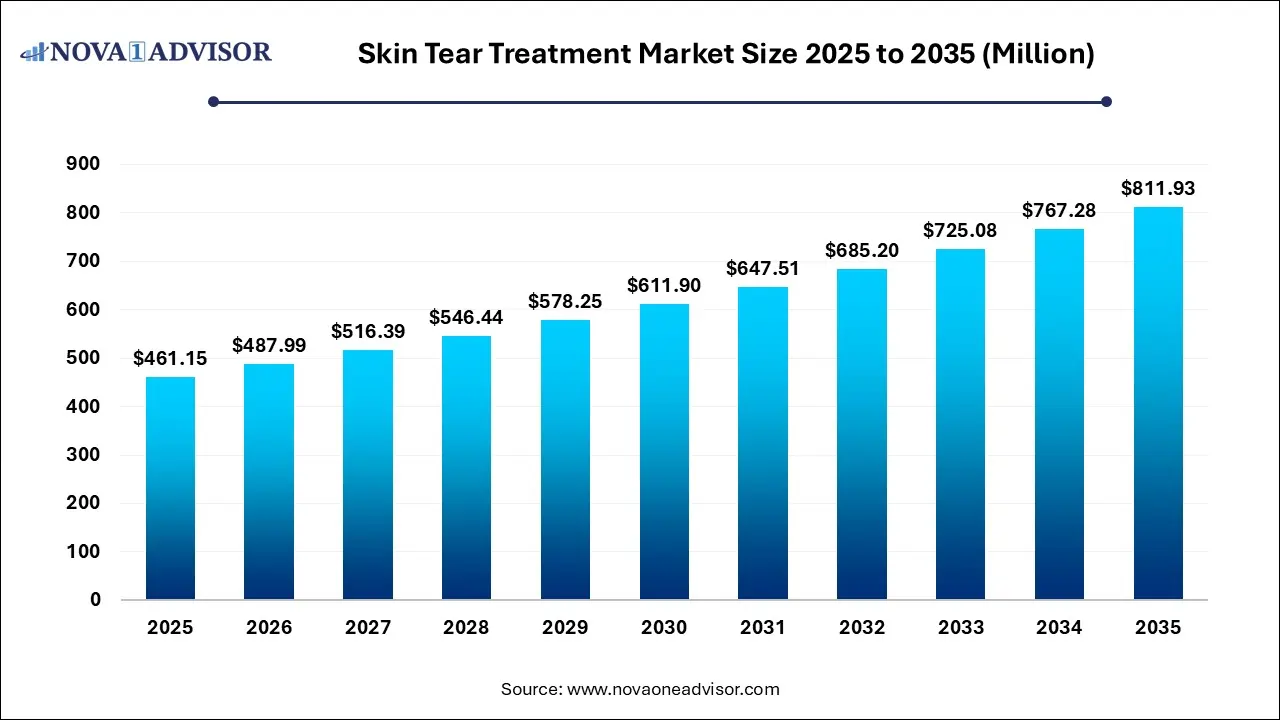
The global skin tear treatment market size was valued at USD 461.15 million in 2025 and is projected to grow from USD 487.99 million in 2026 to USD 811.93 million by 2035, at a CAGR of 5.82% from 2026 to 2035.
Key Takeaway:
- By product type, the silicone barrier films segment dominated the market with the largest share in 2025.
- By product type, the NPWT kits segment is expected to grow at the fastest CAGR over the forecast period.
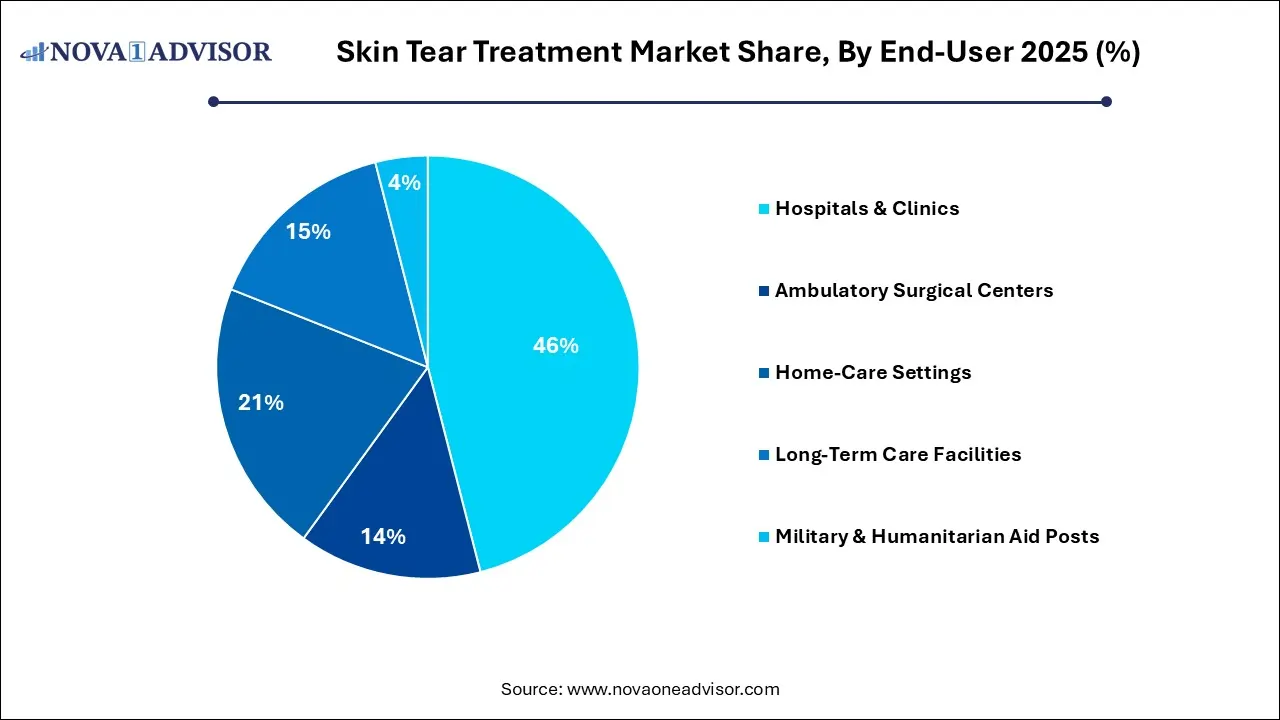
- By end user, the hospital and clinics segment dominated the market with the largest share of 46.0% in 2025.
- By distribution channel, the retail pharmacies segment dominated the market with the largest share in 2025.
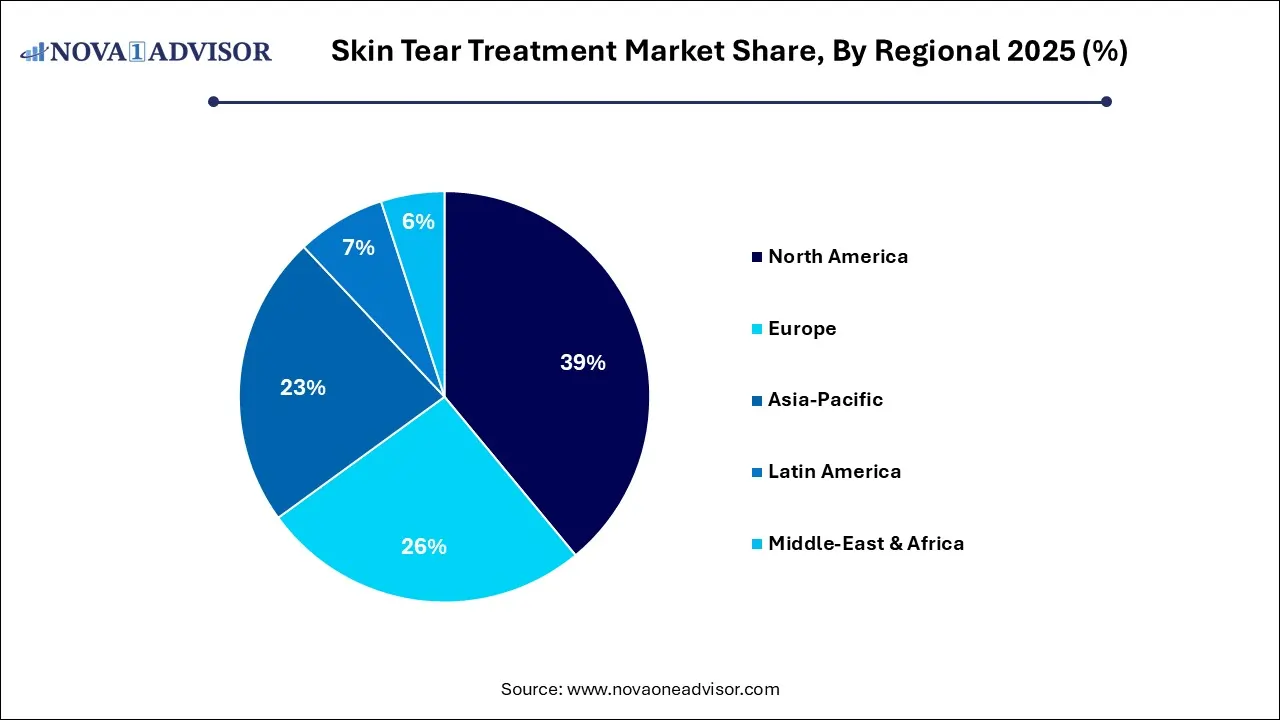
- By region, North America dominated the market with the largest share of 39.0% in 2025.
Market Overview
The global skin tear treatment market is experiencing steady growth as healthcare providers increasingly adopt advanced wound care solutions to improve healing outcomes and reduce treatment costs. Skin tears, commonly affecting older adults, newborns, and patients with fragile skin due to chronic illnesses or long-term corticosteroid use, have become a significant clinical concern with the aging global population.
The market has shifted from traditional gauze dressings to advanced products such as silicone dressings, collagen-based therapies, antimicrobial wound care solutions, and moisture-retentive dressings that promote faster healing and lower infection risks. Rising cases of diabetes, vascular disorders, obesity, and other conditions that impair wound healing are further driving demand for specialized treatment options.
Advancements in digital wound imaging, AI-assisted wound assessment, portable negative-pressure wound therapy, and bioactive wound care materials are enhancing treatment precision and patient outcomes. Additionally, the growing preference for outpatient and home healthcare has increased the adoption of easy-to-use wound care products and telemedicine-supported monitoring, supporting continued expansion of the skin tear treatment market.
Market Outlook
- Market Growth Overview: The skin tear treatment market is expected to grow significantly between 2025 and 2035, driven by the increasing prevalence of chronic illnesses like diabetes and technological innovations in wound care dressings.
- Sustainability Trends: Sustainability trends involve the use of eco-friendly hydrogels, smart dressings, and atraumatic silicone-based adhesives.
- Major Investors: Major investors in the market include ConvaTec, Mölnlycke Health Care, Smith+Nephew, and Cardinal Health.
How is AI impacting the global high-performance skin tear treatment market?
Artificial intelligence is transforming the market by replacing subjective human visual assessments with data-driven and objective diagnostics. By using AI-enabled smartphone and computer vision applications along with smart dressings, they offer rapid and precise tracking of wound healing trajectories, significantly minimizing healthcare costs and enhancing overall clinical workflows.
Major Trends in the Market
- Increasing adoption of silicone-based atraumatic dressings to minimize skin damage during dressing changes.
- Rising use of portable negative-pressure wound therapy (NPWT) devices for faster wound healing.
- Growing integration of artificial intelligence (AI) for accurate wound assessment and treatment planning.
- Expansion of telemedicine and remote wound monitoring for home-based patient care.
- Increasing demand for antimicrobial dressings containing silver and iodine to reduce infection risks.
- Greater use of collagen and extracellular matrix-based products to support tissue regeneration.
- Rising preference for home healthcare wound management solutions among elderly patients.
- Growing investment in bioengineered and regenerative wound healing materials.
- Wider adoption of digital wound imaging technologies for clinical documentation and monitoring.
- Increased focus on preventive skin integrity programs in hospitals and long-term care facilities.
- Rising implementation of personalized wound care protocols based on patient-specific needs.
- Strategic collaborations between medical device manufacturers and digital health companies.
- Development of environmentally sustainable and eco-friendly wound care products.
- Expansion of healthcare infrastructure and advanced wound care services in emerging economies.
- Growing awareness and adoption of evidence-based skin tear management guidelines.
Skin Tear Treatment Market Report Scope
| Report Coverage | Details |
| Market Size in 2026 | USD 487.99 Million |
| Market Size by 2035 | USD 811.93 Million |
| Growth Rate From 2026 to 2035 | CAGR of 5.82% |
| Base Year | 2025 |
| Forecast Period | 2026 to 2035 |
| Segments Covered | By Product Type, By End-User, By Distribution Channel, By Region |
| Market Analysis (Terms Used) | Value (USD Million/Billion) or (Volume/Units) |
| Regional Scope | North America; Europe; Asia Pacific; Central and South America; the Middle East and Africa |
| Key Companies Profiled | 3M Co., Advanced Medical Solutions Group PLC, ConvaTec Group PLC, McKesson Corp., Mölnlycke Health Care AB, AMERX Health Care Corp., Hollister Inc., Smith & Nephew PLC, and others. |
Market Driver
Growing Global Elderly Population Increasing Skin Tear Incidence
The rapidly increasing elderly population is the primary driver of the skin tear treatment market. Age-related skin thinning, reduced collagen production, and lower elasticity make older adults highly susceptible to skin injuries from everyday activities. As the number of elderly patients rises, hospitals, nursing homes, and home healthcare providers are increasingly adopting advanced wound care products that promote faster healing, reduce complications, and improve patient comfort, driving sustained market growth.
Market Restraint
High Cost of Advanced Wound Care Products
The high cost of advanced wound care solutions remains a key challenge for market expansion. Products such as silicone dressings, collagen matrices, and portable negative-pressure wound therapy systems are significantly more expensive than conventional dressings. Budget limitations and inadequate reimbursement policies, particularly in developing countries, often restrict the adoption of these premium wound care technologies.
Market Opportunity
Expansion of Home-Based Wound Care Services
The growing shift toward home healthcare is creating significant opportunities for the skin tear treatment market. Easy-to-use silicone dressings, portable NPWT devices, telemedicine platforms, and digital wound monitoring solutions allow patients to receive effective treatment outside hospitals. As healthcare systems focus on reducing hospitalization costs and improving patient convenience, demand for home-based wound care products is expected to increase substantially.
Segmental Insights
By Product Type
Why did the silicone barrier films segment dominate the skin tear treatment market?
The silicone barrier films segment dominated the market with the largest share in 2025. The dominance of the segment can be attributed to the growing demand to prevent dressing-related trauma (e.g., MARSI) along with the materials' better breathability and biocompatibility. In addition, these films form a transparent, breathable, and waterproof layer that safeguards the peri-wound area from friction, incontinence, and excess wound exudate to avoid further skin stripping.
How did the NPWT kits segment expected to hold the fastest-growing skin tear treatment market in the coming years?
The NPWT kits segment is expected to grow at the fastest CAGR over the forecast period. The growth of the segment can be credited to the surge in the elderly population, the inexpensive nature of portable devices, and the rise in clinical preferences for low-trauma and non-invasive healing. Also, this kit features antimicrobial foams to manage heavy wounds, effectively minimizing the incidence of infection, leading to segment growth further.
By End-User
Why did the hospitals and clinics segment dominate the skin tear treatment market?
The hospitals and clinics segment dominated the market with the largest share in 2025. The dominance of the segment can be linked to the extensive availability of specialized wound care infrastructure and the high volume of acute injuries. These facilities can administer and store high-tech healing products, like moisture-retentive dressings and silicone barrier films. The increase in elderly population is more susceptible to skin tears, necessitating intensive care.
How did the home-care settings segment expected to hold the fastest-growing skin tear treatment market in the coming years?
The home-care settings segment is expected to grow at the fastest CAGR over the forecast period. The growth of the segment can be driven by an ongoing transition towards patient-oriented and personalized treatment at home coupled with the technological innovations such as portable negative pressure wound therapy (NPWT). Moreover, the development of single-use and user-friendly NPWT kits allows for secure adhesion outside of clinical settings.
By Distribution Channel
Why did the retail pharmacies segment dominate the skin tear treatment market?
The retail pharmacies segment dominated the market with the largest share in 2025. The dominance of the segment is owing to the ongoing transition towards over the counter (OTC) self-care along with the extensive availability of moisture-retentive and advanced dressings. Additionally, major pharmacies are offering the benefit of immediate product availability as compared to specialized wound care centers.
How did the e-commerce settings segment expected to hold the fastest-growing skin tear treatment market in the coming years?
The e-commerce segment is expected to grow at the fastest CAGR during the forecast period. The growth of the segment is due to enhanced access to silicone barrier films and premium moisture-retentive dressings along with the rise in home care adoption. Furthermore, various e-commerce websites provide recurring and automated options, which smooth the process for managing chronic or recurring skin tears.
By Regional
Why did the North American region account for the largest share in the skin tear treatment market?
North America dominated the market with the largest share in 2025. The dominance of the region can be attributed to the extensive adoption of regenerative therapies and strong reimbursement frameworks for premium wound care. In addition, increasing preference for home-based and pain-free treatment options and minimally invasive hydrogels is enabling patients to manage tears outside of hospital settings. Robust regional investments into biological wound therapies and regenerative medicine are fuelling next-generation product rollouts.
U.S. Skin Tear Treatment Market Trends
The growth of the market in the country can be driven by a surge in the incidence of chronic conditions impacting skin integrity and favorable regulatory guidelines allowing much wider access to innovative telehealth and treatments and caregiver training. Increasing patient preference for recovering at home boosts the adoption of single-use systems such as negative-pressure wound therapy (NPWT) kits and smart bandages.
Why did the Asia-Pacific region become the fastest-growing skin tear treatment market during the forecast period?
Asia Pacific is expected to grow at the fastest CAGR over the forecast period. The growth of the region can be credited to a rapid rise in chronic diseases such as diabetes and developing healthcare infrastructure in emerging economies such as China and India. Furthermore, government initiatives to innovate healthcare infrastructure, along with the growing per capita disposable income, are increasing access to premium wound treatments.
China Skin Tear Treatment Market Trends
The growth of the country can be attributed to the surge in volume of surgeries and growing healthcare reforms that enhanced access to advanced wound care. The escalating clinical recognition and implementation of regenerative medicine, biological skin substitutes, and smart dressings significantly enhance the rate of tissue repair and reduce infection risks in complex clinical cases.
Why Did Europe Hold a Notable Share in the skin tear treatment market?
Europe is expected to grow at a notable CAGR over the forecast period. The growth of the region can be linked to the growing need for moisture-retentive and active dressings along with the aging demographic populations in major countries. Furthermore, the region is also witnessing an extensive adoption of advanced bio-engineered dressings and negative-pressure wound therapy (NPWT) devices to reduce scarring.
Germany Skin Tear Treatment Market Trends
Germany's Digital Healthcare Act allows the reimbursement of remote monitoring systems and digital health applications (DiGAs), which directly fuels the adoption of sensor-equipped and smart dressings. Germany possesses a comprehensive network of certified wound care centers and a rapidly expanding home healthcare and outpatient sector. This infrastructure ensures the widespread availability and adoption of both conventional and advanced skin care management products.
Key Players in the Skin Tear Treatment Market
- Mölnlycke Health Care: Specializes in soft silicone dressings (such as the Safetac technology range), which are highly favored for skin tears because they do not adhere to the wound bed and minimize trauma during removal.
- Medline Industries: A key distributor and manufacturer supplying hospitals and long-term care facilities with an extensive range of skin tear treatments and protective dressings.
- Smith & Nephew: It provides innovative moist wound healing products and negative pressure wound therapy systems utilized for acute and complex skin tears.
Recent Developments
- In April 2026, Tiger BioSciences officially announced the launch of carePAC™, a comprehensive line of pre-configured wound care convenience kits developed to streamline dressing changes and enhance patient access to essential medical supplies for home-based wound management.
Segments Covered in the Report
This report forecasts revenue growth at country levels and provides an analysis of the latest industry trends in each of the sub-segments from 2021 to 2035. For this study, Nova one advisor, Inc. has skin tear treatment market.
By Product Type
- Moisture-Retentive Dressings
- Silicone Barrier Films
- Hyaluronic Acid Wound Devices
- Gels & Creams
- Antimicrobial Impregnated Dressings
- Negative-Pressure Wound Therapy (NPWT) Kits
- Collagen & Cellular Matrix Products
- Others
By End-User
- Hospitals & Clinics
- Ambulatory Surgical Centers
- Home-Care Settings
- Long-Term Care Facilities
- Military & Humanitarian Aid Posts
By Distribution Channel
- Direct Tenders
- Retail Pharmacies & Drug Stores
- E-Commerce
By Region
- North America
- Europe
- Asia Pacific
- Latin America
- Middle East & Africa
FAQ's

Proceed to Buy
Instant PDF delivery on confirmation

Skin Tear Treatment Market Size to Hit USD 811.93 Million by 2035
 Request Customization
 Download Sample

Get a Sample of this Report
Skin Tear Treatment Market