

Snoring Control Device Market Size, Share, and Trends 2026 to 2035
 Status Published
 Category Healthcare


Content
Snoring Control Device Market Size and Growth 2026 to 2035
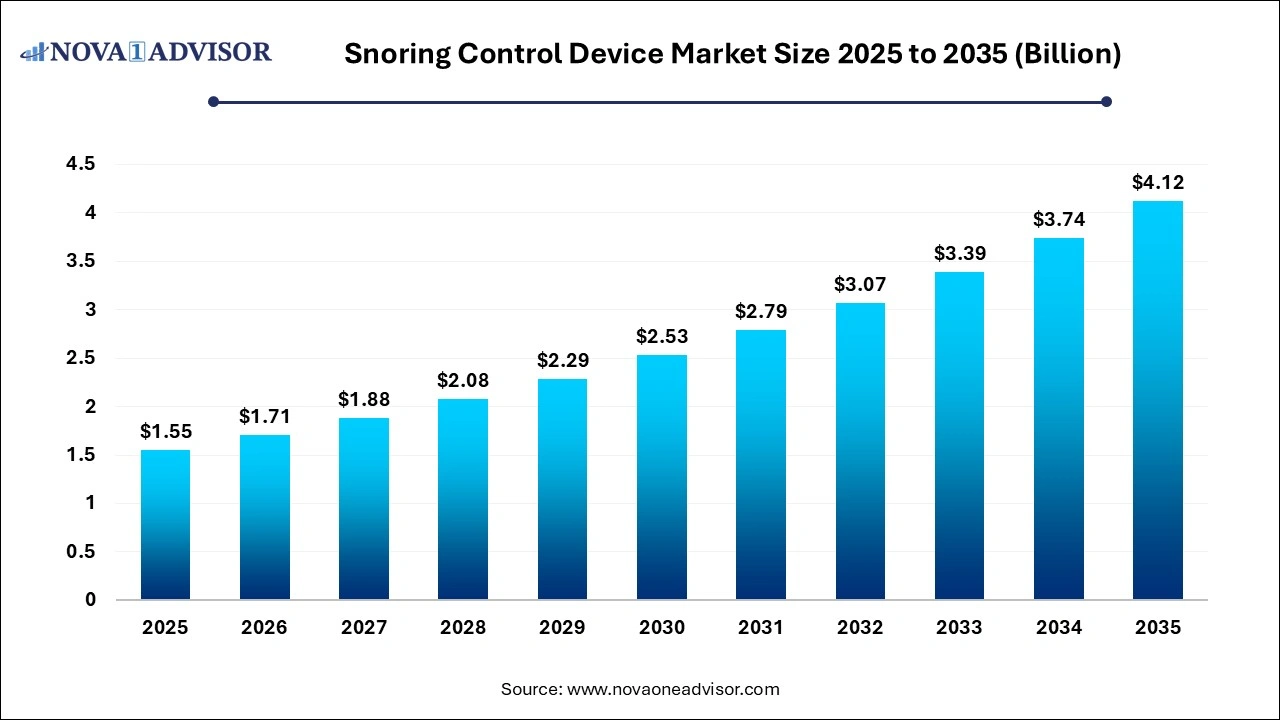
The global snoring control device market size was valued at USD 1.55 billion in 2025 and is projected to grow from USD 1.71 billion in 2026 to USD 4.12 billion by 2035, at a CAGR of 10.27% from 2026 to 2035. North America dominated the market, accounting for a revenue share of 39.0% in 2025.
Key Takeaway
- By type, the nasal devices segment dominated the market with the largest share in 2025.
- By type, the oral appliances segment is expected to grow at the fastest CAGR over the forecast period.
- By distribution channel, online retail dominated the market with the largest share in 2025.
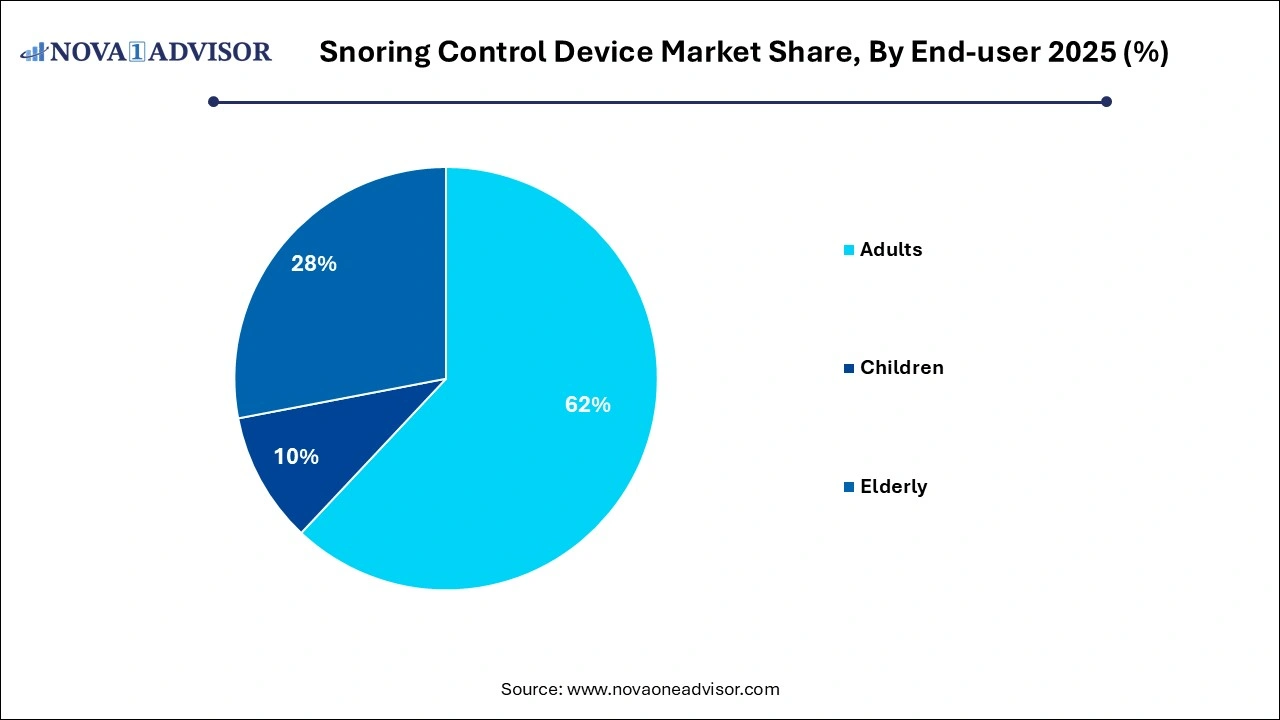
- By end user, the adults segment dominated the market with the largest share of 62.0% in 2025.
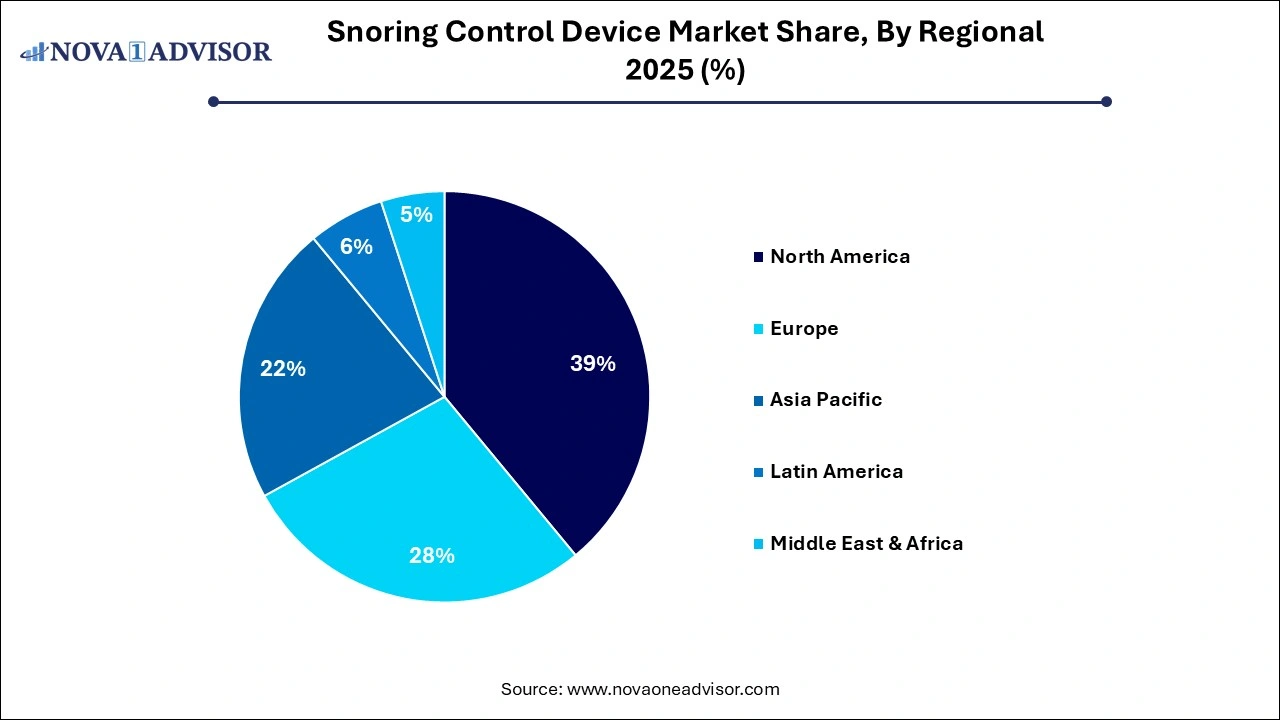
- By region, North America dominated the market with the largest share of 39.0% in 2025.
Market Overview
The global Snoring Control Device Market is witnessing steady growth as awareness of sleep health and the risks associated with untreated snoring continues to increase. Snoring is now recognized as a potential symptom of obstructive sleep apnea (OSA) and other sleep disorders that can contribute to cardiovascular diseases, hypertension, diabetes, and reduced quality of life. This growing awareness is driving demand for early diagnosis and effective treatment solutions.
Consumers are increasingly opting for non-invasive and cost-effective devices such as oral appliances, nasal dilators, chin straps, positional therapy devices, and smart wearable technologies as alternatives to CPAP therapy. Rising obesity rates, sedentary lifestyles, alcohol consumption, smoking, and an aging population are further contributing to the growing prevalence of snoring and sleep-disordered breathing.
Technological advancements, including adjustable mandibular advancement devices, ergonomic oral appliances, smart wearable sleep monitors, and app-connected sleep tracking systems, are improving treatment comfort and patient compliance. In addition, the expansion of telemedicine and home sleep testing is making snoring management more accessible through virtual consultations and personalized treatment recommendations. Ongoing innovation, increasing healthcare awareness, and the integration of digital health technologies are expected to support the long-term growth of the global snoring control device market.
Market Outlook
- Market Growth Overview: The global snoring control device market is expected to grow significantly between 2025 and 2035, driven by growing consumer awareness about snoring issues.
- Sustainability Trends: Sustainability trends involve a shift toward renewable and durable and biocompatible materials.
- Major Investors: Major investors in the market include ResMed, Koninklijke Philips, and Fisher & Paykel Healthcare.
How AI is Impacting the Global Snoring Control Device Market?
Artificial intelligence is transforming the snoring control device market by enabling more accurate sleep diagnostics, personalized therapy, and improved patient adherence. AI-powered wearable devices, smartphones, and connected sleep monitors continuously track breathing patterns, snoring intensity, body position, oxygen saturation, heart rate, and sleep stages, allowing patients to monitor their sleep health from home. Machine learning algorithms can distinguish simple snoring from symptoms of obstructive sleep apnea (OSA), supporting earlier diagnosis and more effective treatment recommendations.
AI is also enhancing product personalization through smart positional therapy devices that learn individual sleeping habits and automatically adjust vibration alerts or body-position guidance to reduce snoring episodes. Connected oral appliances equipped with AI-driven analytics provide physicians with compliance and performance data, enabling customized treatment adjustments based on patient outcomes. In addition, AI-powered mobile applications and virtual health assistants offer personalized sleep coaching, lifestyle recommendations, treatment reminders, and insights into factors such as body weight, alcohol consumption, sleeping posture, and stress that influence snoring. Integration with cloud-based healthcare platforms further enables remote patient monitoring and real-time therapy optimization, positioning AI as a key driver of innovation and improved clinical outcomes in the global snoring control device market.
Snoring Control Device Market Report Scope
| Report Coverage | Details |
| Market Size in 2026 | USD 1.71 Billion |
| Market Size by 2035 | USD 4.12 Billion |
| Growth Rate From 2026 to 2035 | CAGR of 10.27% |
| Base Year | 2025 |
| Forecast Period | 2026 to 2035 |
| Segments Covered | By Type, By End-user, By Distribution Channel, By Region |
| Market Analysis (Terms Used) | Value (USD Million/Billion) or (Volume/Units) |
| Regional Scope | North America; Europe; Asia Pacific; Central and South America; the Middle East and Africa |
| Key Companies Profiled | GlaxoSmithKline plc, Sleeping Well, LLC, ResMed, Apnea Sciences Corporation, MPowrx Health and Wellness Products, Somnomed Ltd, VitalSleep, Airway Management Inc., TheraSnore, Theravent, Inc., AirSnore, Tomed Dr, MEDiTAS, SnoreMeds, and Toussaint GmbH. |
Market Driver
Rising Prevalence of Sleep Disorders and Obesity Drives Market Growth
The increasing incidence of sleep disorders, obesity, and lifestyle-related respiratory conditions is a major driver of the global snoring control device market. Excess body weight and aging contribute to airway obstruction during sleep, increasing the likelihood of snoring and obstructive sleep apnea. Growing awareness of the health risks associated with untreated snoring—including cardiovascular disease, hypertension, diabetes, and daytime fatigue—is encouraging consumers to seek early treatment through non-invasive snoring control devices. In addition, the expansion of sleep clinics, improved diagnostic services, and the availability of affordable over-the-counter products are further supporting market growth.
Market Restraint
Patient Compliance and Comfort Challenges Limit Adoption
Limited patient compliance remains a key challenge in the snoring control device market. Many users discontinue treatment due to discomfort, improper fitting, skin irritation, or difficulty adapting to oral appliances, chin straps, and positional therapy devices. The effectiveness of these products also varies depending on the underlying cause of snoring, reducing their suitability for some patients. Furthermore, custom-fitted oral appliances often require professional consultations and periodic adjustments, increasing treatment costs. Limited awareness of sleep disorders and restricted access to sleep specialists in developing regions continue to hinder broader market adoption.
Market Opportunity
Digital Sleep Healthcare Opens New Growth Opportunities
The rapid adoption of digital healthcare technologies is creating significant opportunities for the snoring control device market. Wearable sleep trackers, AI-powered mobile applications, cloud-based sleep analytics, and telemedicine platforms are enabling convenient home-based diagnosis, treatment, and long-term monitoring. Connected snoring control devices can share real-time treatment data with healthcare providers, allowing personalized therapy adjustments and improving patient outcomes. Rising investments in digital health infrastructure and increasing awareness of sleep disorders in emerging economies are expected to create strong growth opportunities for manufacturers offering affordable, connected, and user-friendly snoring control solutions.
Segmental Insights
By Type
Why did the nasal devices segment dominate the global snoring control device market?
The nasal devices segment dominated the market with the largest share in 2025. The dominance of the segment can be attributed to the increasing consumer preference for drug-free and non-invasive over-the-counter solutions. In addition, direct-to-consumer digital healthcare platforms are strategically propelling consumer acquisition and driving recurring transactions for single-use diagnostic strips and nasal dilators.
How did the oral appliances segment expected to hold the significantly growing global snoring control device market in the coming years?
The oral appliances segment is expected to grow at the fastest CAGR over the forecast period. The growth of the segment can be credited to the increasing rates of lifestyle-related diseases such as obesity and the increasing preference for comfortable, non-invasive CPAP solutions. Many patients decline the use of bulky continuous positive airway pressure (CPAP) devices, driving a pronounced transition toward silent, mask-free, and hose-free oral comfort alternatives.
By Distribution Channel
Why did the online retail segment dominate the global snoring control device market?
The online retail dominated the market with the largest share in 2025. The dominance of the segment can be linked to the increasing inclination towards discreet purchasing and e-commerce convenience. Online retailers prominently showcase app-integrated smart wearables and anti-snoring monitoring devices designed to attract digitally proficient consumers.
How did the pharmacy segment expected to hold the significantly growing global snoring control device market in the coming years?
The pharmacy segment is expected to grow at the fastest CAGR over the forecast period. The growth of the segment can be driven by growing consumer accessibility and increasing the availability of over-the-counter anti-snoring aids. Also, pharmacies offer economical, conservative over-the-counter devices that serve as a practical substitute for costly custom dental prosthetics or advanced surgical interventions.
By End User
Why did the adults segment dominate the global snoring control device market?
The adults segment dominated the market with the largest share in 2025. The dominance of the segment is owing to the increasing incidence of habitual snoring among men and older adults and a surge in obesity rates. Furthermore, adults increasingly favor portable, non-invasive oral appliances and nasal dilators, available over the counter or in custom-fitted variants, as practical alternatives to traditional continuous positive airway pressure (CPAP) systems.
How did the elderly segment expected to hold the significantly growing global snoring control device market in the coming years?
The elderly segment is expected to grow at the fastest CAGR over the forecast period. The growth of the segment is due to the growing transition towards home care and non-invasive medical solutions. Older adults and their respective caregivers increasingly show a clear preference for accessible, user-centric home-care technologies over clinical or hospital-administered interventions.
By Regional
Why did the North American region account for the largest share in the global snoring control device market?
North America dominated the market with the largest share in 2025. The dominance of the region can be attributed to the surge in healthcare spending and growing incidence of sleep apnea and habitual snoring. Furthermore, the acquisition of home-care anti-snoring solutions has become smooth due to widespread e-commerce availability, direct-to-consumer telehealth subscriptions, and the presence of prominent regional industry players.
U.S. Global Snoring Control Device Market Trends
The growth of the market in the country can be driven by the growing obesity rates and the surge in the incidence of sleep disorders such as sleep apnea. Also, the incorporation of intelligent wearable devices, Bluetooth-enabled tracking systems, and real-time application-based coaching has significantly enhanced user comfort and adherence, driving country growth soon.
Why did the Asia-Pacific region become the fastest-growing global snoring control device market during the forecast period?
Asia Pacific is expected to grow at the fastest CAGR over the forecast period. The growth of the region can be credited to the surge in disposable incomes and growing aging populations in countries such as Japan and China. Furthermore, economic growth within developing Asian markets enhances consumer purchasing capacity for non-invasive domestic wellness and personal care technologies.
China Global Snoring Control Device Market Trends
The market in the country is growing due to a growing transition towards consumer-accessible smart health wearables and growing urbanization across major cities. Patients exhibit a strong preference for non-invasive, conservative alternatives such as mandibular advancement devices, nasal strips, and positional therapy over complex surgical interventions.
Key Players in the Global Snoring Control Device Market
- ResMed Inc.: A global powerhouse specializing in cloud-connectable sleep apnea and respiratory care devices, masks, and ventilation solutions.
- SomnoMed Limited: An Australian-based pioneer renowned for continuous, patient-customized digital dental/oral mandibular advancement devices (MADs) treating obstructive sleep apnea (OSA) and snoring.
- Airway Management, Inc.: Specializes in high-grade custom oral appliances (such as the TAP series) designed to stabilize the lower jaw and keep airways open.
Recent Developments
- In October 2025, Smartee Denti-Technology announced the international introduction of the Smartee Sleep Aligner series, an advanced clear dental appliance engineered to reduce primary snoring and obstructive sleep apnea hypopnea syndrome, featuring the specialized Smartee SA and dual-function Smartee SA Plus variants.
Segments Covered in the Report
This report forecasts revenue growth at country levels and provides an analysis of the latest industry trends in each of the sub-segments from 2021 to 2035. For this study, Nova one advisor, Inc. has snoring control device market
By Type
- Nasal Devices
- Oral Appliances
- Positional Therapy Devices
- Chin Straps
By End User
- Adults
- Children
- Elderly
By Distribution Channel
- Online Retail
- Pharmacies
- Hospitals
- Specialty Stores
By Region
- North America
- Europe
- Asia Pacific
- Latin America
- Middle East & Africa

Proceed to Buy
Instant PDF delivery on confirmation

Snoring Control Device Market Size to Hit USD 4.12 Billion by 2035
 Request Customization
 Download Sample

Get a Sample of this Report
Snoring Control Device Market