

Spina Bifida Market Size, Share, Growth, Report 2026 to 2035
 Status Published
 Category Healthcare


Content
Spina Bifida Market Size and Growth 2026 to 2035
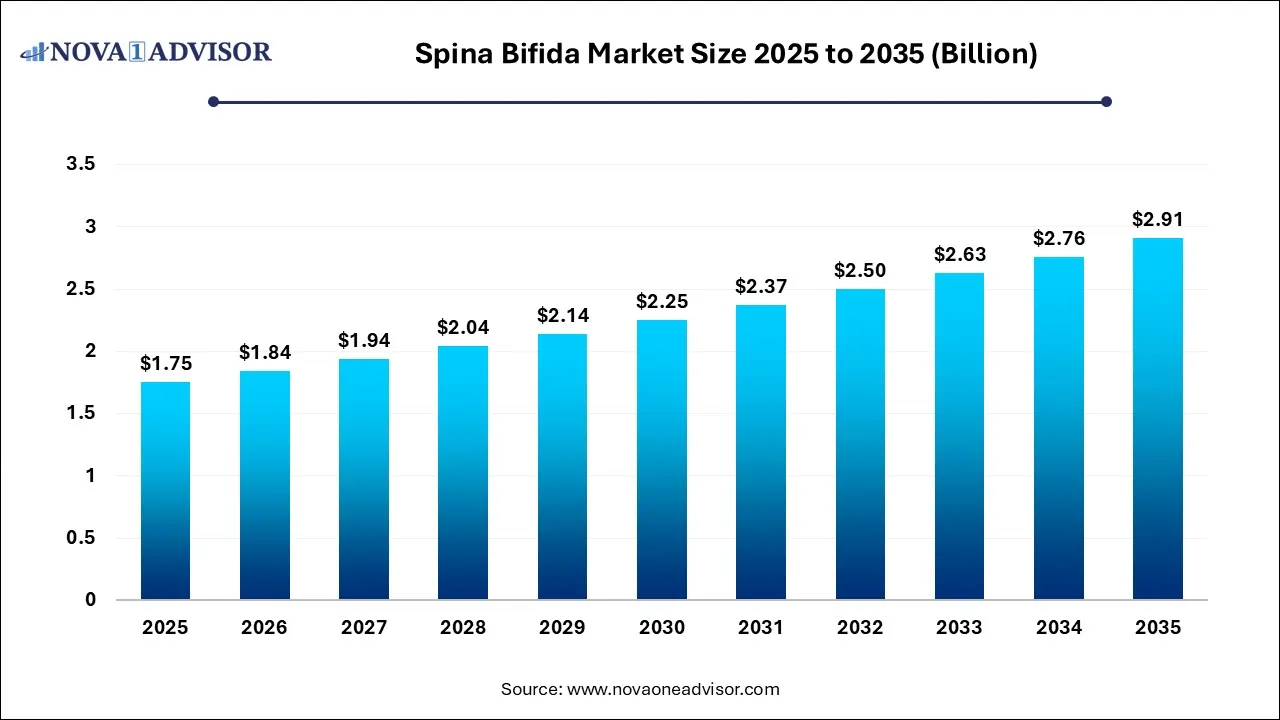
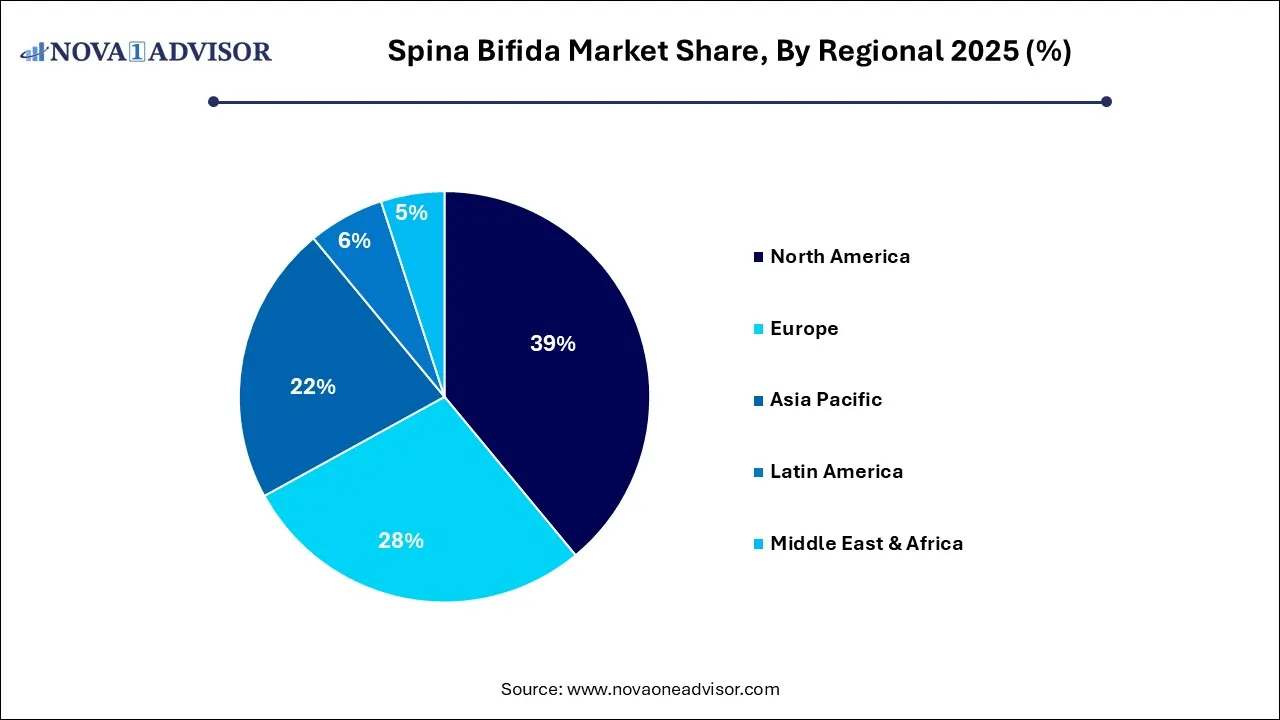
The global spina bifida market size was valued at USD 1.75 billion in 2025 and is projected to grow from USD 1.84 billion in 2026 to USD 2.91 billion by 2035, at a CAGR of 5.2% from 2026 to 2035. North America dominated the market, accounting for a revenue share of 39.0% in 2025.
Key Takeaway
- By type, the myelomeningocele segment dominated the market with the largest share in 2025.
- By type, the meningocele segment is expected to grow at the fastest CAGR over the forecast period.
- By diagnosis and treatment, the postnatal surgery segment dominated the market with the largest share in 2025.
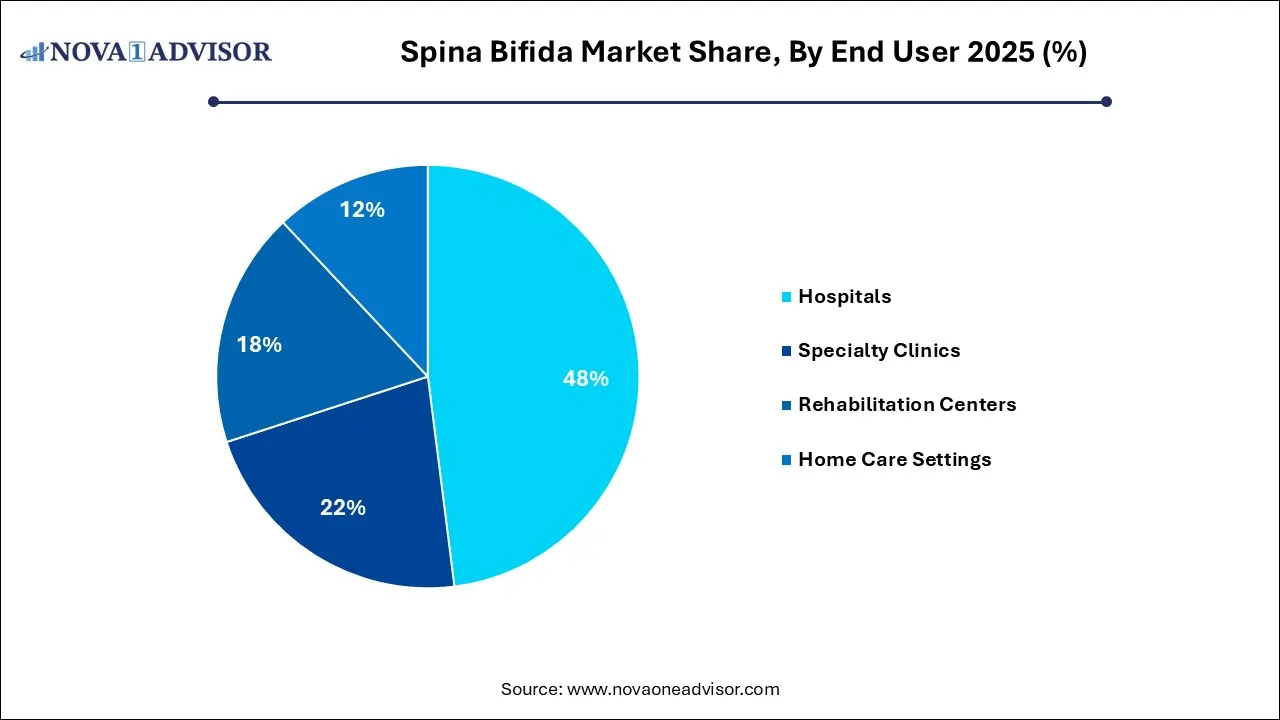
- By end use, the hospitals segment dominated the market with the largest share of 48.0% in 2025.
- By region, North America dominated the market with the largest share of 39.0%.
Market Overview
The global Spina Bifida market is growing steadily due to increasing awareness, advancements in prenatal diagnosis, and continuous improvements in multidisciplinary patient care. Spina bifida, a congenital neural tube defect, requires lifelong management involving neurosurgery, orthopedic care, rehabilitation, urology, and pediatric services, driving sustained demand for comprehensive treatment and supportive healthcare solutions.
Technological advancements in prenatal ultrasonography, fetal MRI, genetic screening, minimally invasive fetal surgery, and advanced rehabilitation devices have significantly improved early diagnosis and patient outcomes. Government initiatives promoting maternal health, folic acid supplementation, and prenatal screening programs are further supporting early detection and timely intervention. In addition, ongoing research in regenerative medicine, stem cell therapy, and digital health technologies is expanding treatment possibilities. These developments, combined with increasing investments in specialized pediatric healthcare and rehabilitation services, are expected to support the long-term growth of the global Spina Bifida market.
Market Outlook
- Market Growth Overview: The global spina bifida market is expected to grow significantly between 2025 and 2035, driven by the increasing demand for diagnosis and treatment initiatives.
- Sustainability Trends: Sustainability trends involve growing access to advanced therapies, emphasis on preventative public health, and long-term care equity.
- Major Investors: Major investors in the market include Medtronic, Boston Scientific Corporation, and Johnson & Johnson.
How is AI impacting the global spina bifida market?
Artificial Intelligence (AI) is revolutionizing the market by enhancing prenatal diagnostics, improving spinal and fetal surgeries, and transforming assistive rehabilitation devices. Furthermore, machine learning models evaluate current maternal health data against extensive historical pregnancy datasets. This evidence-based approach enables healthcare providers to anticipate potential clinical risks.
AI is also supporting surgical planning through three-dimensional anatomical reconstruction and predictive analytics that help clinicians evaluate risks and optimize treatment strategies. In rehabilitation, AI-enabled robotic devices, wearable sensors, and digital therapy platforms personalize rehabilitation programs by monitoring patient progress and adjusting treatment accordingly. Additionally, AI-powered telemedicine solutions facilitate remote monitoring, caregiver support, and long-term disease management. As research in pediatric neurology and precision medicine advances, AI is expected to accelerate innovation and improve outcomes across the global Spina Bifida market.
Spina Bifida Market Report Scope
| Report Coverage | Details |
| Market Size in 2026 | USD 1.84 Billion |
| Market Size by 2035 | USD 2.91 Billion |
| Growth Rate From 2026 to 2035 | CAGR of 5.2% |
| Base Year | 2025 |
| Forecast Period | 2026 to 2035 |
| Segments Covered | By Type, By Diagnosis Treatment, By End Use, By Region |
| Market Analysis (Terms Used) | Value (USD Million/Billion) or (Volume/Units) |
| Regional Scope | Value (USD Million/Billion) or (Volume/Units) |
| Key Companies Profiled | B. Braun Melsungen AG, Boston Scientific, C.B. Fleet, C.R. Bard, Inc., Coloplast A/S, ConvaTec Group plc, Cook Medical, Covidien Private Ltd., Dynarex Corporation, Ethicon, Fujifilm, Hollister Incorporated, KARL STORZ, Medline Industries, Medtronic plc, Olympus, Pacific Hospital Supply Co., Ltd., Smith & Nephew, Stryker, Teleflex Incorporation, Wellspect Healthcare, and others. |
Market Driver
Increasing Adoption of Advanced Prenatal Diagnosis and Early Intervention
The growing use of advanced prenatal diagnostic technologies is a key driver of the global spina bifida market. High-resolution ultrasound, fetal MRI, maternal serum screening, and genetic testing enable earlier detection of neural tube defects, allowing timely counseling, treatment planning, and specialized care. Early diagnosis supports improved neurological outcomes and increases demand for fetal surgery, pediatric neurosurgery, and rehabilitation services.
Market Restraint
High Cost of Lifetime Disease Management
The high cost of lifelong spina bifida care remains a significant challenge for market growth. Patients often require multiple surgeries, rehabilitation therapies, mobility aids, and continuous multidisciplinary care throughout their lives. Limited access to specialized treatment centers and inconsistent reimbursement for advanced therapies and assistive technologies, particularly in developing regions, further restrict access to comprehensive care.
Market Opportunity
Expansion of Multidisciplinary Spina Bifida Care Centers
The development of integrated multidisciplinary care centers presents a major opportunity for the spina bifida market. Healthcare providers are increasingly adopting coordinated care models that combine neurosurgery, orthopedics, urology, rehabilitation, physical therapy, and psychological support to improve patient outcomes. Growing investments in specialized pediatric healthcare infrastructure, telemedicine, and advanced rehabilitation technologies are expected to drive long-term market growth.
Segmental Insights
By Type
Why did the myelomeningocele segment dominate the global spina bifida market?
The myelomeningocele segment dominated the market with the largest share in 2025. The dominance of the segment can be attributed to the growing demand for lifelong medical care and rapid innovations in in utero fetal surgery. In addition, myelomeningocele is the most severe and prevalent form of spina bifida, a congenital neural tube defect. It occurs when the embryonic spinal canal and backbone fail to close properly.
How did the meningocele segment expected to hold the significantly growing global spina bifida market in the coming years?
The meningocele segment is expected to grow at the fastest CAGR over the forecast period. The growth of the segment can be credited to the superior prenatal imaging and earlier surgical correction along with the innovations in regenerative medicine. Surgeons are performing operative procedures on infants at an earlier stage to ensure the secure closure of the sac and reduce the risk of infection.
By Diagnosis Treatment
Why did the postnatal surgery segment dominate the global spina bifida market?
The postnatal surgery segment dominated the market with the largest share in 2025. The dominance of the segment can be linked to the growing incidence of neural tube defects and less accessibility of cutting-edge fatal surgery. Moreover, significant public and private sector investments are expanding neonatal intensive care units (NICUs) and paediatric neurosurgery centres within emerging economies.
How did the fetal surgery segment expected to hold the significantly growing global spina bifida market in the coming years?
The fetal surgery segment is expected to grow at the fastest CAGR over the forecast period. The growth of the segment can be driven by growing adoption of in utero closures that repair the spine before birth and a surge in demand from advanced care centers. Also, government and private health insurance providers are increasingly extending coverage for these advanced, specialized surgical procedures.
By End Use
Why did the hospitals segment dominate the global spina bifida market?
The hospitals segment dominated the market with the largest share in 2025. The dominance of the segment is owing to the growing numbers of postnatal and complex prenatal surgeries coupled with the transition towards multidisciplinary care teams. Hospitals are investing heavily in advanced diagnostic and imaging technologies, specifically high-resolution ultrasound and fetal magnetic resonance imaging (MRI).
How did the home care settings segment expected to hold the significantly growing global spina bifida market in the coming years?
The home care settings segment is expected to grow at the fastest CAGR during the study period. The growth of the segment is due to increasing preference for managing major conditions at home and innovations in portable medical devices. Furthermore, the frequent utilization of catheters, ostomy supplies, and bowel management systems in the home care setting accounts for a major market share.
By Regional
Why did the North American region account for the largest share in the global spina bifida market?
North America dominated the market with the largest share in 2025. The dominance of the region can be attributed to the growing government investments into neural tube defect research and the presence of extensive insurance/reimbursement systems. In addition, organizations such as the Spina Bifida Association, along with funding from institutions like the National Institutes of Health (NIH), actively promote awareness, support early intervention initiatives, and boost the commercialization of innovative neurosurgical devices.
U.S. Global Spina Bifida Market Trends
The growth of the market in the country can be driven by growing support networks such as the Spina Bifida Association and government support for research initiatives. The United States possesses advanced paediatric neurosurgery capabilities, comprehensive rehabilitation centres, and specialized multidisciplinary medical teams.
Why did the Asia-Pacific region become the fastest-growing global spina bifida market during the forecast period?
Asia Pacific is expected to grow at the fastest CAGR over the forecast period. The growth of the region can be credited to the growing healthcare investments and enhanced access to maternal care along with the ongoing adoption of cutting-edge prenatal diagnostic ultrasound techniques. Furthermore, there is an increase in specialized paediatric and neurological centres within highly populated nations, such as China and India, which enhances the accessibility of advanced surgical procedures and post-operative care.
China Global Spina Bifida Market Trends
The market in the country is growing due to the growing government investments in maternal care and extensive availability of innovative treatments such as fetal surgery in major cities. China’s extensive population provides a broad epidemiological foundation for studying congenital defects. Such as regions in Northern China, most notably Shanxi Province.
Why did Europe hold a notable share in the global spina bifida market?
Europe is expected to grow at a notable CAGR over the forecast period. The growth of the region can be linked to the growing adoption of fatal surgery techniques and strong multidisciplinary care networks in major countries. Moreover, governments across the region operate robust, publicly funded maternal and paediatric healthcare networks. These systems use integrated multidisciplinary teams comprising neurologists, orthopaedic specialists, and physical therapists.
Germany's Global Spina Bifida Market Trends
The growth of the market is boosted by increasing investments in congenital disorder management and a surge in healthcare expenditures. Germany serves as a major hub for prominent global medical technology and pharmaceutical corporations, including B. Braun. These industry leaders are dedicated to the ongoing development of surgical instruments and specialized care products designed for the treatment of spina bifida.
Key Players in the Global Spina Bifida Market
- Boston Scientific: Develops advanced technologies used in urology and minimally invasive surgeries, which are common for managing bladder control issues in spina bifida patients.
- Johnson & Johnson: Through their innovations in maternal-fetal surgery, they hold a significant position in in-utero correction, allowing surgeons to operate on the fetus early in pregnancy.
- Abbott, Pfizer, & Boston Scientific: Major pharmaceutical and device companies actively funding, researching, or supplying tools for this highly advanced prenatal care.
Recent Developments
- In February 2025, GE HealthCare has secured FDA 510(k) clearance for its updated Voluson Expert Series ultrasound portfolio (Models 22, 20, and 18). This medical device portfolio integrates high-resolution imaging, advanced ultrasound technology, and ergonomic architecture to optimize clinical workflow efficiency and diagnostic precision.
Segments Covered in the Report
This report forecasts revenue growth at country levels and provides an analysis of the latest industry trends in each of the sub-segments from 2021 to 2035. For this study, Nova one advisor, Inc. has spina bifida market.
By Type
- Spina Bifida Occulta
- Meningocele
- Myelomeningocele
By Diagnosis Treatment
- Prenatal Screening
- Fetal Surgery
- Postnatal Surgery
- Orthopedic Care
- Urological Care
- Rehabilitation & Assistive Devices
By End Use
- Hospitals
- Specialty Clinics
- Rehabilitation Centers
- Home Care Settings
By Region
- North America
- Europe
- Asia Pacific
- Latin America
- Middle East & Africa
FAQ's

Proceed to Buy
Instant PDF delivery on confirmation

 Request Customization
 Download Sample

Get a Sample of this Report
Spina Bifida Market