

Steam Autoclave Market Size, Share, Forecast Report, 2026-2035
 Status Published
 Category Healthcare


Content
Steam Autoclaves Market Size and Growth 2026 to 2035
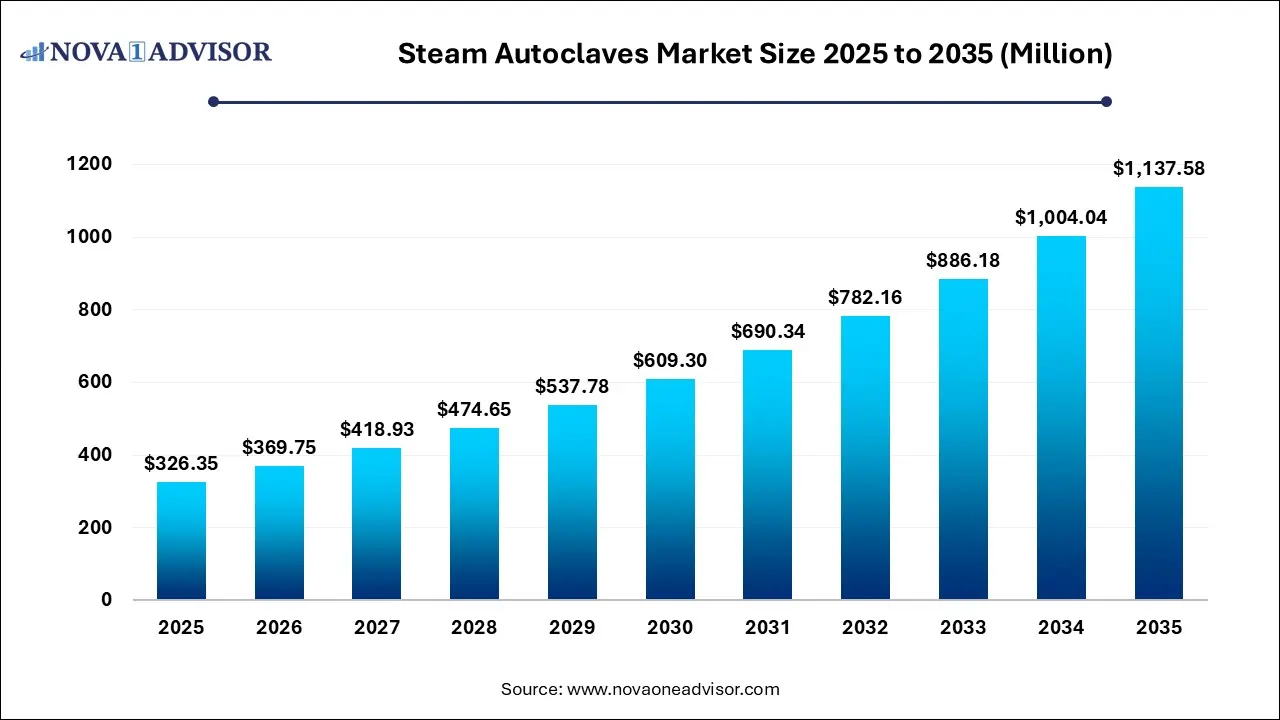
The global steam autoclaves market size was estimated at USD 326.35 million in 2025 and is projected to hit around USD 1,137.58 million by 2035, growing at a CAGR of 13.3% during the forecast period from 2026 to 2035.
Key Takeaway:
- By configuration, the vertical segment dominated the market and accounted for the largest revenue share in 2025.
- By configuration, the tabletop segment is anticipated to witness the fastest CAGR over the forecast period.
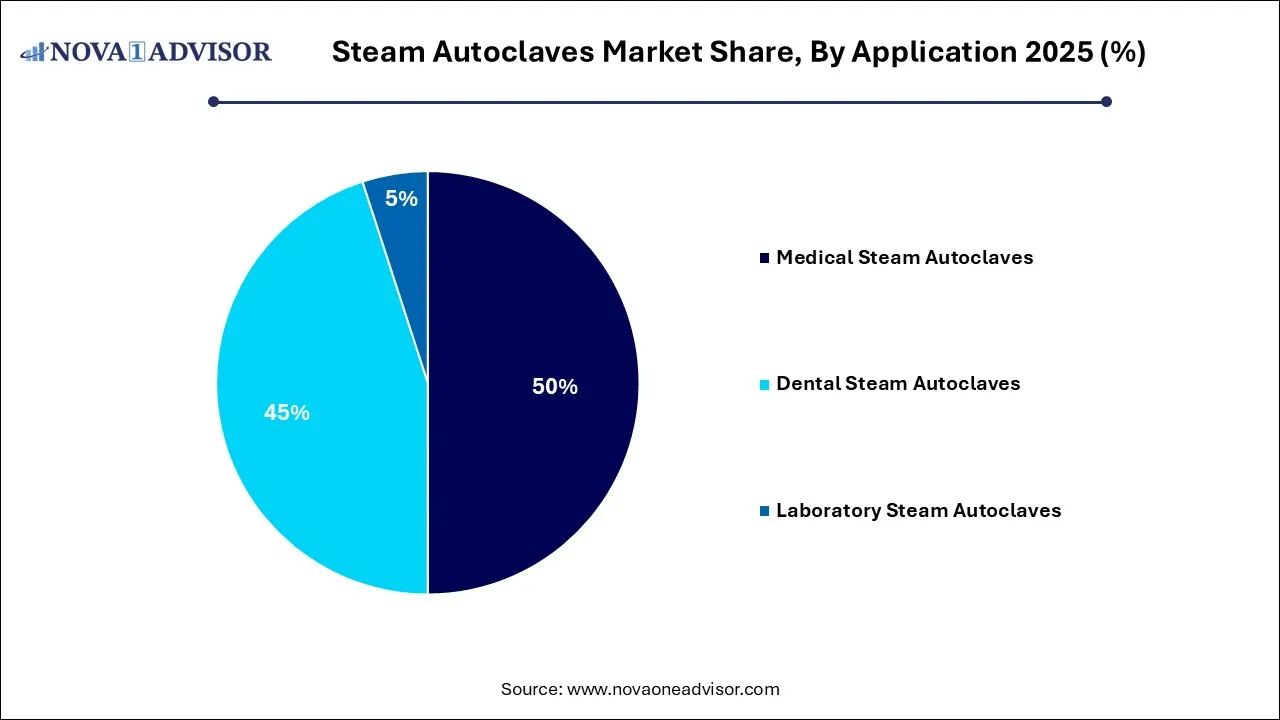
- By application, the medical segment dominated the market and accounted for the largest revenue share in 2025.
- By region, North America accounted for the largest revenue share in 2025.
Market Overview
The steam autoclaves market represents a critical component of modern sterilization infrastructure across healthcare, pharmaceutical manufacturing, biotechnology research, diagnostics, academic laboratories, and waste management facilities. Steam autoclaves utilize saturated steam under pressure to eliminate bacteria, viruses, fungi, spores, and other microorganisms from instruments, laboratory materials, medical devices, and contaminated waste.
Sterilization remains one of the most fundamental requirements in healthcare and scientific environments. Without effective sterilization processes, healthcare-associated infections, laboratory contamination, and compromised research outcomes can become significant concerns. Steam autoclaves have therefore become indispensable tools for ensuring safety, compliance, and operational efficiency.
The technology behind steam sterilization has evolved considerably over the past century. Modern autoclaves offer advanced control systems, programmable sterilization cycles, automated documentation, remote monitoring, and enhanced safety features. These improvements have increased reliability while reducing operator intervention.
Healthcare institutions remain the primary consumers of steam autoclaves. Hospitals use them extensively to sterilize surgical instruments, reusable medical devices, textiles, and laboratory materials. As surgical volumes continue to increase globally, demand for dependable sterilization equipment remains strong.
Dental practices also contribute significantly to market demand. Regulatory agencies worldwide require stringent sterilization protocols for dental instruments, leading to widespread adoption of tabletop steam autoclaves.
The pharmaceutical and biotechnology sectors represent another important growth avenue. Drug development, vaccine manufacturing, microbiological testing, and sterile production environments require validated sterilization systems capable of maintaining strict quality standards.
For example, vaccine manufacturing facilities routinely utilize large-capacity steam autoclaves to sterilize production equipment and laboratory materials. Similarly, biosafety laboratories handling infectious agents depend on autoclaves to prevent contamination and ensure safe waste disposal.
Growing awareness regarding infection control, increasing healthcare expenditure, expanding research activities, and stricter regulatory requirements continue to support market growth. Furthermore, emerging economies are investing heavily in healthcare infrastructure and laboratory modernization, creating substantial opportunities for steam autoclave manufacturers.
As sterilization standards become increasingly stringent worldwide, steam autoclaves are expected to remain a cornerstone of infection prevention and biosafety management strategies.
Market Outlook
- Market Growth Overview: The global steam autoclave market is expected to grow significantly between 2025 and 2035, driven by the rising volume of surgeries and geriatric population, strict infection control and safety mandates, and booming expansion in the pharmaceutical and biotech sector.
- Sustainability Trends: Sustainability trends involve water conservation and recycling, energy efficiency and heat recovery, and eco-friendly materials and design.
- Major Investors: Major investors in the market include Getting AB, STERIS plc, Belimed AG, Tuttnauer, Astell Scientific, and Shinva Medical Instrument Co.
How is AI Transforming the Steam Autoclaves Market?
Artificial intelligence is gradually transforming sterilization processes by improving operational efficiency, equipment reliability, compliance monitoring, and predictive maintenance.
One of the most important AI applications involves predictive maintenance. Traditional autoclave maintenance often relies on fixed schedules or reactive repairs following equipment failures. AI algorithms can analyze operational parameters such as temperature fluctuations, pressure cycles, valve performance, and component wear to predict potential failures before they occur.
This capability helps healthcare facilities reduce downtime and maintain uninterrupted sterilization operations. For hospitals with high surgical volumes, preventing autoclave failure is critical for maintaining workflow continuity.
AI is also improving sterilization validation processes. Advanced systems can analyze cycle performance data and automatically identify deviations that may compromise sterilization effectiveness. Real-time monitoring ensures compliance with regulatory requirements while minimizing human error.
Machine learning technologies are being integrated into smart sterilization management systems capable of optimizing cycle selection based on load characteristics. This improves energy efficiency while ensuring complete sterilization.
For example, pharmaceutical manufacturers can utilize AI-powered monitoring platforms to track thousands of sterilization cycles and automatically generate compliance documentation for audits.
Digital twins are also emerging as valuable tools. These virtual models simulate autoclave performance under different operating conditions, allowing manufacturers to optimize designs and improve reliability before deployment.
As healthcare facilities increasingly adopt connected medical infrastructure, AI-enabled autoclaves are expected to become more common, enhancing safety, efficiency, and regulatory compliance.
Steam Autoclaves Market Report Scope
| Report Coverage | Details |
| Market Size in 2026 | USD 369.75 Million |
| Market Size by 2035 | USD 1,137.58 Million |
| Growth Rate From 2026 to 2035 | CAGR of 13.3% |
| Base Year | 2025 |
| Forecast Period | 2026 to 2035 |
| Segments Covered | Configuration, Application, Region |
| Market Analysis (Terms Used) | Value (USD Million/Billion) or (Volume/Units) |
| Regional Scope | North America; Europe; Asia Pacific; Central and South America; the Middle East and Africa |
| Key Companies Profiled | Belimed Deutschland; BMM Weston Ltd; Getinge; LTE Scientific Ltd; Matachana; Medi safe International; Panasonic; PRIORCLAVE LTD.; Tuttnauer; Eryigit Medical Devices; STERIS, Peacocks Medical Group; Steelco S.p.A. |
Segmental Insights
By Configuration
How did the vertical segment dominate the Global Steam Autoclave market?
The vertical segment is driven by an exceptionally cost-effective and energy-efficient sterilization solution for space-constrained facilities, maximizing overall processing throughput without requiring complex plumbing configurations. This combination of an ergonomic footprint, material versatility, and low operational cost makes it a vital asset for modern laboratory and medical waste management.
How did the tabletop segment expected to hold the fastest-growing Global Steam Autoclave market in the coming years?
The tabletop segment is driven by a surge in standalone dental clinics, veterinary practices, and outpatient centers requiring high-temperature sterilization for small instruments. These compact units optimize space and cost efficiency for smaller facilities with budget constraints that cannot accommodate massive, floor-standing central sterilization systems.
By Application
How did the medical segment dominate the Global Steam Autoclave market?
The medical segment is driven by the surging elective and emergency surgical volumes that necessitate a rapid, massive throughput of sterile reusable instruments. Steam sterilization remains the legally and medically mandated gold standard for maintaining stringent infection control and protecting patient safety across all clinical settings.
How did the laboratory segment expected to hold the fastest-growing Global Steam Autoclave market in the coming years?
The laboratory segment is driven by the massive investments in life sciences, vaccine development, and pharmaceutical research and development that require absolute sterilization to prevent cross-contamination. Government bodies reinforce this demand through strict regulatory mandates that legally require high-pressure sterilization across all clinical and research facilities to curb pathogens.
By Regional
How did the North America region account for the largest share in the Global Steam Autoclave market?
North America is driven by the high density of advanced healthcare facilities and robust research and development investments that require rigorous sterilization protocols. This consistent demand is heavily reinforced by strict compliance mandates from regulatory bodies like the FDA and CDC to combat rising hospital-acquired infections.
U.S. Global Steam Autoclave Market Trends
The U.S. is advancing rapidly as healthcare facilities upgrade to state-of-the-art steam systems to combat healthcare-associated infections and meet tightening regulatory frameworks. Stringent environmental policies limiting toxic chemical sterilant, such as ethylene oxide, are actively pushing research laboratories and hospitals to adopt eco-friendly steam sterilization methods.
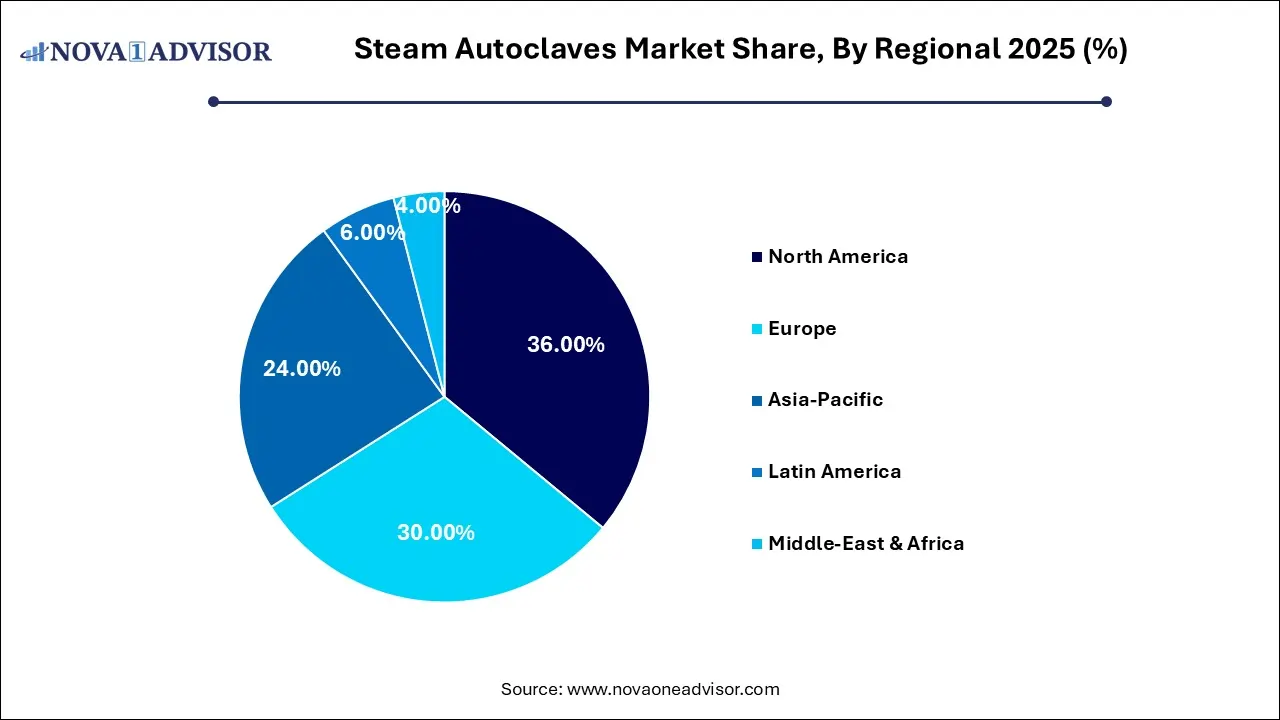
How did the Asia-Pacific region become the fastest-growing Global Steam Autoclave Market during the forecast period?
Asia Pacific has a surge in autoclaves, massive infrastructure investments, and a growing number of modern healthcare and diagnostic centers. The booming medical and dental tourism in hubs, such as India and China, which significantly increases procedural volumes and the demand for high-capacity sterilization systems.
China Global Steam Autoclave Market Trends
China’s critical need for large-scale steam autoclaves to safely dispose of hundreds of thousands of tons of annual biohazardous medical waste. In alignment with modern digital infrastructure standards, the region is experiencing a strong shift toward IoT-enabled autoclaves that feature automated validation and cloud-based record-keeping for regulatory traceability.
How Did Europe Hold A Notable Share in the Global Steam Autoclave Market?
Europe’s advanced healthcare infrastructure and decentralized outpatient centers demand high-end, efficient device reprocessing cycles to sustain continuous clinical workflows. The strong presence of domestic manufacturing giants, such as Getinge and Belimed, drives regional innovation, leading the global transition toward water-saving, energy-efficient, and AI-powered predictive maintenance technologies.
Germany Global Steam Autoclave Market Trends
Germany’s aging population and high surgical volumes that require rigorous device sterilization across its extensive hospital networks. The rapidly embracing Industry 4.0 innovations, with a heavy emphasis on smart, connected, and energy-efficient tabletop and modular configurations that reduce carbon footprint while automating digital validation tracking.
Key Players in the Global Steam Autoclave Market
- Belimed
Belimed produces a wide range of highly efficient, space-saving steam sterilizers. Their automated and resource-conscious technologies are designed to optimize hospital Central Sterile Services Departments (CSSDs), improving workflow and reducing consumption of water and energy.
- BMM Weston Ltd.
With over 130 years of manufacturing experience, BMM Weston specializes in premium, high-capacity steam sterilizers that cater to medical, laboratory, and educational facilities. Their robustly engineered units are trusted worldwide for delivering reliable sterilization to combat cross-contamination.
- Getinge AB
As an industry titan in infection control, Getinge offers extensive, automated steam sterilization systems for hospitals and the life science industry. Their innovative load-handling and sterilizer designs focus on maximized throughput, operator safety, and exceptional resource conservation.
Segments Covered in the Report
This report forecasts revenue growth at country levels and provides an analysis of the latest industry trends in each of the sub-segments from 2021 to 2035. For this study, Nova one advisor, Inc. has steam autoclaves market.
By Configuration
- Table Top Autoclaves
- Vertical Steam Autoclaves
- Horizontal Steam Autoclaves
- Floor Standing Steam Autoclaves
- High Pressure Steam Autoclaves
By Application
- Medical Steam Autoclaves
-
- Hospital Steam Autoclaves
- Clinical Steam Autoclaves
- Medical Waste Management Steam Autoclaves
- Dental Steam Autoclaves
- Laboratory Steam Autoclaves
-
- Pharmaceutical Steam Autoclaves
- Bio-hazardous Waste Management Steam Autoclaves
By Region
- North America
- Europe
- Asia-Pacific
- Latin America
- Middle East & Africa (MEA)

Proceed to Buy
Instant PDF delivery on confirmation

Steam Autoclave Market Size to Hit USD 1,137.58 Million by 2035
 Request Customization
 Download Sample

Get a Sample of this Report
Steam Autoclave Market