

Stem Cell Banking Market Size, Share, and Trends 2026 to 2035
 Status Published
 Category Healthcare


Content
Stem Cell Banking Market Summary
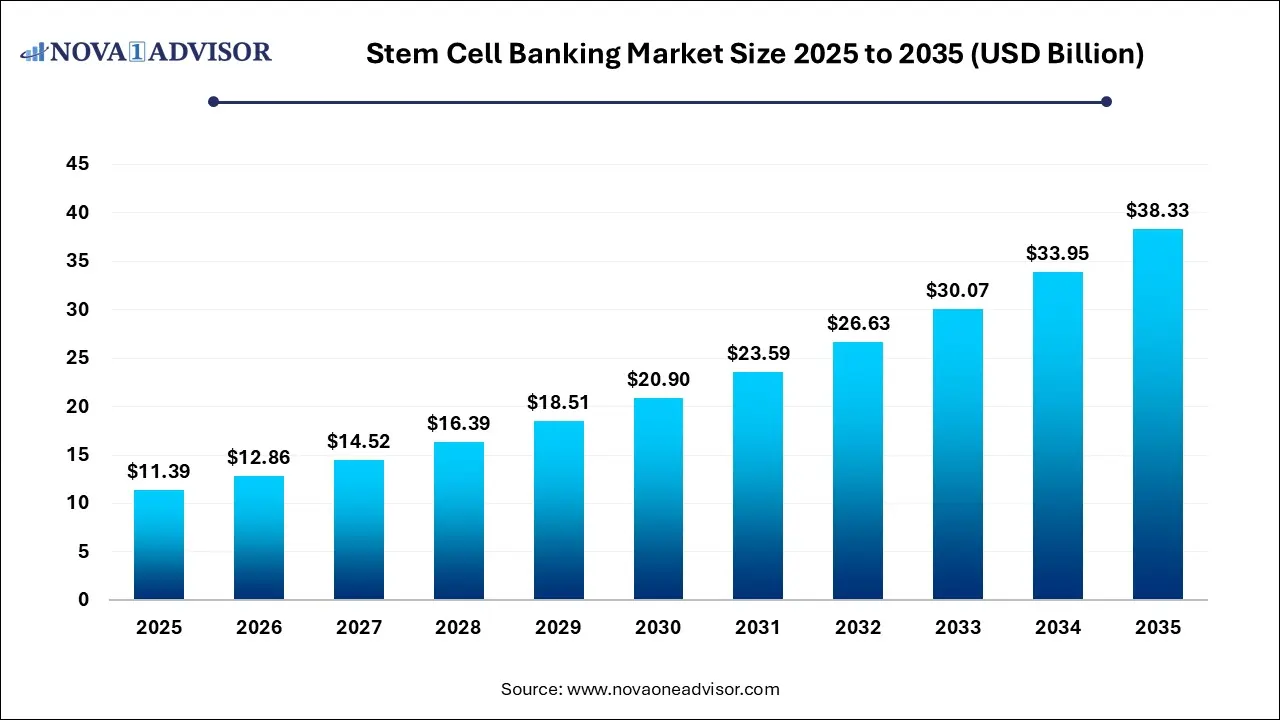
The stem cell banking market size was estimated at USD 11.39 billion in 2025 and is projected to increase from USD 12.86 billion in 2026 to approximately USD 38.33 billion by 2035, growing at a CAGR of 12.9% from 2026 to 2035. The stem cell banking market is driven by the rising therapeutic awareness and applications, advancements in regenerative medicine, and the rise in cord blood banking and the increasing prevalence of stem cell transplantation (HSCT) for various diseases, which boost the market, particularly with advances in storage technology.
Key Takeaways
- By product, the adult stem cell segment held a dominant position in the market with a share of 45% in 2025.
- By product, the umbilical cord blood stem cells segment is the fastest growing between 2026 and 2035.
- By type, the private segment held a dominant position in the market with a share of 70% in 2025.
- By type, the public segment is the fastest growing between 2026 and 2035.
- By application, the regenerative medicine segment held a dominant position in the market with a share of 50% in 2025.
- By region, the North America region held a dominant position in the market with a share of 38% in 2025.
Innovation Driving Transformation in the Stem Cell Banking Market
Stem cell banking comprises the collection, processing, and long-term cryopreservation of stem cells, primarily from umbilical cord blood and tissue, for future therapeutic applications, often viewed as biological insurance. This sector provides critical advantages, enabling the treatment of over 80 diseases, including leukemia, anemia, and various blood disorders, while offering promising potential in regenerative medicine to repair damaged tissues and organs. Key benefits include the ability of these stored cells to match perfectly with the donor or familial relatives, reducing the risk of immune rejection during transplantation.
Stem Cell Banking Market Trends
- Strategic Diversification into Cord Tissue and MSC Assets
While umbilical cord blood banking has been the standard, there is a surge in banking umbilical cord tissue to store mesenchymal stem cells. These cells are increasingly valued for their potential in regenerative medicine to treat a broader range of inflammatory and neurological conditions than hematopoietic stem cells.
- Evolution of Hybrid Value Propositions
Banks are moving away from strictly private or public models toward hybrid approaches, where parents can store cells privately for family use while having the option to donate them to public registries. This approach increases utilization and expands the pool of diverse stem cell samples available for public matching.
- Optimization of Cryogenic Infrastructure and Supply Chain Logistics
Technological improvements in automated cryopreservation techniques ensure higher cell viability and improved efficiency in the long-term storage of stem cells. Sophisticated cold-chain logistics have also made it easier for samples to be safely transported from hospitals to specialized storage facilities worldwide.
Key AI Integration in the Stem Cell Banking Market
AI and ML are transforming the stem cell banking industry by enhancing efficiency, quality control, and personalization in regenerative medicine. Algorithms are utilized to automate stem cell culture, monitoring cell viability and morphology in real-time, which reduces human labor and lowers costs. These technologies improve the precision of stem cell selection and characterization by analyzing genetic information, ensuring optimal donor matching for patient-specific therapies. AI optimizes cryopreservation storage conditions and predicts the therapeutic potency of stem cells, strengthening confidence in the safety and efficacy of stored samples.
Stem Cell Banking Market Report Scope
| Report Coverage | Details |
| Market Size in 2026 | USD 12.86 Billion |
| Market Size by 2035 | USD 38.33 Billion |
| Growth Rate From 2026 to 2035 | CAGR of 12.9% |
| Base Year | 2025 |
| Forecast Period | 2026 to 2035 |
| Segments Covered | By Product, By Type, By Application, By Region |
| Market Analysis (Terms Used) | Value (USD Million/Billion) or (Volume/Units) |
| Regional Scope | North America; Europe; Asia Pacific; Central and South America; the Middle East and Africa |
| Key Companies Profiled | Cord Blood Registry (CBR), ViaCord, Cryo-Cell International, LifeCell International, Texas Cord Blood Bank, StemCyte, Neostem , AMAREX Clinical Research, Future Health Biobank, Insception Lifeban, Umbilical Cord Blood Bank Ltd, California Cryobank, Lonza Group AG, Macopharma, Regen Lab SA, Stempeutics Research |
Market Dynamics
Driver
Increasing Prevalence of Chronic Diseases
With the creation of high demand for regenerative medicine, as these conditions become more common, there is a rising, urgent need for autologous stem cells that can repair, replace, or regenerate damaged tissues without immune rejection. Consequently, families are increasingly investing in cord blood and cord tissue banking, viewing them as vital biological insurance to secure potential treatment options for the future. The expanding therapeutic applications of stem cells in treating conditions like leukemia, thalassemia, and Alzheimer’s are forcing medical institutions and patients to rely more on bank-stored stem cells.
Restraint
High Costs of Storage and Processing
The market growth is hindered by creating substantial barriers for consumers and limiting widespread adoption. The complex, capital-intensive nature of maintaining cryogenic facilities, including liquid nitrogen systems, continuous monitoring, and specialized laboratory personnel, imposes high operational expenditures on providers.
Opportunity
Adipose Tissue-Derived Stem Cells
The provision of an abundant, easily accessible, and minimally invasive source of mesenchymal stem cells, far surpassing the yield from traditional sources like bone marrow. Because these cells can be readily harvested from fat tissue, often considered waste material during liposuction, they enable personalized, autologous storage for regenerative medicine and cosmetic applications, fueling demand for private banking services. Their high potency in treating various orthopedic and degenerative conditions encourages consumers to store their cells for future therapeutic use.
Segment Insights
By Product Insights
Why Did the Adult Stem Cell Segment Hold a 45% Share for the Stem Cell Banking Market?
The adult stem cell segment held a dominant position in the market with a share of 45% in 2025, owing to the established clinical use, proven safety, and fewer ethical concerns. Growing applications in curing degenerative diseases, such as osteoporosis and cardiovascular conditions, increase the demand for banking these cells.
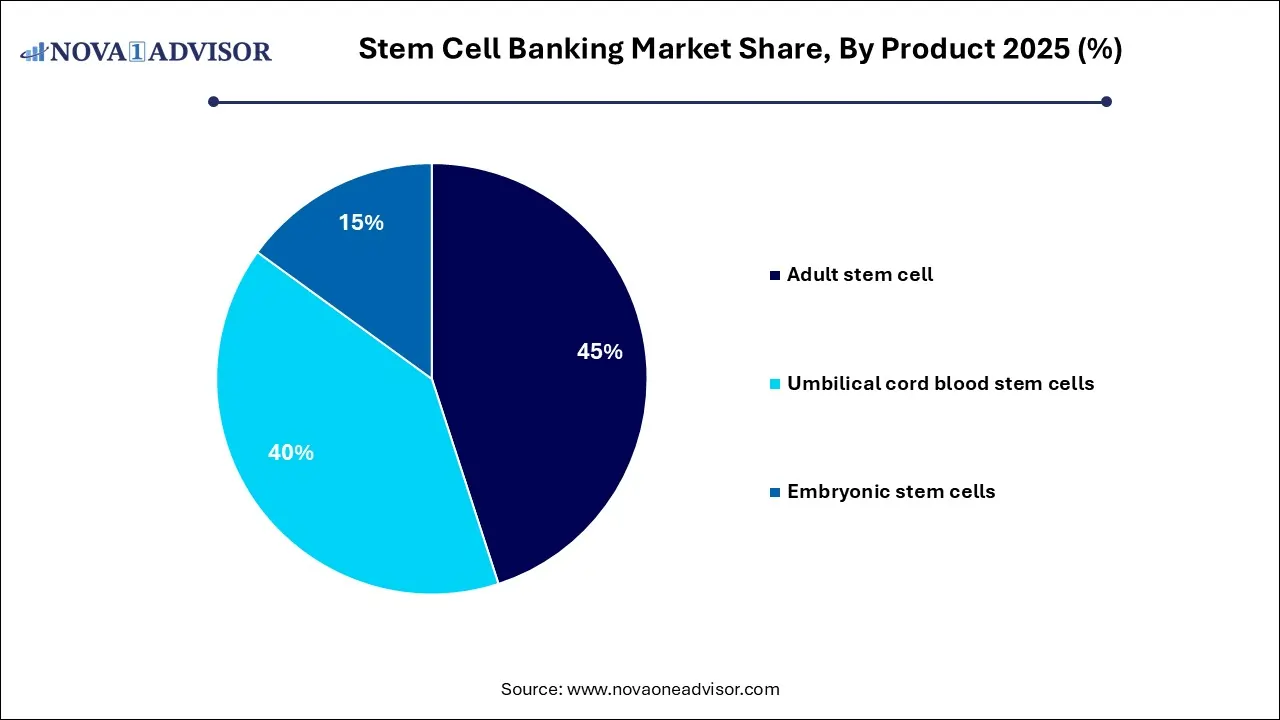
The umbilical cord blood stem cells segment held a 40% share of the market in 2025, due to the rising awareness of newborn stem cell preservation and private banking. Rising awareness about the potential to treat future illnesses in children and family members drives many parents to choose private storage as biological insurance.
The embryonic stem cells segment held 15% share of the market in 2025, due to the heavily used in research and clinical trials for treating chronic and degenerative diseases. The expansion of stem cell therapies and increasing recognition of their capacity to treat incurable diseases have increased the demand for high-quality cell lines, driving the banking of these cells.
By Type Insights
Why Did the Private Segment Lead the Stem Cell Banking Market?
The private segment registered its dominance over the market with a share of 70% in 2025, owing to the growing preference for personalized healthcare and long-term biological insurance. A significant surge in blood-related disorders, such as leukemia, and other chronic conditions, has increased interest in storing stem cells for treating conditions, such as sickle cell anemia.
The public segment held the 30% share of the market in 2025, with no fees for the collection, processing, and storage of cord blood donations. Growing registries for public cord blood units help in identifying HLA matches for patients in need, boosting public bank utilization rates.
By Application Insights
Why Did the Regenerative Medicine Segment Lead the Stem Cell Banking Market?
The regenerative medicine segment registered its dominance over the market with a share of 50% in 2025, owing to the increasing preference for personalized healthcare and long-term biological insurance. An increasing number of clinical trials, research, and development activities in regenerative medicine require high-quality, preserved stem cells, boosting the storage.
The personalized storage segment held the 30% share of the market in 2025, with the preventive healthcare trends and rising disposable income. Increasing awareness of regenerative medicine’s potential fuels the demand for saving stem cells from sources, such as the umbilical cord, which have high plasticity for treating various diseases.
The clinical research segment held the 20% share of the market in 2025, due to the increase in trials utilizing stem cells to treat conditions, such as cancer, cerebral palsy, and autism, driving demand. Advancements in therapeutic research, a growing number of clinical trials require consistent access to stirred stem cells, which boosts the storage and analysis segments.
By Regional Insights
Why Did the North America Region Lead the Stem Cell Banking Market?
The North America region registered its dominance over the market with a share of 38% in 2025, owing to the strong infrastructure, high awareness, and favorable reimbursement policies. The presence of top biotech firms and leading research institutions accelerates the development of stem cell-based therapies. Rising adoption of personal banking and significant investments from both public and private sectors in stem cell research.
The Europe region held the 25% share of the market in 2025, with the stringent regulations and slower commercialization. Increasing awareness regarding the long-term benefits of storing newborn stem cells and a strong infrastructure. High investments in regenerative medicine, combined with strict but supportive regulatory frameworks for cell therapies.
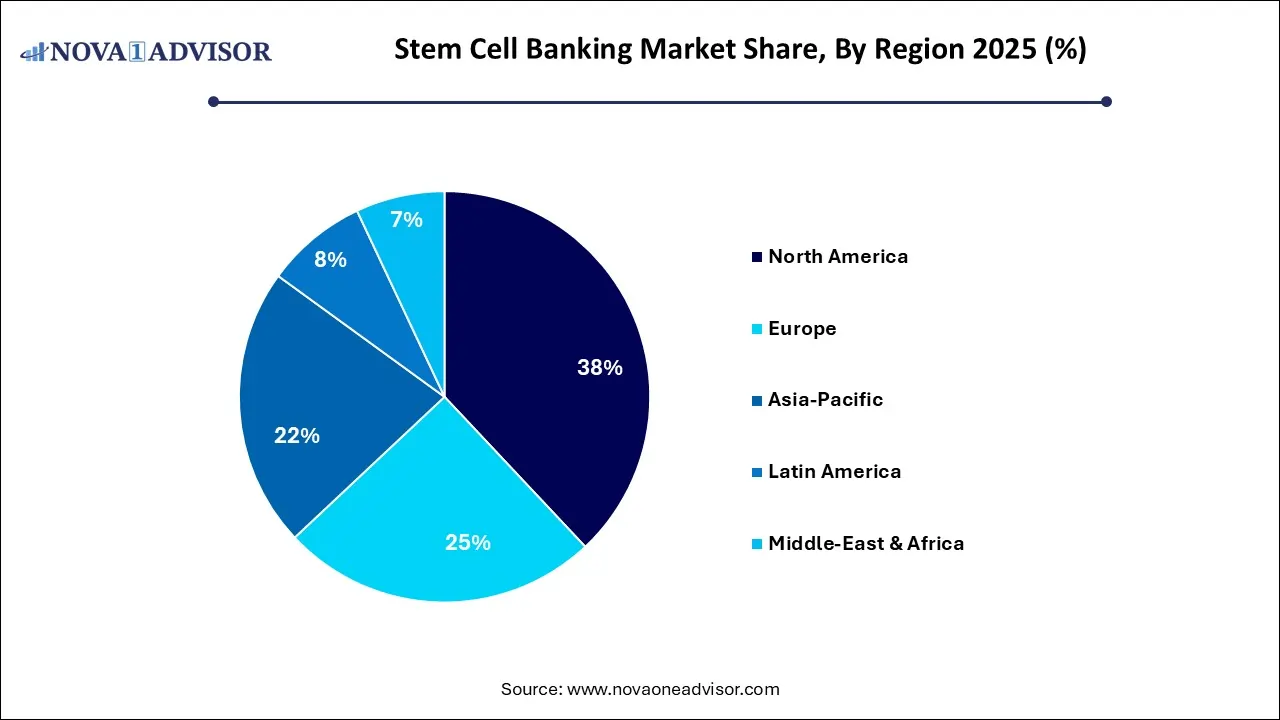
The Asia Pacific segment held 22% share of the market in 2025, due to the rising awareness, improving healthcare access, and cost advantages. Rapid advancements in stem cell technology, specifically in adult stem cell banking and mesenchymal stem cells (MSCs), are fueling interest in therapeutic applications for tissue regeneration and personalized medicine.
The Latin America region held 8% share of the market in 2025, with the convergence of heightened clinical awareness and increasing consumer affordability surge in private stem cell banking across key emerging markets. The critical advancements in storage technology and supportive regulatory frameworks that prioritize regenerative medicine.
The MEA region held 7% share of the market in 2025, due to the integration of regenerative medicine into mainstream clinical practice. The combination of strategic government investment in infrastructure and the rapid adoption of innovative technologies, such as iPSCs and automated cryopreservation.
Recent Developments
- In January 2025, Ucello, supported by VectorBuilder's CDMO services, received FDA IND approval for UC101, the world’s first umbilical cord blood-derived allogeneic CAR-T therapy for treating diseases. The therapy uses stable producer cell lines to achieve 10-fold higher viral titers and significantly lower manufacturing costs, with a single batch capable of treating over 100 patients.
- In April 2025, Abu Dhabi Biobank launched a private cord blood banking service in Masdar City, offering local stem cell storage at 50% below current market rates. The initiative aims to improve access to treatments for diseases like thalassemia and leukemia, featuring up to 30-year storage in partnership with local healthcare providers.In February 2025, CellBank Australia, operated by the
- Children’s Medical Research Institute (CMRI), officially announced a landmark partnership with the European Bank for Induced Pluripotent Stem Cells (EBiSC). This strategic collaboration is designed to streamline the procurement of high-quality research materials for scientists across the Oceania region, significantly reducing the logistical hurdles associated with international cell line acquisition.
Stem Cell Banking Market Companies
- Cord Blood Registry (CBR) 
- ViaCord
- Cryo-Cell International
- LifeCell International
- Texas Cord Blood Bank
- StemCyte
- Neostem 
- AMAREX Clinical Research
- Future Health Biobank
- Insception Lifeban
- Umbilical Cord Blood Bank Ltd
- California Cryobank
- Lonza Group AG
- Macopharma
- Regen Lab SA
- Stempeutics Research
Segments Covered in the Report
This report forecasts revenue growth at country levels and provides an analysis of the latest industry trends in each of the sub-segments from 2021 to 2035. For this study, Nova one advisor, Inc. has segmented the stem cell banking market.
By Product
- Adult stem cell
- Umbilical cord blood stem cells
- Embryonic stem cells
By Type
- Private
- Public
By Application
- Regenerative medicine
- Personalized storage
- Clinical research
By Region
- North America
- Europe
- Asia Pacific
- Latin America
- Middle East and Africa (MEA)
FAQ's

Proceed to Buy
Instant PDF delivery on confirmation

Stem Cell Banking Market Size to Hit USD 38.33 Billion by 2035
 Request Customization
 Download Sample

Get a Sample of this Report
Stem Cell Banking Market