

Taurine Market (Type: Food Grade and Pharmaceutical Grade; Application: Health Care Products, Pet Food, Beverage, and Others; and Form: Tablets/Capsules, Liquid-based Serum, and Others) - Global Industry Analysis, Share, Growth, Regional Outlook and Forecasts, 2022-2030
 Status Published
 Category Healthcare


Content
Taurine Market Summary
The global taurine market size was estimated at USD 5.39 billion in 2025 and is projected to hit around USD 9.59 billion by 2035, growing at a CAGR of 5.94% during the forecast period from 2026 to 2035.
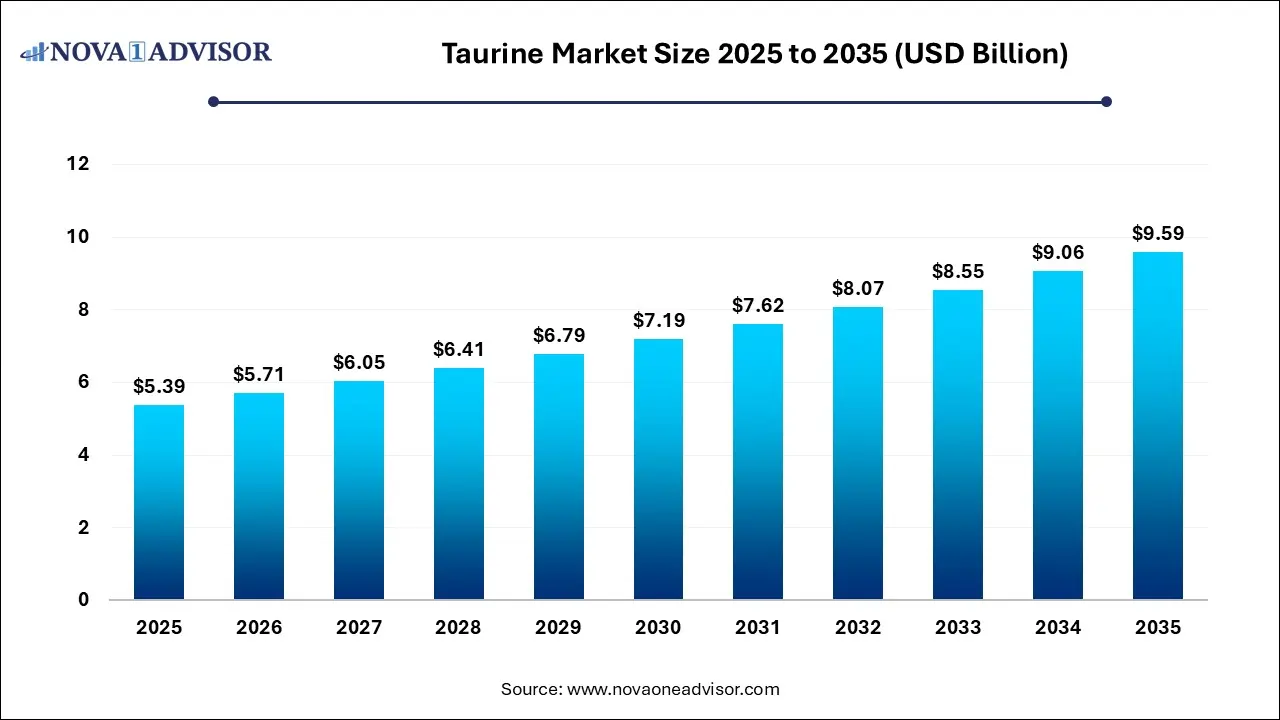
Market Key Takeaways
- The taurine market is witnessing steady growth driven by increasing demand in energy drinks, dietary supplements, and pet nutrition.
- Food-grade taurine dominates the market due to its extensive use in beverages and functional foods.
- Health care products represent the largest application segment owing to growing consumer awareness of preventive healthcare.
- Liquid-based taurine formulations are gaining traction due to convenience and faster absorption.
- Asia Pacific leads the global market due to strong production capabilities and rising consumption.
- AI integration is improving supply chain optimization and product innovation.
- Expanding applications in pharmaceuticals and animal nutrition present long-term growth opportunities.
Market Overview
The taurine market has evolved significantly over the past decade, transitioning from a niche amino acid segment to a critical component in multiple industries including food & beverages, pharmaceuticals, and animal nutrition. Taurine, a sulfur-containing amino acid, is widely recognized for its role in cardiovascular health, neurological development, and metabolic regulation. Unlike many other amino acids, taurine is not used for protein synthesis but plays a vital role in physiological functions such as bile salt formation, osmoregulation, and antioxidant defense.
One of the most prominent drivers of taurine demand is its widespread use in energy drinks. Major global beverage brands incorporate taurine as a key ingredient due to its perceived benefits in enhancing physical performance and mental alertness. For instance, energy drinks marketed toward athletes and young consumers often highlight taurine as a performance-enhancing compound, contributing to its rising consumption globally.
In addition to beverages, taurine is extensively used in dietary supplements aimed at improving cardiovascular health, reducing fatigue, and supporting overall wellness. The growing trend toward preventive healthcare has encouraged consumers to incorporate supplements into their daily routines, thereby boosting market demand.
The pharmaceutical sector is also leveraging taurine for its therapeutic potential in treating conditions such as heart disease, diabetes, and neurological disorders. Furthermore, taurine is a crucial ingredient in pet food formulations, particularly for cats, as it is essential for their vision and heart health.
From a production standpoint, Asia Pacific, particularly China, dominates taurine manufacturing due to cost advantages and established supply chains. However, increasing environmental regulations and quality standards are prompting manufacturers to adopt more sustainable production practices.
Market Outlook
- Market Growth Overview: The taurine market is expected to grow significantly between 2025 and 2035. driven by the rising demand in energy drinks and sports nutrition, growing health and wellness consciousness, and rising disposable income in emerging economies.
- Sustainability Trends: Sustainability trends involve green synthesis and biotechnology, plant-based and natural sourcing, and transparent supply chains and clean label.
- Major Investors: Major investors in the market include Qianjiang Yongan Pharmaceutical Co., Ltd., Grand Pharmaceutical Group Limited (Grand Pharma), and Taisho Pharmaceutical Holdings Co., Ltd.
How is AI Transforming the Taurine Market?
Artificial Intelligence (AI) is gradually reshaping the taurine market by enhancing production efficiency, optimizing supply chains, and enabling data-driven product development. Although taurine is a relatively mature product, AI is unlocking new opportunities for innovation and operational excellence.
In manufacturing, AI-powered systems are being used to monitor chemical synthesis processes in real time. Taurine is typically produced through chemical synthesis involving ethylene oxide and sodium bisulfite. AI algorithms analyze process variables such as temperature, pressure, and reaction time to optimize yield and minimize waste. This not only improves efficiency but also reduces production costs and environmental impact.
AI is also playing a significant role in quality control. Machine learning models can detect anomalies in production batches, ensuring consistent product quality. This is particularly important for pharmaceutical-grade taurine, where stringent quality standards must be met.
In the consumer space, AI-driven analytics are helping companies understand purchasing behavior and preferences. For example, beverage companies use AI to analyze consumer trends and develop new taurine-infused products tailored to specific demographics. Personalized nutrition is another emerging area where AI is enabling the development of customized supplements based on individual health profiles.
Supply chain optimization is another key area where AI is making an impact. Predictive analytics helps manufacturers forecast demand, manage inventory, and reduce logistics costs. This is particularly valuable in a global market where raw material availability and transportation costs can fluctuate significantly.
Overall, AI is enhancing efficiency, innovation, and customer engagement in the taurine market, positioning it for sustained growth.
Taurine Market Report Scope
| Report Coverage | Details |
| Market Size in 2026 | USD 5.71 Billion |
| Market Size by 2035 | USD 9.59 Billion |
| Growth Rate From 2026 to 2035 | CAGR of 5.94% |
| Base Year | 2025 |
| Forecast Period | 2026 to 2035 |
| Segments Covered | By Type, By Application, By Form, By Region |
| Market Analysis (Terms Used) | Value (USD Million/Billion) or (Volume/Units) |
| Regional Scope | North America; Europe; Asia Pacific; Central and South America; the Middle East and Africa |
| Key Companies Profiled | Taisho Pharmaceutical Holdings Co., Ltd., Grand Pharmaceutical Group Limited, AWI-Awell Ingredients Co., Ltd., The Honjo Chemical Corporation, Qianjiang Yongan Pharmaceutical Co., Ltd., A. B. Enterprises, Atlantic Chemicals Trading GmbH, Kyowa Hakko Bio Co., Ltd., Jiangsu Yuanyang Pharmaceutical Co., Ltd, Hubei Grand Fuchi Pharmaceutical & Chemicals Co., Ltd., Advance Inorganics, Aakriti Trading Company, Avanscure LifeSciences Pvt. Ltd. |
Market Driver
Growing Demand for Functional Beverages
One of the most significant drivers of the taurine market is the increasing demand for functional beverages, particularly energy drinks. These beverages are formulated to provide additional health benefits beyond basic nutrition, such as improved energy levels, mental focus, and physical performance.
Taurine is a key ingredient in many of these beverages due to its role in supporting cardiovascular function and reducing fatigue. For example, energy drink brands often combine taurine with caffeine and vitamins to create a synergistic effect that enhances alertness and endurance. The growing popularity of fitness and active lifestyles has further fueled demand for such products.
In emerging markets, rising disposable incomes and urbanization are contributing to increased consumption of energy drinks. Younger consumers, in particular, are drawn to these beverages due to their convenience and perceived benefits. As a result, beverage manufacturers are continuously innovating and expanding their product portfolios, driving demand for taurine.
Market Restraint
Health Concerns and Regulatory Scrutiny
Despite its benefits, the taurine market faces challenges related to health concerns and regulatory scrutiny. Excessive consumption of taurine, particularly through energy drinks, has raised concerns about potential health risks, including cardiovascular issues and nervous system effects.
Regulatory authorities in several countries have implemented guidelines and restrictions on the use of taurine in food and beverages. For instance, some regions have set limits on the amount of taurine that can be included in energy drinks, while others require clear labeling to inform consumers about potential risks.
These regulations can impact market growth by limiting product formulations and increasing compliance costs for manufacturers. Additionally, negative media coverage and public perception regarding energy drink consumption can influence consumer behavior, potentially reducing demand.
Market Opportunity
Expansion in Animal Nutrition and Pet Care
The growing pet care industry presents a significant opportunity for the taurine market. Taurine is an essential nutrient for cats and plays a crucial role in maintaining their vision, heart function, and reproductive health. As pet ownership increases globally, particularly in urban areas, the demand for high-quality pet food is rising.
Pet owners are increasingly willing to spend on premium and specialized pet food products that offer enhanced nutritional benefits. This trend is driving the inclusion of taurine in pet food formulations. For example, premium cat food brands often highlight taurine content as a key selling point.
Additionally, advancements in animal nutrition research are uncovering new benefits of taurine for other animals, including dogs and livestock. This is expanding its application beyond traditional markets and creating new growth opportunities for manufacturers.
Segmental Insights
By Type
How did the food-grade segment account for the largest share in the Taurine market?
The food-grade segment is driven by the growing consumer focus on cognitive and metabolic wellness, which fuels its adoption in dietary supplements and functional foods. High purity and safety standards ensure food-grade taurine remains the versatile industry benchmark for both human and animal consumption. These factors solidify taurine’s position as a cornerstone ingredient in the expanding global wellness and functional nutrition sectors.
How did the pharmaceutical-grade segment expect to hold the fastest-growing Taurine market in the coming years?
The pharmaceutical-grade segment is driven by high purity and an expanding role in therapeutic and anti-aging formulations. The strategic collaboration and significant manufacturing investment are aimed at diversifying its use in cosmetic and advanced medicines. With the rising healthcare spending and urbanization, high-grade taurine is a vital component in the future of specialized health and wellness products.
By Application
How did the beverages segment account for the largest share in the Taurine market?
The beverages segment is driven by the massive demand from global energy drinks leaders, where it serves as a nonnegotiably ingredient for mental and physical stimulation. The shift toward functional beverages that offer targeted health benefits beyond simple hydration. The health-conscious urban consumers benefit from a consistent need for quick, accessible energy boosts. The rapid global expansion of the beverage industry ensures taurine remains a high-volume staple in the functional nutrition market.
How did the pharmaceuticals segment expect to hold the fastest-growing Taurine market in the coming years?
The pharmaceuticals segment is driven by the rapid expansion as clinical research uncovers new therapeutic benefits for cardiovascular, liver, and metabolic health. To meet rigorous medical standards, manufacturers are prioritizing high-purity production and significant capacity expansion globally. The increased integration into clinical nutrition and specialized supplements.
By Form
How did the tablets/ capsules segment dominate the Taurine market?
The tablets/ capsules segment is driven by their unmatched convenience and precise dosing for on-the-go sports nutrition. As busy, health-conscious consumers shift toward preventative wellness, these formats provide a reliable way to support muscle recovery and neurological health. The rising demand for amino acid supplements that reduce fatigue and enhance physical performance. The ease of consumption and portability make solid oral forms the preferred choice in the global taurine supplement market.
How did the liquid-based serum segment expect to hold the fastest-growing Taurine market in the coming years?
The liquid-based serum segment is driven by the high bioavailability and faster adoption rates, meeting the urgent needs of the sports nutrition and fitness sectors. These versatile formats allow for seamless integration into functional beverages and energy drinks, catering to the rising consumer demand for ready-to-drink (RTD) options. The increased health consciousness and urbanization in China and Japan.
By Regional
How did the North America region account for the largest share in the Taurine market?
North America’s massive energy drink sector and a deeply ingrained fitness culture that optimizes taurine for performance and recovery. High disposable income and health awareness further accelerate the demand for premium supplements and taurine-enriched pet foods. The region's lead is reinforced by advanced manufacturing capabilities and a sophisticated distribution network for both food and pharmaceutical grades.
U.S. Taurine Market Trends
The U.S. surge in health consciousness with dietary supplements increasingly targeting cardiovascular health and cognitive function. The humanization of pets is driving significant demand for taurine -enriched nutrition in cat and dog food. The product diversification into trendy formats like gummies and liquid shots is capturing a broader, convenience-focused consumer base.
How did the Asia Pacific region hold the fastest-growing Taurine Market in the forecast period?
Asia Pacific is leveraging its position as the primary manufacturing hub, benefiting from low production costs and robust supply chains. Rapid urbanization and rising disposable incomes in China and India are fuelling a massive surge in demand for energy drinks and premium pet nutrition. The growing middle class is increasingly investing in taurine-based dietary supplements for cardiovascular health and performance enhancement.
China Taurine Market Trends
China’s global shipping hurdles and production bottlenecks. To counter these pressures, manufacturers are investing in advanced purification technologies and fermentation-derived natural taurine to satisfy emerging clean-label and vegan market needs. The market is pivoting toward high-purity, pharmaceutical-grade applications in clinical nutrition, positioning taurine as a critical ingredient for both immediate energy and long-term metabolic health.
Key Players in the Taurine Market
- Taisho Pharmaceutical Holdings Co., Ltd.
Taisho Pharmaceutical leads the market with an estimated 25% share, largely driven by its high-purity taurine production through its joint venture Taisho MTC.
- Grand Pharmaceutical Group Limited
Grand Pharmaceutical is a major global player engaged in the manufacturing and sales of pharmaceutical-grade taurine, which is utilized for both nutritional supplements and therapeutic applications. The company contributes to the market by producing taurine that supports cardiovascular health, liver function, and metabolic health.
- AWI-Awell Ingredients Co., Ltd.
AWI-Awell Ingredients contributes to the global market as a manufacturer and supplier of high-quality nutritional taurine, catering to the pharmaceutical, food, and feed industries. They focus on producing, marketing, and exporting taurine that complies with strict international standards, including USP, EP, and JP.
Segments Covered in the Report
This report forecasts revenue growth at country levels and provides an analysis of the latest industry trends in each of the sub-segments from 2021 to 2035. For this study, Nova one advisor, Inc. has segmented the taurine market
By Type
- Food Grade
- Pharmaceutical Grade
By Application
- Health Care Products
- Pet Food,
- Beverage
- Others
By Form
- Tablets/Capsules
- Liquid-based Serum
- Others
By Geography
North America
- U.S.
- Canada
Europe
- Germany
- France
- United Kingdom
- Rest of Europe
Asia Pacific
- China
- Japan
- India
- Southeast Asia
- Rest of Asia Pacific
Latin America
- Brazil
- Rest of Latin America
Middle East & Africa (MEA)
- GCC
- North Africa
- South Africa
- Rest of Middle East & Africa
FAQ's

Proceed to Buy
Instant PDF delivery on confirmation

 Request Customization
 Download Sample

Get a Sample of this Report
Taurine Market