

Thrombectomy Devices Market Size, Share, Growth, Report 2026 to 2035
 Status Published
 Category Healthcare


Content
Thrombectomy Devices Market Size and Forecast 2026 to 2035
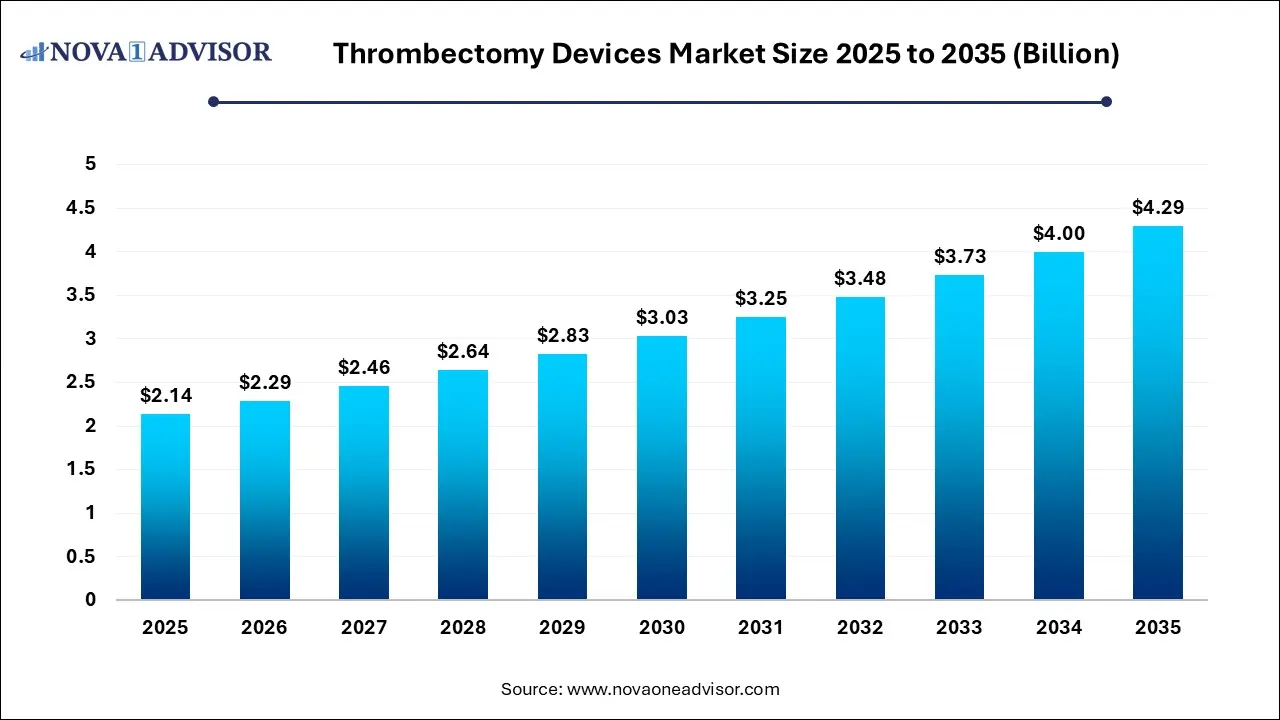
The global thrombectomy devices market size was valued at USD 2.14 billion in 2025 and is projected to grow from USD 2.29 billion in 2026 to USD 4.29 billion by 2035, at a CAGR of 7.19% from 2026 to 2035.
Thrombectomy Devices Market Key Takeaways
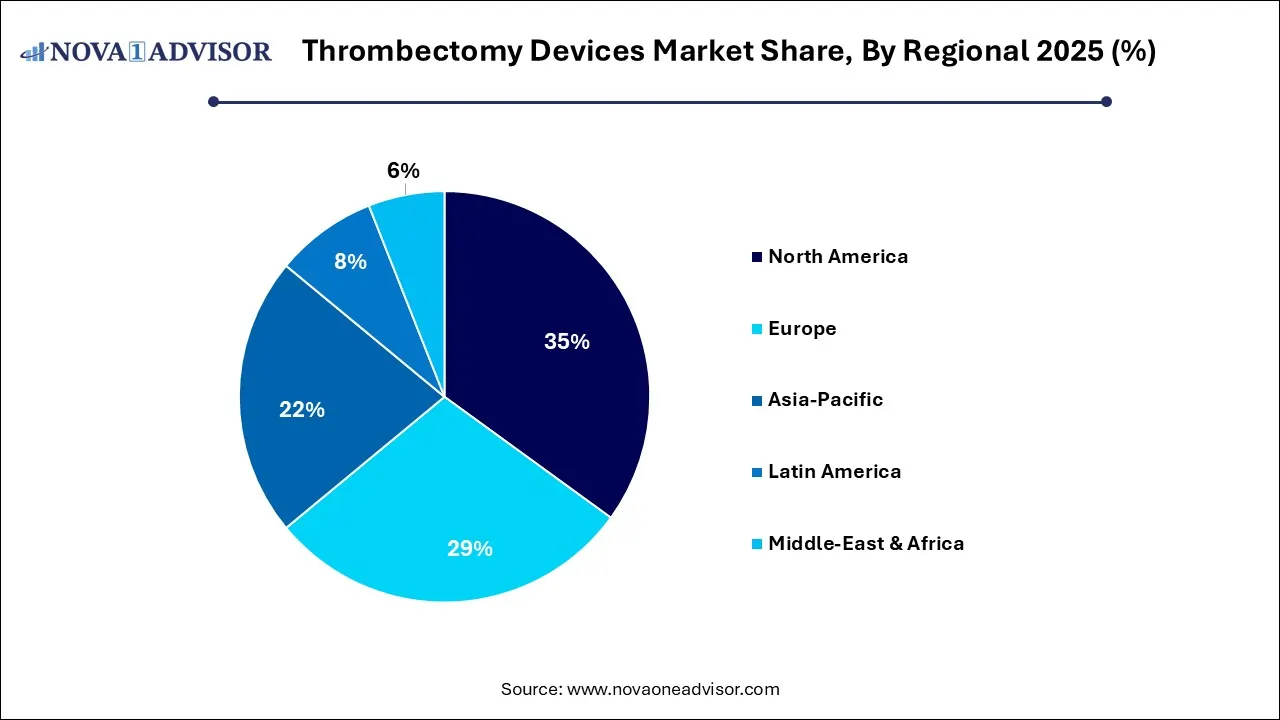
- North America led the market with the biggest market share of 3.0% in 2025.
- Asia Pacific is estimated to be the fastest-growing during the forecast period of 2026-2035.
- By product type, the mechanical/fragmentation thrombectomy devices segment dominated the market in 2025.
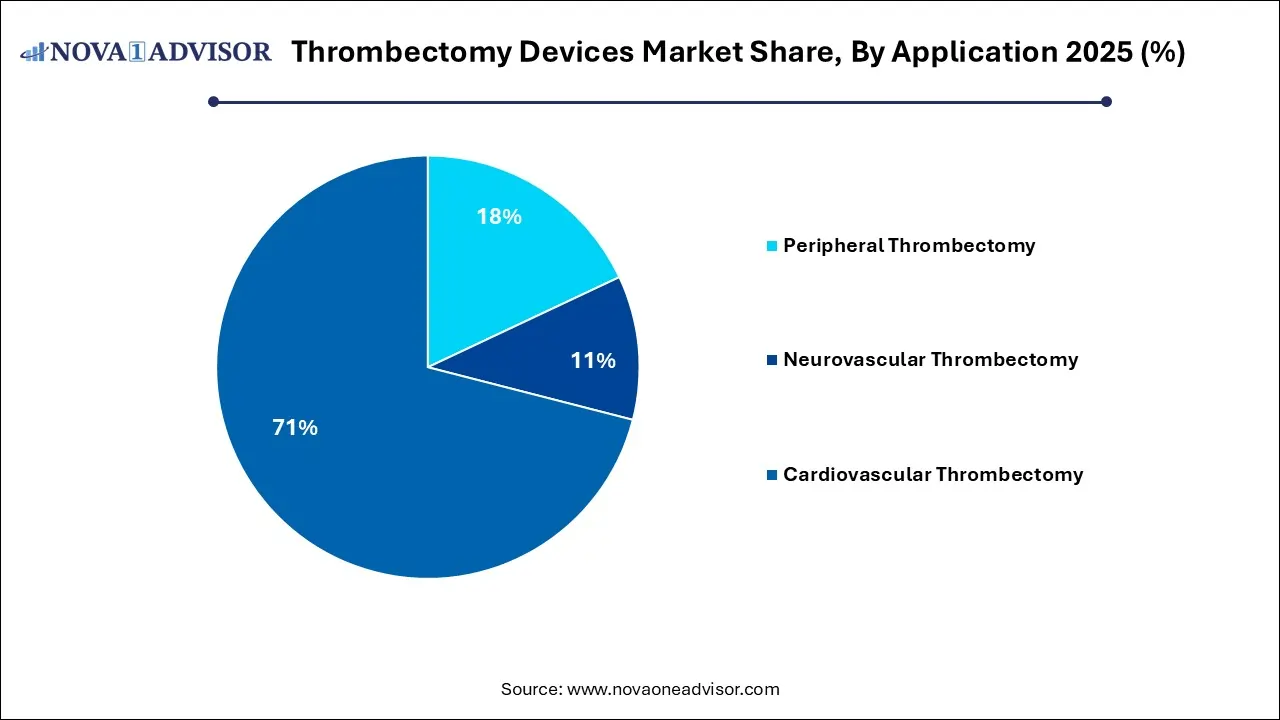
- By application type, the cardiovascular thrombectomy segment will hold the largest market share of 71.0% in 2025.
- By application type, the peripheral thrombectomy segment is the fastest growing during the forecast period.
- By end-user type, the hospitals segment dominated the market in 2025.
Market Overview
The thrombectomy devices market is experiencing strong growth, driven by the rising prevalence of cardiovascular diseases, acute ischemic stroke, pulmonary embolism, deep vein thrombosis, and peripheral arterial disease. Thrombectomy devices enable rapid mechanical removal of blood clots, restoring blood flow quickly and reducing the risk of severe complications compared with thrombolytic therapy alone. Increasing aging populations, sedentary lifestyles, obesity, diabetes, hypertension, and other cardiovascular risk factors are expanding the demand for minimally invasive clot removal procedures. Technological advancements, including improved aspiration systems, stent retrievers, advanced catheters, and real-time imaging guidance, have enhanced procedural success and patient outcomes. Growing clinical evidence supporting mechanical thrombectomy, along with expanding investments in stroke centers, vascular intervention facilities, and emergency healthcare infrastructure, is further accelerating market adoption. Continuous innovation in next-generation thrombectomy technologies is expected to support sustained market growth over the forecast period.
Market Outlook
- Market Growth Overview: The global thrombectomy devices market is expected to grow significantly between 2025 and 2035, driven by the rising prevalence of thromboembolic disorders, growing demand for minimally invasive procedures, and favorable healthcare reimbursement.
- Sustainability Trends: Sustainability trends involve reprocessing single-use devices, energy efficient consoles, and eco-friendly material.
- Major Investors: Major investors in the market include Medtronic, Stryker, Penumbra, Boston Scientific, Terumo, and Johnson & Johnson.
How is AI Impacting the Global Thrombectomy Devices Market?
AI and ML are accelerating the global thrombectomy devices industry by expediting LVO stroke diagnosis and optimizing procedural precision. Advanced algorithms automate critical imaging analyses, drastically reducing door-to-treatment times and improving overall patient selection. The top manufacturers are integrating AI-driven intelligent aspiration technologies, such as flow-based algorithms, into mechanical systems to better detect and remove large clots. This automation directly improves procedural success rates, lowers operational complications, and reduces the learning curve for clinicians. Consequently, these technology-backed advancements are a major driver pushing the market toward a projected multi-billion-dollar valuation.
Major Trends in the Thrombectomy Devices Market
- Increasing adoption of mechanical thrombectomy as the preferred treatment for acute ischemic stroke caused by large vessel occlusion.
- Rising demand for minimally invasive endovascular procedures that reduce recovery time and procedural complications.
- Continuous advancements in aspiration thrombectomy systems with enhanced suction power and improved clot retrieval efficiency.
- Growing utilization of combined aspiration and stent retriever techniques to improve first-pass recanalization rates.
- Expanding application of thrombectomy devices for pulmonary embolism, deep vein thrombosis, acute limb ischemia, and dialysis access thrombosis.
- Development of highly flexible microcatheters, guidewires, and clot extraction catheters for navigating complex vascular anatomy.
- Increasing integration of artificial intelligence into stroke diagnosis, imaging analysis, treatment planning, and workflow optimization.
- Expansion of comprehensive stroke centers and neurovascular intervention programs across developed and emerging healthcare markets.
- Rising adoption of robotic-assisted endovascular intervention technologies to improve procedural precision and remote intervention capabilities.
- Growing investment in physician training, simulation-based education, and multidisciplinary stroke care programs to improve patient outcomes.
Thrombectomy Devices Market Report Scope
| Report Coverage | Details |
| Market Size in 2026 | USD 2.29 Billion |
| Market Size by 2035 | USD 4.29 Billion |
| Growth Rate From 2026 to 2035 | CAGR of 7.19% |
| Base Year | 2025 |
| Forecast Period | 2026 to 2035 |
| Segments Covered | Product, Application, End-use, and Region |
| Market Analysis (Terms Used) | Value (USD Million/Billion) or (Volume/Units) |
| Regional Scope | North America; Europe; Asia Pacific; Central and South America; the Middle East and Africa |
| Key Companies Profiled | Ultrasound-assisted Thrombectomy Devices, Rotational Thrombectomy Devices, Aspiration Thrombectomy Devices, Mechanical/Fragmentation Thrombectomy Devices, Clot Extraction Catheter, Stent Retrievers, Microcatheters, Others, and Others |
Market Driver
Rising Global Burden of Stroke and Cardiovascular Diseases
The primary driver of the thrombectomy devices market is the increasing global prevalence of stroke and cardiovascular diseases, which continue to be among the leading causes of mortality and long-term disability. Population aging, urbanization, unhealthy dietary habits, physical inactivity, smoking, obesity, diabetes, hypertension, and hyperlipidemia have significantly increased the incidence of ischemic stroke, pulmonary embolism, peripheral arterial disease, and deep vein thrombosis. These conditions often require immediate restoration of blood flow to prevent irreversible tissue damage, making thrombectomy devices an essential component of modern emergency vascular care. Healthcare systems worldwide are therefore expanding their interventional capabilities to address the growing burden of thrombotic disorders.
Clinical evidence has firmly established mechanical thrombectomy as one of the most effective treatments for patients with acute ischemic stroke caused by large vessel occlusion. Compared with thrombolytic therapy alone, thrombectomy enables rapid mechanical clot removal, resulting in higher vessel recanalization rates and significantly improved neurological outcomes when performed within recommended treatment windows. The benefits of catheter-based thrombectomy have also expanded to pulmonary embolism, acute limb ischemia, and selected cases of deep vein thrombosis, encouraging wider adoption among vascular specialists. For instance, many tertiary hospitals now operate dedicated 24-hour stroke intervention teams equipped with advanced imaging and endovascular technologies, enabling faster treatment and improved survival rates while driving demand for sophisticated thrombectomy devices.
Market Restraint
High Procedural Costs and Limited Access to Specialized Care
Despite remarkable advances in thrombectomy technology, the high cost associated with endovascular procedures remains a significant challenge for market expansion. Modern thrombectomy systems require expensive disposable devices, including aspiration catheters, stent retrievers, guidewires, microcatheters, and imaging-compatible accessories. Hospitals must also invest in advanced angiography suites, hybrid operating rooms, and high-resolution imaging equipment to perform these procedures safely and effectively. These substantial capital and operational expenditures can limit technology adoption, particularly in healthcare systems operating under budget constraints or in developing economies with limited reimbursement support.
Access to thrombectomy procedures is also restricted by the availability of specialized healthcare professionals and treatment infrastructure. Successful interventions require highly trained neurointerventional radiologists, vascular surgeons, interventional cardiologists, and multidisciplinary emergency teams capable of delivering rapid treatment. Many rural and underserved regions continue to lack comprehensive stroke centers, resulting in delayed diagnosis, prolonged patient transfer times, and reduced eligibility for intervention within the therapeutic window. Variations in healthcare infrastructure, reimbursement policies, and physician training continue to create disparities in patient access, limiting broader market penetration despite the proven clinical effectiveness of thrombectomy devices.
Market Opportunity
Expansion of Comprehensive Stroke Networks and Emerging Vascular Applications
A major opportunity for the thrombectomy devices market lies in the continued expansion of comprehensive stroke care networks and the increasing availability of advanced neurovascular intervention services worldwide. Governments, healthcare providers, and professional medical societies are investing heavily in stroke awareness campaigns, emergency medical services, telemedicine, and regional referral systems that enable patients to reach thrombectomy-capable hospitals more quickly. Improvements in emergency response protocols, mobile stroke units, and advanced imaging technologies are increasing the number of patients eligible for timely mechanical thrombectomy, thereby expanding procedural volumes and creating sustained demand for innovative thrombectomy devices.
Beyond stroke management, thrombectomy technology is rapidly finding broader clinical applications across multiple vascular disorders. Catheter-based thrombectomy is increasingly being utilized for pulmonary embolism, deep vein thrombosis, peripheral arterial disease, dialysis access thrombosis, and other thromboembolic conditions where rapid clot removal can improve patient outcomes while reducing the need for open surgery or prolonged thrombolytic therapy. Continuous innovation in aspiration systems, clot extraction devices, and microcatheters is enabling physicians to treat increasingly complex vascular anatomies with greater safety and efficiency. Manufacturers that develop versatile, minimally invasive thrombectomy platforms supported by robust clinical evidence and physician training initiatives are expected to capitalize on these expanding therapeutic opportunities and strengthen their competitive position in the global market.
Segmental Insights
By Product
Why did the mechanical/fragmentation thrombectomy devices segment dominate the Global Thrombectomy Devices market?
The mechanical/fragmentation thrombectomy devices segment is driven by providing quicker arterial recanalization with a significantly lower incidence of intracranial hemorrhage. The physical intervention devices safely extend the acute stroke treatment window up to 24 hours after symptom onset, bypassing the rigid time constraints of pharmaceutical alternatives. The continuous technological advancements, such as flexible braided nitinol structures and large-bore aspiration catheters. These engineering refinements drastically reduce procedural times while maximizing overall reperfusion rates in high-throughput stroke centers. The U.S. Food and Drug Administration has routinely cleared advanced mechanical embolectomy and thrombectomy systems, actively approving next-generation systems (such as the Lightning Flash system) designed for complex venous and pulmonary thrombus removal.
By Application
Why did the cardiovascular thrombectomy segment dominate the Global Thrombectomy Devices market?
The cardiovascular thrombectomy segment is driven by rising lifestyle risks such as diabetes and obesity, alongside a definitive shift toward minimally invasive aspiration catheters and stent retrievers that eliminate the need for open-heart surgery. The expanded intervention windows from the American Heart Association have drastically broadened the eligible patient pool entering hospital emergency rooms for acute treatments. To capture this expanding market, major industry innovators are continually releasing highly navigable, micro-engineered devices featuring enhanced suction power to safely resolve previously untreatable vascular blockages.
How did the peripheral thrombectomy segment expected to hold the fastest-growing Global Thrombectomy Devices market in the coming years?
The peripheral thrombectomy segment is driven by the aging global population, experiencing high rates of diabetes, hypertension, and obesity, significantly driving the incidence of peripheral blood clots. The clinical shift toward ambulatory surgical centers and outpatient labs, which adopt peripheral thrombectomy devices to enable same-day discharge and minimize hospital stay times.
By End Use
Why did the hospitals segment dominate the Global Thrombectomy Devices market?
The hospitals segment is driven by the advanced infrastructure, multidisciplinary medical teams, and large-scale imaging systems, such as MRIs and CT scans, indispensable for executing intricate thrombectomy procedures. The established insurance coverage and bundled payment efficiency models heavily favor hospital-based clot management over smaller, fragmented outpatient settings. This combination of clinical necessity, specialized hardware, and robust financial backing ensures that hospitals remain the dominant revenue-generating end-user segment within the global thrombectomy market.
How did the ambulatory surgical centers segment expected to hold the fastest-growing Global Thrombectomy Devices market in the coming years?
The ambulatory surgical centers segment is driven by the global expansion of decentralized, specialty-driven centers, which reduces pressure on tertiary-care hospitals while providing patients with rapid, localized access to life-saving care. The availability of portable, high-efficiency aspiration catheters and stent retrievers enables these outpatient facilities to successfully perform complex, minimally invasive thrombectomy procedures.
By Regional
Why did the North American region account for the largest share in the Global Thrombectomy Devices market?
North America is driven by aging demographics, obesity, and hypertension, resulting in nearly 800,000 stroke cases annually in the U.S. alone. The advanced healthcare infrastructure features a high density of specialized stroke centers and well-established, mature clinical networks. The strong local research and development investments, swift FDA regulatory clearances, and highly favorable insurance reimbursement frameworks ensure a rapid adoption rate and consistent, high-volume demand for novel clot-removal procedures.
U.S. Global Thrombectomy Devices Market Trends
The U.S. has been driven by industry innovators introducing intelligent aspiration platforms and AI-guided clot detection systems, such as Penumbra’s Lightning Flash device. The emerging shift is paired with a distinct clinical migration away from invasive open surgeries toward highly specialized, catheter-based mechanical retrievals that significantly reduce tissue damage and recovery times. The commercial and clinical trajectory remains concentrated among established medical device giants, consistently driving advanced vascular R&D across regional healthcare ecosystems.
Why did the Asia-Pacific region become the fastest-growing global veterinary point-of-care (PoC) Diagnostics Market during the forecast period?
In Asia-Pacific, the transition to commercial-scale livestock farming mandates stricter government-sponsored disease surveillance and rapid testing to prevent transboundary outbreaks. The heightened awareness of zoonotic diseases has prompted both governments and farm operators to prioritize immediate diagnostic confirmation before prescribing critical medications. The converging clinical and regulatory factors position the region as a primary driver of point-of-care veterinary diagnostic adoption.
China Global Thrombectomy Devices Market Trends
China's improved clinical outcomes, simpler deployment, and lower relative cost in smaller vessels. The localization is supported by government policies and volume-based procurement initiatives aimed at making advanced stroke treatments more affordable and universally accessible.
Why Did Europe Hold A Notable Share in the Global Thrombectomy Devices Market?
Europe’s rapidly aging population exhibits high susceptibility to cardiovascular and neurovascular diseases, creating a strong clinical demand for immediate intervention. The aggressive public health initiatives and standardized stroke management protocols, such as England's NHS strategies, which systematically drive early diagnosis and high treatment rates. To support these frameworks, leading markets such as Germany and the U.K. leverage advanced hospital networks and high healthcare spending to ensure widespread access to acute care.
Germany Global Thrombectomy Devices Market Trends
Germany’s extension of the acute ischemic stroke intervention window up to 24 hours (supported by DEFUSE-3 and DAWN trials) has quadrupled patient eligibility. German stroke centers are increasingly incorporating AI-assisted imaging software to accelerate diagnostic times and guide procedural navigation more precisely.
Key Players in the Global Thrombectomy Devices Market
Medtronic holds a significant share of the market by offering a comprehensive portfolio that includes both mechanical stent retrievers and advanced aspiration systems for clot removal. Their continuous clinical research and development efforts expand treatment windows and improve procedural success rates for ischemic stroke patients.
Stryker maintains a dominant position in this market by providing highly advanced neurovascular and peripheral thrombectomy solutions, including specialized stent retrievers and catheter systems. Their strategic acquisitions and continuous technological enhancements allow them to set industry benchmarks for swift and effective blood clot removal.
- Terumo Corporation
Terumo contributes to the market by supplying specialized aspiration catheters and highly sophisticated, minimally invasive vascular access tools.
Recent Developments
- In February 2026, Johnson & Johnson launched the CEREGLIDE™ 42 and 57 aspiration catheters and the INNERGLIDE™ 7 delivery aid in the U.S., completing a multi-axial portfolio designed to enhance navigation and clot removal in distal ischemic stroke cases. These new devices, part of an aspiration-first strategy, feature variable-stiffness construction and TruCourse™ technology to improve tracking through tortuous anatomy, while INNERGLIDE™ 7 offers added support for delivering large-bore catheters to distal targets.
Segments Covered in the Report
This report forecasts revenue growth at country levels and provides an analysis of the latest industry trends in each of the sub-segments from 2021 to 2035. For this study, Nova one advisor, Inc. has thrombectomy devices market.
By Product Type
- Ultrasound-assisted Thrombectomy Devices
- Rotational Thrombectomy Devices
- Aspiration Thrombectomy Devices
- Mechanical/Fragmentation Thrombectomy Devices
- Clot Extraction Catheter
- Stent Retrievers
- Microcatheters
- Others
By Application
- Peripheral Thrombectomy
- Neurovascular Thrombectomy
- Cardiovascular Thrombectomy
By End-use
- Hospitals
- Ambulatory Surgical Centers
- Others
By Geography
- North America
- Asia Pacific
- Europe
- Latin America
- Middle East & Africa
FAQ's

Proceed to Buy
Instant PDF delivery on confirmation

Thrombectomy Devices Market Size to Hit USD 4.29 Billion by 2035
 Request Customization
 Download Sample

Get a Sample of this Report
Thrombectomy Devices Market