

Tissue Transglutaminase Test Market Size, Share, and Trends 2026 to 2035
 Status Published
 Category Healthcare


Content
Tissue Transglutaminase Test Market Size and Growth 2026 to 2035
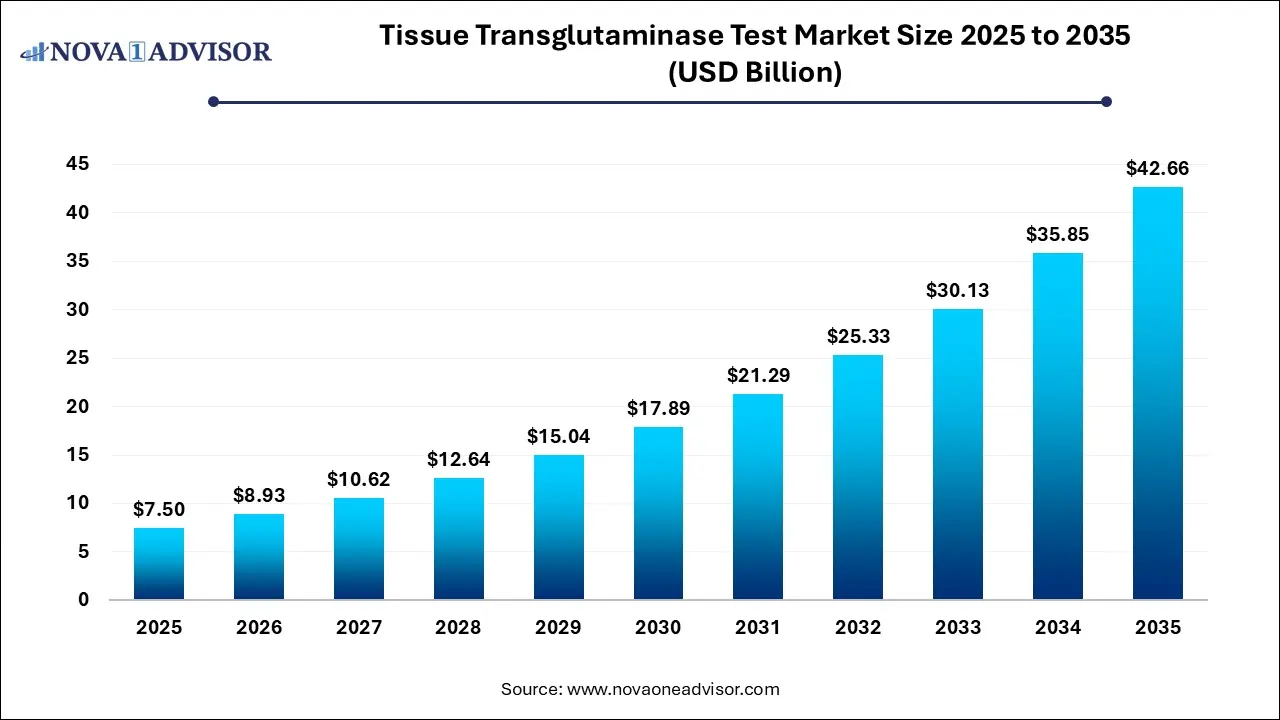
The global tissue transglutaminase test market size was estimated at USD 7.50 billion in 2025 and is projected to hit around USD 42.66 billion by 2035, growing at a CAGR of 18.98% during the forecast period from 2026 to 2035.
Market Overview
The global Tissue Transglutaminase Test Market represents a critical segment within the broader autoimmune diagnostics and gastrointestinal testing industry. Tissue transglutaminase tests are primarily used for the diagnosis of celiac disease, an autoimmune disorder triggered by gluten consumption. These tests detect antibodies against tissue transglutaminase enzymes, particularly tTG-IgA and tTG-IgG antibodies, which are highly associated with celiac disease and related autoimmune conditions.
The increasing burden of autoimmune diseases globally has significantly contributed to market expansion. Celiac disease, once considered relatively rare, is now recognized as a major public health concern affecting millions of individuals worldwide. The growing awareness among healthcare professionals and patients regarding early diagnosis and management of gluten intolerance is driving the demand for tissue transglutaminase testing solutions. In addition, advancements in laboratory diagnostics and immunological testing technologies have improved the sensitivity and specificity of these tests, making them more reliable and accessible.
The market is also benefiting from increasing screening initiatives undertaken by hospitals, diagnostic laboratories, and healthcare organizations. Several countries have introduced awareness programs encouraging early detection of gastrointestinal disorders, especially among high-risk populations such as individuals with type 1 diabetes, thyroid disorders, and family history of celiac disease. These developments are expanding the testing population and strengthening market demand.
Another important factor influencing market growth is the expansion of diagnostic infrastructure in emerging economies. Countries across Asia Pacific, Latin America, and the Middle East are investing heavily in healthcare modernization, which includes advanced pathology laboratories and automated diagnostic systems. This trend is improving the availability of tissue transglutaminase tests beyond urban healthcare centers.
The market landscape is characterized by the presence of diagnostic companies focusing on immunoassays, ELISA-based testing kits, and automated laboratory analyzers. Competitive strategies include product innovation, partnerships with healthcare providers, geographic expansion, and investments in AI-supported diagnostics. Furthermore, the growing popularity of home-based healthcare and remote monitoring solutions is encouraging the development of simplified and rapid testing platforms.
Despite the positive outlook, the market faces certain challenges including limited awareness in low-income regions, underdiagnosis of celiac disease, and variability in diagnostic standards across countries. Nevertheless, continued research activities and improvements in healthcare accessibility are expected to sustain long-term market growth.
Market Outlook
- Market Growth Overview: The global tissue tranglutaminase (Ttg) test market is expected to grow significantly between 2025 and 2034, driven by the increase in diagnosed celiac disease cases and gluten sensitivity, expansion of home-based testing, and growing awareness and screening.
- Sustainability Trends: Sustainability trends involve the rise of eco-friendly and sustainable diagnostics, automation, and digitalization for efficiency, and the adoption of environmental, social, and governance frameworks.
- Major Investors: Major investors in the market include Thermo Fisher Scientific Inc., Abbott Laboratories, Inova Diagnostics, Diasorin (LIAISON®), and NanoRepro AG.
How is AI Transforming the Tissue Transglutaminase Test Market
Artificial intelligence is significantly transforming the Tissue Transglutaminase Test Market by improving diagnostic accuracy, laboratory efficiency, and clinical decision-making. AI-powered algorithms are increasingly being integrated into laboratory information systems and immunodiagnostic platforms to streamline the interpretation of serological test results. These systems help reduce human errors and ensure consistent evaluation of antibody levels across different patient populations.
One of the most important applications of AI in this market is predictive diagnostics. Machine learning models can analyze patient history, genetic predisposition, dietary habits, autoimmune markers, and laboratory findings to identify individuals at high risk of celiac disease even before severe symptoms appear. This predictive capability supports earlier intervention and improves long-term patient outcomes.
AI-driven automation is also enhancing laboratory workflow management. Advanced immunoassay analyzers equipped with AI can optimize sample prioritization, automate quality control procedures, and detect abnormalities during processing. This reduces turnaround time and increases laboratory productivity, particularly in high-volume diagnostic centers.
For example, several diagnostic laboratories are utilizing AI-assisted pathology systems to correlate serological test findings with biopsy imaging data. Such integrated systems improve diagnostic confidence and reduce the likelihood of false-negative or false-positive interpretations. AI-based clinical support systems can additionally recommend follow-up tests and suggest differential diagnoses based on patient-specific parameters.
Another emerging application involves remote healthcare and telemedicine integration. AI-enabled home testing kits connected to cloud-based healthcare platforms allow physicians to monitor patients remotely. Patients with suspected gluten sensitivity or chronic gastrointestinal symptoms can upload results digitally for clinical evaluation, improving accessibility in rural and underserved regions.
Natural language processing tools are also helping healthcare providers analyze large clinical datasets and research publications related to autoimmune disorders. This supports evidence-based treatment planning and facilitates faster clinical research related to celiac disease prevalence and testing efficacy.
As healthcare systems increasingly embrace digital transformation, AI is expected to become a central component of next-generation autoimmune diagnostic ecosystems. The integration of AI with laboratory diagnostics will likely improve patient stratification, accelerate diagnosis, and reduce healthcare costs over the coming years.
Tissue Transglutaminase Test Market Report Scope
| Report Coverage | Details |
| Market Size in 2026 | USD 8.93 Billion |
| Market Size by 2035 | USD 42.66 Billion |
| Growth Rate From 2026 to 2035 | CAGR of 18.98% |
| Base Year | 2025 |
| Forecast Period | 2026 to 2035 |
| Segments Covered | By Type, By End User, By Region |
| Market Analysis (Terms Used) | Value (USD Million/Billion) or (Volume/Units) |
| Regional Scope | North America; Europe; Asia Pacific; Central and South America; the Middle East and Africa |
| Key Companies Profiled | Some of the key players profiled in the report are Quest Diagnostics Incorporated., SQI Diagnostics, Trinity Biotech, ZEDIRA GmbH, Demeditec Diagnostics GmbH, ARUP Laboratories, Cell Science Systems, and Bio-Rad Laboratories, Inc., Pfizer Inc., Celimmune, LLC., and others. |
Market Driver
Rising Prevalence of Celiac Disease and Autoimmune Disorders
The increasing prevalence of celiac disease worldwide is one of the strongest drivers of the Tissue Transglutaminase Test Market. Celiac disease has transitioned from being considered a rare gastrointestinal condition to a widely recognized autoimmune disorder affecting millions of individuals globally. Growing awareness among healthcare professionals and patients has substantially increased screening rates, directly boosting demand for tissue transglutaminase testing.
Several factors are contributing to the rising incidence of celiac disease, including genetic predisposition, dietary changes, environmental triggers, and improved diagnostic capabilities. Modern healthcare systems are increasingly emphasizing early diagnosis because untreated celiac disease can lead to severe complications such as malnutrition, infertility, neurological disorders, osteoporosis, and intestinal lymphoma.
Additionally, the overlap of celiac disease symptoms with other gastrointestinal disorders has encouraged broader diagnostic testing. Patients suffering from chronic fatigue, abdominal pain, anemia, bloating, and diarrhea are increasingly undergoing serological screening. Healthcare guidelines in several countries now recommend routine testing for high-risk populations, including first-degree relatives of celiac patients and individuals with type 1 diabetes or autoimmune thyroid disorders.
The expansion of awareness campaigns by healthcare organizations and patient advocacy groups has further accelerated market growth. Social media, digital healthcare platforms, and gluten-free lifestyle movements have also contributed to increased public awareness, leading to higher patient demand for diagnostic testing.
Market Restraint
Limited Awareness and Misdiagnosis in Developing Regions
Despite significant advancements in autoimmune diagnostics, limited awareness and frequent misdiagnosis remain major restraints for the Tissue Transglutaminase Test Market, especially in low- and middle-income countries. Many healthcare providers in developing regions still lack adequate training regarding the recognition and diagnosis of celiac disease.
Symptoms associated with celiac disease often mimic other gastrointestinal conditions such as irritable bowel syndrome, lactose intolerance, and inflammatory bowel disease. As a result, patients frequently experience delayed diagnosis or receive inappropriate treatments for several years. This underdiagnosis significantly reduces testing rates and limits market penetration in underserved regions.
Another challenge involves inadequate laboratory infrastructure in rural and resource-constrained settings. Advanced immunoassay analyzers and specialized pathology services may not be readily available in smaller healthcare facilities. Consequently, patients may need to travel to urban centers for testing, increasing healthcare costs and reducing accessibility.
Cultural and dietary factors also influence diagnosis rates. In several regions, awareness regarding gluten intolerance remains relatively low, and healthcare consultations for chronic digestive symptoms are often delayed. Additionally, reimbursement limitations and lack of standardized screening policies in certain countries continue to hinder widespread adoption of tissue transglutaminase testing.
Market Opportunity
Expansion of Home-Based and Point-of-Care Diagnostic Testing
The growing demand for home-based and point-of-care diagnostics presents a major opportunity for the Tissue Transglutaminase Test Market. Modern healthcare systems are increasingly shifting toward decentralized diagnostic models that prioritize convenience, rapid results, and patient-centered care. This transition is creating favorable conditions for the development of portable and easy-to-use tTG testing kits.
Consumers are becoming more proactive regarding preventive healthcare and chronic disease management. Individuals experiencing recurring gastrointestinal symptoms increasingly prefer self-testing solutions before consulting specialists. Home-based tissue transglutaminase testing kits can support early detection and encourage timely medical intervention.
Technological advancements in biosensors, microfluidics, and digital diagnostics are enabling manufacturers to develop highly accurate rapid testing platforms. Some next-generation devices integrate smartphone connectivity and cloud-based reporting systems, allowing patients to share results directly with healthcare providers.
The opportunity is especially significant in remote and underserved regions where access to specialized laboratories remains limited. Point-of-care solutions can improve healthcare accessibility and reduce diagnostic delays. Furthermore, telemedicine integration is expected to strengthen the adoption of remote autoimmune disease diagnostics.
As healthcare systems continue emphasizing personalized and decentralized care models, companies investing in innovative home testing technologies are likely to gain substantial competitive advantages in the coming years.
Segmental Insights
By Type
How did the serological testing segment account for the largest share in the Global Tissue Tranglutaminase (Ttg) Test market?
The serological testing segment is driven by the shift toward automated ELISA platforms, and recombinant technology has significantly improved testing efficiency while reducing operational costs for laboratories. The rapid growth of point-of-care (POC) kits is decentralising diagnosis, allowing for immediate, high-volume assessments in clinical settings. This combination of reliability and accessibility ensures that serology will continue to dominate the market over traditional, invasive biopsy methods.
How did the Biopsy segment expect to hold the fastest-growing Global Tissue Tranglutaminase (Ttg) Test market in the coming years?
The Biopsy segment is driven by the technological refinements in endoscopic precision and minimally invasive sampling, which have significantly reduced patient barriers, ensuring higher diagnostic accuracy and procedure volumes. This segment continues to grow alongside rising global prevalence, as clinicians rely on tissue-based evidence to navigate complex or ambiguous autoimmune presentations. The necessity of a definitive clinical baseline ensures that biopsy remains an indispensable and high-value component of the diagnostic market.
By End User
How did the clinics and hospitals segment account for the largest share in the Global Tissue Tranglutaminase (Ttg) Test market?
The clinics and hospitals segment is driven by the ever-increasing automated, high-throughput platforms to manage the vast majority of global celiac screenings. The integration of specialized gastroenterology care ensures that Ttg-IgA testing is managed. With the rising disease prevalence and standardized clinical guidelines, these facilities remain the highest-volume centres for both rapid and confirmatory diagnostics.
How did the home care segment expect to hold the fastest-growing Global Tissue Tranglutaminase (Ttg) Test market in the coming years?
The home care segment is driven by the advancement in microfluidics and lateral flow technology, providing consumers with a high-precision, private alternative to clinical visits. As global awareness of celiac symptoms grows, these cost-effective kits empower a proactive patient base, including a rising geriatric demographic, to manage chronic screening independently. By decentralizing diagnostics from hospitals to the home, this is significantly reducing the economic and logistical barriers to early detection.
By Regional
How did the North America region account for the largest share in the Global Tissue Tranglutaminase (Ttg) Test market?
North America’s high diagnostic awareness and a sophisticated healthcare infrastructure that prioritises early celiac detection. The region benefits from the heavy presence of industry giants, such as Thermo Fisher and Roche, who drive the rapid adoption of automated and molecular diagnostic tools. The significant rise in healthcare expenditure and the surging popularity of at-home testing are decentralising care and increasing total testing volumes.
U.S. Global Tissue Tranglutaminase (Ttg) Test Market Trends
The U.S. is shifting toward Ttg-IgA serology, which now serves as the primary, non-invasive gateway for both adult and high-volume paediatric screening. The integration of high-sensitivity platforms, such as CLIA and POCT, enhances diagnostic speed and accuracy across a rising global patient base. As clinical guidelines increasingly favour these antibody-based assessments over traditional biopsies, testing volumes are surging to meet the needs of an expanding global prevalence.
How did the Asia Pacific region hold the fastest-growing Global Tissue Tranglutaminase (Ttg) Test Market in the forecast period?
Asia Pacific’s rapid infrastructure expansion and significant government-backed health initiatives. Increasing per capita disposable income, coupled with a rise in localized manufacturing, makes high-precision tTG kits more affordable and accessible to diverse populations. As clinical awareness grows, these regions are transitioning from underdiagnosis to becoming major hubs for routine celiac and autoimmune screening.
China Global Tissue Tranglutaminase (Ttg) Test Market Trends
China’s rising awareness of celiac disease and its high genetic prevalence. While ELISA methods currently lead, the sector is shifting toward automated analyzers and rapid, paper-based point-of-care technologies. Significant investment in diagnostic infrastructure is evolving from traditional laboratory testing toward decentralized, high-efficiency clinical solutions.
Key Players in the Global Tissue Tranglutaminase (Ttg) Test Market
- SQI Diagnostics
SQI Diagnostics contributes to the global transglutaminase test market by utilizing its proprietary multiplexing and automation technology, such as the SQIDlite and sqid-X platforms, to deliver high-sensitivity screening.
- Trinity Biotech
Trinity Biotech strengthens the market through its extensive range of Captia™ Enzyme Linked Immunosorbent Assays (ELISA) designed for the detection of autoimmune celiac disease, including specific tests for tissue transglutaminase antibodies (tTG).
- Quest Diagnostics Incorporated
Quest Diagnostics contributes to the global transglutaminase (tTG) test market by providing a comprehensive, high-sensitivity diagnostic panel (tTG-IgA, tTG-IgG, and total IgA) used to detect celiac disease.
Segments Covered in the Report
This report forecasts revenue growth at country levels and provides an analysis of the latest industry trends in each of the sub-segments from 2021 to 2035. For this study, Nova one advisor, Inc. has segmented the tissue transglutaminase test market.
By Type
- Serological Testing
- Biopsy
- Others
By End User
- Clinics and Hospitals
- Home Care
- Research Organizations
- Others
By Region
- North America
- Europe
- Asia Pacific
- Latin America
- Middle East and Africa (MEA)
FAQ's

Proceed to Buy
Instant PDF delivery on confirmation

Tissue Transglutaminase Test Market Size to Hit USD 42.66 Billion by 2035
 Request Customization
 Download Sample
Warning: Trying to access array offset on value of type null in /home/multiwpmr/public_html/report-details.php on line 1145

Get a Sample of this Report
Tissue Transglutaminase Test Market