

U.S. Antacids Market Size, Share, and Trends 2026 to 2035
 Status Published
 Category Healthcare


Content
U.S. Antacids Market Size and Growth 2026 to 2035
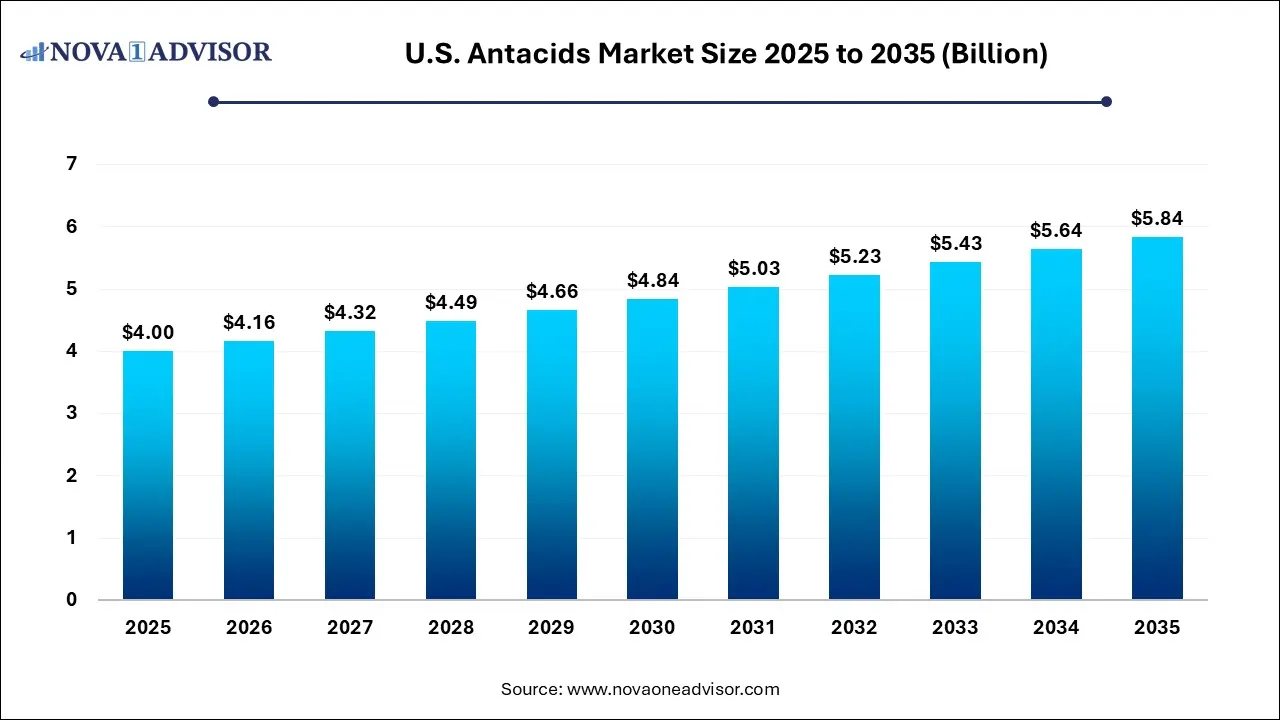
The U.S. antacids market size is calculated at USD 4.0 billion in 2025, grow to USD 4.16 billion in 2026, and is projected to reach around USD 5.84 billion by 2035, grow at a CAGR of 3.9% from 2026 to 2035. The market is expanding due to rising cases of acid reflux and GERD linked to a sedentary lifestyle and poor dietary habits. Additionally, an aging population and the widespread availability of over-the-counter medication contribute to increasing demand.
Key Takeaways
- By type, the liquid segment held a significant market share in 2025.
- By end use, the retail pharmacy segment grew at a lucrative rate in the market in 2025.
Which Factors are Driving the Growth of the U.S. Antacids Market?
The antacids market encompasses the production and sale of medications that neutralize stomach acid to treat conditions like heartburn, indigestion, and acid reflux. It includes OTC and prescription products in various forms, driven by rising digestive disorders and lifestyle-related issues. The growth of the U.S. antacids market is primarily driven by the rising incidence of gastrointestinal disorders such as reflux, GERD, and indigestion, largely linked to unhealthy eating habits, obesity, and stress. Increased awareness of digestive health and the easy availability of over-the-counter antacid products also support market expansion. Additionally, a growing elderly population, who are more prone to such conditions, and innovation in fast-acting formulations are further demand across the country, boosting overall market growth.
- For Instance, As per a CDC report released in September 2025, obesity affected 40.3% of U.S. adults between August 2021 and August 2023. The condition was most common among individuals aged 40–59 and those with lower educational attainment. Additionally, 9.4% of adults were found to have severe obesity, with women experiencing higher rates than men across all age categories.
What are the emerging trends in the U.S. Antacids Market for 2025?
- In August 2025, Haleon launched a new 3-in-1 variant of ENO, India’s leading OTC antacid brand. This formulation combines ENO with natural ingredients like cumin, carom seeds, and black salt to provide quick and effective relief from acidity, indigestion, and gastric discomfort.
- In July 2025, the U.S. FDA approved vonoprazan (Voquezna), a new treatment for gastroesophageal reflux disease (GERD). This medication is intended for daily use to help relieve heartburn symptoms in adults affected by GERD.
What Impact does AI have on the U.S. Antacids Market?
Artificial intelligence is significantly influencing the U.S. antacids market by streamlining research and development processes. AI algorithms analyze extensive datasets from clinical trials and consumer feedback to identify new active ingredients and optimize formulations, enhancing efficacy and minimizing side effects. This accelerates product development cycles, enabling faster market entry for innovative antacid products. Additionally, AI-driven insights into consumer preferences and purchasing behaviors assist companies in tailoring marketing strategies and improving supply chain efficiency, thereby boosting competitiveness and market growth.
Report Scope of U.S. Antacids Market
| Report Coverage | Details |
| Market Size in 2026 | USD 4.16 Billion |
| Market Size by 2035 | USD 5.84 Billion |
| Growth Rate From 2026 to 2035 | CAGR of 3.86% |
| Base Year | 2025 |
| Forecast Period | 2026-2035 |
| Segments Covered | By Type, By End-use |
| Market Analysis (Terms Used) | Value (US$ Million/Billion) or (Volume/Units) |
| Key Companies Profiled | Haleon Group of Companies., Bayer AG, Boehringer Ingelheim International GmbH, Dr. Reddy’s Laboratories Ltd., Sanofi, Reckitt Benckiser Group plc, Sun Pharmaceuticals Ltd., Takeda Pharmaceutical Company Limited, Pfizer Inc., Procter & Gamble |
Market Dynamics
Driver
Increasing Prevalence of Gastrointestinal Disorders
A growing number of Americans are suffering from digestive health issues due to modern lifestyle, including irregular eating patterns, low physical activity, and high-fat diets. This shift has led to a consistent rise in demand for antacids, which offer quick relief from symptoms like bloating, acidity, and discomfort. As these disorders become more common across various age groups, especially adults, the need for effective and easily accessible antacid solutions continues to drive the market growth.
Restraint
Growing Concern Over the Long-term Side Effects
Rising awareness about the potential health risks associated with prolonged use of antacids limits their widespread adoption. Concerns over complications such as bone adoption. Concerns over complications such as bone fracture, vitamin B12 deficiency, and digestive imbalances have led healthcare professionals and consumers to reassess frequent or long-term usage. This growing caution is prompting a shift towards safer or more natural remedies, which in turn is restricting the growth potential of the U.S. antacids market.
Opportunity
Rising Demand for Natural and Herbal-based Products
The rising popularity of herbal and natural remedies is creating new growth avenues in the U.S. antacids market. Consumers are now more inclined toward products made from organic and plant-derived ingredients due to safety concerns linked to traditional medications. This shift in preference is driving companies to develop gentler, naturally formulated antacids, catering to a health-conscious population and opening an opportunity for brands to stand out with a cleaner, side-effect-free solution in a competitive market.
- For Instance, In March 2025, Haleon launched “ENO Chewy Bites” in the U.S., offering flavored, chewable antacids that cater to the growing demand for natural and convenient digestive relief. This reflects the market shift toward safer, plant-based alternatives.
Segmental Insights
Segmental Insights
By Type
Tablet
Tablet formulations dominate the U.S. antacids market because they offer unmatched convenience, affordability, portability, and long shelf life. Consumers frequently carry chewable tablets during travel, work, school, and outdoor activities, making them the preferred option for immediate symptom management. Their compact packaging allows storage in handbags, offices, vehicles, and medicine cabinets. Additionally, tablet manufacturing costs remain relatively low, enabling manufacturers to offer competitive pricing while maintaining strong profit margins.
Tablet antacids continue to benefit from decades of consumer trust and physician familiarity. Pharmaceutical companies consistently introduce improved flavors, calcium-enriched formulations, sugar-free alternatives, and fast-dissolving technologies to enhance patient compliance. Retail pharmacies dedicate significant shelf space to chewable tablet brands due to their consistently high turnover. Their broad availability across supermarkets, convenience stores, pharmacies, and online platforms further strengthens market leadership, making tablets the most widely purchased antacid formulation in the United States.
Liquid
Liquid antacids are the fastest-growing segment in the U.S. antacids market owing to their rapid onset of action and improved patient experience. Since liquid formulations are already dissolved, they begin neutralizing stomach acid almost immediately after ingestion. This characteristic makes them particularly attractive for patients experiencing severe heartburn episodes requiring quick symptom relief.
The growing elderly population also contributes significantly to liquid formulation demand. Many older adults experience difficulty swallowing tablets, making suspensions a more practical option. Pediatric patients similarly benefit from liquid formulations when prescribed by healthcare providers. Manufacturers continue improving taste, packaging convenience, dosing accuracy, and formulation stability, encouraging greater adoption. Increased recommendations by pharmacists for rapid symptom relief further support the segment's accelerated growth trajectory.
Others
The "Others" category includes powders, effervescent formulations, gummies, and emerging alternative dosage forms designed to improve patient convenience and product differentiation. Although this segment currently accounts for a smaller portion of overall market revenue, it reflects manufacturers' continuous efforts to diversify digestive health solutions and cater to evolving consumer preferences.
Innovation within this segment is driven by changing lifestyles and demand for more personalized healthcare experiences. Effervescent antacids appeal to consumers seeking faster dissolution and pleasant flavors, while gummies attract younger adults looking for convenient alternatives to traditional dosage forms. As companies continue investing in novel delivery systems and consumer-friendly formulations, this category is expected to gradually expand over the coming years.
By End-use
Retail Pharmacy
Retail pharmacies dominate the U.S. antacids market because they remain the primary purchasing destination for OTC digestive medications. Large pharmacy chains, independent pharmacies, supermarkets, and mass merchandisers provide consumers with immediate access to multiple antacid brands and formulations. Pharmacists frequently recommend suitable products based on symptom severity, age, and medical history, enhancing consumer confidence.
Retail pharmacies also benefit from strong promotional activities, loyalty programs, seasonal discounts, and attractive product placement. Their extensive geographic presence ensures convenient availability in both urban and rural communities. The continued integration of digital pharmacy services, home delivery, mobile applications, and online ordering further reinforces retail pharmacies' leadership position in the U.S. antacids market.
Hospital Pharmacy
Hospital pharmacies represent the fastest-growing end-use segment due to increasing hospitalization rates associated with gastrointestinal disorders and the rising complexity of inpatient medication management. Patients undergoing surgery, intensive care treatment, chemotherapy, or prolonged hospitalization frequently receive acid-neutralizing medications to prevent gastrointestinal complications and improve patient comfort.
Hospitals also increasingly implement standardized treatment protocols supported by clinical pharmacists who optimize medication selection and patient monitoring. Growing admissions among elderly populations and patients with chronic diseases contribute to higher utilization of antacid therapies within healthcare institutions. Furthermore, expanding healthcare infrastructure and increasing emphasis on comprehensive digestive care continue supporting the growth of hospital pharmacy distribution.
Others
The "Others" segment includes online pharmacies, mail-order pharmacies, clinics, and specialty healthcare providers that distribute antacid products to specific patient populations. Digital healthcare expansion has significantly increased the visibility of these channels, particularly among consumers seeking convenient purchasing options and home delivery services.
Online pharmacies, in particular, are experiencing notable growth due to increasing internet penetration, mobile commerce, and digital payment adoption. Consumers appreciate the ability to compare products, read reviews, and receive medications without visiting physical stores. As telemedicine and virtual healthcare consultations become more common, these alternative distribution channels are expected to gain greater importance within the U.S. antacids market.
Top Companies in the U.S. Antacids Market
- Haleon Group of Companies.
- Bayer AG
- Boehringer Ingelheim International GmbH
- Dr. Reddy’s Laboratories Ltd.
- Sanofi
- Reckitt Benckiser Group plc
- Sun Pharmaceuticals Ltd.
- Takeda Pharmaceutical Company Limited
- Pfizer Inc.
- Procter & Gamble
Recent Developments in the U.S. Antacids Market
- In January 2025, UK-based healthcare company Haleon announced a $54 million investment to upgrade its R&D center in Northside Richmond, Virginia. The renovation is expected to be completed within the year, aiming to strengthen the company’s research capabilities and support future innovation efforts across its product range.
- In March 2025, Lil’ Drug Store Products (LDSP) partnered with Procter & Gamble to expand the distribution of Rolaids, a well-known heartburn relief brand. Through this collaboration, Rolaids products will now be made widely available across travel and convenience retail locations throughout the U.S., enhancing accessibility for consumers on the go.
Segments Covered in the Report
This report forecasts revenue growth at country levels and provides an analysis of the latest industry trends in each of the sub-segments from 2021 to 2035. For this study, Nova one advisor, Inc. has segmented the U.S. antacids market.
By Type
- Tablet
- Liquid
- Others
By End-use
- Hospital Pharmacy
- Retail Pharmacy
- Others
FAQ's

Proceed to Buy
Instant PDF delivery on confirmation

 Request Customization
 Download Sample
Warning: Trying to access array offset on value of type null in /home/multiwpmr/public_html/report-details.php on line 1145

Get a Sample of this Report
U.S. Antacids Market