

U.S. Antimicrobial Catheters Market Size, Share, and Trends 2026 to 2035
 Status Published
 Category Healthcare


Content
U.S. Antimicrobial Catheters Market Size and Growth 2026 to 2035
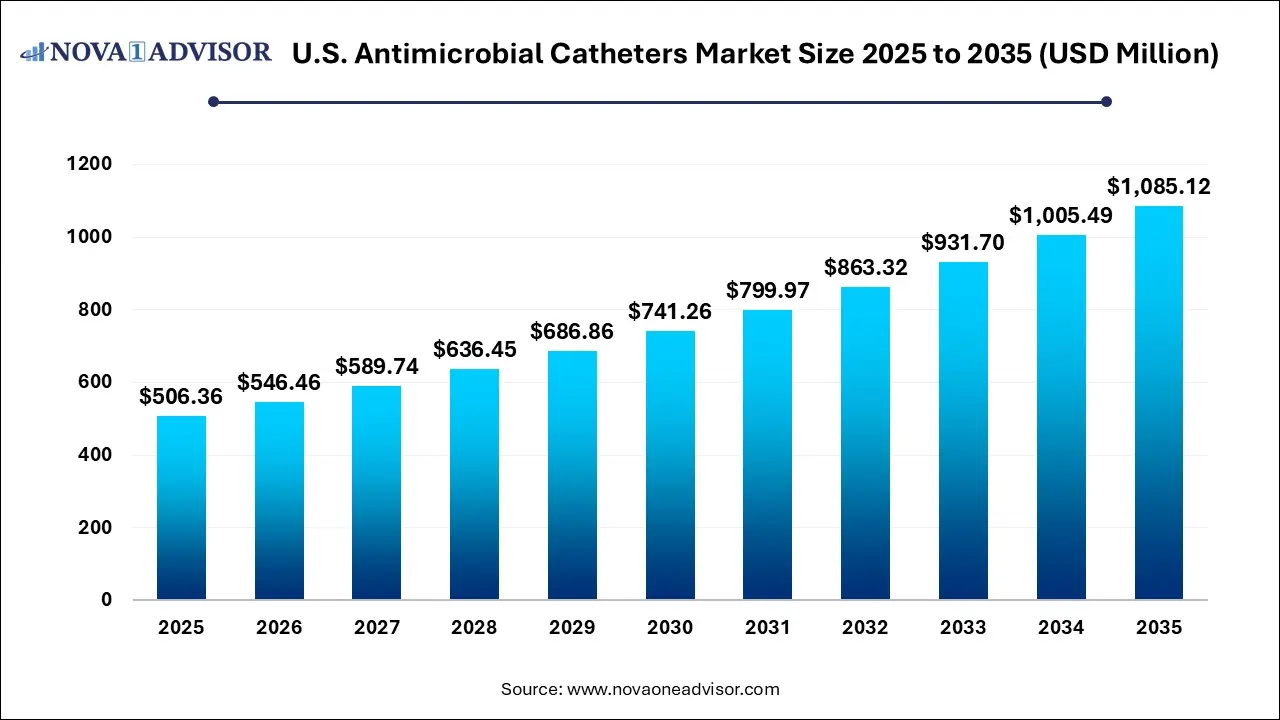
The U.S. antimicrobial catheters market size was estimated at USD 506.36 million in 2025 and is projected to increase from USD 546.46 million in 2026 to approximately USD 1,085.12 million by 2035, growing at a CAGR of 7.92% from 2026 to 2035. The U.S. antimicrobial catheters market is driven by the high incidence of hospital-acquired infections, shifting toward advanced, multi-agent antimicrobial coatings and non-antibiotic surfaces that prevent bacterial adhesion without contributing to antibiotic resistance, and growing geriatric and chronic disease populations.
Key Takeaways
- By product type, the specialty and surgical catheters segment held a dominant position in the market with a share of 40% in 2025.
- By product type, the vascular access catheters segment is the fastest growing between 2026 and 2035.
- By technology, the antibiotic-impregnated segment accounted for a considerable revenue share of 35% in the market in 2025.
- By technology, the silver-based technology segment is the fastest growing during 2026 and 2035.
- By material, the silicone segment is the dominant in the U.S. Antimicrobial Catheters market with a share of 40% in 2025.
- By end use, the hospitals segment held the dominant position in the market with a share of 50% in 2025.
Innovation Driving Transformation in the U.S. Antimicrobial Catheters Market
U.S. antimicrobial catheters consist of specialized medical devices coated with antimicrobial agents, such as silver or antibiotics, to prevent bacterial colonization and biofilm formation. The essential infection control tools, these catheters are used in urinary and vascular applications to combat high-burden hospital-acquired infections such as CLABSI and CAUTIs. The market growth is driven by rising HAIs, an aging population requiring long-term catheterization, and stringent, value-based infection prevention protocols within U.S. hospitals.
U.S. Antimicrobial Catheters Market Trends
- Rising Adoption of Silver-Based Technologies
Silver-based antimicrobial coatings remain the dominant technology due to their proven effectiveness against a broad spectrum of bacteria and high durability. These coatings, often utilizing silver alloys or nanoparticles, are increasingly preferred for both short-term and long-term catheters because they effectively reduce biofilm formation.
- Rapid Growth in Home Healthcare and Outpatient Care
The rising preference for home-based management of chronic urological and vascular conditions. Advancements in antimicrobial technologies are enabling safer long-term catheter use outside of hospitals, while healthcare providers are encouraging home care to reduce hospital stays and related costs.
- Advancements in Non-Antibiotic Coatings and Nanotechnology
The significant trend toward developing non-antibiotic surfaces, such as zwitterionic polymers, antimicrobial peptides, and nitric oxide-releasing coatings. These next-generation coatings aim to resist microbial adhesion rather than relying on systemic antibiotics, providing longer-lasting protection and better biocompatibility.
Key AI Integration in the U.S. Antimicrobial Catheters Market
AI and ML are transforming the U.S. antimicrobial catheters industry by facilitating advanced, data-driven design and enhanced infection surveillance. Researchers are utilizing AI, especially geometry-focused Fourier neural operators, to optimize catheter geometries, such as creating specialized internal structures that suppress bacterial upstream swimming. These AI-aided designs have demonstrated the potential to reduce bacterial contamination by up to 100-fold compared to conventional catheters. AI algorithms are applied to electronic health records and real-time data to personalize catheter selection and predict risks of catheter-associated urinary tract infections.
U.S. Antimicrobial Catheters Market Report Scope Report Scope
| Report Coverage | Details |
| Market Size in 2026 | USD 546.46 Million |
| Market Size by 2035 | USD 1,085.12 Million |
| Growth Rate From 2026 to 2035 | CAGR of 7.92% |
| Base Year | 2025 |
| Forecast Period | 2026 to 2035 |
| Segments Covered | Product Type, Technology, Material, End use |
| Market Analysis (Terms Used) | Value (USD Million/Billion) or (Volume/Units) |
| Key Companies Profiled | B. Braun SE; Teleflex Incorporated; SilvoGuard; BD; Medline; ConvaTec Group PLC; Silq Technologies; AvantGuard (Halomine Inc.); Medtronic; Cook; Integra LifeSciences Corporation; Vygon; Camstent |
Market Dynamics
Driver
Rising HAI Prevalence
The escalating need for specialized, long-term vascular access, particularly in oncology and rare disease treatments, where the immune systems may be compromised. As these advanced therapies often require repeated, high-frequency administration over extended periods, the risk of catheter-related bloodstream infections rises, making antimicrobial-coated catheters essential for patient safety. Many gene therapy delivery systems rely on advanced catheter-based techniques, such as balloon catheters or drug-eluting catheters, which necessitate specialized antimicrobial materials to maintain sterility.
Restraint
High Cost & Reimbursement Issues
The market growth is hindered by adoption in price-sensitive healthcare settings. While these catheters are clinically effective in reducing infections, they are often more expensive than conventional catheters, causing many hospitals to resist wider implementation due to procedural costs. Limited reimbursement coverage for the premium price of these advanced devices further discourages adoption, especially when hospitals are already managing tight budgets and trying to avoid non-reimbursable penalties.
Opportunity
Next-Generation Coatings
The significant improvement in long-term infection prevention and the reduction of catheter-associated urinary tract infections. These innovations tackle the critical issue of bacterial biofilm formation, offering, in some cases, up to 21 days of enhanced efficacy compared to older technologies. By providing superior durability and safety, this coating meets strict hospital infection control protocols, fueling demand in the lucrative U.S. vascular and urinary catheter sectors. The heavy investment in nanotechnology and smart material research from key manufacturers is creating lucrative growth opportunities and driving market differentiation.
Segment Insights
Product Type Insights
Why Did the Specialty and Surgical Catheters Segment Hold a 40% Share for the U.S. Antimicrobial Catheters Market?
The specialty and surgical catheters segment held a dominant position in the market with a share of 40% in 2025, owing to the increasing complexity of surgeries and medical procedures that require specialized catheter technologies. The technological advancements are transforming catheters from simple conduits into high-performance tools essential for modern, risk-mitigated healthcare delivery.
The vascular access catheters segment held a 35% share of the market in 2025. Due to the growing number of chronic diseases requiring frequent vascular access, driving steady demand. Catheters are used to gain access to the vascular system for treatments, such as IV therapy, dialysis, or blood draws. The widespread clinical applications in intensive care units and emergency care.
The urological catheters segment held a 25% share of the market in 2025, driven by the consistent demand in healthcare facilities, though growth is outpaced by vascular access and surgical catheters. Growing cases of urinary retention, incontinence, and prostatic hyperplasia, especially among the elderly, necessitate frequent, long-term catheterization. The rising preferences for self-catheterization and home-based care have increased the demand for safe, antimicrobial products for managing chronic conditions.
By Technology Insights
Why Did the Antibiotic-Impregnated Segment Lead the U.S. Antimicrobial Catheters Market?
The antibiotic-impregnated segment registered its dominance over the market with a share of 35% in 2025, owing to the broad application and effectiveness in infection control make this the dominant technology in catheter usage. Superior infection prevention and focus on cost-effective care. The widely used method in specialized applications minimizes serious infection risks.
The silver-based technology segment held the 25% share of the market in 2025, due to its effectiveness in infection prevention, high demand in healthcare settings, and innovation in technology has enhanced the performance and effectiveness of these catheters. Increased regulatory focus on reducing hospital-acquired infections spurred the adoption of superior infection control techniques.
The organic/polymer-based (Non-Metal/Non-Antibiotic) segment held a 21% share of the market in 2025 because of growing interest in biocompatible and non-metallic materials, which cater to patients with metal allergies or concerns over antibiotic resistance. They often have better biocompatibility, reducing tissue inflammation, toxicity, and allergic reactions compared to traditional coatings.
The combination technologies segment held a 19% share of the market in 2025 due to rising preference for multi-functional solutions that offer a broader range of benefits, including infection prevention and longer catheter lifespan. The growing prevalence of healthcare-associated infections, especially in intensive care units, has created high demand for advanced, infection-resistant materials.
By Materials Insights
Why Did the Silicone Segment Hold a 40% Share for the U.S. Antimicrobial Catheters Market?
The silicone segment led the market with a share of 40% in 2025, due to the superior flexibility, biocompatibility, and cost-effectiveness of silicone make it the leading material for catheter production. The rising demand for catheters in home care and chronic care settings drives the need for materials that are safe and comfortable for extended, long-term use.
The polyurethane (PU) segment held a 35% share of the market in 2025, with the highly durable PU, which tends to make it less comfortable and flexible than silicone, limiting its widespread use. The material minimizes thrombosis risk and tissue irritation, which is critical for long-term catheterization. A durable and more rigid material is often used in more specialized catheters that need greater strength.
The latex segment held a 15% share of the market in 2025, due to rising allergies and sensitivities to latex among patients. Its high flexibility and soft structure often provide better comfort for patients requiring medium-to long-term catheterization. The rise in urinary incontinence management has spurred the demand for latex-foley catheters. The advancement in coating technology and the ease of insertion.
The others segment held a 10% share of the market in 2025, due to the innovation in biocompatible and advanced materials, which is gaining traction, albeit with slower adoption due to cost and regulatory challenges. Shift towards home care and self-catheterization, reduced infection rates, and innovation in advanced technology.
By End-Use Insights
Why Did the Hospitals Segment Hold a 50% Share for the U.S. Antimicrobial Catheters Market?
The hospitals segment led the market with a share of 50% in 2025, due to the high volume of invasive procedures and treatments, particularly for chronic and complex conditions. The rise in invasive and minimally invasive surgeries requires extensive use of Foley and vascular catheters in acute care settings. Healthcare facilities patients receive acute care, surgeries, and treatments requiring catheter use.
The ambulatory surgical centers (ASCs) segment held a 20% share of the market in 2025, with the high-volume migration to outpatient settings and cost-effective reimbursement policies. It prioritizes reducing infection risks and bloodstream infections, which are common complications that ASCs work to minimize to ensure patient safety and reduce readmissions.
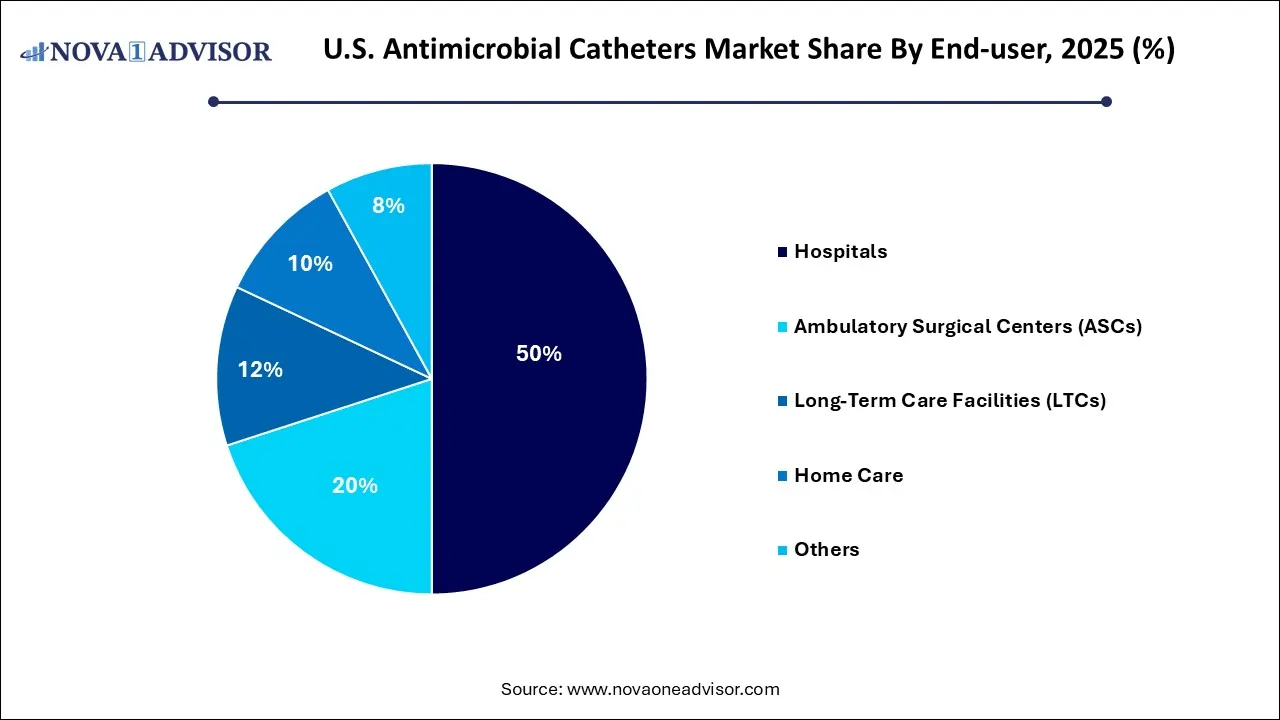
The long-term care facilities (LTCs) segment held a 12% share of the market in 2025, as the aging population grows, demand for long-term care solutions and related medical devices is on the rise. Improved awareness of antibiotic resistance has driven a shift toward using technologies, such as silver-coated catheters, to prevent infection rather than treating it.
The home care segment held a 10% share of the market in 2025, due to the rising preference for home care due to patient comfort, convenience, and cost savings is driving this segment's growth. The increase in elderly patients with mobility issues or chronic conditions requiring long-term catheterization at home has boosted demand.
The others segment held a 8% share of the market in 2025, owing to miscellaneous settings such as outpatient clinics or rehabilitation centers using antimicrobial catheters. The shift toward home care, self-catheterization, and external and specialized catheters.
Recent Developments
- In February 2025, Johnson & Johnson MedTech launched the CEREGLIDE™ 92 Catheter System in the U.S., a .092 inner diameter device featuring INNERGLIDE™ 9 and TruCourse™ Technology to improve access in complex acute ischemic stroke cases. Designed for rapid navigation to the M1 territory, the system supports enhanced clot withdrawal and integrates with the company’s Stroke Solutions portfolio.
- In February 2026, Medline entered a Prime Vendor agreement with Michigan-based McLaren Health Care to supply 12 hospitals and various care facilities, expanding a prior five-year relationship. This partnership allows McLaren to utilize Medline’s distribution network for acute care, lab services, and home health to drive operational efficiency.
- In January 2025, Becton, Dickinson and Company (BD) has announced a multi-state investment strategy to fortify the U.S. healthcare supply chain. By expanding domestic production of syringes, needles, and IV catheters, BD is addressing the nation's critical need for resilient, high-volume medical infrastructure.
U.S. Antimicrobial Catheters Market Companies
- B. Braun SE
- SilvoGuard
- Teleflex Incorporated
- BD
- ConvaTec Group PLC
- MEDLINE
- Silq Technologies
- Medtronic
- AvantGuard (Halomine Inc.)
- Cook
- Vygon
- Integra LifeSciences Corporation
- Camstent
U.S. Antimicrobial Catheters Market Report Segmentation
By Product Type
- Urological Catheters
- Vascular Access Catheters
- Specialty and Surgical Catheters
By Technology
- Silver-Based Technology
- Antibiotic-Impregnated
- Organic/Polymer-Based (Non-Metal/Non-Antibiotic)
- Combination Technologies
By Material
- Silicone
- Polyurethane (PU)
- Latex
- Others
By End Use
- Hospitals
- Ambulatory Surgical Centers (ASCs)
- Long-Term Care Facilities (LTCs)
- Home Care
- Others
FAQ's

Proceed to Buy
Instant PDF delivery on confirmation

U.S. Antimicrobial Catheters Market Size to Hit USD 1,085.12 Million by 2035
 Request Customization
 Download Sample

Get a Sample of this Report
U.S. Antimicrobial Catheters Market