

U.S. Chiropractic Market Size, Share, and Trends 2026 to 2035
 Status Published
 Category Healthcare


Content
U.S. Chiropractic Market Size and Growth 2026 to 2035
The U.S. chiropractic market size reached USD 912.61 million in 2025 and is projected to hit around USD 8127.82 million by 2035, expanding at a CAGR of 24.44% during the forecast period from 2026 to 2035.
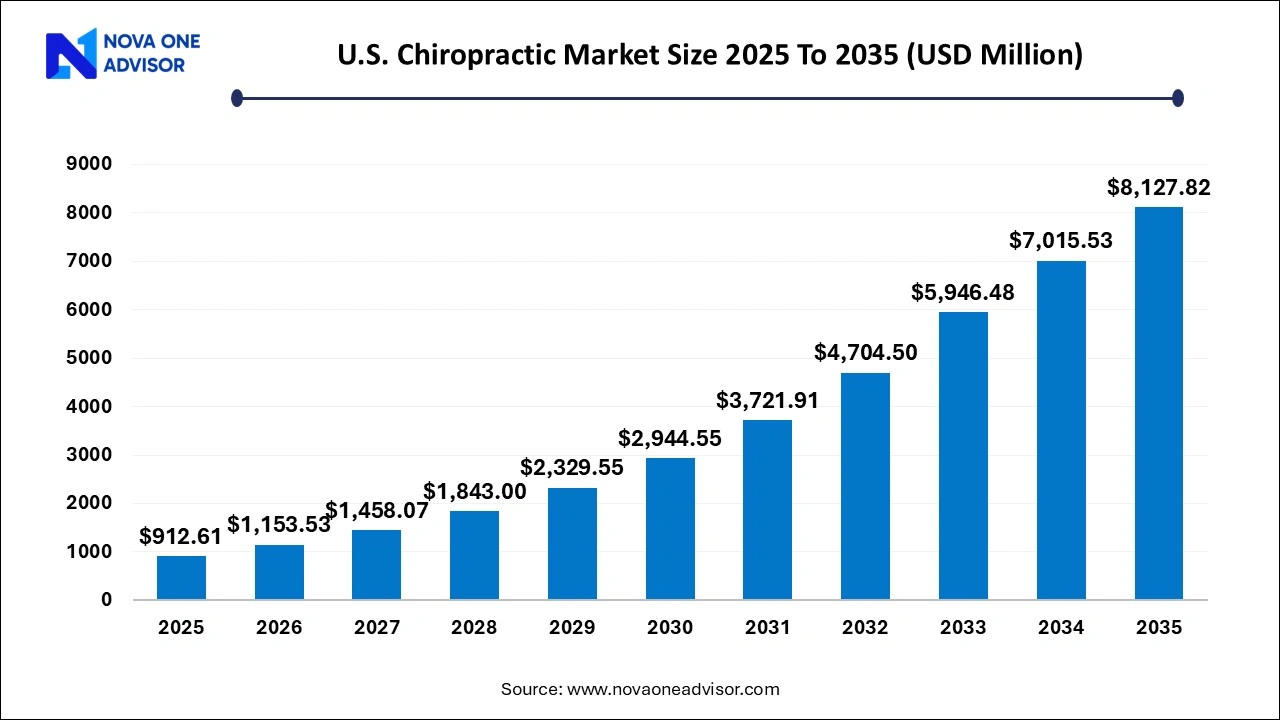
Key Takeaways:
- The suburban segment dominated the market and accounted for the largest revenue share of around 63.0% in 2025.
- The rural segment is expected to advance at the fastest CAGR of 27.3% during the forecast period.
- The clinic segment accounted for the largest revenue share of around 46% in 2025.
- The franchise segment is expected to expand at the fastest CAGR of 28.6% over the forecast. period
Market Overview
The U.S. chiropractic market is a critical pillar in the country’s complementary and alternative medicine (CAM) landscape, focused on diagnosing and treating neuromuscular disorders through manual adjustment and spinal manipulation. The chiropractic profession has evolved from its origins in the late 19th century into a mainstream clinical practice, often integrated with primary healthcare services, wellness programs, and rehabilitative medicine.
As of 2025, the U.S. chiropractic industry consists of more than 70,000 licensed chiropractors and thousands of support staff operating across clinics, wellness centers, and franchise locations. These practitioners provide non-invasive therapies aimed at pain management, musculoskeletal rehabilitation, posture correction, sports injury recovery, and holistic wellness.
The market's resilience is underscored by growing consumer preference for drug-free treatment options, especially for conditions like lower back pain, neck stiffness, migraines, and joint issues. Moreover, an increasing number of private insurers and public health plans have started to reimburse chiropractic services, expanding patient access across demographics.
While traditionally considered a niche profession, chiropractic care now finds widespread acceptance in urban and suburban settings, and is increasingly being adopted as part of integrated wellness regimens in corporate health programs, professional sports teams, and post-operative recovery protocols.
Major Trends in the Market
-
Integration of Chiropractic Services with Physical Therapy and Rehabilitation
-
Rising Consumer Interest in Preventive and Holistic Wellness
-
Franchise Model Expansion in Chiropractic Chains
-
Digital Booking Platforms and Telehealth Consultations
-
Greater Acceptance by Insurance Providers and Employers
-
Expansion of Chiropractic Services in Prenatal and Pediatric Care
-
Use of Wearables and Sensor-based Posture Correction Tools in Clinics
-
Growing Chiropractic Education and Licensing Standards
U.S. Chiropractic Market Report Scope
| Report Attribute | Details |
| Market Size in 2026 | USD 1153.53 Million |
| Market Size by 2035 | USD 8127.82 Million |
| Growth Rate From 2026 to 2035 | CAGR of 24.44% |
| Base Year | 2025 |
| Forecast Period | 2026 to 2035 |
| Segments Covered | Designation, location |
| Market Analysis (Terms Used) | Value (US$ Million/Billion) or (Volume/Units) |
| Report Coverage | Revenue forecast, company ranking, competitive landscape, growth factors, and trends |
| Key Companies Profiled | Magen David Community Center, Inc.; The Joint Corp.; Lbi Starbucks DC 3; Allied Health of Wisconsin, S.C.; Sherman College of Chiropractic; Chiropractic Strategies Group, Inc.; Chiro One Wellness Centers, LLC; Landmark Healthcare Services, Inc.; Parsons Gregory V Advanced Chiropractic Clinic; Silverman Chiropractic Center, DC PCA; Emergency Chiropractic; Multi-Specialty Healthcare Group, LLC |
U.S. Chiropractic Market Dynamics
Drivers
- Growing Consumer Awareness: The increasing awareness among consumers about the benefits of non-invasive and drug-free healthcare options has driven demand for chiropractic services.
- Preventive Healthcare Emphasis: A societal shift towards preventive healthcare has fueled interest in holistic approaches, with chiropractic care emerging as a proactive solution for maintaining overall health and well-being.
Restraints
- Insurance Coverage Challenges: Despite growing acceptance, a significant challenge in the U.S. chiropractic market is the inconsistency in insurance coverage for chiropractic services, limiting accessibility for some patients.
- Collaboration Barriers: Integrating chiropractic care into mainstream healthcare encounters barriers related to collaboration with traditional medical practitioners, hindering seamless coordination of patient care.
Opportunities
- Collaborative Care Models: Opportunities abound for chiropractors to further integrate into collaborative care models, working alongside traditional healthcare professionals to provide comprehensive and well-rounded patient care.
- Research Initiatives: Investing in research initiatives to build a robust body of evidence supporting the efficacy of chiropractic interventions can enhance the credibility of the field and expand its acceptance within mainstream healthcare.
Challenges
- Insurance Coverage Disparities: Inconsistencies in insurance coverage for chiropractic services pose a significant challenge, limiting accessibility for a portion of the population and impacting the financial sustainability of chiropractic practices.
- Collaboration Hurdles: Integrating chiropractic care into mainstream healthcare encounters challenges related to collaboration with traditional medical practitioners, hindering seamless coordination of patient care and the establishment of interdisciplinary healthcare teams.
Segments Insights
By Location Insights
Urban Areas Dominate the Market
Urban chiropractic practices dominate the market, particularly in metropolitan regions with high population density and diversified healthcare access. Cities like New York, Los Angeles, and Chicago feature both premium chiropractic clinics and high-volume franchises serving professionals, athletes, and students alike.
Urban chiropractors often collaborate with orthopedic surgeons, physiotherapists, and acupuncturists within integrated wellness centers. Access to corporate offices, fitness clubs, and affluent clientele supports diverse service offerings, including custom orthotics, massage therapy, ergonomic consulting, and digital posture assessments.
Suburban Areas are the Fastest-Growing
Suburban locations are the fastest-growing, driven by migration patterns post-pandemic, where families and professionals have moved from urban centers into suburban towns. With an increased focus on work-from-home ergonomics and family-oriented wellness, suburban clinics and franchises are booming.
New chiropractic businesses are targeting strip malls, neighborhood plazas, and residential communities with convenient access and family-friendly pricing. Suburban practices are often the first adopters of mobile adjustments, at-home visits, and school outreach programs, expanding their reach into emerging demand clusters.
By Designation
Clinic Settings Dominated the Market
Independent chiropractic clinics represent the dominant segment by designation in the U.S., comprising solo practices, small partnerships, and family-owned centers. These clinics account for a majority of patient volume and continue to thrive due to personalized care, longstanding community presence, and word-of-mouth referrals.
These clinics typically offer services like spinal adjustments, therapeutic massage, ultrasound therapy, and electrical stimulation, and often serve as a first point of care for patients suffering from acute or chronic pain. Their flexible scheduling, familiarity with local patient needs, and lower overhead costs contribute to their enduring popularity, especially in suburban neighborhoods.
Franchises are the Fastest-Growing Segment
The franchise model is the fastest-growing segment, led by chains like The Joint Chiropractic, which has rapidly scaled its presence to over 800 locations nationwide. These franchises offer standardized pricing, walk-in services, and membership models, making chiropractic care more accessible and predictable for cost-conscious consumers.
Franchises benefit from strong marketing, brand recognition, and centralized training, enabling faster adoption among millennials and young families. The ability to provide care without insurance, fast service, and digital appointment management are helping this segment capture a new generation of wellness-oriented consumers.
Country-Level Analysis
In the United States, chiropractic care is now a mainstream healthcare option, especially for lower back pain, sports injuries, and joint issues. It is recognized by the American Medical Association and is part of many employer health plans and Medicare benefits for qualified seniors.
State-level differences in scope of practice such as the authority to order diagnostic imaging or perform physical therapy shape how chiropractors operate across different geographies. States like California, Florida, and Texas have high chiropractic saturation, while others are witnessing rapid growth due to licensing expansion and demand.
Chiropractic education is standardized by the Council on Chiropractic Education (CCE), with over 15 accredited institutions offering doctor of chiropractic degrees. This regulatory foundation, combined with growing research into spinal biomechanics, supports industry credibility and market stability.
Key U.S. Chiropractic Companies:
- Magen David Community Center, Inc.
- The Joint Corp.
- Lbi Starbucks DC 3
- Allied Health of Wisconsin, S.C.
- Sherman College of Chiropractic
- Chiropractic Strategies Group, Inc.
- Chiro One Wellness Centers, LLC
- Landmark Healthcare Services, Inc.
- Parsons Gregory V Advanced Chiropractic Clinic
- Silverman Chiropractic Center, DC PCA
- Emergency Chiropractic
- Multi-Specialty Healthcare Group, LLC
Recent Developments
-
April 2025 – The Joint Chiropractic announced the opening of its 900th U.S. location, with plans to expand into underserved suburban areas in the Midwest and Southeast.
-
March 2025 – HealthSource Chiropractic partnered with wearable tech firm SpineSense to integrate posture tracking and real-time feedback tools into patient care plans.
-
February 2025 – American Chiropractic Association (ACA) launched a public awareness campaign promoting drug-free pain management to reduce opioid dependency.
-
January 2025 – ChiroFusion, a leading chiropractic EHR provider, introduced an AI-powered documentation tool that automates SOAP notes and streamlines insurance billing.
-
December 2025 – A clinical study published by the Journal of Manipulative and Physiological Therapeutics confirmed the effectiveness of chiropractic spinal manipulation in managing chronic tension headaches in adults, increasing referrals from neurologists.
Segments Covered in the Report
This report forecasts revenue growth at country levels and provides an analysis of the latest industry trends in each of the sub-segments from 2021 to 2035. For this study, Nova one advisor, Inc. has segmented the U.S. Chiropractic market.
By Designation
- Clinic
- Wellness Center
- Rehab Center
- Franchise
By Location
- Urban
- Suburban
- Rural
FAQ's

Proceed to Buy
Instant PDF delivery on confirmation

U.S. Chiropractic Market Size to Hit USD 8127.82 Million by 2035
 Request Customization
 Download Sample

Get a Sample of this Report
U.S. Chiropractic Market