

U. S. Point-Of-Care Testing (POCT) Market Size, Share, and Trends 2026 to 2035
 Status Published
 Category Healthcare


Content
US Point-Of-Care Testing (POCT) Market Size 2026-2035
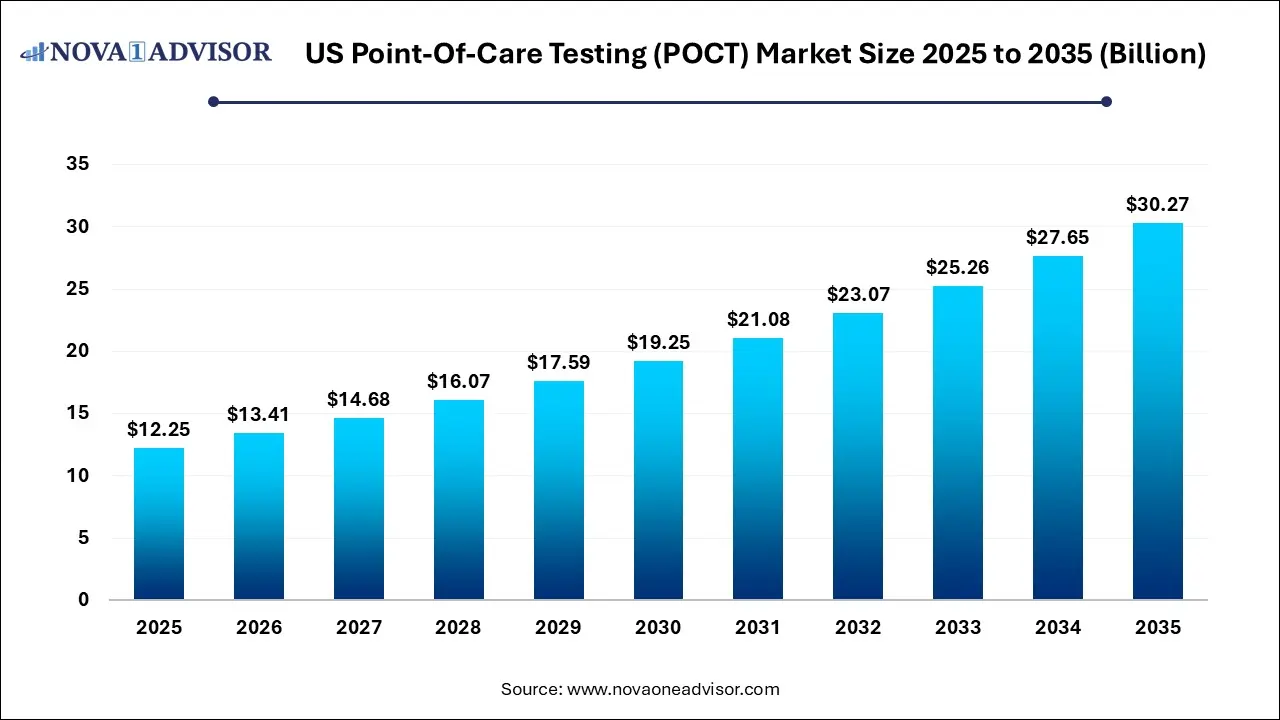
The US point-of-care testing (POCT) market size was estimated at USD 12.25 billion in 2025 and is projected to increase from USD 13.41 billion in 2026 to approximately USD 30.27 billion by 2035, growing at a CAGR of 9.47% from 2026 to 2035. The US point-of-care testing (POCT) market is driven by the rising burden of chronic and infectious diseases, integration of telehealth and digital health integration, and innovation in microfluidics, biosensors, and smartphone-integrated diagnostics platforms, making testing faster, more portable, and easier to use without extensive clinical training.
Key Takeaways
- By type, the prescription-based testing segment held a dominant position in the market with a share of 62% in 2025.
- By type, the OTC testing segment is the fastest growing between 2026 and 2035.
- By application, the blood glucose testing segment held a dominant position in the market with a share of 31% in 2025.
- By application, the infectious diseases testing segment is the fastest growing between 2026 and 2035.
Innovation Driving Transformation in the US Point-Of-Care Testing (POCT) Market
US point-of-care testing (POCT) comprises medical diagnostic testing conducted at or near the site of patient care rather than in a centralized laboratory. Its primary advantages include rapid turnaround times and immediate data access, which allow healthcare professionals to make swift clinical management decisions and start treatments without delay. These rapid results significantly streamline procedures and workflow efficiency in applications ranging from urgent care and intensive care to decentralized home healthcare and rural medical settings.
US Point-Of-Care Testing (POCT) Market Trends
- Rise of Home-Based Testing and Telehealth Integration
Consumers increasingly utilize self-testing kits and decentralized diagnostic solutions for routine screening and chronic disease management. These tests frequently integrate with mobile applications and telemedicine platforms, allowing patients to seamlessly record, track, and share their diagnostic metrics remotely with physicians.
- Digital and Connected Devices
Modern point-of-care devices are increasingly equipped with cloud connectivity, Bluetooth, and built-in interfaces that sync data directly to electronic health records (EHRs). This continuous digital integration eliminates manual data entry, reduces human error, and gives healthcare providers instantaneous access to test results regardless of the care setting.
- Expansion of CLIA-Waived Testing
The US regulatory landscape is trending toward the development and rapid approval of CLIA-waived diagnostic tools. This regulatory status allows advanced tests to be safely operated by non-laboratory personnel in urgent care centers, retail clinics, and even at the patient's bedside.
Key AI Integration in the US Point-Of-Care Testing (POCT) Market
AI and ML are revolutionizing the US POCT industry by enhancing the accuracy and sensitivity of decentralized, rapid diagnostic platforms. These algorithms enable the immediate interpretation of complex biomarker profiles and images, allowing non-laboratory personnel to conduct reliable testing in remote or urgent care settings. The predictive analytics optimize clinical workflows by streamlining data integration into electronic health records and forecasting device maintenance.
US Point-Of-Care Testing (POCT) Market Report Scope
| Report Coverage | Details |
| Market Size in 2026 | USD 13.41 Billion |
| Market Size by 2035 | USD 30.27 Billion |
| Growth Rate From 2026 to 2035 | CAGR of 9.47% |
| Base Year | 2025 |
| Forecast Period | 2026 to 2035 |
| Segments Covered | By Type , By Application |
| Market Analysis (Terms Used) | Value (USD Million/Billion) or (Volume/Units) |
| Key Companies Profiled | Abbott Laboratories, Siemens Healthineers AG. Roche Diagnostics, Danaher Corporation, Thermo Fisher Scientific Inc., Becton Dickinson , Company, Bio-Rad Laboratories Inc., Nova Biomedical Corporation, QuidelOrtho Corporation, EKF Diagnostics Holdings PLC, OraSure Technologies Inc., Trinity Biotech PLC, Meridian Bioscience Inc., Chembio Diagnostics Inc., HemoCue AB. |
Market Dynamics
Driver
Rising Chronic Conditions
The necessitating frequent and immediate diagnostic monitoring. Because these ailments demand continuous tracking of vital health markers, patients increasingly utilize decentralized, easy-to-use testing devices in outpatient clinics and home settings. This on-site capability ensures early disease detection and allows individuals to proactively manage their health without relying solely on centralized laboratories.
Restraint
Regulatory and Reimbursement Hurdles
The market growth is hindered by the reimbursement policies that often favor centralized laboratories, offering lower payout rates for point-of-care testing. This pricing disparity, compounded by inconsistent coverage across private health plans, discourages healthcare providers from investing in the devices. These financial and compliance barriers slow new product launches and limit the widespread adoption of POCT in outpatient and decentralized settings.
Opportunity
Expansion of Infectious Diseases
By creating a critical demand for rapid, decentralized diagnostics. These diseases require immediate identification to guide treatment and prevent further transmission; healthcare providers are actively shifting from centralized laboratory testing to fast, point-of-care platforms. This decentralization allows for immediate clinical decision-making in urgent care clinics, physician offices, and home-care settings. The major industry players are consistently investing in R&D to introduce innovative, operator-friendly POCT devices.
Segment Insights
By Type Insights
Why Did the prescription-based testing Segment Hold a 62% Share for the US Point-Of-Care Testing (POCT) Market?
The prescription-based testing segment held a dominant position in the market with a share of 62% in 2025. Owing to the strong hospital utilization, higher clinical reliability, broader reimbursement support, and extensive use in chronic and acute disease management. The combination of clinical necessity, strict quality control, and mandatory professional interpretation ensures this a powerful, foundational revenue share in the diagnostic market.
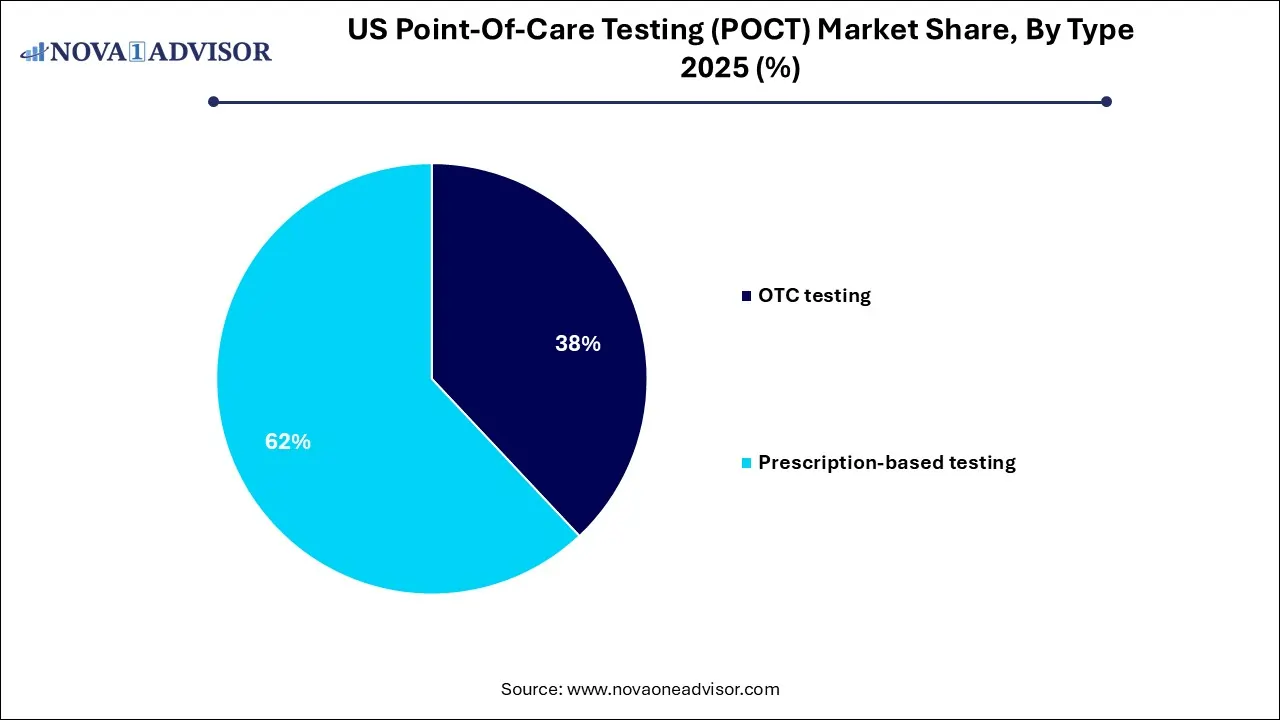
The OTC testing segment held a 38% share of the market in 2025, with rising consumer preference for self-testing, increasing awareness of preventive healthcare, and growing adoption of home-based diagnostic kits. The growing emphasis on proactive health management and early detection has boosted at-home diagnostic tracking.
By Application Insights
Why Did the Blood Glucose Testing Segment Hold a 68% Share for the US Point-Of-Care Testing (POCT) Market?
The Blood glucose testing segment held a dominant position in the market with a share of 31% in 2025. Owing to the high prevalence of diabetes, continuous monitoring requirements, and widespread adoption of portable glucose monitoring devices. Healthcare systems are highly incentivizing the remote tracking of patients' glucose levels to improve overall outcomes and reduce hospitalization rates.
The infectious diseases testing segment held a 24% share of the market in 2025, due to the increasing demand for rapid diagnostics, rising infectious disease outbreaks, and expanding decentralized healthcare services. The strong, ongoing push toward decentralized healthcare delivery. Moving testing out of purpose-built laboratories directly to the patient's bedside or community clinics increases accessibility for patients.
The cardiac markers testing segment held an 18% share of the market in 2025, due to heavily driving the adoption of point-of-care testing to bypass lengthy centralized laboratory processing. By drastically reducing reliance on centralized laboratory infrastructure, this high-growth segment minimizes overall testing expenses and hospital stay durations while optimizing emergency patient workflows.
The pregnancy and fertility testing segment held a 15% share of the market in 2025, with rapid tests offering unmatched accessibility and immediate results, serving as a highly economical first line of testing compared to lab-based blood assays. Technological advancements in lateral flow assays have significantly elevated product sensitivity, allowing for early detection and fostering deep consumer trust in home-based urine kits.
The others segment held a 10% share of the market in 2025, due to the rising number of rapid diagnostic tests gaining CLIA-waived status, allowing non-laboratory personnel to securely perform advanced screenings without regulatory violations. The massive expansion of telehealth and remote monitoring systems blurs the traditional lines between clinical testing and consumer-driven diagnostics to optimize patient tracking.
Recent Developments
- In May 2025, SAFE Health Systems officially released OpenCDx, the healthcare industry’s first open-source, standards-based Connected Diagnostics platform. Funded under a federal contract awarded to SAFE Health, the platform is designed to modernize national healthcare infrastructure, enhance public health surveillance, and streamline remote patient care.
- In November 2025, Abbott announced a definitive agreement to acquire Exact Sciences for $105 per share in a cash transaction valued at approximately $21 billion, accelerating its position in the $60 billion cancer screening and diagnostics market. The deal, expected to close in the second quarter, will make Exact Sciences a subsidiary of Abbott, adding key products like Cologuard and Oncotype DX to its portfolio.
US Point-Of-Care Testing (POCT) Market Companies
- Abbott Laboratories
- Siemens Healthineers AG
- Roche Diagnostics
- Danaher Corporation
- Thermo Fisher Scientific Inc
- Becton Dickinson
- Company, Bio-Rad Laboratories Inc.
- Nova Biomedical Corporation
- QuidelOrtho Corporation
- EKF Diagnostics Holdings PLC
- OraSure Technologies Inc.
- Trinity Biotech PLC
- Meridian Bioscience Inc.
- Chembio Diagnostics Inc.
- HemoCue AB.
Segments Covered in the Report
This report forecasts revenue growth at country levels and provides an analysis of the latest industry trends in each of the sub-segments from 2021 to 2035. For this study, Nova one advisor, Inc. has US point-of-care testing (POCT) market.
By Type
- OTC testing
- Prescription-based testing
By Application
- Blood glucose testing
- Infectious diseases testing
- Cardiac markers testing
- Pregnancy and fertility testing
- Others
FAQ's

Proceed to Buy
Instant PDF delivery on confirmation

U.S. Point-Of-Care Testing (POCT) Market Size to Hit USD 30.27 Billion by 2035
 Request Customization
 Download Sample

Get a Sample of this Report
U. S. Point-Of-Care Testing (POCT) Market