

U.S. Wound Wash Market Size, Share, and Trends 2026 to 2035
 Status Published
 Category Healthcare


Content
U.S. Wound Wash Market Summary
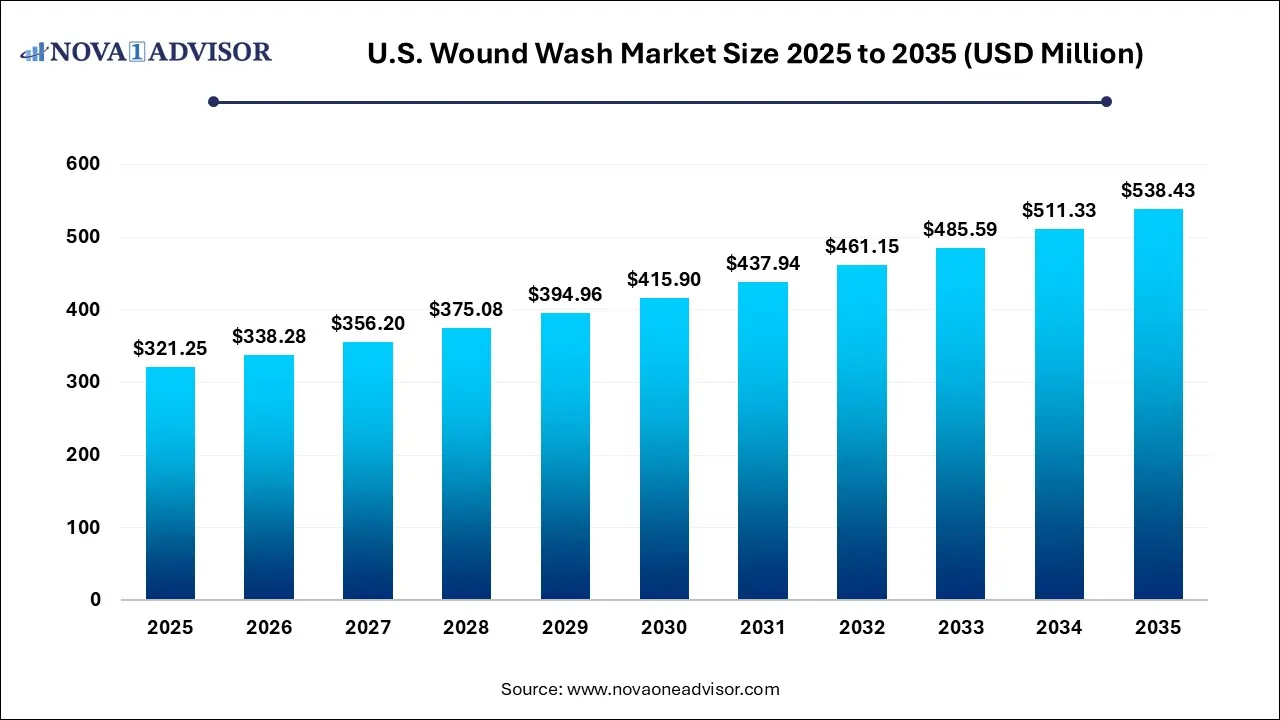
The U.S. wound wash market size was estimated at USD 321.25 million in 2025 and is projected to increase from USD 338.28 million in 2026 to approximately USD 538.43 million by 2035, growing at a CAGR of 5.3% from 2026 to 2035. The U.S. wound wash market is driven by the expanding research in genomics, proteomics, and drug discovery by pharmaceutical companies and academic institutions, which requires sophisticated, high-resolution imaging tools, increased use of fluorescence imaging for cancer detection, neurological disorders, and infectious disease diagnosis, and growing investment in life science research infrastructure by government bodies and private investors.
Key Takeaways
- By product, the antiseptic segment held a dominant position in the market with a share of 28% in 2025.
- By product, the saline solution segment is the fastest growing between 2026 and 2035.
- By product form, the solutions segment accounted for a considerable revenue share of 45% in the market in 2025.
- By product form, the sprays segment is the fastest growing during 2026 and 2035.
- By application, the acute wound segment accounted for a considerable revenue share of 55% in the market in 2025.
- By application, the chronic wound segment is the fastest growing during 2026 and 2035.
- By end use, the hospitals segment accounted for a considerable revenue share of 40% in the market in 2025.
Innovation Driving Transformation in the U.S. Wound Wash Market
U.S. wound wash comprises a specialized antiseptic or surfactant solution. These products primarily offer the benefits of preventing infection, reducing biofilm, and preparing the wound bed for optimal healing in hospitals and home care settings. The high versatility, effective on surgical wounds, burns, and pressure ulcers, combined with ease of use, enhances patient compliance and reduces healthcare costs by minimizing infection risks. The market growth is driven by the increasing prevalence of diabetes leading to chronic ulcers, a rising geriatric population with frail skin, and a high volume of trauma-related injuries requiring immediate, safe cleansing.
U.S. Wound Wash Market Trends
- Strategic Proliferation of Hypochlorous Acid Formulations
The high demand for hypochlorous acid-based wound cleansers, which offer potent antimicrobial action without harming healthy tissue or delaying the healing process. These solutions are becoming preferred over traditional saline for managing chronic wounds, such as diabetic foot ulcers and pressure ulcers, due to their ability to disrupt biofilm and combat pathogens.
- Transition Toward Unit-Dose and Aseptic Packaging Models
Hospitals and outpatient centers are rapidly moving away from bulk, multi-use containers to reduce cross-contamination risks, driving a trend toward individually packaged, sterile, ready-to-use sprays and wipes. Strict infection-control protocols and the need for consistent product sterility in surgical wound care strongly support the trend.
- Advancements in Non-Invasive and Precision Delivery Systems
Manufacturers are introducing advanced application formats, including no-touch aerosol sprays and specialized foaming applicators. These innovations allow for even coverage across the wound bed and reduce patient discomfort during cleaning, lifting debris without disrupting delicate newly formed tissue.
Key AI Integration in the U.S. Wound Wash Market
AI and ML are rapidly transforming the U.S. wound care industry by enabling automated, high-precision wound assessment through mobile image analysis. These technologies allow clinicians to accurately measure wound size, depth, and tissue composition, reducing subjective bias and improving diagnostic consistency. AI-driven predictive analytics are used to identify high-risk wounds, such as diabetic foot ulcers, allowing for early intervention and personalized treatment, which enhances healing rates and reduces hospital admissions. AI is also driving innovation in smart wound cleansing products, integrating sensors to monitor infection signs in real time.
U.S. Wound Wash Market Report Scope
| Report Coverage | Details |
| Market Size in 2026 | USD 338.28 Million |
| Market Size by 2035 | USD 538.43 Million |
| Growth Rate From 2026 to 2035 | CAGR of 5.3% |
| Base Year | 2025 |
| Forecast Period | 2026 to 2035 |
| Segments Covered | Product, Product Form, Application, End use |
| Market Analysis (Terms Used) | Value (USD Million/Billion) or (Volume/Units) |
| Key Companies Profiled | Atlantis Consumer Healthcare Inc.; Medline Industries, LP.; Johnson & Johnson Consumer Inc.; B. Braun SE; Zimmer Biomet; Urgo Medical North America; Coloplast Corp; Mölnlycke Health Care AB; Cardinal Health; Armis Biopharma; Bravida Medical; Irrimax Corporation; BD; Sanara MedTech.; pure&clean; Innovacyn, Inc. |
Market Dynamics
Driver
Increasing Chronic and Acute Wounds
The rising prevalence of chronic conditions like diabetes, obesity, and an aging population in the U.S. is substantially increasing the incidence of hard-to-heal wounds, such as pressure ulcers and diabetic foot ulcers, which require consistent, specialized wound management. Simultaneously, the U.S. wound wash market is driven by an increase in acute wounds arising from a high volume of surgeries, trauma cases, and burn injuries, necessitating sterile cleansing solutions to prevent infection.
Restraint
High Costs of Advanced Products
The market growth is hindered by limiting their adoption among price-sensitive patients and limiting access to treatment. The limited reimbursement coverage for these specialized products restricts their use to only the most severe cases, discouraging widespread adoption. As a result, many healthcare providers opt for traditional, lower-cost alternatives to manage costs, thereby restraining the growth of advanced, high-cost, and more effective treatment options.
Opportunity
Development of Novel Formulations
The improved clinical outcomes and infections enable premium pricing and cater to the high demand from increasing chronic wound and surgical cases. Innovative, non-cytotoxic, and user-friendly formulations allow for targeted, effective, and safer wound care, supporting the shift toward outpatient and home care management. Consequently, consistent investments in R&D and FDA approvals of these next-generation cleaners are strengthening market competition and opening significant growth opportunities.
Segment Insights
By Product Insights
Why Did the Antiseptic Segment Hold a 28% Share for the U.S. Wound Wash Market?
The antiseptic segment held a dominant position in the market with a share of 28% in 2025, owing to the strong infection control demand, especially in clinical and surgical settings. The surge in the high incidence of trauma/acute wounds, the developments of advanced, non-sterilizing antimicrobial formulations, such as hypochlorous acid, that speed up healing while disinfecting, has increased the adoption rate.
The saline solution segment held a 26% share of the market in 2025. Due to the advanced antiseptic and specialized solutions, enhanced therapeutic benefits are offered. Its affordability and wide applicability across different wound types ensure high adoption in both hospitals and home healthcare. The rising demand in healthcare sectors, infection control, and convenience.
The irrigation solution segment holds a 20% share of the market in 2025, with the increased use in surgical and emergency wound management. Strong advanced healthcare systems in the region and increased awareness regarding standard wound care protocols, which prioritize proper cleaning. Advancements in technology and efficiency have led to widespread use in acute and chronic care settings.
The pulsed lavage systems segment held a 16% share of the market in 2025, due to rising adoption in hospitals for deep and surge in chronic, diabetic, and surgical wounds, coupled with an aging population, which has increased the demand for advanced, fast-acting wound management tools. The advanced healthcare technologies and a regulatory environment that support the adoption of specialized, highly efficient, and safe surgical equipment.
The others segment held 10% share of the market in 2025, because of the limited scalability and lower adoption compared to mainstream solutions. The rising prevalence of diabetes and obesity in the region requires effective, non-cytotoxic cleansing solutions to treat chronic, non-healing wounds.
By Product Form Insights
Why Did the Solutions Segment Lead the U.S. Wound Wash Market?
The solutions segment registered its dominance over the market with a share of 45% in 2025, owing to the versatility and widespread clinical usage, though slowly losing share to convenient formats. The shift toward outpatient and home-based care has boosted demand for portable, user-friendly spray solutions and easy-to-apply wipes. Growing infection control and efficiency, and rising surgical cases.
The sprays segment held the 25% share of the market in 2025, due to the convenience, portability, and reduced contamination risk. The widespread adoption across emergency departments and long-term care settings for efficient, rapid cleansing. The shift from inpatient to home-based care, patients and caregivers prioritize products that are easy to use without specialized equipment.
The wipes segment held a 20% share of the market in 2025 because of the home care use and ease of application. The increasing prevalence of chronic conditions requiring routine wound care, the development of alcohol free and pH-balanced wipes that cater to sensitive skin, are expanding their adoption among the elderly population.
The other applications segment held a 10% share of the market in 2025, with limited awareness and narrower use cases. Shift toward home settings, rising demand for easy-to-use, effective cleanser sprays and solutions. The rising chronic wound cases and the focus on infection control.
By Application Insights
Why Did the Acute Wounds Segment Lead the U.S. Wound Wash Market?
The acute wounds segment registered its dominance over the market with a share of 55% in 2025, owing to the high incidence of injuries and surgical procedures, though slightly declining in share. The high prevalence of acute wounds requires consistent, reliable care in acute care settings, a surge in non-fatal injuries, including road accidents and workplace incidents, to adopt advanced, sterile, and easy-to-use wound wash products.
The chronic wounds segment held the 45% share of the market in 2025, due to the rising aging population and chronic disease prevalence. The increased adoption of advanced wound care products and protocols that emphasize thorough cleaning as a critical first step.
By End Use Insights
Why Did the Hospitals Segment Hold a 40% Share of the U.S. Wound Wash Market?
The hospitals segment led the market with a share of 40% in 2025, due to high patient inflow and advanced treatment infrastructure, though slightly declining. Preventing hospital- acquired infections, the presence of dedicated, well-equipped wound management centers, specialized nursing care, and interdisciplinary teams makes hospitals the focal point for complex care. Increased surgical procedures and comprehensive reimbursement policies.
The specialty clinics segment held 22% share of the market in 2025, due to the increased preference for specialized and outpatient care. The expansion of the ambulatory surgical centers and the growing need for advanced wound cleansing. The rising favorable reimbursement policies for necessary treatments, high patient volume, and specialized care.
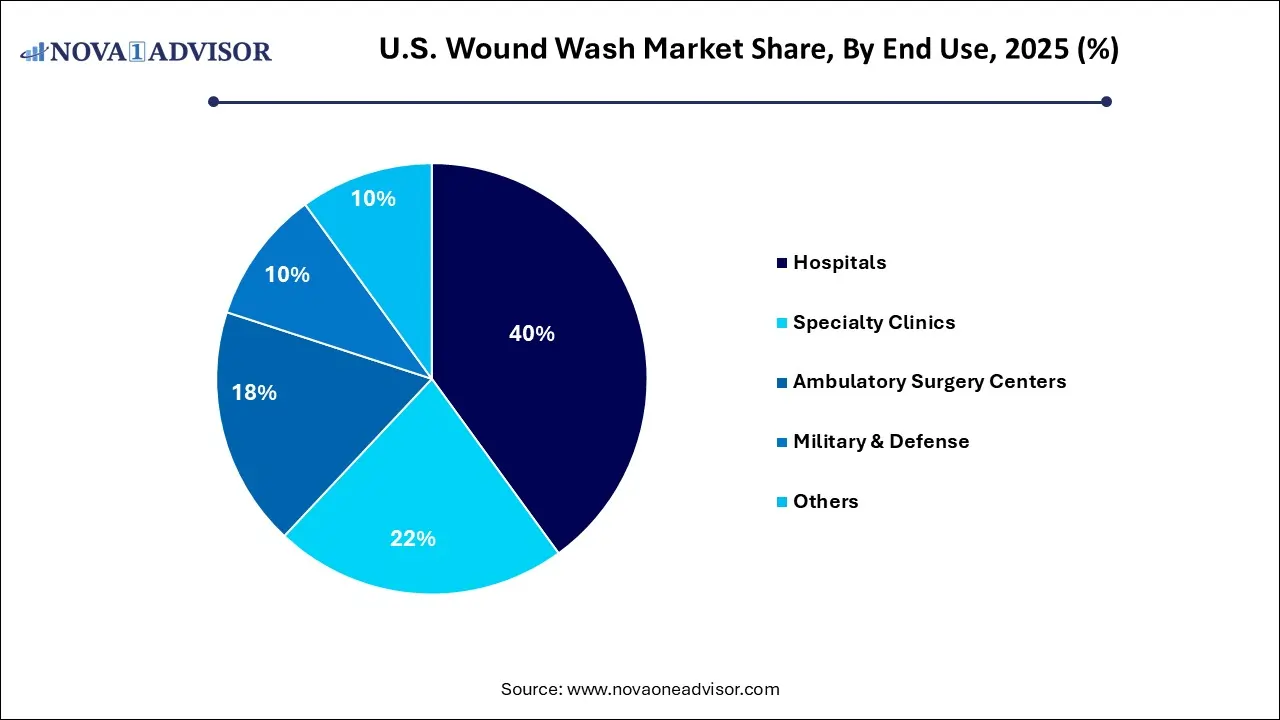
The ambulatory surgery centers segment held a 18% share of the market in 2025. With the high patient inflow and advanced treatment infrastructure, though slightly declining. The increased adoption of advanced, non-sensitizing wound solutions that aid in faster wound preparation and cleaning, accelerating healing. An increasing number of certified facilities and a shift to outpatient surgeries.
The military & defense held 10% share of the market in 2025, due to the demand for advanced trauma care solutions. Increased military procurement and contracts. The military industry complex often acts as a catalyst for adopting and investing in next-generation wound cleansing technologies that are then adopted for specialized and civilian care.
The others segment held a 10% share of the market in 2025, as the slight decline as structured healthcare facilities capture a larger share. Long-term care facilities and nursing homes are significant consumers of these products, contributing to consistent market demand.
U.S. Wound Wash Market Companies
- Atlantis Consumer Healthcare Inc.
- B. Braun SE
- Medline Industries, LP
- Johnson & Johnson Consumer Inc. (Johnson & Johnson)
- Urgo Medical North America (URGO Group)
- Zimmer Biomet
- Coloplast Corp (Coloplast Group)
- Cardinal Health
- Mölnlycke Health Care AB
- Armis Biopharma
- Irrimax Corporation
- Bravida Medical
- BD
- Pure&Clean
- Sanara MedTech Inc.
Recent Developments
- In October 2025, Sonoma Pharmaceuticals partnered with Medline Industries to launch a new Microcyn-based hypochlorous acid (HOCl) wound cleanser for the U.S. hospital, home healthcare, and outpatient markets. This collaboration aims to provide advanced wound care that reduces infection risk without damaging healthy tissue.
- In September 2025, Kane Biotech submitted a U.S. FDA 510(k) application for its revyve® Antimicrobial Wound Cleanser, expanding its portfolio into the $200M+ U.S. wound cleansing market. This new product complements existing FDA-cleared wound gels by providing irrigation to decrease bacterial load and remove debris in acute and chronic wounds.
- In March 2025, Convatec announced an exclusive global collaboration with the Wound, Ostomy, and Continence Nurses Society™ (WOCN®) to provide free, advanced educational programs, including the Advanced Ostomy Care and Ostomy Care Associates (OCA®) initiatives. The partnership aims to bridge the gap in specialized nursing care and train over 750 new professionals in the region.
Segments Covered in the Report
This report forecasts revenue growth at country levels and provides an analysis of the latest industry trends in each of the sub-segments from 2021 to 2035. For this study, Nova one advisor, Inc. has segmented the U.S. Wound Wash Market.
By Product
- Antiseptic
-
- Povidone Iodine
- Chlorhexidine
- Polyhexanide (PHMB)
- Others
- Saline Solution
- Irrigation Solution
- Pulsed Lavage Systems
-
- Disposable
- Reusable
- Semi Disposable
- Others
By Product Form
- Solutions
- Sprays
- Wipes
- Others
By Application
- Acute Wounds
-
- Surgical & Traumatic Wounds
- Burns & Lacerations
- Chronic Wounds
-
- Diabetic Foot Ulcers
- Pressure Ulcers
- Venous Leg Ulcers
- Other Chronic Wounds
By End Use
- Hospitals
- Specialty Clinics
- Ambulatory Surgery Centers
- Military & Defense
- Others
FAQ's

Proceed to Buy
Instant PDF delivery on confirmation

 Request Customization
 Download Sample

Get a Sample of this Report
U.S. Wound Wash Market