

Vascular Graft Market Size, Share, and Trends 2026 to 2035
 Status Published
 Category Healthcare


Content
Vascular Grafts Market Size and Growth 2026 to 2035
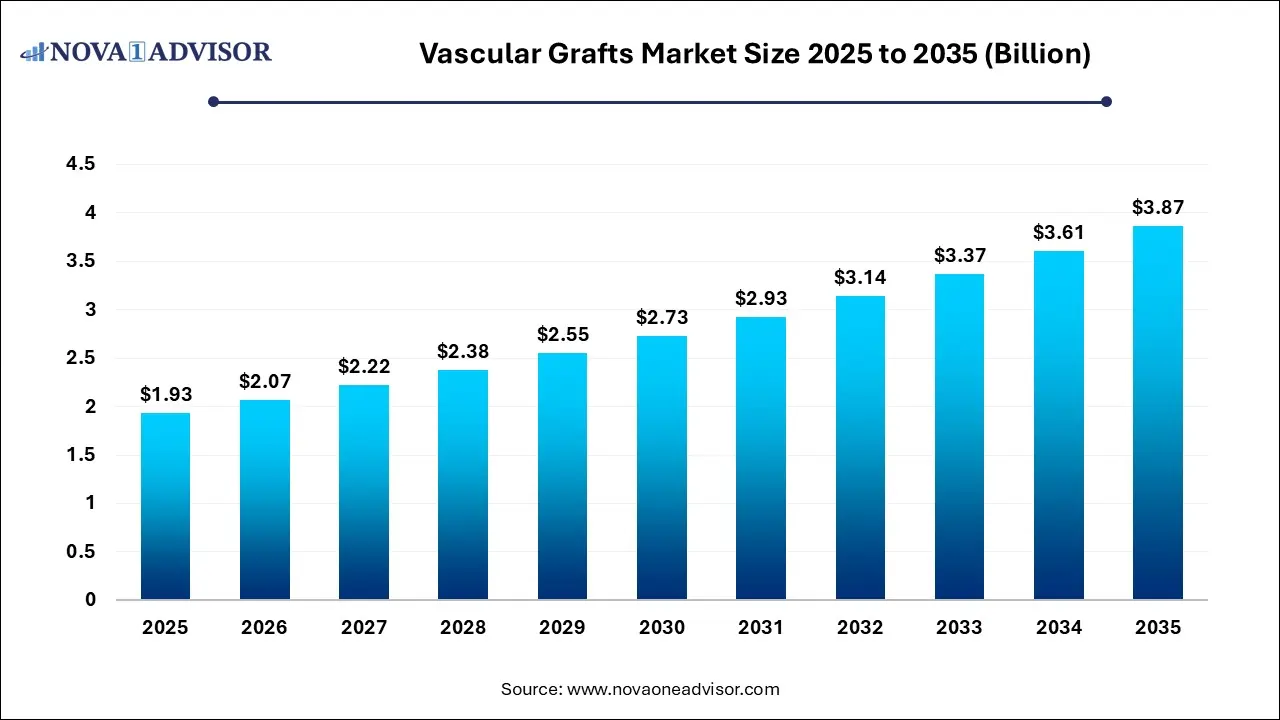
The global vascular grafts market size was estimated at USD 1.93 billion in 2025 and is projected to hit around USD 3.87 billion by 2035, growing at a CAGR of 7.2% during the forecast period from 2026 to 2035.
Key Takeaway:
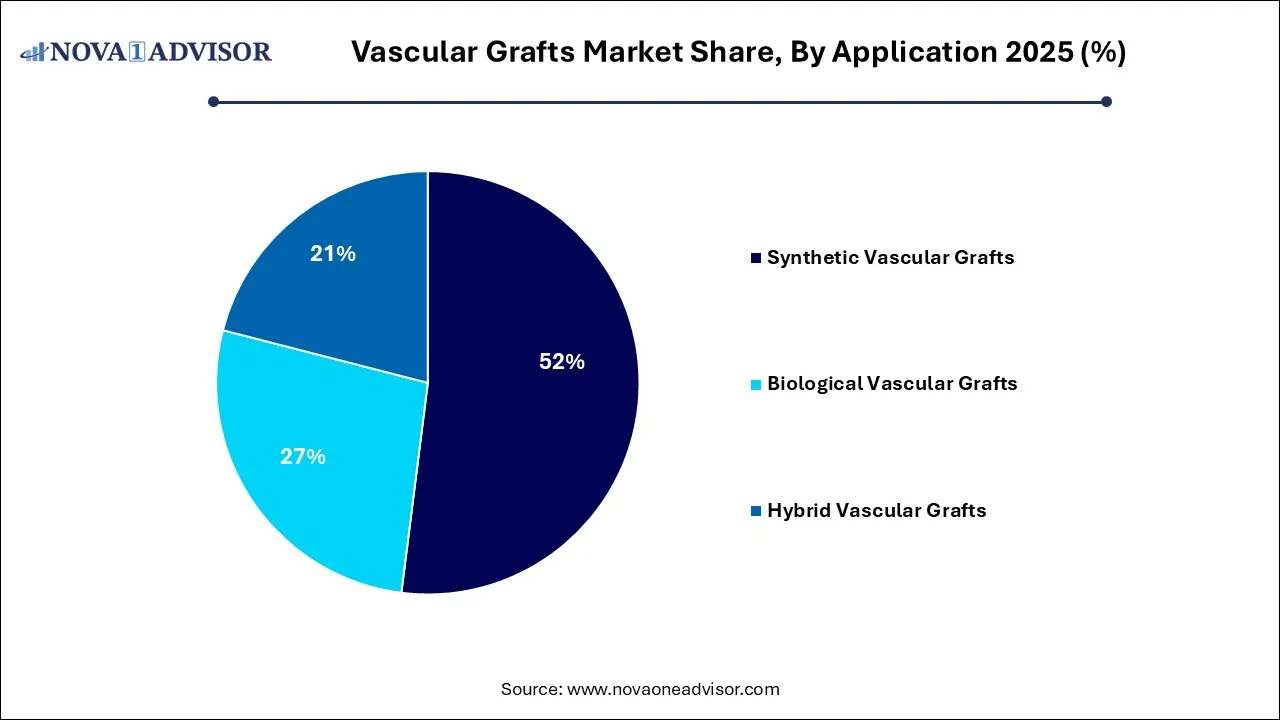
- By raw material, the synthetic vascular grafts segment dominated the market and accounted for the largest revenue share in 2025.
- By raw material, the hybrid vascular grafts segment is anticipated to witness the fastest CAGR over the forecast period.
- By product, the endovascular stent grafts segment dominated the market and accounted for the largest revenue share in 2025.
- By application, the cardiac aneurysm segment dominated the market and accounted for the largest revenue share in 2025.
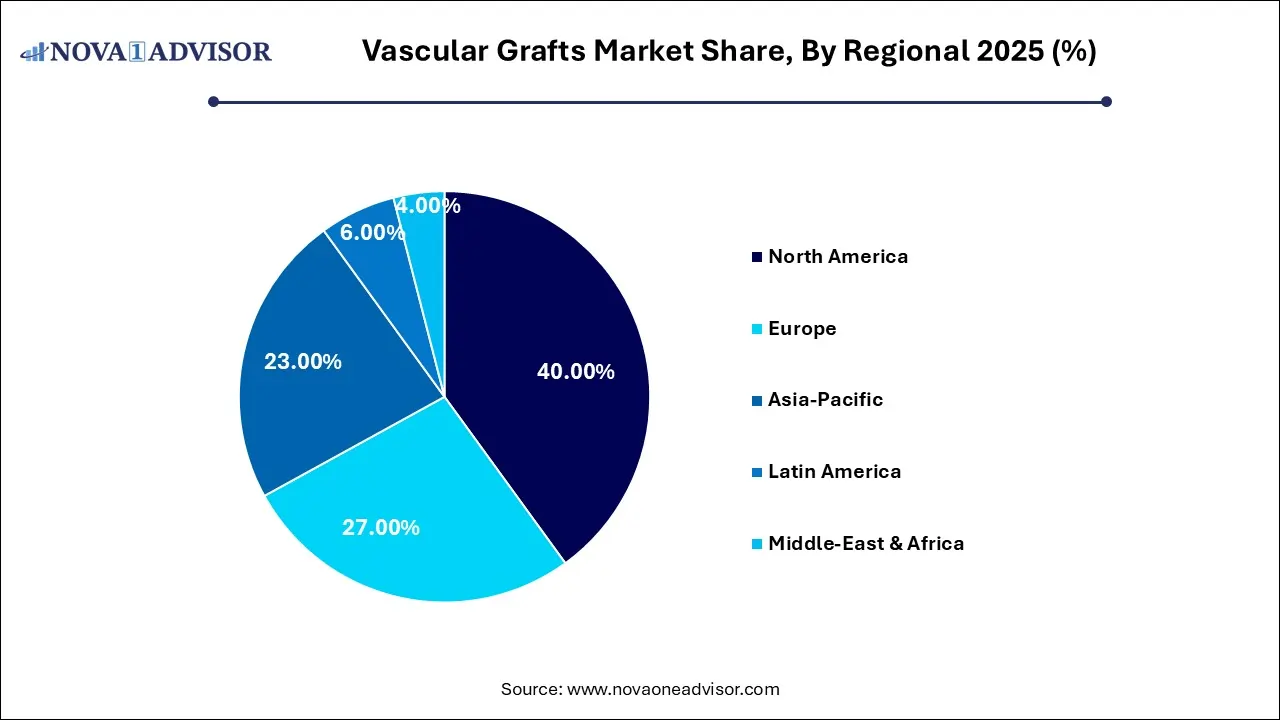
- By region, North America accounted for the largest revenue share in 2025.
Market Overview
The vascular grafts market occupies a critical position within the cardiovascular device industry, serving as an essential component in the treatment of numerous vascular disorders. Vascular grafts are implantable conduits used to replace, bypass, or repair diseased blood vessels when natural vessels become damaged, blocked, weakened, or unsuitable for surgical intervention. These grafts restore blood flow and help prevent life-threatening complications associated with vascular diseases.
Over the past several decades, vascular graft technology has evolved significantly. Early graft designs primarily relied on synthetic materials such as polyester and polytetrafluoroethylene (PTFE). Today, advances in biomaterials, tissue engineering, and endovascular technologies have expanded the range of available graft solutions, enabling physicians to address increasingly complex clinical challenges.
Cardiovascular diseases remain the leading cause of mortality worldwide. Conditions such as coronary artery disease, peripheral artery disease, abdominal aortic aneurysms, thoracic aneurysms, and chronic kidney disease frequently require vascular reconstruction procedures. As these conditions continue to increase in prevalence, demand for vascular graft products is expected to rise accordingly.
One of the strongest growth drivers is the aging global population. Elderly individuals are more susceptible to vascular degeneration, atherosclerosis, aneurysm formation, and kidney dysfunction. Consequently, healthcare systems are witnessing a growing number of patients requiring vascular access and vessel replacement procedures.
For example, patients with end-stage renal disease often require hemodialysis access grafts when native vessels are unsuitable for fistula creation. Similarly, individuals suffering from peripheral artery disease may require bypass grafts to restore circulation to the lower extremities and prevent limb loss.
The market is also benefiting from the increasing adoption of minimally invasive endovascular procedures. Endovascular stent grafts have transformed aneurysm treatment by enabling physicians to repair diseased vessels without open surgery, resulting in reduced hospitalization, faster recovery, and lower procedural risk.
Innovation remains central to market evolution. Manufacturers are investing heavily in next-generation graft materials, antimicrobial coatings, bioengineered vascular conduits, and hybrid devices designed to improve long-term patency and reduce complications such as thrombosis, infection, and graft failure.
As healthcare providers increasingly focus on improving outcomes while reducing procedural burdens, vascular graft technologies are expected to remain indispensable across modern cardiovascular care pathways.
Market Outlook
- Market Growth Overview: The global vascular graft market is expected to grow significantly between 2025 and 2035, driven by the rising burden of vascular diseases, increasing incidence of chronic kidney failure, and aging global population.
- Sustainability Trends: Sustainability trends involve a shift to bioresorbable and tissue-engineered grafts, greening vascular surgery and care delivery, and supply chain transparency and ESG governance.
- Major Investors: Major investors in the market include Medtronic, W.L. Gore & Associates, Terumo Corporation, Getinge AB, Cook Medical, LeMaitre Vascular, and B. Braun Melsungen.
How is AI Transforming the Vascular Grafts Market?
Artificial intelligence is emerging as a transformative force across cardiovascular medicine and is increasingly influencing the vascular grafts market.
One of the most impactful applications involves diagnostic imaging. AI algorithms can analyze CT angiography, MRI scans, and ultrasound images to detect aneurysms, arterial stenosis, vessel calcification, and other vascular abnormalities with greater precision. Early diagnosis enables physicians to intervene before disease progression necessitates emergency procedures.
AI is also improving procedural planning. Advanced software platforms can generate three-dimensional vascular reconstructions that assist surgeons in selecting optimal graft dimensions, identifying anatomical challenges, and determining the most effective intervention strategy. This is particularly valuable in complex aneurysm repairs where graft sizing and positioning are critical.
Machine learning models are increasingly being used to predict postoperative outcomes. By analyzing large datasets, these systems can estimate risks of graft occlusion, infection, restenosis, or thrombosis, enabling personalized treatment planning.
In vascular surgery training, AI-powered simulation systems allow physicians to practice endovascular procedures in virtual environments. These platforms help improve procedural proficiency while reducing learning curves.
AI also supports research and development. Biomaterial scientists can use predictive modeling to evaluate how different graft materials may interact with blood flow dynamics, endothelial cells, and surrounding tissues before clinical testing begins.
For example, digital twin technology is being explored to simulate patient-specific vascular anatomy, allowing customized graft designs tailored to individual physiological conditions. Such advancements may accelerate the future adoption of personalized vascular graft solutions.
As AI becomes increasingly integrated into cardiovascular workflows, it is expected to improve treatment accuracy, reduce complications, and enhance long-term graft performance.
Vascular Grafts Market Report Scope
| Report Coverage | Details |
| Market Size in 2026 | USD 2.07 Billion |
| Market Size by 2035 | USD 3.87 Billion |
| Growth Rate From 2026 to 2035 | CAGR of 7.2% |
| Base Year | 2025 |
| Forecast Period | 2026 to 2035 |
| Segments Covered | Product, Application, Raw Material, Region |
| Market Analysis (Terms Used) | Value (USD Million/Billion) or (Volume/Units) |
| Regional Scope | North America; Europe; Asia Pacific; Central and South America; the Middle East and Africa |
| Key Companies Profiled | Medtronic; Terumo Corporation; LeMaitre Vascular, Inc.; Getinge AB; BD (Becton Dickinson); Abbott; B. Braun Melsungen AG.; W. L. Gore and Associates, Inc.; MicroPort Scientific Corporation; Endologix |
Segmental Insights
By Raw Material
How did the synthetic vascular grafts segment dominate the Global Vascular Graft market?
The synthetic vascular grafts segment is driven by its superior durability, immediate availability, and cost-effective manufacturing compared to biological options. The escalating global incidence of peripheral arterial disease and coronary artery disease drives a massive demand for these materials in surgical bypasses.
How did the hybrid vascular grafts segment expected to hold the fastest-growing Global Vascular Graft market in the coming years?
The hybrid vascular grafts segment is driven by seamlessly combining synthetic scaffolds with advanced biological coatings. This integrated design significantly improves long-term vessel patency and promotes natural endothelial cell growth to reduce clotting and infection risks. With expanding investments in tissue engineering, these bioengineered implants are rapidly broadening their clinical footprint.
By Product
How did the endovascular stent grafts segment dominate the Global Vascular Graft market?
The endovascular stent grafts segment is driven by the rising global burden of abdominal and thoracic aortic aneurysms due to its highly minimally invasive profile. By utilizing catheter-based delivery rather than open surgery, these procedures drastically reduce operative trauma, blood loss, and patient recovery times. The aging population faces lifestyle-induced, vessel-weakening conditions, such as hypertension and atherosclerosis.
How did the peripheral vascular grafts segment expected to hold the fastest-growing Global Vascular Graft market in the coming years?
The peripheral vascular grafts segment is driven by the aging population and rise in lifestyle-related comorbidities that have vastly increased peripheral vascular disorders. Continuous advancement in graft materials, including drug-coated systems and bioengineered designs, has significantly reduced postoperative thrombosis.
By Application
How did the cardiac aneurysm segment dominate the Global Vascular Graft market?
The cardiac aneurysm segment is driven by a growing geriatric demographic prone to vessel-wall weakening from widespread conditions, such as hypertension and obesity. This expanding patient pool is matched by a profound clinical shift toward endovascular aneurysm repair stent grafts, which drastically reduce complication rates compared to open surgeries.
How did the vascular occlusion segment expected to hold the fastest-growing Global Vascular Graft market in the coming years?
The vascular occlusion segment is driven by expanding geriatric demographics and lifestyle-induced metabolic conditions that necessitate routine bypass and occlusion-repair procedures. To optimize long-term treatment outcomes, manufacturers are introducing advanced tissue-engineered, biosynthetic, and highly refined prosthetic grafts, such as ePTFE, that dramatically reduce post-surgical clotting risks.
By Regional
How did the North America region account for the largest share in the Global Vascular Graft market?
North America is driven by the large geriatric population experiencing high rates of chronic cardiovascular diseases, diabetes, and kidney failure. The region’s state-of-the-art hospitals and specialized cardiovascular centers facilitate a high volume of complex surgeries, backed by comprehensive coverage from established insurance frameworks, such as Medicare.
U.S. Global Vascular Graft Market Trends
The U.S. has shifted toward minimally invasive endovascular stent grafts for treating abdominal aortic aneurysms. While synthetic materials, such as ePTFE and polyester, continue to dominate procedural volume due to their structural durability and design flexibility, next-generation research is heavily shifting toward bioengineered solutions and tissue-engineered vascular grafts to eliminate post-surgical clotting risks.
How did the Asia-Pacific region become the fastest-growing Global Vascular Graft Market during the forecast period?
Asia Pacific has an aging demographic and a sharp rise in lifestyle-related chronic illnesses, such as diabetes and atherosclerosis. Developing nations are actively combating this disease burden by expanding their hospital networks, tertiary care centers, and public health reimbursement frameworks to make advanced treatments widely affordable.
China Global Vascular Graft Market Trends
China’s growing geriatric population and a rising burden of chronic kidney disease require a high volume of PTFE haemodialysis access grafts. Clinicians are heavily favoring minimally invasive endovascular stent grafts over open surgeries to accelerate patient recovery times and minimize procedural complications.
How Did Europe Hold A Notable Share in the Global Vascular Graft Market?
Europe’s rising target population requires frequent coronary artery bypass and haemodialysis access procedures. The region’s state-of-the-art hospitals, advanced surgical infrastructure, and nationwide aortic aneurysm screening programs ensure high rates of early diagnosis and elective endovascular repair.
Germany Global Vascular Graft Market Trends
Germany’s high cardiovascular burden and rising cases of end-stage renal disease continuously drive demand for coronary bypasses and hemodialysis access grafts. The country’s well-funded hospital networks and robust medical reimbursement policies facilitate the immediate adoption of premium technologies, particularly minimally invasive endovascular stent grafts.
Key Players in the Global Vascular Graft Market
- Cardinal Health
Cardinal Health (US) contributes by globally distributing essential vascular access devices, procedure kits, and endovascular repair systems like the INCRAFT AAA Stent Graft. Their extensive supply chain and comprehensive product portfolio ensure healthcare providers worldwide have access to the critical tools required for vascular surgeries.
- Gore Medical
Gore Medical (US) is a pioneer in the vascular graft space, renowned for manufacturing durable, high-performance GORE-TEX and GORE EXCLUDER grafts. Their innovative bioengineered materials provide clinicians with reliable solutions for treating aneurysms and establishing hemodialysis access without the need for preclotting.
- Terumo
Terumo contributes through its specialized subsidiary, Terumo Aortic, which develops an extensive portfolio of advanced surgical grafts, stent systems, and hybrid devices for complex aortic repairs.
Segments Covered in the Report
This report forecasts revenue growth at country levels and provides an analysis of the latest industry trends in each of the sub-segments from 2021 to 2035. For this study, Nova one advisor, Inc. has vascular grafts market.
By Product
- Hemodialysis Access Grafts
- Endovascular Stent Grafts
- Coronary Artery By-Pass Grafts
- Vascular Grafts for Aorta Disease
- Peripheral Vascular Grafts
By Application
- Cardiac Aneurysm
-
- Endovascular Stent Graft
- Vascular Graft
- Kidney Failure
- Vascular Occlusion
- Coronary Artery Disease
By Raw Material
- Synthetic Vascular Grafts
-
- Polytetrafluoroethylene (PTFE) Grafts
- Polyester Grafts
- Polyurethane Grafts
- Biological Vascular Grafts
-
- Autografts
- Allografts
- Xenografts
- Hybrid Vascular Grafts
By Region
- North America
- Europe
- Asia-Pacific
- Latin America
- Middle East & Africa (MEA)

Proceed to Buy
Instant PDF delivery on confirmation

 Request Customization
 Download Sample

Get a Sample of this Report
Vascular Graft Market