

Veterinary PoC Diagnostics Market Size, Share, Forecast Report, 2026-2035
 Status Published
 Category Healthcare


Content
Veterinary PoC Diagnostics Market Size, Growth and Trends 2026 to 2035
The global veterinary PoC diagnostics market size was valued at USD 2.40 billion in 2025 and is expected to hit around USD 5.23
billion by 2035 with a CAGR of 8.11% 2026 to 2035.
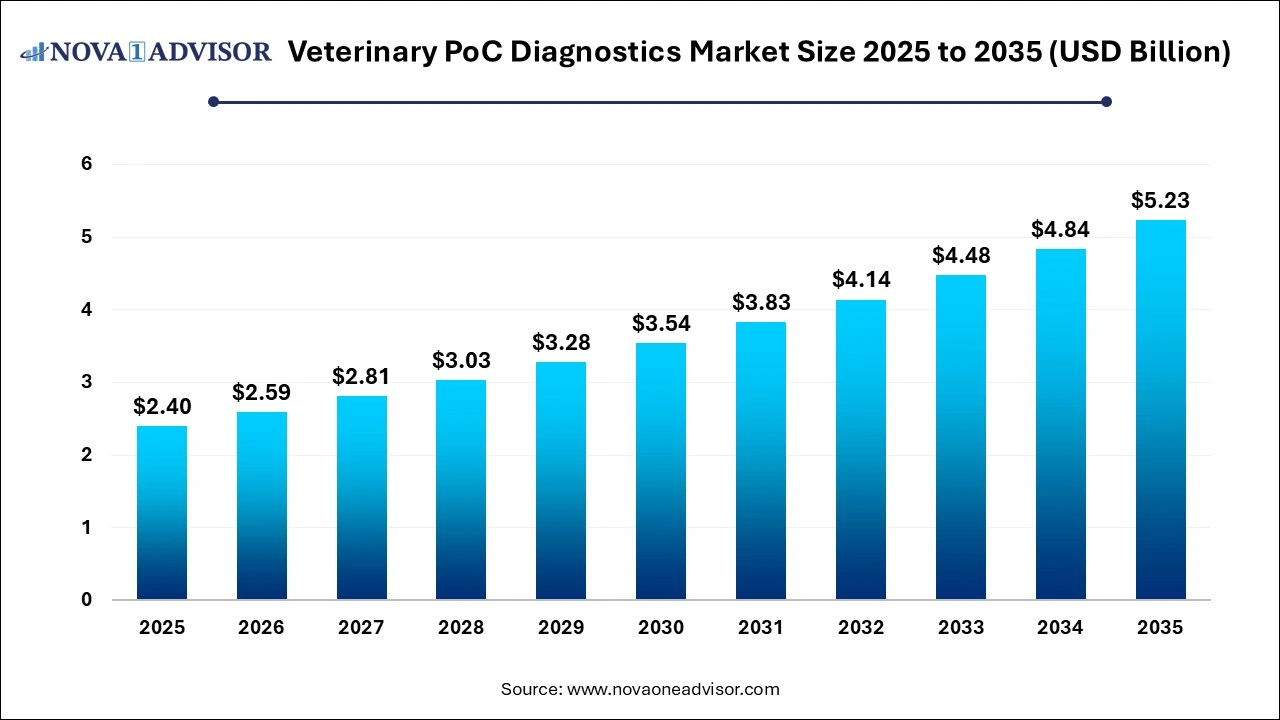
Veterinary PoC Diagnostics Market Outlook
- Market Growth Overview: The veterinary poc diagnostics market is expected to grow significantly between 2026 and 2035, driven by the rising pet ownership and humanization, technological advancement in diagnostics, and rising prevalence of animal chronic diseases.
- Sustainability Trends: Sustainability trends involve eco-friendly and biodegradable materials, reduce west generation, and compact and energy-efficient equipment.
- Major Investors: Major investors in the market include IDEXX Laboratories, Zoetis, Heska Corporation (now part of Antech Diagnostics), Virbac, and Thermo Fisher Scientific.
Report Scope of Veterinary PoC Diagnostics Market
| Report Coverage | Details |
| Market Size in 2026 | USD 2.59 Billion |
| Market Size by 2035 | USD 5.23 Billion |
| Growth Rate From 2026 to 2035 | CAGR of 8.11% |
| Base Year | 2025 |
| Forecast Period | 2026 to 2035 |
| Segments Covered | By Produt, By Technology, By Animal Type, By Application, By End-User |
| Market Analysis (Terms Used) | Value (USD Million/Billion) or (Volume/Units) |
| Regional scope | North America; Europe; Asia Pacific; Latin America; MEA |
| Key Companies Profiled | Zoetis, Inc., IDEXX Laboratories, Inc., Heska Corporation, Virbac |
Veterinary PoC Diagnostics Market Segment Insights
By Produt Insights
How did the Consumable Segment Dominate the Veterinary PoC Diagnostics Market?
The consumable segment is driven by the recurring necessity of reagents and test strips for every diagnostic cycle. As pet owners pivot toward preventative care and routine screening for chronic diseases, the demand for these high-volume, disposable tools continues to outpace hardware sales. The segment thrives by transforming complex laboratory science into rapid, shelf-stable consumables that empower veterinarians to deliver immediate clinical outcomes.
By Technology Insights
How did the Immunodiagnostics Segment Account for the Largest Share in the Veterinary PoC Diagnostics Market?
The Immunodiagnostics segment is driven by a perfect balance of high sensitivity, cost-effectiveness, and a user-friendly format ideal for both urban clinics and field-based livestock monitoring. As global concerns over Zoonotic Diseases intensify, these lateral flow and ELISA-based assays serve as the primary frontline defense for rapid screening. The shift towards a reliable, low-barrier diagnostic solution that bridges the gap between laboratory accuracy and point-of-care speed.
How did the molecular diagnostics segment expect to hold the fastest-growing Veterinary PoC Diagnostics market in the coming years?
The molecular diagnostics segment is driven by the superior sensitivity required for early, life-saving intervention. Strategic alliances, such as those led by MiDOG Animal Diagnostics, are rapidly expanding the menu of available in-house tests for complex infections. The redefining of veterinary standards by providing definitive, DNA-level accuracy in minutes rather than days.
By Animal Type Insights
How did the Companion Animals Segment Account for the Largest Share in the Veterinary PoC Diagnostics Market?
The companion animals segment is driven by the surge in premium wellness screenings and early diagnostic panels for age-related conditions like diabetes and renal failure in aging dog and cat populations. The integration of rapid, on-site Molecular Diagnostics allows veterinarians to transition from reactive treatment to proactive, data-driven health management. The pet owners increasingly prioritise longevity and immediate clinical outcomes, making sophisticated in-clinic testing the new standard of veterinary care.
By Application Insights
How did the Clinical Pathology Segment Account for the Largest Share in the Veterinary PoC Diagnostics Market?
The clinical pathology segment is driven by a shift toward preventative medicine, where routine blood and serum profiles are used to detect asymptomatic conditions like kidney dysfunction in aging companion animals. As pet owners demand the same diagnostic speed for their animals as human healthcare providers, rapid clinical pathology panels have become the primary revenue generator for modern veterinary practices.
How did the Bacteriology Segment Expect to hold the Fastest-Growing Veterinary PoC Diagnostics Market in the Coming years?
The bacteriology segment is emerging with a rise of rapid molecular panels for mastitis and respiratory pathogens, allows clinicians to bypass multi-day lab cultures for immediate, on-site results. As Zoonotic Disease concerns intensify, veterinary clinics are rapidly upgrading their in-house labs with high-sensitivity PCR tools to ensure accurate pathogen identification. The transformation from a traditional culture-based field into a high-speed, digital diagnostic discipline that prioritises global health safety and precise clinical intervention.
By End-User Insights
How did the Veterinary Clinics Segment Account for the largest share in the Veterinary PoC Diagnostics Market?
The veterinary clinics segment is driven by a decisive shift toward high-tech, in-house biochemistry and hematology suites. Market leadership is cemented by the clinical necessity for rapid diagnostic results that enable immediate treatment decisions during a single pet owner visit. By integrating compact, AI-Enhanced Analyzers, clinics have effectively replaced slower, off-site specialized labs to improve both patient outcomes and operational efficiency.
How did the home care settings segment expect to hold the fastest-growing Veterinary PoC Diagnostics market in the coming years?
The home care settings segment is driven by "pet humanisation" and the demand for proactive, At-home preventive testing. This surge is powered by AI-driven diagnostic apps and portable kits that allow owners to monitor chronic conditions like diabetes or renal disease without a clinic visit. Supported by the expansion of veterinary telemedicine, these tools provide immediate results that sync directly with remote veterinary consultations. The shifting of pet healthcare into a convenient, "always-on" digital ecosystem that prioritises early intervention and long-term pet longevity.
Key Players in the Veterinary PoC Diagnostics Market
- Zoetis, Inc.: Zoetis offers a comprehensive range of point-of-care instruments, such as the VETSCAN series, including VETSCAN Imagyst and VS2, designed for rapid, in-clinic hematology, chemistry, and AI-assisted slide analysis.
- IDEXX Laboratories, Inc.; IDEXX holds a leading position in the market by providing an integrated, AI-driven, in-clinic ecosystem that connects diagnostic analyzers (Catalyst Dx, ProCyte Dx) with VetConnect PLUS software for real-time results.
- Heska Corporation: Now part of Mars Science & Diagnostics, Heska specializes in providing advanced, high-value in-clinic analyzers (Element Series) and digital imaging, focusing on providing rapid, accurate diagnostic tools for canine and feline practices.
- Virbac: Virbac contributes to the PoC market through its Speed range, which offers rapid, easy-to-use in-clinic testing kits designed for the quick detection of major infectious and parasitic diseases, primarily for companion animals and farm animals.
Segments Covered in the Report
By Product
- Consumables
- Instruments
By Technology (Kits and Analyzers)
- Immunodiagnostics
- Clinical Biochemistry
- Molecular Diagnostics
- Hematology
- Urinalysis
- Other Technologies
By Animal Type
- Companion Animals
- Livestock Animals
By Application
- Clinical Pathology
- Bacteriology
- Virology
- Parasitology
- Other Applications
By End User
- Veterinary Clinics
- Veterinary Hospitals and Academic Institutes
- Home Care Settings
By Region
- North America
- US
- Canada
- Europe
- Germany
- UK
- France
- Italy
- Spain
- Rest of Europe (RoE)
- Asia Pacific
- China
- Japan
- India
- Rest of Asia Pacific (RoAPAC)
- Latin America
- The Middle East & Africa

Proceed to Buy
Instant PDF delivery on confirmation

Veterinary PoC Diagnostics Market Size to Exceed USD 5.23 Billion by 2035
 Request Customization
 Download Sample

Get a Sample of this Report
Veterinary PoC Diagnostics Market