

Veterinary Radiography System Market Size, Share, and Trends 2026 to 2035
 Status Published
 Category Healthcare


Content
Veterinary Radiography System Market Size and Growth 2026 to 2035
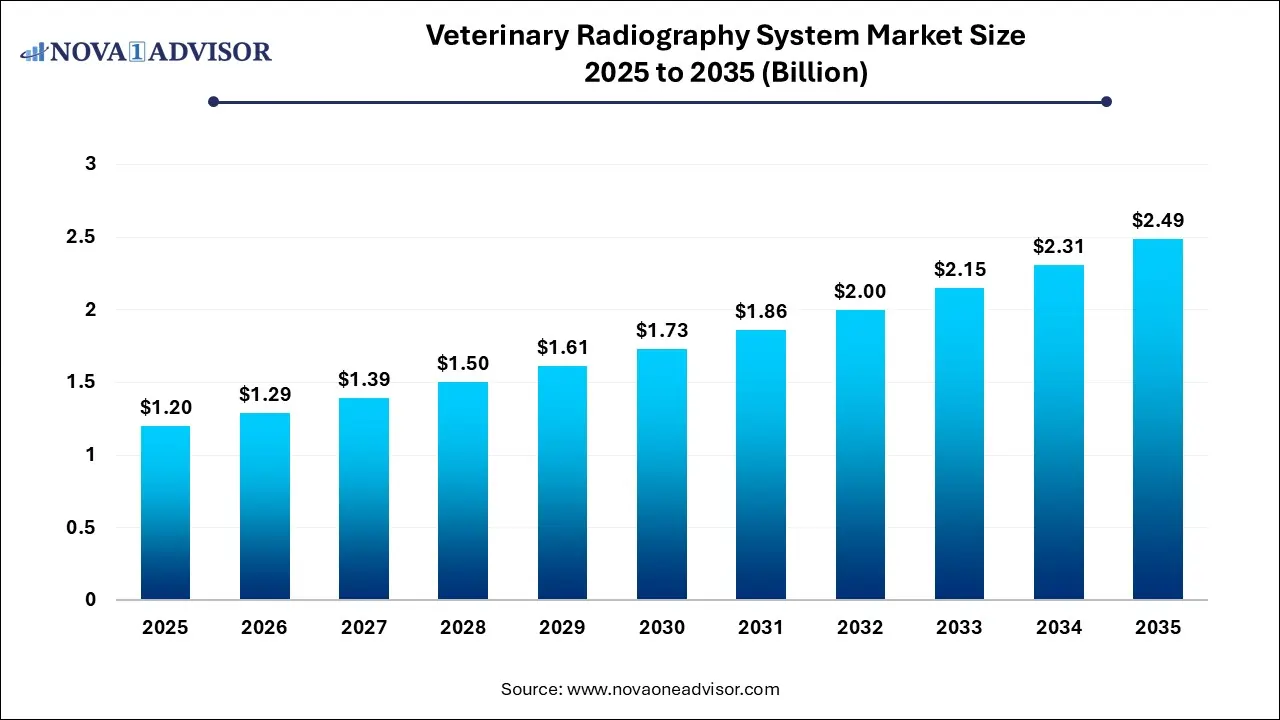
The global veterinary radiography system market size was valued at USD 1.20 billion in 2025 and is projected to grow from USD 1.29 billion in 2026 to USD 2.49 billion by 2035, at a CAGR of 7.53% from 2026 to 2035. North America dominated the market, accounting for a revenue share of 39.0% in 2025.
Key Takeaway
- By product, the digital X-ray segment dominated the market with the largest share in 2025.
- By product, the analog X-ray segment is expected to grow at the fastest CAGR over the forecast period.
- By technology, the computed radiography segment dominated the market with the largest share in 2025.
- By application, the orthopedic & rheumatology segment dominated the market with the largest share in 2025.
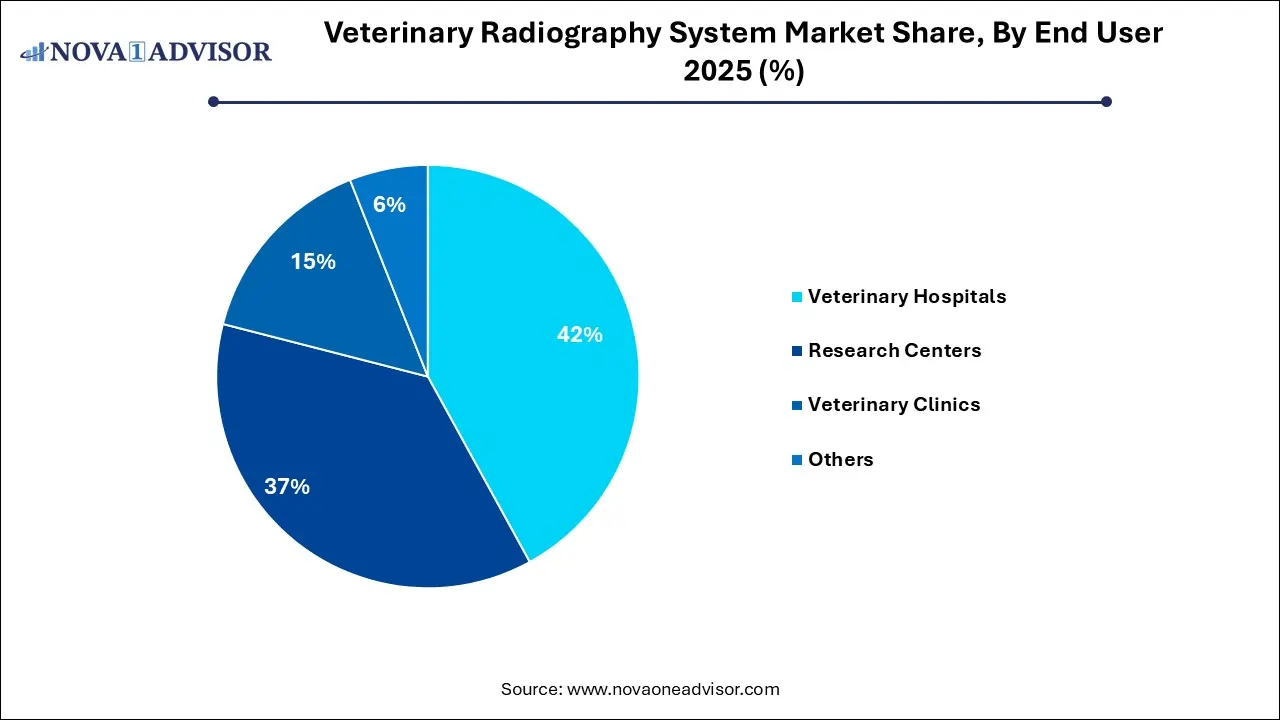
- By end user, the veterinary hospitals segment dominated the market with the largest share of 42.0% in 2025.
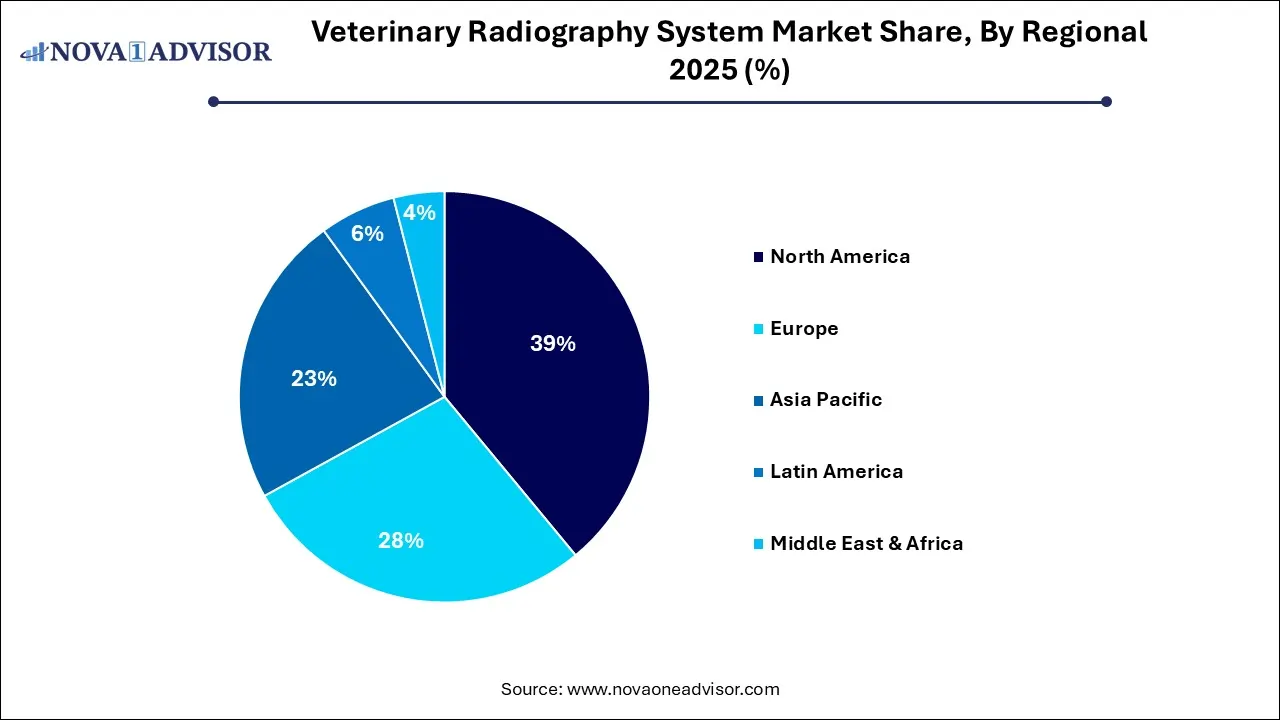
- By region, North America dominated the market with the largest share of 39.0% in 2025.
Market Overview
The global veterinary radiography system market is experiencing steady growth due to increasing demand for advanced diagnostic imaging in companion animals and livestock. Veterinary radiography systems play a crucial role in diagnosing orthopedic injuries, respiratory disorders, dental diseases, and soft tissue abnormalities, making them an essential tool for veterinary clinics, hospitals, and animal healthcare providers.
Rising pet ownership, growing awareness of animal health, and higher spending on veterinary care are driving the adoption of digital radiography systems that offer faster image acquisition, improved diagnostic accuracy, and enhanced workflow efficiency. In the livestock sector, radiographic imaging is increasingly used for early disease detection and reproductive health management, helping improve productivity and animal welfare.
Technological advancements, including portable X-ray systems, wireless digital detectors, cloud-based image management, and AI-assisted diagnostic software, are further enhancing veterinary imaging capabilities. In addition, increasing investments in veterinary infrastructure, research, and specialized animal healthcare services are supporting market expansion. These factors are expected to drive sustained growth in the global veterinary radiography system market over the coming years.
Market Outlook
- Market Growth Overview: The global veterinary radiography system market is expected to grow significantly between 2025 and 2035, driven by growing demand for imaging devices and ongoing technological innovations.
- Sustainability Trends: Sustainability trends involve a shift to digital X-ray films to eliminate toxic chemicals and adoption of energy-efficient hardware systems.
- Major Investors: Major investors in the market include IDEXX Laboratories, Fujifilm Holdings Corporation, Canon Inc., Carestream Health, Heska Corporation, Sound Technologies, and Sedecal.
How is AI impacting the global global veterinary radiography system market?
Artificial Intelligence (AI) is revolutionizing the market by fuelling the shift from conventional X-rays to smart digital platforms. It boosts image analysis, improves diagnostic precision, and allows for remote teleradiology. Furthermore, AI demonstrates exceptional proficiency in detecting subtle anatomical configurations. Which serves as a secondary diagnostic resource, this technology assists veterinary professionals in identifying microfractures.
AI-driven image enhancement technologies improve radiograph quality by reducing noise, optimizing contrast, and highlighting subtle abnormalities that may be difficult to detect manually. Cloud-based AI platforms also enable seamless image sharing and remote consultations with veterinary radiologists, expanding access to specialist expertise in underserved areas. Additionally, AI streamlines workflow through automated image organization, preliminary report generation, and integration with electronic medical records. As AI adoption continues to grow, it is expected to enhance diagnostic precision, improve patient outcomes, and drive innovation across the global veterinary radiography system market.
Veterinary Radiography System Market Report Scope
| Report Coverage | Details |
| Market Size in 2026 | USD 1.29 Billion |
| Market Size by 2035 | USD 2.49 Billion |
| Growth Rate From 2026 to 2035 | CAGR of 7.53% |
| Base Year | 2025 |
| Forecast Period | 2026 to 2035 |
| Segments Covered | By Product, By Technology, By Application, By End User, By Region |
| Market Analysis (Terms Used) | Value (USD Million/Billion) or (Volume/Units) |
| Regional Scope | North America; Europe; Asia Pacific; Central and South America; the Middle East and Africa |
| Key Companies Profiled | Sound (VCA, Inc.), Canon, Inc., Fujifilm Holdings America Corporation, Diagnostic Imaging Systems, Merry X-Ray Corporation, Sedecal, IMV imaging, DRE Medical, and Midmark Corporation. Few distributors include Triangle X-Ray Company, Ozark Imaging, and United Radiology Systems, Inc. |
Market Driver
Rising Companion Animal Ownership and Increasing Pet Healthcare Spending
The growing adoption of companion animals and increasing expenditure on pet healthcare are major drivers of the veterinary radiography system market. As pets are increasingly considered family members, demand for advanced diagnostic imaging has risen to support early detection of fractures, respiratory diseases, dental disorders, and other health conditions. Additionally, the expanding aging pet population and the growth of specialty veterinary services are increasing the need for digital radiography systems that provide accurate diagnoses and efficient clinical workflows.
Market Restraint
High Cost of Advanced Digital Radiography Systems
The high initial investment required for digital veterinary radiography systems remains a key market restraint. Expenses related to imaging equipment, software, installation, maintenance, and staff training can be challenging for small veterinary clinics and rural practices. Ongoing costs for system upgrades and servicing further increase ownership expenses, limiting the adoption of advanced imaging technologies, particularly in developing regions.
Market Opportunity
Expansion of Veterinary Healthcare Infrastructure in Emerging Markets
The rapid development of veterinary healthcare infrastructure across emerging economies offers significant growth opportunities for the veterinary radiography system market. Increasing investments in veterinary hospitals, diagnostic centers, livestock health programs, and mobile veterinary services are driving demand for modern imaging solutions. Furthermore, the introduction of portable, wireless, AI-enabled, and cloud-connected radiography systems is improving access to advanced diagnostics, creating long-term opportunities for manufacturers and healthcare providers worldwide.
Segmental Insights
By Product
Why did the digital X-ray segment dominate the global veterinary radiography system market?
The digital X-ray segment dominated the market with the largest share in 2025. The dominance of the segment can be attributed to the growing disposable income for pet healthcare and technological innovations such as artificial intelligence (AI). In addition, digital X-ray technology provides veterinarians with immediate, high-resolution diagnostic images, significantly improving patient care. This rapid imaging process eliminates processing delays by allowing professionals to identify medical conditions.
How did the analog X-ray segment expected to hold the significantly growing global veterinary radiography system market in the coming years?
The analog X-ray segment is expected to grow at the fastest CAGR over the forecast period. The growth of the segment can be credited to its robust reliability, affordability, and ease of maintenance in budget-sensitive clinics. Also, analog X-ray systems require a substantially lower initial financial investment for purchase and installation when compared to premium digital alternatives.
By Technology
Why did the computed radiography segment dominate the global veterinary radiography system market?
The computed radiography segment dominated the market with the largest share in 2025. The dominance of the segment can be linked to its capability to digitize clinical data for small and large animals and cost-effectiveness. Computed Radiography (CR) systems offer exceptional adaptability, enabling clinical practices to retrofit existing analog X-ray machinery using a CR reader and reusable photostimulable phosphor plates.
How did the digital radiography segment expected to hold the significantly growing global veterinary radiography system market in the coming years?
The digital radiography segment is expected to grow at the fastest CAGR over the forecast period. The growth of the segment can be driven by a surge in spending on pet healthcare and a rapid increase in companion pet ownership across the globe. Digital files facilitate smooth cloud storage and instantaneous transmission to animal specialists. Hence, a diagnostic X-ray captured at a local clinic can be reviewed by a remote expert within seconds.
By Application
Why did the orthopedic & rheumatology segment dominate the global veterinary radiography system market?
The orthopedic & rheumatology segment dominated the market with the largest share in 2025. The dominance of the segment is owing to the surge in pet insurance coverage and growing frequency of animal bone fractures and joint disorders. Novel diagnostic software can automatically identify and highlight occult skeletal defects and joint injuries, significantly improving the precision.
How did the cardiology segment expected to hold the significantly growing global veterinary radiography system market in the coming years?
The cardiology segment is expected to grow at the fastest CAGR over the forecast period. The growth of the segment is due to growing heart disorders among older animals and superior access to pet healthcare. The number of specialized veterinary cardiology clinics has increased significantly, which leads to a higher demand for advanced diagnostic equipment.
By End User
Why did the veterinary hospitals segment dominate the global veterinary radiography system market?
The veterinary hospitals segment dominated the market with the largest share in 2025. The dominance of the segment can be attributed to the growing investments in innovative imaging upgrades and growing demand for fast, rapid, accurate diagnostics in surgical and emergency interventions. Digital radiography systems enhance clinical efficiency by delivering immediate image access and minimize radiation exposure.
How did the other segment expected to hold the significantly growing global veterinary radiography system market in the coming years?
The other segment is expected to grow at the fastest CAGR over the forecast period. The growth of the segment can be credited to the increasing need for mobile imaging and rise in pet ownership and insurance, along with the growing transition towards digital and AI-enhanced technologies. Veterinarians are showing a growing preference for compact and lightweight digital radiography systems.
By Regional
Why did the North American region account for the largest share in the global veterinary radiography system market?
North America dominated the market with the largest share in 2025. The dominance of the region can be attributed to the growing transition from conventional analog x-rays to advanced digital imaging and the surge in pet ownership programs. In addition, major equipment manufacturers continue to advance innovative, AI-enhanced imaging products within the North American market through robust financial investments and strategic partnerships.
U.S. Global Veterinary Radiography System Market Trends
The growth of the market in the country can be driven by growing spending on companion animals and a rise in demand for cutting-edge imaging such as AI-driven digital X-rays. The US Food and Drug Administration (FDA) maintains a distinct regulatory framework for veterinary devices by offering greater oversight flexibility.
Why did the Asia-Pacific region become the fastest-growing global veterinary radiography system market during the forecast period?
Asia Pacific is expected to grow at the fastest CAGR over the forecast period. The growth of the region can be credited to the increasing disposable incomes and growing awareness of animal health among emerging economies. Furthermore, the expansion of veterinary healthcare infrastructure and heightened public awareness regarding zoonotic transmissions are driving clinical adoption of advanced diagnostic technologies.
China Global Veterinary Radiography System Market Trends
The market in the country is growing due to the ongoing modernization of veterinary clinics and transition from conventional film to digital X-ray (DR) systems. Modern veterinary facilities in China are smoothly integrating artificial intelligence (AI) and cloud-based software into their operations. These technologies assist practitioners in evaluating radiographs efficiently and accurately.
Key Players in the Global Veterinary Radiography System Market
- IDEXX Laboratories: A massive player in veterinary diagnostics. They provide robust digital imaging systems that integrate perfectly with broader clinic software.
- Fujifilm (Fujifilm Medical / FUJIFILM Holdings): Known for their high-quality Computed Radiography (CR) and Direct Radiography (DR) systems (like the FDR D-EVO series) designed specifically for veterinary clinics.
- Sound Technologies (Sound / VCA): One of the largest standalone veterinary imaging providers globally. They offer advanced radiography equipment, ultrasound, and the Sound Technologies cloud PACS platform for storing and sharing images.
Recent Developments
- In July 2026, Rayence (KOSDAQ: 228850), a prominent global provider of digital X-ray imaging solutions, has announced the full-scale commercialization of "SHINE" (Smart High-resolution Image Noise Elimination). This next-generation denoising image processing technology is specifically engineered to improve the quality of medical X-ray diagnostics.
Segments Covered in the Report
This report forecasts revenue growth at country levels and provides an analysis of the latest industry trends in each of the sub-segments from 2021 to 2035. For this study, Nova one advisor, Inc. has veterinary radiography system market.
By Product
- Digital X-Ray
- Analog X-Ray
By Technology
- Digital Radiography
- Computed Radiography
- Film-screen Radiography
By Application
- Cardiology
- Oncology
- Orthopedic & Rheumatology
- Nephrology
- Others
By End User
- Veterinary Hospitals
- Research Centers
- Veterinary Clinics
- Others
By Region
- North America
- Europe
- Asia Pacific
- Latin America
- Middle East & Africa
FAQ's

Proceed to Buy
Instant PDF delivery on confirmation

Veterinary Radiography System Market Size to Hit USD 2.49 Billion by 2035
 Request Customization
 Download Sample

Get a Sample of this Report
Veterinary Radiography System Market