

Achondrogenesis Market Size, Share, and Trends 2026 to 2035
 Status Published
 Category Healthcare


Content
Achondrogenesis Market Size and Growth 2026 to 2035
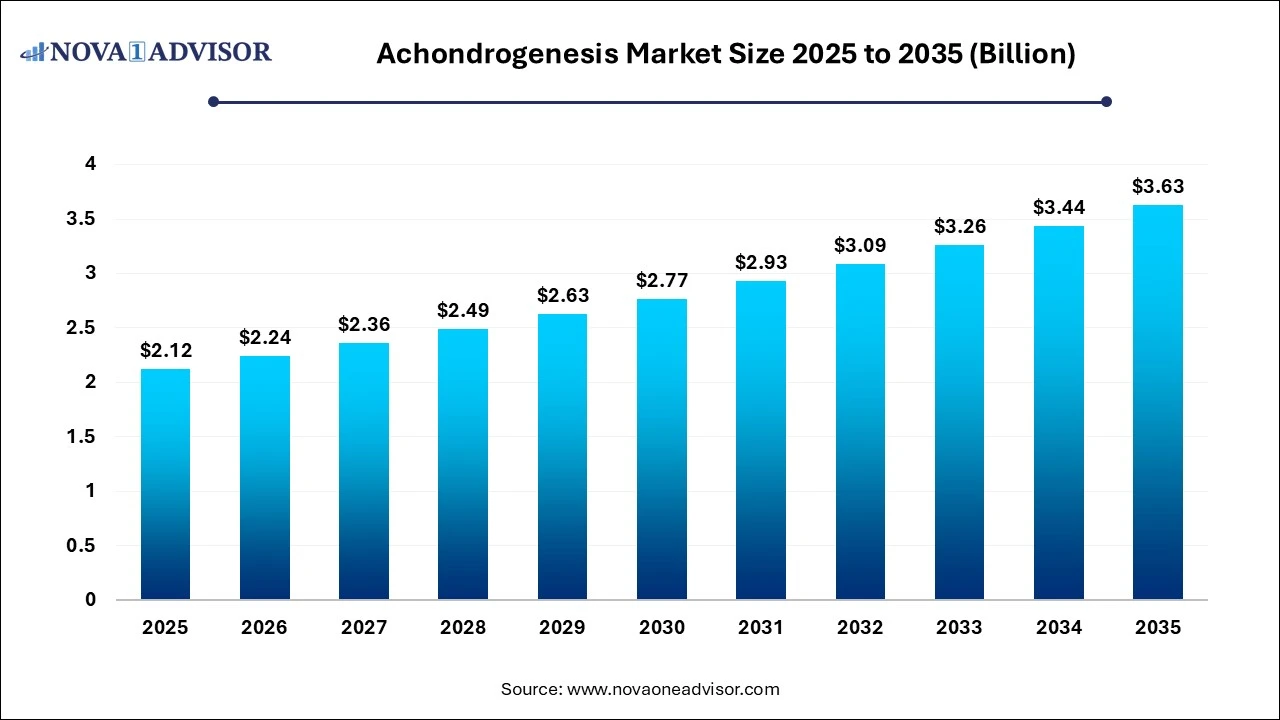
The global achondrogenesis market size was valued at USD 2.12 billion in 2025 and is projected to grow from USD 2.24 billion in 2026 to USD 3.63 billion by 2035, at a CAGR of 5.52% from 2026 to 2035. North America dominated the market, accounting for a revenue share of 41.0% in 2025.
Key Takeaway:
- By type, the type II segment dominated the market with the largest share in 2025.
- By type, the type IA segment is expected to grow at the fastest CAGR over the forecast period.
- By diagnosis, the molecular genetic testing segment dominated the market with the largest share in 2025.
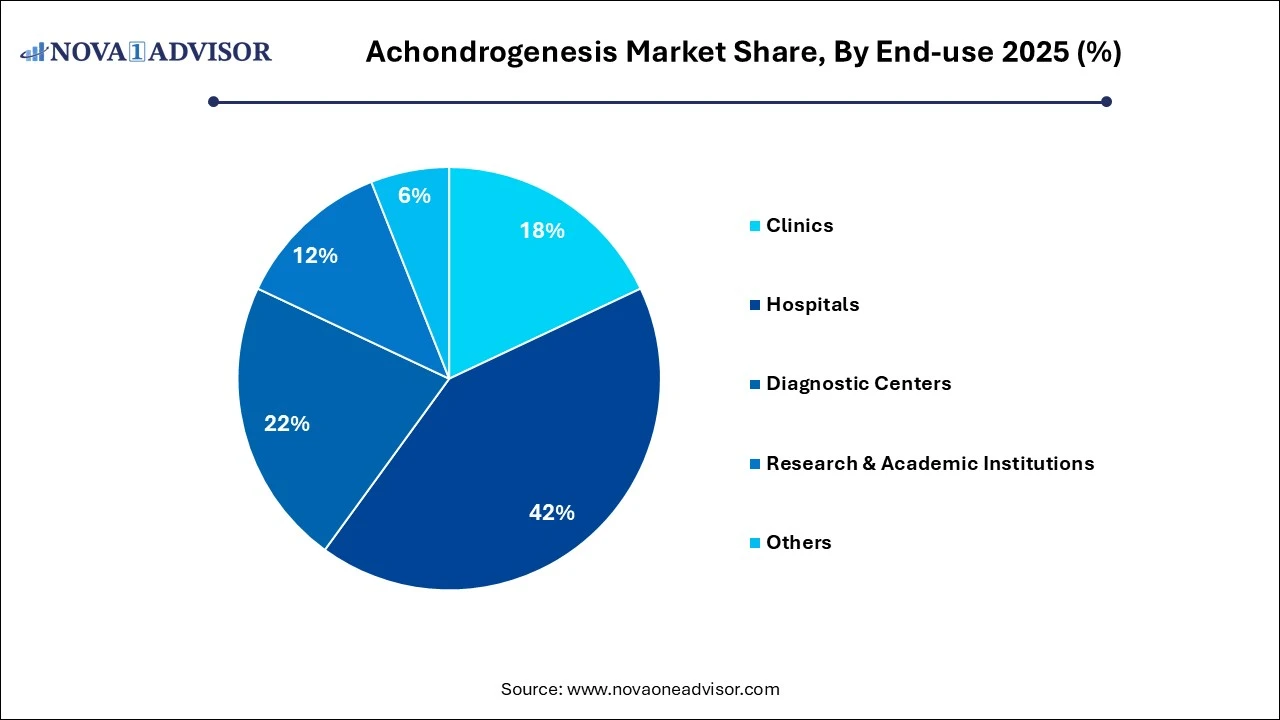
- By end user, the hospital segment dominated the market with the largest share of 42.0% in 2025.
- By region, North America dominated the market with the largest share of 41.0% in 2025.
Market Overview
The global achondrogenesis market is gradually expanding as advances in genetic diagnostics and prenatal screening improve the early detection of this rare inherited skeletal disorder. Achondrogenesis is a severe form of skeletal dysplasia characterized by impaired bone and cartilage development, leading to significant fetal skeletal abnormalities and, in most cases, perinatal mortality due to respiratory complications. While treatment options remain limited, growing awareness of rare genetic diseases and increasing access to advanced prenatal diagnostic technologies are driving market growth.
The market is primarily supported by the adoption of high-resolution prenatal ultrasound, fetal magnetic resonance imaging (MRI), chromosomal analysis, and next-generation sequencing (NGS), which enable accurate identification and molecular confirmation of the disorder during pregnancy. Advances in genomic research have improved the understanding of mutations in genes such as COL2A1, SLC26A2, and TRIP11, allowing for more precise diagnosis and differentiation from other skeletal dysplasias. These developments are enhancing genetic counseling and supporting informed clinical decision-making for affected families.
In addition, increasing government support for rare disease research, expanding international collaboration, and growing investment in precision medicine are strengthening the market. Specialized maternal-fetal medicine centers are integrating advanced imaging with molecular diagnostics to improve prenatal care and reproductive counseling. Looking ahead, continued progress in genomics, artificial intelligence, prenatal imaging, stem cell research, and gene editing technologies is expected to further improve diagnostic accuracy and support the long-term development of the global achondrogenesis market.
Market Outlook
- Market Growth Overview: The global achondrogenesis market is expected to grow significantly between 2025 and 2035, driven by the ongoing innovations in prenatal screening and genetic testing technologies.
- Sustainability Trends: Sustainability trends involve the ongoing transition towards comprehensive support systems and lifelong genetic counseling for families.
- Major Investors: Major investors in the market include Illumina, Inc.; Thermo Fisher Scientific; Centogene N.V.; and Quest Diagnostics.
How is AI Impacting The Global Achondrogenesis Market?
Artificial intelligence is playing an increasingly important role in the global achondrogenesis market by improving the early diagnosis and understanding of this rare genetic skeletal disorder. AI-powered algorithms analyze fetal ultrasound images, radiological scans, and genomic data to identify subtle skeletal abnormalities associated with achondrogenesis. By comparing fetal measurements such as limb length, thoracic size, bone development, and skull ossification with large clinical databases, AI helps clinicians detect high-risk pregnancies earlier and supports more accurate prenatal diagnosis.
AI is also transforming genetic testing by accelerating the analysis of whole-exome and whole-genome sequencing data. Machine learning models can rapidly identify disease-causing mutations in genes such as COL2A1, SLC26A2, and TRIP11, reducing diagnostic turnaround times and improving the accuracy of molecular diagnosis. This enables healthcare providers to deliver timely genetic counseling, improve pregnancy management, and differentiate achondrogenesis from other skeletal dysplasias with greater confidence.
In addition, AI is advancing rare disease research by uncovering relationships between genetic mutations and clinical outcomes, supporting the discovery of new biomarkers and potential therapeutic targets. AI-powered digital health platforms also facilitate collaboration among genetic laboratories, maternal-fetal medicine specialists, researchers, and healthcare institutions by enabling secure sharing and analysis of clinical data. As artificial intelligence and computational genomics continue to evolve, AI is expected to strengthen early diagnosis, accelerate research, and support future precision medicine approaches for achondrogenesis.
Achondrogenesis Market Report Scope
| Report Coverage | Details |
| Market Size in 2026 | USD 2.24 Billion |
| Market Size by 2035 | USD 3.63 Billion |
| Growth Rate From 2026 to 2035 | CAGR of 5.52% |
| Base Year | 2025 |
| Forecast Period | 2026 to 2035 |
| Segments Covered | By Type, By Diagnosis, By End-Users, By Region |
| Market Analysis (Terms Used) | Value (USD Million/Billion) or (Volume/Units) |
| Regional Scope | North America; Europe; Asia Pacific; Central and South America; the Middle East and Africa |
| Key Companies Profiled | Cook, Thermo Fisher Scientific, CooperSurgical Inc., Illumina, Inc., Siemens AG, FUJIFILM Holdings Corporation, Koninklijke, Philips N.V., Stryker, Toshiba Corporation, Invivoscribe, Abbott Molecular Inc., INVITROGEN CORPORATION, Roche Molecular Systems, Inc., and others. |
Market Driver
Advancements in Prenatal Genetic Diagnostics Driving Market Growth
Advances in prenatal genetic diagnostics are the primary driver of the global achondrogenesis market. High-resolution fetal ultrasonography, next-generation sequencing (NGS), chromosomal microarray analysis, and targeted genetic testing enable clinicians to detect severe skeletal abnormalities and confirm achondrogenesis earlier during pregnancy with greater accuracy. Early diagnosis supports informed pregnancy management, multidisciplinary care, and comprehensive genetic counseling for affected families. In addition, declining sequencing costs, improved laboratory technologies, and increasing awareness of inherited genetic disorders are expanding access to advanced prenatal testing, driving sustained demand for molecular diagnostic solutions despite the rarity of the condition.
Market Restraint
Extremely Low Disease Prevalence and Limited Treatment Options Limiting Market Growth
The achondrogenesis market is constrained by the extremely low prevalence of the disorder and the absence of effective disease-modifying therapies. As an ultra-rare genetic condition, achondrogenesis affects only a small number of pregnancies worldwide, limiting commercial opportunities and making large-scale clinical research difficult. Current clinical management primarily focuses on prenatal diagnosis, genetic counseling, supportive neonatal care, and reproductive planning rather than curative treatment. While research in gene editing, regenerative medicine, and stem cell therapy is advancing, these approaches remain in the experimental stage, leaving diagnostic services as the primary focus of the market.
Market Opportunity
Precision Genomics and Rare Disease Research Creating Long-Term Growth Opportunities
The expanding field of precision genomics and rare disease research presents significant long-term opportunities for the global achondrogenesis market. Increasing investments by governments, academic institutions, and biotechnology companies are improving the understanding of genetic mutations responsible for skeletal dysplasias and supporting the development of advanced molecular diagnostic platforms. International patient registries, genomic databases, and collaborative research initiatives are enhancing early diagnosis and genetic counseling. At the same time, emerging technologies such as gene editing, stem cell research, regenerative medicine, and AI-driven drug discovery are creating new possibilities for future disease-modifying therapies, offering promising growth opportunities as precision medicine continues to evolve.
Segmental Insights
By Type
Why did the type II segment dominate the global achondrogenesis market?
The type II segment dominated the market with the largest share in 2025. The dominance of the segment can be attributed to its higher occurrence rates and superior clinical understanding. In addition, advanced fetal imaging and high-resolution ultrasonography enable clinical specialists to detect profound skeletal and thoracic anomalies during early gestation.
How did the type IA segment expected to hold the significantly growing global achondrogenesis market in the coming years?
The type IA segment is expected to grow at the fastest CAGR over the forecast period. The growth of the segment can be credited to the growing accessibility of advanced sequencing techniques and the rise in interest in rare disease registries. Increased rates of carrier screening and targeted family counselling improve the awareness and identification of congenital skeletal dysplasias.
By Diagnosis
Why did the molecular genetic testing segment dominate the global achondrogenesis market?
The molecular genetic testing segment dominated the market with the largest share in 2025. The dominance of the segment can be linked to its crucial role in confirming achondrogenesis by identifying particular genetic mutations. Enhanced financial allocation toward the investigation of rare genetic pathologies and the expansion of genomic medicine registries notably optimizes diagnostic precision.
How did the biochemical testing segment expected to hold the significantly growing global achondrogenesis market in the coming years?
The biochemical testing segment is expected to grow at the fastest CAGR over the forecast period. The growth of the segment can be driven by ongoing enhancements in metabolic screening techniques along with the advent of integrated diagnostic approaches. It serves a crucial function in validating and supplementing clinical diagnoses by analyzing specific biomarkers and metabolic pathways associated with achondrogenesis.
By End Users
Why did the hospital segment dominate the global achondrogenesis market?
The hospital segment dominated the market with the largest share in 2025. The dominance of the segment is owing to the surge in innovative diagnostic infrastructure and easy accessibility of genetic counselling. Also, specialized hospital environments serve as the primary setting for acute medical intervention and ongoing clinical management.
How did the research and academic institutions segment expected to hold the significantly growing global achondrogenesis market in the coming years?
The research and academic institutions segment are expected to grow at the fastest CAGR over the forecast period. The growth of the segment is due to a surge in investments in rare disease research coupled with rising partnerships between academia and biotech firms. Increasing financial backing from government bodies for ultra-rare genetic bone disorders is driving market growth shortly.
By Regional
Why did the North American region account for the largest share in the global achondrogenesis market?
North America dominated the market with the largest share in 2025. The dominance of the region can be attributed to the growing incidence of genetic testing, promoted by innovative healthcare infrastructure. Furthermore, the broad availability of advanced neonatal intensive care units, pediatric endocrinology services, and genetic counseling centers enhances patient surveillance, optimizes clinical data registries, and boosts comprehensive family support frameworks.
U.S. Global Achondrogenesis Market Trends
The growth of the market in the country can be driven by the growing partnerships between biotechnology firms and research institutes. The U.S. Food and Drug Administration provides significant financial incentives, tax credits, and market exclusivity provisions to biotechnology enterprises engaged in the research and development of treatments for severe congenital skeletal diseases.
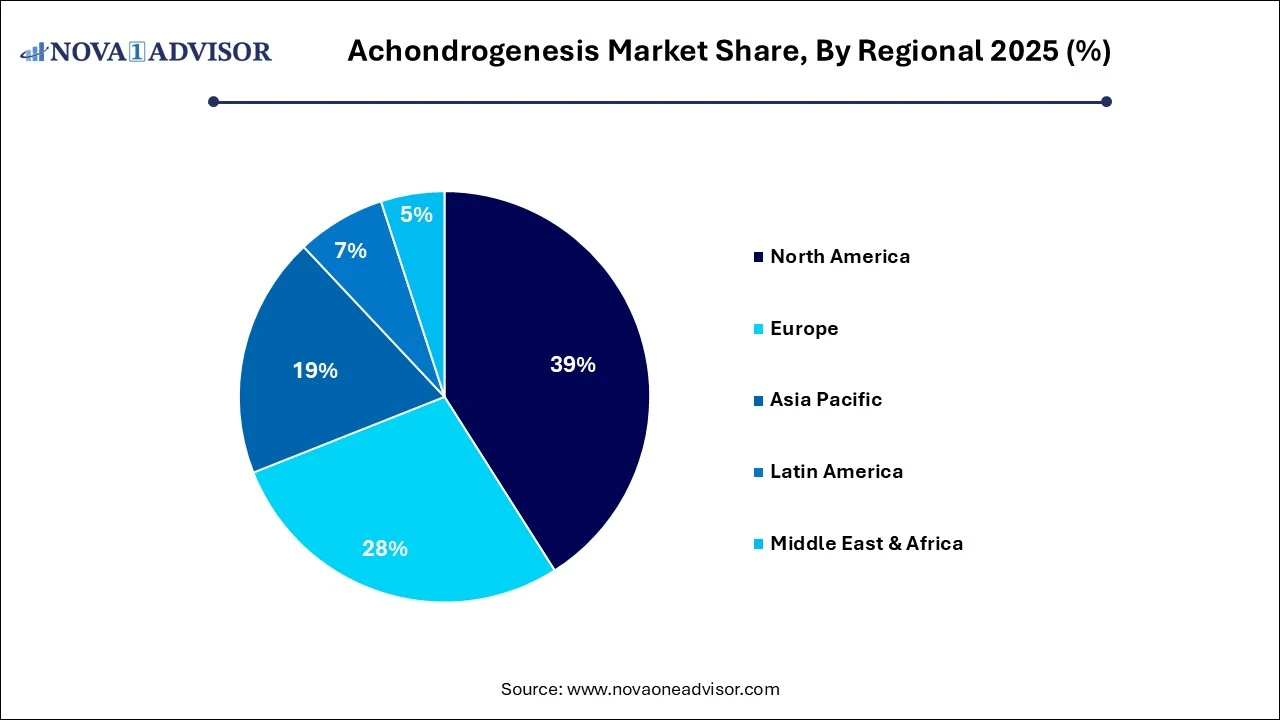
Why did the Asia-Pacific region become the fastest-growing global achondrogenesis market during the forecast period?
Asia Pacific is expected to grow at the fastest CAGR over the forecast period. The growth of the region can be credited to the surge in healthcare expenditures, enhancing prenatal diagnostic capabilities along with the growing genetic disease awareness. Furthermore, increased regulatory attention, boosted guidelines for orphan drugs, and financial rewards for rare diseases are actively attracting international drug partnerships to the major countries in the region.
China Global Achondrogenesis Market Trends
The market in the country is growing due to growing healthcare spending, a surge in genetic testing, and improved pediatric hospital networks. Moreover, government investments and a strategic shift toward rare disease focus are propelling the regulatory approval pathways for novel therapeutics and diagnostics.
Key Players in the Global Achondrogenesis Market
- Thermo Fisher Scientific Inc.: It provides advanced genetic analysis, sequencing, and molecular testing technologies utilized in rare disease research and mutation detection.
- Illumina, Inc.: A leader in sequencing and array-based solutions, supporting comprehensive prenatal screening and identification of lethal skeletal dysplasia mutations.
- Siemens Healthcare & Koninklijke Philips N.V.: Deliver high-resolution prenatal ultrasound and medical imaging systems critical for early structural and skeletal abnormality detection.
Recent Developments:
- In February 2024, Illumina, Inc., partnered with prominent European academic institutions to inaugurate a multi-center research initiative. This endeavor centers on the establishment of an expanded genomic reference framework for skeletal dysplasias.
Segments Covered in the Report
This report forecasts revenue growth at country levels and provides an analysis of the latest industry trends in each of the sub-segments from 2021 to 2035. For this study, Nova one advisor, Inc. has achondrogenesis market.
By Type
- Type IA
- Type IB
- Type II
By Diagnosis
- Physical Examination
- Molecular Genetic Testing
- Biochemical Testing
By End-Users
- Clinics
- Hospitals
- Diagnostic Centers
- Research and Academic Institutions
- Others
By Region
- North America
- Europe
- Asia Pacific
- Latin America
- Middle East & Africa
FAQ's

Proceed to Buy
Instant PDF delivery on confirmation

 Request Customization
 Download Sample

Get a Sample of this Report
Achondrogenesis Market