

Alpha Mannosidosis Market Size, Share, and Trends 2026 to 2035
 Status Published
 Category Healthcare


Content
Alpha Mannosidosis Market Size and Growth 2026 to 2035
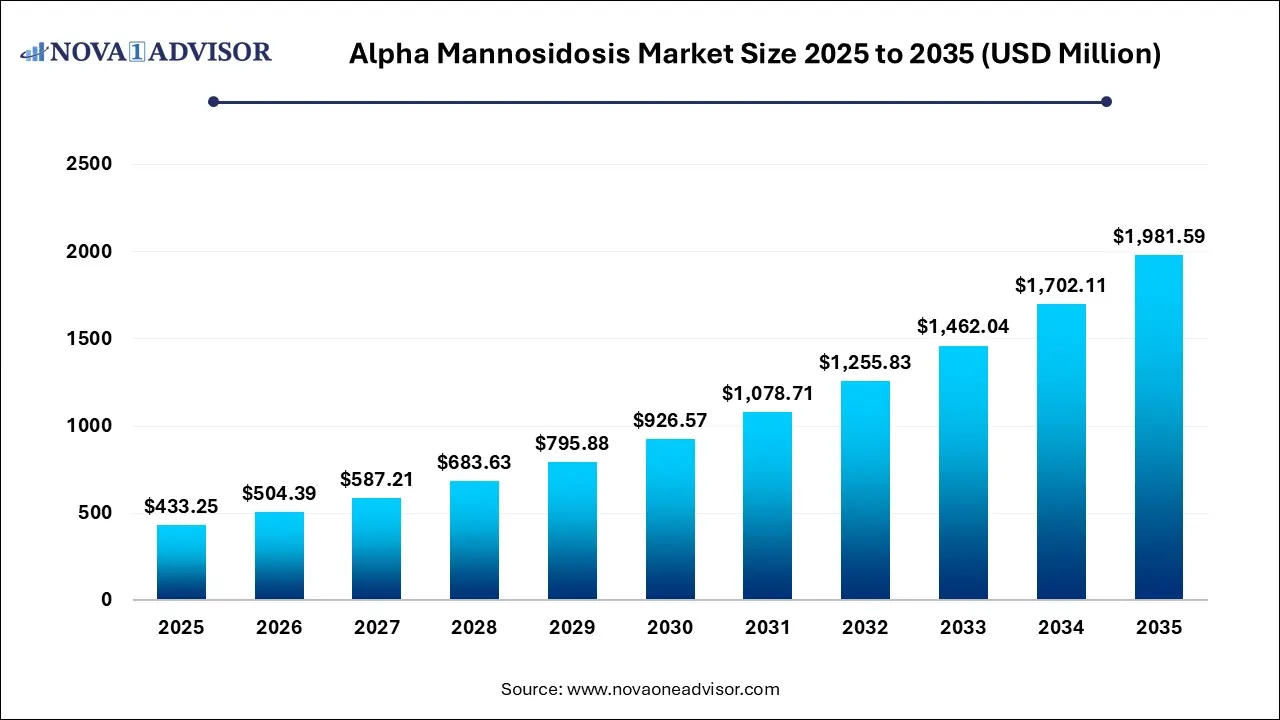
The global alpha mannosidosis market size was estimated at USD 433.25 million in 2025 and is projected to hit around USD 1,981.59 million by 2035, growing at a CAGR of 16.42% during the forecast period from 2026 to 2035.
Market Overview
Alpha Mannosidosis is a rare inherited lysosomal storage disorder caused by deficiency of the enzyme alpha-mannosidase. This enzyme deficiency results in the accumulation of mannose-rich oligosaccharides in tissues, leading to progressive intellectual disability, skeletal abnormalities, hearing impairment, immune dysfunction, and neurological complications. Since the disease is ultra-rare, diagnosis is often delayed, resulting in prolonged disease progression before appropriate treatment initiation.
The Alpha Mannosidosis market has gained significant attention in recent years because of growing advances in genetic testing technologies, increasing awareness among healthcare professionals, and expanding investment in rare disease therapeutics. Governments and regulatory agencies across major economies are actively supporting orphan drug development through incentives such as tax credits, accelerated approvals, and extended exclusivity periods. These initiatives are helping biotechnology and pharmaceutical companies justify investments in niche therapeutic areas with relatively small patient populations.
Historically, management of Alpha Mannosidosis was largely supportive, involving physiotherapy, hearing aids, orthopedic interventions, and infection management. However, the emergence of disease-modifying therapies, particularly enzyme replacement therapy, has transformed treatment paradigms. Modern therapeutic strategies now aim to slow disease progression, improve neurological function, and enhance quality of life. The increasing availability of newborn screening programs and next-generation sequencing technologies is also improving diagnostic rates.
The market is further influenced by rising collaborations among biotechnology firms, research institutions, and patient advocacy groups. Rare disease organizations play an essential role in patient education, fundraising, and clinical trial recruitment. In addition, healthcare systems are increasingly recognizing the long-term economic benefits of early intervention in rare diseases, which supports market expansion.
Although the patient pool remains limited, the high cost of orphan therapies contributes significantly to market value. Manufacturers are focusing on expanding geographic reach, enhancing clinical evidence, and developing next-generation therapies with improved efficacy profiles. As precision medicine continues to evolve, the Alpha Mannosidosis market is expected to witness sustained innovation over the coming decade.
Market Outlook
- Market Growth Overview: The global alpha mannosidosis market is expected to grow significantly between 2025 and 2034, driven by advances in genetic testing and increased awareness, growing investment in rare diseases, and a supportive regulatory framework.
- Sustainability Trends: Sustainability trends involve expansion of early detection and screening, digitalization and operational efficiency, and ESG integration and environmental responsibility.
- Major Investors: Major investors in the market include Chiesi Farmaceutici S.p.A., Ultragenyx Pharmaceutical Inc., Orchard Therapeutics, and Sobi.
How is AI Transforming the Alpha Mannosidosis Market
Artificial intelligence is playing an increasingly important role in transforming the diagnosis, treatment, and management of Alpha Mannosidosis. Since the disease presents with diverse and often nonspecific symptoms, early diagnosis remains challenging. AI-powered diagnostic tools are helping clinicians analyze genetic sequencing data more efficiently and accurately, enabling faster identification of pathogenic mutations associated with the disorder.
Machine learning algorithms are being integrated into genomic analysis platforms to identify rare disease patterns that may otherwise be overlooked. AI-based tools can compare patient symptoms, biochemical markers, imaging results, and genetic data against large databases to support differential diagnosis. This significantly reduces diagnostic delays, which is particularly important in progressive neurodegenerative disorders where early treatment initiation improves outcomes.
Pharmaceutical companies are also using AI in drug discovery and clinical development. AI models help identify potential therapeutic targets, predict enzyme interactions, and optimize molecular design for enzyme replacement therapies. These technologies reduce development timelines and improve the efficiency of clinical research in ultra-rare diseases where patient recruitment is difficult.
AI is additionally improving patient monitoring and disease management. Digital health platforms powered by AI can track patient progression, analyze treatment response, and predict complications using longitudinal health data. Such systems enable physicians to personalize treatment strategies and adjust therapies based on individual disease progression patterns.
Another major application involves clinical trial optimization. Since Alpha Mannosidosis has a very limited patient population globally, identifying eligible participants for trials is difficult. AI-driven patient identification systems help researchers locate suitable patients through electronic health records and genetic databases, accelerating trial enrollment.
For example, biotechnology firms developing lysosomal storage disorder therapies are increasingly partnering with AI-based genomic companies to improve biomarker discovery and rare disease diagnosis. Hospitals are also adopting AI-assisted radiology and neurology tools to monitor disease progression more effectively.
Overall, artificial intelligence is helping overcome some of the major barriers in rare disease management, including delayed diagnosis, fragmented patient identification, and inefficient clinical development processes.
Alpha Mannosidosis Market Report Scope
| Report Coverage | Details |
| Market Size in 2026 | USD 504.39 Million |
| Market Size by 2035 | USD 1,981.59 Million |
| Growth Rate From 2026 to 2035 | CAGR of 16.42% |
| Base Year | 2025 |
| Forecast Period | 2026 to 2035 |
| Segments Covered | By Treatment Type, By Indication, By End-user, By Region |
| Market Analysis (Terms Used) | Value (USD Million/Billion) or (Volume/Units) |
| Regional Scope | North America; Europe; Asia Pacific; Central and South America; the Middle East and Africa |
| Key Companies Profiled | Chiesi Farmaceutici, Takeda Pharmaceutical Company, Sanofi, Pfizer, Orchard Therapeutics, BioMarin Pharmaceutical, Alexion Pharmaceuticals, Amicus Therapeutics, Ultragenyx Pharmaceutical, REGENXBIO |
Segmental Insights
By Treatment Type
Enzyme Replacement Therapy Dominated the Market
Enzyme replacement therapy dominated the Alpha Mannosidosis market due to its ability to directly address enzyme deficiency, which is the root cause of the disease. The approval and commercialization of targeted ERT solutions significantly transformed the treatment landscape by offering disease-modifying benefits rather than merely supportive care. Physicians increasingly prefer enzyme replacement therapy because it helps reduce oligosaccharide accumulation and improves patient functionality over time.
The dominance of this segment is also supported by growing clinical evidence demonstrating improved mobility, respiratory function, and quality of life among treated patients. Pharmaceutical companies continue investing in optimizing dosing regimens and improving long-term efficacy. Favorable orphan drug incentives and growing reimbursement support in developed countries are additionally strengthening the adoption of enzyme replacement therapy globally.
Bone Marrow Transplant is Expected to be the Fastest Growing Segment
Bone marrow transplant is anticipated to witness notable growth because of increasing interest in curative or long-term therapeutic approaches for pediatric patients. Hematopoietic stem cell transplantation has shown potential to stabilize disease progression when performed at early stages, particularly before severe neurological complications develop.
Advancements in transplant protocols, donor matching technologies, and supportive care have improved survival rates and reduced complications associated with transplantation procedures. Research institutions are also evaluating combination strategies involving transplantation and gene-based therapies to enhance clinical outcomes. Growing awareness among rare disease specialists regarding the benefits of early intervention is likely to support the expansion of this segment during the forecast period.
By Indication
How did the type II segment account for the largest share in the Global Alpha Mannosidosis market?
The type II segment is driven by the high clinical prevalence of Type II alpha-mannosidosis, which establishes it as the most common form of the disorder, making this patient population the primary focus for commercial drug developers. The greater number of patients in this category makes them a central focus of ongoing clinical studies and therapy adoption, reinforcing their market share.
How did the Type III segment expect to hold the fastest-growing Global Alpha Mannosidosis market in the coming years?
The type III segment is driven by the critical requirement for immediate therapeutic intervention to halt rapid neurological deterioration and prevent early mortality, which drives urgent demand within the Type III alpha-mannosidosis segment. The immediate adoption of specialized enzyme replacement therapies, such as Lamzede, alongside the clinical anticipation of curative, next-generation gene therapies.
By End-user
How did the hospitals segment account for the largest share in the Global Alpha Mannosidosis market?
The hospitals segment is driven by providing the specialized medical infrastructure required to execute complex intravenous enzyme replacement therapies and hematopoietic stem cell transplants. Beyond routine therapy administration, these multi-disciplinary hubs possess the advanced diagnostic arrays and intensive monitoring suites necessary to safely manage progressive genetic disorders.
How did the speciality clinics segment expect to hold the fastest-growing Global Alpha Mannosidosis market in the coming years?
The speciality clinics segment is driven by the expanding global network of rare disease-focused centers, which is transforming patient management by providing highly targeted, specialized care environments engineered exclusively for complex genetic conditions. The rising early genetic screening initiatives and sophisticated diagnostic enzyme assays systematically funnel newly identified patients into localized clinic networks.
By Regional
North America
North America represents the largest regional market for Alpha Mannosidosis due to advanced healthcare infrastructure, strong rare disease awareness, and robust orphan drug reimbursement systems. The region benefits from extensive genetic testing capabilities, high adoption of enzyme replacement therapy, and the presence of leading biotechnology companies focused on lysosomal storage disorders.
The increasing integration of precision medicine and newborn screening programs has significantly improved early diagnosis rates across the region. Government support through orphan drug legislation and favorable reimbursement policies further contributes to market expansion. Research collaborations between academic institutions and pharmaceutical companies continue to accelerate innovation in rare disease therapeutics.
United States
The United States dominates the North American market because of its highly developed rare disease treatment ecosystem. The country has a strong presence of specialty hospitals, advanced genomic diagnostic laboratories, and established orphan drug development frameworks under the Orphan Drug Act.
Increasing adoption of next-generation sequencing technologies is improving patient identification rates. The U.S. Food and Drug Administration (FDA) continues to support accelerated approvals for rare disease therapies, encouraging investment in Alpha Mannosidosis treatment development. Additionally, patient advocacy organizations actively promote awareness and facilitate access to treatment programs.
The country is also witnessing growing investments in gene therapy research targeting lysosomal storage disorders. Major pharmaceutical and biotechnology firms are collaborating with academic centers to expand clinical trials and develop next-generation therapies.
Canada
Canada is experiencing steady growth in the Alpha Mannosidosis market due to expanding rare disease healthcare programs and improving access to genetic diagnostics. Provincial healthcare systems are increasingly recognizing the importance of early intervention for inherited metabolic disorders.
The country benefits from strong collaborations between healthcare institutions and global rare disease organizations. Canadian hospitals are increasingly participating in international clinical studies focused on enzyme replacement therapies and genetic treatments.
Growing awareness among pediatric neurologists and metabolic disorder specialists is helping improve diagnosis rates across the country. Government initiatives supporting rare disease reimbursement policies are expected to further strengthen market growth.
Europe
Europe is one of the most significant markets for Alpha Mannosidosis owing to strong regulatory support for orphan drugs, advanced healthcare systems, and increasing investments in rare disease research. The region has well-established patient registries and genetic screening programs that support early diagnosis and treatment.
European countries are actively promoting rare disease awareness campaigns and improving access to specialized treatment centers. The presence of major pharmaceutical manufacturers and biotechnology innovators also contributes to market development.
Germany
Germany is a leading country in the European Alpha Mannosidosis market because of its highly developed healthcare infrastructure and strong emphasis on rare disease research. The country has a large number of specialized metabolic disorder treatment centers and advanced genomic laboratories.
German healthcare providers increasingly utilize molecular diagnostics for early disease identification. Government support for orphan drug reimbursement and clinical research further drives market expansion. The country is also actively involved in European rare disease networks and collaborative research programs.
United Kingdom
The United Kingdom is witnessing growing demand for Alpha Mannosidosis therapies due to increasing awareness of lysosomal storage disorders and advancements in genomic medicine. The National Health Service (NHS) has strengthened its focus on rare disease management through improved diagnostic pathways and specialized care centers.
The country is investing heavily in genomic sequencing initiatives to enhance early disease detection. Collaboration between universities, biotechnology firms, and rare disease advocacy organizations is further accelerating therapeutic innovation.
France
France maintains a strong position in the European market due to its advanced orphan drug policies and well-established rare disease treatment framework. The country has developed specialized referral centers for inherited metabolic disorders, enabling coordinated multidisciplinary care.
French healthcare authorities actively support access to orphan therapies and promote clinical research in rare diseases. Increasing integration of AI-assisted genomic analysis tools is also improving diagnostic efficiency within the country.
Italy
Italy is emerging as an important market due to increasing awareness of genetic disorders and growing participation in European rare disease initiatives. Italian healthcare institutions are expanding access to advanced diagnostic technologies and specialized treatment facilities.
The country benefits from the presence of rare disease-focused pharmaceutical companies and research institutions involved in enzyme replacement therapy development. Government initiatives aimed at improving patient access to orphan drugs are supporting market growth.
Spain
Spain is experiencing moderate growth in the Alpha Mannosidosis market because of improving healthcare infrastructure and rising adoption of genetic testing. The country has strengthened rare disease registries and expanded collaborations with European research organizations.
Increasing physician awareness regarding lysosomal storage disorders is contributing to improved diagnosis rates. Spain is also witnessing growing investments in specialty clinics and metabolic disease treatment centers.
Asia Pacific
Asia Pacific is expected to be the fastest-growing regional market due to improving healthcare expenditure, expanding genetic testing adoption, and increasing awareness of rare diseases. Governments across the region are strengthening healthcare systems and supporting rare disease diagnosis initiatives.
The region presents substantial untapped opportunities because many patients remain undiagnosed due to limited awareness and inadequate diagnostic infrastructure. As access to advanced medical technologies improves, patient identification rates are expected to rise significantly.
China
China is projected to emerge as one of the fastest-growing country markets due to rapid healthcare modernization and increasing government focus on rare diseases. The country has introduced several initiatives to improve access to orphan drugs and genetic diagnostics.
Large population size and increasing healthcare investments create significant growth potential. Chinese hospitals are expanding their genomic medicine capabilities, while biotechnology companies are investing in rare disease therapy research.
The country is also witnessing growing adoption of AI-based diagnostic tools for identifying inherited metabolic disorders more efficiently.
Japan
Japan has a well-developed healthcare system and strong expertise in rare disease research, making it a key market within Asia Pacific. The country actively supports orphan drug development through favorable regulatory policies and financial incentives.
Japanese healthcare institutions are increasingly using advanced molecular diagnostic technologies for early disease detection. Collaboration between pharmaceutical companies and academic researchers continues to drive innovation in lysosomal storage disorder therapies.
India
India is gradually emerging as a promising market due to rising awareness of genetic disorders and expanding healthcare infrastructure. Although diagnosis rates remain relatively low, increasing adoption of genomic testing is improving disease identification.
Government initiatives focused on rare diseases and expanding insurance coverage for specialized treatments are expected to support future market growth. Additionally, the growing presence of specialty hospitals and diagnostic laboratories is enhancing access to rare disease care.
South Korea
South Korea is witnessing increasing growth in rare disease therapeutics due to strong technological advancement and healthcare digitization. The country has highly advanced diagnostic laboratories and growing expertise in precision medicine.
Government funding for biotechnology research and rare disease management programs is accelerating therapeutic innovation. South Korean healthcare providers are also integrating AI-assisted genomic tools into clinical practice.
Australia
Australia has a relatively mature rare disease healthcare framework with increasing focus on early diagnosis and specialized care. The country actively participates in international rare disease clinical research initiatives and promotes patient access to orphan therapies.
Advanced healthcare infrastructure and strong genetic counseling services support the growth of the Alpha Mannosidosis market in Australia.
Latin America
Latin America is witnessing gradual market growth due to improving healthcare access and increasing awareness of rare genetic disorders. However, limited reimbursement coverage and diagnostic infrastructure continue to present challenges.
Countries in the region are increasingly collaborating with international healthcare organizations to improve rare disease management and access to advanced therapies.
Brazil
Brazil dominates the Latin American market because of its large population and expanding healthcare system. The country is improving access to genetic testing and rare disease treatment programs through public healthcare initiatives.
Growing awareness among healthcare professionals regarding lysosomal storage disorders is contributing to higher diagnosis rates. Brazil is also expanding collaborations with international pharmaceutical companies involved in orphan drug development.
Mexico
Mexico is experiencing moderate growth due to increasing investment in healthcare infrastructure and rising adoption of molecular diagnostics. Rare disease advocacy groups are actively promoting awareness and patient support initiatives.
The country is gradually improving access to specialized treatment centers and rare disease therapies, particularly in urban healthcare systems.
Middle East and Africa (MEA)
The MEA market remains at a developing stage but offers long-term growth opportunities due to improving healthcare infrastructure and rising focus on genetic diseases. Increasing investments in specialty healthcare facilities are gradually improving access to rare disease diagnostics.
Limited awareness and high treatment costs remain major barriers in several countries. However, growing government initiatives aimed at modernizing healthcare systems are expected to support future market development.
Saudi Arabia
Saudi Arabia is emerging as a key market within the Middle East due to increasing healthcare investments and growing adoption of advanced genetic testing technologies. The country is expanding specialized healthcare facilities focused on inherited disorders.
Government support for healthcare modernization and rare disease management programs is expected to drive future growth.
United Arab Emirates
The UAE is witnessing increasing adoption of precision medicine and advanced genomic diagnostics. The country’s healthcare sector is rapidly modernizing, with strong investment in specialty hospitals and rare disease treatment programs.
International collaborations with biotechnology companies and research institutions are further supporting market development.
South Africa
South Africa is gradually improving rare disease diagnosis capabilities through expanding laboratory infrastructure and increasing awareness programs. However, access to advanced therapies remains limited compared to developed markets.
Improving healthcare partnerships and international support programs are expected to enhance market opportunities in the coming years.
Key Players in the Global Alpha Mannosidosis Market
- Chiesi Farmaceutici S.p.A.
Chiesi contributes to the alpha mannosidosis market through its subsidiary, Chiesi Global Rare Diseases, which commercializes Lamzede (velmanase alfa), the first approved enzyme replacement therapy (ERT) for the treatment of non-central nervous system manifestations of the disease.
- Sobi (Swedish Orphan Biovitrum AB)
Sobi contributes to the rare disease landscape by providing specialized expertise in treatment distribution and patient support, strengthening the overall infrastructure for managing metabolic conditions like alpha mannosidosis.
- Orchard Therapeutics (a Kyowa Kirin Company)
Orchard Therapeutics contributes to the advanced treatment landscape of genetic lysosomal storage diseases, with a focus on hematopoietic stem cell gene therapy, positioning it as a key innovator for future, potentially curative, treatment modalities.
Segments Covered in the Report
This report forecasts revenue growth at country levels and provides an analysis of the latest industry trends in each of the sub-segments from 2021 to 2035. For this study, Nova one advisor, Inc. has segmented the alpha mannosidosis market.
By Treatment Type
- Bone Marrow Transplant
- Enzyme Replacement Therapy
By Indication
- Type I
- Type II
- Type III
By End-user
- Hospitals
- Specialty Clinics
By Region
- North America
- Europe
- Asia Pacific
- Latin America
- Middle East and Africa (MEA)

Proceed to Buy
Instant PDF delivery on confirmation

Alpha Mannosidosis Market Size to Hit USD 1,981.59 Million by 2035
 Request Customization
 Download Sample

Get a Sample of this Report
Alpha Mannosidosis Market