

Angiography Equipment Market Size, Share, and Trends 2026 to 2035
 Status Published
 Category Healthcare


Content
Angiography Equipment Market Size and Growth 2026 to 2035
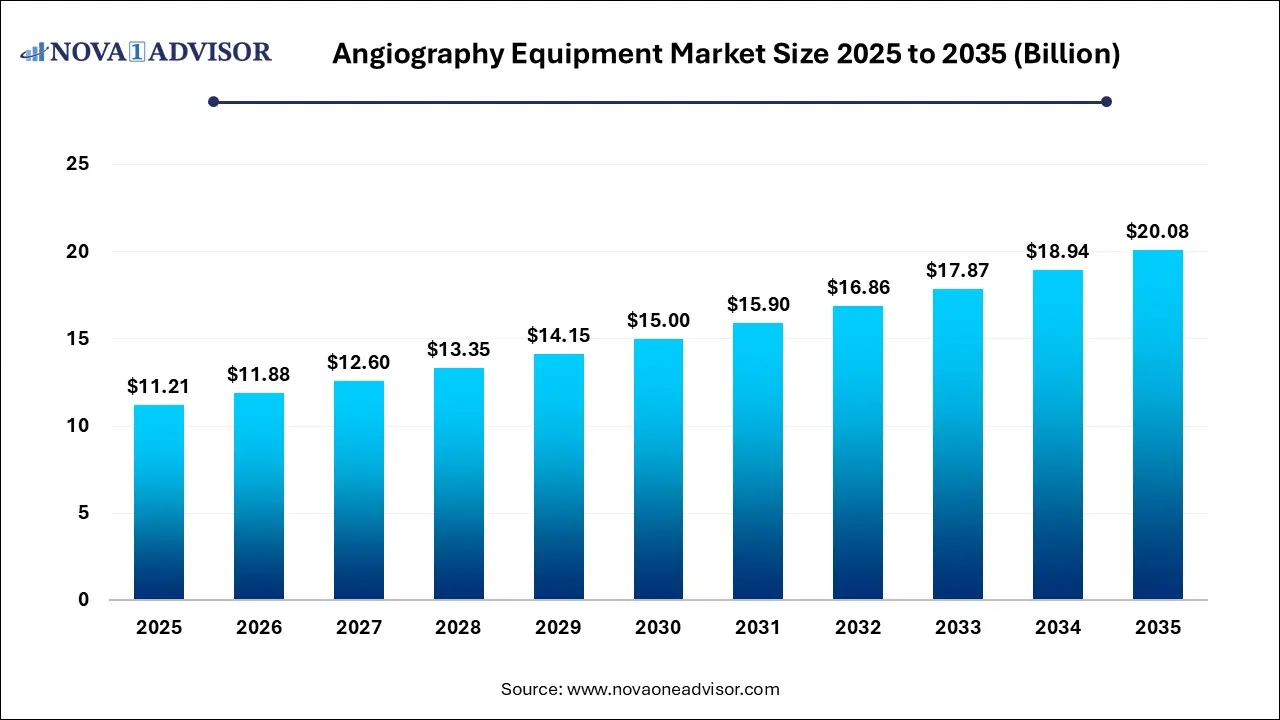
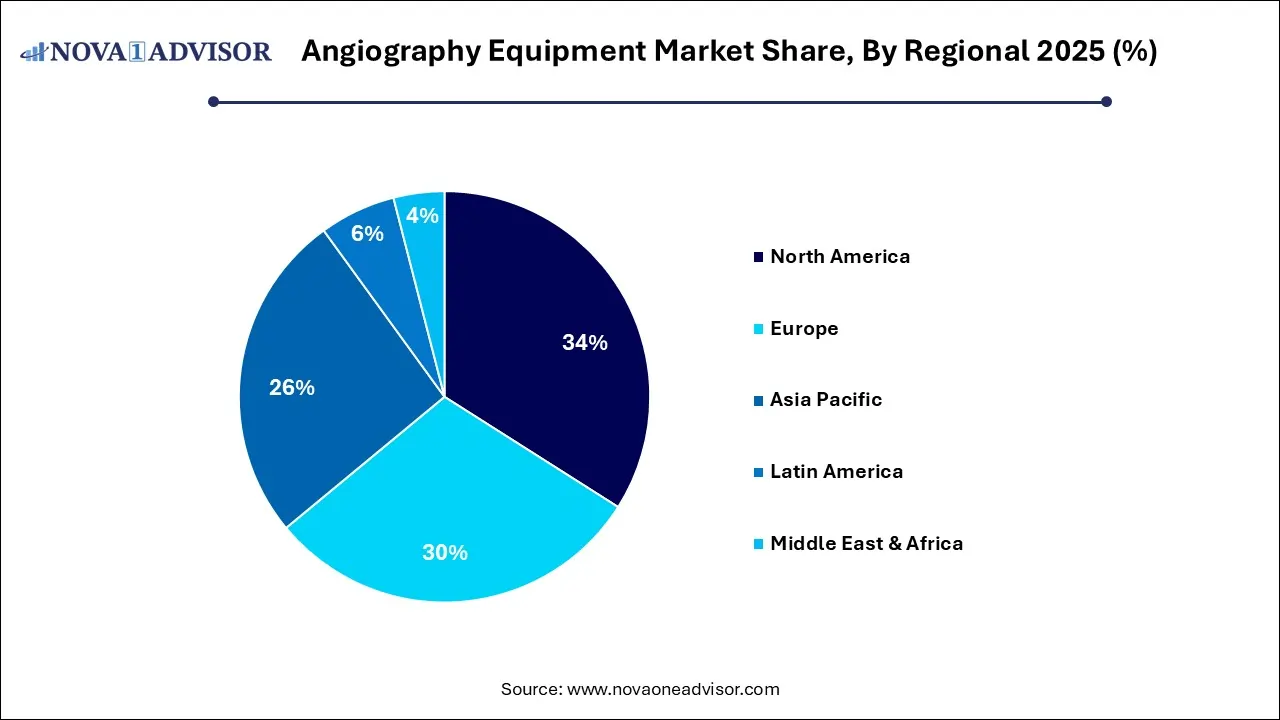
The global angiography equipment market size was valued at USD 11.21 billion in 2025 and is projected to grow from USD 11.88 billion in 2026 to USD 20.08 billion by 2035, at a CAGR of 6.0% from 2026 to 2035. North America dominated the market, accounting for a revenue share of 34.0% in 2025.
Key Takeaway:
- By product, the angiography systems segment dominated the market with the largest share in 2025.
- By product, the contrast media segment is expected to grow at the fastest CAGR over the forecast period.
- By technology, the X-ray segment dominated the market with the largest share in 2025.
- By procedure, the coronary segment dominated the market with the largest share in 2025.
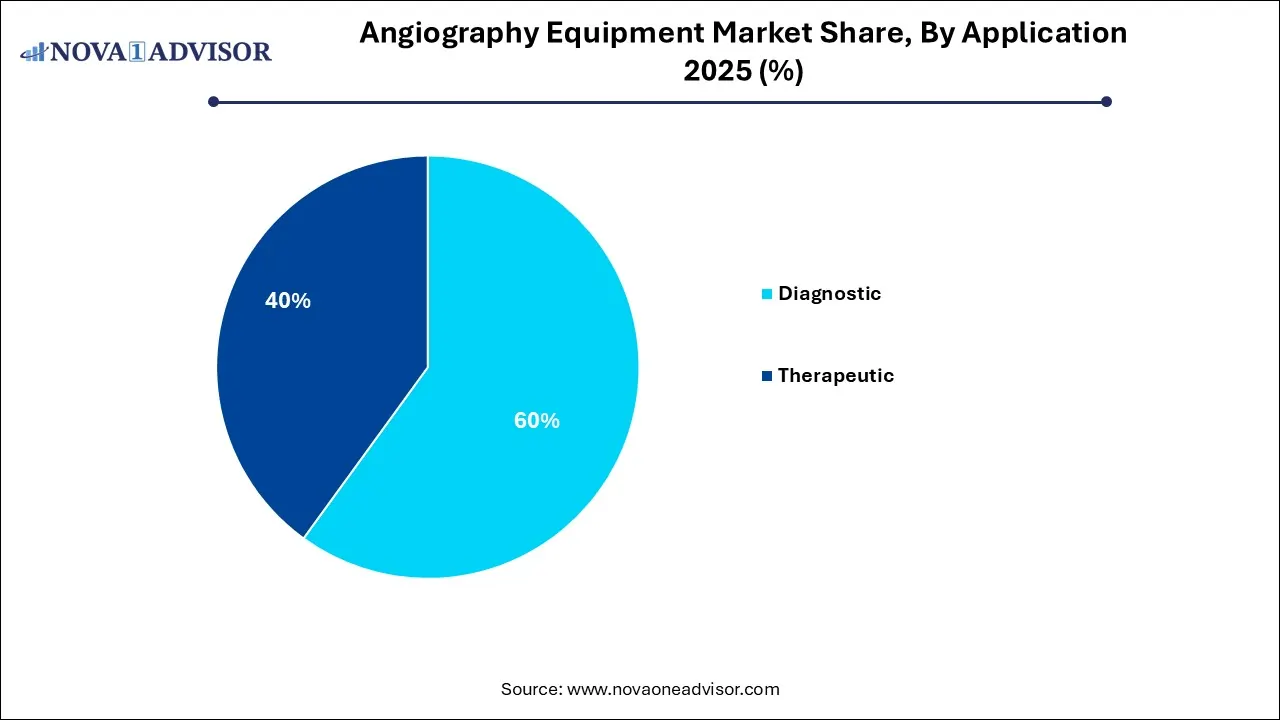
- By application, the diagnostic segment dominated the market with the largest share of 60.0% in 2025.
- By region, North America dominated the market with the largest share of 34.0% in 2025.
Market Overview
The global angiography equipment market is experiencing steady growth, driven by the increasing prevalence of cardiovascular, neurovascular, and peripheral vascular diseases. Angiography systems play a vital role in diagnosing and guiding minimally invasive treatments by providing high-resolution images of blood vessels. Rising cases of hypertension, diabetes, obesity, and aging populations are fueling demand for advanced vascular imaging solutions.
Technological advancements, including flat-panel detectors, 3D imaging, digital subtraction angiography (DSA), and robotic-assisted systems, are improving diagnostic accuracy and procedural efficiency. Additionally, the growing adoption of minimally invasive interventions, expanding healthcare infrastructure, and increased investments in advanced imaging technologies are supporting market expansion. Favorable government initiatives, higher healthcare spending, and ongoing innovation by leading manufacturers are expected to sustain long-term market growth.
Market Outlook
- Market Growth Overview: The global metallic spinal implants market is expected to grow significantly between 2025 and 2035, driven by the increasing scope of applications and ongoing technological innovations.
- Sustainability Trends: Sustainability trends involve the emphasis on minimizing and reducing energy and expanding equipment lifespans.
- Major Investors: Major investors in the market are Siemens Healthineers, GE HealthCare, Koninklijke Philips N.V., and Canon Medical Systems.
How is AI impacting the global angiography equipment market?
Artificial intelligence (AI) is revolutionizing the market by enhancing image clarity, minimizing procedure times, and reducing radiation exposure. Furthermore, artificial intelligence software possesses the capability to detect obscure or early-stage anomalies, such as minor arterial blockages, that may elude detection by fatigued clinicians. This technology enhances timely intervention by improving survival rates for patients diagnosed with cardiovascular disease.
AI also supports procedural planning by analyzing vascular anatomy and recommending optimal treatment strategies for complex interventions. In addition, workflow automation streamlines image management, report generation, and integration with electronic health records, improving operational efficiency. As predictive analytics and AI-driven decision support continue to advance, next-generation angiography systems are expected to deliver more personalized treatment planning and better patient outcomes.
Angiography Equipment Market Report Scope
| Report Coverage | Details |
| Market Size in 2026 | USD 11.88 Billion |
| Market Size by 2035 | USD 20.08 Billion |
| Growth Rate From 2026 to 2035 | CAGR of 6.0% |
| Base Year | 2025 |
| Forecast Period | 2026 to 2035 |
| Segments Covered | Product, Technology, Procedure, Application, Region |
| Market Analysis (Terms Used) | Value (USD Million/Billion) or (Volume/Units) |
| Regional Scope | North America; Europe; Asia Pacific; Central and South America; the Middle East and Africa |
| Key Companies Profiled | GE Healthcare (U.S.), Koninklijke Philips N.V. (Netherlands), Siemens Healthineers (Germany), Canon Corporation (Japan), Boston Scientific Corporation (U.S.), Cordis (a Cardinal Health Company, U.S.) Shimadzu Corporation (Japan), Medtronic (Ireland), Angiodynamics (U.S.), B. Braun Melsungen (Germany), Abbott Laboratories (U.S.), and Terumo (Japan) |
Market Driver
Rising Burden of Cardiovascular Diseases Drives Market Growth
The growing prevalence of cardiovascular diseases, including coronary artery disease, peripheral artery disease, and stroke, is a major driver of the angiography equipment market. Increasing rates of diabetes, hypertension, obesity, and aging populations are fueling demand for advanced vascular imaging and minimally invasive procedures. Angiography plays a critical role in the early diagnosis and treatment of cardiovascular conditions, while expanding government screening programs, improved healthcare access, and rising patient awareness continue to support market growth.
Market Restraint
High Equipment Costs Restrict Market Adoption
The high cost of advanced angiography equipment remains a key challenge for market expansion. Modern systems require significant investments in imaging technology, specialized infrastructure, maintenance, software upgrades, and skilled personnel. Smaller hospitals and healthcare facilities, particularly in emerging economies, often face budget constraints that limit adoption. In addition, reimbursement variations and long equipment replacement cycles can delay purchasing decisions, slowing market penetration.
Market Opportunity
Growing Demand for Structural Heart and Neurovascular Procedures Creates Opportunities
The increasing adoption of structural heart and neurovascular interventions is creating significant growth opportunities for the angiography equipment market. Procedures such as transcatheter aortic valve replacement (TAVR), thrombectomy, aneurysm embolization, and carotid artery stenting rely on advanced angiographic imaging for precise guidance. Rising investments in specialized cardiovascular centers, hybrid operating rooms, and AI-enabled imaging technologies are expected to drive demand for next-generation angiography systems, particularly as minimally invasive procedures continue to expand globally.
Segmental Insights
By Product
Why did the angiography systems segment dominate the global angiography equipment market?
The angiography systems segment dominated the market with the largest share in 2025. The dominance of the segment can be attributed to the increasing investments and technological innovations in medical facilities along with the surge in scope of applications. In addition, the rising global elderly population directly correlates with a higher incidence of cardiovascular diseases, driving segment growth further.
How did the contrast media segment expected to hold the significantly growing global angiography equipment market in the coming years?
The contrast media segment is expected to grow at the fastest CAGR over the forecast period. The growth of the segment can be credited to the growing number of minimally invasive surgeries and the rise in technological innovations in imaging techniques. An automatic contrast injector ensures the precise delivery of contrast media into the bloodstream at the optimal time. This process enhances image resolution and minimizes the overall volume of contrast agent required for the patient.
By Technology
Why did the X-ray segment dominate the global angiography equipment market?
The X-ray segment dominated the market with the largest share in 2025. The dominance of the segment can be linked to the increasing incidence of cardiovascular diseases and technological innovations in medical facilities. Minimally invasive procedures, such as cardiac catheterization, offer significant clinical advantages over open surgery, including reduced postoperative pain.
How did the MRA segment expected to hold the significantly growing global angiography equipment market in the coming years?
The MRA segment is expected to grow at the fastest CAGR over the forecast period. The growth of the segment can be driven by heavy regional healthcare modernization and increasing rates of chronic diseases. Magnetic Resonance Angiography (MRA) provides advanced three-dimensional (3D) visualization, enabling imaging in any anatomical plane with high soft tissue contrast.
By Procedure
Why did the coronary segment dominate the global angiography equipment market?
The coronary segment dominated the market with the largest share in 2025. The dominance of the segment is owing to the surge rates of coronary artery disease (CAD) and growing demand for coronary angiography in developing nations. Moreover, manufacturing companies are increasingly adopting artificial intelligence (AI) and machine learning (ML) technologies to optimize production.
How did the endovascular segment expected to hold the significantly growing global angiography equipment market in the coming years?
The endovascular segment is expected to grow at the fastest CAGR over the projected period. The growth of the segment is due to its growing use to treat vascular conditions such as peripheral artery disease and deep vein thrombosis. The rising prevalence of obesity, a growing geriatric demographic, and high rates of diabetes are resulting in an increase of vascular and cardiac conditions.
By Application
Why did the diagnostic segment dominate the global angiography equipment market?
The diagnostic segment dominated the market with the largest share in 2025. The dominance of the segment can be attributed to the growing geriatric demographic and transition towards early diagnosis. High-resolution Computed Tomography Angiography (CTA) and Magnetic Resonance Angiography (MRA) provide exceptionally precise, non-invasive visualization of intricate neurovascular and cardiovascular structures.
How did the therapeutic segment expected to hold the significantly growing global angiography equipment market in the coming years?
The therapeutic segment is expected to grow at the fastest CAGR over the study period. The growth of the segment can be credited to the increasing need for advanced treatments across various medical conditions coupled with a surge in chronic conditions. Minimally invasive surgical procedures are increasingly favored by both patients and clinicians over conventional open surgeries, mainly due to reduced postoperative pain and minimal scarring.
By Regional
Why did the North American region account for the largest share in the global angiography equipment market?
North America dominated the market with the largest share in 2025. The dominance of the region can be attributed to the growing incidence of cardiovascular diseases and innovative healthcare infrastructure. In addition, the robust local presence of major corporations ensures that healthcare facilities receive prompt access to advanced instrumentation, software updates, and technical maintenance support.
U.S. Global Angiography Equipment Market Trends
The growth of the market in the country can be driven by the favourable reimbursement policies and ongoing technological innovations in AI-assisted 3D imaging. The United States benefits from a high concentration of major medical device manufacturers, including GE Healthcare, Medtronic, and Boston Scientific. This strong industry presence ensures continuous product innovation and the efficient distribution of medical equipment.
Why did the Asia-Pacific region become the fastest-growing global angiography equipment market during the forecast period?
Asia Pacific is expected to grow at the fastest CAGR over the forecast period. The growth of the region can be credited to the increasing hospital infrastructure along with the surge in heart disease. Furthermore, the rapid demographic shift toward an aging population in nations like Japan, China, and India is propelling the prevalence of cardiovascular and neurological conditions soon.
China Global Angiography Equipment Market Trends
The market in the country is growing due to ongoing implementation of government modernization rules and government healthcare investments. China is experiencing an unprecedented demographic shift characterized by a rapidly aging population. This increase in the elderly demographic aligns with a rising incidence of age-related vascular complications.
Key Players in the Global Angiography Equipment Market
- GE HealthCare (United States): They offer the Innova IGS and Discovery series. They specialize in advanced image-processing software that reduces radiation exposure for both patients and medical staff.
- Koninklijke Philips N.V. (Netherlands): Their flagship Azurion platform is designed to improve lab efficiency and speed during complex, minimally invasive procedures.
- Medtronic (Ireland): One of the largest medical technology companies in the world, producing a wide range of devices for coronary and peripheral vascular blockages.
Recent Developments
- In December 2025, Royal Philips finalized an agreement to acquire SpectraWAVE, Inc., a prominent developer specializing in artificial intelligence-driven medical imaging, enhanced vascular imaging (EVI) of coronary arteries, and angiography-based physiology assessments.
Segments Covered in the Report
This report forecasts revenue growth at country levels and provides an analysis of the latest industry trends in each of the sub-segments from 2021 to 2035. For this study, Nova one advisor, Inc. has angiography equipment market.
By Product
- Angiography Systems
- Catheters
- Guidewire
- Balloons
- Contrast Media
- Vascular Closure Devices
- Angiography Accessories
By Technology
- X-Ray
- MRA
- CT
By Procedure
- Coronary
- Endovascular
- Neurovascular
By Application
- Diagnostic
- Therapeutic
By Region
- North America
- Europe
- Asia Pacific
- Latin America
- Middle East & Africa

Proceed to Buy
Instant PDF delivery on confirmation

Angiography Equipment Market Size to Hit USD 20.08 Billion by 2035
 Request Customization
 Download Sample

Get a Sample of this Report
Angiography Equipment Market