

Artificial Vital Organs And Medical Bionics Market Size, Share, and Trends 2026 to 2035
 Status Published
 Category Healthcare


Content
Artificial Vital Organs And Medical Bionics Market Size and Trends
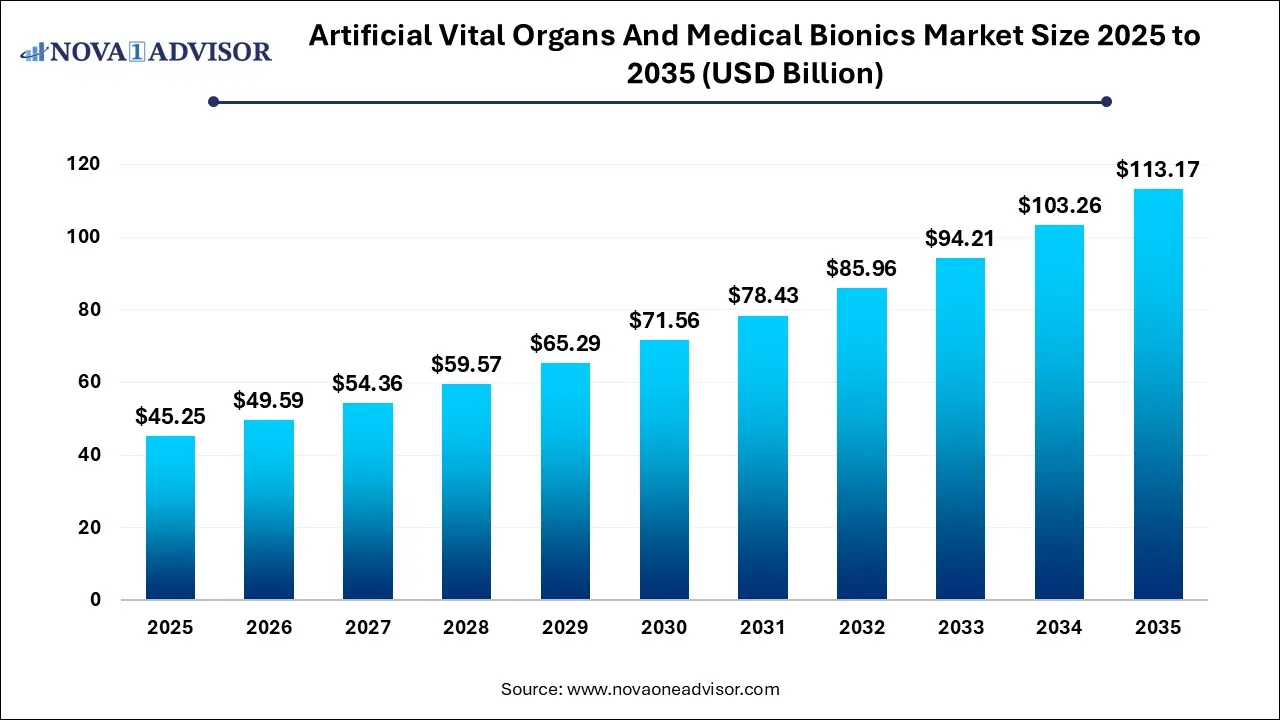
The artificial vital organs and medical bionics market size was exhibited at USD 45.25 billion in 2025 and is projected to hit around USD 113.17 billion by 2035, growing at a CAGR of 9.6% during the forecast period 2026 to 2035.
Key Takeaway:
- By artificial organ, the heart segment dominated the market with the largest share in 2025.
- By artificial organ, the pancreas segment is expected to grow at the fastest CAGR over the forecast period.
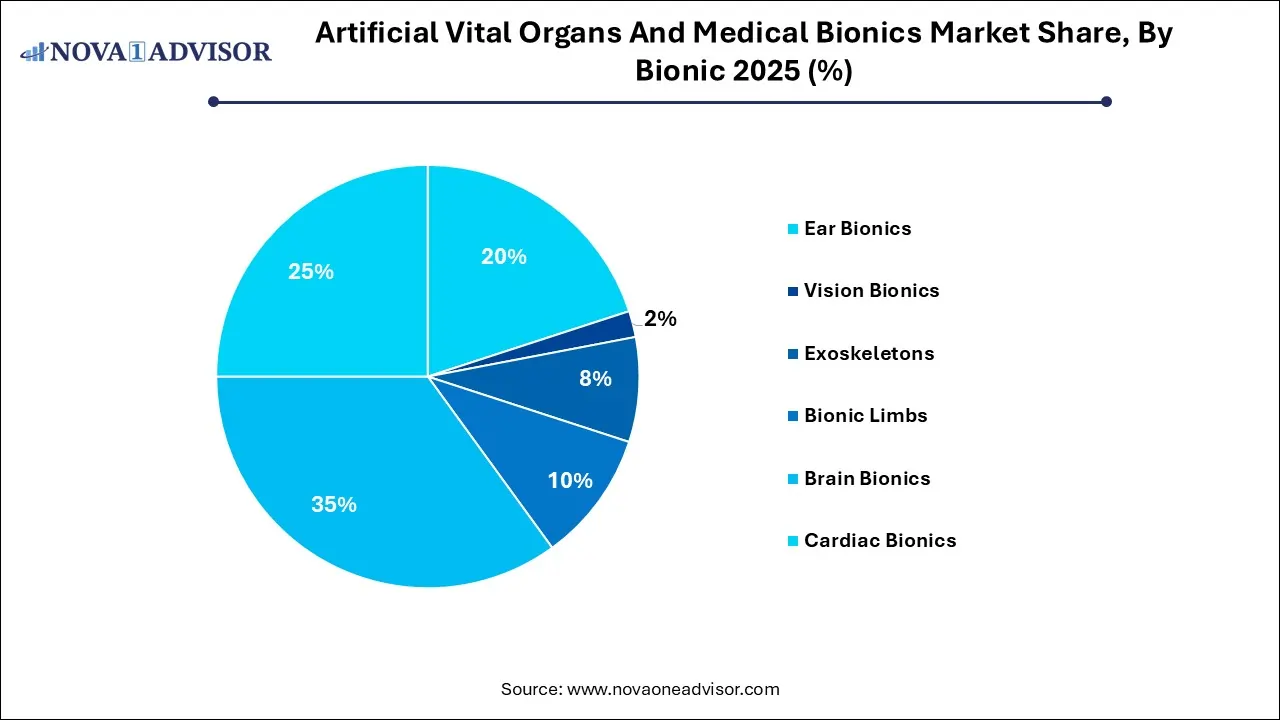
- By bionics, the brain bionics segment dominated the market with the largest share of 35.0% in 2025.
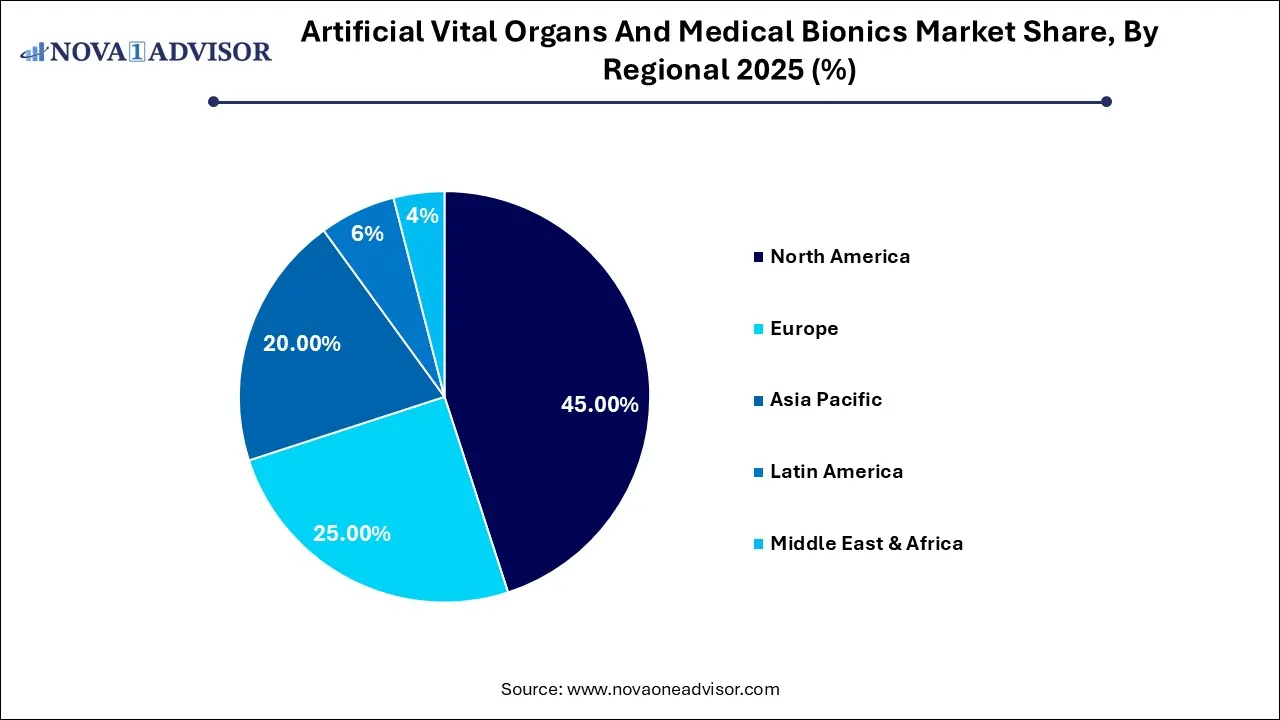
- By region, North America dominated the market with the largest share of 45.0% in 2025.
Market Overview
The global Artificial Vital Organs and Medical Bionics Market represents a transformative intersection of bioengineering, regenerative medicine, and medical device innovation. This market is poised to revolutionize the healthcare sector by offering life-sustaining or function-restoring devices for patients suffering from organ failure, traumatic injuries, or congenital disabilities. Artificial organs such as hearts, kidneys, and lungs mimic the biological functions of their natural counterparts, while bionic systems including exoskeletons, bionic limbs, and auditory implants restore mobility, hearing, and vision.
The market is rapidly expanding due to rising chronic disease prevalence, increasing geriatric populations, and growing demand for organ transplantation. According to the World Health Organization (WHO), cardiovascular diseases are the leading cause of death globally, while end-stage renal disease continues to grow, escalating the need for both artificial and bionic organ systems. Traditional organ transplant waiting lists are often plagued by long delays and donor shortages. In this context, artificial organs and medical bionics offer a lifeline, providing patients with timely and often less invasive solutions.
Innovations such as 3D-printed organs, brain-computer interfaces (BCIs), and AI-powered exoskeletons are setting new standards. Public and private investments in biotech startups, academic research collaborations, and rising FDA approvals are fueling the market. As accessibility improves and prices gradually decline, emerging economies are also beginning to benefit from these technological marvels.
Market Outlook
- Market Growth Overview: The artificial vital organs and medical bionics market is expected to grow significantly between 2025 and 2035, driven by the ongoing innovations in technology and increasing disease prevalence across the globe.
- Sustainability Trends: Sustainability trends involve minimizing environmental footprints and enhancing device efficiency.
- Major Investors: Major investors in the market include SynCardia Systems LLC, Carmat SA, and Edwards Lifesciences Corporation.
How is AI impacting the artificial vital organs and medical bionics market?
Artificial Intelligence (AI) is revolutionizing the market by allowing devices to adapt to human actions, forecast health emergencies, and combine smoothly with the nervous system. Furthermore, AI algorithms in implanted or wearable devices such as pacemakers or artificial hearts rapidly track vital signs. Hence, the AI can show early signs of infection, organ failure, and rejection.
Major Trends in the Market
-
Rise of Personalized and 3D-Printed Organs: Technological breakthroughs in 3D bioprinting are enabling the creation of personalized artificial organs, particularly in kidney and liver segments.
-
Integration of AI and IoT in Bionics: Smart bionics powered by AI are now capable of real-time feedback and adaptive motion, dramatically improving patient quality of life.
-
Miniaturization and Portability: Devices like portable dialysis machines and compact artificial hearts are improving mobility and usability for patients.
-
Brain-Machine Interfaces (BMIs): Brain bionics are seeing significant progress, enabling paralyzed individuals to control devices using neural signals.
-
Increased Regulatory Approvals: Government bodies such as the FDA and EMA are accelerating the approval pathways for life-saving devices in light of urgent clinical needs.
-
Focus on Pediatric Applications: Companies are designing smaller, adaptable bionic limbs and heart devices suitable for children, widening the consumer base.
-
Global Shortage of Organ Donors: The ever-widening gap between demand and availability of donor organs is pushing healthcare systems to adopt artificial alternatives.
-
Military and Rehabilitation Use: Exoskeletons and bionic limbs are increasingly being used in defense sectors and for post-trauma rehabilitation of soldiers and accident victims.
Report Scope of Artificial Vital Organs And Medical Bionics Market
| Report Coverage | Details |
| Market Size in 2026 | USD 49.59 Billion |
| Market Size by 2035 | USD 113.17 Billion |
| Growth Rate From 2026 to 2035 | CAGR of 9.6% |
| Base Year | 2025 |
| Forecast Period | 2026-2035 |
| Segments Covered | Artificial Organs, Bionics, Region |
| Market Analysis (Terms Used) | Value (US$ Million/Billion) or (Volume/Units) |
| Regional scope | North America; Europe; Asia Pacific; Latin America; MEA |
| Key Companies Profiled | Medtronic, Inc.; LifeNet Health; Terumo Corporation; Ekso Bionics Holdings, Inc.; Nano Retina Ltd.; Edwards Lifesciences Corporation; InnoScot Health Ltd.; Ottobock SE & Co. KGaA; Orthofix Medical Inc. |
Key Market Driver: Rising Prevalence of Organ Failure and Chronic Conditions
One of the strongest drivers propelling the artificial organs and medical bionics market is the rising global burden of chronic diseases leading to organ failure. Conditions like diabetes, hypertension, chronic kidney disease (CKD), and cardiovascular disorders are growing at an alarming rate. The International Diabetes Federation estimates that over 530 million people were living with diabetes in 2023, with projections reaching over 640 million by 2030. This rise is directly linked to increased cases of kidney failure, necessitating dialysis or artificial kidneys.
Furthermore, the number of individuals requiring organ transplants far exceeds the number of available donors. In the U.S. alone, more than 100,000 people await organ transplants, but only around 40,000 procedures are performed annually. Artificial organs such as total artificial hearts or implantable kidney systems are filling this void by offering temporary or long-term solutions. This driver, backed by global healthcare initiatives and rising investments, continues to stimulate R&D and commercialization.
Key Market Restraint: High Costs and Limited Access
Despite technological advances, the market faces a significant restraint in the form of high cost and limited accessibility, especially in low- and middle-income countries. Artificial organs and advanced bionics are priced in tens or hundreds of thousands of dollars. For instance, a total artificial heart can cost upwards of $125,000, excluding surgery and hospitalization charges. Similarly, high-end robotic bionic limbs can cost between $20,000 to $100,000 depending on the complexity.
These costs often make such solutions unaffordable to vast segments of the global population. Reimbursement policies are either limited or non-existent in many countries. Additionally, the technical expertise required to implant and manage these systems may not be available outside tertiary care hospitals. This combination of cost and infrastructure limitations hinders broader adoption, creating disparities in healthcare access.
Key Market Opportunity: Technological Collaboration and Emerging Markets
A promising opportunity lies in cross-industry collaborations and the expansion into emerging markets. Tech giants such as Google and Tesla have shown interest in neural interfaces and wearable bionics, respectively. Partnerships between medical device manufacturers and AI software developers are enabling smart bionic limbs that learn user movement patterns and improve over time. For instance, companies like Össur and Coapt are integrating machine learning into prosthetics to personalize motor control.
Simultaneously, emerging economies such as India, Brazil, and Southeast Asian nations are investing heavily in healthcare infrastructure and innovation hubs. Government support, such as India’s National Health Mission or Brazil’s Unified Health System (SUS), is opening doors for affordable bionic solutions and modular artificial organs. Manufacturers who localize production and adapt to regional needs are likely to experience rapid growth.
Segmental Insights
By Artificial Organ
Why did the heart segment dominate the artificial vital organs and medical bionics market?
The heart segment dominated the market with the largest share in 2025. The dominance of the segment can be attributed to the increase in cardiovascular diseases and medical breakthroughs along with the extensive shortage of human heart donors. In addition, governments and major companies are investing heavily in research and development (R&D) to create more biocompatible materials.
How did the pancreas segment expected to hold the significantly growing artificial vital organs and medical bionics market in the coming years?
The pancreas segment is expected to grow at the fastest CAGR over the forecast period. The growth of the segment can be credited to the increasing global prevalence of diabetes and ongoing leaps in wearable technology. An artificial pancreas functions as a closed-loop automated system that continuously monitors blood glucose levels and administers insulin, which significantly reduces the daily disease-management burden for patients.
By Bionic
Why did the brain bionics segment dominate the artificial vital organs and medical bionics market?
The brain bionics segment dominated the market with the largest share in 2025. The dominance of the segment can be linked to the increasing number of individuals suffering from nervous system disorders and ongoing leaps in microchip technology. Governments and private enterprises are making substantial investments in medical bionics. These financial commitments are focusing on extending battery longevity, miniaturizing device footprints, and improving biocompatibility.
How did the exoskeleton bionics segment expected to hold the significantly growing artificial vital organs and medical bionics market in the coming years?
The exoskeleton bionics segment is expected to grow at the fastest CAGR over the projected period. The growth of the segment can be driven by increasing cases of spinal cord injuries and neurological disorders across the globe. Recent advancements in artificial intelligence, battery efficiency, and lightweight materials have significantly reduced the bulk of these devices by enhancing their adaptability to individual gait patterns.
U.S. Artificial Vital Organs and Medical Bionics Market Size and Growth 2026 to 2035
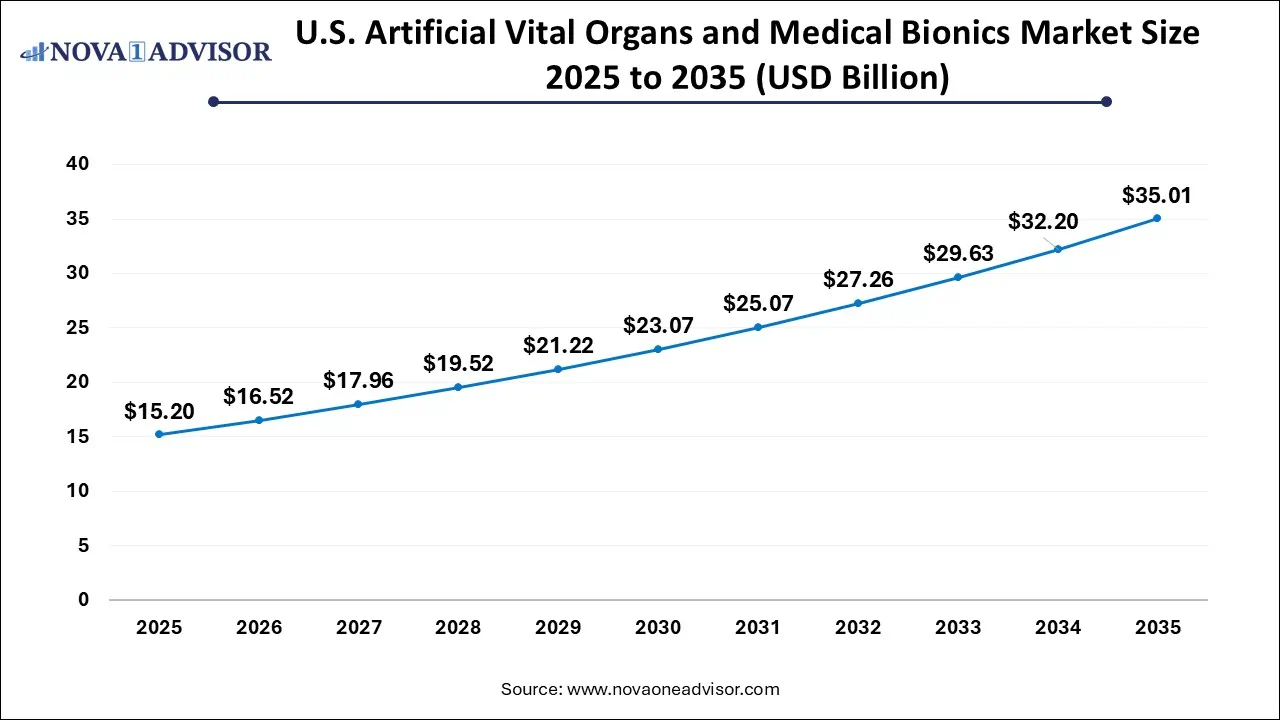
The U.S. artificial vital organs and medical bionics market size is evaluated at USD 15.20 billion in 2025 and is projected to be worth around USD 35.01 billion by 2035, growing at a CAGR of 8.7% from 2026 to 2035.
Why did the North American region account for the largest share in the artificial vital organs and medical bionics market?
North America dominated the market with the largest share in 2025. The dominance of the region can be attributed to the surge in healthcare spending, increase in aging population, and severe donor shortages in urban areas. In addition, North America is home to globally recognized healthcare and research institutions characterized by their rapid integration of technological advancements. Also, a sophisticated medical infrastructure and increased public health literacy ensure broad access to innovative therapeutic interventions.
U.S. Artificial Vital Organs And Medical Bionics Market Trends
The growth of the market in the country can be driven by increasing chronic disease prevalence, robust FDA frameworks, and high healthcare spending. Also, major companies in the country such as Medtronic and Abbott benefit from strong government and venture capital funding, which helps boost first-in-human clinical trials.
Why did the Asia-Pacific region become the fastest-growing artificial vital organs and medical bionics market during the forecast period?
Asia Pacific is expected to grow at the fastest CAGR over the forecast period. The growth of the region can be credited to the increasing healthcare access and implementation of government manufacturing programs in emerging economies such as China and India. Furthermore, the dramatic rise in lifestyle-related non-communicable diseases, including diabetes, hypertension, and cardiovascular conditions, frequently leads to end-stage organ failure.
China Artificial Vital Organs And Medical Bionics Market Trends
The market in the country is growing due to the increasing incidence of chronic conditions and innovations in healthcare infrastructure. Due to the acute shortage of human organs, medical practitioners and patients are increasingly using engineered artificial organs and advanced bionic implants as viable therapeutic alternatives.
Why did Europe hold a notable share in the artificial vital organs and medical bionics market?
Europe is expected to grow at a notable CAGR over the forecast period. The growth of the region can be linked to the strong government funding and healthcare standards in countries such as Germany, France, and the UK coupled with the technological innovations in AI-powered prosthetics. Moreover, demographic shifts toward an older population in the region have propelled the frequency of age-associated mobility and organ decline, which results in a substantial increase in the need for advanced orthopedic and bionic implants.
Germany Artificial Vital Organs And Medical Bionics Market Trends
The growth of the market is boosted by a dense network of major market players such as Berlin Heart GmbH and rapid advancements in biocompatible materials. Germany hosts major medical device manufacturers, such as Berlin Heart, and benefits from robust collaborative funding between biotechnology firms and research institutions.
Some of the prominent players in the artificial vital organs and medical bionics market include:
- Medtronic plc
- Boston Scientific Corporation
- Cochlear Ltd.
- Zimmer Biomet Holdings Inc.
- Edwards Lifesciences Corporation
- Abiomed Inc.
- SynCardia Systems LLC
- BiVACOR Inc.
- ReWalk Robotics
- Ekso Bionics Holdings Inc.
- Össur hf
- Open Bionics
- Ottobock SE & Co. KGaA
- NeuroPace Inc.
- Second Sight Medical Products Inc.
Artificial Vital Organs And Medical Bionics Market Recent Developments
-
March 2025 – SynCardia Systems announced the development of a more compact version of its Total Artificial Heart, suitable for smaller-framed patients and women, with clinical trials commencing mid-2025.
-
February 2025 – Neuralink, a company founded by Elon Musk, received FDA approval to expand its clinical trials for brain-machine interfaces aimed at patients with spinal injuries.
-
January 2025 – BiVACOR, a company developing a total artificial heart based on rotary pump technology, secured $22 million in Series B funding to advance its first-in-human trials.
-
November 2024 – Össur introduced its next-generation bionic knee joint, featuring real-time adaptive gait recognition and AI-based fall detection.
-
October 2024 – Cochlear Ltd. launched its Smart Hearing Ecosystem in Europe, integrating mobile devices with cochlear implants to improve remote monitoring and tuning.
Segments Covered in the Report
This report forecasts revenue growth at country levels and provides an analysis of the latest industry trends in each of the sub-segments from 2021 to 2035. For this study, Nova one advisor, Inc. has segmented the artificial vital organs and medical bionics market
By Artificial Organs
- Heart
- Kidney
- Liver
- Pancreas
- Lungs
By Bionics
- Ear Bionics
- Vision Bionics
- Exoskeletons
- Bionic Limbs
- Brain Bionics
- Cardiac Bionics
By Regional
- North America
- Europe
- Asia Pacific
- Latin America
- Middle East and Africa (MEA)
FAQ's

Proceed to Buy
Instant PDF delivery on confirmation

Artificial Vital Organs And Medical Bionics Market | USD 113.17 Billion by 2035
 Request Customization
 Download Sample

Get a Sample of this Report
Artificial Vital Organs And Medical Bionics Market