

Blood Transfusion Diagnostics Market Size, Share, and Trends 2026 to 2035
 Status Published
 Category Healthcare


Content
Blood Transfusion Diagnostics Market Summary
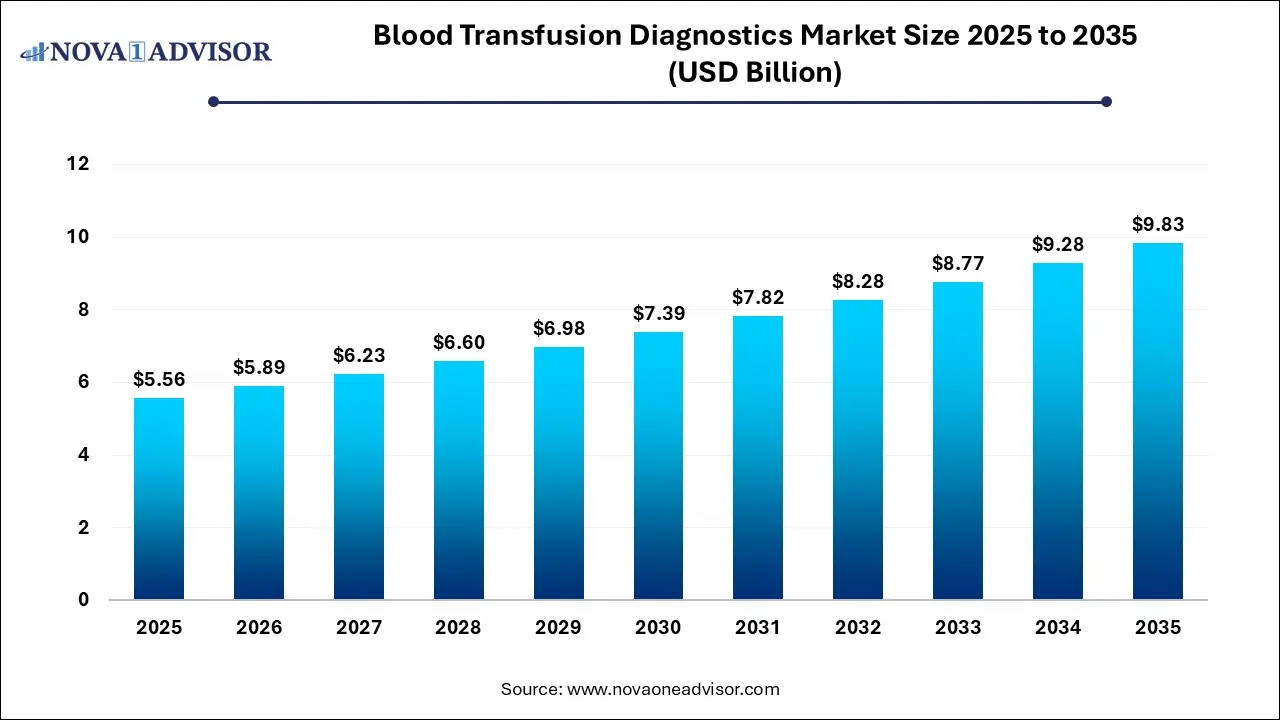
The global blood transfusion diagnostics market size was estimated at USD 5.56 billion in 2025 and is projected to hit around USD 9.83 billion by 2035, growing at a CAGR of 5.86% during the forecast period from 2026 to 2035.
Market Key Takeaways
- The Blood Transfusion Diagnostics Market is witnessing sustained growth due to the increasing demand for safe blood transfusion practices, rising prevalence of infectious diseases, and expanding healthcare infrastructure globally.
- Technological advancements in molecular diagnostics, automation, and artificial intelligence are improving testing accuracy, reducing turnaround times, and enhancing donor-recipient compatibility.
- Reagents & kits represent the dominant product segment because of their recurring usage in blood screening and compatibility testing procedures.
- Molecular testing and next-generation sequencing technologies are rapidly gaining traction owing to their high sensitivity and ability to detect complex blood-borne pathogens.
- Hospitals and blood banks remain the leading end users due to high blood transfusion volumes and stringent safety requirements.
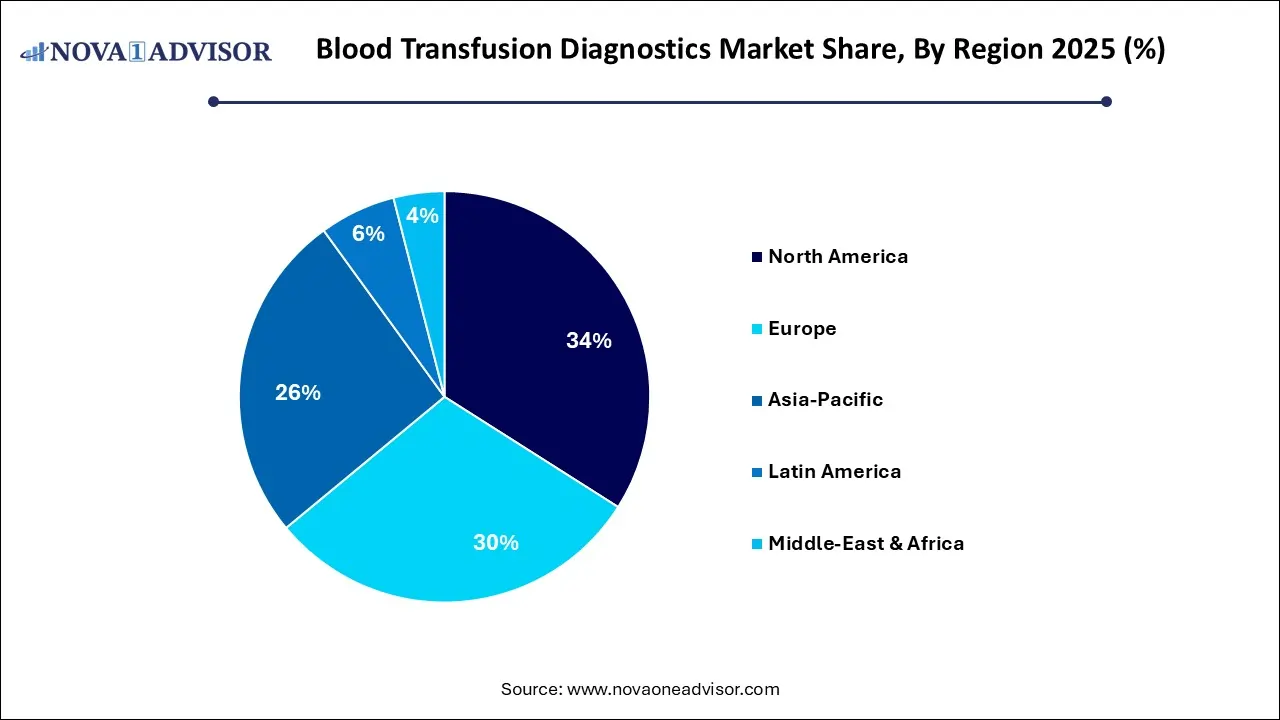
- North America dominates the market due to advanced healthcare systems, strong regulatory frameworks, and high adoption of automated diagnostic platforms, while Asia Pacific is emerging as the fastest-growing region due to rising healthcare investments and increasing awareness regarding blood safety.
- The growing burden of chronic diseases such as cancer, anemia, hemophilia, and kidney disorders continues to increase demand for transfusion diagnostics globally.
- Regulatory emphasis on screening donated blood for infectious agents such as HIV, hepatitis B, hepatitis C, syphilis, and emerging pathogens is accelerating market adoption.
Market Overview
The Blood Transfusion Diagnostics Market forms an essential component of the global healthcare ecosystem, ensuring the safety, compatibility, and effectiveness of blood transfusion procedures. Blood transfusion diagnostics involve a broad range of tests and technologies used to screen blood donors, determine blood groups, identify infectious diseases, and assess donor-recipient compatibility before transfusion. These diagnostics play a critical role in preventing transfusion-transmitted infections (TTIs) and adverse transfusion reactions.
The increasing number of surgical procedures, trauma cases, organ transplants, cancer therapies, and chronic disease treatments has significantly elevated the demand for blood and blood components worldwide. As blood utilization rises, healthcare systems are under increasing pressure to maintain stringent safety standards. This has accelerated investments in advanced blood screening technologies and automated diagnostic systems.
Blood transfusion diagnostics have evolved considerably over the past decade. Conventional serology-based methods continue to be widely used; however, molecular diagnostics, nucleic acid testing (NAT), microarrays, and next-generation sequencing are becoming increasingly important due to their superior sensitivity and specificity. Modern diagnostic systems can identify infections during the early window period, thereby reducing the risk of contaminated blood entering the supply chain.
For example, nucleic acid amplification testing has become a standard practice in many developed nations for screening HIV and hepatitis viruses. Several blood banks in the United States and Europe now employ automated molecular systems capable of processing thousands of samples daily with minimal human intervention. Such advancements are improving operational efficiency and enhancing patient safety.
The market is also benefiting from increasing government initiatives related to voluntary blood donation and blood safety awareness. Organizations such as the World Health Organization (WHO) and national health authorities continue to promote universal blood screening programs. Emerging economies are investing in modern blood banking infrastructure to reduce transfusion-related complications and improve healthcare quality.
Furthermore, demographic trends such as population aging are contributing to higher transfusion demand. Elderly patients frequently require blood transfusions during surgeries, cancer treatments, and chronic disease management. This demographic shift is expected to sustain long-term market growth.
Despite strong growth prospects, the industry faces challenges including high diagnostic costs, limited infrastructure in low-income regions, and regulatory complexities. Nevertheless, ongoing innovation, digital transformation, and increasing healthcare investments are expected to create substantial opportunities for market participants over the coming years.
Market Outlook
- Market Growth Overview: The global blood transfusion diagnostics market is expected to grow significantly between 2025 and 2035, driven by the rising prevalence of infectious and chronic diseases, surging demand for surgeries and trauma care, and growing healthcare infrastructure in emerging economies.
- Sustainability Trends: Sustainability trends involve automation and energy efficiency, waste reduction through miniaturization, and eco-friendly green labs.
- Major Investors: Major investors in the market include Grifols, S.A., Bio-Rad Laboratories, Inc., F. Hoffmann-La Roche Ltd., Abbott Laboratories, and Immucor, Inc.
How is AI Transforming the Blood Transfusion Diagnostics Market
Artificial intelligence is transforming the Blood Transfusion Diagnostics Market by improving testing accuracy, streamlining laboratory workflows, and enabling predictive analytics in blood management systems. AI-powered technologies are increasingly being integrated into transfusion diagnostics to reduce human error, optimize blood inventory management, and enhance patient safety.
One of the major applications of AI is automated image analysis in blood typing and serology testing. Traditional manual interpretation of agglutination reactions can be subjective and time-consuming. AI-enabled imaging systems can rapidly analyze blood samples with greater consistency and precision. These systems help laboratories minimize interpretation errors and improve diagnostic reliability.
AI is also supporting predictive blood demand forecasting. Hospitals and blood banks are using machine learning algorithms to analyze historical transfusion patterns, disease outbreaks, surgical schedules, and seasonal variations. This allows institutions to optimize blood inventory levels and reduce wastage caused by expired blood products.
For instance, several healthcare systems are deploying AI-driven blood inventory management software that predicts blood shortages and automatically recommends redistribution between hospitals and blood banks. Such systems became particularly valuable during pandemic-related supply disruptions.
Another transformative application involves pathogen detection. AI algorithms can analyze large genomic datasets generated through molecular diagnostics and next-generation sequencing platforms. These systems can identify rare mutations, emerging pathogens, and complex infectious profiles faster than conventional analytical methods.
In transfusion medicine, AI is helping improve donor-recipient matching by analyzing extensive immunohematology databases. Advanced algorithms can identify compatible donors for patients with rare blood groups or multiple antibodies, thereby reducing transfusion complications.
Automation powered by AI is also improving laboratory efficiency. Smart diagnostic analyzers can prioritize urgent samples, monitor instrument performance, detect anomalies, and recommend maintenance schedules. This reduces downtime and enhances throughput in high-volume blood screening laboratories.
Additionally, AI-supported digital platforms are enabling remote diagnostics and centralized laboratory management. Laboratories located in resource-constrained regions can access expert interpretation through cloud-based systems integrated with AI analytics.
As healthcare systems continue embracing digital transformation, AI is expected to play an increasingly important role in transfusion diagnostics by enhancing precision, reducing costs, and improving patient outcomes.
Blood Transfusion Diagnostics Market Report Scope
| Report Coverage | Details |
| Market Size in 2026 | USD 5.89 Billion |
| Market Size by 2035 | USD 9.83 Billion |
| Growth Rate From 2026 to 2035 | CAGR of 5.86% |
| Base Year | 2025 |
| Forecast Period | 2026 to 2035 |
| Segments Covered | Product Type, Test Type, Technology, End User, and Region |
| Market Analysis (Terms Used) | Value (USD Million/Billion) or (Volume/Units) |
| Regional Scope | North America; Europe; Asia Pacific; Central and South America; the Middle East and Africa |
| Key Companies Profiled | Grifols (Spain), Thermo Fisher Scientific, Inc. (U.S.), Roche Diagnostics (Switzerland), bioMérieux (France), Bio-Rad Laboratories, Inc. (U.S.), Immucor (U.S), Siemens Healthineers (Germany), Ortho Clinical Diagnostics, Inc. (U.S.), Becton, Dickinson and Company (U.S.), Novartis AG (Switzerland), Beckman Coulter, Inc. (U.S.), Ortho Clinical Diagnostics (U.S), Beckman Coulter (U.S), Diagast (France), Abbott Diagnostics (U.S), BAG healthcare (Germany), DiaSorin (Italy), Fujirebio (Belgium), Grifols (Spain), Quidel (U.S), Hologic/Gen-Probe (U.S), Biokit (Spain). |
Segmental Insights
By Product Type
How did the reagents and kits segment account for the largest share in the Global Blood Transfusion Diagnostics market?
The reagents and kits segment is driven by the high-volume blood transfusion, which necessitates a continuous supply of diagnostic reagents and assays, making the consumables a resilient driver. This steady consumption is reinforced by stringent regulatory mandates for infection screening, ensuring that testing remains a non-discretionary operational cost for healthcare facilities.
How did the instruments segment expect to hold the fastest-growing Global Blood Transfusion Diagnostics market in the coming years?
The instruments segment is driven by the transition toward high-speed automated instruments is fundamentally optimizing laboratory workflows by replacing error-prone manual testing with precision-driven systems. By integrating AI-enabled analysers with local information systems, healthcare providers are achieving superior diagnostic accuracy and seamless data management across the transfusion chain.
By Test Type
How did the disease screening segment account for the largest share in the Global Blood Transfusion Diagnostics market?
The disease screening segment is driven by leveraging highly sensitive nucleic acid amplification tests and advanced serology, and healthcare providers can effectively mitigate the transmission of infections, such as HIV and Hepatitis. The rising volume of global transfusions is required for complex surgeries and chronic disease management.
How did the molecular testing segment expect to hold the fastest-growing Global Blood Transfusion Diagnostics market in the coming years?
The molecular testing segment is driven by developing automated, high-throughput systems, and blood banks are optimizing operational efficiency and reliability, effectively managing the rising demand for rapid, molecular testing. The clinical integration of molecular genotyping ensures superior donor-recipient matching, which is critical for preventing complications in patients requiring long-term transfusion therapy.
By Technology
How did the serology-based testing segment dominate the Global Blood Transfusion Diagnostics market?
The serology-based testing segment is driven by offering a significantly more cost-effective alternative to molecular methods; serology facilitates widespread compliance with stringent regulatory mandates, particularly in high-volume settings. The technological refinements in assay formulations have further bolstered the accuracy of these kits, maintaining their relevance in the detection of transfusion-transmissible infections.
How did the molecular-based testing segment expect to hold the fastest-growing Global Blood Transfusion Diagnostics market in the coming years?
The molecular-based testing segment is driven by the strategic shift toward automated, high-throughput molecular platforms, is optimizing human error while maximizing processing speed. The integration of molecular genotyping for blood group testing is significantly improving clinical outcomes for chronic patients by providing precise donor matching and reducing the risk of alloimmunization.
By End User
How did the hospitals segment dominate the Global Blood Transfusion Diagnostics market?
The hospitals segment is driven by integrating advanced automated platforms and molecular diagnostics into their existing laboratory infrastructure. Hospitals are achieving the rapid turnaround times essential for emergency and chronic disease management. The centralisation of these diagnostic services positions hospitals as the primary engine for market growth and technological integration in the blood screening sector.
How did the plasma fractionation centers segment expect to hold the fastest-growing Global Blood Transfusion Diagnostics market in the coming years?
The plasma fractionation centers segment is driven by the high-efficiency model, where AI-driven supply chains and localized manufacturing meet the escalating demand from an aging global population. While high treatment costs remain, a shift toward subcutaneous self-administration and expansion in Asia-Pacific hubs is broadening patient access.
U.S. Blood Transfusion Diagnostics Market Size and Growth 2026 to 2035
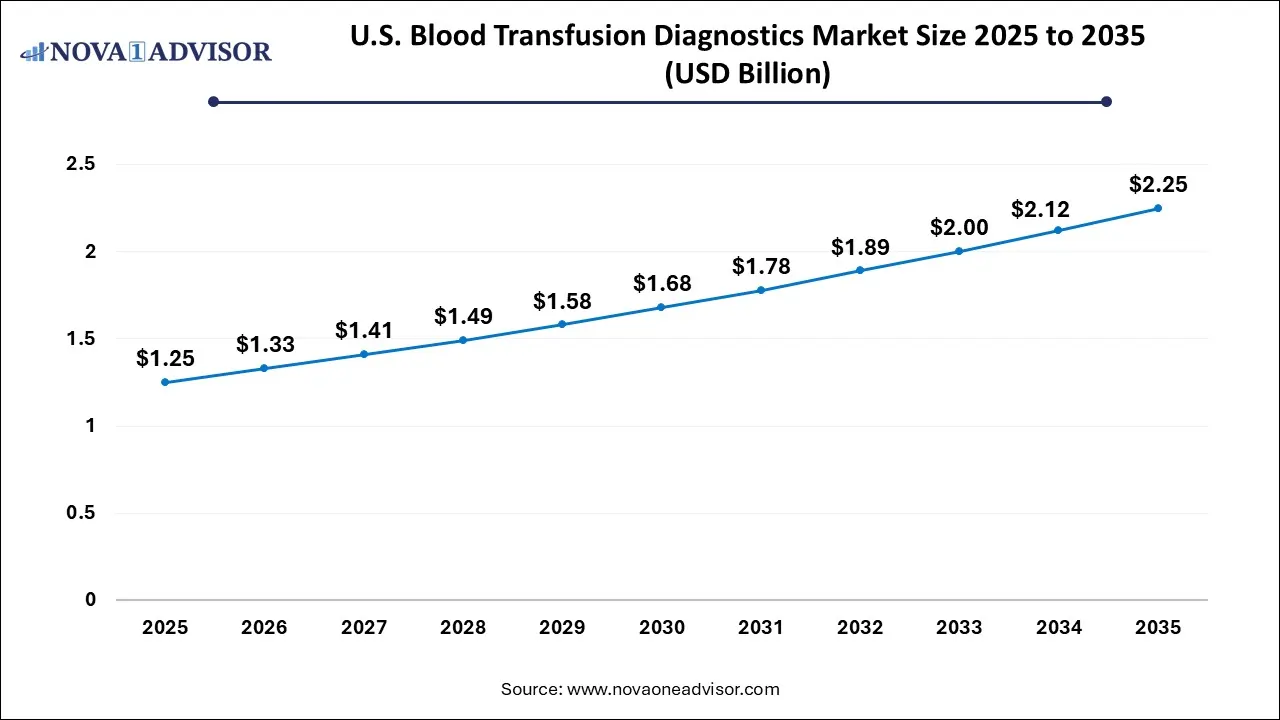
The U.S. blood transfusion diagnostics market size was exhibited at USD 1.25 billion in 2025 and is projected to be worth around USD 2.25 billion by 2035, growing at a CAGR of 6.07% from 2026 to 2035.
How did the North America region account for the largest share in the Global Blood Transfusion Diagnostics market?
North America’s high volume of complex surgical procedures and chronic disease management. Strict regulatory mandates from agencies, such as the FDA, ensure that rigorous screening remains a non-negotiable operational standard, providing a stable market for diagnostic consumables. The synergy between high public awareness and stringent research and development investment by major industry players secures the region’s position as a global leader in blood safety innovation.
U.S. Global Blood Transfusion Diagnostics Market Trends
The U.S. widespread adoption of automated, high-throughput systems and molecular diagnostics is fundamentally transforming laboratory efficiency by minimizing human error and accelerating pathogen detection. This technological shift is essential to meet the escalating clinical demand for blood transfusions triggered by a rising volume of complex surgeries and chronic disease management.
How did the Asia Pacific region hold the fastest-growing Global Blood Transfusion Diagnostics Market in the forecast period?
Asia Pacific’s aggressive government investment in healthcare infrastructure and the implementation of more rigorous screening standards to mitigate the risk of infections. The resulting shift toward automated systems and NAT technology is optimizing diagnostic speed and accuracy, ensuring the resilience of the blood supply chain.
China Global Blood Transfusion Diagnostics Market Trends
China’s rapid proliferation of private and hospital-based laboratories is increasingly adopting automated analyzers to achieve the high throughput required for a large population. A heightened clinical focus on mitigating transfusion-transmissible infections ensures a consistent and non-discretionary demand for sophisticated reagents and screening kits.
Key Players in the Global Blood Transfusion Diagnostics Market
- Grifols
Grifols, a recognized leader in transfusion medicine, enhances global blood safety through a comprehensive portfolio of diagnostic tools, including Procleix Panther systems for molecular testing and DG Gel cards for blood typing.
- Thermo Fisher Scientific, Inc.
Thermo Fisher Scientific supports the blood transfusion diagnostics market by providing high-throughput automated analyzers, such as cell washers and advanced molecular diagnostics (e.g., Applied Biosystems Axiom BloodGenomiX Array), to expedite blood processing and matching.
- Roche Diagnostics
As a market leader in in-vitro diagnostics, Roche Diagnostics offers a comprehensive blood donor screening solution using molecular polymerase chain reaction (PCR) and serological testing to identify pathogens like HIV and HCV in donated blood.
Segments Covered in the Report
This report forecasts revenue growth at country levels and provides an analysis of the latest industry trends in each of the sub-segments from 2021 to 2035. For this study, Nova one advisor, Inc. has segmented the blood transfusion diagnostics market.
By Product Type
- Instruments
-
- Immunohematology Analyzers
- Nucleic Acid Amplification Systems (NAT)
- Microarray Platforms
- ELISA Readers
- PCR Systems
- Others
- Reagents & Kits
-
- ABO/Rh Typing Reagents
- Antibody Screening Reagents
- NAT Reagents
- HLA Typing Kits
- ELISA Kits
- Others
- Software & Services
-
- Blood Bank Management Software
- Laboratory Information Systems (LIS)
- Testing Services
- Others
By Test Type
- Blood Group Typing
-
- ABO Typing
- Rh Typing
- Antibody Screening
- Disease Screening
-
- HIV
- Hepatitis B & C
- Syphilis
- Malaria
- Other
- Molecular Testing
-
- NAT (Nucleic Acid Testing)
- Genotyping & HLA Typing
- Pathogen Inactivation Detection
- Crossmatching & Compatibility Testing
-
- Major Crossmatch
- Minor Crossmatch
By Technology
- Serology-based Testing
- Molecular-based Testing
- Microarray
- Next-generation Sequencing (NGS)
- Enzyme-linked Immunosorbent Assay (ELISA)
- Rapid Diagnostics
- Others
By End User
- Hospitals
- Blood Banks
- Diagnostic Laboratories
- Plasma Fractionation Centers
- Academic & Research Institutes
- Others
By Region
- North America
- Europe
- Asia-Pacific
- Latin America
- Middle East and Africa
FAQ's

Proceed to Buy
Instant PDF delivery on confirmation

Blood Transfusion Diagnostics Market Size to Hit USD 9.83 Billion by 2035
 Request Customization
 Download Sample

Get a Sample of this Report
Blood Transfusion Diagnostics Market