

Carcinoid Syndrome Management Market Size, Share, and Trends 2026 to 2035
 Status Published
 Category Healthcare


Content
Carcinoid Syndrome Management Market Size and Growth 2026 to 2035
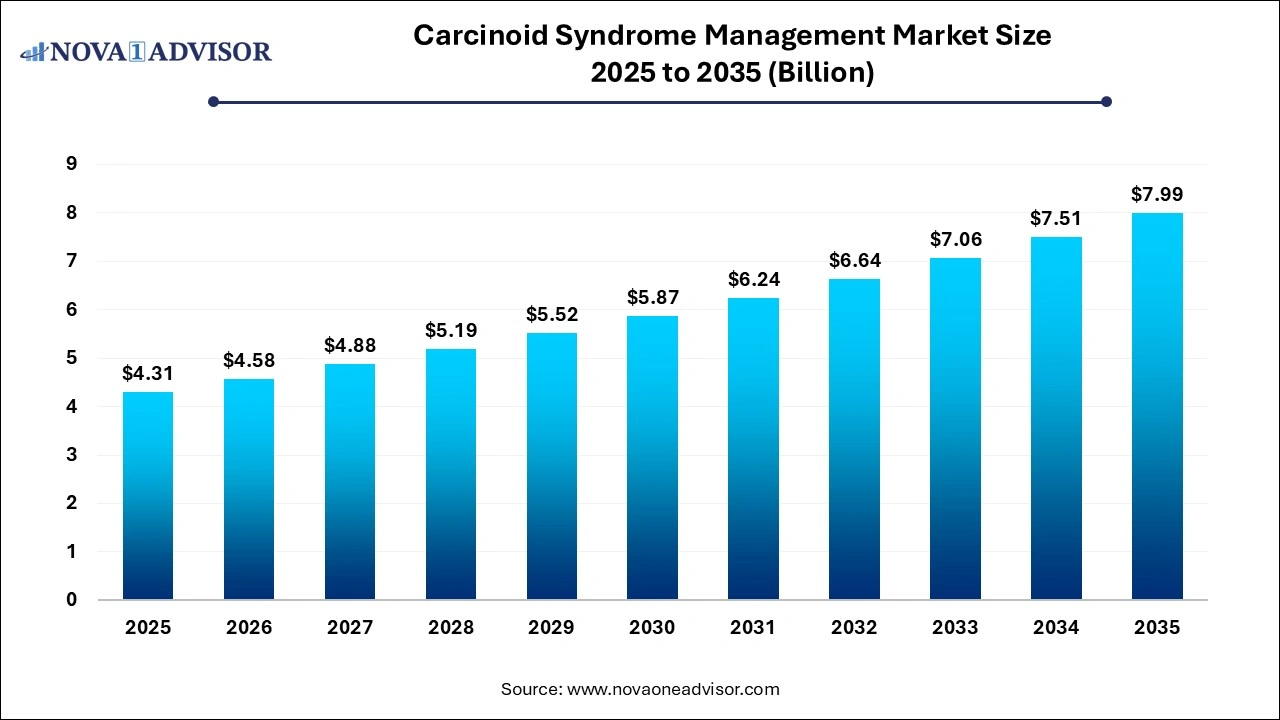
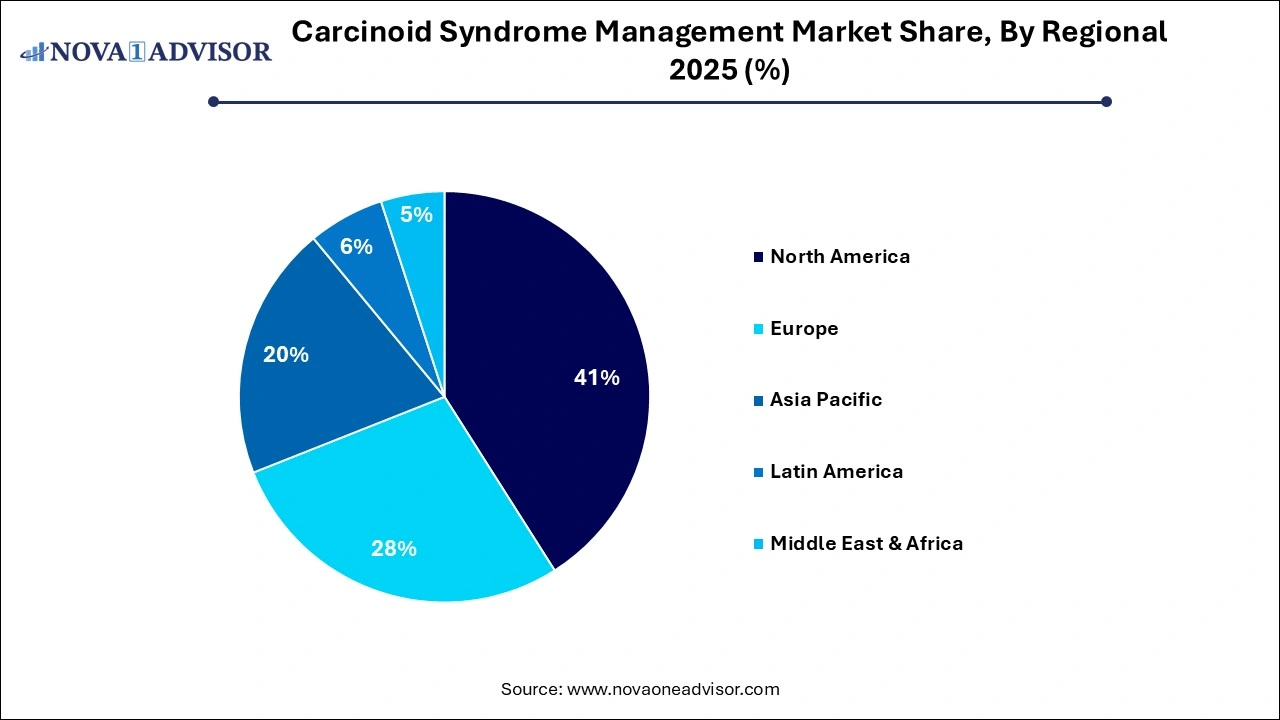
The global carcinoid syndrome management market size was valued at USD 4.31 billion in 2025 and is projected to grow from USD 4.58 billion in 2026 to USD 7.99 billion by 2035, at a CAGR of 6.37% from 2026 to 2035. North America dominated the market, accounting for a revenue share of 41.0% in 2025.
Key Takeaway:
- By treatment type, the medications segment dominated the market with the largest share in 2025.
- By treatment type, the targeted therapy segment is expected to grow at the fastest CAGR over the forecast period.
- By route of administration, the oral segment dominated the market with the largest share in 2025.
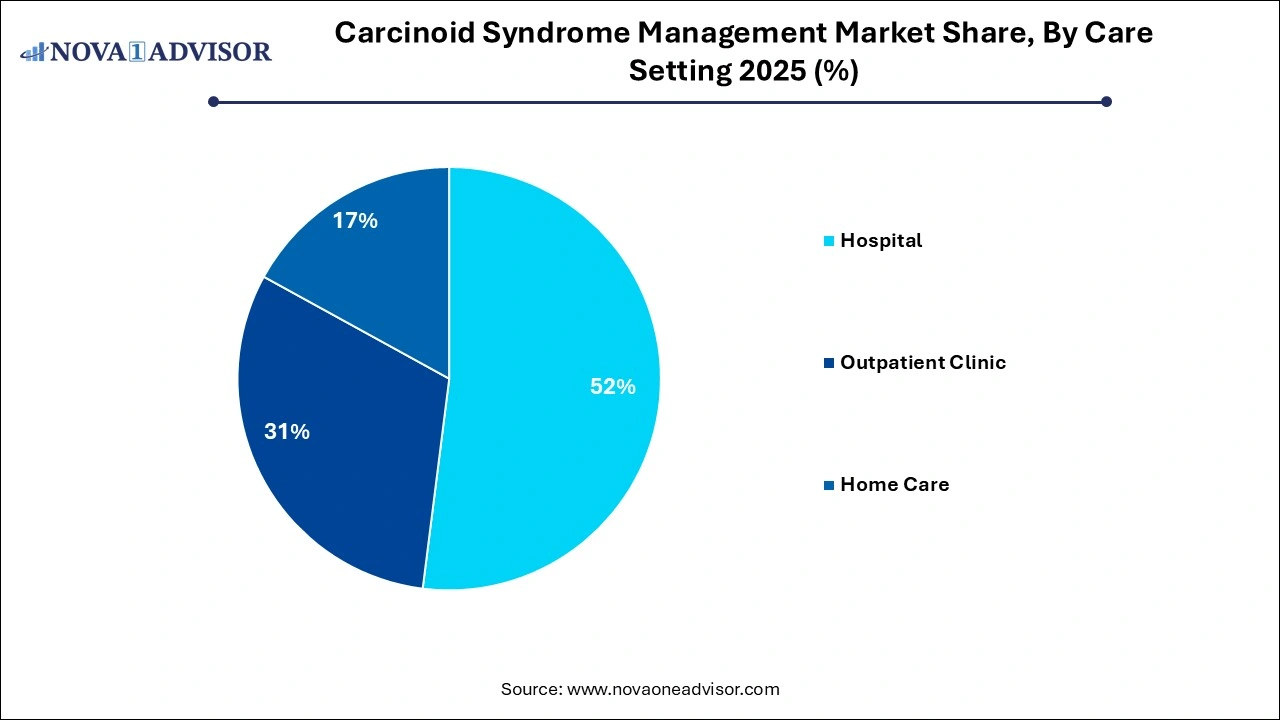
- By care settings, the hospital segment dominated the market with the largest share of 52.0% in 2025.
- By region, North America dominated the market with the largest share of 41.0% in 2025.
Market Overview
The global carcinoid syndrome management market is growing steadily, driven by advancements in the diagnosis and treatment of neuroendocrine tumors (NETs) and increasing awareness of this rare endocrine disorder. Carcinoid syndrome occurs when hormone-secreting neuroendocrine tumors release excessive serotonin and other bioactive substances, causing symptoms such as flushing, diarrhea, wheezing, and abdominal pain. The rising adoption of advanced diagnostic techniques, including biomarker testing, PET/CT imaging, molecular diagnostics, and urinary 5-HIAA analysis, is enabling earlier and more accurate diagnosis, supporting timely treatment and improved patient outcomes.
Treatment options have expanded significantly with the widespread use of somatostatin analogs, surgical interventions, peptide receptor radionuclide therapy (PRRT), targeted therapies, liver-directed procedures, and systemic oncology treatments. Additionally, the development of specialized neuroendocrine tumor centers, increasing physician awareness, patient advocacy initiatives, and ongoing investments in rare disease research are strengthening the market. Looking ahead, innovations in precision medicine, artificial intelligence, targeted therapeutics, and digital patient monitoring are expected to further enhance the management of carcinoid syndrome and drive continued market growth.
Market Outlook
- Market Growth Overview: The global carcinoid syndrome management market is expected to grow significantly between 2025 and 2035, driven by the growing prevalence of neuroendocrine tumors.
- Sustainability Trends: Sustainability trends involve the growing emphasis on managing long-term clinical viability along with the cost-effective care models.
- Major Investors: Major investors in the market include Novartis AG, Ipsen Pharma, and Lexicon Pharmaceuticals, Inc.
How is AI Impacting The Global Carcinoid Syndrome Management Market?
Artificial intelligence (AI) is revolutionizing the market by enhancing early detection of neuroendocrine tumors and propelling personalized treatment and drug discovery protocols. Furthermore, artificial intelligence evaluates multi-modal patient data, encompassing genomics and clinical markers, to assist physicians in optimizing somatostatin analog therapy or addressing specific symptom drivers.
AI is also enhancing medical imaging by assisting radiologists in detecting small neuroendocrine tumors on CT, MRI, and PET scans with greater accuracy. Machine learning models improve lesion identification, monitor tumor progression, and assess treatment response following surgery, somatostatin analog therapy, or peptide receptor radionuclide therapy (PRRT). These capabilities support more precise clinical decision-making and optimized patient care.
Additionally, AI-driven predictive analytics help clinicians develop personalized treatment strategies by evaluating factors such as tumor grade, receptor expression, genetic mutations, biomarker levels, metastatic burden, and previous treatment history. AI-enabled digital health platforms further improve disease management through remote monitoring of symptoms, medication adherence, wearable device data, and quality-of-life indicators, allowing healthcare providers to detect disease progression or treatment failure at an early stage. Moreover, AI is accelerating drug discovery and clinical trial recruitment by identifying potential therapeutic targets and matching eligible patients to clinical studies, contributing to continued innovation in carcinoid syndrome management.
Carcinoid Syndrome Management Market Report Scope
| Report Coverage | Details |
| Market Size in 2026 | USD 4.58 Billion |
| Market Size by 2035 | USD 7.99 Billion |
| Growth Rate From 2026 to 2035 | CAGR of 6.37% |
| Base Year | 2025 |
| Forecast Period | 2026 to 2035 |
| Segments Covered | Treatment Type, Route of Administration, Care Setting, Regional |
| Market Analysis (Terms Used) | Value (USD Million/Billion) or (Volume/Units) |
| Regional Scope | North America; Europe; Asia Pacific; Central and South America; the Middle East and Africa |
| Key Companies Profiled | Novartis International AG (Sandoz) (Switzerland), Pharmascience Inc. (Canada), Omega Laboratories Ltd. (Canada), Teva Pharmaceutical Industries Ltd. (Israel), Mylan N.V. (USA), Ipsen Biopharmaceuticals, Inc.(US), Sirtex Medical Limited (Australia) , BTG International Ltd. (UK), Wockhardt Ltd. |
Market Driver
Increasing Incidence and Earlier Diagnosis of Neuroendocrine Tumors
The growing incidence of neuroendocrine tumors (NETs) and continuous improvements in diagnostic technologies are key drivers of the global carcinoid syndrome management market. Greater physician awareness, advanced imaging techniques such as Gallium-68 PET/CT, high-sensitivity biomarker testing, chromogranin A assays, and urinary 5-HIAA analysis are enabling earlier and more accurate diagnosis. Early detection allows timely treatment with surgery, somatostatin analogs, targeted therapies, and peptide receptor radionuclide therapy (PRRT), improving patient outcomes and increasing demand for comprehensive carcinoid syndrome management solutions.
Market Restraint
Limited Disease Awareness and Delayed Diagnosis
Limited awareness of carcinoid syndrome among patients and healthcare providers remains a significant barrier to market growth. Symptoms such as flushing, diarrhea, abdominal pain, and wheezing often resemble common gastrointestinal or respiratory disorders, leading to delayed diagnosis and treatment. Many patients are diagnosed only after the disease has progressed to advanced stages, reducing treatment effectiveness and increasing the risk of complications such as carcinoid heart disease. In addition, the limited availability of specialized neuroendocrine tumor centers and expertise in certain regions restricts access to advanced diagnostic and therapeutic options.
Market Opportunity
Advancements in Precision Oncology and Targeted Therapies
The rapid advancement of precision oncology is creating significant opportunities in the carcinoid syndrome management market. Innovations in genomic sequencing, biomarker discovery, receptor profiling, and molecular diagnostics are enabling the development of highly targeted therapies for neuroendocrine tumors. Expanding use of peptide receptor radionuclide therapy (PRRT), next-generation somatostatin receptor-targeted treatments, molecular inhibitors, and immunotherapy combinations is improving treatment outcomes while supporting personalized care. Continued investment in orphan drug development, biomarker-driven clinical trials, and precision diagnostics is expected to drive long-term growth and expand therapeutic options for patients with carcinoid syndrome.
Segmental Insights
By Treatment Type
Why did the medications segment dominate the global carcinoid syndrome management market?
The medications segment dominated the market with the largest share in 2025. The dominance of the segment can be attributed to the ongoing innovations in long-acting drug formulations and the surge in incidence of neuroendocrine tumors (NETs). In addition, the advanced use of endoscopic ultrasonography and positron emission tomography-computed tomography (PET/CT) allows clinicians to detect functional tumors at an earlier stage.
How did the targeted therapy segment expected to hold the significantly growing global carcinoid syndrome management market in the coming years?
The targeted therapy segment is expected to grow at the fastest CAGR over the forecast period. The growth of the segment can be credited to the increasing incidence of neuroendocrine tumors and rapid advancements in precision medicine. Novel therapeutic categories including somatostatin analogs, specialized inhibitors, and targeted radiopharmaceuticals enhance clinical efficacy regarding symptom management.
By Route of Administration
Why did the oral segment dominate the global carcinoid syndrome management market?
The oral segment dominated the market with the largest share in 2025. The dominance of the segment can be linked to the surge in availability of small-molecule oral targeted therapies and the surge in convenience over conventional injectable somatostatin analogs. Oral medications decrease the frequency of clinical visits compared to injectable treatments, hence optimizing daily patient management and therapeutic adherence.
How did the intravenous segment expected to hold the significantly growing global carcinoid syndrome management market in the coming years?
The intravenous segment is expected to grow at the fastest CAGR over the forecast period. The growth of the segment can be driven by increasing hospital-based treatment of specialized oncology infusions and growing clinical use of radioligand therapies. The growing global incidence of diagnosed neuroendocrine tumors has directly increased the number of patients who require advanced clinical interventions.
By Care Setting
Why did the hospital segment dominate the global carcinoid syndrome management market?
The hospital segment dominated the market with the largest share in 2025. The dominance of the segment is owing to the increasing investments in cutting-edge healthcare and cancer care facilities. Furthermore, access to advanced diagnostic imaging and precision radioligand therapy provides capabilities that exceed the operational capacity of smaller medical facilities.
How did the home care segment expected to hold the significantly growing global carcinoid syndrome management market in the coming years?
The home care segment is expected to grow at the fastest CAGR over the study period. The growth of the segment is due to increasing neuroendocrine tumor survivorship and transition towards sophisticated self-administration. Advanced subcutaneous delivery systems and sustained-release depot formulations created to reduce clinical visit frequency and enhance patient adherence can fuel segment growth further.
By Regional
Why did the North American region account for the largest share in the global carcinoid syndrome management market?
North America dominated the market with the largest share in 2025. The dominance of the region can be attributed to the increasing incidence of neuroendocrine tumors and preferred insurance reimbursement policies. In addition, the advent of advanced medical facilities and surge in regional healthcare spending facilitates comprehensive, multidisciplinary patient management.
U.S. Global Carcinoid Syndrome Management Market Trends
The growth of the market in the country can be driven by growing research investment and extensive availability of cutting-edge treatment centers in major cities. Also, established insurance frameworks and specialty pharmacy reimbursement policies ensure continuous patient access to high-cost and targeted therapies.
Why did the Asia-Pacific region become the fastest-growing global carcinoid syndrome management market during the forecast period?
Asia Pacific is expected to grow at the fastest CAGR over the forecast period. The growth of the region can be credited to the increasing rare disease awareness and growing per capita income among emerging nations such as China and India. Furthermore, the introduction of cost-effective formulations enables both public and private sectors to enhance clinical penetration across lower-income populations within the APAC region.
China Global Carcinoid Syndrome Management Market Trends
The market in the country is growing due to the increasing healthcare spending and extensive access to cutting-edge therapies like somatostatin analogs. Moreover, substantial capital investment toward hospital-based radiation infrastructure and cold-chain supply networks has significantly optimized the deployment of advanced medical therapies.
Key Players in the Global Carcinoid Syndrome Management Market
- Ipsen: A primary market player providing flagship long-acting somatostatin analogs targeted at controlling severe flushing and diarrhea episodes.
- Crinetics Pharmaceuticals: An emerging clinical-stage player actively expanding pipelines with non-peptide oral somatostatin receptor agonists.
- Lexicon Pharmaceuticals: Noted for introducing specialized oral therapies like telotristat ethyl (Xermelo) to inhibit peripheral serotonin synthesis for refractory carcinoid syndrome diarrhea.
Recent Developments
- In September 2025, following nearly two decades of endocrinology research and development, Crinetics Pharmaceuticals has achieved its first commercial milestone with the regulatory approval of a novel therapeutic for acromegaly, a rare growth disorder.
Segments Covered in the Report
This report forecasts revenue growth at country levels and provides an analysis of the latest industry trends in each of the sub-segments from 2021 to 2035. For this study, Nova one advisor, Inc. has carcinoid syndrome management market.
By Care Setting
- Hospital
- Outpatient Clinic
- Home Care
By Route of Administration
- Oral
- Intravenous
- Subcutaneous
By Treatment Type
- Surgery
- Medications
- Radiation Therapy
- Targeted Therapy
By Region
- North America
- Europe
- Asia Pacific
- Latin America
- Middle East & Africa
FAQ's

Proceed to Buy
Instant PDF delivery on confirmation

Carcinoid Syndrome Management Market Size to Exceed USD 7.99 Billion by 2035
 Request Customization
 Download Sample

Get a Sample of this Report
Carcinoid Syndrome Management Market