

Cell Therapy Monitoring Kits Market Size, Share, and Trends 2026 to 2035
 Status Published
 Category Healthcare


Content
Cell Therapy Monitoring Kits Market Size and Growth 2026 to 2035
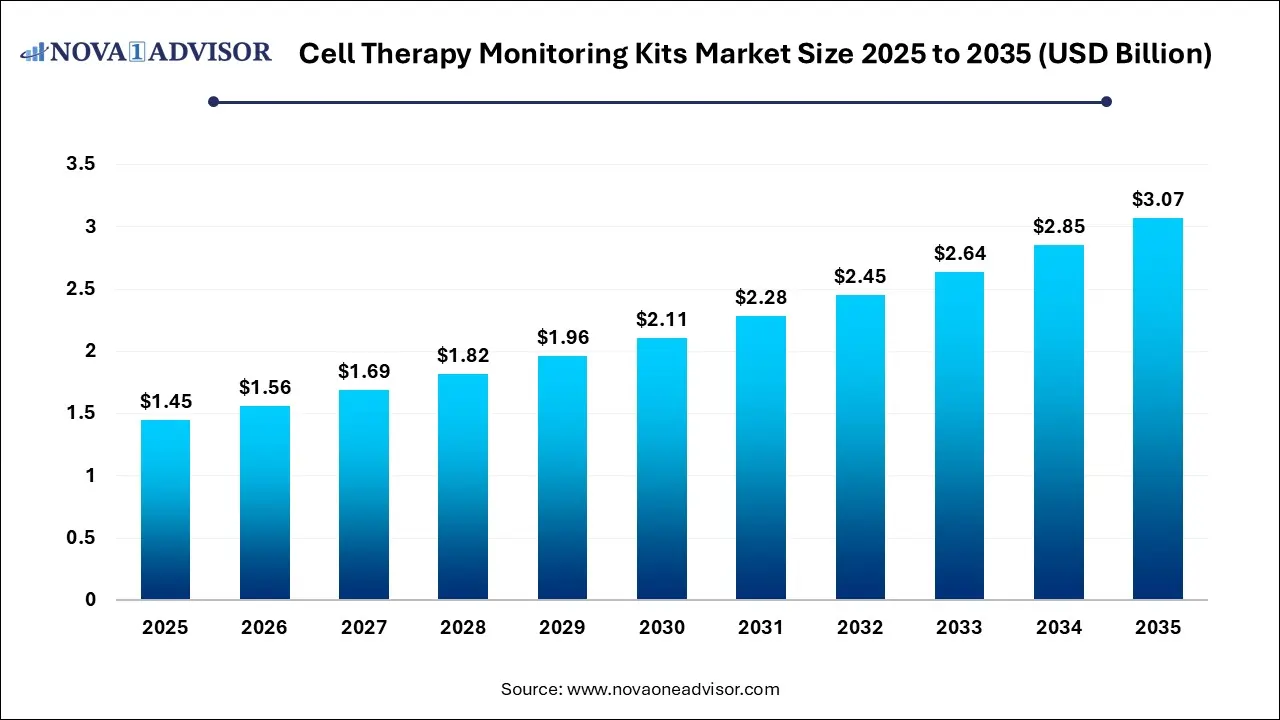
The cell therapy monitoring kits market size was estimated at USD 1.45 billion in 2025 and is projected to increase from USD 1.56 billion in 2026 to approximately USD 3.07 billion by 2035, growing at a CAGR of 7.8% from 2026 to 2035. The cell therapy monitoring kits market is driven by the rising prevalence of chronic diseases, expansion of CAR-T and cell-based therapies, and rise in complex autologous cell therapies, where cells are patient-derived, necessitates rigorous, personalized process control to manage variability.
Key Takeaways
- By product, the cell activation kit segment held a dominant position in the market with a share of 34% in 2025.
- By product, the immune cell differentiation and expansion kits segment is the fastest growing between 2026 and 2035.
- By application, the Oncology segment held a dominant position in the market with a share of 36% in 2025.
- By application, the autoimmune diseases segment is the fastest growing between 2026 and 2035.
- By therapy type, the stem cell therapies segment held a dominant position in the market with a share of 42% in 2025.
- By end use, the hospitals and clinics segment held a dominant position in the market with a share of 38% in 2025.
- By region, the North America region held a dominant position in the market with a share of 39% in 2025.
Innovation Driving Transformation in the Cell Therapy Monitoring Kits Market
Cell therapy monitoring kits use specialized, high-throughput technologies, such as flow cytometry, NGS, and digital PCR, to analyze cell viability, function, and behavior during manufacturing and post-administration. The primary benefits of these monitoring solutions across oncology and regenerative medicine include ensuring product consistency, increasing precision in tailored patient therapies, enabling early detection of complications, and lowering overall manufacturing costs. The market growth is driven by a booming CAR-T cell therapy pipeline, increasing regulatory demand for rigorous quality control, and the shift toward automated, closed-loop processing systems.
Cell Therapy Monitoring Kits Market Trends
- Shift Toward Real-Time In-Line Process Analytical Technology (PAT)
Monitoring is shifting from traditional, delayed off-line sampling to automated, in-line, or at-line analysis systems that provide real-time data on cell health. Kits designed for continuous, automated monitoring of metabolic markers, such as glucose and lactate, allow for immediate interventions, reducing the risk of wasting expensive cell culture materials.
- Integration of Automated, Closed-System Manufacturing Infrastructure
To combat manual labor, reduce contamination risks, and improve scalability, the industry is shifting toward closed-system monitoring tools and kits. Technologies such as CliniMACS Prodigy and automated, closed-system flow cytometers allow for standardized, GMP-compliant monitoring without manual intervention.
- Proliferation of High-Throughput Multiplex Immunoassays
The growing demand for monitoring kits that can perform multiplexing, assessing multiple markers or cytokines simultaneously to deeply profile cell function and phenotype. Kits, such as Luminex® Assay platforms or Simple Plex™ Assays, allow for rapid screening of multiple parameters in a single workflow.
Key AI Integration in the Cell Therapy Monitoring Kits Market
AI and ML are transforming the cell therapy monitoring kits industry by enabling real-time, automated analysis of complex cell cultures, shifting from traditional, manual, and endpoint-only testing to proactive quality control. These technologies leverage machine vision to monitor cell morphology, expansion, and health in real time, detecting deviations early to reduce batch failure rates and ensure consistent product quality. By analyzing large, complex datasets, AI algorithms improve the identification of optimal culture conditions, enhance cell selection, and predict final cell yields more accurately.
Cell Therapy Monitoring Kits Market Report Scope
| Report Coverage | Details |
| Market Size in 2026 | USD 1.56 Billion |
| Market Size by 2035 | USD 3.07 Billion |
| Growth Rate From 2026 to 2035 | CAGR of 7.8% |
| Base Year | 2025 |
| Forecast Period | 2026 to 2035 |
| Segments Covered | Product, Application, Therapy Type, End use, Region |
| Market Analysis (Terms Used) | Value (USD Million/Billion) or (Volume/Units) |
| Regional Scope | North America; Europe; Asia Pacific; Central and South America; the Middle East and Africa |
| Key Companies Profiled | STEMCELL Technologies Inc.; Lonza Group; Thermo Fisher Scientific Inc.; Merck KGaA (Sigma-Aldrich); BD Biosciences; Miltenyi Biotec; GE Healthcare; Sartorius AG; PerkinElmer Inc.; Cell Biolabs Inc. |
Market Dynamics
Driver
Expanding Pipelines of CAR-T and Gene Therapies
The necessity of precise, real-time assessment of cell viability, phenotype, and functionality during complex manufacturing processes. As the number of clinical trials and approved products increases, particularly in oncology and autoimmune diseases, manufacturers require standardized, GMP-compliant kits to monitor cell activation and expansion efficiency. The shift toward more advanced, next-generation CAR-T and CRISPR-based gene therapies creates a high demand for specialized monitoring tools that ensure safety and efficacy.
Restraint
High Cost of Development and Manufacturing
The market growth is hindered by restricting the overall adoption of these advanced treatments to niche, high-priced, or well-funded clinical settings. Because these therapies require complex, personalized, and labor-intensive processes, the high cost of manufacturing creates a financial bottleneck that discourages broader commercialization and reduces demand for associated, yet costly, monitoring tools. The high R&D expenditures increase the risk for developers, leading to fewer new products reaching the market and, consequently, limited demand for specialized kits, particularly among smaller biotech firms unable to afford them.
Opportunity
Expansion of Allogenic Cell Therapies
The expansion of allogeneic cell therapies, which are developed in large, standardized batches from healthy donors, drives the need for rigorous, high-volume quality control, significantly boosting the demand for specialized monitoring kits. Unlike personalized, patient-specific autologous treatments, allogeneic off-the-shelf therapies require continuous, stringent monitoring across development, manufacturing, and storage to ensure safety, efficacy, and sterility before they reach patients.
Segment Insights
By Product Insights
Why Did the Cell Activation Kit Segment Hold a 34% Share for the Cell Therapy Monitoring Kits Market?
The cell activation kit segment held a dominant position in the market with a share of 34% in 2025. Owing to the widespread use in early-stage cell preparation and the high demand in immunotherapy workflows. The growing prevalence of cancer fuels the need for these kits in manufacturing tailored treatments.
The immune cell differentiation and expansion kits segment held a 28% share of the market in 2025, with the increasing adoption of CAR-T and NK-cell therapies driving strong demand for expansion technologies. These kits ensure essential sterility, viability, and potency during the manufacturing process.
The stem cell kit segment held a 24% share of the market in 2025, due to the rising stem cell research and regenerative medicine investments, which are steadily expanding this segment. It is widely used in treating blood cancers and autoimmune disorders, creating a high demand for monitoring kits.
The others segment held a 14% share of the market in 2025, providing specialized monitoring for regenerative medicine, cardiovascular therapies, and rare genetic disorders where unique cell-based monitoring solutions are required. The shift toward sophisticated, automated, and multi-parametric monitoring tools captures revenue in research settings focused on identifying new biomarkers, providing more comprehensive data than standard kits.
By Application Insights
Why Did the Oncology Segment Lead the Cell Therapy Monitoring Kits Market?
The oncology segment registered its dominance over the market with a share of 36% in 2025, owing to the rapid growth in CAR-T therapies and increasing global cancer prevalence. Real-time, accurate, and rapid monitoring is essential to measure patient responses, leading to high adoption of kits that offer immediate data for personalized cancer care.
The autoimmune diseases segment held the 18% share of the market in 2025, with the growing interest in personalized immunotherapies accelerating adoption in autoimmune treatment research. The expanding pipeline of clinical trials focused on cell-based therapies for autoimmune disorders has increased the demand for related monitoring products.
The cardiovascular diseases segment held the 14% share of the market in 2025, due to the ongoing stem cell-based cardiac regeneration studies, though commercialization remains limited. Numerous ongoing studies and clinical trials for cell-based therapies in cardiovascular disease necessitate robust tracking of cell functionality.
The neurological disorders segment held the 12% share of the market in 2025, with an increasing number of clinical trials for Parkinson’s, Alzheimer’s, and spinal cord therapies supporting future growth. The growing shift toward personalized therapeutic approaches, where monitoring kits are essential to measure how well treatments work.
The musculoskeletal disorders segment held the 10% share of the market in 2025, due to increasing occurrences of osteoarthritis, cartilage injuries, and tendonitis in an aging population, which has created a massive, sustained demand for advanced treatment monitoring. Patients prefer non-invasive or minimally invasive solutions over conventional surgical approaches, such as total joint replacement.
The others segment held the 10% share of the market in 2025, owing to the increasing research and application of cell-based therapies for chronic diseases, including multiple sclerosis, rheumatoid arthritis, and Crohn’s disease, requiring precise monitoring. The surge in clinical trial applications drive the demand for specialized, non-standardized monitoring kits.
By Therapy Type Insights
Why Did the Stem Cell Therapies Segment Lead the Cell Therapy Monitoring Kits Market?
The stem cell therapies segment registered its dominance over the market with a share of 42% in 2025, owing to the broad clinical applications and extensive regenerative medicine research activities. Growing focus on tissue regeneration and repair increases the adoption of stem cell therapies, necessitating monitoring tools for assessing tissue growth and functional restoration.
The chimeric antigen receptor (CAR) T-cell therapies screening segment held the 33% share of the market in 2025, with the rapid FDA approvals and strong success rates in hematologic cancers are accelerating market expansion. Growing investment from biopharma companies and ongoing research and development to expand CAR-T into solid tumors and autoimmune diseases increases the need for specialized monitoring tools.
The natural killer (NK) cell therapies segment held the 15% share of the market in 2025, due to the increasing clinical development of off-the-shelf NK therapies is boosting future adoption potential. It enhanced tumor-killing capabilities, contributors to high demand for specialized monitoring tools.
The others segment held the 10% share of the market in 2025, due to it includes dendritic cell therapies and emerging experimental cell-based treatments. Increased focus on developing high-sensitivity kits to detect rare cellular events essential for the regulatory approval of advanced cell-based therapies.
By End Use Insights
Why Did the Hospitals and Clinics Segment Lead the Cell Therapy Monitoring Kits Market?
The hospitals and clinics segment registered its dominance over the market with a share of 38% in 2025, owing to the rising hospital-based adoption of personalized and oncology-focused cell therapies. The high volume of autologous therapies requires personalized, patient-side monitoring of cells, which is best handled within hospital settings.
The research institutes segment held the 24% share of the market in 2025, with the increased government and institutional funding for advanced therapy research is supporting growth. The actively personalized therapies, which demand advanced monitoring for individualized therapeutic responses.
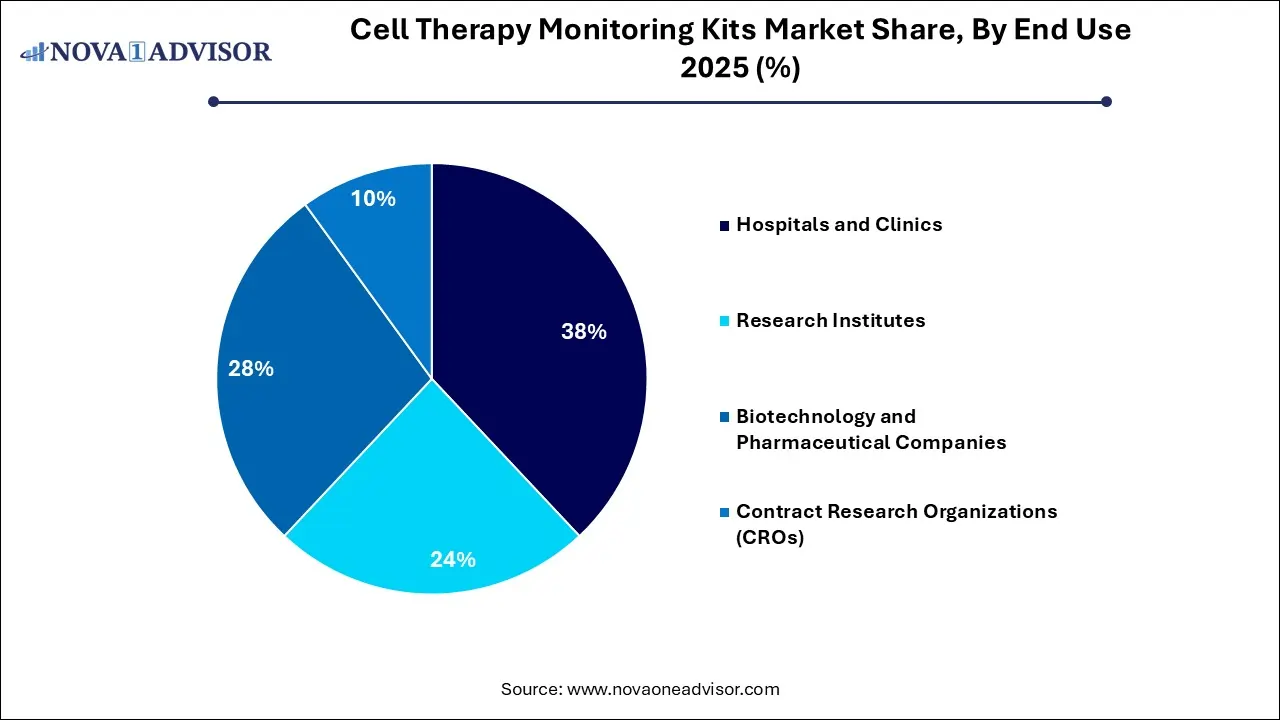
The biotechnology and pharmaceutical companies segment held the 28% share of the market in 2025, due to the expanding investment in cell therapy pipelines and biopharmaceutical innovation is driving strong demand. The extensive adopt closed processing equipment, cell imaging, and automated molecular assays, such as PCR and ELISA to monitor cell behavior and quality during production.
The contract research organizations (CROs) segment held the 10% share of the market in 2025, due to dependence on outsourced contracts and lower direct commercialization activities. The rise in personalized therapies, particularly in cancer research, drives a heavy reliance on CROs to manage complicated and time-consuming trials.
By Regional Insights
Why Did the North America Region Lead the Cell Therapy Monitoring Kits Market?
The North America region registered its dominance over the market with a share of 40% in 2025, owing to the high healthcare spending, advanced cell therapy approvals, and strong biopharmaceutical R&D investments. The rapid technological innovations, such as automated cell counters, flow cytometry, and AI-enabled imaging tools, are heavily used in high-throughput research facilities.
The Europe region held the 27% share of the market in 2025, due to the strong clinical research activity and increasing adoption of advanced therapies. The industry is moving towards point-of-care testing and automated manufacturing, which necessitates advanced, AI-enabled monitoring devices.
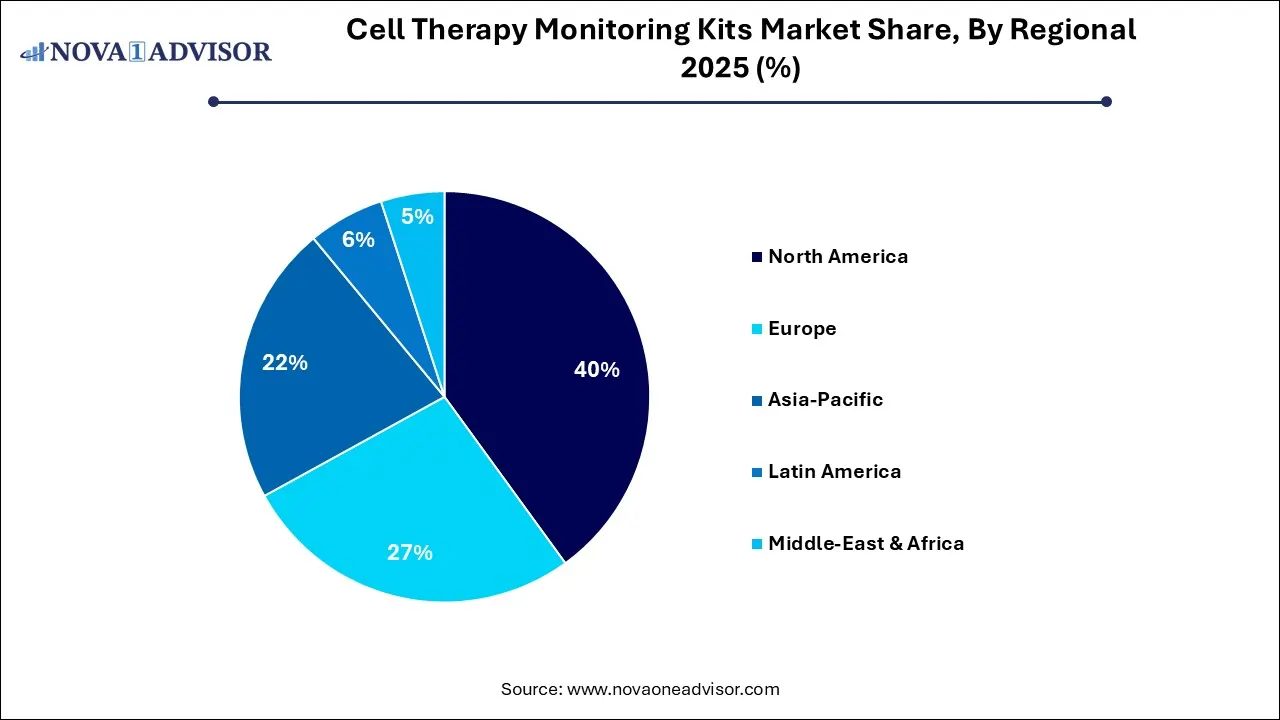
The Asia Pacific segment held 22% share of the market in 2025, due to the massive patient pool and a high incidence of solid tumors, increasing the need for therapeutic monitoring. Significant public and private investments are bolstering biotech manufacturing capacity.
The Latin America region held 6% share of the market in 2025, with the limited advanced healthcare infrastructure and lower R&D spending restricting market penetration. The increasing prevalence of chronic, non-communicable diseases, especially cancer and diabetes, is driving demand for regenerative medicine.
The MEA region held 5% share of the market in 2025, due to the aggressive government-backed healthcare infrastructure investments in the UAE and Saudi Arabia, which are rapidly accelerating the regional adoption of automated cell monitoring technologies. The expansion of specialized CAR-T therapy centers and localized GMP manufacturing facilities creates a strict regulatory environment that drives demand for high-standard quality control kits.
Cell Therapy Monitoring Kits Market Companies
- STEMCELL Technologies Inc.
- Thermo Fisher Scientific Inc.
- Lonza Group
- BD Bioscience
- GE Healthcare
- Cell Biolabs Inc
- PerkinElmer Inc
- Milteny Biotec
- Merck KGaA(Sigma -Aldrich )
- Startorius AG
Recent Developments
- In January 2025, CellFE has launched T-Rest, a first-in-class transfection media for resting T cell workflows that enhances CAR-T therapy durability and safety by preserving stem cell memory and reducing chromosomal abnormalities. The new technology, designed for the Infinity MTx platform, was unveiled at Advanced Therapies Week 2025 alongside a new Non-Viral Cell Therapy Working Group with Avectas and a strategic collaboration with DKFZ/TcellTech.
- In May 2026, Novartis has officially finalized the blueprint for its historic expansion of United States manufacturing, research, and development infrastructure. Marking the exact one-year milestone of its massive $23 billion US investment initiative, the pharmaceutical giant announced the addition of its seventh new facility: a 56,200-square-foot Active Pharmaceutical Ingredient (API) plant located in Morrisville, North Carolina.
- In January 2026, The FDA is implementing increased regulatory flexibility regarding Chemistry, Manufacturing, and Control (CMC) requirements for cell and gene therapies to accelerate product development, particularly for small-batch, complex treatments. This initiative from the Center for Biologics Evaluation and Research (CBER) aims to standardize previously ad-hoc approaches, enabling faster Biologics License Application (BLA) submissions while ensuring safety and efficacy.
Segments Covered in the Report
This report forecasts revenue growth at country levels and provides an analysis of the latest industry trends in each of the sub-segments from 2021 to 2035. For this study, Nova one advisor, Inc. has segmented the cell therapy monitoring kits market.
By Product
- Cell Activation Kit
- Immune Cell Differentiation and Expansion Kits
- Stem Cell Kit
- Others
By Application
- Oncology
- Autoimmune Diseases
- Cardiovascular Diseases
- Neurological Disorders
- Musculoskeletal Disorders
- Others
By Therapy Type
- Stem Cell Therapies
- Chimeric Antigen Receptor (CAR) T-Cell Therapies
- Natural Killer (NK) Cell Therapies
- Others
By End Use
- Hospitals and Clinics
- Research Institutes
- Biotechnology and Pharmaceutical Companies
- Contract Research Organizations (CROs)
By Regional
- North America
- Europe
- Asia Pacific
- Latin America
- Middle East and Africa (MEA)

Proceed to Buy
Instant PDF delivery on confirmation

Cell Therapy Monitoring Kits Market Size to Exceed USD 3.07 Billion by 2035
 Request Customization
 Download Sample

Get a Sample of this Report
Cell Therapy Monitoring Kits Market