

Crohn's Disease Therapeutics Market Size, Share, and Trends 2026 to 2035
 Status Published
 Category Healthcare


Content
Crohn’s Disease Therapeutics Market Size and Growth 2026 to 2035
The global crohn’s disease therapeutics market size was valued at USD 14.20 billion in 2025 and is projected to grow from USD 15.14 billion in 2026 to USD 26.91 billion by 2035, at a CAGR of 6.6% from 2026 to 2035.
.webp "Crohn's Disease Therapeutics Market Size 2025 to 2035")
Key Takeaway:
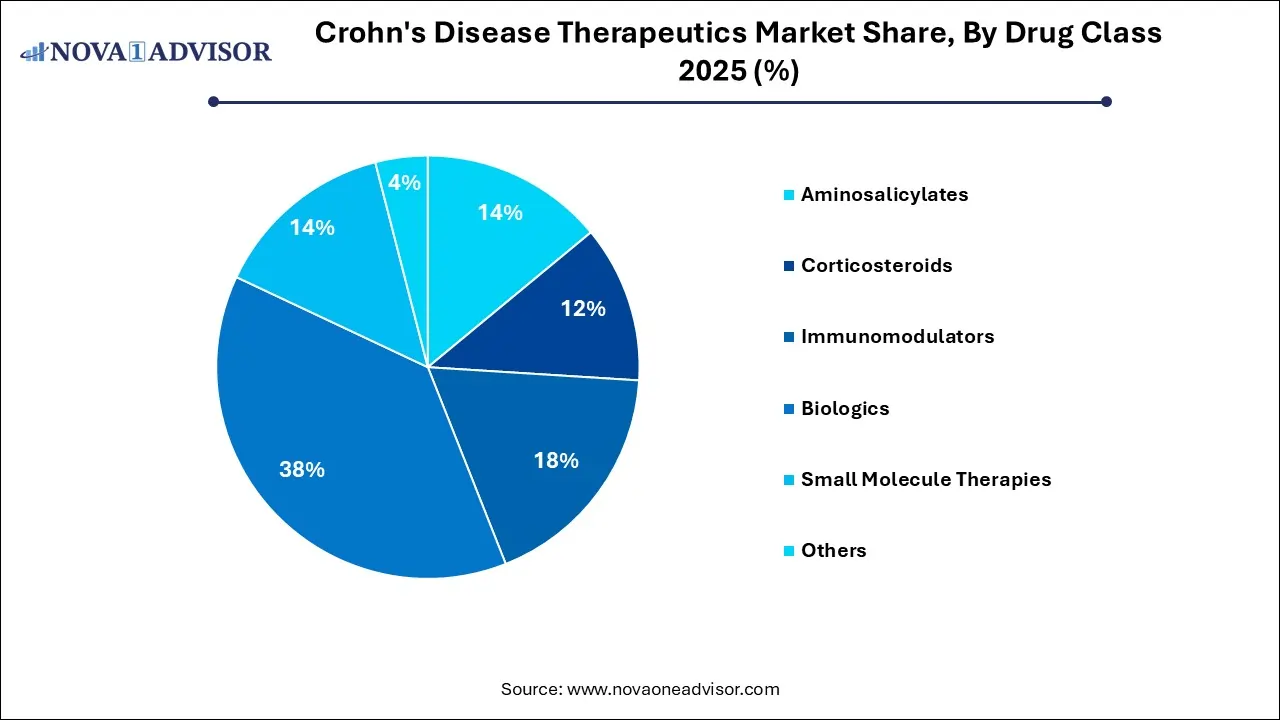
- By drug class, the biologics segment dominated the market with the largest share of 38.0% in 2025.
- By drug class, the small molecule segment is expected to grow at the fastest CAGR over the forecast period.
- By route of administration, the injectable segment dominated the market with the largest share in 2025.
- By distribution channel, the hospital pharmacies segment dominated the market with the largest share in 2025.
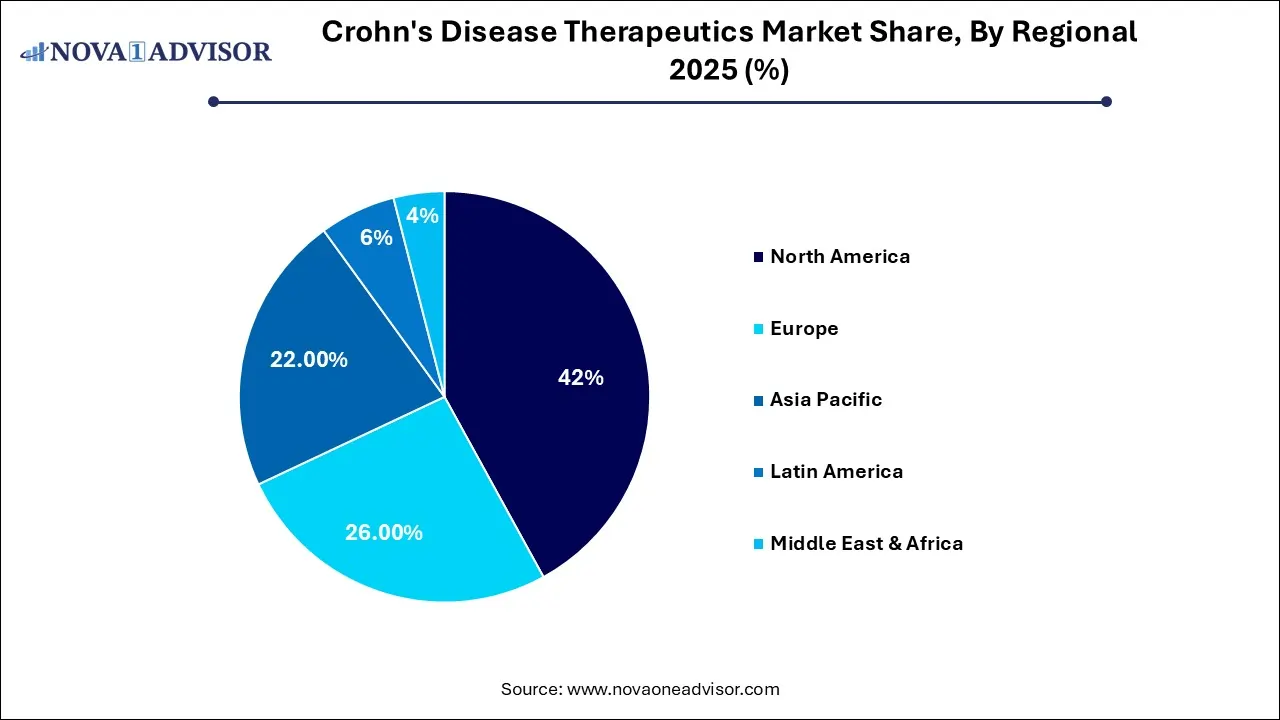
- By region, North America dominated the market with the largest share of 42.0% in 2025.
Market Overview
The global Crohn’s disease therapeutics market is witnessing strong growth, driven by the rising prevalence of inflammatory bowel disease (IBD), advancements in targeted therapies, and increasing adoption of precision medicine. Crohn’s disease is a chronic inflammatory condition of the gastrointestinal tract that requires long-term treatment to manage symptoms, reduce inflammation, and prevent disease progression.
Growing incidence rates across both developed and emerging economies, supported by improved diagnosis, urbanization, and changing lifestyles, are expanding the patient population. While corticosteroids and immunomodulators remain widely used, biologics targeting TNF, integrins, and interleukins, along with emerging oral small-molecule therapies, are transforming disease management by offering more effective and personalized treatment options.
Healthcare providers are increasingly adopting early intervention and individualized treatment strategies based on disease severity, biomarkers, and patient characteristics to improve long-term outcomes and reduce complications. At the same time, digital health technologies, including telemedicine, remote patient monitoring, and mobile health applications, are enhancing disease management and treatment adherence.
Ongoing research into next-generation biologics, JAK inhibitors, S1P receptor modulators, microbiome-based therapies, stem cell treatments, and gene-targeted medicines is further strengthening the therapeutic pipeline. With continuous innovation, expanding healthcare access, and increasing focus on precision medicine, the global Crohn’s disease therapeutics market is expected to experience sustained growth over the forecast period.
Market Outlook
- Market Growth Overview: The global Crohn's disease market is expected to grow significantly between 2025 and 2035, driven by ongoing advancements in biologics and targeted therapies across the globe.
- Sustainability Trends: Sustainability trends involve AI-optimized clinical trials and a shift toward individualized medicines to prevent therapeutic switching.
- Major Investors: Major investors in the market include Pfizer, Eli Lilly, Bristol-Myers Squibb, Amgen, and Merck.
How is AI impacting the global Crohn's disease market?
Artificial intelligence is transforming the Crohn’s disease therapeutics market by improving disease diagnosis, personalized treatment planning, and long-term patient management. AI-powered platforms analyze clinical data, laboratory results, imaging, genetic profiles, microbiome information, and treatment history to predict disease progression and recommend individualized therapeutic strategies.
Machine learning algorithms help identify patients at higher risk of severe disease progression, hospitalization, or surgery, enabling earlier use of advanced therapies and improving long-term clinical outcomes. AI is also enhancing diagnostic accuracy through automated analysis of colonoscopy images and MRI or CT enterography, allowing more consistent detection of inflammation, ulcers, strictures, and mucosal healing.
In pharmaceutical research, AI accelerates drug discovery by identifying new therapeutic targets, optimizing clinical trial design, and predicting patient response to emerging treatments, reducing development timelines. Additionally, AI-powered remote monitoring platforms analyze patient-reported symptoms, wearable device data, medication adherence, and biomarkers to detect potential disease flares early, supporting timely intervention, reducing hospitalizations, and improving overall disease management.
Crohn’s Disease Therapeutics Market Report Scope
| Report Coverage | Details |
| Market Size in 2026 | USD 15.14 Billion |
| Market Size by 2035 | USD 26.91 Billion |
| Growth Rate From 2026 to 2035 | CAGR of 6.6% |
| Base Year | 2025 |
| Forecast Period | 2026 to 2035 |
| Segments Covered | By Drug Class, By Route of Administration, By Distribution Channel, By Region |
| Market Analysis (Terms Used) | Value (USD Million/Billion) or (Volume/Units) |
| Regional Scope | North America; Europe; Asia Pacific; Central and South America; the Middle East and Africa |
| Key Companies Profiled | Abbott Laboratories, AbbVie Inc., Allergan PLC, Celgene Corp., Eli Lilly and Co., Johnson & Johnson Services Inc., Pfizer Inc., Takeda Pharmaceutical Co., Ltd. and others |
Market Driver
Rising Global Prevalence of Inflammatory Bowel Disease
The primary driver of the Crohn’s disease therapeutics market is the increasing global incidence and prevalence of inflammatory bowel disease. Historically concentrated in developed countries, Crohn’s disease is now rising rapidly across emerging economies due to westernized dietary habits, urbanization, environmental pollution, altered gut microbiota, smoking, improved diagnostic capabilities, and heightened disease awareness.
Earlier diagnosis allows physicians to initiate treatment before irreversible bowel damage occurs. Simultaneously, expanding healthcare access and improved physician education have increased diagnosis rates among previously underserved populations. As more patients receive long-term medical management requiring continuous therapy throughout adulthood, demand for biologics, immunomodulators, corticosteroids, and emerging targeted therapies continues expanding globally.
Market Restraint
High Cost of Advanced Biologic Therapies
Despite remarkable therapeutic effectiveness, biologic therapies remain expensive and represent a major financial challenge for healthcare systems and patients. Monoclonal antibodies targeting TNF, integrins, and interleukins involve complex manufacturing processes that contribute to high treatment costs over prolonged therapy durations.
Limited reimbursement, insurance restrictions, prior authorization requirements, and unequal healthcare access delay treatment initiation in many regions. Patients requiring lifelong biologic therapy may also face significant financial burdens associated with ongoing monitoring, infusion services, and specialist consultations. These economic barriers continue limiting widespread adoption, particularly within low- and middle-income countries.
Market Opportunity
Expansion of Precision Medicine and Oral Targeted Therapies
One of the most promising opportunities within the Crohn’s disease therapeutics market lies in the development of personalized treatment strategies supported by novel oral targeted therapies. Advances in molecular diagnostics, biomarker profiling, and pharmacogenomics enable physicians to select therapies based on individual disease biology rather than generalized treatment algorithms.
Small molecule therapies targeting intracellular inflammatory pathways provide effective alternatives for patients who experience inadequate response or intolerance to biologics. Their oral administration improves patient convenience while reducing dependence on infusion centers. As precision medicine becomes increasingly integrated into gastroenterology practice, pharmaceutical companies developing personalized therapeutic solutions are expected to capture significant future market growth.
Segmental Insights
By Drug Class
Why did the biologics segment dominate the global Crohn's disease market?
The biologics segment dominated the market with the largest share in 2025. The dominance of the segment can be attributed to the increasing disease incidence, robust R&D pipelines, and strong clinical efficacy in achieving mucosal healing. In addition, the rising incidence of Crohn's disease, associated with lifestyle shifts, advancing urbanization, and heightened diagnostic precision, leads to segment growth further.
How did the small molecule segment expected to hold the fastest-growing global Crohn's disease market in the coming years?
The small molecule segment is expected to grow at the fastest CAGR over the forecast period. The growth of the segment can be credited to the surge in pipeline growth of Janus Kinase (JAK) inhibitors and Sphingosine-1-Phosphate (S1P) modulators coupled with its cost efficiency. Small molecule therapies do not induce the production of neutralizing antibodies; a common clinical challenge associated with the prolonged use of biologics that frequently leads to a loss of therapeutic efficacy over time.
By Route of Administration
Why did the injectable segment dominate the global Crohn's disease market?
The injectable segment dominated the market with the largest share in 2025. The dominance of the segment can be linked to its exceptional bioavailability and high efficiency of biologic drugs. Also, the adoption and availability of pre-filled syringes and autoinjectors enable sophisticated at-home administration, minimizing reliance on hospital visits.
How did the oral segment expected to hold the fastest-growing global Crohn's disease market in the coming years?
The oral segment is expected to grow at the fastest CAGR over the forecast period. The growth of the segment can be driven by growing disease prevalence, robust R&D investments, and a shift towards precision medicine. Innovations in targeted release mechanisms enable oral small molecules to overcome systemic side effects, giving patients a minimally invasive therapeutic alternative.
By Distribution Channel
Why did the hospital pharmacies segment dominate the global Crohn's disease marke?
The hospital pharmacies segment dominated the market with the largest share in 2025. The dominance of the segment is owing to the growing demand for inpatient clinical administration of advanced biologics and surge in global disease prevalence. Moreover, hospital pharmacies experience substantial demand for parenteral and injectable therapies, including anti-TNF agents (e.g., infliximab) and monoclonal antibodies, which need professional administration and rigorous clinical oversight.
How did the online pharmacies segment expected to hold the fastest-growing global Crohn's disease market in the coming years?
The online pharmacies segment is expected to grow at the fastest CAGR over the study period. The growth of the segment is due to an ongoing surge in home-administered biologics and newly approved oral therapies. Online platforms often give integrated digital dashboards that monitor complex insurance paperwork and discount coupons.
By Regional
Why did the North American region account for the largest share in the global Crohn's disease market?
North America dominated the market with the largest share in 2025. The dominance of the region can be attributed to the extensive adoption of premium biological and biosimilar drugs and robust reimbursement and healthcare insurance policies. In addition, well-integrated healthcare networks featuring diverse insurance portfolios facilitate smooth access to specialists. This structural advantage promotes earlier clinical diagnoses and ensures consistent care through innovative methodologies.
U.S. Global Crohn's Disease Therapeutics Market Trends
The growth of the country can be driven by ongoing innovation promoted by organizations such as the Crohn's & Colitis Foundation and heavy pipeline investments by major market players. Also, the strategic utilization of FDA-approved targeted therapeutics, such as tumor necrosis factor (TNF) inhibitors and interleukin-23 (IL-23) blockers, is complemented by the smooth commercial adoption of novel agents, including upadacitinib and mirikizumab.
Why did the Asia-Pacific region become the fastest-growing global Crohn's disease market during the forecast period?
Asia Pacific is expected to grow at the fastest CAGR over the forecast period. The growth of the region can be credited to the growing access to cost-effective biosimilars and surge in healthcare spending coupled with enhanced diagnostic capabilities. Moreover, rising healthcare spending and proactive government policies in emerging markets are broadening access to specialized medical facilities and innovative treatments, with a particular focus on metropolitan areas.
China Global Crohn's Disease Therapeutics Market Trends
The market growth in the country is owing to innovations in diagnostic imaging and better awareness among healthcare professionals regarding the disease prevalence. Leading global pharmaceutical enterprises are actively strengthening their commercial presence and launching clinical trials for advanced mechanisms of action, notably JAK inhibitors, throughout China.
Why Did Europe Hold a Notable Share in the global Crohn's disease market?
Europe is expected to grow at a notable CAGR over the forecast period. The growth of the region can be linked to the increasing regional incidence of inflammatory bowel diseases (IBD) and favorable public reimbursement frameworks. Furthermore, public healthcare systems in regions such as Germany, the UK, and the Nordics actively mandate the utilization of biosimilars. This strategic framework reduces pharmaceutical procurement expenditures.
Germany Global Crohn's Disease Therapeutics Market Trends
The growth of the market is boosted by growing adoption of innovative biologics and biosimilars coupled with strong healthcare spending. The growing incidence of Inflammatory Bowel Disease (IBD) throughout the region is significantly driven by environmental factors, rapid urbanization, and the adoption of Westernized dietary patterns, leading to market growth soon.
Key Players in the Global Crohn's Disease Therapeutics Market
- Johnson & Johnson (Janssen): A major market shareholder with Stelara (ustekinumab), along with newer approvals like Tremfya (guselkumab) for moderate to severe Crohn's.
- Bristol-Myers Squibb (BMS) and Amgen: Competitors in the selective immunosuppressant and S1P receptor modulator spaces, developing specialized treatments like Zeposia (ozanimod).
- AbbVie Inc.: Leads with blockbuster anti-TNF therapies like Humira (adalimumab) and has expanded its portfolio with the JAK inhibitor Rinvoq (upadacitinib) and the IL-23 inhibitor Skyrizi (risankizumab).
Recent Developments
- In June 2026, Campfield Therapeutics, a clinical-stage biopharmaceutical company based in San Diego, California, has officially launched following the completion of a $180 million Series A funding round. The capital will be used to advance the development of the company's therapeutic candidate for the treatment of inflammatory bowel disease (IBD).
Segments Covered in the Report
This report forecasts revenue growth at country levels and provides an analysis of the latest industry trends in each of the sub-segments from 2021 to 2035. For this study, Nova one advisor, Inc. has crohn’s disease therapeutics market.
By Drug Class
- Aminosalicylates
- Corticosteroids
- Immunomodulators
- Biologics
- Small Molecule Therapies
- Others
By Route of Administration
- Oral
- Injectable
- Intravenous (IV)
By Distribution Channel
- Hospital Pharmacies
- Retail Pharmacies
- Online Pharmacies
By Region
- North America
- Europe
- Asia Pacific
- Latin America
- Middle East & Africa
FAQ's

Proceed to Buy
Instant PDF delivery on confirmation

Crohn's Disease Therapeutics Market Size to Hit USD 28.68 Billion by 2035
 Request Customization
 Download Sample

Get a Sample of this Report
Crohn's Disease Therapeutics Market