

Fusion Spinal Implants Market Size, Share, and Trends 2026 to 2035
 Status Published
 Category Healthcare


Content
Fusion Spinal Implants Market Size and Growth 2026 to 2035
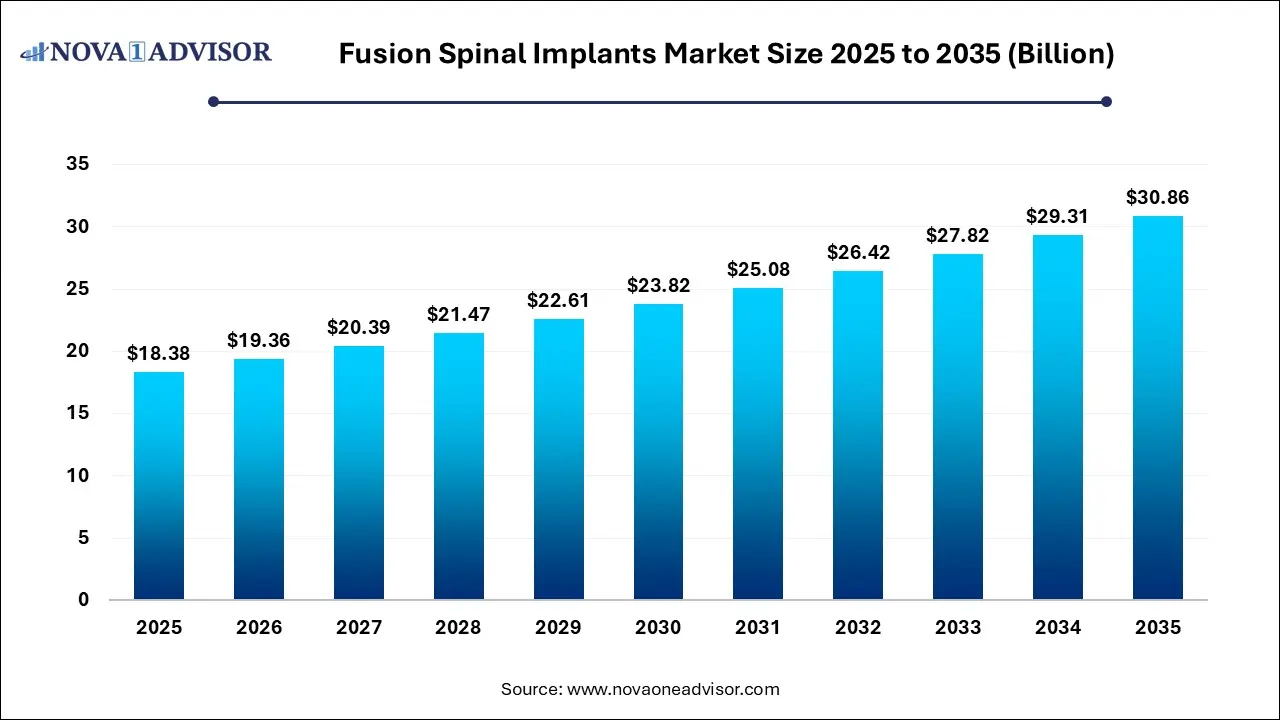
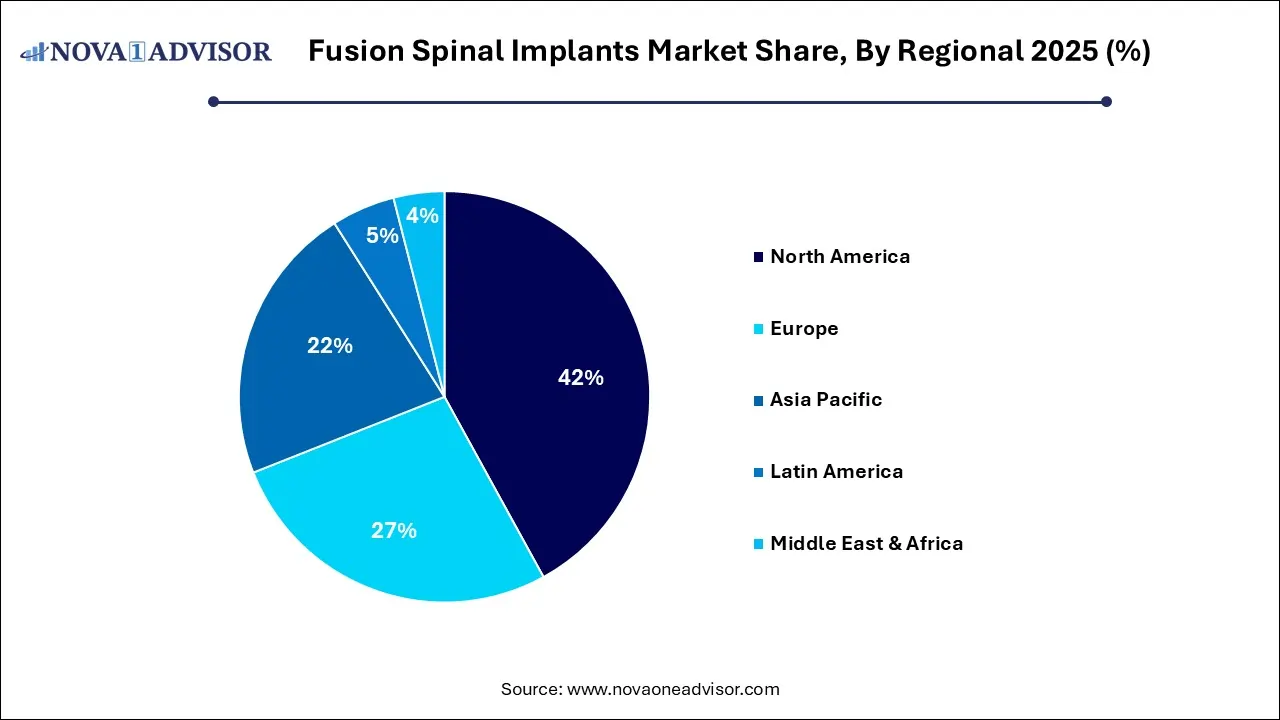
The global fusion spinal implants market size was valued at USD 18.38 billion in 2025 and is projected to grow from USD 19.36 billion in 2026 to USD 30.86 billion by 2035, at a CAGR of 5.32% from 2026 to 2035. North America dominated the market, accounting for a revenue share of 42% in 2025.
Key Takeaway
- By technology, the motion preservation/non-fusion segment dominated the market with the largest share in 2025.
- By technology, the spinal fusion and fixation technologies segment is expected to grow at the fastest CAGR over the forecast period.
- By product, the thoracic fusion and lumbar fusion segment dominated the market with the largest share in 2025.
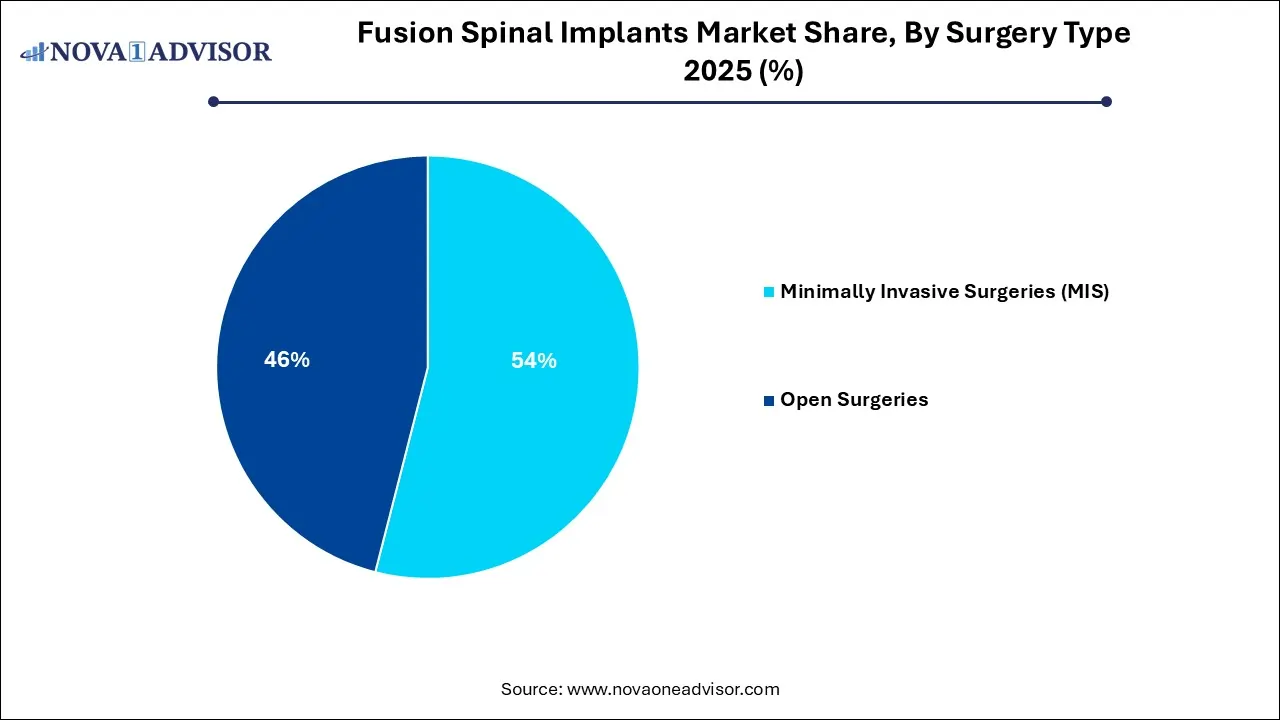
- By surgery type, the minimally invasive surgeries segment dominated the market with the largest share of 56.0% in 2025.
- By region, North America dominated the market with the largest share of 42.0% in 2025.
Market Overview
The global fusion spinal implants market is experiencing steady growth due to the increasing prevalence of degenerative spinal disorders, spinal injuries, and age-related musculoskeletal conditions. Spinal fusion procedures are widely used to treat conditions such as degenerative disc disease, spinal stenosis, scoliosis, spondylolisthesis, and vertebral fractures by restoring spinal stability and relieving nerve compression. Advances in implant materials, including titanium alloys, PEEK, porous metals, and bioactive coatings, along with improved biologics, are enhancing fusion success rates and long-term patient outcomes.
The growing adoption of minimally invasive spinal surgery, supported by robotic-assisted systems, advanced navigation, and digital imaging technologies, is transforming the market by reducing surgical trauma, shortening recovery time, and improving implant placement accuracy. Increasing investments in orthopedic research, outpatient spine care, and personalized surgical solutions are further driving market expansion. As healthcare providers continue to prioritize better clinical outcomes and long-term cost efficiency, demand for advanced fusion spinal implant technologies is expected to remain strong.
Market Outlook
- Market Growth Overview: The global global fusion spinal implants market is expected to grow significantly between 2025 and 2035, driven by the growing prevalence of spinal disorders globally.
- Sustainability Trends: Sustainability trends involve 3D-printed custom implants, motion-preserving technologies, and minimally invasive spine surgery (MISS).
- Major Investors: Major investors in the market include Medtronic, Johnson & Johnson (DePuy Synthes), Globus Medical, Zimmer Biomet, and Stryker.
How is AI impacting the global fusion spinal implants market?
Artificial intelligence (AI) is significantly improving the diagnosis, planning, execution, and postoperative management of spinal fusion procedures. AI-powered algorithms analyze MRI, CT, and X-ray images to detect spinal abnormalities, assess disease severity, and support personalized treatment planning. Machine learning also assists surgeons by generating detailed 3D anatomical models, optimizing implant selection, and determining precise screw trajectories for improved surgical accuracy.
During surgery, AI enhances robotic-assisted navigation and real-time imaging, enabling more accurate implant placement while reducing the risk of complications. After surgery, AI-driven remote monitoring platforms use wearable devices to track patient recovery, detect early signs of implant failure or non-union, and support timely clinical intervention. Additionally, AI is accelerating implant innovation by optimizing implant design, material selection, and biomechanical performance, contributing to safer, more personalized, and digitally integrated spinal fusion therapies.
Fusion Spinal Implants Market Report Scope
| Report Coverage | Details |
| Market Size in 2026 | USD 19.36 Billion |
| Market Size by 2035 | USD 30.86 Billion |
| Growth Rate From 2026 to 2035 | CAGR of 5.32% |
| Base Year | 2025 |
| Forecast Period | 2026 to 2035 |
| Segments Covered | By Technology, By Product, By Surgery Type, By Region |
| Segments Covered | Value (USD Million/Billion) or (Volume/Units) |
| Regional Scope | North America; Europe; Asia Pacific; Central and South America; the Middle East and Africa |
| Key Companies Profiled | Alphatec Holdings, Inc., DePuy Synthes, Globus Medical, Inc., Medicrea, Medtronic, PLC., NuVasive, Inc, Orthofix International N.V., RTI Surgical, Inc., Stryker Corp. and Zimmer Biomet Holdings Inc. |
Market Dynamics
Driver: Increasing Prevalence of Degenerative Spinal Disorders
The rising incidence of degenerative spinal disorders, including degenerative disc disease, spinal stenosis, scoliosis, spondylolisthesis, and vertebral fractures, is a key driver of the fusion spinal implants market. Aging populations, sedentary lifestyles, obesity, osteoporosis, and sports-related injuries continue to increase the demand for spinal fusion procedures. Advances in implant materials, biologics, minimally invasive surgical techniques, and navigation technologies are improving surgical outcomes, while growing awareness and expanding access to specialized spine care are further supporting market growth.
Restraint: High Procedure Costs and Risk of Revision Surgeries
The high cost of spinal fusion procedures, including advanced implants, robotic systems, navigation technologies, biologics, and specialized surgical expertise, remains a major challenge for market expansion. Additionally, potential complications such as implant loosening, adjacent segment degeneration, non-union (pseudoarthrosis), infection, and the need for revision surgery may affect long-term treatment outcomes and influence physician decision-making, particularly in cost-sensitive healthcare markets.
Opportunity: Expansion of Robotic-Assisted and Personalized Spine Surgery
The growing adoption of robotic-assisted surgery and personalized spinal care presents significant opportunities for the fusion spinal implants market. Robotic platforms, AI-powered navigation, and advanced imaging technologies are improving implant placement accuracy and surgical precision. Meanwhile, 3D-printed patient-specific implants, AI-driven surgical planning, regenerative biologics, and advanced biomaterials are enabling more customized treatments with better clinical outcomes. Increasing investments in spine care infrastructure across emerging economies are expected to further accelerate market growth.
Segmental Insights
By Technology
Why did the motion preservation/non-fusion segment dominate the global fusion spinal implants market?
The motion preservation/non-fusion segment dominated the market with the largest share in 2025. The dominance of the segment can be attributed to the growing demand for motion preservation and its benefits over conventional methods. Advanced surgical instruments facilitate smaller incisions, minimized muscle trauma, and improved recovery periods. This trigger makes non-fusion interventions highly attractive to active, working-age patients.
How did the spinal fusion and fixation technologies segment expected to hold the fastest-growing global fusion spinal implants market in the coming years?
The spinal fusion and fixation technologies segment is expected to grow at the fastest CAGR over the forecast period. The growth of the segment can be credited to the extensive adoption of minimally invasive spine surgeries (MISS) and the surge in rates of degenerative disc diseases. Also, these biological aids drastically increase the success rate of fusions, driving surgeons and patients to opt for these procedures with higher confidence.
By Product
Why did the thoracic fusion and lumbar fusion segment dominate the global fusion spinal implants market?
The thoracic fusion and lumbar fusion segment dominated the market with the largest share in 2025. The dominance of the segment can be linked to the ongoing technological innovations such as 3D-printed implants and the increase in the aging population globally. Moreover, the use of minimally invasive surgical techniques for the placement of spinal implants results in significantly reduced tissue trauma and decreased intraoperative blood loss.
How did the cervical fusion devices segment expected to hold the fastest-growing global fusion spinal implants market in the coming years?
The cervical fusion devices segment is expected to grow at the fastest CAGR over the forecast period. The growth of the segment can be driven by growing adoption of 3D-printed titanium implants and a transition towards performing anterior cervical discectomy and fusion (ACDF) procedures. The growing use of advanced bone graft substitutes, such as peptide-enhanced grafts, significantly boosts bone healing in complex multi-level neck surgeries by ensuring faster and more predictable fusion rates.
By Surgery Type
Why did the minimally invasive surgeries segment dominate the global fusion spinal implants market?
The minimally invasive surgeries segment dominated the market with the largest share in 2025. The dominance of the segment is owing to its faster recovery times as compared to conventional open surgeries and development of highly specialized hardware. The rising incidence of spinal conditions. such as degenerative disc disease, spinal stenosis, and herniated discs, is primarily driven by an increasing elderly population.
How did the open surgeries segment expected to hold the fastest-growing global fusion spinal implants market in the coming years?
The open surgeries segment is expected to grow at the fastest CAGR over the forecast period. The growth of the segment is due to growing demand for open surgery to correct severe spinal deformities and ongoing technological innovations. Advances in computer-assisted navigation, AI-driven imaging, and robotic systems have significantly enhanced the safety and precision of open surgery.
By Regional
Why did the North American region account for the largest share in the global fusion spinal implants market?
North America dominated the market with the largest share in 2025. The dominance of the region can be attributed to the growing transition towards performing spinal fusions in ambulatory surgery centers . In addition, the favourable reimbursement policies are shifting away from traditional open surgeries that require large incisions. Hence, modern healthcare increasingly uses minimally invasive surgery (MIS) techniques.
U.S. Global Fusion Spinal Implants Market Trends
The growth of the market in the country can be driven by increasing transitions towards minimally invasive surgeries (MIS) and growing rates of degenerative disc disease. Also, manufacturers in the country are increasingly using 3D printing technology to fabricate custom titanium cages. These patient-specific implants feature porous surfaces that replicate natural bone architecture and improve spinal fusion success rates.
Why did the Asia-Pacific region become the fastest-growing global fusion spinal implants market during the forecast period?
Asia Pacific is expected to grow at the fastest CAGR over the forecast period. The growth of the region can be credited to the increasing disposable incomes and enhancing healthcare infrastructure. Emerging regional economies are making substantial investments to modernize hospitals and surgical infrastructure. Furthermore, local and global medical device manufacturers are forming strategic collaborations to expand access to spinal care.
China Global Fusion Spinal Implants Market Trends
The market in the country is growing due to favourable government reimbursement policies offering financial support to patients along with the modernization in healthcare facilities. The Chinese government's expansion of tertiary hospitals and increased public healthcare expenditure have improved access to advanced spinal treatments for both rural and urban populations.
Why Did Europe Hold a Notable Share in the global fusion spinal implants market?
Europe is expected to grow at a notable CAGR over the forecast period. The growth of the region can be linked to the growing prevalence of degenerative disc diseases and a robust transitional transition towards minimally invasive surgical (MIS) methods. Moreover, countries with highly developed healthcare systems, among which Germany facilitated the largest regional market share, invested substantially in state-of-the-art surgical facilities.
Germany Global Fusion Spinal Implants Market Trends
The growth of the market is boosted by cutting-edge healthcare infrastructure and a surge in rates of degenerative disc diseases. Lifestyle choices, such as sedentary professions and obesity, have increased the incidence of chronic back conditions, herniated discs, and spinal stenosis across both geriatric and working populations.
Key Players in the Global Fusion Spinal Implants Market
- Medtronic plc: Based in Ireland, Medtronic is the undisputed market leader in spinal technology. They offer a wide range of fusion devices, biologics (bone-healing materials), and spinal cord stimulators.
- Stryker Corporation: Stryker is a US-based leader known for its 3D-printed titanium implants and advanced surgical navigation systems that help surgeons operate with high precision.
- Zimmer Biomet: Based in the US, this company is a major player offering a broad suite of spinal fusion, motion preservation, and bone-healing devices.
Recent Developments
- In June 2026, Xenix Medical officially secured US Food and Drug Administration (FDA) clearance for its Lux expandable lumbar interbody fusion system. The company has announced the commercial launch of the product within the United States market.
Segments Covered in the Report
This report forecasts revenue growth at country levels and provides an analysis of the latest industry trends in each of the sub-segments from 2021 to 2035. For this study, Nova one advisor, Inc. has fusion spinal implants market.
By Technology
- Motion Preservation/Non-Fusion
- Spinal Fusion and Fixation Technologies
By Product
- Cervical Fusion Devices
- Thoracic Fusion and Lumbar Fusion
- Interbody Fusion Devices
- Bone Grafts and Biologics
- Vertebral Compression Fracture (VCF) Treatment Devices
- Spine Navigation and Robotic-Assisted Systems
- Others
By Surgery Type
- Minimally Invasive Surgeries (MIS)
- Open Surgeries
By Region
- North America
- Europe
- Asia Pacific
- Latin America
- Middle East & Africa
FAQ's

Proceed to Buy
Instant PDF delivery on confirmation

Fusion Spinal Implants Market Size to Hit USD 30.86 Billion by 2035
 Request Customization
 Download Sample

Get a Sample of this Report
Fusion Spinal Implants Market