

Lazy Eye Market Size, Share, Forecast Report, 2026-2035
 Status Published
 Category Healthcare


Content
Lazy Eye Market Size and Growth 2026 to 2035
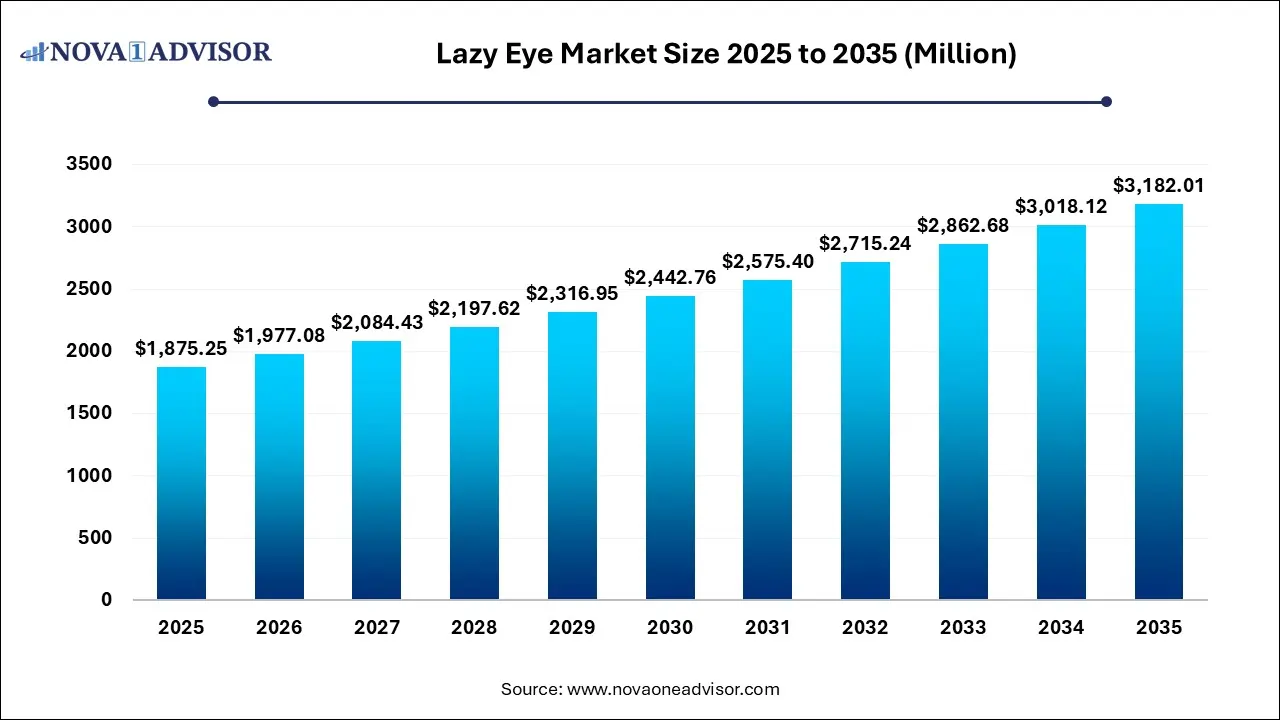
The global lazy eye market size was valued at USD 1,875.25 million in 2025 and is projected to grow from USD 1,977.08 million in 2026 to USD 3,182.01 million by 2035, at a CAGR of 5.43% from 2026 to 2035. North America dominated the market, accounting for a revenue share of 38.0% in 2025.
Key Takeaway:
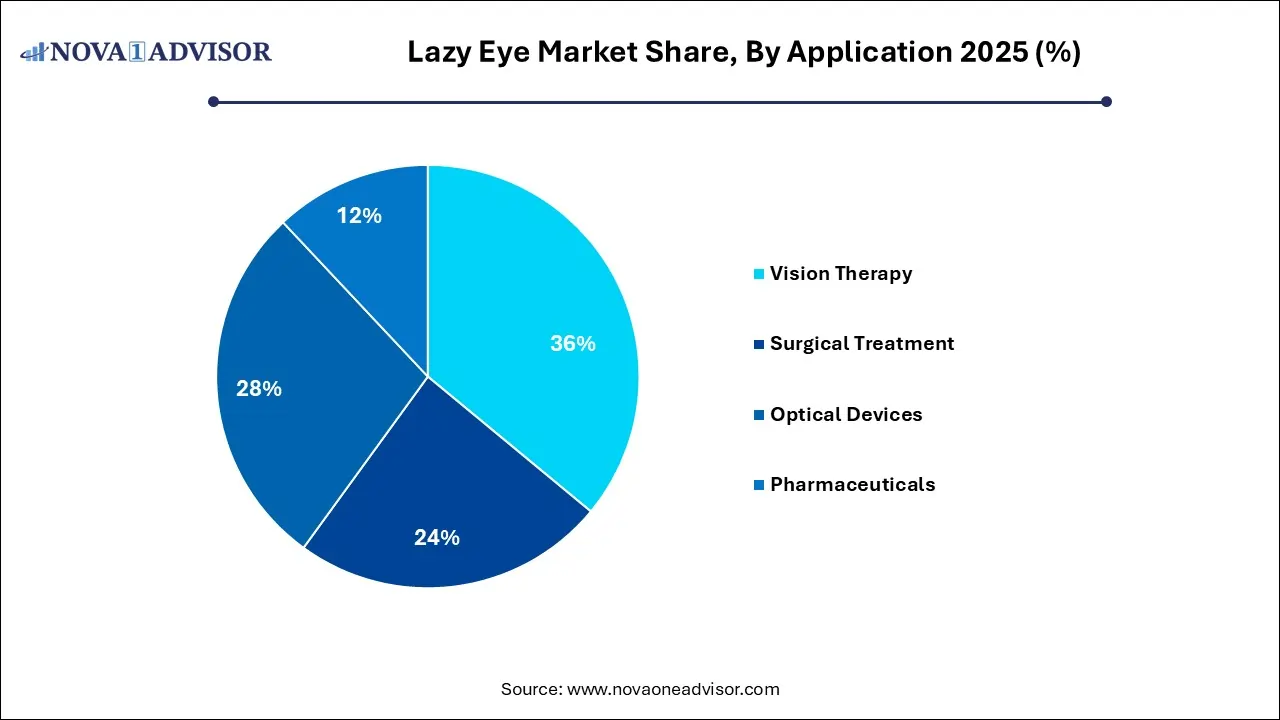
- By application, the vision therapy segment dominated the market with a large share of 36.0% in 2025.
- By application, the surgical treatment segment is expected to grow at the fastest CAGR over the forecast period.
- By age group, the children segment dominated the market with the largest share in 2025.
- By diagnostic method, the visual acuity test segment dominated the market with the largest share in 2025.
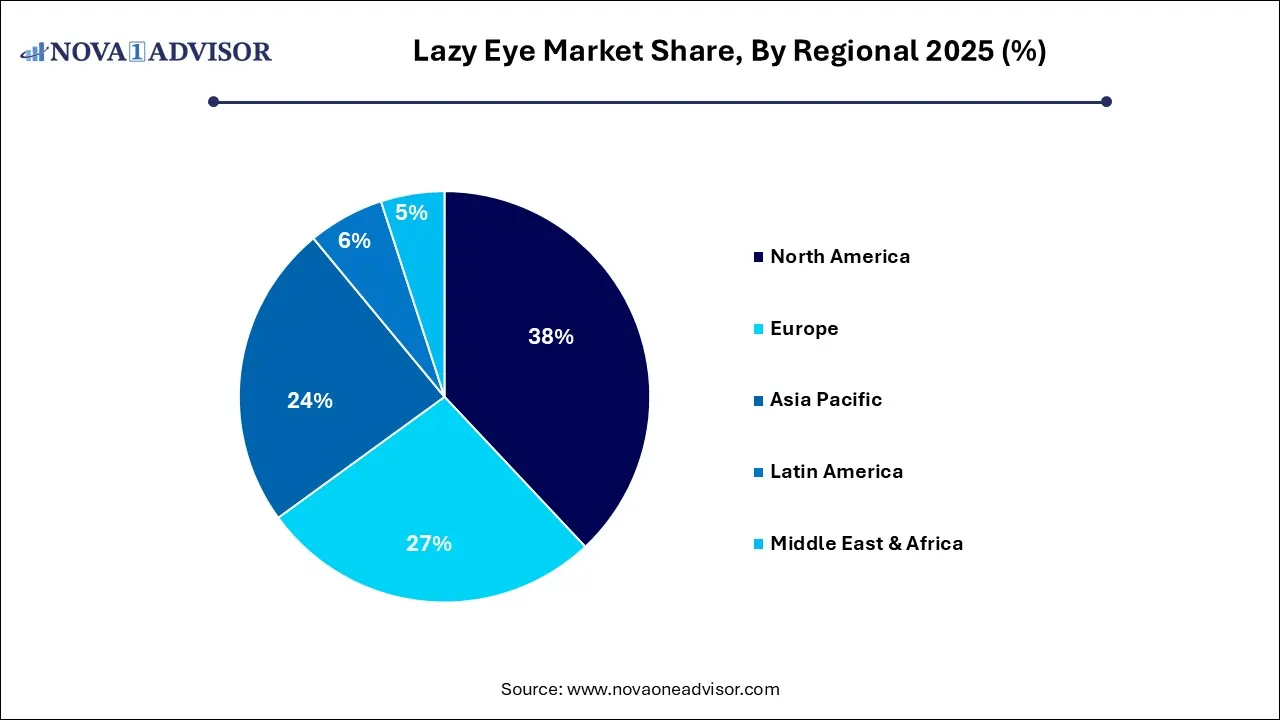
- By region, North America dominated the market with the largest share of 38.0% in 2025.
Market Overview
The global lazy eye (amblyopia) market is experiencing steady growth, driven by increasing awareness of pediatric eye health, expanding vision screening programs, and advancements in non-invasive treatment technologies. Amblyopia is a neurodevelopmental vision disorder in which one eye develops reduced visual acuity because the brain favors the stronger eye. Early diagnosis and timely treatment are essential to prevent permanent vision loss and improve long-term visual outcomes.
Rising cases of refractive errors, strabismus, congenital cataracts, and other childhood eye disorders are increasing the demand for effective diagnostic and therapeutic solutions. National vision screening initiatives, greater parental awareness, and improved access to pediatric eye care are enabling earlier detection during the critical period of visual development.
Treatment options are evolving beyond traditional eye patching to include atropine therapy, binocular vision therapy, digital therapeutics, virtual reality-based rehabilitation, and vision training programs that improve patient engagement and treatment adherence. Advances in artificial intelligence, portable vision screening devices, eye-tracking systems, and smartphone-based diagnostic applications are further enhancing the accuracy and accessibility of amblyopia care.
Growing investments in pediatric healthcare infrastructure, teleophthalmology, and digital health platforms, particularly in emerging economies, are supporting market expansion. Although challenges such as delayed diagnosis, treatment compliance, and limited access to specialized eye care remain, continuous innovation in personalized vision therapy and digital rehabilitation is expected to drive sustained growth in the global lazy eye market.
Market Outlook
- Market Growth Overview: The global lazy eye market is expected to grow significantly between 2025 and 2035, driven by the growing need for effective interventions and innovations in diagnostic techniques.
- Sustainability Trends: Sustainability trends involve transitioning from single-use physical patches to sustainable materials and innovating digital therapeutics to reduce manufacturing waste.
- Major Investors: Major investors in the market include Novartis AG (Alcon), Bausch & Lomb, and Pfizer for pharmaceuticals.
How is AI impacting the global lazy eye market?
Artificial intelligence (AI) is transforming the lazy eye (amblyopia) market by improving early diagnosis, personalized treatment, and long-term patient monitoring. AI-powered vision screening systems analyze eye alignment, visual acuity, and refractive errors to detect amblyopia at an early stage, enabling timely intervention and better visual outcomes, particularly in children.
Machine learning integrated into smartphone-based screening tools and teleophthalmology platforms is expanding access to eye care by supporting remote assessments and faster referrals. AI also enables personalized treatment by evaluating patient characteristics, therapy response, and compliance to recommend customized patching schedules, binocular exercises, and digital vision therapy.
AI-driven digital therapeutics and eye-tracking technologies continuously monitor treatment progress, adjust therapy difficulty in real time, and improve patient engagement through interactive, gamified rehabilitation programs. As AI advances alongside wearable devices and augmented reality-based vision therapy, it is making amblyopia management more precise, accessible, and patient-centered.
Lazy Eye Market Report Scope
| Report Coverage | Details |
| Market Size in 2026 | USD 1,977.08 Million |
| Market Size by 2035 | USD 3,182.01 Million |
| Growth Rate From 2026 to 2035 | CAGR of 5.43% |
| Base Year | 2025 |
| Forecast Period | 2026 to 2035 |
| Segments Covered | Application, Age Group, Severity Level, Treatment Type, Diagnosis Method, Region |
| Market Analysis (Terms Used) | Value (USD Million/Billion) or (Volume/Units) |
| Regional Scope | North America; Europe; Asia Pacific; Central and South America; the Middle East and Africa |
| Key Companies Profiled | Pfizer Inc. (U.S.), TCI Chemicals (India) Pvt. Ltd. (India), Adwia Pharmaceuticals Co. (Egypt), 3M (U.S.), Bausch & Lomb Incorporated. (U.S.), Rebion (U.S.), Vivid Vision, Inc. (U.S.), Johnson and Johnson Services, Inc. (U.S.), and others. |
Market Driver
Increasing Early Childhood Vision Screening Programs Driving Market Growth
The expansion of pediatric vision screening programs is a key driver of the global lazy eye market. Governments, schools, and healthcare organizations are strengthening early eye screening initiatives to detect amblyopia during the critical stage of visual development, when treatment is most effective. The growing use of portable screening devices, digital vision assessment tools, and AI-assisted diagnostics is improving early detection rates, driving demand for optical correction, vision therapy, and advanced treatment solutions.
Market Restraint
Poor Treatment Adherence Limiting Long-Term Clinical Outcomes
Low patient adherence to traditional amblyopia treatments remains a major challenge for market growth. Eye patching, atropine therapy, and home-based vision exercises often require long-term commitment, leading to poor compliance due to discomfort, social stigma, and inconsistent supervision. These factors can reduce treatment effectiveness and prolong recovery, limiting overall clinical outcomes despite the availability of effective therapies.
Market Opportunity
Expansion of Digital Therapeutics and Adult Amblyopia Treatment Creating Significant Growth Potential
Growing evidence that adolescents and adults can benefit from amblyopia treatment is creating new market opportunities. Advances in digital therapeutics, virtual reality-based rehabilitation, AI-guided vision training, and gamified therapy platforms are expanding treatment options beyond pediatric patients. In addition, increasing adoption of telehealth, wearable eye-tracking technologies, and personalized digital rehabilitation is improving access, patient engagement, and long-term treatment outcomes, supporting sustained market growth.
Segmental Insights
By Application
Why did the vision therapy segment dominate the global lazy eye market?
The vision therapy segment dominated the market with a large share in 2025. The dominance of the segment can be attributed to the growing transition towards digital therapeutics and gamified home-based software. In addition, early diagnosis of paediatric vision disorders is mainly facilitated by rising public awareness and extensive school-based screening programs.
How did the surgical treatment segment expected to hold the significantly growing global lazy eye market in the coming years?
The surgical treatment segment is expected to grow at the fastest CAGR over the forecast period. The growth of the segment can be credited to the growing awareness regarding paediatric vision disorders and ongoing innovations in ophthalmic procedures. Increased accessibility to specialized ophthalmic clinics across emerging regions, particularly within the Asia-Pacific, is impacting positive market growth soon.
By Age Group
Why did the children segment dominate the global lazy eye market?
The children segment dominated the market with the largest share in 2025. The dominance of the segment can be linked to the enhanced reimbursement policies and growing need for home-based therapies. Moreover, conventional therapies, such as eye patching, frequently encounter adherence challenges emerging from social stigma and patient discomfort.
How did the adults segment expected to hold the significantly growing global lazy eye market in the coming years?
The adults segment is expected to grow at the fastest CAGR over the forecast period. The growth of the segment can be driven by technological innovations in virtual reality (VR) and gamified software. Ongoing clinical validation shows that the adult brain retains neurological adaptability, enabling significant enhancements in visual acuity via neuroplasticity therapies.
By Diagnosis Method
Why did the visual acuity test segment dominate the global lazy eye market?
The visual acuity test segment dominated the market with the largest share in 2025. The domain of the segment is owing to the increasing incidence of childhood refractive errors and the incorporation of AI-driven digital screening tools. Mandatory pediatric vision screening protocols in North America and Europe are driving a substantial boost in the volume of clinical visual acuity testing.
How did the cover test segment expected to hold the significantly growing global lazy eye market in the coming years?
The cover test segment is expected to grow at the fastest CAGR over the study period. The growth of the segment is due to increasing pediatric vision screenings and early intervention policy adaptation. Improving public and parental health education regarding pediatric vision disorders directly increased rates of initial ocular alignment screenings.
By Regional
Why did the North American region account for the largest share in the global lazy eye market?
North America dominated the market with the largest share in 2025. The dominance of the region can be attributed to the growing transition from conventional patching toward digital therapeutics and extensive pediatric eye screening programs. In addition, the region possesses a dense concentration of leading ophthalmic manufacturers and digital therapeutic companies, which collectively drive significant advancements in medical technology.
U.S. Global Lazy Eye Market Trends
The growth of the market in the country can be driven by the surge in screen time, growing pediatric eye disorders, and rising digital therapeutics adoption. Also, early diagnostics are supported by the high availability of ophthalmologists, specialized clinics, and continuous clinical research in neuro-visual treatments.
Why did the Asia-Pacific region become the fastest-growing global lazy eye market during the forecast period?
Asia Pacific is expected to grow at the fastest CAGR over the forecast period. The growth of the region can be credited to the surge in disposable income and government initiatives supporting pediatric eye care. Furthermore, increasing per capita healthcare expenditure across regional developing economies such as China and India is expanding patient access to specialized ophthalmic consultations and advanced corrective technologies.
China Global Lazy Eye Market Trends
The market in the country is growing due to the growing incidence of refractive errors and extensive pediatric population growth. Moreover, the ongoing expansion of telemedicine and mobile health infrastructure in China is actively facilitating the integration and acceptance of digital therapeutics and vision-training software.
Key Players in the Global Lazy Eye Market
- Pfizer Inc.: A significant player supplying both general and pediatric ophthalmic pharmaceutical treatments.
- Novartis AG: Operates in the field through subsidiaries and pipelines, developing pharmaceuticals like the amblyopia treatment formerly known as Amblyotech.
- 3M: A major manufacturer of medical supplies that dominates the traditional eye-patching and occlusion therapy sector.
Recent Developments
- In June 2026, Luminopia, Inc., a pioneer in digital therapeutics for neuro-visual disorders, has formalized its first international licensing agreement with ROHTO Pharmaceutical Co., Ltd., a Japanese multinational renowned for its consumer healthcare and ophthalmic products.
Segments Covered in the Report
This report forecasts revenue growth at country levels and provides an analysis of the latest industry trends in each of the sub-segments from 2021 to 2035. For this study, Nova one advisor, Inc. has lazy eye market.
By Age Group
- Children
- Adolescents
- Adults
- Elderly
By Application
- Vision Therapy
- Surgical Treatment
- Optical Devices
- Pharmaceuticals
By Severity Level
- Mild
- Moderate
- Severe
By Treatment Type
- Non-Surgical
- Surgical
- Combination Therapy
By Diagnosis Method
- Visual Acuity Test
- Cover Test
- Retinoscopy
By Region
- North America
- Europe
- Asia Pacific
- Latin America
- Middle East & Africa
FAQ's

Proceed to Buy
Instant PDF delivery on confirmation

 Request Customization
 Download Sample

Get a Sample of this Report
Lazy Eye Market