

Metallic Spinal Implants Market Size, Share, and Trends 2026 to 2035
 Status Published
 Category Healthcare


Content
Metallic Spinal Implants Market Size and Growth 2026 to 2035
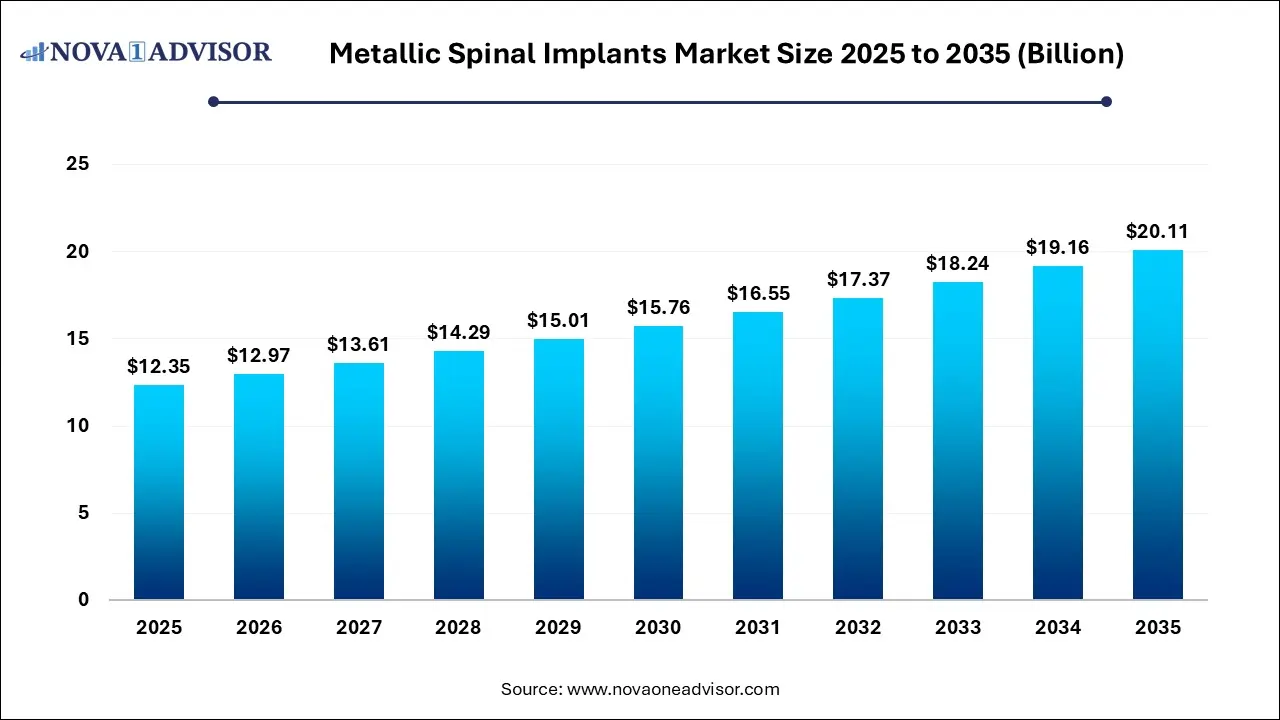
The global metallic spinal implants market size was valued at USD 12.35 billion in 2025 and is projected to grow from USD 12.97 billion in 2026 to USD 20.11 billion by 2035, at a CAGR of 5.0% from 2026 to 2035. North America dominated the market, accounting for a revenue share of 39.0% in 2025.
Key Takeaway
- By type, the titanium segment dominated the market with the largest share in 2025 and is expected to grow at the fastest CAGR over the forecast period.
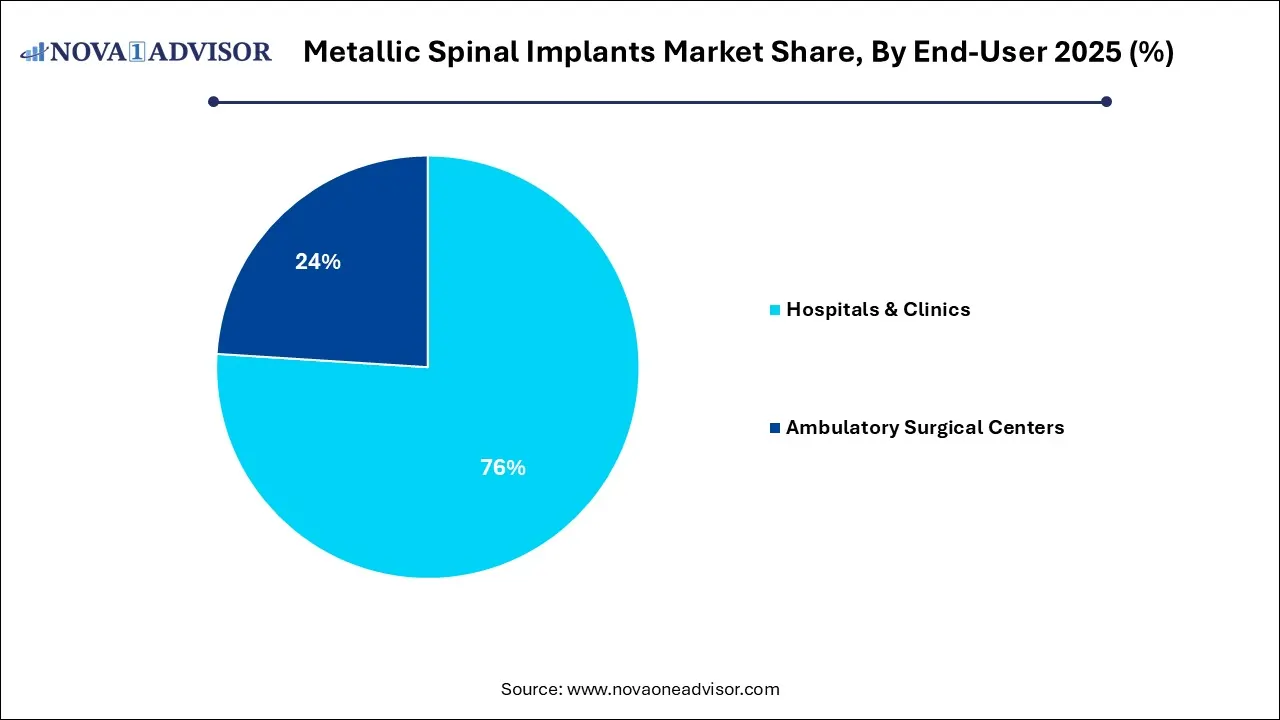
- By end user, the hospitals & clinics segment dominated the market with the largest share of 76.0% in 2025.
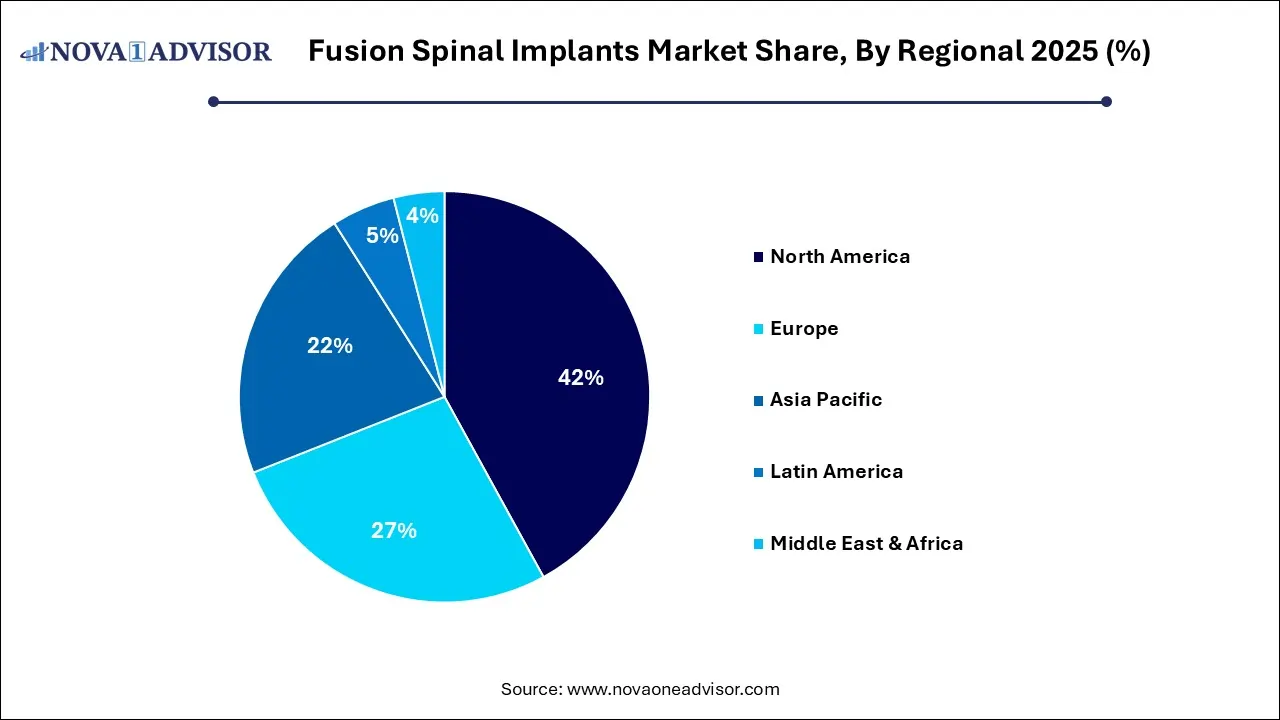
- By region, North America dominated the market with the largest share of 39.0% in 2025.
Market Overview
The global metallic spinal implants market is experiencing steady growth, driven by the increasing prevalence of spinal disorders, rising aging populations, and continuous advancements in spinal surgery technologies. Metallic spinal implants are widely used to stabilize and support the spine during the treatment of conditions such as degenerative disc disease, spinal deformities, fractures, tumors, and traumatic injuries. Titanium alloys, cobalt-chromium alloys, and stainless steel remain the most commonly used materials, with titanium gaining preference due to its excellent biocompatibility, high strength, and superior imaging compatibility.
The growing adoption of minimally invasive spine surgeries, coupled with innovations in implant design, navigation systems, robotic-assisted procedures, and 3D printing, is transforming the market. Increasing cases of spinal disorders among both elderly and younger populations, along with improved healthcare infrastructure and favorable reimbursement policies, continue to support market expansion. As healthcare providers focus on enhancing surgical outcomes and reducing revision procedures, demand for advanced metallic spinal implant solutions is expected to remain strong over the coming years.
Market Outlook
- Market Growth Overview: The global metallic spinal implants market is expected to grow significantly between 2025 and 2035, driven by growing rates of degenerative disc diseases and the better mechanical strength of materials.
- Sustainability Trends: Sustainability trends involve the adoption of energy-efficient 3D printing and circular economy initiatives to reduce raw materials waste.
- Major Investors: Major investors in the market include Medtronic, Johnson & Johnson (DePuy Synthes), Stryker Corporation, Globus Medical, and Zimmer Biomet.
How is AI impacting the global metallic spinal implants market?
Artificial intelligence (AI) is reshaping the metallic spinal implants market by enhancing surgical planning, implant design, and postoperative patient care. AI-powered imaging solutions analyze MRI, CT, and X-ray scans to accurately identify spinal abnormalities, assess vertebral anatomy, and support precise implant selection, improving surgical accuracy while reducing planning time.
Machine learning algorithms integrated into preoperative planning software help surgeons determine optimal implant sizes, screw placement, and fixation strategies based on patient-specific anatomy. Combined with robotic-assisted spine surgery and real-time navigation systems, AI improves implant positioning, minimizes surgical complications, and enhances procedural consistency.
AI is also accelerating innovation in implant development by optimizing implant geometry through generative design and supporting the production of customized, patient-specific implants using 3D printing technologies. In postoperative care, AI-powered remote monitoring platforms and predictive analytics track recovery progress, detect potential complications early, and enable timely clinical intervention. As AI adoption continues to expand, it is expected to improve clinical outcomes, personalize spine care, and drive greater efficiency across the metallic spinal implants market.
Metallic Spinal Implants Market Report Scope
| Report Coverage | Details |
| Market Size in 2026 | USD 12.97 Billion |
| Market Size by 2035 | USD 20.11 Billion |
| Growth Rate From 2026 to 2035 | CAGR of 5.0% |
| Base Year | 2025 |
| Forecast Period | 2026 to 2035 |
| Segments Covered | By Type, By End-User, By Region |
| Market Analysis (Terms Used) | Value (USD Million/Billion) or (Volume/Units) |
| Regional Scope | North America; Europe; Asia Pacific; Central and South America; the Middle East and Africa |
| Key Companies Profiled | Ametek Specialty Products, Aperam S.A., ATI Specialty Alloys & Components, Carpenter Technology Corp., CoreLink, Inc, PrinterPrezz, Inc., Nexxt Spine LLC., DePuy Synthes, Fort Wayne Metals, Johnson Matthey Plc, Medtronic, PLC., NuVasive, Inc., QuesTek Innovations LLC and Royal DSM. |
Market Dynamics
Driver: Rising Prevalence of Degenerative Spinal Disorders and Aging Population
The increasing incidence of degenerative spinal disorders and the expanding elderly population are major factors driving the metallic spinal implants market. Conditions such as degenerative disc disease, spinal stenosis, osteoporosis, and vertebral fractures are becoming more common, increasing the need for spinal stabilization and fusion procedures. Additionally, sedentary lifestyles, obesity, poor posture, and sports-related injuries are contributing to spinal disorders among younger adults. Advancements in minimally invasive surgery, robotic-assisted procedures, and AI-enabled surgical planning are further improving surgical outcomes and boosting demand for advanced metallic spinal implants.
Restraint: High Surgical Costs and Stringent Regulatory Requirements
The high cost of spinal surgeries, including implants, robotic systems, advanced imaging, hospitalization, and rehabilitation, remains a key challenge for market growth. Limited reimbursement in many developing regions further restricts patient access to advanced spinal procedures. Additionally, stringent regulatory approval processes, extensive clinical testing, and ongoing post-market surveillance increase product development costs and delay commercialization, creating barriers for manufacturers introducing new implant technologies.
Opportunity: Expanding Healthcare Infrastructure and Personalized Spine Care
Growing healthcare investments in emerging economies and increasing adoption of personalized medicine present significant opportunities for the metallic spinal implants market. Expanding hospital infrastructure, improved insurance coverage, and greater awareness of spinal disorders are improving access to advanced spine surgeries. Meanwhile, AI-driven design, 3D printing, and patient-specific metallic implants are enabling more customized treatments with improved clinical outcomes. Rising medical tourism and collaborations between implant manufacturers, hospitals, and digital health companies are also expected to accelerate innovation and support long-term market growth.
Segmental Insights
By Type
Why did the titanium segment dominate the global metallic spinal implants market?
The titanium segment dominated the market with the largest share in 2025 and is expected to grow at the fastest CAGR over the forecast period. The dominance and growth of the segment can be attributed to its excellent strength, unmatched biocompatibility, and long-term durability. In addition, titanium has a crucial ability to fuse directly with living bone (called osseointegration), which creates a permanent and strong anchor for spinal rods, screws, and cages without forming scar tissue.
How did the stainless-steel segment expected to hold the significantly growing global metallic spinal implants market in the coming years?
The stainless-steel segment is expected to grow at a significant CAGR over the forecast period. The growth of the segment can be credited to the growing burden of spinal disorders and rapid growth in the aging population across the globe. Stainless steel provides outstanding structural strength and durability, supplying the essential stabilization necessary for complex spinal fusions and severe trauma reconstructions.
By End-User
Why did the hospitals & clinics segment dominate the global metallic spinal implants market?
The hospitals & clinics segment dominated the market with the largest share in 2025. The dominance of the segment can be linked to the growing demand for load-bearing and complex spinal surgeries along with the high strength of metal alloys. Also, healthcare institutions are increasingly adopting 3D-printed metallic implants. These components feature porous, trabecular surfaces engineered to stimulate osseointegration. This advanced design drives patient recovery and enhanced long-term structural stability.
How did the ambulatory surgical centers segment expected to hold the fastest-growing global metallic spinal implants market in the coming years?
The ambulatory surgical centers segment is expected to grow at the fastest CAGR over the forecast period. The growth of the segment can be credited to the innovations in minimally invasive surgical procedures and excellent durability of these materials. Ambulatory Surgery Centers (ASCs) enable spinal procedures such as simple fusions and decompressions to be conducted in outpatient settings rather than traditional hospital environments. This shift significantly decreases overhead costs and facility fees for healthcare systems.
By Regional
Why did the North American region account for the largest share in the global metallic spinal implants market?
North America dominated the market with the largest share in 2025. The dominance of the region can be attributed to the surge in obesity and trauma-related spinal disorders coupled with the robust preference for less invasive surgeries that need reliable and durable metal hardware. In addition, North America possesses robust medical infrastructure and industry-leading per capita healthcare spending. Furthermore, comprehensive reimbursement policies allow patients in this region to finance complex spinal surgeries and advanced medical implants more easily than those in developing nations.
U.S. Global Metallic Spinal Implants Market Trends
The growth of the market in the country can be driven by growing rates of sedentary behaviours and obesity along with the transition towards outpatient centres. Also, traditional titanium implants remain prominent in the medical field because manufacturers use 3D printing to build porous metal surfaces. These small holes help the bone grow into the metal, which leads more to faster and stronger healing.
Why did the Asia-Pacific region become the fastest-growing global metallic spinal implants market during the forecast period?
Asia Pacific is expected to grow at the fastest CAGR over the forecast period. The growth of the region can be credited to the increasing elderly population, surged in rate of spinal disorders and enhanced healthcare funding. Furthermore, the market is currently experiencing a notable transition, with procedures shifting from acute care hospitals to ambulatory surgery centres (ASCs). This migration enhances the accessibility and operational efficiency of spinal implant surgeries.
China Global Metallic Spinal Implants Market Trends
The market in the country is growing due to increasing rates of spine disorders and robust government support for local production. By actively supporting domestic Chinese medical enterprises, the government effectively reduces expenditures and stimulates local manufacturing capabilities. This strategic initiative enhances the affordability of spinal surgeries for the general public.
Why did Europe hold a notable share in the global metallic spinal implants market?
Europe is expected to grow at a notable CAGR over the forecast period. The growth of the region can be linked to the growing rates of spine conditions and ongoing innovations in 3D-printed metal implants and biomimetics. Moreover, several European nations, most notably Germany, the United Kingdom, and France, maintain highly developed healthcare infrastructures. These countries possess robust medical research frameworks and currently account for a significant majority of the regional spinal market.
Germany Global Metallic Spinal Implants Market Trends
The growth of the market is boosted by ongoing innovations in metallic alloy materials and surgical robotics coupled with the rapid surge in the aging population. Germany’s robust healthcare infrastructure facilitates the extensive use of advanced surgical robots and computer-assisted navigation systems. These technologies allow surgeons to insert metallic screws and rods into the spine with sub-millimetre precision.
Key Players in the Global Metallic Spinal Implants Market
- 1. Medtronic: They manufacture a wide array of metal cages, screws, and rods used in spinal fusions. They are known for their enabling technology ecosystem, which integrates spinal hardware with surgical robotics and 3D-guided navigation.
- 2. Johnson & Johnson (DePuy Synthes): They offer a comprehensive portfolio of titanium and cobalt-chromium metal implants for cervical, thoracic, and lumbar fixations.
- 3. Globus Medical: They focus on rapid product development, integrating metal interbody devices with advanced robotic-assisted surgical systems.
Recent Developments
- In January 2026, Nivalon Medical Technologies Inc. developed the world's first fully customized, metal-free spinal implant. By combining AI-driven design with ceramic 3D printing, the company creates patient-specific devices. The implant features a bone-like material and a flexible core to restore natural movement without the risks of traditional metal hardware.
Segments Covered in the Report
This report forecasts revenue growth at country levels and provides an analysis of the latest industry trends in each of the sub-segments from 2021 to 2035. For this study, Nova one advisor, Inc. has metallic spinal implants market.
By Type
- Stainless Steel
- Cobalt Chrome
- Titanium
By End-user
- Hospitals & Clinics
- Ambulatory Surgical Centers
By Region
- North America
- Europe
- Asia Pacific
- Latin America
- Middle East & Africa
FAQ's

Proceed to Buy
Instant PDF delivery on confirmation

Metallic Spinal Implants Market Size to Hit USD 20.11 Billion by 2035
 Request Customization
 Download Sample

Get a Sample of this Report
Metallic Spinal Implants Market