

Microspheres Market Size, Share, and Trends 2026 to 2035
 Status Published
 Category Healthcare


Content
Microspheres Market Summary
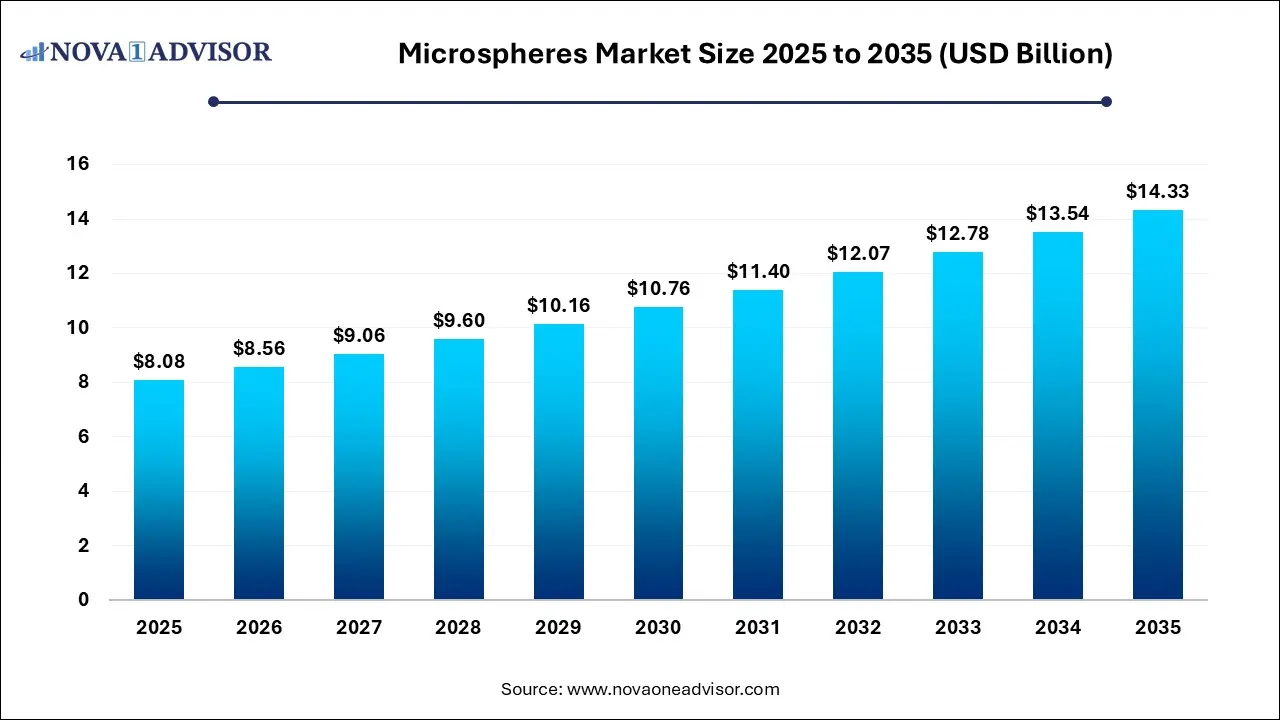
The global microspheres market size was estimated at USD 4.12 billion in 2025 and is projected to hit around USD 7.45 billion by 2035, growing at a CAGR of 6.11% during the forecast period from 2026 to 2035.
Market Key Takeaways
- The microspheres market is witnessing strong growth driven by expanding applications across healthcare, construction, automotive, and oil & gas industries.
- Polymer and glass microspheres dominate due to their versatility and cost-efficiency.
- Asia Pacific is emerging as the fastest-growing regional market due to rapid industrialization and infrastructure expansion.
- Healthcare and biotechnology applications are growing at the fastest pace due to drug delivery innovations.
- Increasing demand for lightweight materials in automotive and aerospace industries is accelerating adoption.
- Sustainability trends are pushing demand for fly ash (cenosphere) microspheres.
Market Overview
The microspheres market represents a dynamic segment within advanced materials, encompassing tiny spherical particles typically ranging from 1 to 1000 micrometers in diameter. These materials can be hollow or solid and are manufactured using glass, polymers, ceramics, metals, or fly ash derivatives. Their unique properties—such as low density, high strength-to-weight ratio, thermal insulation, and controlled release capabilities—make them indispensable across diverse industrial applications.
Microspheres have evolved from niche laboratory materials into essential components in high-performance applications. For instance, in the construction sector, hollow glass microspheres are increasingly used to reduce the weight of concrete structures while maintaining structural integrity. In healthcare, polymer microspheres are revolutionizing drug delivery systems by enabling targeted and sustained release of pharmaceuticals.
The market is benefiting from macroeconomic trends such as urbanization, industrial automation, and increased investment in healthcare infrastructure. Additionally, the push for energy efficiency and lightweight materials in automotive and aerospace sectors is further strengthening demand.
The competitive landscape includes major players such as 3M Company, Trelleborg AB, Momentive Technologies, and AkzoNobel N.V., all of whom are investing heavily in R&D to enhance product performance and expand application scope.
Market Outlook
- Market Growth Overview: The global microspheres market is expected to grow significantly between 2025 and 2035, driven by the growing applications in healthcare and biotechnology sectors, improved fuel efficiency and lower emissions, and construction and infrastructure developments.
- Sustainability Trends: Sustainability trends involve eco-friendly material shifts, lightweight materials for energy efficiency, and recycled material utilization.
- Major Investors: Major investors in the market include 3M Company, Nouryon, Merck KGaA, Trelleborg AB, and Potters Industries LLC.
How is AI Transforming the Microspheres Market?
Artificial Intelligence (AI) is significantly transforming the microspheres market by optimizing production processes, improving material design, and enabling predictive maintenance in manufacturing.
One of the most impactful applications of AI lies in materials engineering. Machine learning algorithms are now being used to simulate and predict the behavior of microspheres under various environmental and mechanical conditions. This allows manufacturers to design microspheres with precise characteristics—such as specific density, thermal conductivity, or biodegradability—without relying solely on trial-and-error experimentation.
For example, AI-driven modeling tools are helping companies develop polymer microspheres for targeted drug delivery systems. These systems require exact control over particle size and release rates, which AI can optimize by analyzing vast datasets from previous experiments. This has significantly reduced development timelines in pharmaceutical applications.
In manufacturing, AI-powered automation ensures consistency in microsphere size and quality. Smart sensors integrated into production lines can detect anomalies in real time, reducing defects and improving yield. Predictive maintenance systems powered by AI also help prevent equipment failures, thereby minimizing downtime and operational costs.
Moreover, AI is enhancing supply chain efficiency by forecasting demand across industries such as automotive and construction. This enables manufacturers to align production with market needs, reducing inventory costs and improving responsiveness.
Microspheres Market Report Scope
| Report Coverage | Details |
| Market Size in 2026 | USD 8.56 Billion |
| Market Size by 2035 | USD 14.33 Billion |
| Growth Rate From 2026 to 2035 | CAGR of 5.9% |
| Base Year | 2025 |
| Forecast Period | 2026 to 2035 |
| Segments Covered | Product, Material, Application, Region |
| Market Analysis (Terms Used) | Value (USD Million/Billion) or (Volume/Units) |
| Regional Scope | North America; Europe; Asia Pacific; Central and South America; the Middle East and Africa |
| Key Companies Profiled | Akzo Nobel N.V.; Trelleborg AB; Chase Corp; MO SCI, LLC; Sigmund Lindner GmbH; Momentive Performance Materials; Potters Industries LLC; DiaSorin S.p.A; Matsumoto Yushi-Seiyaku Co. Ltd; 3M Company |
Segmental Insights
By Product
How did the Hollow microspheres segment dominate the Global Microspheres market?
The hollow microspheres segment is driven by the integration into coating and construction materials providers' insulation and durability, while helping manufacturers manage production costs through lightweight, high-performance filters. As industries prioritize energy efficiency and adoption of hollow grades.
How did the Solid microspheres segment expect to hold the fastest-growing Global Microspheres market in the coming years?
The Solid microspheres segment is driven by its superior structural integrity and thermal stability compared to hollow alternatives. These high-performance fillers are increasingly essential in the medical and life sciences sectors for targeted drug delivery, while their ability to enhance surface finishes and durability continues to dominate the paints, coatings, and cosmetics industries. By focusing on technological customization and expanding production in emerging markets, manufacturers are successfully meeting the precise demands of the aerospace and automotive sectors.
By Material
How did the glass microspheres segment account for the largest share in the Global Microspheres market?
The glass microspheres segment is driven by providing critical weight reduction while maintaining the high crush strength required for automotive and construction applications. Their superior thermal stability makes them indispensable for insulating systems and high-performance coatings that must withstand extreme environments. As industries shift toward fuel efficiency and lightweight composites, these versatile fillers ensure product durability without adding unnecessary mass.
How did the polymer microspheres segment expect to hold the fastest-growing Global Microspheres market in the coming years?
The polymer microspheres segment is driven by delivering a massive weight reduction with minimal loading, effectively replacing traditional foaming agents in high-performance coatings. The medical sector is simultaneously fuelling rapid growth through innovative cancer therapies and minimally invasive procedures that rely on specialized polymer carriers. The impending 2029 cosmetic microbead ban is accelerating a critical industry pivot toward sustainable, biodegradable alternatives to ensure regulatory compliance.
By Application
How did the healthcare and biotechnology segment account for the largest share in the Global Microspheres market?
The healthcare and biotechnology segment is driven by enabling targeted, controlled drug delivery that maximizes efficacy while reducing side effects for chronic disease treatments. Driven by advancements in biomaterials like PLGA and a surge in diagnostic R&D, these carriers are now vital for tissue engineering and biotechnology. High healthcare expenditure in North America and Europe further accelerates this high-value growth, cementing microspheres as a cornerstone of next-generation medical infrastructure.
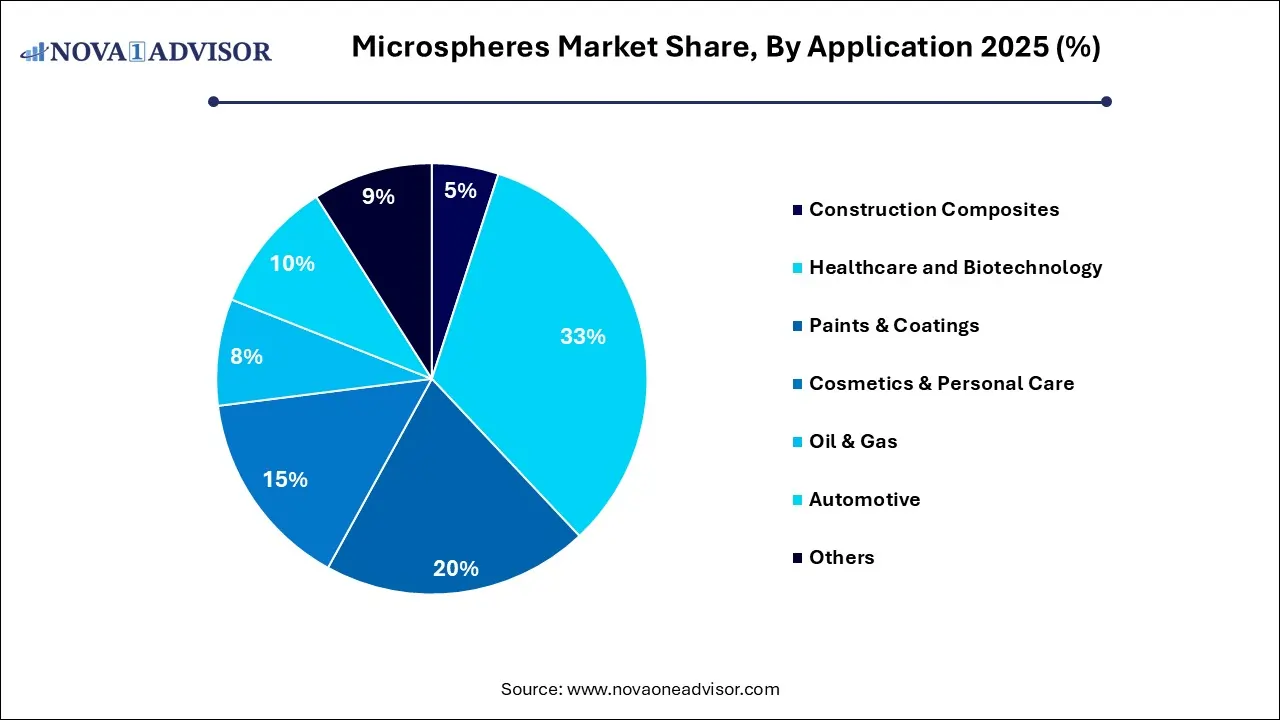
How did the paints and coatings segment expect to hold the fastest-growing Global Microspheres market in the coming years?
The paints and coatings segment is driven by the offering of significant weight reduction and thermal insulation, which are critical for the surging EV and aerospace industries. Their unique spherical structure creates a dense, anti-corrosive barrier while simultaneously enabling low-VOC, eco-friendly formulations to meet global sustainability goals.
By Regional
How did the North America region account for the largest share in the Global Microspheres market?
North America’s high concentration of industry giants, such as 3M and Nouryon, drives innovation in high-value industrial applications. The growing demand for lightweight, fuel-efficient composites in aerospace and the rapid adoption of polymer microspheres in advanced medical diagnostics. The heavy investment in infrastructure renovations and specialty coatings ensures that these regions remain at the forefront of the global microsphere market.
U.S. Global Microspheres Market Trends
The U.S. advanced healthcare sector is where microspheres are critical for cutting-edge cancer treatments and precision drug delivery. The region's focus on aerospace and automotive light weighting further drives demand for glass and polymer fillers that offer superior thermal stability and structural efficiency. A strong sustainability shift toward biodegradable materials is ensuring long-term growth as industries align with stricter environmental and recycling standards.
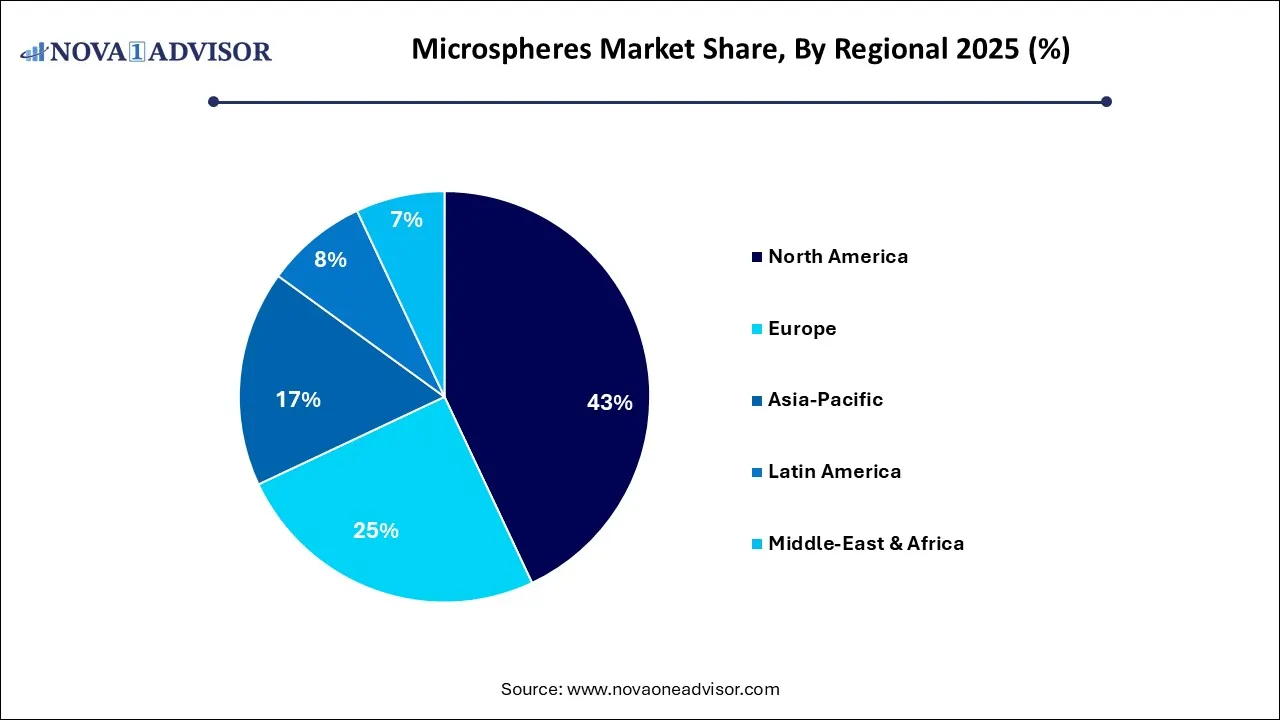
How did the Asia Pacific region hold the fastest-growing Global Microspheres Market in the forecast period?
Asia Pacific’s rapid urbanization and high-volume manufacturing in India and China, where microspheres are essential for lightweight construction and fuel-efficient automotive parts. Simultaneously, Japan’s advanced biotechnology sector is accelerating the adoption of high-precision drug delivery systems for cancer treatment. With the integration of AI-driven production and a booming cosmetics market, the region is successfully scaling high-quality, cost-effective microsphere technologies for both industrial and consumer sectors.
China Global Microspheres Market Trends
China’s widespread adoption of hollow glass microspheres, which provide cost-effective density reduction for massive infrastructure and automotive projects. The region's rapid urban development fuels continuous demand for high-strength coatings and concrete additives, while a surging healthcare sector accelerates R&D in precision drug delivery.
Key Players in the Global Microspheres Market
- AkzoNobel N.V. (Expancel)
AkzoNobel is a global leader in the production of Expancel® expandable thermoplastic microspheres, which act as lightweight fillers and blowing agents to reduce density and cost in paints, coatings, and construction materials.
- Trelleborg AB
Trelleborg AB manufactures high-performance polymeric microspheres, specifically for creating syntactic foams utilized as specialized buoyant fillers in subsea, offshore, and aerospace applications.
- Chase Corp
Chase Corporation contributes to the market through its Dualite® brand, manufacturing proprietary, ultra-lightweight polymer microspheres that act as fillers in plastics, resins, and adhesives.
Segments Covered in the Report
This report forecasts revenue growth at country levels and provides an analysis of the latest industry trends in each of the sub-segments from 2021 to 2035. For this study, Nova one advisor, Inc. has segmented the microspheres market.
By Product
- Hollow Microspheres
- Solid Microspheres
By Material
- Glass Microspheres
- Polymer Microspheres
- Ceramic Microspheres
- Fly Ash (Cenospheres) Microspheres
- Metallic Microspheres
By Application
- Construction Composites
- Healthcare and Biotechnology
- Paints & Coatings
- Cosmetics & Personal Care
- Oil & Gas
- Automotive
- Others
By Region
- North America
- Europe
- Asia Pacific
- Latin America
- Middle East and Africa (MEA)

Proceed to Buy
Instant PDF delivery on confirmation

 Request Customization
 Download Sample

Get a Sample of this Report
Microspheres Market