

Neurostimulation Devices Market Size, Share, and Trends 2026 to 2035
 Status Published
 Category Healthcare


Content
Neurostimulation Devices Market Size and Growth 2026 to 2035
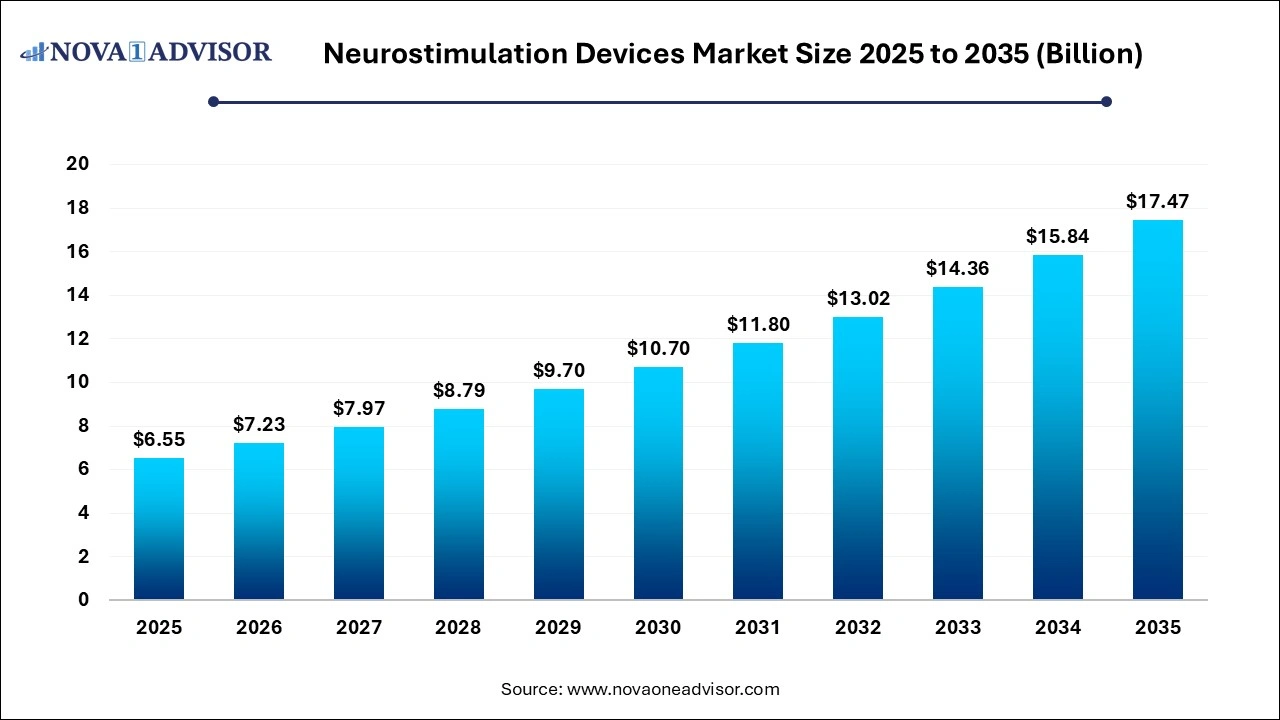
The global neurostimulation devices market size was valued at USD 6.55 billion in 2025 and is projected to grow from USD 7.23 billion in 2026 to USD 17.47 billion by 2035, at a CAGR of 10.31% from 2026 to 2035. North America dominated the market, accounting for a revenue share of 44.0% in 2025.
Key Takeaway
- By product, the spinal cord stimulators segment dominated the market with a large share in 2025.
- By product, the deep brain stimulators (DBS) segment is expected to grow at the fastest CAGR over the forecast period.
- By application, the Parkinson’s disease segment dominated the market with the largest share in 2025.
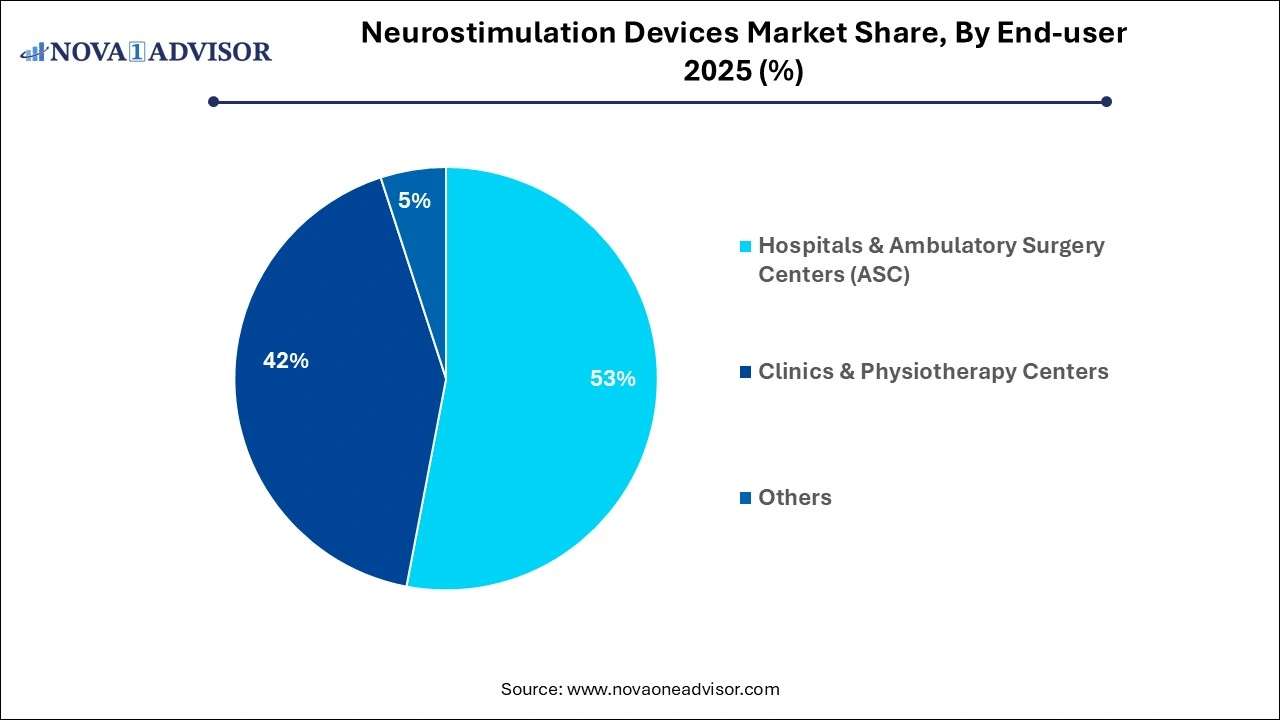
- By end use, the hospitals & ambulatory surgery centers (ASCs) segment dominated the market with the largest share of 53.0% in 2025.
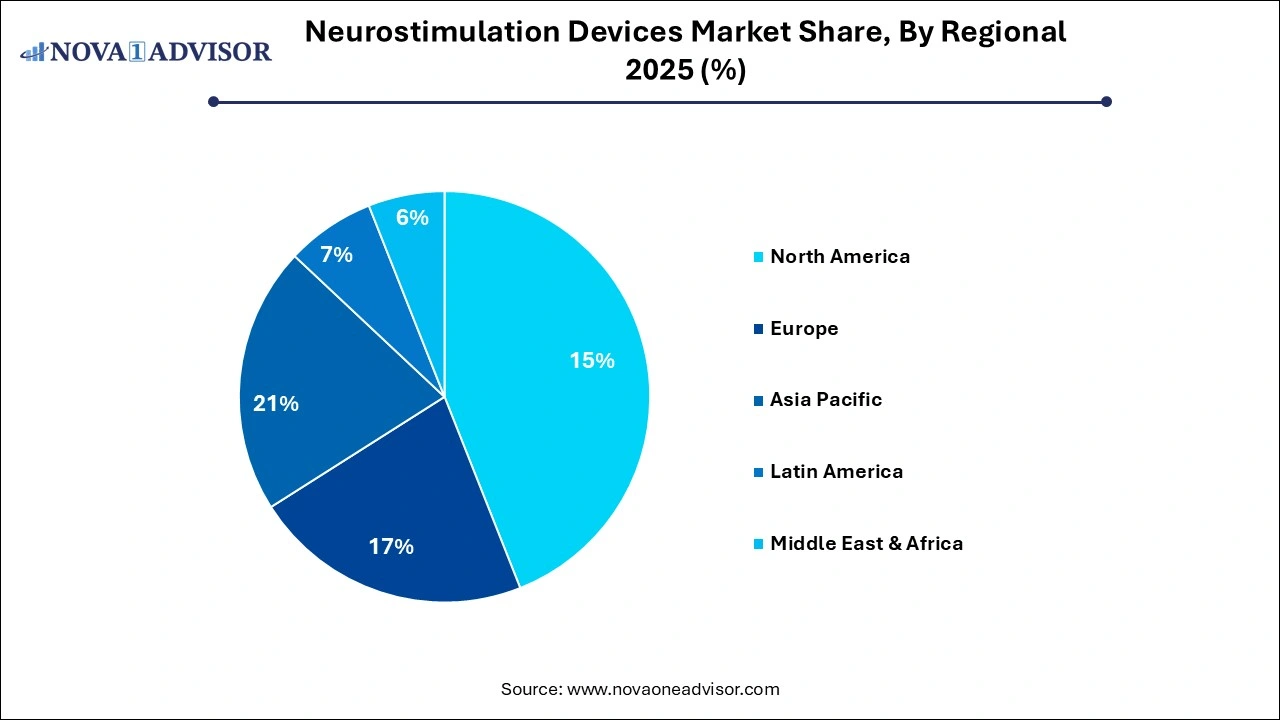
- By region, North America dominated the market with the largest share of 44.0% in 2025.
Market Overview
The global neurostimulation devices market is experiencing strong growth due to the rising prevalence of neurological disorders, continuous technological advancements, and increasing demand for drug-free treatment options. Neurostimulation devices deliver targeted electrical impulses to regulate nerve activity, making them effective for managing chronic pain, Parkinson's disease, epilepsy, depression, and other neurological conditions where conventional medications may have limited effectiveness.
Ongoing innovations such as miniaturized implantable devices, rechargeable batteries, MRI-compatible systems, wireless connectivity, and closed-loop stimulation technologies are improving treatment outcomes and patient convenience. At the same time, expanding healthcare investments, favorable reimbursement policies, and growing access to specialized neurological care are accelerating market adoption worldwide. Furthermore, ongoing clinical research is extending the application of neurostimulation to conditions including Alzheimer's disease, stroke rehabilitation, migraine, spinal cord injuries, and psychiatric disorders, creating significant opportunities for future market growth.
Market Outlook
- Market Growth Overview: The global neurostimulation devices market is expected to grow significantly between 2025 and 2035, driven by the increasing incidence of neurological disorders across the globe.
- Sustainability Trends: Sustainability trends involve a growing emphasis on eco-conscious manufacturing and energy-efficient rechargeable hardware.
- Major Investors: Major investors in the market include Medtronic, Boston Scientific Corporation, Abbott, LivaNova PLC, and Nevro Corp.
How is AI Impacting The Global Neurostimulation Devices Market?
Artificial intelligence (AI) is revolutionizing the market by transitioning it from static to dynamic, adaptive, and more personalized, closed-loop systems. Furthermore, machine learning algorithms streamline complex clinical calibration procedures, significantly reducing the manual mapping and programming time required during patient follow-up sessions.
Machine learning algorithms help identify disease progression patterns, predict symptom changes, and optimize stimulation settings for conditions such as Parkinson's disease, epilepsy, and chronic pain. This enables more precise therapy delivery, better symptom control, and improved device efficiency.
AI is also enhancing remote patient monitoring through connected neurostimulation platforms that transmit treatment data to healthcare providers. Clinicians can track patient progress, detect therapy-related issues early, and make timely adjustments without requiring frequent in-person visits, improving long-term disease management.
In addition, AI-powered imaging and brain mapping technologies support neurosurgeons in accurately positioning electrodes during implantation procedures, increasing therapeutic success while reducing surgical risks. AI is also accelerating product development by analyzing clinical data, optimizing device performance, and identifying new therapeutic applications, paving the way for smarter, more autonomous neurostimulation systems.
Neurostimulation Devices Market Report Scope
| Report Coverage | Details |
| Market Size in 2026 | USD 7.23 Billion |
| Market Size by 2035 | USD 17.47 Billion |
| Growth Rate From 2026 to 2035 | CAGR of 10.31% |
| Base Year | 2025 |
| Forecast Period | 2026 to 2035 |
| Segments Covered | Product Type, Application, End Use, Region |
| Market Analysis (Terms Used) | Value (USD Million/Billion) or (Volume/Units) |
| Regional Scope | North America; Europe; Asia Pacific; Central and South America; the Middle East and Africa |
| Key Companies Profiled | Abbott (St. Jude Medical), Medtronic, Boston Scientific Corporation, Aleva Neurotherapeutics, Nexstim, LivaNova PLC, NeuroPace Inc., Nevro Corporation, Nalu Medical, Mainstay Medical, Saluda Medical Pty Ltd, BIOTRONIK, electroCore, Inc., MicroTransponder Inc., tVNS Technologies GmbH, Laborie, and Axonics, Inc. |
Market Driver
Rising Prevalence of Neurological Disorders Fuels Market Growth
The growing incidence of neurological disorders is a major driver of the neurostimulation devices market. Increasing aging populations, longer life expectancy, and improved diagnosis have led to a higher number of patients with conditions such as Parkinson's disease, epilepsy, chronic pain, and treatment-resistant depression. As conventional drug therapies often lose effectiveness or cause adverse side effects, healthcare providers are increasingly adopting neurostimulation as an effective long-term treatment. Its ability to improve symptom control, reduce dependence on medications, and enhance patient quality of life is driving greater adoption across hospitals and specialized neurological care centers.
Market Restraint
High Treatment Costs Limit Wider Adoption
The high cost of neurostimulation devices and implantation procedures remains a key challenge for market growth. Advanced device technology, specialized surgical expertise, postoperative programming, and long-term patient management contribute to significant overall treatment expenses. Limited reimbursement coverage, inadequate healthcare infrastructure, and shortages of trained specialists in many developing countries further restrict patient access, slowing market penetration despite the proven clinical benefits of neurostimulation therapies.
Market Opportunity
Expanding Clinical Applications Create Strong Future Growth Potential
The expansion of neurostimulation into new therapeutic areas presents significant growth opportunities for the market. Beyond established uses in chronic pain, Parkinson's disease, and epilepsy, ongoing research is exploring its effectiveness in treating Alzheimer's disease, stroke rehabilitation, obsessive-compulsive disorder, chronic migraine, spinal cord injuries, obesity, and other neurological and psychiatric conditions. At the same time, innovations such as AI-enabled adaptive stimulation, minimally invasive procedures, wearable devices, and remote programming are improving treatment accessibility and clinical outcomes. These advancements are expected to broaden the patient base and support sustained market expansion in the coming years.
Segmental Insights
By Product
Why did the spinal cord stimulators segment dominate the global neurostimulation devices market?
The spinal cord stimulators segment dominated the market with a large share in 2025. The dominance of the segment can be attributed to the growing acceptance of SCS for a range of conditions and the ongoing development of innovative systems. In addition, healthcare providers and patients actively pursue safe, non-pharmacological, and opioid-sparing alternatives for the management of chronic, refractory neuropathic pain.
How did the deep brain stimulators (DBS) segment expected to hold the significantly growing global neurostimulation devices market in the coming years?
The deep brain stimulators (DBS) segment is expected to grow at the fastest CAGR over the forecast period. The growth of the segment can be credited to the growing device availability and rapid R&D efforts. The rising global prevalence of Parkinson’s disease, essential tremor, and dystonia serves as the major clinical foundation for the increased adoption of deep brain stimulation.
By Application
Why did the Parkinson's disease segment dominate the global neurostimulation devices market?
The Parkinson's disease segment dominated the market with the largest share in 2025. The dominance of the segment can be linked to the rise in adoption of innovative neurostimulation therapies and the surge in incidence of the disorder. Broader insurance protection and improved healthcare reimbursement frameworks across both developed and developing nations significantly enhance patient access to surgical implants.
How did the chronic pain segment expected to hold the significantly growing global neurostimulation devices market in the coming years?
The chronic pain segment is expected to grow at the fastest CAGR over the forecast period. The growth of the segment can be driven by the growing incidence of chronic pain conditions across the globe and the increasing need for non-pharmacological treatment solutions. Healthcare providers and patients increasingly prioritize non-addictive, pharmacological-free pain management strategies to reduce the risks associated with long-term adverse medication effects.
By End Use
Why did the hospitals & ambulatory surgery centers (ASCs) segment dominate the global neurostimulation devices market?
The hospitals & ambulatory surgery centers (ASCs) segment dominated the market with the largest share in 2025. The dominance of the segment is owing to the surge in adoption of innovative neurostimulation techniques and collaboration among major market players. Furthermore, ambulatory surgery centers (ASCs) present a cost-effective alternative to traditional hospital settings for various surgical procedures.
How did the clinics and physiotherapy centers segment expected to hold the significantly growing global neurostimulation devices market in the coming years?
The clinics and physiotherapy centers segment are expected to grow at the fastest CAGR over the forecast period. The growth of the segment is due to their improved outcomes as compared to conventional treatment options. Patients frequently favor local clinics and specialized physiotherapy centers over traditional hospital settings for routine care, post-treatment follow-ups, and rehabilitation.
By Regional
Why did the North American region account for the largest share in the global neurostimulation devices market?
North America dominated the market with the largest share in 2025. The dominance of the region can be attributed to the growing incidence of neurological disorders, such as Parkinson's disease and epilepsy. Furthermore, robust insurance frameworks and supportive regulatory policies from authorities such as the FDA improve commercialization and accelerate patient access to medical therapies.
U.S. Global Neurostimulation Devices Market Trends
The growth of the market in the country can be driven by the growing adoption of surgical expertise needed by end users along with the favorable insurance coverage. Also, minimally invasive and non-implantable neurostimulation procedures are progressively transitioning from acute hospital settings to specialized outpatient clinics.
Why did the Asia-Pacific region become the fastest-growing global neurostimulation devices market during the forecast period?
Asia Pacific is expected to grow at the fastest CAGR over the forecast period. The growth of the region can be credited to the strong presence of major local market players in developing countries such as China and India. Furthermore, specialized pain and movement disorder clinics provide rapid, highly individualized care relative to overcrowded general hospitals, hence enhancing overall patient compliance.
China Global Neurostimulation Devices Market Trends
The market in the country is growing due to increasing healthcare expenditures and robust government backing for domestic medical technology advancements. Moreover, the growth in urban development has expanded access to advanced medical services and sophisticated neuromodulation procedures within tier-1 and tier-2 city hospitals.
Key Players in the Global Neurostimulation Devices Market
- Abbott Laboratories: It offers diverse neuromodulation platforms focusing heavily on chronic pain and movement disorder management.
- Boston Scientific Corporation: Recognized for pioneering high-frequency and multi-option spinal cord stimulation systems with wide clinical adoption.
- LivaNova PLC: Prominent for vagus nerve stimulation (VNS) therapies primarily used in drug-resistant epilepsy and treatment-resistant depression.
Recent Developments
- In December 2025, the EASEE4YOU European clinical investigation, assessing an innovative neurostimulation intervention for adolescents diagnosed with pharmacoresistant focal epilepsy, has announced its expansion to the United Kingdom with the incorporation of Great Ormond Street Hospital into the trial protocol.
Segments Covered in the Report
This report forecasts revenue growth at country levels and provides an analysis of the latest industry trends in each of the sub-segments from 2021 to 2035. For this study, Nova one advisor, Inc. has neurostimulation devices market.
By Product
- Spinal Cord Stimulators
- Deep Brain Stimulators
- Sacral Nerve Stimulators
- Vagus Nerve Stimulators
- Gastric Electrical Stimulation
- Others
By Application
- Parkinson’s Disease
- Chronic Pain
- Migraine
- Epilepsy
- Tremor
- Depression
- Urinary & Fecal Incontinence
- Others
By End Use
- Hospitals & Ambulatory Surgery Centers (ASC)
- Clinics & Physiotherapy Centers
- Others
By Region
- North America
- Europe
- Asia-Pacific
- Latin America
- Middle East & Africa (MEA)
FAQ's

Proceed to Buy
Instant PDF delivery on confirmation

Neurostimulation Devices Market Size to Hit USD 17.47 Billion by 2035
 Request Customization
 Download Sample

Get a Sample of this Report
Neurostimulation Devices Market