

Ovarian Cancer Drugs Market (By Therapeutic Class; By Treatment; By End-use; By Region) - Industry Analysis, Share, Growth, Regional Outlook and Forecasts, 2026-2035
 Status Published
 Category Healthcare


Content
Ovarian Cancer Drugs Market Size and Growth 2026 to 2035
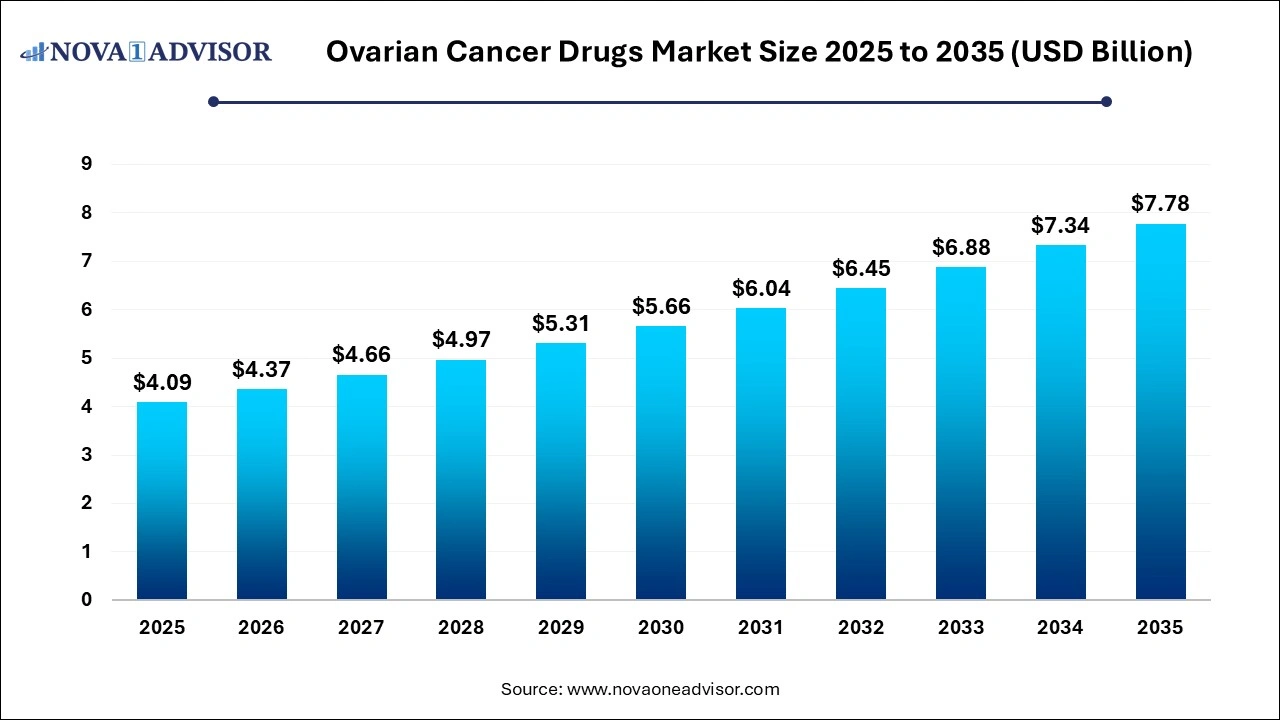
The ovarian cancer drugs market size was exhibited at USD 4.09 billion in 2025 and is projected to hit around USD 7.78 billion by 2035, growing at a CAGR of 6.64% during the forecast period 2026 to 2035.
Ovarian Cancer Drugs Market Key Takeaways:
- Among the major drug classes, PARP inhibitors contributed to the majority of the market share in 2025.
- The targeted therapy segment held the largest revenue share in 2025.
- The radiation therapy segment is expected to grow at the fastest CAGR over the forecast period.
- The hospital pharmacy segment accounted for the largest revenue share of around 46% in 2025.
- The online pharmacy material segment is estimated to register the fastest CAGR of 8.1% over the forecast period.
- North America dominated the market and accounted for the largest revenue share of 44% in 2025.
- Asia Pacific is expected to grow at the fastest CAGR of 8.0% during the forecast period.
Ovarian Cancer Drugs Market Outlook
- Market Growth Overview: The ovarian cancer drugs market is expected to grow significantly between 2026 and 2035, driven by rising targeted therapies and novel drug delivery, increasing incidence of ovarian cancer, and expansion of R&D and pharmaceutical investments.
- Sustainability Trends: Sustainability trends involve green chemistry and manufacturing, targeted therapies for better patient outcomes, and a growing focus on drug repurposing and natural compounds.
- Major Investors: Major investors in the market include AstraZeneca, F. Hoffmann-La Roche (Genentech), GSK, Merck & Co., Pfizer, and Bristol Myers Squibb.
How AI is Impaction on Ovarian Cancer Drug Market
AI and ML are accelerating the ovarian cancer drug industry by drastically reducing the time and cost of drug discovery, enabling the identification of novel therapeutic compounds, and predicting drug reactions, with some AI-developed molecules already entering clinical trials. ML algorithms are being used to analyze complex, multi-omics data (genomics, proteomics) to identify potential biomarkers for early detection and to tailor targeted therapies like PARP inhibitors to individual patient profiles. Additionally, AI is transforming clinical trials by optimizing patient cohort selection, predicting treatment responses, and identifying resistance mechanisms to standard chemotherapy. The integration of AI with imaging, known as radiomics, helps in monitoring tumor evolution and predicting recurrence.
Supply Chain Analysis of the Ovarian Cancer Drug Market
- Research & Development (R&D) and Drug Discovery: This initial stage involves target identification, molecule screening, and preclinical testing to discover novel agents, particularly focused on PARP inhibitors, ADCs, and immune checkpoint inhibitors.
Key Players: AstraZeneca PLC, F. Hoffmann-La Roche AG, AbbVie Inc. - Clinical Trials and Regulatory Approval: This stage involves Phase I-III trials to establish safety, efficacy, and dosage, followed by navigating regulatory bodies like the FDA and EMA for approval, a process now accelerated by breakthrough designations for ovarian cancer.
Key Players: AstraZeneca, Roche, ImmunoGen (acquired by AbbVie), Clovis Oncology, Sutro Biopharma, and Daiichi Sankyo. - Distribution and Logistics: Finished drugs are distributed through authorized wholesalers, specialty pharmacies, and direct hospital channels to ensure timely, cold-chain delivery for sensitive biologics.
Key Players: AstraZeneca, Roche.
Report Scope of Ovarian Cancer Drugs Market
| Report Coverage | Details |
| Market Size in 2026 | USD 4.37 Billion |
| Market Size by 2035 | USD 7.78 Billion |
| Growth Rate From 2026 to 2035 | CAGR of 6.64% |
| Base Year | 2025 |
| Forecast Period | 2026 to 2035 |
| Segments Covered | By Therapeutic Class, By Treatment, By End-use |
| Market Analysis (Terms Used) | Value (USD Million/Billion) or (Volume/Units) |
| Regional scope | North America; Europe; Asia Pacific; Latin America; MEA |
| Key Companies Profiled | AbbVie Inc.; Pfizer, Inc., AstraZeneca; F. Hoffmann-La Roche AG; Johnson & Johnson Services, Inc.; Boehringer Ingelheim International GmbH; Clovis Oncology; ImmunoGen, Inc.; Vivesto AB |
Ovarian Cancer Drugs Market Segmental Insights
By Therapeutic Class Insights
Among the major drug classes, PARP inhibitors contributed to the majority of the market share in 2025, supported by continued uptake of approved drugs and superior efficacy. The surging uptake of checkpoint inhibitors is also projected to benefit the growth of the market. Current research in ovarian cancer is focused on using novel treatments such as immunotherapy, targeted therapy, and, most importantly, combination regimens. Immuno-oncologic agents have shown promising results with improved survival and lower toxicity.
However, a single-agent response rate of PD-1/ PD-L1 molecules such as Opdivo and Keytruda for ovarian cancer treatment is less than 20.0%. Combination therapies, specifically checkpoint inhibitors, are poised to be introduced in the first-line setting to target major unmet needs, including overcoming tumor resistance, improving progression-free survival, and maintaining the quality of life.
By Treatment Insights
The targeted therapy segment held the largest revenue share in 2025. Targeted therapies are designed to specifically identify and attack cancer cells while sparing healthy cells, resulting in more effective treatment with fewer side effects. In ovarian cancer, targeted therapies aim to inhibit specific molecular targets that drive the growth of cancer cells. Bevacizumab, an angiogenesis inhibitor administered to patients with ovarian cancer as targeted therapy, is proven to shrink and slow the growth of advanced epithelial ovarian cancers.
The radiation therapy segment is expected to grow at the fastest CAGR over the forecast period. Radiation therapy utilizes high-energy X-rays to kill cancer cells. It is a painless procedure that only targets the area affected by the cancer. Radiation therapy is beneficial in treating areas where cancer has spread, either close to the primary tumor or in another organ, such as the spinal cord and brain. External beam radiation therapy and brachytherapy are the most common radiation therapy administered to women with ovarian cancer.
By End-use Insights
The hospital pharmacy segment accounted for the largest revenue share of around 46.0% in 2024. The dominance of the segment is attributed to the fact that hospital pharmacies ensure timely access to necessary drugs for patients undergoing ovarian cancer treatment, which is essential for their care. Furthermore, patients who are diagnosed and treated for ovarian cancer in hospitals have increased trust in these hospital pharmacies contributing to the growth of the segment.
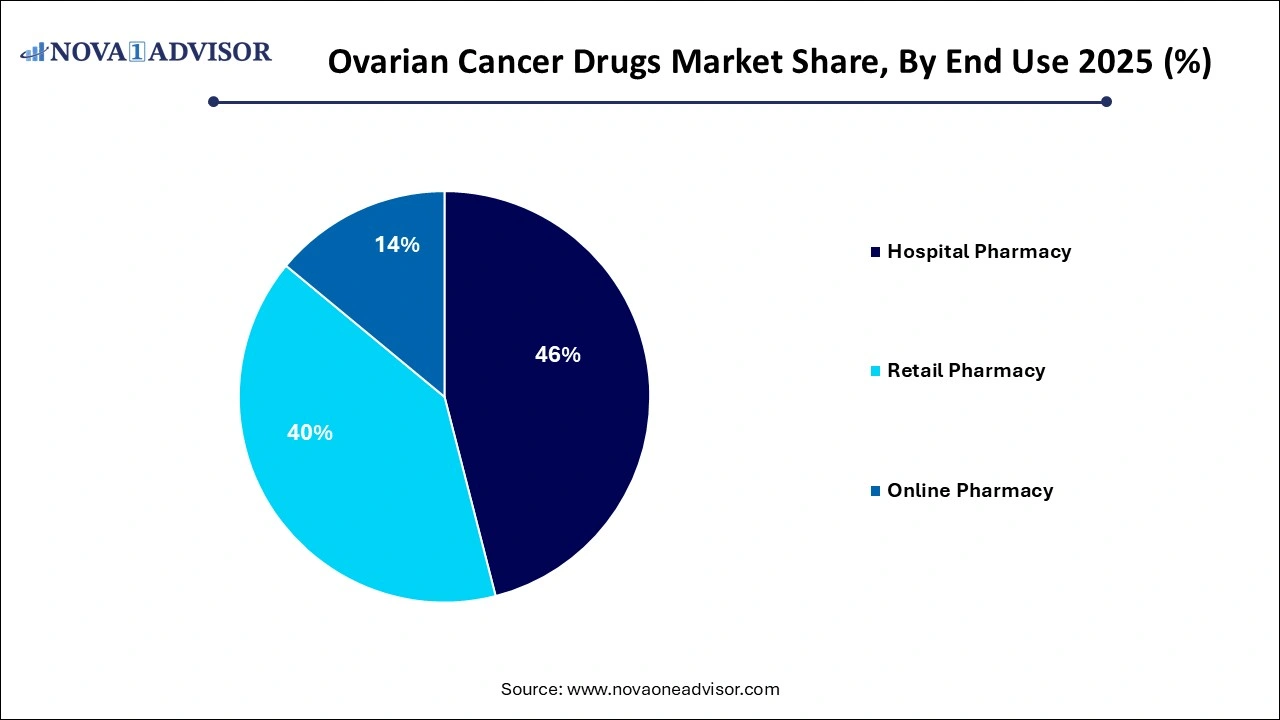
The online pharmacy material segment is estimated to register the fastest CAGR of 8.1% over the forecast period. These digital pharmacies provide convenient access to a wide range of medications, including drugs used in the treatment of ovarian cancer. Online pharmacies offer patients the convenience of ordering their prescribed medications from the comfort of their homes, eliminating the need for physical visits, therefore, attributing to the growth over the forecast period.
U.S. Ovarian Cancer Drugs Market Size and Growth 2026 to 2035
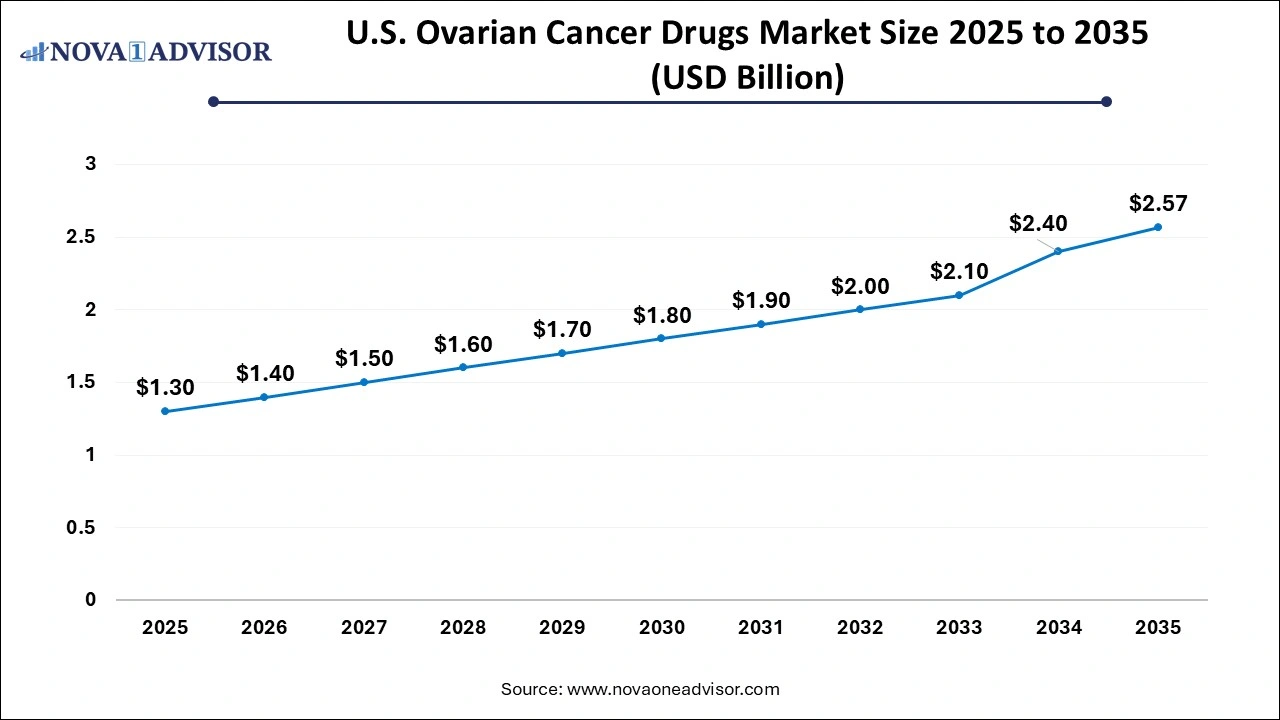
The U.S. ovarian cancer drugs market size is evaluated at USD 1.30 billion in 2025 and is projected to be worth around USD 2.57 billion by 2035, growing at a CAGR of 7.05% from 2026 to 2035.
North America dominated the market and accounted for the largest revenue share of 44% in 2025. The region has a well-developed healthcare infrastructure and advanced medical facilities, which facilitate early diagnosis and treatment of ovarian cancer. The increasing awareness among patients has led to increased screening and detection rates. Additionally, North America is home to many pharmaceutical companies, research institutions, and academic centers focusing on developing innovative cancer treatments. According to the American Cancer Society, ovarian cancer ranks fifth in cancer death among women. Additionally, it is the deadliest of all gynecologic malignancies. In 2023, 19,710 women were diagnosed with ovarian cancer, and 13,270 deaths were reported in the U.S.
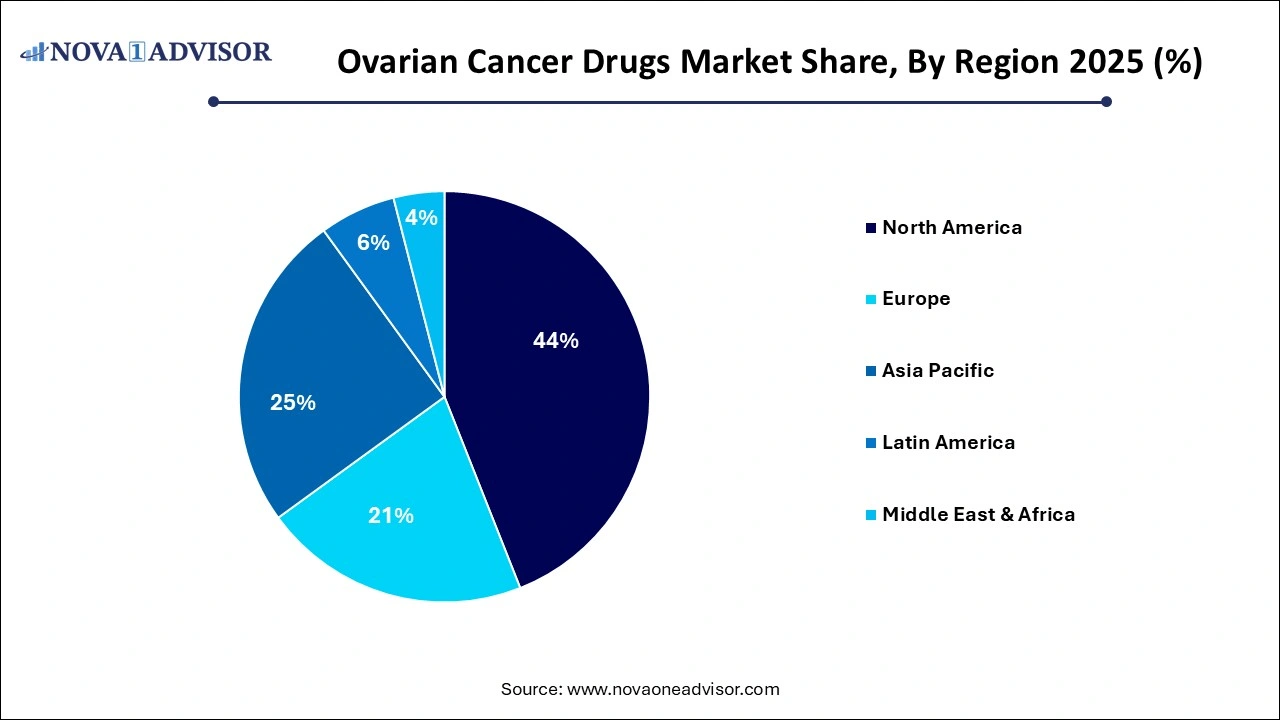 Asia Pacific is expected to grow at the fastest CAGR of 8.0% during the forecast period. The growth over the forecast period can be attributed to the large population and the increasing prevalence of ovarian cancer in Asian countries. This rising prevalence of ovarian cancer creates a substantial patient pool and drives the demand for effective treatment options, thus contributing to market growth. Furthermore, an increasing focus on healthcare infrastructure development in the Asia Pacific region fuels the demand for ovarian cancer drugs and drives the market growth.
U.S. Ovarian Cancer Drugs Market Trends
The U.S.’s rising worldwide incidence and a dominant North American market that benefits from high healthcare spending and advanced early-detection programs. While hospital pharmacies remain the primary distribution hub, the rapid expansion of online channels and genomic research is further accelerating market growth. These targeted therapies and novel combinations are setting a new standard for more effective, individualized patient outcomes.
China Ovarian Cancer Drugs Market Trends
China’s targeted PARP and angiogenesis inhibitors, which have become the gold standard for BRCA-mutated patients. Growth is heavily fueled by accelerated NMPA approvals, such as Lynparza for first-line maintenance, and strategic multinational-local partnerships that now drive 60% of market expansion. This shift toward biomarker-guided personalization is essential to meet the surging demand from an aging demographic and rising incidence rates. These advanced diagnostics and collaborative distribution models are transforming China into a global leader in high-efficacy precision oncology.
Key Players in the Ovarian Cancer Drugs Market
- AbbVie Inc.: AbbVie contributes to the cancer market by focusing on hematologic malignancies with blockbuster therapies like Imbruvica and Venclexta, targeting difficult-to-treat blood cancers.
- Pfizer, Inc.: Pfizer has established a dominant position in oncology through a broad portfolio of 24 approved medicines covering breast, genitourinary, and blood cancers.
- AstraZeneca: AstraZeneca has built a leading oncology franchise focused on precision medicine, with key products like Tagrisso for lung cancer and Lynparza for BRCA-mutated cancers.
- F. Hoffmann-La Roche AG: As a long-term leader in oncology, Roche dominates by combining its pharmaceutical prowess with diagnostic tools, delivering personalized healthcare for various cancer types.
- Johnson & Johnson Services, Inc. (Janssen): J&J contributes significantly to the oncology market by developing targeted, innovative therapies for prostate cancer and hematologic malignancies, such as Darzalex and Imbruvica.
Segments Covered in the Report
This report forecasts revenue growth at country levels and provides an analysis of the latest industry trends in each of the sub-segments from 2026 to 2035. For this study, Nova one advisor, Inc. has segmented the ovarian cancer drugs market
By Therapeutic Class
- PARP Inhibitors
- Angiogenesis Inhibitors
- PD-L1 Inhibitors
By End-use
- Hospital Pharmacy
- Retail Pharmacy
- Online Pharmacy
By Treatment
- Chemotherapy
- Radiation Therapy
- Hormonal Therapy
- Targeted Therapy & Others
By Regional
- North America
- Europe
- Asia Pacific
- Latin America
- Middle East and Africa (MEA)
FAQ's

Proceed to Buy
Instant PDF delivery on confirmation

 Request Customization
 Download Sample

Get a Sample of this Report
Ovarian Cancer Drugs Market