

Peptic Ulcer Testing Market Size, Share, Growth, Report 2026 to 2035
 Status Published
 Category Healthcare


Content
Peptic Ulcer Testing Market Size and Growth 2026 to 2035
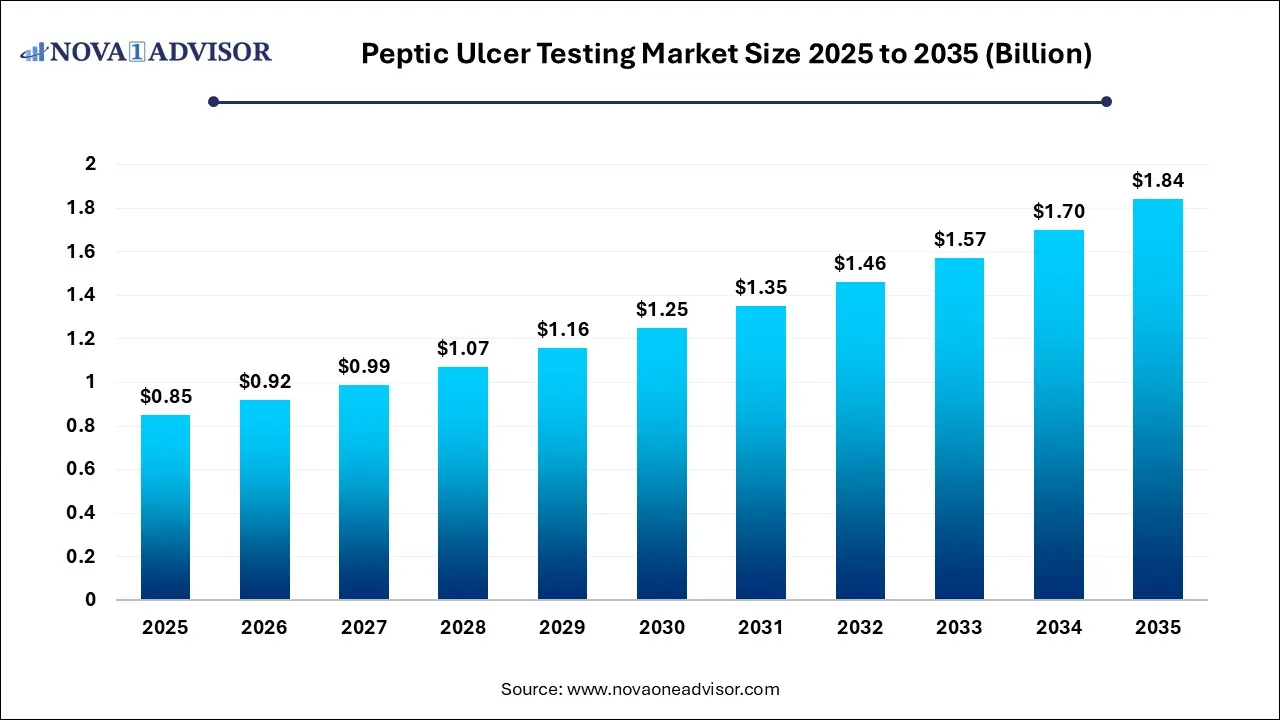
The global peptic ulcer testing market size was valued at USD 0.85 billion in 2025 and is projected to grow from USD 0.92 billion in 2026 to USD 1.84 billion by 2035, at a CAGR of 8.0% from 2026 to 2035. North America dominated the market, accounting for a revenue share of 39% in 2025.
Key Takeaway:
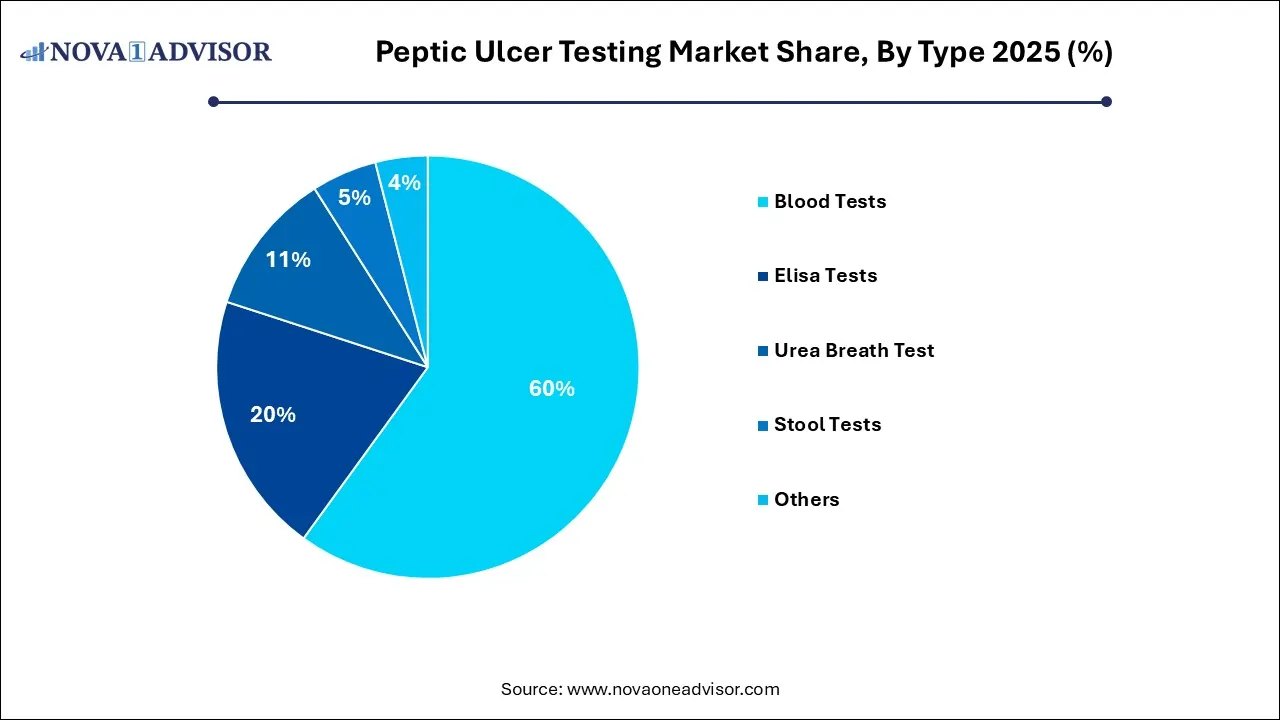
- By type, the blood tests segment dominated the market with the largest share of 60.0% in 2025.
- By type, the ELISA tests segment is expected to grow at the fastest CAGR over the forecast period.
- By application, the hospital segment dominated the market with the largest share in 2025.
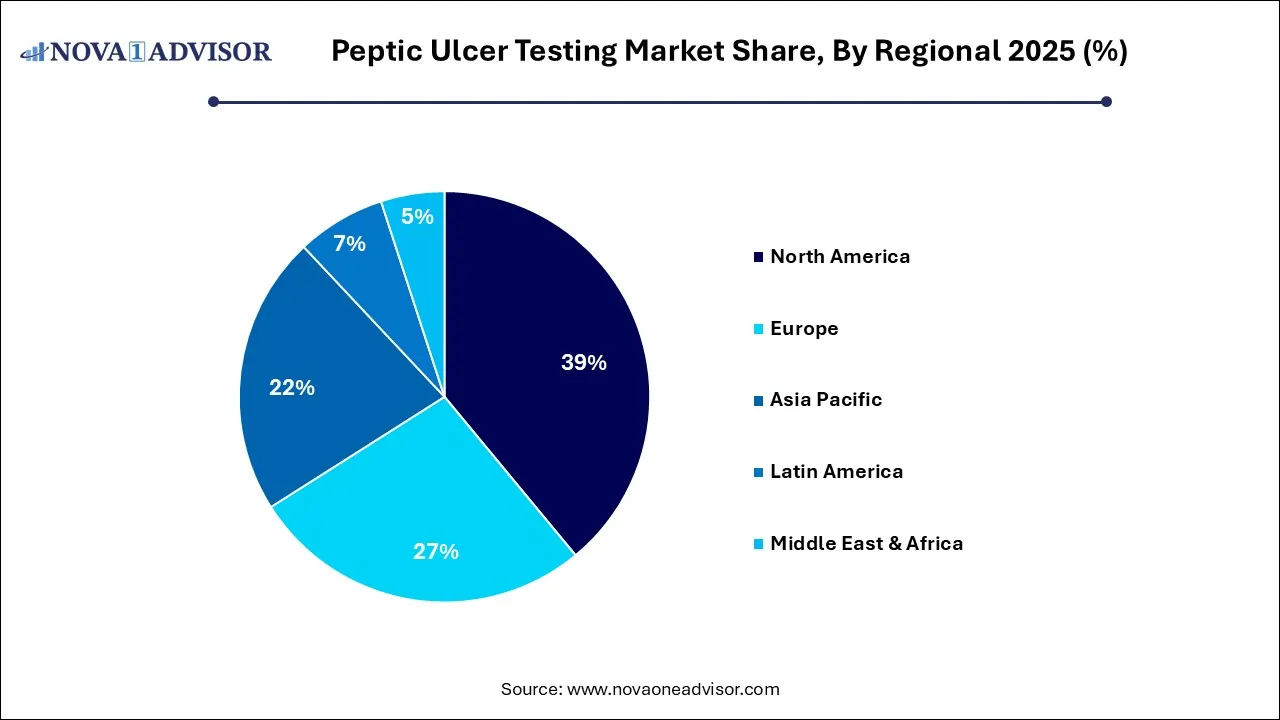
- By region, North America dominated the market with the largest share of 39.0% in 2025.
Market Overview
The global peptic ulcer testing market is experiencing steady growth due to the rising prevalence of peptic ulcer disease and Helicobacter pylori (H. pylori) infections worldwide. Early and accurate diagnosis is essential for preventing complications such as gastrointestinal bleeding, perforation, and gastric cancer while enabling timely treatment. Increasing cases linked to H. pylori infection, prolonged NSAID use, unhealthy lifestyles, smoking, and alcohol consumption continue to drive demand for reliable diagnostic solutions.
Technological advancements have significantly improved diagnostic accuracy through the adoption of urea breath tests, stool antigen tests, ELISA, molecular diagnostics, and PCR-based assays. In addition, laboratory automation, digital diagnostics, and AI-supported analysis are enhancing testing efficiency and reducing turnaround times. Growing healthcare investments, expanding preventive screening programs, rising awareness of gastrointestinal health, and improved access to diagnostic services in emerging economies are further supporting market growth. As healthcare systems increasingly embrace personalized and digital diagnostics, the peptic ulcer testing market is expected to witness sustained expansion over the forecast period.
Market Outlook
- Market Growth Overview: The global peptic ulcer testing market is expected to grow significantly between 2025 and 2035, driven by growing adoption of non-invasive tests.
- Sustainability Trends: Sustainability trends involve minimizing environmental harm and lowering overall medical costs.
- Major Investors: Major investors in the market include Becton, Dickinson and Co., Quidel Corp., Bio-Rad Laboratories, Beckman Coulter Inc., and Kibion AB.
How is AI impacting the global peptic ulcer testing market?
Artificial intelligence is revolutionizing the market by enhancing diagnostic accuracy and speeding up workflows. AI algorithms process endoscopic images and lab results in real time, allowing doctors to detect ulcers earlier. Furthermore, digital pathology platforms use artificial intelligence (AI) to scan histological sections of gastric tissue, identifying and annotating bacterial presence for pathologists.
AI is further enhancing gastrointestinal care through real-time analysis of endoscopic images, enabling faster detection of ulcers and related abnormalities with greater accuracy. In addition, AI-driven workflow automation, predictive analytics, and electronic health record integration help streamline clinical operations and improve treatment planning. As AI adoption continues to expand, integrated diagnostic platforms combining laboratory testing, imaging, and patient data are expected to deliver more personalized and efficient management of peptic ulcer disease.
Peptic Ulcer Testing Market Report Scope
| Report Coverage | Details |
| Market Size in 2026 | USD 0.92 Billion |
| Market Size by 2035 | USD 1.84 Billion |
| Growth Rate From 2026 to 2035 | CAGR of 8.0% |
| Base Year | 2025 |
| Forecast Period | 2026 to 2035 |
| Segments Covered | By Type, By Application, By Region |
| Market Analysis (Terms Used) | Value (USD Million/Billion) or (Volume/Units) |
| Regional Scope | North America; Europe; Asia Pacific; Central and South America; the Middle East and Africa |
| Key Companies Profiled | Kibion AB, Beckman Coulter Inc., Biomerieux S.A., Otsuka America Pharmaceutical, Inc., Becton, Dickinson, and Company, Quidel Corporation and Meridian Bioscience Inc. Merger & acquisition, product launch, strategic alliances |
Market Driver
Rising Prevalence of Helicobacter pylori Infection Drives Market Growth
The growing global prevalence of Helicobacter pylori (H. pylori) infection is a major driver of the peptic ulcer testing market. As the leading cause of peptic ulcer disease, chronic gastritis, and an important risk factor for gastric cancer, H. pylori requires early and accurate diagnosis for effective treatment. Increasing awareness among healthcare professionals, expanding screening programs, improved access to diagnostic services, and greater adoption of non-invasive testing methods are driving demand for peptic ulcer diagnostic solutions. Continuous advancements in rapid and accurate testing technologies further support market growth.
Market Restraint
Limitations in Diagnostic Accuracy Challenge Market Expansion
The absence of a single diagnostic test with complete accuracy remains a key restraint for the peptic ulcer testing market. Certain testing methods may produce false-positive or false-negative results due to previous infections or the use of medications such as proton pump inhibitors and antibiotics. These limitations often require multiple or repeat tests, increasing healthcare costs and delaying diagnosis. In addition, limited laboratory infrastructure and access to advanced diagnostic technologies in low-resource settings continue to restrict market adoption.
Market Opportunity
Expansion of Point-of-Care and Home-Based Testing Creates Growth Opportunities
The growing demand for convenient and decentralized healthcare is creating significant opportunities for the peptic ulcer testing market. Increasing adoption of point-of-care and home-based diagnostic solutions enables faster detection of H. pylori infections while reducing the need for hospital visits. Advances in portable diagnostic devices, smartphone-enabled health applications, and telemedicine platforms are improving patient access and follow-up care. Rising investments in primary healthcare infrastructure and preventive diagnostics, particularly in emerging economies, are expected to further accelerate market growth.
Segmental Insights
By Type
Why did the blood tests segment dominate the global peptic ulcer testing market?
The blood tests segment dominated the market with the largest share in 2025. The dominance of the segment can be attributed to the increasing Helicobacter pylori (H. pylori) infection rates and demand for the affordability of tests. In addition, blood tests offer a more cost-effective and accessible diagnostic option compared to complex procedures such as an upper endoscopy.
How did the ELISA tests segment expected to hold the significantly growing global peptic ulcer testing market in the coming years?
The ELISA tests segment is expected to grow at the fastest CAGR over the forecast period. The growth of the segment can be credited to the rapid technological innovations in assay sensitivity and cost-effectiveness compared to endoscopies. Patients favor non-invasive diagnostic modalities over invasive endoscopic procedures more. Enzyme-linked immunosorbent assay (ELISA) fecal antigen and serum antibody tests offer a patient-centric alternative, delivering rapid and reliable diagnostic outcomes.
By Application
Why did the hospital segment dominate the global peptic ulcer testing market?
The hospital segment dominated the market with the largest share in 2025. The dominance of the segment can be linked to the growing admissions for severe gastrointestinal bleeding cases and the high volume of invasive endoscopic procedures. Hospitals manage acute, life-threatening ulcer complications, such as gastrointestinal (GI) haemorrhage or viscus perforation. These critical emergencies need immediate diagnostic assessment and invasive intervention.
How did the laboratories tests segment expected to hold the significantly growing global peptic ulcer testing market in the coming years?
The laboratories segment is expected to grow at the fastest CAGR over the forecast period. The growth of the segment can be driven by increasing incidence of Helicobacter pylori (H. pylori) infections and rapid integration with innovative testing methods like ELISA and PCR. Major pharmaceutical corporations are expanding their investments in laboratory-based companion diagnostic algorithms designed to align specific ulcer eradication therapies with localized antibiotic resistance profiles.
By Regional
Why did the North American region account for the largest share in the global peptic ulcer testing market?
North America dominated the market with the largest share in 2025. The dominance of the region can be attributed to the ongoing surge of convenient at-home testing kits and the increase in the aging population in major cities. In addition, North America is relying more on direct-to-consumer, at-home diagnostic kits. Stool antigen tests and finger-stick blood tests, which require only a minimal blood sample, enable individuals to screen for ulcers efficiently and confidentially.
U.S. Global Metallic Spinal Implants Market Trends
The growth of the market in the country can be driven by extensive adoption of minimally invasive at-home tests and developing healthcare infrastructure. The U.S. diagnostics market is actively shifting toward rapid, patient-centric testing solutions. A primary example of this industry transition is the growing utilization of at-home peptic ulcer testing.
Why did the Asia-Pacific region become the fastest-growing global peptic ulcer testing market during the forecast period?
Asia Pacific is expected to grow at the fastest CAGR over the forecast period. The growth of the region can be credited to poor sanitation in emerging nations and an increasing aging population. Furthermore, individuals now benefit from enhanced access to convenient, non-invasive diagnostic procedures such as stool and urea breath tests, which largely diminish patient anxiety, leading to regional growth soon.
China Global Peptic Ulcer Testing Market Trends
The market in the country is growing due to increasing access to preventive screening and high rates of H. pylori infections. Government initiatives actively promote early, proactive diagnosis by encouraging patients to use minimally invasive diagnostics, such as urea breath tests, impacting positive market growth further.
Why did Europe hold a notable share in the global peptic ulcer testing market?
Europe is expected to grow at a notable CAGR over the forecast period. The growth of the region can be linked to the surge in use of pain relievers (NSAIDs) and the growing elderly population in major countries. Moreover, Europe, particularly nations such as Germany, France, Italy, and the United Kingdom, possesses exceptional hospital infrastructure and medical research facilities. Substantial financial investments from both public sectors and private clinics ensure that patients benefit from all these facilities.
Germany Global Peptic Ulcer Testing Market Trends
The growth of the market is boosted by increasing demand for non-invasive tests and a surge in spending on early gastrointestinal (GI) disease screening. German medical institutions benefit significantly from substantial public healthcare expenditure. This robust financial framework facilitates proactive public health campaigns, which empower patients to detect and treat ulcerations before severe complications.
Key Players in the Global Peptic Ulcer Testing Market
- Biomerica, Inc.: Known for quick and easy testing, Biomerica specializes in point-of-care tests. Point-of-care means taking the test right in a doctor's office or at home for fast results, without sending samples to a big lab.
- Beckman Coulter Inc. (a subsidiary of Danaher): They supply automated laboratory equipment. This helps big hospitals run many blood and stool samples quickly to check for ulcers.
- Bio-Rad Laboratories, Inc.: Bio-Rad provides advanced laboratory testing kits and immunoassays that detect antibodies related to H. pylori. Their tests serve hospitals and large diagnostic centers.
Recent Developments
- In September 2025, Dr. Reddy’s Laboratories announced the launch of Tegoprazan (50 mg) in the Indian market. According to the company's regulatory filing, the medication is a potassium-competitive acid blocker (P-CAB) developed to manage acid-related gastrointestinal conditions.
Segments Covered in the Report
This report forecasts revenue growth at country levels and provides an analysis of the latest industry trends in each of the sub-segments from 2021 to 2035. For this study, Nova one advisor, Inc. has peptic ulcer testing market.
By Type
- Blood Tests
- Elisa Tests
- Urea Breath Test
- Stool Tests
- Others
By Application
- Hospitals
- Laboratories
- Others
By Region
- North America
- Europe
- Asia Pacific
- Latin America
- Middle East & Africa

Proceed to Buy
Instant PDF delivery on confirmation

Peptic Ulcer Testing Market Size to Hit USD 1.84 Billion by 2035
 Request Customization
 Download Sample

Get a Sample of this Report
Peptic Ulcer Testing Market