

Platelet Rich Plasma Market (By Type; By Application; By End-use) - Global Industry Analysis, Share, Growth, Regional Outlook and Forecasts, 2026-2035
 Status Published
 Category Healthcare


Content
Platelet Rich Plasma Market Size, Share and Trends 2026 to 2035
The global platelet rich plasma market was estimated at USD 650.13 million in 2025 and is projected to reach USD 2,246.28 million by 2035, growing at a CAGR of 13.2% over the forecast period 2026-2035. Market growth is driven by rising demand for anti-aging solutions and hair restoration, which has created a surge in PRP demand; increasing injuries and chronic conditions; growing numbers of consumers and providers who prefer non-surgical alternatives to surgery; and rising awareness and high disposable incomes.
.webp "Platelet Rich Plasma Market Size 2025 to 2035")
Platelet Rich Plasma Market Key Takeaways
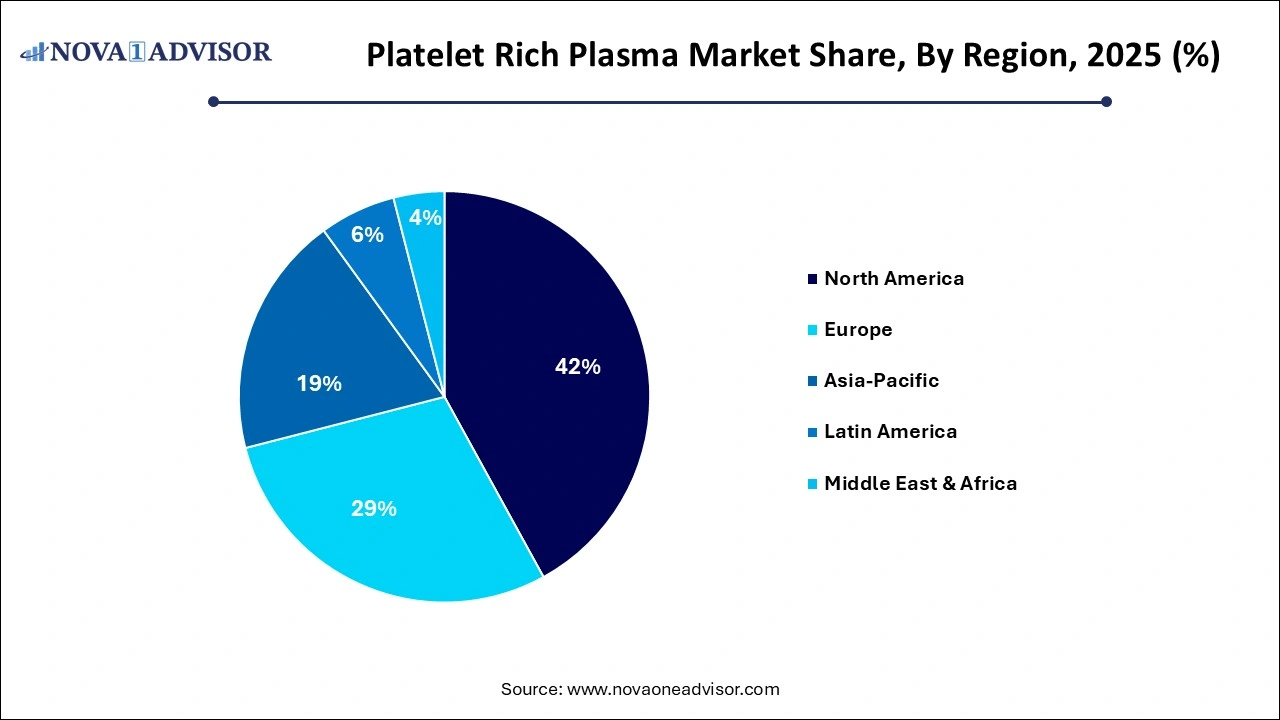
- By region, North America held the largest share of the platelet rich plasma market in 2025.
- By region, Asia Pacific is expected to experience the fastest growth between 2026 and 2035.
- By type, the pure PRP segment led the market in 2025.
- By type, the Leukocyte Rich PRP segment is expected to expand at the highest CAGR over the projected timeframe.
- By application, the orthopedics segment led the market in 2025.
- By application, the dermatology segment is the fastest growing in the platelet rich plasma market.
- By end user, the hospitals segment dominated the platelet rich plasma market in 2025.
Artificial Intelligence The Next Growth Catalyst in Platelet Rich Plasma
AI and ML are transforming the platelet-rich plasma industry by shifting it toward precision medicine through the analysis of patient-specific data, such as age and platelet count, to tailor formulations for optimal therapeutic outcomes. ML models are utilized to forecast treatment success, particularly in orthopedics and dermatology, reducing the traditional trial-and-error approach and improving clinical decisions. AI-enabled computer vision is being integrated into point-of-care and automated centrifugation systems to ensure high-quality PRP preparation by offering real-time, non-invasive quality control of platelet concentration.
Strategic Overview of the Global Platelet Rich Plasma Industry
The platelet rich plasma market involves around regenerative therapies that extract a patient’s own blood, concentrate platelets and essential growths, and re-inject them to accelerate healing. The market is driven by increasing demand for non-surgical cosmetic enhancements, such as hair restoration and facial rejuvenation, and non-invasive orthopedic treatments for musculoskeletal disorders, tendon repairs, and osteoarthritis. Key benefits include accelerated recovery times, minimal side effects due to the autologous nature of the treatment, and enhanced tissue regeneration.
Platelet Rich Plasma Market Outlook
- Market Growth Overview: The platelet rich plasma market is expected to grow significantly between 2026 and 2035, driven by the increase in chronic injuries, musculoskeletal disorders, and sports-related injuries, which is fueling demand for PRP as a healing agent, growing demand for nonsurgical aesthetics, innovation in technological advancements in prep devices, and growing recognition of regenerative medicine advancements.
- Sustainability Trends: Sustainability trends are production and materials efficiency, focusing on reducing waste and improving the energy efficiency of PRP preparation devices and kits, sustainable packaging and components shift towards environmentally friendly materials for disposable items is increasing, and increased focus on autologous treatments, a naturally derived, autologous therapy, PRP aligns with sustainable, personalized medical solutions that minimize foreign materials.
- Major Investors: Major investors in the market include Arthrex, Inc., EmCyte Corporation, Johnson & Johnson, Zimmer Biomet, Stryker Corporation, and Terumo Corporation. These players drive the market through aggressive R&D to enhance PRP preparation techniques, achieve FDA clearances, and expand applications in orthopedics, sports medicine, and aesthetics. The implementing strategic acquisitions, forming partnerships with clinics, and leveraging endorsements from athletes and celebrities to increase adoption of non-surgical, regenerative treatments.
- Startup Economy: The startup economy in the market focuses on Nuo therapeutic focuses on regenerative products for wound care with its Aurix systems, a biodynamic hematogel, Orthosera, a regenerative medicine company specializing in blood serum-based products, including bonealbumin, a serum albumin-enhanced bone substitute, and CytoVive, which develops next-generation regenerative medicine solutions, including PRP kits and Fibrin Matrix.
Platelet Rich Plasma Market Report Scope
| Report Coverage | Details |
| Market Size in 2025 | USD 735.95 Million |
| Market Size by 2035 | USD 2,246.28 Million |
| Growth Rate From 2026 to 2035 | CAGR of 13.2% |
| Base Year | 2025 |
| Forecast Period | 2026 to 2035 |
| Market Analysis (Terms Used) | Value (USD Million/Billion) or (Volume/Units) |
| Segments Covered | By Type, By Application, By End Use |
| Regional Scope | North America; Europe; Asia Pacific; Central and South America; the Middle East and Africa |
| Key Companies Profiled | Johnson & Johnson Services, Inc., Arthrex, Inc, EmCyte Corporation, Dr. PRP USA LLC. Juventix Regenerative Medical, LLC. |
Platelet Rich Plasma Market Dynamics
Drivers
Rising Incidence of Musculoskeletal and Sports Injuries
The rising incidence of musculoskeletal disorders, such as osteoarthritis and chronic tendon injuries, along with an increase in sports-related injuries, and a more individuals, ranging from professional athletes to the aging population, seek faster recovery and non-surgical alternatives to manage pain, PRP therapy has gained significant popularity. PRP works by using the patient’s own blood to accelerate healing, making it a desirable, low-risk option for tendon, ligament, and muscle strains. High-profile endorsements and the need for quicker rehabilitation to return to activity have accelerated the adoption of this therapy in sports medicine.
Booming Aesthetic and Cosmetic Demand
The individuals increasingly seek non-surgical, natural-looking anti-aging solutions. PRP, which harmeless a patient’s own blood components to stimulate collagen production and cellular rejuvenation, has become highly popular for facial skin rejuvenation, acne scar treatment, and hair restoration. The desire for minimal downtime and safer, autologous treatments has propelled the adoption of PRP over traditional fillers or surgeries.
Restraint
High Treatment Costs and Limited Reimbursement
The market growth is hindered by creating a substantial financial barrier for patients, with a single session often ranging. Because many regulatory bodies, such as the FDA in the USA, consider PRP an off-label or elective procedure, insurers often refuse to cover it, leaving patients with high out-of-pocket expenses. This lack of coverage forces the market to rely on a cash-pay model, which limits adoption to only higher-income individuals rather than broad clinical application. This financial burden discourages widespread adoption despite the therapy's demonstrated potential in orthopedics and dermatology.
Opportunities
Expansion Into Emerging Applications
The expansion of platelet rich plasma creates a significant opportunity by diversifying its patient base beyond traditional orthopedics. In dermatology, the increasing demand for non-surgical aesthetic enhancements, such as the vampire facelift and acne scar treatment, has created a high-growth, cash-pay segment that fuels demand. The PRP's adoption in new fields like dentistry for implant support and in cardiovascular surgical sites for healing has opened up fresh avenues for market penetration. This diversification is accelerated by technological advancements in PRP preparation, enabling customized formulations that improve effectiveness in specialized applications.
Development of Allogeneic PRP
The market is creating immersive opportunities by transforming it into an off-the-shelf solution. Unlike autologous PRP, which requires time-consuming blood collection and processing at the point of care, allogeneic PRP can be manufactured at scale, providing consistent platelet quality and immediate availability in emergency or clinical settings. This ready-to-use nature expands the market beyond traditional orthopedics into broader applications such as chronic refractory wound healing, particularly for patients with co-morbidities like diabetes whose own platelets are too weak for effective repair.
How Macroeconomic Variables Influence the Platelet Rich Plasma Market?
- Economic Growth and GDP: Economic growth and rising GDP generally lead to positive growth. By increasing disposable income, which allows more individuals to afford out-of-pocket, non-surgical aesthetic and orthopedic treatments. Higher economic development enables better healthcare infrastructure, enhanced awareness of advanced regenerative therapies, and increased investment in medical research, fueling the adoption of PRP in various applications.
- Inflation & Drug Pricing Pressures: It can negatively affect the growth of the platelet rich plasma market by increasing the overall cost of, and reducing consumer demand for, what are often out-of-pocket, non-insurance-covered procedures. The high cost of PRP kits and specialized medical labor, exacerbated by inflationary pressure on manufacturing and distribution, hinders widespread adoption and creates an affordability barrier for patients. While the market continues to expand due to increasing clinical awareness and demand for non-surgical treatments, these economic factors limit faster growth by constraining accessibility in price-sensitive markets.
- Exchange Rates: Exchange rate fluctuations can negatively affect international suppliers, as the increasing cost of importing high-quality centrifuge kits and specialized regenerative equipment when local currencies weaken. While the core demand for PRP therapy remains by increasing sports injuries and cosmetic procedures, adverse currency volatility can shrink profit margins for companies importing these medical devices, often compelling them to raise prices, which in turn acts as a hurdle to broader adoption.
Platelet Rich Plasma Market Segment Insights
By Type Insights
Why did the Pure PRP Segment Dominate the Platelet Rich Plasma Market in 2025?
The Pure PRP segment dominated the market, accounting for the largest share in 2025. By offering a clinically superior safety profile that minimizes patient inflammation and pain compared to leukocyte-rich alternatives. Its compatibility with standardized closed system kits allowed for seamless integration into busy outpatient workflows, ensuring consistent results. Its extreme versatility across high-growth sectors, such as dermatology and orthopedics, makes pure PRP the gold standard for clinicians seeking reliable, low-risk regenerative outcomes.
The Leukocyte Rich PRP segment is expected to grow at the fastest CAGR during the projection period, driven by offering superior clinical efficacy for chronic, refractory conditions like tendinopathies and osteoarthritis. Its high white blood cell concentration triggers a robust immune response, making it the preferred choice for complex tissue regeneration and rapid healing in sports medicine. As clinicians shift toward indication-tailored therapies, LR-PRP’s specialized role in treating stubborn injuries has driven significant adoption across high-growth orthopedic centers.
By Application Insights
How Does the Orthopedic Segment Lead the Platelet Rich Plasma Market in 2025?
The orthopedic segment led the Platelet Rich Plasma market in 2025 due to addressing the high prevalence of sports injuries and age-related conditions, such as osteoarthritis. The shift toward minimally invasive alternatives to surgery, supported by highly concentrated formulations from advanced preparation devices, has solidified clinician and patient trust. Backed by the specialized portfolios of industry giants like Arthrex and Zimmer Biomet, orthopaedics remains the primary engine for PRP market growth and clinical integration.
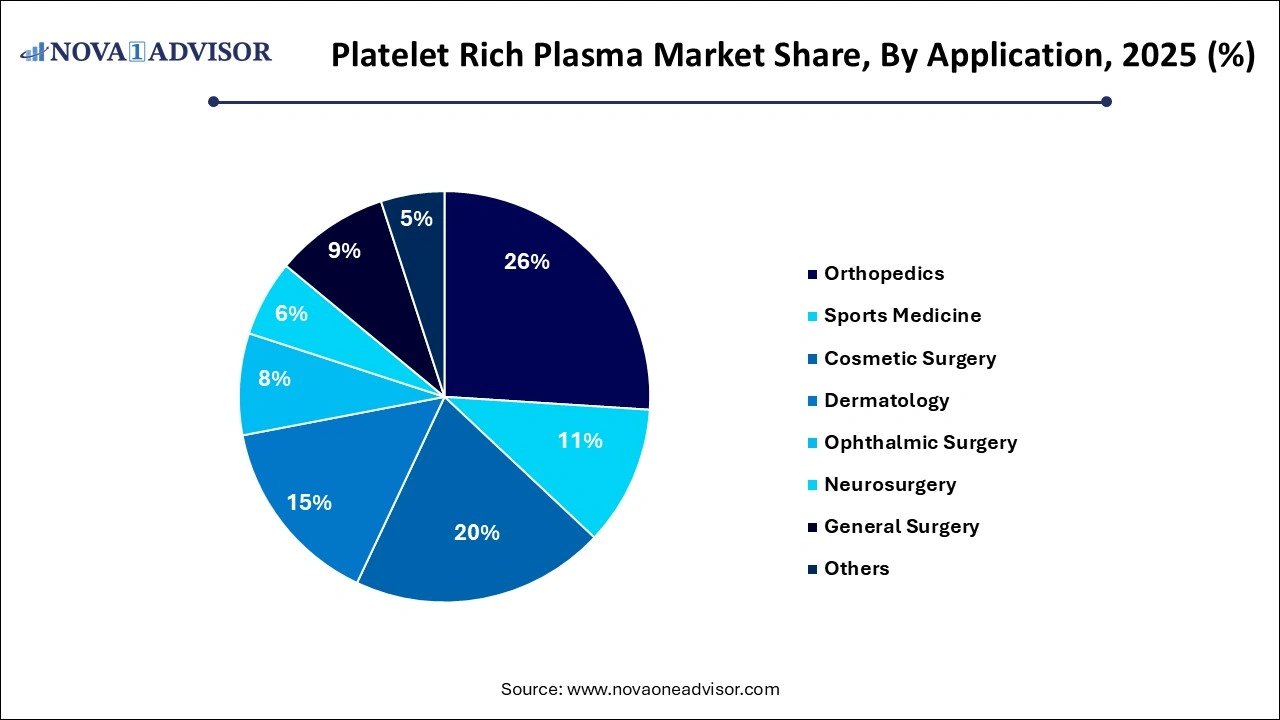
The dermatology segment is projected to grow at the highest CAGR in the coming years. This is mainly because of the massive popularity of natural rejuvenation and hair loss treatments that avoid synthetic fillers. Its high-margin, cash-pay nature makes it a lucrative staple for private practices, especially when integrated into recurring protocols like microneedling. By combining PRP with advanced modalities like lasers and skin boosters, clinics have significantly improved clinical outcomes, fueling widespread patient adoption and market growth.
By End Use Insights
How Does the Hospitals Segment Lead the Platelet Rich Plasma Market in 2025?
The hospitals segment led the platelet rich plasma market in 2025 due to leveraging high-volume infrastructure and strict clinical governance to capture the surge in chronic orthopedic and musculoskeletal cases. By integrating specialized outpatient suites into their systems, they effectively expanded their reach into high-demand cosmetic and dermatological services like hair restoration. This combination of regulatory-grade safety and clinical versatility allowed hospitals to maintain leadership over independent clinics in the rapidly evolving PRP market.
The clinics segment is projected to grow at the highest CAGR in the coming years. This is mainly because of meeting the surging demand for convenient, outpatient-centered care that avoids the complexities of large hospital systems. The integration of portable, point-of-care technology allows these facilities to offer efficient same-day treatments, drastically improving the patient experience. By focusing on high-growth niches like aesthetic dermatology and sports medicine, clinics provide targeted, non-surgical alternatives that are increasingly accessible through competitive pricing and digital outreach.
Platelet Rich Plasma Market Regional Insights
What Made North America the Dominant Region in the Platelet Rich Plasma Market?
North America maintained dominance in the platelet rich plasma market while holding the largest share in 2025. The region’s dominance is attributed to the world-class healthcare infrastructure that rapidly adopts innovative regenerative therapies. The aging population and high sports injury rates are creating sustained demand for non-surgical solutions in orthopedics and aesthetics. The favorable FDA regulatory environment and heavy R&D investment from key industry players. North America remains the primary hub for technological advancement and clinical standardisation in the PRP market.
U.S. Platelet Rich Plasma Market Trends
The U.S. is a major contributor to the market in North America due to the powerful synergy between specialized orthopaedic repair and the booming aesthetic rejuvenation sector. High-volume demand from millions of annual sports injuries, coupled with the natural appeal of autologous healing, solidified its position as a primary non-surgical alternative. Despite challenges in standardization and insurance coverage, ongoing technological refinements and strategic mergers, such as EmCyte’s recent acquisitions, continue to scale the accessibility and clinical consistency of these therapies.
What Makes Asia Pacific the Fastest-Growing Area in the Market?
Asia Pacific is expected to grow at the fastest rate in the coming years. This is due to the massive surge in aesthetic and hair restoration procedures across the region. The cost-effective medical tourism and a robust manufacturing base in China and Japan increase the availability of advanced preparation devices. As local healthcare infrastructure expands, the region is rapidly adopting these minimally invasive therapies to manage rising rates of chronic orthopedic conditions and sports injuries.
China Platelet Rich Plasma Market Trends
China is a key player in the Asia Pacific platelet rich plasma market due to the leveraging of expanded healthcare infrastructure and a surge in medical tourism for regenerative therapies. Pure PRP maintained its revenue dominance; the rise of Leukocyte-rich PRP and innovations, such as injectable scaffolds, significantly broadened the clinical application scope. With the shift towards portable, user-friendly devices, the market remains highly competitive as global leaders aggressively scale their regional presence to meet the demand in orthopedics and aesthetics.
How is the Opportunistic Rise of Europe in the Platelet Rich Plasma Market?
Europe is experiencing a strategic growth in the market due to positioning autologous therapies as the premier natural alternative to conventional drugs and invasive surgery. The surge in orthopedic injections for an aging population and high-growth aesthetic niches, such as hair restoration, has led the region to embrace regenerative medicine safety and efficacy. Advanced standardization technologies, such as Arthrex’s ACP Max, have further streamlined clinical workflows, ensuring the high-concentration, consistent results that European providers and patients now demand.
United Kingdom Platelet Rich Plasma Market Trends
The United Kingdom is leading the market in Europe due to its established efficiency in soft tissue regeneration and widespread clinical trust. The Leukocyte-Rich PRP emerged as a specific approach to addressing complex musculoskeletal and chronic joint conditions. The private sectors adoption of automated closed-system kits and the rising popularity of private sectors adoption of automated closed-system kits and the rising popularity of combination therapies in high-demand aesthetic and orthopedic practices.
Platelet Rich Plasma Market Supply Chain Analysis
- R&D and Raw Material Supply: This stage focuses on the design, development, and manufacturing of PRP separation kits, centrifugation devices, and specialized anticoagulants. The key emphasis is on maximizing platelet yield, ensuring sterility, and developing user-friendly, automated systems for point-of-care processing.
Key Players: Terumo BCT, EmCyte Corporation, Zimmer Biomet, Arthrex Inc., Regen Lab SA. - Manufacturing of PRP Kits and Devices: Companies in this stage produce single-use and reusable kits, centrifugation tubes, and specialized plasma separation equipment. Manufacturers focus on compliance with FDA/regulatory standards to ensure closed-system processing, which minimizes contamination risks and boosts procedural efficiency in clinics.
Key Players: Stryker Corporation, Johnson & Johnson, Apex Biologix, Dr. PRP USA LLC, Juventix Regenerative Medical. - Distribution and Logistics: The distribution stage involves supplying PRP systems, kits, and centrifuge machinery to hospitals, specialized clinics, and dermatology centers. Effective logistics ensure that sterile kits and medical devices are delivered promptly, enabling high-volume procedural settings to maintain stock.Key Players: Arthrex, Isto Biologics, and Celling Biosciences.
Platelet Rich Plasma Market Companies
- Johnson & Johnson Services, Inc.:Johnson & Johnson contributes through its DePuy Synthes division, focusing on developing orthobiologics, including PRP products for orthopedics, wound care, and sports medicine.
- Arthrex, Inc.: Arthrex is a major innovator in the PRP market, pioneering arthroscopy and providing advanced systems like the ACP (Autologous Conditioned Plasma) Max and the Angel® PRP system. They contribute by offering specialized, automated centrifugation systems that allow for high-concentration, customized PRP formulations in orthopedic and sports medicine applications.
- EmCyte Corporation: EmCyte contributes by developing and manufacturing advanced, FDA-cleared PRP kits, including the PurePRP® and AbsolutePRP® lines, that focus on high platelet yields.
- Dr. PRP USA LLC: Dr. PRP USA LLC provides FDA-510(k)-cleared, closed-system PRP kits designed for easy, sterile, and rapid extraction, which are heavily used in medical spas, dermatology, and orthopedic clinics. Their systems are known for achieving high platelet recovery rates and allowing clinicians to tailor the PRP concentration for both aesthetics and musculoskeletal treatments.
- Juventix Regenerative Medical, LLC.: Juventix develops innovative regenerative solutions, specifically focusing on platelet-rich plasma and its applications in orthopedics, aesthetics, and dentistry.
Recent Developments
- In September 2025, Smith+Nephew launched the CENTRIO Platelet-Rich-Plasma (PRP) System in the U.S. to treat chronic wounds using a patient-derived, customizable biodynamic hematogel. The system, featuring an 81.3% healing rate for diabetic foot ulcers in clinical trials, operates under a partnership with Nuo Therapeutics and is aimed at expanding Advanced Wound Bioactives portfolios.
- In July 2025, Smith+Nephew (LSE: SN, NYSE: SNN) expanded its Advanced Wound Bioactives portfolio with the U.S. launch of the CENTRIO Platelet-Rich-Plasma System. This launch follows an exclusive private label distribution agreement with Nuo Therapeutics Inc.
- In May 2025, APEX Biologix and Bioventus LLC announced a high-impact exclusive distribution agreement to bring the XCELL PRP® System to the broader U.S. orthopaedics and sports medicine market. This partnership merges APEX’s advanced biologic technology with the massive commercial infrastructure of Bioventus.
Exclusive Analysis on the Platelet Rich Plasma Market
The global Platelet Rich Plasma market is leveraged by rising demand for minimally invasive regenerative treatments in orthopedics, sports medicine, and cosmetic surgery. Segmentation drivers show that the orthopedics segment holds the largest share due to increased prevalence of osteoarthritis, while the dermatology/aesthetics segment grows fastest, fueled by rising disposable incomes and demand for natural-origin procedures. By product type, Pure PRP dominates due to high platelet concentration and minimal side effects, while leukocyte-rich PRP is growing rapidly in complex tendon/joint repairs. The technological advancements in point-of-care preparation devices and strategic FDA-cleared kits are accelerating adoption, particularly in North America and Asia-Pacific markets.
Segments Covered in the Report
By Type
- Pure PRP
- Leukocyte Rich PRP
- Others
By Application
- Orthopedics
- Sports Medicine
- Cosmetic Surgery
- Dermatology
- Ulcer Healing
- Venous Ulcer
- Traumatic Ulcer
- Diabetic Ulcer
- Pyoderma Gangrenosum Ulcer
- Trophic Ulcer
- Vasculitic Ulcer
- Others
- Others
- Ulcer Healing
- Ophthalmic Surgery
- Neurosurgery
- General Surgery
- Others
By End-use
- Hospitals
- Clinics
- Others
By Region
- North America:
- U.S.
- Canada
- Mexico
- Rest of North America
- South America:
- Brazil
- Argentina
- Rest of South America
- Europe:
- Western Europe
- Germany
- Italy
- France
- Netherlands
- Spain
- Portugal
- Belgium
- Ireland
- UK
- Iceland
- Switzerland
- Poland
- Rest of Western Europe
- Eastern Europe
- Austria
- Russia & Belarus
- Türkiye
- Albania
- Rest of Eastern Europe
- Asia Pacific:
- China
- Taiwan
- India
- Japan
- Australia and New Zealand,
- ASEAN Countries (Singapore, Malaysia)
- South Korea
- Rest of APAC
- MEA:
- GCC Countries
- Saudi Arabia
- United Arab Emirates (UAE)
- Qatar
- Kuwait
- Oman
- Bahrain
- South Africa
- Egypt
- Rest of MEA

Proceed to Buy
Instant PDF delivery on confirmation

 Request Customization
 Download Sample

Get a Sample of this Report
Platelet Rich Plasma Market