

Smart Inhaler Market Size, Share, and Trends 2026 to 2035
 Status Published
 Category Healthcare


Content
Smart Inhaler Market Size and Growth 2026 to 2035
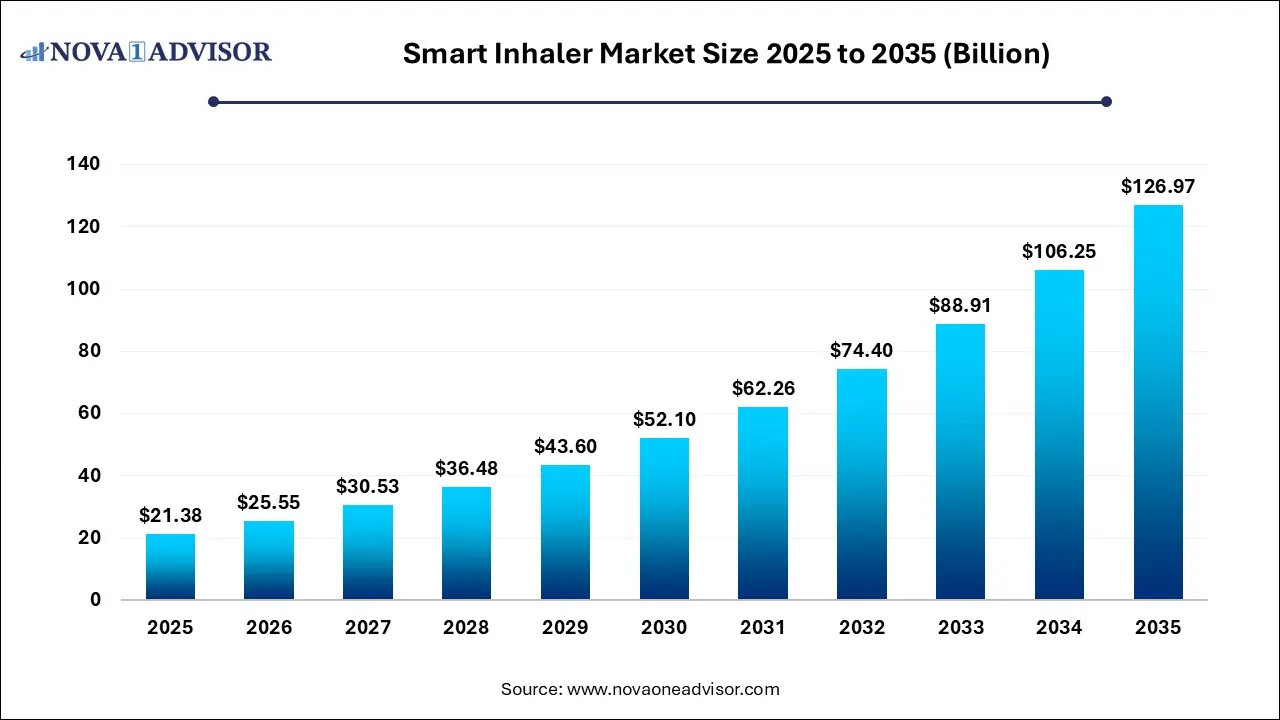
The global smart inhaler market size was valued at USD 21.38 billion in 2025 and is projected to grow from USD 25.55 billion in 2026 to USD 126.97 billion by 2035, at a CAGR of 19.5% from 2026 to 2035. North America dominated the market, accounting for a revenue share of 45.0% in 2025.
Key Takeaway:
- By type, the metered dose inhalers (MDIs) segment dominated the market with the largest share in 2025.
- By type, the dry powdered inhalers (DPIs) segment is expected to grow at the fastest CAGR over the forecast period.
- By indication, the chronic obstructive pulmonary disease (COPD) segment dominated the market with the largest share in 2025.
- By distribution channel, the hospital pharmacies segment dominated the market with the largest share in 2025.
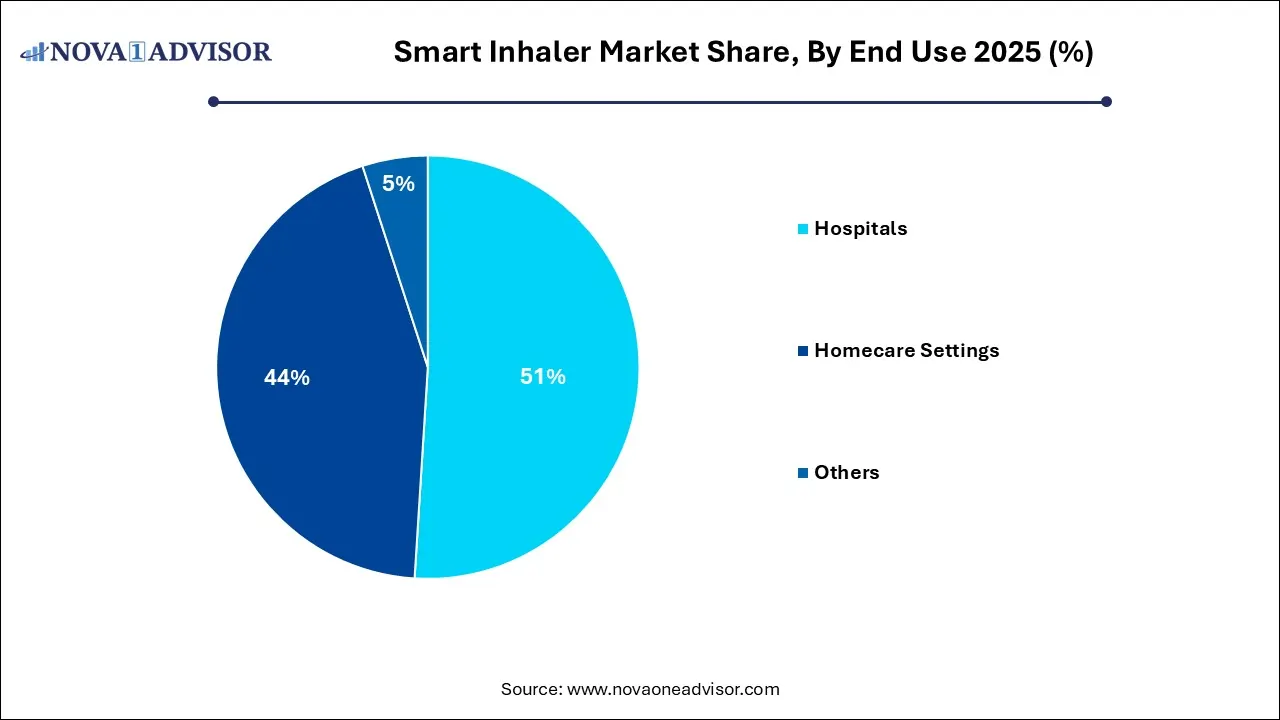
- By end use, the hospitals segment dominated the market with the largest share of 51.0% in 2025.
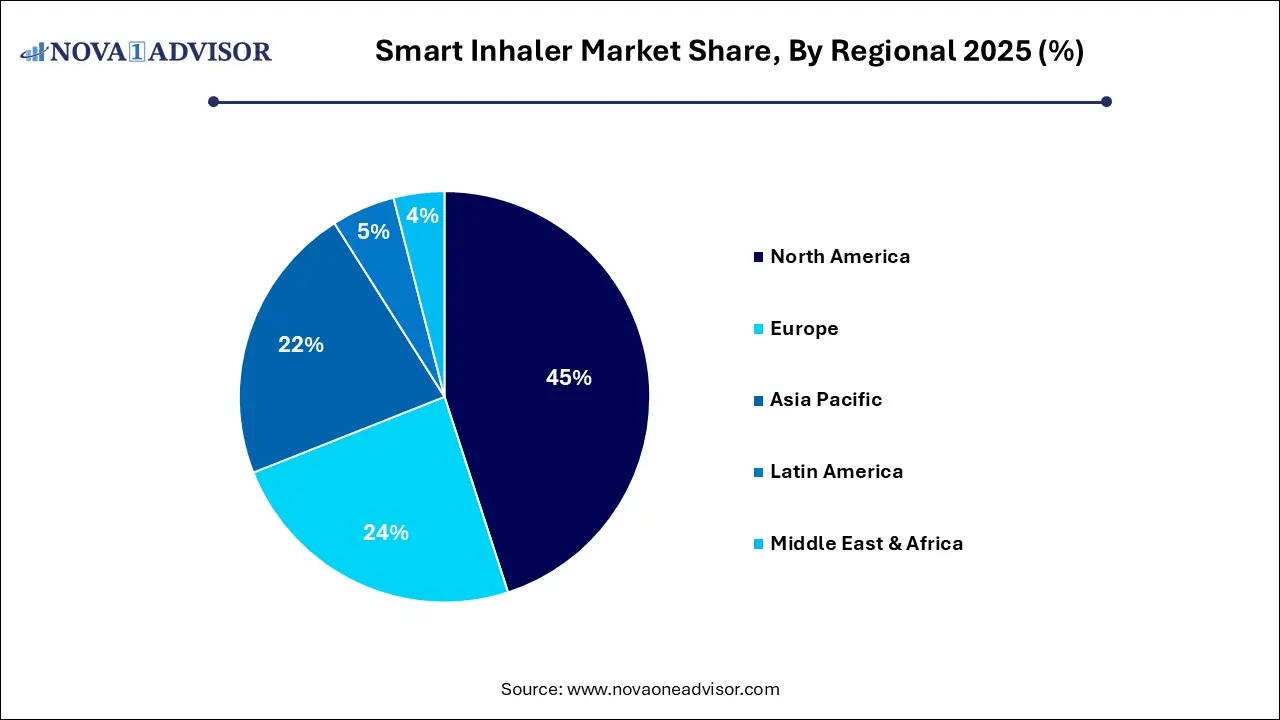
- By region, North America dominated the market with the largest share of 45.0% in 2025.
Market Overview
The global smart inhaler market is witnessing rapid growth as digital healthcare transforms respiratory disease management. Smart inhalers integrate traditional inhalers with sensors, Bluetooth connectivity, mobile applications, and cloud-based analytics to improve medication adherence, monitor inhalation technique, and provide real-time health insights. These connected devices help address poor treatment compliance, a major challenge in managing asthma and chronic obstructive pulmonary disease (COPD).
Rising prevalence of respiratory disorders, increasing adoption of remote patient monitoring, and growing demand for personalized healthcare are driving market expansion. Healthcare providers are leveraging smart inhalers to track patient adherence, optimize treatment plans, and reduce hospitalizations through proactive disease management. At the same time, partnerships between pharmaceutical companies and digital health technology providers are accelerating innovation, with AI-powered analytics, predictive monitoring, and cloud-based platforms enhancing device capabilities. Supported by favorable digital health initiatives, expanding smartphone usage, and increasing awareness of self-care, the smart inhaler market is expected to maintain strong growth over the coming years.
Market Outlook
- Market Growth Overview: The global smart inhaler market is expected to grow significantly between 2025 and 2035, driven by increasing adoption of digital solutions in the healthcare industry.
- Sustainability Trends: Sustainability trends involve the integration of reusable smart sensors with traditional inhalers and focus on value-based care.
- Major Investors: Major investors in the market include Teva Pharmaceutical Industries, AstraZeneca, GlaxoSmithKline (GSK), Boehringer Ingelheim, and Novartis AG.
How is AI impacting the global smart inhaler market?
Artificial intelligence is transforming the market by revolutionizing conventional devices into proactive respiratory care tools and by integrating hardware sensors with machine learning. Furthermore, AI algorithms process a patient's historical usage patterns and symptoms to give tailored coaching and customized treatment plans.
AI also improves patient engagement through virtual health assistants that provide medication reminders, inhaler technique guidance, and personalized disease management support. In addition, pharmaceutical companies use AI to analyze real-world data from connected inhalers, helping improve drug development, evaluate treatment effectiveness, and support precision medicine initiatives. As AI capabilities continue to evolve, smart inhalers are expected to deliver increasingly personalized recommendations, enhancing patient outcomes while reducing healthcare costs.
smart inhaler market Report Scope
| Report Coverage | Details |
| Market Size in 2026 | USD 25.55 Billion |
| Market Size by 2035 | USD 126.97 Billion |
| Growth Rate From 2026 to 2035 | CAGR of 19.5% |
| Base Year | 2025 |
| Forecast Period | 2026 to 2035 |
| Segments Covered | Type, Indication, Distribution Channel, End use, and Region |
| Market Analysis (Terms Used) | Value (USD Million/Billion) or (Volume/Units) |
| Regional Scope | North America; Europe; Asia Pacific; Central and South America; the Middle East and Africa |
| Key Companies Profiled | Presspart Verwaltungs GmbH; Personal Air Quality Systems Pvt Ltd; COHERO Health Inc. (AptarGroup, Inc.); Cognita Labs; Adherium; Amiko Digital Health Limited; Teva Pharmaceuticals Industries Ltd; Propeller Health (ResMed); Novartis AG; Pneuma Respiratory Inc.; 3M; AireHealth, Inc.; FindAir Sp. z o.o |
Market Driver
Increasing Prevalence of Chronic Respiratory Diseases Fuels Market Growth
The growing incidence of asthma, COPD, and other chronic respiratory disorders is a key driver of the smart inhaler market. Factors such as rising air pollution, smoking, urbanization, and aging populations are increasing the demand for effective long-term respiratory disease management. Smart inhalers improve medication adherence through automated reminders, dose tracking, and real-time monitoring, helping reduce hospitalizations and improve patient outcomes. As healthcare systems increasingly adopt preventive and digital healthcare solutions, the demand for connected inhalers continues to rise.
Market Restraint
High Costs and Limited Reimbursement Hamper Adoption
The high cost of smart inhalers compared to conventional inhalers remains a major challenge for market growth. Advanced features such as electronic sensors, wireless connectivity, cloud platforms, and mobile applications increase device costs, making them less affordable in price-sensitive markets. In addition, limited reimbursement policies, data privacy concerns, and integration challenges with existing healthcare systems continue to restrict widespread adoption, particularly in developing economies.
Market Opportunity
Growing Adoption of Remote Patient Monitoring Creates New Opportunities
The increasing use of telemedicine and remote patient monitoring is creating significant growth opportunities for the smart inhaler market. Connected inhalers enable healthcare providers to remotely track medication adherence, inhaler usage, and patient health status, supporting proactive disease management. Rising investments in digital healthcare infrastructure, expanding smartphone penetration, and the integration of AI-driven analytics are expected to further accelerate the adoption of smart inhalers, particularly in emerging markets.
Segmental Insights
By Type
Why did the metered dose inhalers (MDIs) segment dominate the global smart inhaler market?
The metered dose inhalers (MDIs) segment dominated the market with the largest share in 2025. The dominance of the segment can be attributed to the extensive clinical availability, ease of use, and affordability in treating chronic respiratory diseases such as chronic obstructive pulmonary disease (COPD). In addition, smart metered-dose inhalers (MDIs) provide digital reminders and monitor usage data, which clinical evidence demonstrates reduces emergency room visits and hospitalizations.
How did the dry powdered inhalers (DPIs) segment expected to hold the significantly growing global smart inhaler market in the coming years?
The dry powdered inhalers (DPIs) segment is expected to grow at the fastest CAGR over the forecast period. The growth of the segment can be credited to the increasing concerns over the environmental effect of inhaler devices that use chlorofluorocarbons as propellants. Because the smart DPI is breath-actuated, medication is released exclusively upon inhalation, which minimizes the probability of administration errors.
By Indication
Why did the chronic obstructive pulmonary disease (COPD) segment dominate the global smart inhaler market?
The chronic obstructive pulmonary disease (COPD) segment dominated the market with the largest share in 2025. The dominance of the segment can be linked to the growing exposure to air pollution and tobacco along with the demand for real-time medication tracking. Chronic Obstructive Pulmonary Disease (COPD) is a progressive respiratory pathology that mainly affects the geriatric demographic.
How did the asthma segment expected to hold the significantly growing global smart inhaler market in the coming years?
The asthma segment is expected to grow at the fastest CAGR over the forecast period. The growth of the segment can be driven by a rapid surge in pollution, a sudden spike in asthma cases, and new digital tools. Moreover, managing asthma needs continuous, long-term therapeutic intervention. Digital inhalers monitor real-world use of data, allowing healthcare providers to accurately assess patient adherence to prescribed treatment regimens.
By Distribution Channel
Why did the hospital pharmacies segment dominate the global smart inhaler market?
The hospital pharmacies segment dominated the market with the largest share in 2025. The dominance of the segment is owing to the ongoing innovations in facility infrastructure and access to expert guidance. Hospitals use respiratory specialists and healthcare professionals expertly trained to instruct patients on operating new, advanced monitoring devices.
How did the online pharmacies segment expected to hold the significantly growing global smart inhaler market in the coming years?
The online pharmacies segment is expected to grow at the fastest CAGR over the forecast period. The growth of the segment is due to the surge of telemedicine over remote patient care and extensive smartphone adoption globally. Digital healthcare platforms empower patients to independently research, compare costs, and procure medical devices, such as smart metered-dose inhalers and standalone sensors for convenient home delivery.
By End Use
Why did the hospitals segment dominate the global smart inhaler market?
The hospitals segment dominated the market with the largest share in 2025. The dominance of the segment can be attributed to the growing demand to manage COPD and asthma along with high patient volume in the hospitals. Furthermore, hospitals employ clinical professionals who provide patients with detailed demonstrations on operating smart medical devices.
How did the home care settings segment expected to hold the significantly growing global smart inhaler market in the coming years?
The home care settings segment is expected to grow at the fastest CAGR over the projected period. The growth of the segment can be credited to the rise in telehealth and an ongoing push to lower overall high hospital costs. The widespread adoption of telehealth consultations has significantly optimized the process for patients to digitally transmit their smart-inhaler data.
By Regional
Why did the North American region account for the largest share in the global smart inhaler market?
North America dominated the market with the largest share in 2025. The dominance of the region can be attributed to the strong healthcare spending and extensive smartphone penetration across the major countries. Government bodies and insurance providers offer financial incentives and reimbursement frameworks to physicians and patients who use connected health technologies.
U.S. Global Smart Inhaler Market Trends
The growth of the market in the country can be driven by an ongoing push towards digital health technologies and supportive government policies. Also, major U.S. medical and pharmaceutical organizations are increasingly collaborating to integrate digital connectivity directly into widely used inhaler devices.
Why did the Asia-Pacific region become the fastest-growing global smart inhaler market during the forecast period?
Asia Pacific is expected to grow at the fastest CAGR over the forecast period. The growth of the region can be credited to the increasing pollution levels and surge in disposable incomes in emerging economies. Furthermore, public health initiatives and supportive reimbursement frameworks, particularly within Australia, China, and Japan, are propelling the integration of connected, IoT-based medical technologies, leading to regional growth soon.
China Global Smart Inhaler Market Trends
The market in the country is growing due to an extensive respiratory disease burden and severe air pollution in the major cities. The expansion of middle-class disposable income has heightened consumer readiness to invest premium capital in proactive, outcome-oriented preventive healthcare services.
Key Players in the Global Smart Inhaler Market
- Teva Pharmaceutical Industries: A major drug maker that focuses on "drug-device combination therapies. " They build smart sensors and connectivity directly into their own brand-name inhalers.
- AptarGroup (including Cohero Health): They provide digital connected devices, smart nebulizers, and cloud platforms that help patients and doctors track lung function and medication adherence.
- GlaxoSmithKline (GSK) & AstraZeneca: These global pharmaceutical giants are combining their well-known respiratory medicines with digital delivery mechanisms and in-house smart solutions.
Recent Developments
- In June 2026, Lupin Limited has formed a strategic alliance with Laboratorios ERN, S.A. to introduce Luforbec (beclometasone/formoterol) 100/6 to the Spanish market. This fixed-dose pressurized metered-dose inhaler (pMDI) is specifically indicated for the therapeutic management of adult asthma and chronic obstructive pulmonary disease (COPD).
Segments Covered in the Report
This report forecasts revenue growth at country levels and provides an analysis of the latest industry trends in each of the sub-segments from 2021 to 2035. For this study, Nova one advisor, Inc. has smart inhaler market.
By Type
- Dry Powdered Inhalers (DPIs)
- Metered Dose Inhalers (MDIs)
By Indication
- Asthma
- COPD
- Others
By Distribution Channel
- Hospital Pharmacies
- Retail Pharmacies
- Online Pharmacies
By End Use
- Hospitals
- Homecare Settings
- Others
By Region
- North America
- Europe
- Asia Pacific
- Latin America
- Middle East & Africa

Proceed to Buy
Instant PDF delivery on confirmation

 Request Customization
 Download Sample

Get a Sample of this Report
Smart Inhaler Market