

Surgical Sealants and Adhesives Market Size, Share, Growth, Report 2026 to 2035
 Status Published
 Category Healthcare


Content
Surgical Sealants & Adhesives Market Summary
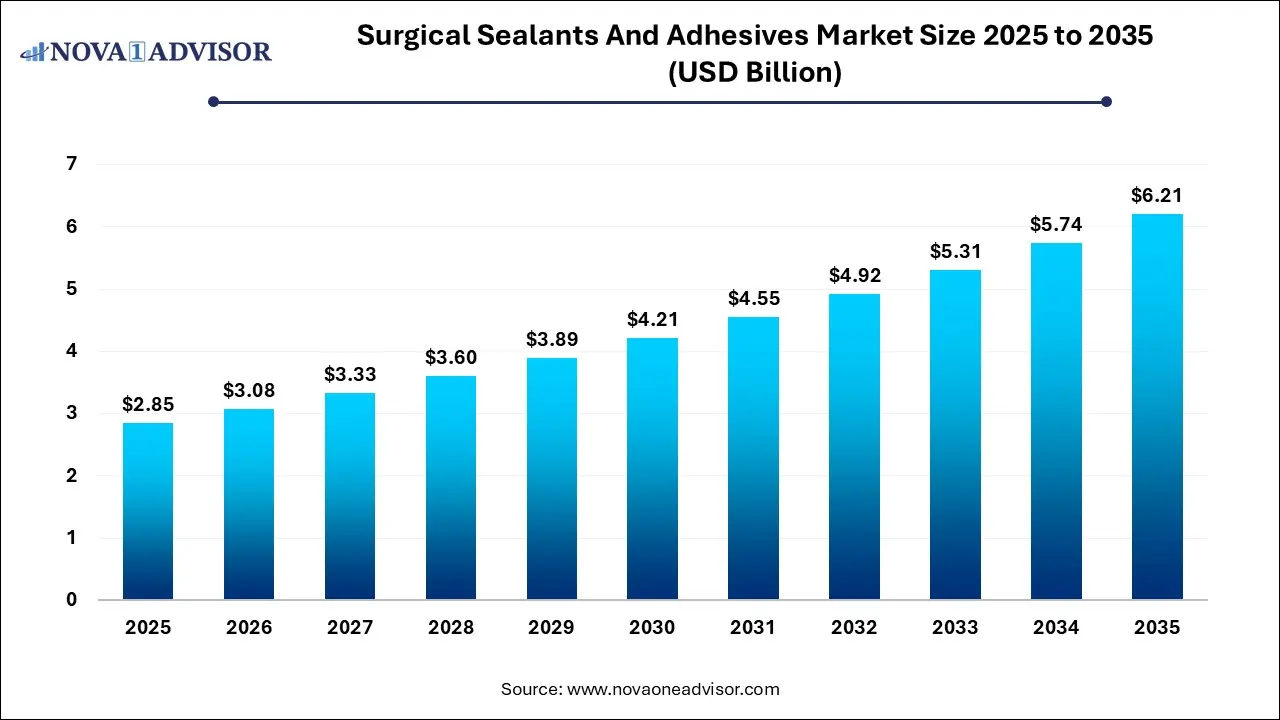
The global surgical sealants and adhesives market size was estimated at USD 2.85 billion in 2025 and is projected to hit around USD 6.21 billion by 2035, growing at a CAGR of 8.1% during the forecast period from 2026 to 2035.
Market Overview
The surgical sealants & adhesives market has become an integral part of modern surgical care as healthcare providers increasingly focus on improving procedural efficiency, reducing postoperative complications, and accelerating patient recovery. Surgical sealants and adhesives are specialized biomaterials used during surgeries to bind tissues, prevent fluid leakage, manage bleeding, and support wound closure. Unlike traditional sutures and staples, these products provide enhanced sealing properties while minimizing tissue trauma and improving cosmetic outcomes.
The growing prevalence of chronic diseases, rising geriatric population, and increasing number of surgical interventions worldwide are major factors fueling market demand. Cardiovascular diseases, orthopedic disorders, neurological conditions, and cancer surgeries have significantly increased the need for advanced tissue management solutions. In addition, the growing popularity of minimally invasive procedures has accelerated the adoption of surgical sealants because these procedures require precision-based closure methods that reduce operating time and postoperative complications.
The market is also benefiting from advancements in biomaterials and regenerative medicine. Manufacturers are investing heavily in the development of bio-compatible, biodegradable, and infection-resistant sealants that improve healing outcomes. For instance, fibrin-based sealants are increasingly used in cardiovascular and neurological surgeries because of their excellent biocompatibility and hemostatic properties. Similarly, polymeric hydrogels are gaining popularity for tissue engineering applications due to their flexibility and moisture-retention capabilities.
Hospitals and ambulatory surgical centers are increasingly adopting advanced surgical adhesives to reduce hospitalization duration and improve patient satisfaction. The emphasis on enhanced recovery after surgery (ERAS) protocols has further contributed to the growing utilization of these products. Emerging economies are also experiencing increasing adoption due to expanding healthcare infrastructure and rising awareness regarding advanced surgical technologies.
The competitive landscape of the market is characterized by strategic collaborations, product approvals, mergers, and continuous research activities. Major medical device and biotechnology companies are focusing on next-generation surgical adhesives with improved strength, reduced toxicity, and multifunctional capabilities. Innovations involving antimicrobial coatings, bioactive components, and AI-assisted surgical integration are expected to define the future trajectory of the market.
Market Outlook
- Market Growth Overview: The global surgical sealants and adhesives market is expected to grow significantly between 2025 and 2035, driven by the surging in surgical procedures, shift to sutureless wound closure, and the rapid expansion of minimally invasive surgeries.
- Sustainability Trends: Sustainability trends involve the rise of biodegradable and bioresorbable adhesives, a shift toward natural and biological sealants, and green manufacturing and a lower environmental footprint.
- Major Investors: Major investors in the market include Johnson & Johnson, Baxter International Inc., Becton, Dickinson and Company (BD), Medtronic plc, and Advanced Medical Solutions Group plc.
How is AI Transforming the Surgical Sealants & Adhesives Market
Artificial intelligence is playing an increasingly important role in transforming surgical practices and influencing the development and application of surgical sealants & adhesives. AI technologies are helping surgeons improve procedural precision, optimize adhesive selection, and predict postoperative outcomes. The integration of AI into surgical workflows is improving efficiency while reducing complications associated with tissue closure and wound healing.
One of the most impactful applications of AI is in robotic-assisted surgeries. AI-enabled robotic systems can analyze tissue characteristics in real time and guide surgeons in selecting appropriate sealants or adhesives during procedures. For example, during cardiovascular surgeries, AI systems can identify areas vulnerable to leakage or bleeding and recommend optimal sealant application patterns. This improves surgical precision and reduces the risk of postoperative complications.
AI is also enhancing product development within the market. Manufacturers are utilizing machine learning algorithms to analyze biomaterial performance, degradation rates, and tissue compatibility. These insights accelerate research and development activities while helping companies design advanced adhesives with customized healing properties. Predictive analytics can evaluate how specific formulations interact with different tissue types, thereby improving product safety and effectiveness.
Another major area of AI transformation is postoperative wound management. AI-powered imaging systems can monitor wound healing progression and detect early signs of infection or leakage. Smart surgical adhesives embedded with biosensors may eventually provide real-time feedback regarding tissue healing and inflammation levels. Such innovations could significantly improve patient outcomes while reducing hospital readmissions.
Furthermore, AI-driven data analysis supports hospital procurement decisions by identifying the most effective products for particular surgical specialties. Hospitals increasingly rely on data-driven evidence to optimize surgical outcomes and reduce operational costs. As digital healthcare adoption expands globally, AI integration is expected to become a critical competitive differentiator in the surgical sealants & adhesives market.
Surgical Sealants And Adhesives Market Report Scope
| Report Coverage | Details |
| Market Size in 2026 | USD 3.08 Billion |
| Market Size by 2035 | USD 6.21 Billion |
| Growth Rate From 2026 to 2035 | CAGR of 8.1% |
| Base Year | 2025 |
| Forecast Period | 2026 to 2035 |
| Segments Covered | Type, Indication, Application, Region |
| Market Analysis (Terms Used) | Value (USD Million/Billion) or (Volume/Units) |
| Regional Scope | North America; Europe; Asia Pacific; Central and South America; the Middle East and Africa |
| Key Companies Profiled | Johnson & Johnson (Ethicon); Artivion, Inc (CryoLife, Inc.); C.R. Bard, Inc. (BD); Medtronic; B. Braun SE; Mallinckrodt; Cardinal Health; Baxter; Integra LifeSciences Corporation; Stryker |
Segmental Insights
By Type
How did the natural/biological sealants and adhesives segment dominate the Global Surgical Sealants and Adhesives market?
The natural/biological sealants and adhesives segment is driven by mimicking natural blood coagulation and actively facilitating cell regeneration; these fibrin and collagen-based matrices significantly minimize post-operative inflammation while accelerating tissue repair. Its ability to naturally degrade in vitro eliminates the clinical risks and secondary procedures associated with traditional sutures, staples, or synthetic adhesives.
How did the synthetic and semi-synthetic adhesives and sealants segment expect to hold the fastest-growing Global Surgical Sealants and Adhesives market in the coming years?
The synthetic and semi-synthetic adhesives and sealants segment is driven by the rapid commercial adoption of synthetic surgical sealants, which is heavily propelled by their high-speed curing times, superior mechanical strength, and immediate structural support within dynamic cardiovascular and orthopaedic environments. The integration can significantly optimize operating room efficiency, reduce closure times, and elevate post-operative patient recovery.
By Indication
How did the tissue sealing segment dominate the Global Surgical Sealants and Adhesives market?
The tissue sealing segment is driven by the ability to optimize post-operative patient outcomes, drastically minimize internal fluid leaks, and reduce surgical blood loss. As healthcare systems experience rising global surgical volumes across trauma, elective, and sports-related specialities, the clinical demand for rapid, high-strength wound closure solutions continues to escalate.
How did the tissue engineering segment expect to hold the fastest-growing Global Surgical Sealants and Adhesives market in the coming years?
The tissue engineering segment is driven by the accelerating demand for regenerative therapies across orthopaedic, trauma, and reconstructive specialities is a significant clinical shift toward highly advanced tissue-engineered sealants. By utilizing highly elastic, biocompatible biomaterials that seamlessly integrate into dynamic physiological environments, these innovative formulations effectively restore natural tissue function rather than providing basic wound closure.
By Application
How did the general surgery segment dominate the Global Surgical Sealants and Adhesives market?
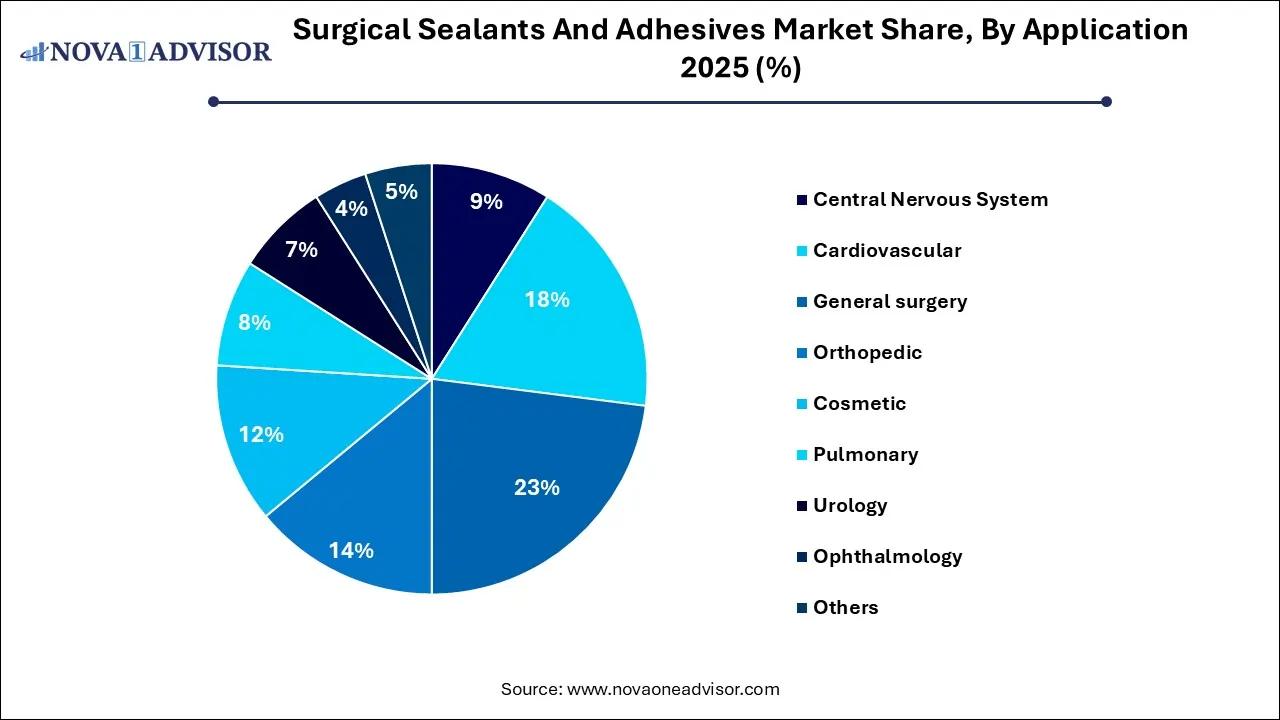
The general surgery segment is driven by the rising clinical burden of colorectal complications and gastrointestinal malignancies, where advanced sealants are vital to prevent dangerous post-operative air and fluid leaks. The general surgery is highly accessible and widely practiced by certified clinicians worldwide; the integration of these high-efficacy sealing agents ensures consistent market adoption, optimized operating room throughput, and elevated standards of patient recovery.
How did the cosmetic surgery segment expect to hold the fastest-growing Global Surgical Sealants and Adhesives market in the coming years?
The cosmetic surgery segment is driven by the rapidly transforming field of plastic and reconstructive surgery, by delivering superior cosmetic and structural results. By eliminating the permanent cross-marks or hatch marks associated with traditional stitches and staples, these advanced sealants provide a smooth, visually appealing finish for skin grafts and incisions. The integration of these high-strength, low-bulk adhesives optimizes clinical throughput, enhances patient compliance, and establishes a highly efficient, scar-minimizing paradigm for modern aesthetic and restorative procedures.
By Regional
How did the North America region account for the largest share in the Global Surgical Sealants and Adhesives market?
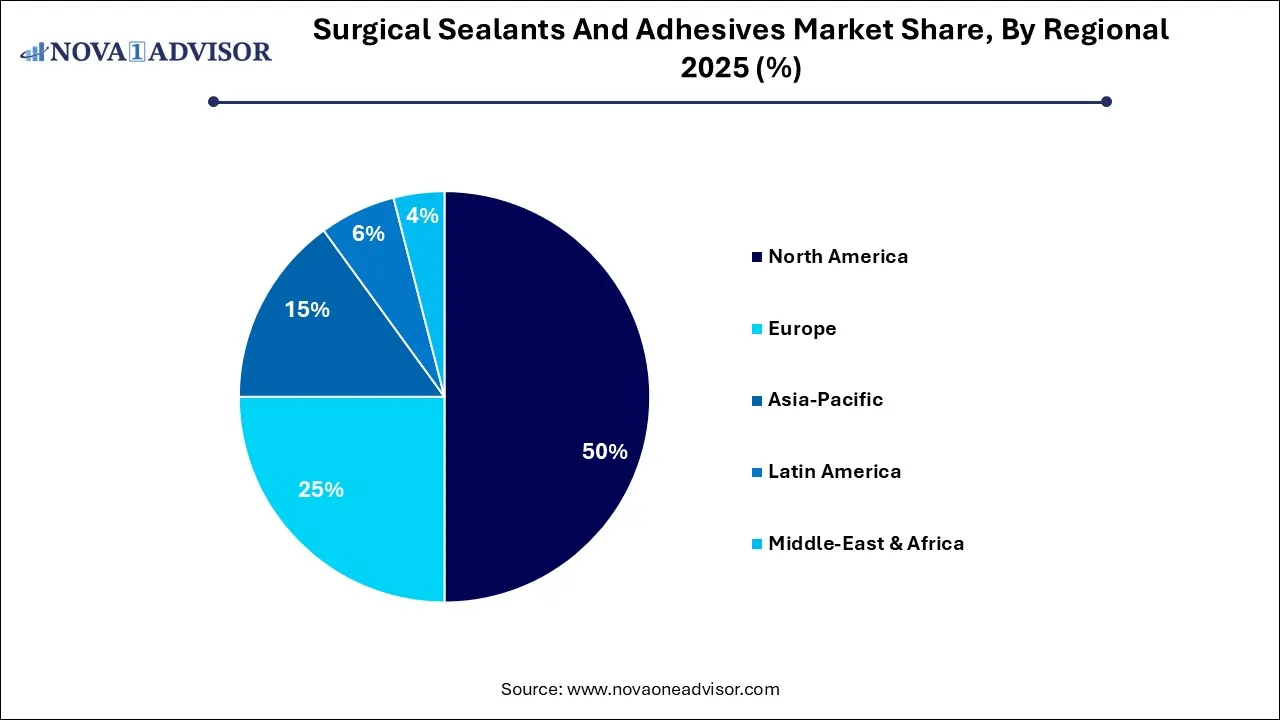
North America is driven by the convergence of an aging population and high prevalence of complex chronic diseases, and an unprecedented volume of surgical interventions across the U.S. healthcare landscape. To optimize these outcomes, healthcare networks are rapidly shifting toward advanced tissue sealants that reduce operating times and eliminate postoperative leakages during complex, minimally invasive surgeries.
U.S. Global Surgical Sealants and Adhesives Market Trends
The U.S. is escalating global surgery volumes across minimally invasive, orthopaedic, and cosmetic specialties. The rapid tissue-bonding capability significantly minimizes overall operative time, reduces physical trauma to the patient, and promotes accelerated physiological recovery. The integration of these high-efficiency sealing modalities allows healthcare networks to shorten hospital stays, optimize inpatient bed turnover, and elevate long-term postoperative patient outcomes.
How did the Asia-Pacific region become the fastest-growing Global Surgical Sealants and Adhesives Market during the forecast period?
Asia Pacific’s hubs for cost-effective medical device manufacturing ensure a highly resilient supply chain, lower operational costs, and rapid market penetration for next-generation tissue sealing technologies. The clinical transition is accelerating by massive government investments, such as India’s health ministry initiatives upgrading district hospitals, which dramatically improve localized access to advanced surgical care.
China Global Surgical Sealants and Adhesives Market Trends
China’s adoption of highly biocompatible low-toxicity biological sealants allows Chinese healthcare networks to drastically reduce surgical side infections, accelerate patient recovery timelines, and lead regional advancements in minimally invasive operative care. The significant transition toward bio-based sealants, establishing natural fibrin and gelatine-based glues as the country’s largest revenue, regenerating adhesive segments.
How Did Europe Hold A Notable Share in the Global Surgical Sealants and Adhesives Market?
Europe’s strategic convergence of an escalating aging population, advanced healthcare infrastructure, and high clinical expenditures is cementing Europe as a premier market for next-generation tissue sealants. To support a rising volume of complex cardiovascular and orthopaedic procedures, the region’s healthcare networks are rapidly prioritizing biocompatible adhesive over legacy sutures to minimize postoperative bleeding and shorten operating time.
Germany Global Surgical Sealants and Adhesives Market Trends
Germany’s industry-wide transition toward bio-based, natural adhesives, such as fibrin and collagen matrices. The strong clinical performance for minimally invasive surgeries, where these fast-acting formulations rapidly establish haemostasis, eliminate the need for traditional sutures, and minimize post-operative complications.
Key Players in the Global Surgical Sealants and Adhesives Market
- Johnson & Johnson
Johnson & Johnson dominates the global market with its extensive line of biosurgical products like EVICEL, SURGICEL, and EVARREST. Their comprehensive offerings provide surgeons with reliable, absorbable solutions for tissue sealing and rapid emergency hemostasis across a variety of surgical procedures.
- Baxter International, Inc.
Baxter International contributes to the market by producing clinically proven active sealants and hemostatic matrices, including FLOSSEAL and TISSEEL. These advanced biological products are specifically designed to stop bleeding quickly, adhere to friable tissue, and promote effective wound closure in complex surgical environments.
- C.R. Bard, Inc.
Now operating as part of Becton Dickinson (BD), C.R. Bard leverages decades of surgical innovation to address complex internal and external wound management. Their specialized product lines enhance procedural efficacy and support surgeons by providing durable, technologically advanced materials for tissue reconstruction and sealing.
Segments Covered in the Report
This report forecasts revenue growth at country levels and provides an analysis of the latest industry trends in each of the sub-segments from 2021 to 2035. For this study, Nova one advisor, Inc. has surgical sealants and adhesives market.
By Type
- Natural or Biological Adhesives and Sealants
-
- Fibrin Sealants
- Collagen Based Adhesives
- Gelatin Based Adhesives
- Synthetic and Semi Synthetic Adhesives and Sealants
-
- Cyanoacrylates
- Polymeric Hydrogels
- Urethane Based Adhesives
By Indication
- Tissue Sealing
- Tissue Engineering
- Hemostasis
By Application
- Central Nervous System
- Cardiovascular
- General surgery
- Orthopedic
- Cosmetic
- Pulmonary
- Urology
- Ophthalmology
- Others
By Region
- North America
- Europe
- Asia Pacific
- Latin America
- Middle East and Africa (MEA)
FAQ's

Proceed to Buy
Instant PDF delivery on confirmation

Surgical Sealants And Adhesives Market Size to Hit USD 6.21 Billion by 2035
 Request Customization
 Download Sample

Get a Sample of this Report
Surgical Sealants and Adhesives Market