

Trocars Market Size, Share, and Trends 2026 to 2035
 Status Published
 Category Healthcare


Content
Trocars Market Size and Growth 2026 to 2035
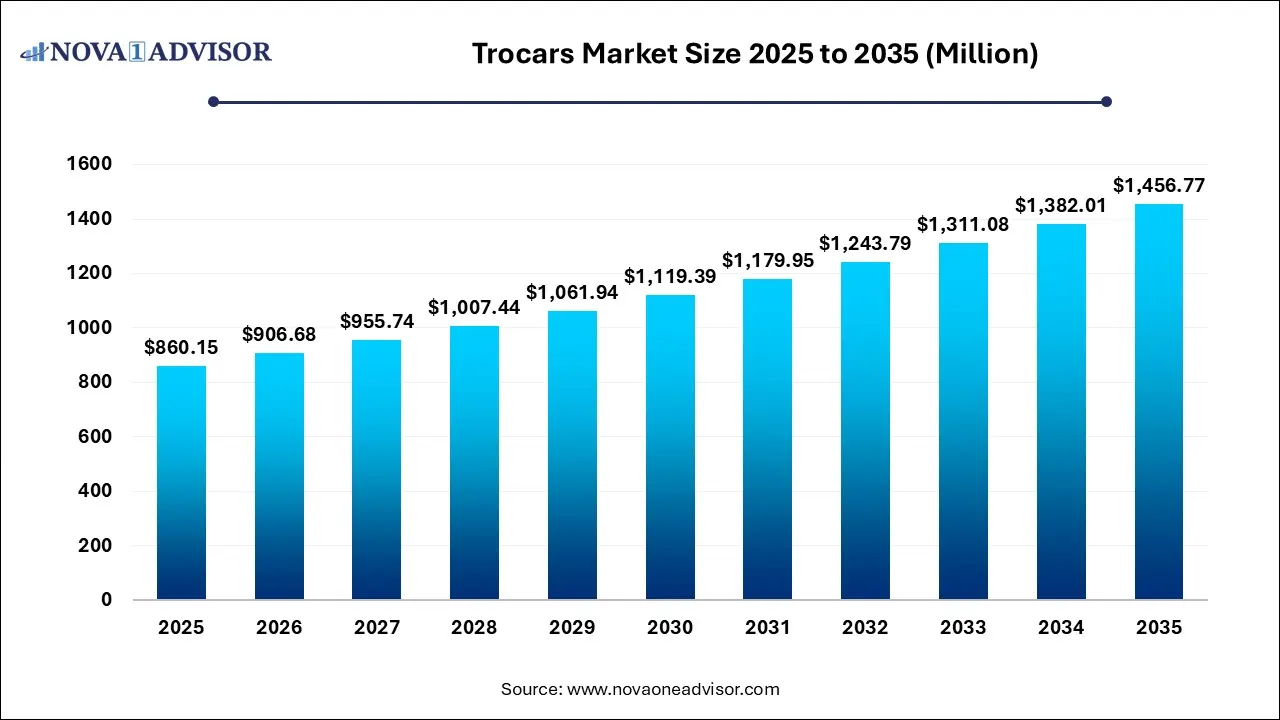
The global trocars market size was estimated at USD 860.15 million in 2025 and is projected to hit around USD 1,456.77 million by 2035, growing at a CAGR of 5.41% during the forecast period from 2026 to 2035.
Key Takeaway:
- By product, the disposable trocars segment dominated the market and accounted for the largest revenue share in 2025.
- By product, the reusable trocars segment is anticipated to witness the fastest CAGR over the forecast period.
- By tip, the bladeless trocars segment dominated the market and accounted for the largest revenue share in 2025.
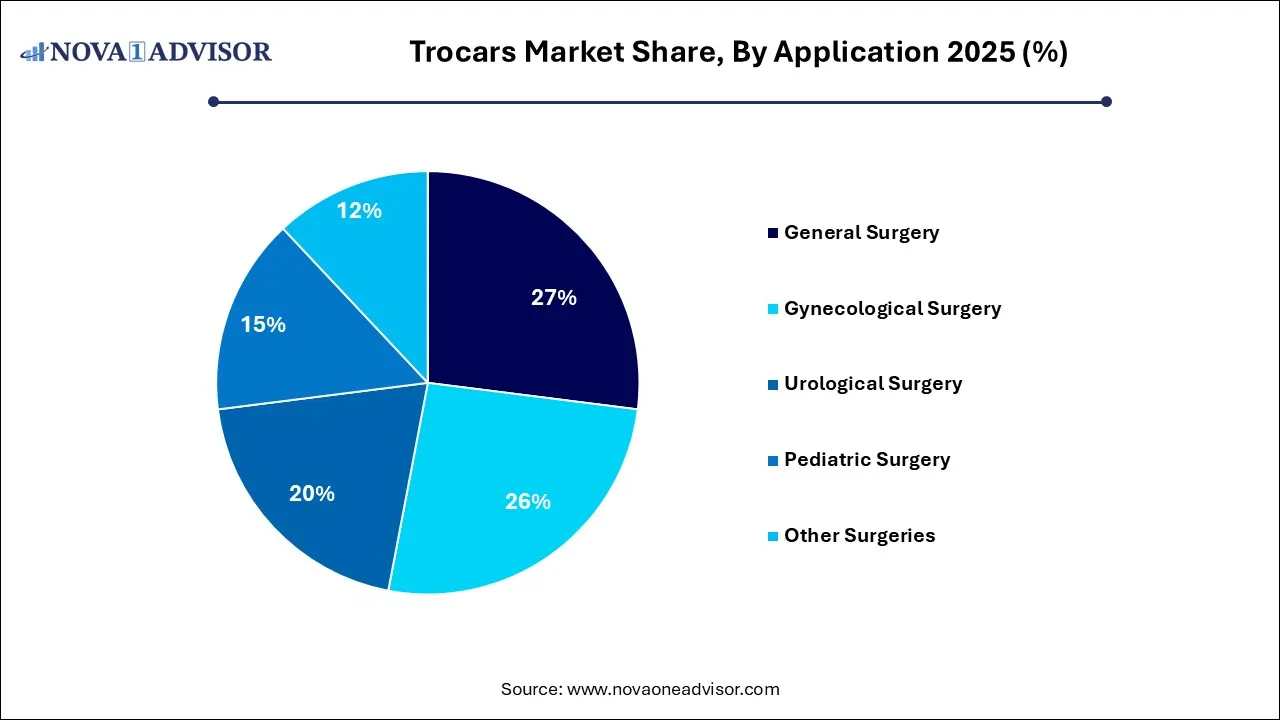
- By application, the general surgery segment dominated the market and accounted for the largest revenue share in 2025.
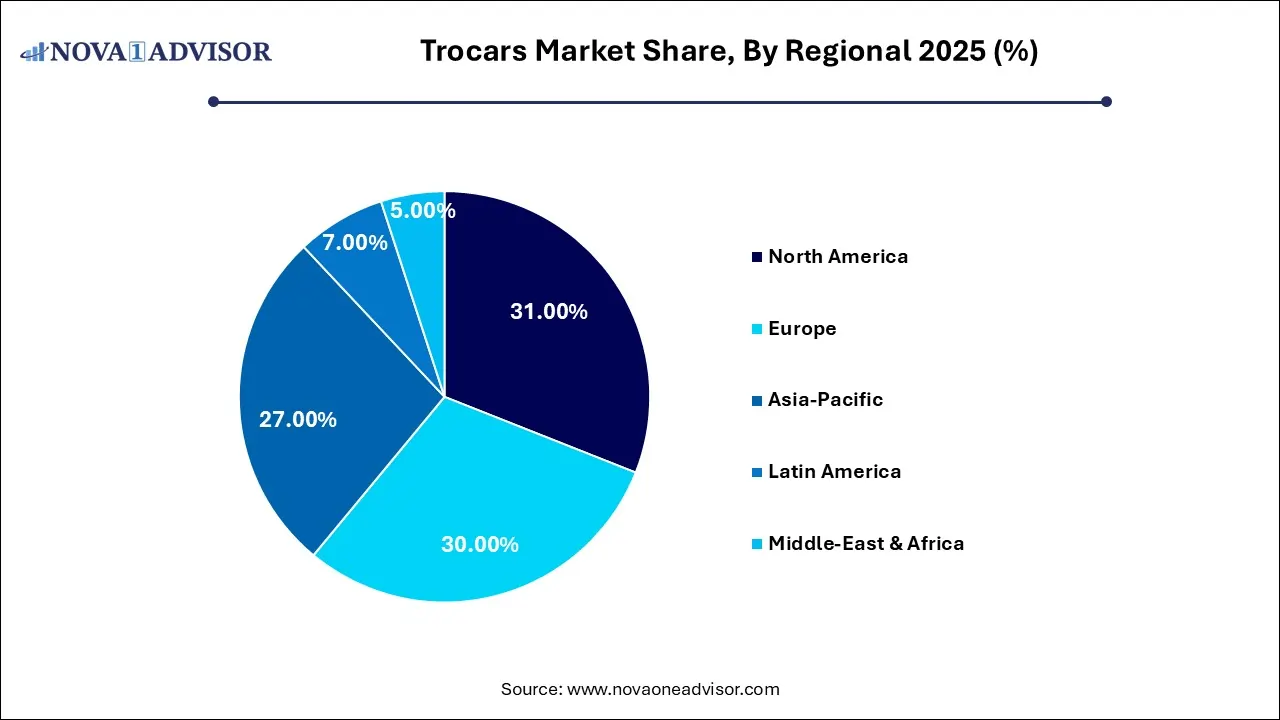
- By region, North America accounted for the largest revenue share in 2025.
Market Overview
Trocars are among the most fundamental instruments used in minimally invasive surgery (MIS). They create access ports through the abdominal wall, enabling surgeons to introduce laparoscopes and specialized surgical instruments into body cavities while minimizing tissue disruption. Over the past two decades, the role of trocars has evolved from simple penetration devices to technologically advanced access systems designed to enhance procedural safety, reduce complications, and improve surgical efficiency.
The global shift toward minimally invasive procedures has transformed the trocars landscape. Surgeons increasingly prefer laparoscopic and robotic approaches because they offer numerous benefits compared with traditional open surgeries, including reduced postoperative pain, shorter hospital stays, lower infection rates, faster recovery periods, and improved cosmetic outcomes.
Several specialties rely heavily on trocars. General surgery procedures such as cholecystectomy, appendectomy, and hernia repair represent significant demand generators. Gynecological interventions, urological procedures, pediatric operations, and advanced laparoscopic surgeries further contribute to market expansion.
Healthcare systems are also encouraging the transition toward minimally invasive approaches due to their economic advantages. Reduced hospitalization periods translate into lower healthcare expenditure and improved utilization of hospital resources.
Technological innovation remains a defining characteristic of this market. Manufacturers continue to develop bladeless entry systems, optical visualization-enabled trocars, ergonomic designs, reusable platforms, and hybrid solutions intended to optimize surgeon experience and patient outcomes.
As surgical techniques become increasingly sophisticated, trocars are transitioning from commoditized devices to strategic procedural tools that support precision-driven interventions.
Market Outlook
- Market Growth Overview: The global trocars market is expected to grow significantly between 2025 and 2035, driven by the growing incidence of chronic conditions, contentious product innovations, and strong accelerating infection control and disposable products.
- Sustainability Trends: Sustainability trends involve the rise of hybrid and reusable systems, circular economy and recycling initiatives, and advanced sterilization technologies.
- Major Investors: Major investors in the market include Medtronic, Johnson & Johnson MedTech, Teleflex Incorporated, Applied Medical Resources Corporation, and B. Braun SE.
How is AI Transforming the Trocars Market?
Although trocars themselves are not AI-enabled devices, artificial intelligence is reshaping the broader surgical ecosystem in which they operate.
AI-powered surgical planning platforms can analyze patient imaging data to determine optimal entry points for minimally invasive procedures. This capability assists surgeons in identifying anatomical variations, potentially reducing access-related complications during trocar insertion.
Computer vision technologies integrated into laparoscopic systems are enabling real-time tissue recognition and procedural guidance. During surgeries, AI algorithms may highlight critical structures, helping surgeons navigate complex anatomy with greater confidence. Since trocars serve as the access gateway for these procedures, increased adoption of intelligent surgical platforms indirectly boosts demand for advanced trocar systems.
AI is also revolutionizing surgeon education. Virtual reality simulators powered by machine learning can adapt training scenarios based on user performance, allowing residents to repeatedly practice trocar placement techniques in risk-free environments.
Robotic surgery presents another avenue of transformation. AI-enhanced robotic systems increasingly require specialized access devices compatible with robotic instruments. Manufacturers are therefore developing trocar platforms tailored to robotic workflows.
For example, predictive analytics tools can forecast surgical case volumes and optimize inventory management, ensuring adequate availability of disposable trocars while minimizing wastage.
As healthcare institutions continue investing in digital operating rooms, the integration of AI into minimally invasive surgery will likely encourage innovation in access technologies and elevate expectations surrounding trocar performance and safety.
Trocars Market Report Scope
| Report Coverage | Details |
| Market Size in 2026 | USD 906.68 Million |
| Market Size by 2035 | USD 1,456.77 Million |
| Growth Rate From 2026 to 2035 | CAGR of 5.41% |
| Base Year | 2025 |
| Forecast Period | 2026 to 2035 |
| Segments Covered | Product, Tip, Application, Region |
| Market Analysis (Terms Used) | Value (USD Million/Billion) or (Volume/Units) |
| Regional Scope | North America; Europe; Asia Pacific; Central and South America; the Middle East and Africa |
| Key Companies Profiled | The Cooper Companies Inc.; Teleflex Incorporated; GENICON, INC.; Medtronic; B. Braun Medical Inc.; Johnson & Johnson Service Inc., Purple Surgical: Applied Medical Resources Corporation; LaproSurge |
Segmental Insights
By Product
How did the disposable trocars segment dominate the Global Trocars market?
The disposable trocars segment is driven by removing the logistical burden and expenses of manual reprocessing and sterilization; these disposable devices optimize hospital cost structures and clinical workflows. Continuous design innovations, including bladeless and optical tips, significantly minimize tissue trauma and vascular injury while delivering superior visualization during minimally invasive surgeries.
How did the reusable trocars segment expected to hold the fastest-growing Global Trocars market in the coming years?
The reusable trocars segment is driven by continuous hospitals and high-volume surgical centers excellent long-term cost efficiency by significantly lowering per-procedure expenses over time. By drastically reducing the heavy biomedical waste generated by single-use alternatives, the adoption of reusable trocars directly supports green-hospital initiatives and ecological sustainability goals.
By Tip
How did the bladeless trocars segment dominate the Global Trocars market?
The bladeless trocars segment is driven by the high favourability in complex bariatric, gynaecological, and general laparoscopic surgeries where smooth access and minimal tissue trauma are paramount. This enhanced clinical profile is further optimized by advanced technological integrations, including ergonomic handles and optical visualization tips that allow surgeons to precisely monitor tissue layers in real time during entry.
How did the optical trocars segment expected to hold the fastest-growing Global Trocars market in the coming years?
The optical trocars segment is driven by incorporating transparent tips that enable real-time visual monitoring of tissue layers during entry; these devices effectively eliminate the high complication risks associated with traditional blind insertions. By combining shorter recovery times with enhanced safety profiles, optical trocars optimize modern surgical workflows and improve long-term patient outcomes.
By Application
How did the general surgery segment dominate the Global Trocars market?
The general surgery segment is driven by a clinical shift toward minimally invasive surgeries that reduce blood loss and shorten hospital stays. The widespread obesity epidemic, which has triggered an expansion in complex bariatric procedures requiring large-bore and specialized access ports. These synchronized technological innovations and rising procedure rates ensure that trocars remain an essential, high-volume asset in modern operating rooms.
By Regional
How did the North America region account for the largest share in the Global Trocars market?
North America is driven by the high volumes of complex bariatric, hernia, and gastrointestinal procedures that require reliable port access. The region’s advanced healthcare systems and ambulatory surgical centers enable the rapid procurement of premium surgical tools. The strong institutional focus on minimizing infection risks and shortening patient recovery times ensures a steady regional demand for these advanced, high-quality trocar systems.
U.S. Global Trocars Market Trends
The U.S. is undergoing a rapid modernization, propelled by an overwhelming clinical shift toward sterile, single-use systems to ensure superior infection control and eliminate cross-contamination. The surgeon preference is for advanced bladeless and optical entry design that dramatically minimizes abdominal wall tissue trauma, bleeding, and blind-insertion complications.
How did the Asia-Pacific region become the fastest-growing Global Trocars Market during the forecast period?
Asia Pacific has an aging demographic, rising obesity rates, and a profound shift toward minimally invasive and robot-assisted surgeries. Massive government infrastructure investments, such as Chins’s healthy Chins 2030 plans, have modernized hospital networks and expanded public access to advanced optical and bladeless entry technologies.
China Global Trocars Market Trends
China’s overwhelming clinical preference for single-use, disposable systems that ensure superior infection control and eliminate hospital reprocessing costs. To minimize tissue trauma and blind-entry complications during complex bariatric, gynaecological and thoracic interventions, local surgeons are increasingly adopting advanced optical and bladeless designs.
How Did Europe Hold A Notable Share in the Global Trocars Market?
Europe’s rapid shift toward minimally invasive procedures across advanced healthcare networks in Germany, France, and the UK. An aging regional demographic and rising chronic health conditions, such as obesity, have triggered a high volume of complex general, gynaecological, and urological surgeries. To comply with rigorous European clinical safety directives, healthcare institutions heavily favour premium, single-use, safety-engineered instruments, specifically advanced bladeless and optical trocars that prevent cross-contamination.
Germany Global Trocars Market Trends
Germany’s rapidly growing ambulatory surgical centers where healthcare systems atively utilize these high-performance access ports to deliver cost-effective procedures and shorten patient hospital stays. With its convenience and zero cross-contamination risk, Germany is charting a unique path by prioritizing stringent environmental, social, and governance mandates.
Key Players in the Global Trocars Market
- Johnson & Johnson Services, Inc.
Through its MedTech division, Johnson & Johnson manufactures market-leading disposable trocars, such as the ENDOPATH XCEL line. These specialized access instruments provide controlled abdominal entry and secure instrument exchanges during laparoscopic procedures.
- Medtronic
Medtronic offers advanced surgical access portfolios, such as the Covidien VersaOne bladeless optical trocars, that are designed to optimize visualization while minimizing tissue trauma. Their innovations aim to improve surgical precision and safety for a variety of minimally invasive surgical workflows.
- The Cooper Companies, Inc.
The Cooper Companies supply a comprehensive range of surgical instruments. Their diverse trocar portfolio, which includes specialized pyramidal and conical tip designs, helps surgeons achieve stable and reliable entry across multiple medical specialties.
Recent Developments
- April 2026: Medtronic expanded its minimally invasive surgery portfolio by emphasizing integrated procedural solutions designed to improve surgical efficiency and support evolving laparoscopic workflows.
- February 2026: Johnson & Johnson MedTech highlighted advancements in digital surgery initiatives and connected operating room technologies intended to enhance surgeon decision-making.
- November 2025: Applied Medical continued strengthening its access instrumentation portfolio through innovations focused on simplifying laparoscopic entry and improving usability.
- September 2025: CONMED showcased enhancements across its minimally invasive surgery offerings, reinforcing commitment to procedural efficiency and surgeon-centric design.
- June 2025: B. Braun emphasized sustainable healthcare solutions, including initiatives supporting reusable surgical technologies and resource optimization.
Segments Covered in the Report
This report forecasts revenue growth at country levels and provides an analysis of the latest industry trends in each of the sub-segments from 2021 to 2035. For this study, Nova one advisor, Inc. has trocars market.
By Product
- Disposable Trocars
- Reusable Trocars
- Reposable Trocars
- Accessories
By Tip
- Bladeless Trocars
- Optical Trocars
- Blunt Trocars
- Bladed Trocars
By Application
- General Surgery
- Gynecological Surgery
- Laparoscopy Surgery
- Urological Surgery
- Pediatric Surgery
- Others
By End User
- Hospitals
- Others
By Region
- Americas
- North America
- US
- Canada
- South America
- North America
- Europe
- Western Europe
- GermanyFrance
- Italy
- Spain
- UK
- Rest of Western Europe
- Eastern Europe
- Western Europe
- Asia-Pacific
- JapanChinaIndia
- Australia
- South Korea
- Rest of Asia-Pacific
- Middle East & Africa
- Middle East
- Africa

Proceed to Buy
Instant PDF delivery on confirmation

 Request Customization
 Download Sample

Get a Sample of this Report
Trocars Market