

Vagal Nerve Stimulation (VNS) Market Size, Share, and Trends 2026 to 2035
 Status Published
 Category Healthcare


Content
Vagal Nerve Stimulation (VNS) Market Size and Growth 2026 to 2035
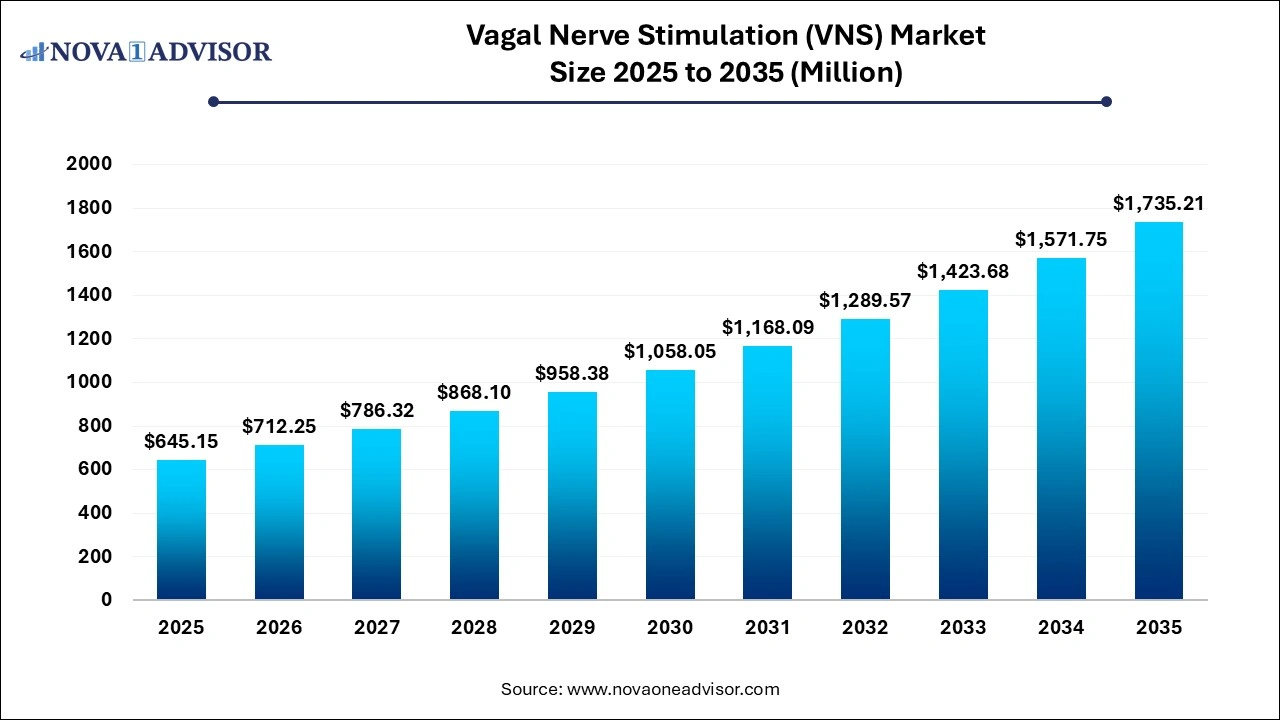
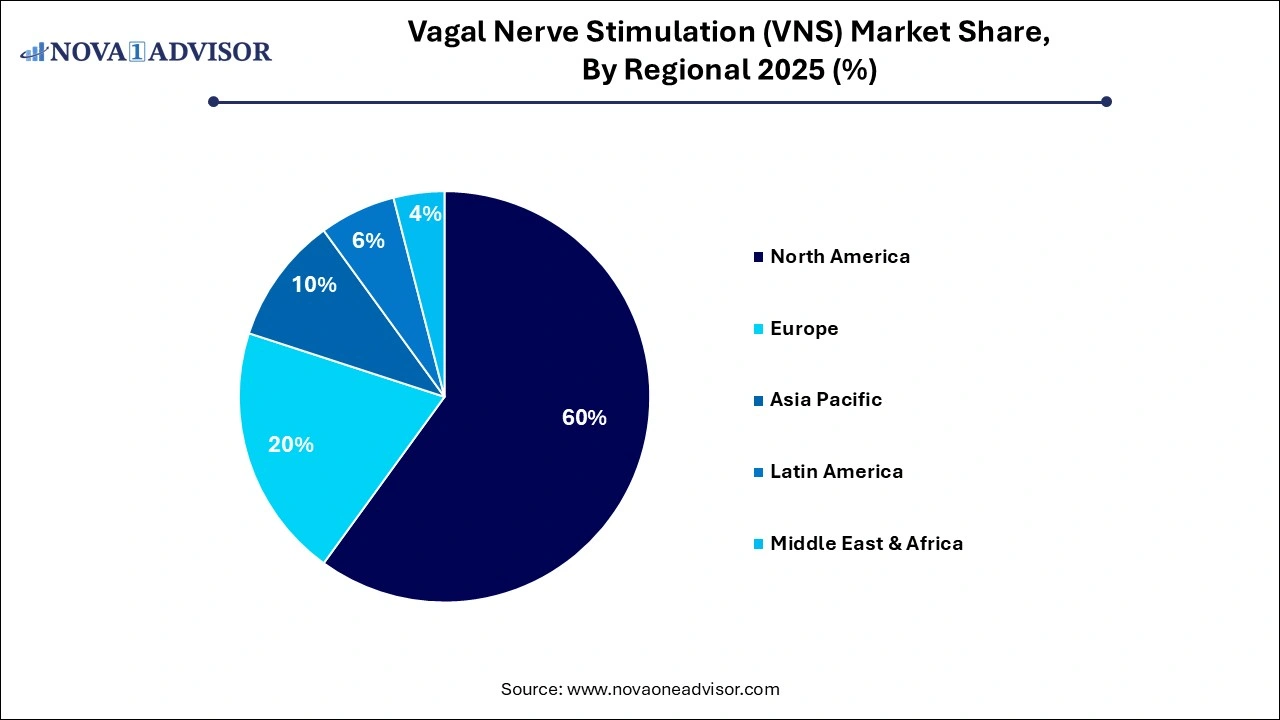
The global vagal nerve stimulation (VNS) market size was valued at USD 645.15 million in 2025 and is projected to grow from USD 712.25 million in 2026 to USD 1,735.21 million by 2035, at a CAGR of 10.4% from 2026 to 2035. North America dominated the market, accounting for a revenue share of 60.0% in 2025.
Key Takeaway
- By product, the implantable VNS device segment dominated the market with the largest share in 2025.
- By product, the external VNS device segment is expected to grow at the fastest CAGR over the forecast period.
- By biomaterials, the metallic biomaterials segment dominated the market with the largest share in 2025.
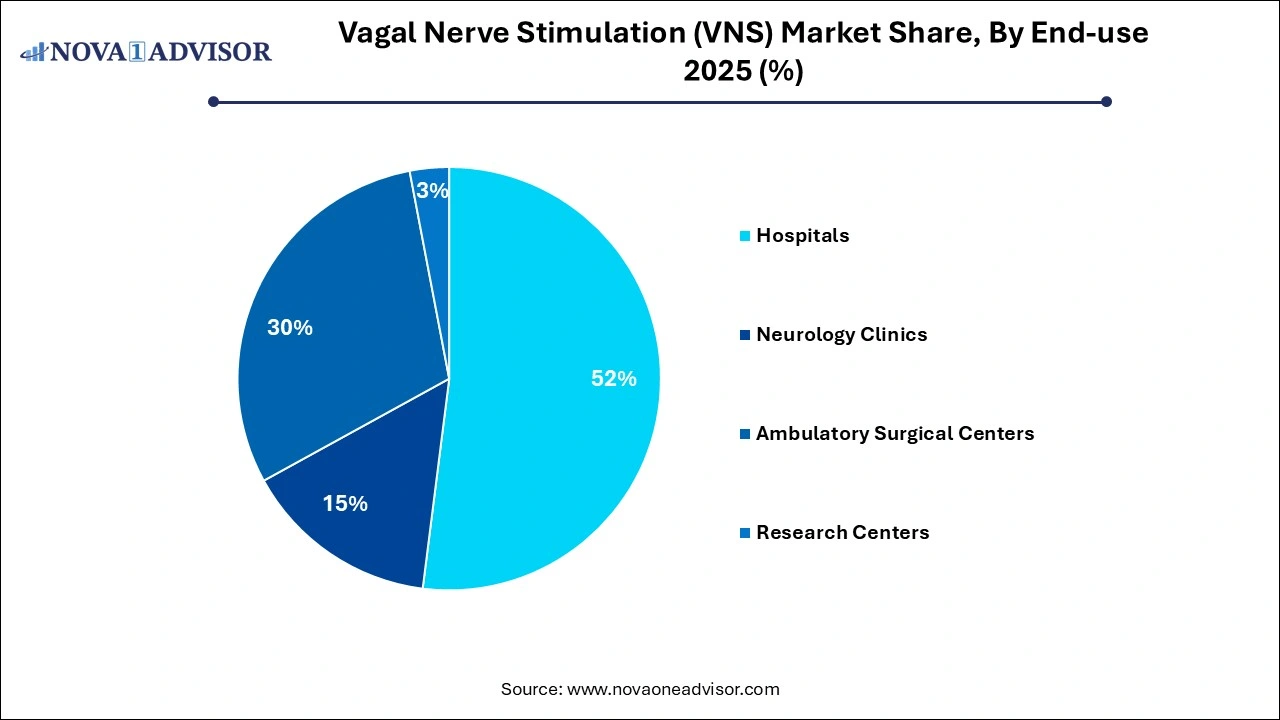
- By end use, the hospitals segment dominated the market with the largest share of 52.0% in 2025.
- By region, North America dominated the market with the largest share of 60.0% in 2025.
Market Overview
The global vagal nerve stimulation (VNS) market is experiencing strong growth due to the rising prevalence of neurological and psychiatric disorders and the increasing adoption of neuromodulation therapies. VNS delivers controlled electrical impulses to the vagus nerve to regulate brain activity and is widely used to treat drug-resistant epilepsy and major depressive disorder. Growing demand for effective alternatives to conventional drug therapies, particularly among patients with limited treatment response, is driving market expansion.
Technological advancements have significantly enhanced VNS devices with programmable settings, longer battery life, wireless connectivity, and remote monitoring capabilities, enabling more personalized and effective treatment. In addition, the growing adoption of non-invasive VNS devices for conditions such as migraine, cluster headache, and chronic pain is expanding the therapy’s accessibility and patient base.
Ongoing research into the role of the vagus nerve in inflammatory, cardiovascular, and neurodegenerative diseases is creating new opportunities for VNS applications beyond traditional neurological disorders. Increasing investments in neuroscience research, expanding telemedicine services, and greater awareness of neuromodulation therapies among healthcare professionals and patients are further supporting market growth. As innovations in digital health and artificial intelligence continue to improve patient management and treatment precision, the global VNS market is expected to witness sustained long-term growth.
Market Outlook
- Market Growth Overview: The global vagal nerve stimulation (VNS) market is expected to grow significantly between 2025 and 2035, driven by the growing geriatric populations across the globe.
- Sustainability Trends: Sustainability trends involve growing adoption of sustainable manufacturing practices and use of green biomaterials.
- Major Investors: Major investors in the market include LivaNova PLC, MicroTransponder Inc., and Parasym Ltd.
How is AI Impacting The Global Vagal Nerve Stimulation (VNS) Market?
Artificial intelligence is transforming the global vagal nerve stimulation (VNS) market by enabling more precise, personalized, and efficient neuromodulation therapies. AI-powered algorithms analyze patient data such as seizure frequency, heart rate variability, EEG signals, sleep patterns, and medical history to recommend individualized stimulation settings. This data-driven approach helps physicians optimize therapy, improve treatment effectiveness, and reduce the need for frequent manual adjustments.
AI is also advancing the development of adaptive VNS systems that continuously monitor physiological signals and automatically adjust stimulation in response to changes in a patient's condition. These intelligent closed-loop devices can detect early signs of abnormal neurological activity, such as seizure onset, and deliver timely stimulation to improve symptom control. As a result, patients benefit from more responsive therapy and better long-term clinical outcomes.
In addition, AI is enhancing remote patient management through connected VNS devices that securely transmit treatment data for continuous monitoring. Healthcare providers can use AI-driven analytics to track therapy performance, identify potential complications, monitor battery status, and receive automated alerts when intervention is needed. AI also supports device manufacturers by accelerating product development, optimizing electrode design, and improving clinical trial analysis. As precision medicine and digital healthcare continue to evolve, AI is expected to play a central role in making VNS therapy safer, more personalized, and more effective across a growing range of neurological and psychiatric disorders.
Vagal Nerve Stimulation (VNS) Market Report Scope
| Report Coverage | Details |
| Market Size in 2026 | USD 712.25 Million |
| Market Size by 2035 | USD 1,735.21 Million |
| Growth Rate From 2026 to 2035 | CAGR of 10.4% |
| Base Year | 2025 |
| Forecast Period | 2026 to 2035 |
| Segments Covered | Product, Application, Biomaterial, End-use, Region |
| Market Analysis (Terms Used) | Value (USD Million/Billion) or (Volume/Units) |
| Regional Scope | North America; Europe; Asia Pacific; Central and South America; the Middle East and Africa |
| Key Companies Profiled | LivaNova PLC (UK), EnteroMedics Inc. (US), ElectroCore Medical LLC (US), Boston Scientific Corporation (US), Cyberonics, Inc. (US), NeuroMetrix, Inc.(US), ImThera Medical (US), and Inspire Medical Systems, Inc.(US) |
Market Driver
Rising Prevalence of Drug-Resistant Neurological Disorders Driving Market Growth
The increasing incidence of drug-resistant neurological disorders is a major driver of the global vagal nerve stimulation (VNS) market. Many patients with epilepsy and treatment-resistant depression do not achieve adequate symptom control with conventional medications, creating strong demand for alternative therapies. VNS provides a clinically proven neuromodulation approach that helps reduce seizure frequency and improve mood by regulating neural activity. Rising awareness of VNS therapy, better diagnostic capabilities, and expanding access to specialized neurological care are further supporting market growth. In addition, favorable clinical outcomes and broader reimbursement coverage are encouraging greater adoption of VNS devices worldwide.
Market Restraint
High Treatment Costs and Surgical Requirements Limiting Market Expansion
The VNS market faces challenges due to the high cost of implantable devices and the need for surgical implantation. Treatment involves device procurement, surgery, hospitalization, programming, and long-term follow-up, making it expensive for many patients, especially in regions with limited reimbursement. Surgical procedures also carry risks such as infection, hoarseness, pain, lead displacement, and other device-related complications, which may discourage some eligible patients. Furthermore, the requirement for trained neurosurgeons and specialized healthcare infrastructure limits adoption in developing markets.
Market Opportunity
Expanding Clinical Applications and Non-Invasive Technologies Creating Growth Opportunities
The growing exploration of VNS therapy beyond epilepsy and depression presents significant opportunities for market expansion. Ongoing research is evaluating its effectiveness in treating conditions such as rheumatoid arthritis, inflammatory bowel disease, heart failure, Parkinson's disease, Alzheimer's disease, stroke rehabilitation, and post-traumatic stress disorder. At the same time, the development of non-invasive VNS devices is broadening access by eliminating the need for surgery and enabling convenient treatment for migraine, chronic pain, anxiety, and stress-related disorders. Combined with AI-enabled therapy optimization, remote patient monitoring, and digital healthcare platforms, these innovations are expected to drive wider adoption and create new growth opportunities for VNS manufacturers.
Segmental Insights
By Product
Why did the implantable VNS device segment dominate the global vagal nerve stimulation (VNS) market?
The implantable VNS device segment dominated the market with the largest share in 2025. The dominance of the segment can be attributed to the growing number of patients suffering from various types of depression, headaches, and epileptic diseases. In addition, it is helpful for those who show no response to anti-seizure drugs and intensive depression treatments.
How did the external VNS device segment expected to hold the significantly growing global vagal nerve stimulation (VNS) market in the coming years?
The external VNS device segment is expected to grow at the fastest CAGR over the forecast period. The growth of the segment can be credited to the rising number of patients suffering from chronic disorders along with its cost-effectiveness. The introduction of advanced devices by major market players coupled with a growing patient preference for non-invasive treatments can fuel segment growth further.
By Biomaterial
Why did the metallic biomaterials segment dominate the global vagal nerve stimulation (VNS) market?
The metallic biomaterials segment dominated the market with the largest share in 2025. The dominance of the segment can be linked to the ongoing innovations and expansion in R&D for vagus nerve stimulation therapies. Greater corporate and academic investments now focus on enhancing the efficiency of metal-to-nerve lead wires and optimizing electrode contact points.
How did the polymeric segment expected to hold the significantly growing global vagal nerve stimulation (VNS) market in the coming years?
The polymeric segment is expected to advance at the fastest CAGR over the forecast period. The growth of the segment can be driven by the growing incidence of stress and depression along with its flexibility benefits. Advanced polymer technologies enable the controlled, localized release of anti-inflammatory and therapeutic agents through specialized drug-eluting matrices.
By End Use
Why did the hospital segment dominate the global vagal nerve stimulation (VNS) market?
The hospital segment dominated the market with the largest share in 2025. The dominance of the segment is owing to the growing number of VNS surgeries performed in hospitals along with the rise in incidence of neurological disorders. Furthermore, it has established institutional insurance frameworks and standardized medical billing codes governing complex neuromodulation procedures.
How did the ambulatory surgical centers (ASC) segment expected to hold the significantly growing global vagal nerve stimulation (VNS) market in the coming years?
The ambulatory surgical centers (ASC) segment is expected to grow at the fastest CAGR over the forecast period. The growth of the segment is due to their inexpensive procedures as compared to hospitals. Moreover, the development of more compact and efficient implantable pulse generators optimizes the surgical workflow suited for high-turnover ambulatory surgery center (ASC) operating suites.
By Regional
Why did the North American region account for the largest share in the global vagal nerve stimulation (VNS) market?
North America dominated the market with the largest share in 2025. The dominance of the region can be attributed to the growing government initiatives and funding for increasing awareness regarding epilepsy. In addition, rapid growth into alternative therapeutic indications, including the management of chronic migraines and the prevention of cluster headaches, is leading to regional growth soon.
U.S. Global Vagal Nerve Stimulation (VNS) Market Trends
The growth of the market in the country can be driven by the surge in healthcare spending and the growing prevalence of neurological conditions. Moreover, the extensive presence of leading medical device manufacturers within the United States significantly accelerates research, development, and clinical trial phases for both advanced implantable and non-invasive technologies.
Why did the Asia-Pacific region become the fastest-growing global vagal nerve stimulation (VNS) market during the forecast period?
Asia Pacific is expected to grow at the fastest CAGR over the forecast period. The growth of the region can be credited to the growing depression and epilepsy rates, developing hospital networks, and better patient awareness. Furthermore, the establishment of regional organizations, such as the Asia-Pacific Centre for Neuromodulation (APCN), plays a key role in advancing research, facilitating clinical trials, and enhancing awareness regarding the clinical efficacy of vagus nerve stimulation (VNS).
China Global Vagal Nerve Stimulation (VNS) Market Trends
The market in the country is growing due to a growing number of patients suffering from chronic neurological and psychiatric conditions, including severe depression. The expansion of hospital infrastructure and improved access to tier-1 medical centers significantly enhance the adoption of advanced neuromodulation technology.
Key Players in the Global Vagal Nerve Stimulation (VNS) Market
- LivaNova PLC: The dominant global leader (inheriting Cyberonics) specializes in implantable VNS therapy systems primarily used for drug-resistant epilepsy and treatment-resistant depression.
- Boston Scientific Corporation: A key device manufacturer offering advanced neuromodulation and implantable stimulation technologies.
- Parasym Ltd.: Focuses on non-invasive electrical stimulation targeting the auricular branch of the vagus nerve for various autonomic and inflammatory conditions.
Recent Developments
- In September 2025, Parasym officially launched Nuropod in the United States, introducing the first clinically evaluated, ear-based vagus nerve stimulation (VNS) device that does not require surgical intervention. This wearable technology utilizes proprietary Auricular Vagal Neuromodulation Technology (AVNT) to target the vagus nerve via the ear.
Segments Covered in the Report
This report forecasts revenue growth at country levels and provides an analysis of the latest industry trends in each of the sub-segments from 2021 to 2035. For this study, Nova one advisor, Inc. has vagal nerve stimulation (VNS) market.
By Product
- Implantable VNS Device
- External VNS Device
By Application
- Epilepsy
- Depression
- Migraine
By Biomaterial
- Metallic
- Ceramics
- Polymeric
By End-use
- Hospitals
- Neurology Clinics
- Ambulatory Surgical Centers
- Research Centers
By Region
- North America
- Europe
- Asia Pacific
- Latin America
- Middle East & Africa
FAQ's

Proceed to Buy
Instant PDF delivery on confirmation

Vagal Nerve Stimulation (VNS) Market Size to Hit USD 1,735.21 Million by 2035
 Request Customization
 Download Sample

Get a Sample of this Report
Vagal Nerve Stimulation (VNS) Market