

Vitamin D Testing Market Size, Share, and Trends 2026 to 2035
 Status Published
 Category Healthcare


Content
Vitamin D Testing Market Size and Growth 2026 to 2035
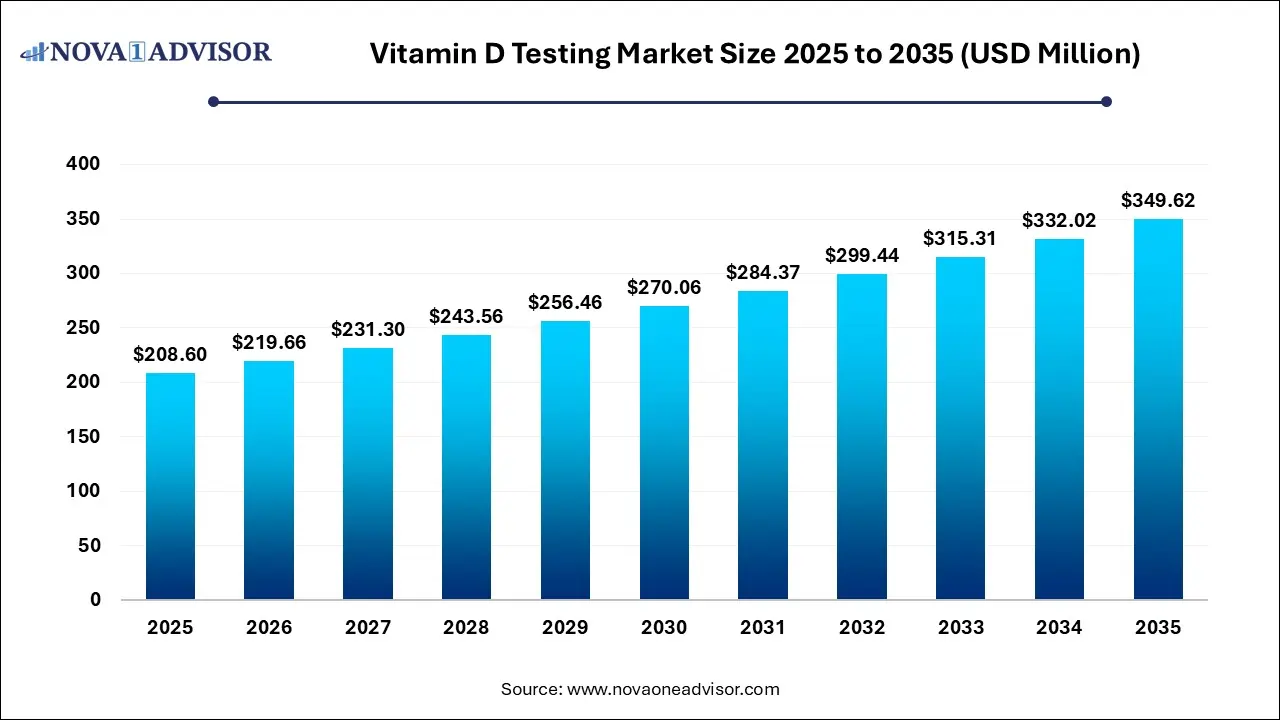
The vitamin D testing market size was estimated at USD 208.60 million in 2025 and is projected to increase from USD 219.66 million in 2026 to approximately USD 349.62 million by 2035, growing at a CAGR of 5.3% from 2026 to 2035. The vitamin D testing market is driven by increased awareness of vitamin D deficiency and its links to bone health, immune function, and chronic conditions, prompting more individuals to seek testing. Growing geriatric population, a shift toward early diagnosis and regular check-ups, government initiatives to educate on the benefits of vitamin D, and increased demand.
Key Takeaways
- By application, the clinical testing segment held a dominant position in the market with a share of 78% in 2025.
- By application, the research testing segment is the fastest growing between 2026 and 2035.
- By product, the 25-hydroxyvitamin D testing segment held a dominant position in the market with a share of 74% in 2025.
- By product, the 1 25-dihydroxyvitamin D testing segment is the fastest growing between 2026 and 2035.
- By end-user, the diagnostic laboratories segment held a dominant position in the market with a share of 48% in 2025.
- By region, the North America region held a dominant position in the market with a share of 39% in 2025.
Innovation Driving Transformation in the Vitamin D Testing Market
Vitamin D testing comprises laboratory and point-of-care diagnostics to measure serum 25-hydroxyvitamin D levels. It involves. It enables early detection of deficiencies responsible for bone disorders, immune dysfunction, and chronic diseases like diabetes. Key advantages include supporting personalized nutrition, guiding supplementation, and managing parathyroid function, with a strong focus on preventative health screening and routine check-ups. The market growth is driven by the high prevalence of deficiency due to indoor lifestyles, rising awareness of bone health in an aging population, and technological advancements, such as automated immunoassay and mass spectrometry.
Vitamin D Testing Market Trends
- Proliferation of At-Home and Point-of-Care Solutions
The growing demand for convenient, rapid testing solutions that eliminate the need for traditional laboratory visits. Dried blood spots micro-sampling and rapid kits allow consumers to collect samples at home or receive immediate results in a clinic, which is enhancing accessibility and patient engagement.
- Transition Toward Automated High-Throughput Infrastructure
Laboratories are increasingly adopting automated chemiluminescence immunoassay platforms to manage high-testing volumes efficiently. These automated systems reduce per-test costs, decrease turnaround time, and improve the precision of results compared to older methods.
- Strategic Integration of High-Precision LC-MS/MS Technology
LCMS/MS technology is gaining traction due to its superior accuracy in distinguishing between vitamin D2 and D3 metabolites, with the expand at a technique is increasingly viewed as the global standard for precise quantification in complex clinical cases, moving beyond basic immunoassay screening.
Key AI Integration in the Vitamin D Testing Market
AI and ML are transforming the vitamin D testing industry by enabling predictive modeling to estimate serum vitamin D levels from routine demographic and clinical data, reducing the need for invasive, costly laboratory tests. Advanced algorithms, such as XGBoost and deep learning models, analyze vast datasets to identify high-risk populations for deficiencies, enhancing the accuracy of diagnosis. AI integration is fostering the development of smart, smartphone-linked rapid testing kits that provide automated, real-time signal processing and interpretation of test strips. The move toward personalized nutrition and precision medicine, with tools designed to optimize and supplement dosage based on patient-specific data.
Vitamin D Testing Market Report Scope
| Report Coverage | Details |
| Market Size in 2026 | USD 219.66 Million |
| Market Size by 2035 | USD 349.62 Million |
| Growth Rate From 2026 to 2035 | CAGR of 5.3% |
| Base Year | 2025 |
| Forecast Period | 2026 to 2035 |
| Segments Covered | By Application, By Product, By End-user, By Region |
| Market Analysis (Terms Used) | Value (USD Million/Billion) or (Volume/Units) |
| Regional Scope | North America; Europe; Asia Pacific; Central and South America; the Middle East and Africa |
| Key Companies Profiled | Abbott, BIOMÉRIEUX, F. Hoffmann-La Roche Ltd, Thermo Fisher Scientific Inc., Siemens Healthineers AG, Danaher, DiaSorin S.p.A., Tosoh Bioscience, Inc., Beckman Coulter, Inc. (BD), Quest Diagnostics Incorporated. |
Market Dynamics
Driver
Rising Prevalence of Deficiency
The accelerating demand for diagnostic screening, as awareness grows regarding the link between low vitamin D levels and chronic conditions, such as osteosis, cardiovascular disease, and immune system dysfunction, physicians and consumer are increasingly opting for routine serum 25-hydroxyvitamin D tests. Lifestyle changes, including reduced sun exposure, urban indoor lifestyles, and high skin pigmentation, have exacerbated this deficiency across all age groups, necessitating frequent monitoring of vitamin levels.
Restraint
High Testing Costs
The market growth is hindered by restricting widespread adoption, particularly in emerging countries where out-of-pocket expenses for patient are prohibitive. The high price of advanced, accurate testing methods, such as liquid chromatography-tandem mass spectrometry limits accessibility, especially for low-income populations, reducing total test volumes. Limited reimbursement coverage by insurance providers for routine screening forces patients to bear the cost, discouraging voluntary or proactive testing.
Opportunity
Point-of-care Testing and Home-based Testing Kits
The increasing accessibility, convenience, and enabling rapid, on-site results. by allowing for finger-prick blood samples that do not require specialized laboratory infrastructure, these solutions bring testing into retail pharmacies and the home, accelerating the shift toward preventative healthcare. The growing consumer demand for data ownership and quick insights into their health, often facilitated by telehealth services bundling these tests, is fueling a high compound annual growth rate in home care remote testing.
Segment Insights
By Application Insights
Why Did the Clinical Testing Segment Hold a 78% Share for the Vitamin D Testing Market?
The clinical testing segment held a dominant position in the market with a share of 78% in 2025. Owing to the rising prevalence of vitamin D deficiency and osteoporosis, and routine physician-recommended screening. The increasingly included in annual health check-ups and for patients with chronic conditions, such as renal disease, diabetes, or limited sun exposure.
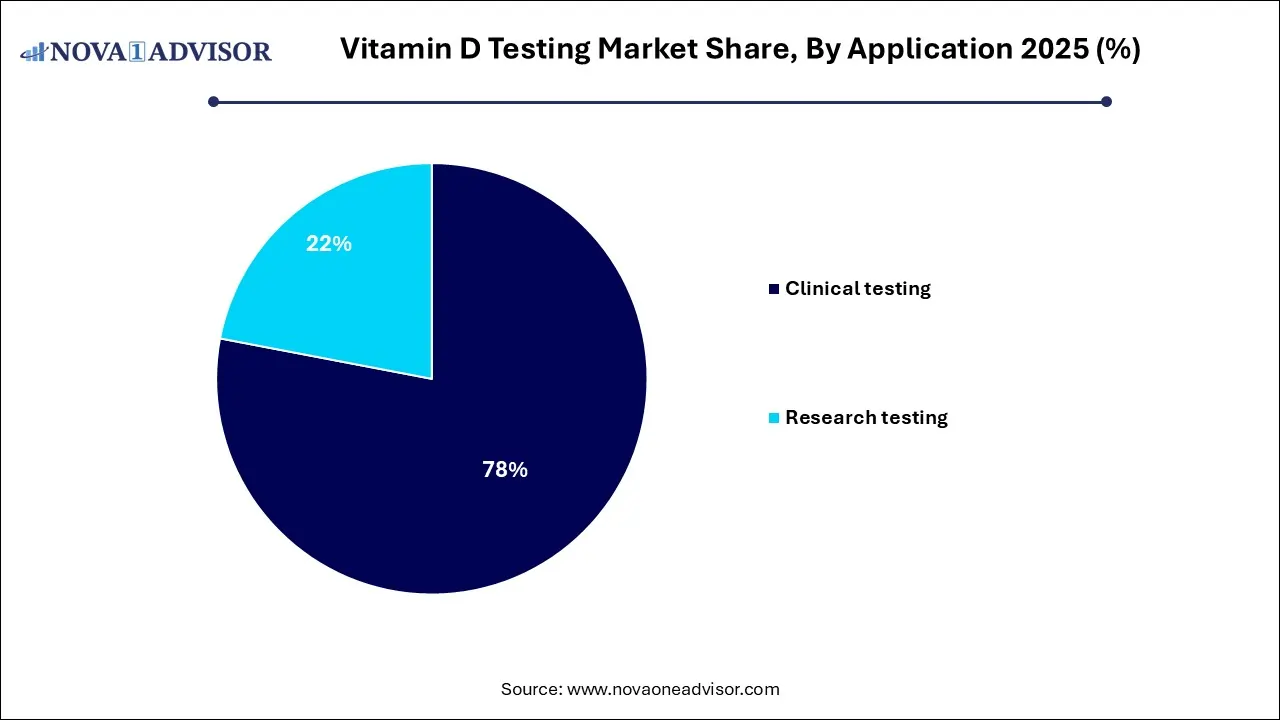
The research testing segment held a 22% share of the market in 2025, with testing volumes limited to specialized studies and research institutions rather than routine healthcare usage. Developments in automated immunoassays have increased the speed and ease of testing, contributing to higher adoption rates.
By Product Insights
Why Did the 25-hydroxyvitamin D Testing Segment Lead the Vitamin D Testing Market?
The 25-hydroxyvitamin D testing segment registered its dominance over the market with a share of 74% in 2025, owing to the most accurate, widely accepted, and routinely prescribed diagnostic test for vitamin D deficiency. The availability of automated immunoassays and rapid, easy-to-use at-home testing options has increased accessibility.
The 1 25-dihydroxyvitamin D testing segment held the 26% share of the market in 2025, with it used only in specialized clinical scenarios and not for general vitamin D screening. The growing incidence of kidney diseases and autoimmune disorders increases the demand for precise monitoring, driving the use of this specialized test.
By End-User Insights
Why Did the Diagnostic Laboratories Segment Lead the Vitamin D Testing Market?
The diagnostic laboratories segment registered its dominance over the market with a share of 48% in 2025, owing to centralized testing infrastructure, cost efficiency, and high testing throughput. The global surge in vitamin D deficiency cases, along with higher health awareness, has increased demand for testing services that these laboratories efficiently handle.
The hospitals and physician clinics segment held the 40% share of the market in 2025, with its increasing preventive screening and integration of point-of-care diagnostics. Increasing focus on personalized and preventative health led to widespread, routine testing in older populations and patients with chronic illness, often performed within the hospital system.
The home care setting segment held the 12% share of the market in 2025, due to the adoption of at-home diagnostic testing, which is still emerging and limited by awareness and accuracy concerns. The increasingly integrated home-based testing kits are being directly integrated into chronic care regimens, allowing patients to test at home and discuss results virtually.
By Regional Insights
Why Did the North America Region Lead the Vitamin D Testing Market?
The North America region registered its dominance over the market with a share of 39% in 2025, owing to the widespread preventive healthcare practices, high testing rates, and strong reimbursement coverage. The region's advanced diagnostic tools include automated immunoassay methods and LC-MS for precise testing. Strong health insurance coverage for diagnostic tests improves accessibility for patients.
The Europe region held the 28% share of the market in 2025, due to the strong healthcare access and rising awareness, though growth is slower than in emerging regions. The high percentage of elderly residents in the region is at higher risk for low vitamin D levels, which boosts demand for screening.
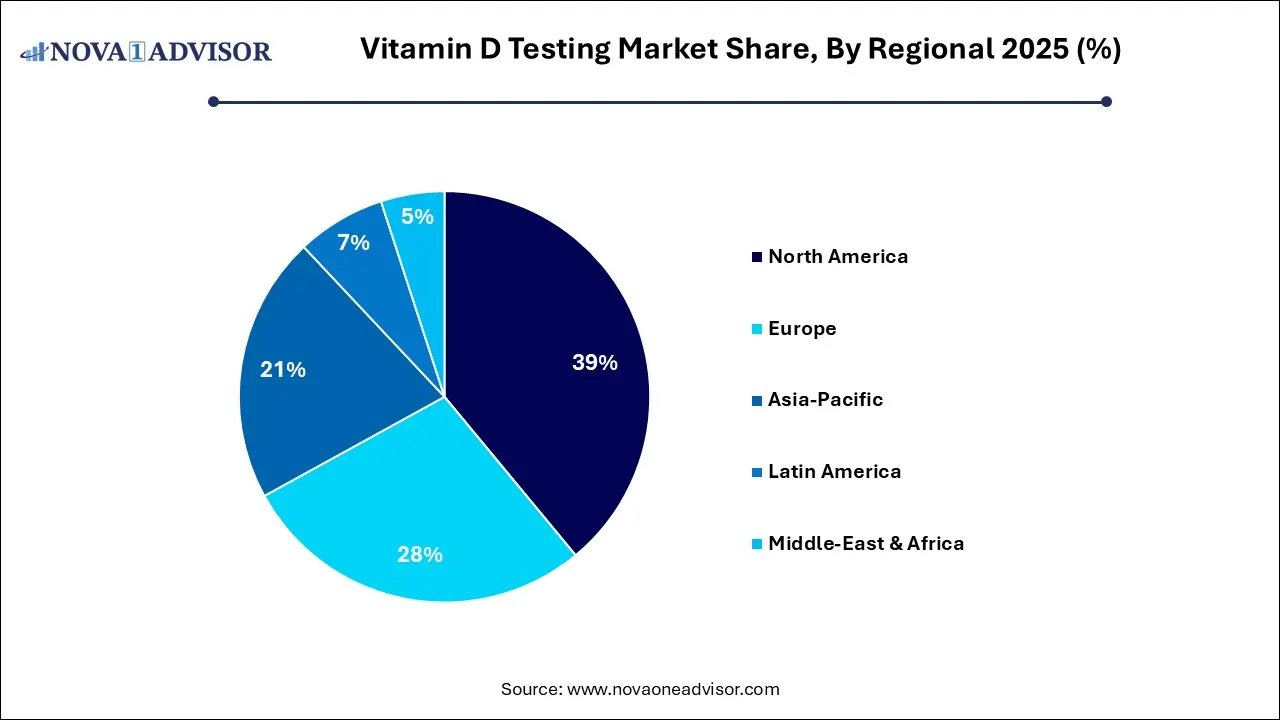
The Asia Pacific segment held 21% share of the market in 2025, due to the rising healthcare expenditure, urbanization, and growing health awareness. Improved diagnostic infrastructure and increasing investments in research and development, especially in emerging economies.
The Latin America region held 7% share of the market in 2025, with limited healthcare spending and lower testing penetration in several countries. Growing public health initiatives and screening programs are increasing the adoption of vitamin D tests.
The MEA region held 5% share of the market in 2025, due to the lower diagnostic accessibility, limited awareness, and uneven healthcare infrastructure development. Significant investment in expanding laboratory services and government-promoted preventative health initiatives accelerated the adoption of testing.
Vitamin D Testing Market Companies
- Abbott
- BIOMÉRIEUX
- F. Hoffmann-La Roche Ltd
- Thermo Fisher Scientific Inc.
- Siemens Healthineers AG
- Danaher
- DiaSorin S.p.A.
- Tosoh Bioscience, Inc.
- Beckman Coulter, Inc. (BD)
- Quest Diagnostics Incorporated.
Recent Developments
- In November 2025, Thermo Fisher Scientific has inaugurated a new Customer Experience Centre and a Bioprocess Design Centre in Hyderabad's Genome Valley, representing a combined investment of approximately ₹90 crore. Supported by the Telangana government, these facilities are designed to support over 200 researchers annually with advanced technologies for drug development and manufacturing.
- In September 2025, Roche achieved the first FDA CLIA “Moderate Complexity” categorization for a mass spectrometry-based test with its Ionify® 25-Hydroxy Vitamin D total assay. This designation, utilizing the automated cobas® i 601 analyzer, allows routine clinical laboratories to run high-precision, gold-standard testing without the need for specialized high-complexity lab certification.
Segments Covered in the Report
This report forecasts revenue growth at country levels and provides an analysis of the latest industry trends in each of the sub-segments from 2021 to 2035. For this study, Nova one advisor, Inc. has segmented the vitamin D testing market.
By Application
- Clinical testing
- Research testing
By Product
- 25-hydroxyvitamin D testing
- 1 25-dihydroxyvitamin D testing
By End-user
- Diagnostic laboratories
- Hospitals and physician clinics
- Home care settings
By Region
- North America
- Europe
- Asia Pacific
- Latin America
- Middle East and Africa (MEA)
FAQ's

Proceed to Buy
Instant PDF delivery on confirmation

Vitamin D Testing Market Size to Hit USD 349.62 Million by 2035
 Request Customization
 Download Sample

Get a Sample of this Report
Vitamin D Testing Market