

Biofilms Treatment Market Size, Share, Forecast Report, 2026-2035
 Status Published
 Category Healthcare


Content
Biofilms Treatment Market Size, Growth and Trends 2026 to 2035
The global biofilms treatment market size was estimated at USD 2.85 billion in 2025 and is expected to be worth around USD 5.66
billion by 2035 with a CAGR of 7.11% from 2026 to 2035.
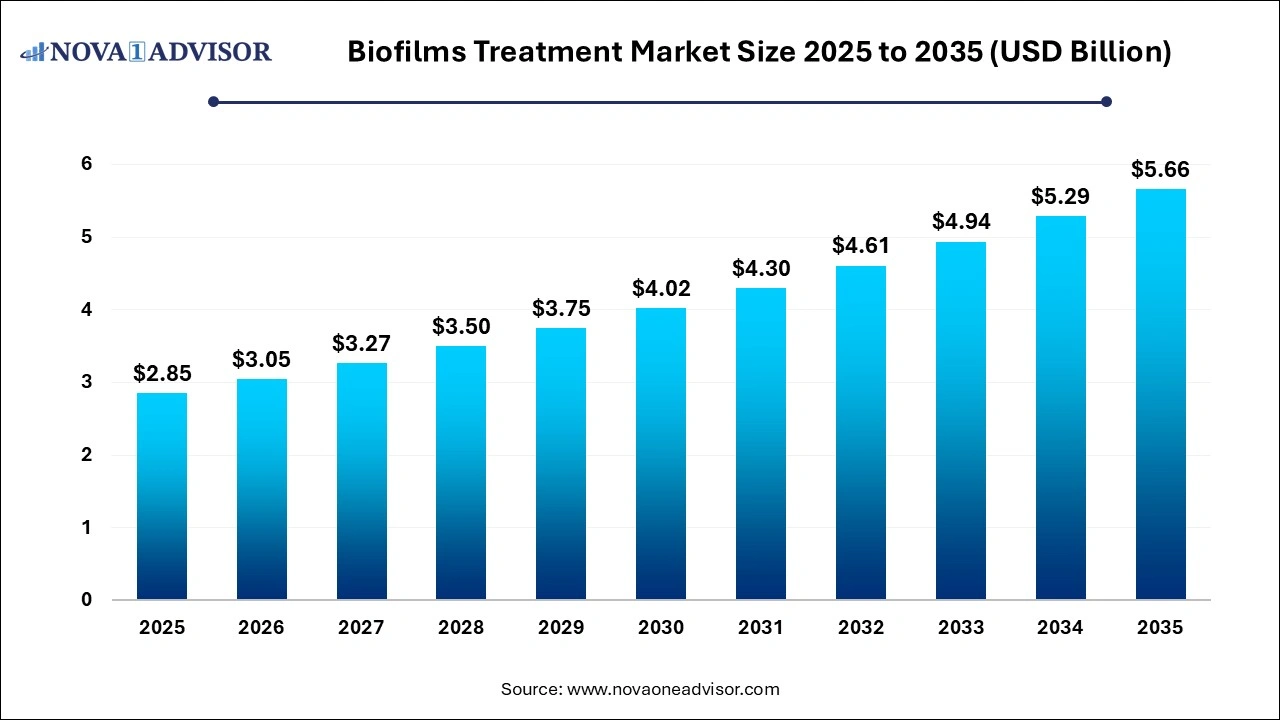
Biofilms Treatment Market Outlook
- Market Growth Overview: The biofilm treatment market is expected to grow significantly between 2026 and 2035, driven by the rising burden of chronic infections and wounds, increased use of medical device-associated infections, and growing awareness and healthcare expenditure.
- Sustainability Trends: Sustainability trends involve eco-friendly and green materials, enzymatic and biological agents, and the circular economy in wastewater.
- Major Investors: Major investors in the market include Smith & Nephew, ConvaTec Group PLC, 3M Company, Coloplast A/S, and Molnlcke Health Care AB.
Report Scope of Biofilms Treatment Market
| Report Coverage | Details |
| Market Size in 2026 | USD 3.05 Billion |
| Market Size by 2035 | USD 5.66 Billion |
| Growth Rate From 2026 to 2035 | CAGR of 7.11% |
| Base Year | 2025 |
| Forecast Period | 2026 to 2035 |
| Segments Covered | By Product, By Wound Type, By End User |
| Market Analysis (Terms Used) | Value (USD Million/Billion) or (Volume/Units) |
| Regional Covered | North America; Europe; Asia Pacific; Latin America; MEA |
| Key Companies Profiled | MiMedx Group Inc. (US), ConvaTec Group plc (UK), Coloplast A/S (Denmark), Mölnlycke Healthcare AB |
Biofilms Treatment Market Segment Insights
By Product Insights
How did the Gauzes and Dressings Segment Dominate the Biofilms Treatment Market?
The gauzes and dressings segment is driven by the shift from passive wound coverage to active, multi-model disruption of microbial materials. The development of smart, nanotechnology-enabled substrates that offer extended wear time and real-time infection monitoring. The combination of mechanical biofilm disruption during dressing changes and sustained antimicrobial release significantly reduces Mean Time to Heal (MTTH) for high-risk conditions like diabetic foot ulcers.
How did the Grafts and Matrices Segment Expect to Hold the Fastest-Growing Biofilms Treatment Market in the Coming Years?
The grafts and matrices segment is driven by engineered disruption of the extracellular polymeric substance (EPS); these products neutralize the protective barriers of biofilms that typically cause conventional dressings to fail in chronic wound environments. The rapid clinical adoption, particularly for diabetic and venous ulcers, is driven by healthcare providers prioritizing high-precision solutions that integrate seamlessly with biologics healing processes. The combination of synthetic biocompatibility and mechanical biofilm inhibition is positioning grafts as the gold standard for treating the world’s most recalcitrant, hard-to-heal wounds.
By Wound Type Insights
How did the Traumatic and Surgical Wounds Segment Account for the Largest Share in the Biofilms Treatment Market?
The traumatic and surgical wounds segment is driven by the shift towards preventative wound care, where specialized dressings are utilized to disrupt the extracellular matrix before chronic infections can take hold. The integration of high-cost, specialized treatments into standard surgical protocols is transforming infection management from a reactive necessity into a proactive clinical standard.
How did the Diabetic Foot Ulcers Segment Expect to Hold the Fastest-Growing Biofilms Treatment Market in the Coming Years?
The diabetic foot ulcers segment is driven by a critical transition from traditional wound care to biofilm-specific therapeutics ecosystems that utilize enzymatic gels and silver-impregnated dressings. The integration of smart antimicrobial technologies and portable negative pressure wound therapy systems, which specifically target the resilient extracellular matrix of chronic infections. The trend toward home-based clinical management to provide cost-effective, long-term care for non-healing wounds.
By End User Insights
How did the Hospitals, ASCs, and Wound Care Centers Segment Dominate the Biofilms Treatment Market?
The hospitals, ASCs, and wound care centers segment is driven by the hospitals and dedicated wound care centers that handle a large, aging patient population with chronic, non-healing wounds that frequently develop biofilms. The advanced care infrastructure provides access to specialized equipment, such as advanced, portable debridement systems, which improve outpatient, surgical, and chronic care efficiency. Its stringent protocols and quality care drive the adoption of high-end, antimicrobial, and antimicrobial treatments to prevent and treat infections.
How did the Home Care Settings Segment Expect to Hold the Fastest-Growing Biofilms Treatment Market in the Coming Years?
The home care settings segment is driven by the surge in user-friendly antimicrobial sprays and gels that empower patients and caregivers to effectively disrupt complex microbial structures without constant professional intervention. Supported by enhanced reimbursement policies and the integration of telemedicine, these cost-effective solutions are becoming the primary choice for an aging population facing persistent, non-healing wounds. The synergy of technological convenience and economic efficiency is ensuring that advanced anti-biofilm therapy remains a sustainable, long-term pillar of modern wound care.
Key Players in the Biofilms Treatment Market
- MiMedx Group Inc. (US): A leader in placental biologics, MiMedx utilizes their proprietary PURION® process to create amniotic tissue allografts like EpiFix, which act as a barrier to protect the wound bed and support natural healing.
- ConvaTec Group plc (UK): ConvaTec provides advanced Hydrofiber® dressings with ionic silver, designed to manage wound exudate while simultaneously disrupting biofilm, and they recently acquired novel antimicrobial nitric oxide technology.
- Coloplast A/S (Denmark): Coloplast offers advanced wound care dressings, including the Biatain Fiber portfolio launched in 2020, which focuses on moisture balance and reducing infection risk.
- Mölnlycke Healthcare AB: Mölnlycke provides advanced wound care solutions, including Safetac® technology dressings, which prevent infection and protect the wound bed, limiting the formation of biofilms.
The biofilms treatment market is segmented into the following segments and subsegments:
By Product
- Debridement Equipment
- Gauzes and Dressings
- Gels, Ointments, and Sprays
- Grafts and Matrices
- Wipes, Pads, and Lavage Solutions
By Wound Type
- Traumatic and Surgical Wounds
- Diabetic Foot Ulcers
- Pressure Ulcers
- Venous Leg Ulcers
- Burns and Other Open Wounds
By End User
- Hospitals, ASCs, and Wound Care Centers
- Home Care Settings
- Other End Users
By Region
- North America
- US
- Canada
- Europe
- Germany
- France
- UK
- Italy
- Spain
- Russia
- RoE
- Asia Pacific
- Japan
- China
- India
- Australia
- Rest of Asia Pacific
- Latin America
- Brazil
- Mexico
- Rest of Latin America
- Middle East and Africa

Proceed to Buy
Instant PDF delivery on confirmation

Biofilms Treatment Market Size to Worth Around USD 5.66Bn by 2035
 Request Customization
 Download Sample

Get a Sample of this Report
Biofilms Treatment Market