

Gene Expression Market Size, Share, and Trends 2026 to 2035
 Status Published
 Category Healthcare


Content
Gene Expression Market Size and Growth 2026 to 2035
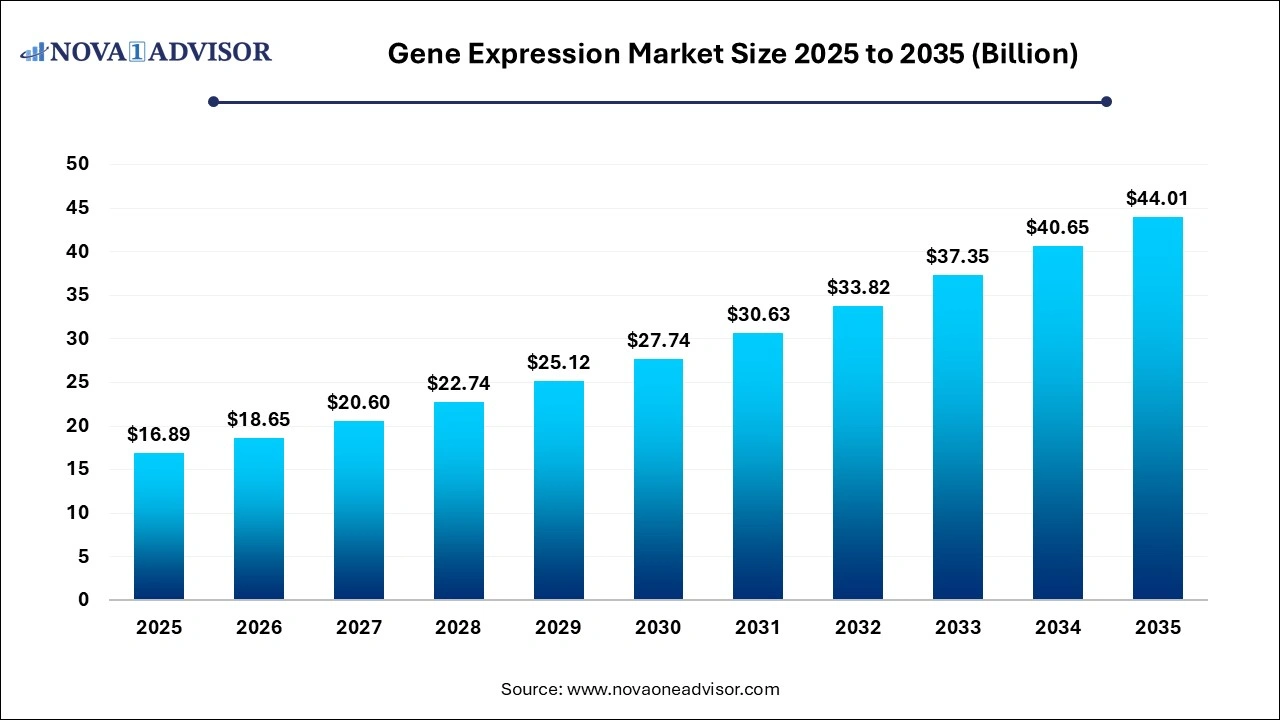
The global gene expression market size was valued at USD 16.89 billion in 2025 and is projected to grow from USD 18.65 billion in 2026 to USD 44.01 billion by 2035, at a CAGR of 10.05% from 2026 to 2035. North America dominated the market, accounting for a revenue share of 47.0% in 2025.
Key Takeaways:
- North America dominated the market and accounted for the largest revenue share of 47% in 2025.
- Asia Pacific is anticipated to register the fastest CAGR of 6.9% during the forecast period.
- CDNA synthesis & conversion accounted for the largest revenue share of 28.18% in 2025.
- Data analysis & interpretation is anticipated to register the fastest CAGR growth of 5.8% during the forecast period.
- Kits & Reagents accounted for the largest revenue share of 75.12% in 2025.
- DNA Chips are anticipated to register the fastest CAGR growth of 5.4% during the forecast period.
- High-plex dominated the gene expression market and accounted for the largest revenue share of 65.15% in 2025.
- The low- to mid- plex segment, on the other hand, is anticipated to register a lucrative CAGR of 4.6% in the market during the forecast period of 2026 to 2035.
- The drug discovery & development segment dominated the market and accounted for the largest revenue share of 43.12% in 2025.
- The clinical diagnostics is anticipated to register the fastest CAGR of 6.2% from 2026 to 2035.
- On the other hand, Promoter analysis is anticipated to register the fastest CAGR growth of 5.4% during the forecast period.
Market Overview
The global Gene Expression Market is witnessing robust growth as gene expression analysis becomes increasingly important in molecular biology, genomics, and precision medicine. These technologies help researchers understand gene activity, identify disease mechanisms, discover biomarkers, and develop targeted therapies, making them essential for biomedical research and clinical diagnostics.
Advancements in technologies such as next-generation sequencing (NGS), quantitative PCR (qPCR), RNA sequencing (RNA-Seq), digital PCR, microarrays, and single-cell transcriptomics have significantly improved the accuracy, speed, and scalability of gene expression analysis. The rising prevalence of cancer, cardiovascular diseases, neurological disorders, autoimmune diseases, and rare genetic conditions is driving demand for advanced gene expression profiling. In addition, growing adoption of precision medicine, increased pharmaceutical and biotechnology research, expanding genomic initiatives, and the integration of AI-powered bioinformatics and cloud computing are accelerating market growth. Continuous investments in genomic research and personalized healthcare are expected to support the long-term expansion of the global gene expression market.
How AI is Impacting the Global Gene Expression Market?
Artificial intelligence is transforming the gene expression market by enabling faster and more accurate analysis of complex transcriptomic data. Modern gene expression studies generate vast amounts of sequencing and molecular data, and AI-powered algorithms help automate data processing, identify meaningful gene expression patterns, and uncover biological insights that would be difficult to detect using conventional analytical methods. Machine learning models can accurately distinguish healthy and diseased tissues based on gene expression profiles, improving the diagnosis of cancer, neurological disorders, autoimmune diseases, and infectious conditions.
AI is also accelerating biomarker discovery by analyzing thousands of genes simultaneously to identify molecular signatures associated with treatment response, disease progression, and patient outcomes. In drug discovery, AI supports target identification, evaluates therapeutic mechanisms, and predicts drug efficacy and toxicity by comparing gene expression changes before and after treatment. Additionally, AI-powered bioinformatics platforms automate quality control, normalization, pathway analysis, and data visualization, significantly improving research efficiency. As multi-omics approaches continue to expand, AI will increasingly integrate gene expression, proteomics, metabolomics, epigenomics, and clinical data to advance precision medicine and personalized therapeutic development.
Major Trends in the Market
-
Integration of Multi-omics Platforms: Combining transcriptomics with proteomics, metabolomics, and epigenomics to obtain a holistic view of gene function and regulation.
-
Rise of Single-cell RNA Sequencing: Single-cell analysis is enabling the dissection of cellular heterogeneity and rare cell population characterization.
-
AI and Machine Learning in Data Interpretation: Artificial intelligence is being used to decode complex gene expression datasets for drug discovery and diagnostics.
-
Miniaturization and Automation of Workflows: Automated gene expression kits and portable systems are enabling point-of-care and decentralized research.
-
Clinical Validation of Expression Signatures: Commercialization of gene expression-based diagnostics for oncology and infectious disease management is expanding.
-
Expansion of Spatial Transcriptomics: New platforms allow for the visualization of gene expression within intact tissues, revealing spatial context in gene regulation.
-
Cloud-Based Data Analysis Platforms: Secure, scalable data processing systems are being adopted for collaborative gene expression studies.
-
Open-Access Databases and International Genomics Initiatives: Public efforts like The Cancer Genome Atlas (TCGA) and GTEx are enriching available datasets and fostering innovation.
Gene Expression Market Report Scope
| Report Attribute | Details |
| Market Size in 2026 | USD 18.65 Billion |
| Market Size by 2035 | USD 44.01 Billion |
| Growth Rate From 2026 to 2035 | CAGR of 10.05% |
| Base Year | 2025 |
| Forecast Period | 2026 to 2035 |
| Segments Covered | Process, Product, Capacity, Application, Technique, Region |
| Market Analysis (Terms Used) | Value (US$ Million/Billion) or (Volume/Units) |
| Report Coverage | Revenue forecast, company ranking, competitive landscape, growth factors, and trends |
| Key Companies Profiled | QIAGEN; Quest Diagnostics, Inc.; F. Hoffmann-La Roche Ltd.; Illumina, Inc.; PerkinElmer, Inc.; Bio-Rad Laboratories; Thermo Fisher Scientific, Inc.; Agilent Technologies; GE Healthcare; Promega Corp.; Luminex Corp.; Takara Bio, Inc.; Danaher Corp.; ELITechGroup; AutoGenomics; Biocartis NV; IntegraGen; Interpace Biosciences, Inc.; Fluidigm Corp. |
Market Driver
Expansion of Precision Medicine and Oncology Research Drives Market Growth
The rapid growth of precision medicine and molecular oncology is a major driver of the gene expression market. Gene expression profiling enables healthcare providers to understand the molecular characteristics of diseases and develop personalized treatment strategies based on individual patient profiles. In oncology, gene expression analysis is widely used to classify tumor types, identify therapeutic targets, predict treatment response, and monitor disease recurrence. Increasing investments in genomic research, government-supported precision medicine initiatives, and the expanding use of transcriptomic technologies in pharmaceutical drug discovery are further accelerating market growth.
Market Restraint
High Cost of Advanced Genomic Technologies and Data Complexity
The high cost of advanced gene expression technologies remains a significant challenge for market expansion. Next-generation sequencing platforms, automated laboratory systems, bioinformatics software, and high-performance computing infrastructure require substantial investment, limiting adoption among smaller laboratories and healthcare institutions. In addition, gene expression studies generate large and complex datasets that require specialized computational expertise for analysis and interpretation. Challenges related to data storage, cybersecurity, regulatory compliance, and the shortage of skilled bioinformaticians continue to hinder broader implementation, particularly in resource-limited settings.
Market Opportunity
Multi-Omics Integration Creates New Growth Opportunities
The integration of gene expression analysis with genomics, proteomics, metabolomics, and epigenomics is creating significant opportunities for the market. Multi-omics approaches provide a more comprehensive understanding of disease biology, enabling researchers to identify novel biomarkers, improve disease prediction, and develop personalized therapies. AI-powered bioinformatics platforms are accelerating the analysis of integrated molecular datasets, supporting faster drug discovery and precision medicine initiatives. Furthermore, the growing adoption of cloud-based computational platforms and multi-omics diagnostics is expected to create substantial long-term opportunities for biotechnology companies, molecular diagnostics providers, and genomics technology developers.
Segmental Analysis
By Process
PCR Analysis dominated the market.
PCR Analysis dominated the gene expression market because quantitative polymerase chain reaction (qPCR) remains the gold standard for validating gene expression measurements due to its exceptional sensitivity, specificity, reproducibility, and rapid turnaround time. Researchers extensively utilize PCR analysis for gene quantification across oncology, infectious diseases, immunology, neuroscience, and agricultural biotechnology. Clinical laboratories also rely heavily on PCR-based assays because regulatory validation, standardized workflows, and established protocols ensure reliable diagnostic performance.
Continuous innovation has further strengthened PCR analysis through digital PCR technologies, automated thermal cyclers, multiplex assays, and integrated laboratory workflows. Pharmaceutical companies routinely employ PCR analysis throughout drug discovery to evaluate therapeutic responses and biomarker expression. The combination of mature technology, broad application scope, and strong clinical acceptance continues supporting the segment's dominant market position.
Data Analysis & Interpretation is projected to be the fastest-growing process.
Data Analysis & Interpretation is expected to witness the fastest growth because modern transcriptomic experiments generate increasingly large and complex biological datasets requiring sophisticated computational analysis. High-throughput sequencing, single-cell transcriptomics, spatial genomics, and multiplex assays produce millions of data points that cannot be interpreted using traditional statistical methods alone.
Artificial intelligence, cloud computing, and advanced bioinformatics platforms are transforming transcriptomic analysis by automating normalization, differential expression analysis, pathway enrichment, and predictive modeling. Biotechnology companies increasingly invest in computational biology capabilities to accelerate biomarker discovery and therapeutic development, making data analysis one of the fastest-growing segments within the gene expression workflow.
By Product
Kits & Reagents dominated the market.
Kits & Reagents dominated the gene expression market because every stage of transcriptomic analysis requires recurring consumption of specialized reagents for RNA extraction, purification, reverse transcription, PCR amplification, sequencing library preparation, labeling, and quality control. Their repetitive use across research laboratories, pharmaceutical companies, hospitals, and academic institutions creates continuous demand irrespective of laboratory size.
Manufacturers continue introducing optimized reagent formulations that improve RNA stability, amplification efficiency, sequencing accuracy, and workflow automation. Ready-to-use kits reduce procedural variability while increasing reproducibility, enabling laboratories to standardize complex molecular biology protocols. Their recurring consumption ensures sustained market leadership within the product segment.
DNA Chips are anticipated to register the fastest growth.
DNA Chips are projected to experience the fastest growth owing to their increasing use in multiplex gene expression profiling, disease biomarker identification, pharmacogenomics, and precision diagnostics. Modern microarray platforms simultaneously analyze thousands of genes, enabling comprehensive transcriptomic profiling with relatively high efficiency and scalability.
Advancements in probe design, microfabrication technologies, hybridization chemistry, and automated imaging systems continue improving DNA chip sensitivity and analytical performance. Integration with AI-driven analytical software further enhances biological interpretation, positioning DNA chips as one of the fastest-growing product categories within the market.
By Capacity
High-Plex dominated the market.
High-Plex dominated the gene expression market because researchers increasingly require comprehensive transcriptomic analysis involving thousands of genes simultaneously. High-plex platforms support large-scale biomarker discovery, systems biology research, oncology profiling, and precision medicine by providing broad molecular coverage within a single experiment.
Modern sequencing technologies, multiplex PCR systems, and spatial transcriptomics platforms have dramatically expanded analytical capacity while reducing cost per data point. Pharmaceutical companies particularly benefit from high-plex technologies because they accelerate target identification, toxicity assessment, and mechanism-of-action studies across complex biological systems.
Low- to Mid-Plex is expected to be the fastest-growing segment.
Low- to Mid-Plex is projected to witness the fastest growth because many clinical diagnostic laboratories increasingly require targeted gene panels rather than whole-transcriptome analysis. These focused assays reduce analytical complexity while providing clinically actionable information with faster turnaround times and lower operational costs.
Growing adoption of companion diagnostics, infectious disease testing, and personalized oncology panels supports increasing demand for targeted multiplex assays. Their affordability, clinical practicality, and simplified data interpretation continue driving rapid expansion across routine diagnostic laboratories.
By Application
Drug Discovery & Development dominated the market.
Drug Discovery & Development dominated the gene expression market because pharmaceutical companies extensively utilize transcriptomic profiling throughout every stage of therapeutic development. Gene expression analysis enables researchers to identify drug targets, understand molecular mechanisms, evaluate toxicity, discover predictive biomarkers, and optimize patient stratification during clinical trials.
Modern precision medicine increasingly depends on transcriptomic information to evaluate therapeutic response and resistance mechanisms. Continuous investment by pharmaceutical companies in genomics-driven research further strengthens demand for gene expression technologies, maintaining the dominance of this application segment.
Clinical Diagnostics is projected to witness the fastest growth.
Clinical Diagnostics is anticipated to register the fastest growth owing to increasing clinical adoption of molecular diagnostics, companion diagnostics, and personalized medicine. Gene expression signatures are increasingly incorporated into diagnostic assays for cancer classification, infectious disease detection, autoimmune disorders, and inherited genetic conditions.
Regulatory approvals, expanding reimbursement coverage, and improved laboratory automation continue accelerating clinical implementation. Integration with artificial intelligence further enhances diagnostic accuracy while reducing interpretation time, positioning clinical diagnostics among the fastest-growing applications.
By Technique
RNA Expression dominated the market.
RNA Expression dominated the gene expression market because transcriptomic analysis represents the primary approach for understanding functional gene activity across virtually every biological discipline. Researchers utilize RNA sequencing, quantitative PCR, digital PCR, and microarrays to investigate disease mechanisms, therapeutic responses, developmental biology, and cellular differentiation.
Technological improvements in sequencing chemistry, sample preparation, and computational analysis continue expanding RNA expression applications across oncology, neuroscience, immunology, regenerative medicine, and infectious disease research. Its central role in molecular biology ensures continued market leadership.
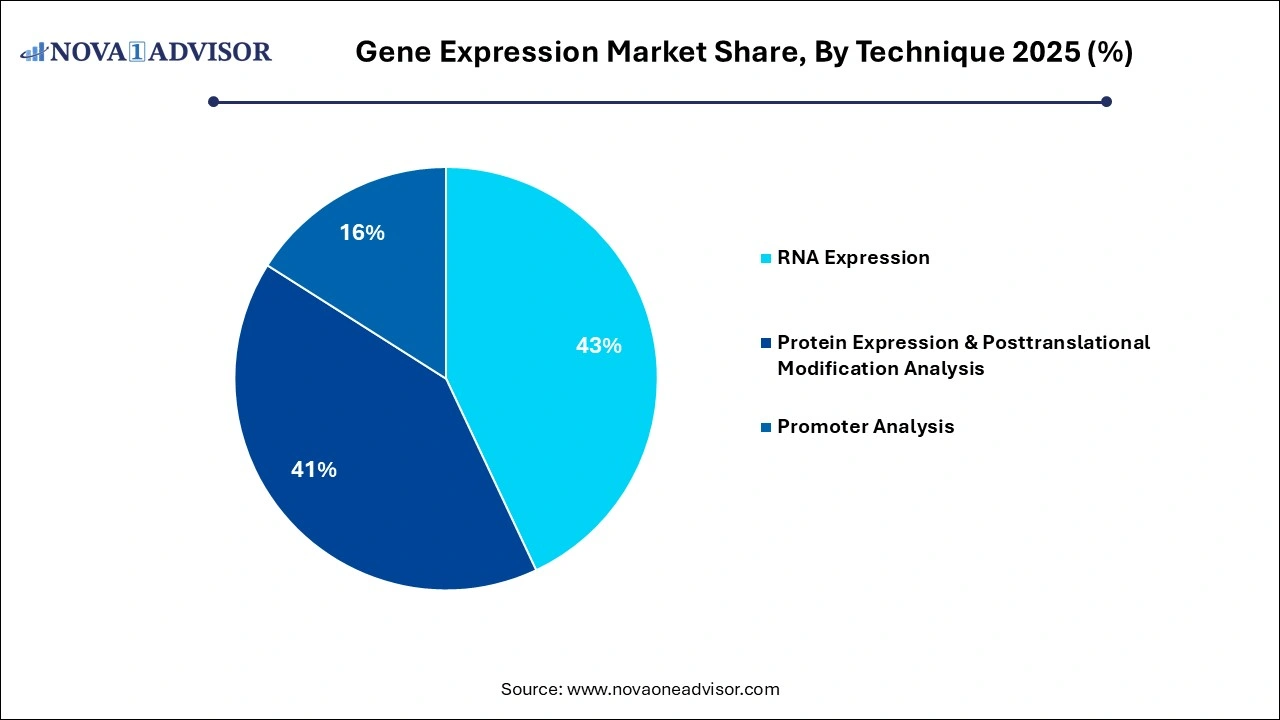
Protein Expression & Posttranslational Modification Analysis is projected to be the fastest-growing technique.
Protein Expression & Posttranslational Modification Analysis is expected to witness the fastest growth because researchers increasingly recognize that gene expression alone cannot fully explain biological function. Protein abundance, phosphorylation, glycosylation, ubiquitination, and other posttranslational modifications directly influence cellular behavior and therapeutic responses.
Integrated transcriptomic and proteomic research is becoming essential for biomarker discovery, precision medicine, and drug development. Advanced mass spectrometry, AI-assisted proteomics, and multi-omics platforms continue accelerating growth within this rapidly evolving segment.
By Region
North America dominated the market.
North America dominated the global gene expression market owing to its advanced biotechnology ecosystem, substantial research funding, well-established genomic infrastructure, and strong presence of leading life science companies. Government agencies, academic institutions, pharmaceutical organizations, and biotechnology firms continuously invest in transcriptomics, precision medicine, and molecular diagnostics.
The region also benefits from extensive adoption of next-generation sequencing, AI-powered bioinformatics, and cloud computing technologies. Comprehensive regulatory frameworks and strong collaboration between academia and industry further reinforce North America's leadership position.
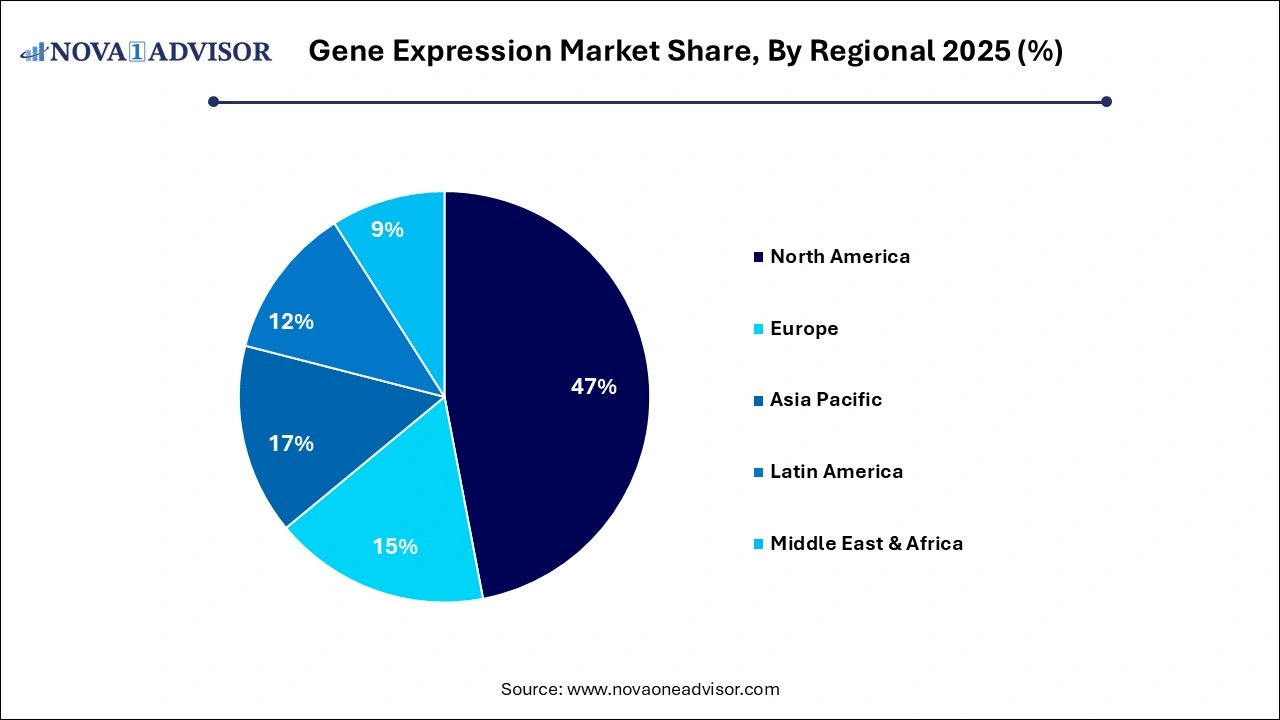
Asia-Pacific is expected to witness the fastest growth.
Asia-Pacific is projected to register the fastest market growth due to expanding biotechnology industries, increasing government investments in genomics, growing pharmaceutical manufacturing, and improving healthcare infrastructure. Countries including China, Japan, South Korea, India, Singapore, and Australia continue investing heavily in precision medicine and molecular diagnostics.
National genome initiatives, expanding research collaborations, and increasing adoption of next-generation sequencing technologies are accelerating market development. International biotechnology companies are also strengthening regional manufacturing and research capabilities, positioning Asia-Pacific as the fastest-growing regional market.
Key Companies & Market Share Insights
- Catalent Inc.
- QIAGEN
- Quest Diagnostics, Inc.
- F. Hoffmann-La Roche Ltd.
- Illumina, Inc.
- PerkinElmer, Inc.
- Bio-Rad Laboratories
- Thermo Fisher Scientific, Inc.
- Agilent Technologies
- GE Healthcare
- Promega Corp.
- Luminex Corp.
- Takara Bio, Inc.
- Danaher Corp.
Segments Covered in the Report
This report forecasts revenue growth at country levels and provides an analysis of the latest industry trends in each of the sub-segments from 2021 to 2035. For this study, Nova one advisor, Inc. has segmented the Gene Expression market.
By Process
- Sample Collection
- Purification
- cDNA synthesis & conversion
- PCR Analysis
- Data analysis & interpretation
By Product
- Kits & Reagents
- DNA Chips
- Others
By Capacity
- Low- to Mid- Plex
- High-Plex
By Application
- Drug Discovery & Development
- Clinical Diagnostics
- Biotech & Microbiology
- Others
By Technique
- RNA Expression
- Promoter Analysis
- Protein Expression & Posttranslational Modification Analysis
By Region
- North America
- Europe
- Asia-Pacific
- Latin America
- Middle East & Africa (MEA)
FAQ's

Proceed to Buy
Instant PDF delivery on confirmation

 Request Customization
 Download Sample

Get a Sample of this Report
Gene Expression Market