

Liver Biopsy Market Size, Share, Forecast Report, 2026-2035
 Status Published
 Category Healthcare


Content
Liver Biopsy Market Size and Growth 2026 to 2035
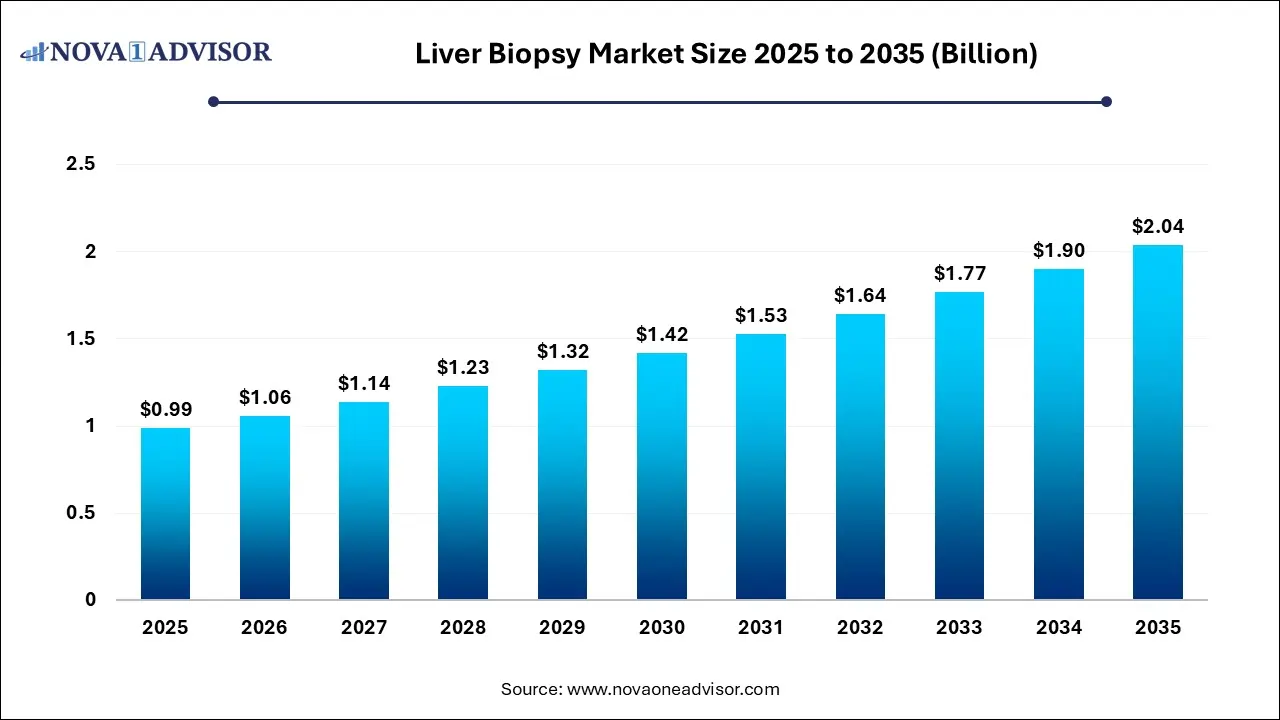
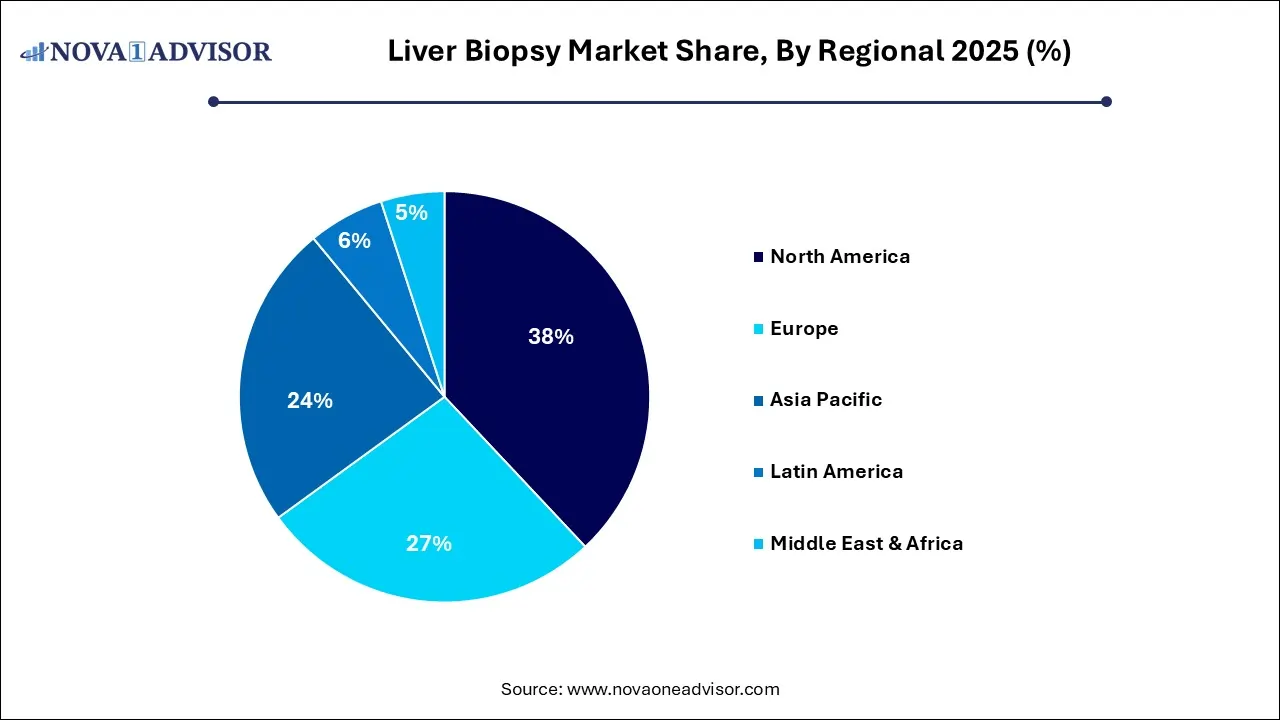
The global liver biopsy market size was valued at USD 0.99 billion in 2025 and is projected to grow from USD 1.06 billion in 2026 to USD 2.04 billion by 2035, at a CAGR of 7.53% from 2026 to 2035. North America dominated the market, accounting for a revenue share of 38.0% in 2025.
Key Takeaway:
- By type, the percutaneous biopsy segment dominated the market with the largest share in 2025.
- By type, the laparoscopic biopsy segment is expected to grow at the fastest CAGR over the forecast period.
- By indication, the non-alcoholic fatty liver disease segment dominated the market with the largest share in 2025.
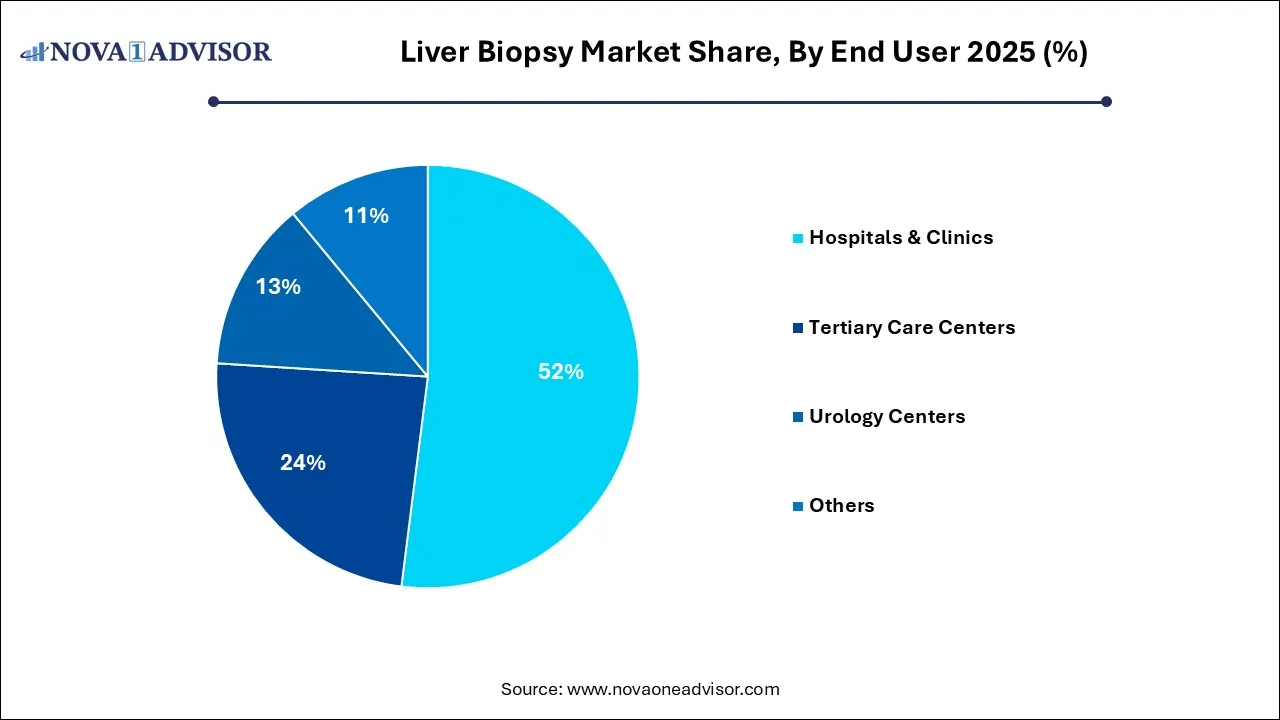
- By end user, the Hospitals & Clinics segment dominated the market with the largest share of 52.0% in 2025.
- By region, North America dominated the market with the largest share of 38.0% in 2025.
Market Overview
The global liver biopsy market remains a vital component of liver disease diagnosis, providing definitive tissue-based evaluation for a broad range of hepatic disorders. Despite growing adoption of non-invasive diagnostic tools such as elastography and serum biomarkers, liver biopsy continues to be the gold standard for assessing liver inflammation, fibrosis, steatosis, cirrhosis, and liver tumors, particularly in complex or inconclusive cases.
The rising prevalence of chronic liver diseases—including metabolic dysfunction-associated steatotic liver disease (MASLD), chronic hepatitis B and C, alcoholic liver disease, autoimmune hepatitis, and liver cancer—is driving demand for accurate diagnostic procedures. Increasing rates of obesity, diabetes, metabolic syndrome, and viral hepatitis further support market growth by creating a greater need for precise disease staging and treatment planning.
Technological advancements have significantly improved liver biopsy procedures through ultrasound-guided and CT-guided techniques, advanced biopsy needles, and enhanced imaging guidance, resulting in greater accuracy, reduced complications, and improved patient safety. Additionally, the growing focus on personalized medicine and the expanding pipeline of therapies for liver diseases continue to reinforce the importance of histopathological evaluation in both clinical practice and drug development.
Rising investments in specialized liver care centers, improving healthcare infrastructure, and expanding access to advanced diagnostics in emerging economies are further supporting market expansion. While non-invasive technologies are increasingly used for screening and monitoring, liver biopsy remains indispensable for definitive diagnosis, disease staging, and therapeutic decision-making, ensuring sustained demand in the global market.
Market Outlook
- Market Growth Overview: The global liver biopsy market is expected to grow significantly between 2025 and 2035, driven by the growing need for personalized medicine.
- Sustainability Trends: Sustainability trends involve the adoption of sustainable and recyclable materials for biopsy needles and kits.
- Major Investors: Major investors in the market include Boston Scientific Corporation, Medtronic, Cook Medical, and Argon Medical Devices.
How is AI impacting the global liver biopsy market?
Artificial intelligence (AI) is revolutionizing the market by facilitating the shift towards digital pathology and precision diagnostics other than rendering tissue sampling obsolete. Furthermore, AI algorithms facilitate the automated digitization of biopsy slides, providing high-precision evaluations of histopathological parameters such as fibrosis, steatosis, and inflammation.
AI-assisted ultrasound, CT, and MRI technologies improve lesion detection, optimize biopsy needle placement, and enhance procedural safety by helping physicians avoid critical structures. In digital pathology, AI algorithms automatically evaluate biopsy samples for fibrosis, steatosis, inflammation, and tumor characteristics, improving diagnostic accuracy while reducing interpretation time.
AI also supports predictive disease management by combining biopsy findings with clinical and genomic data to assess disease progression and treatment response, enabling more personalized patient care. As AI continues to integrate with advanced imaging, digital pathology, and precision medicine, it is making liver biopsy more accurate, efficient, and data-driven.
Liver Biopsy Market Report Scope
| Report Coverage | Details |
| Market Size in 2026 | USD 1.06 Billion |
| Market Size by 2035 | USD 2.04 Billion |
| Growth Rate From 2026 to 2035 | CAGR of 7.53% |
| Base Year | 2025 |
| Forecast Period | 2026 to 2035 |
| Segments Covered | By Type, By End User, By Indication, By Region |
| Market Analysis (Terms Used) | Value (USD Million/Billion) or (Volume/Units) |
| Regional Scope | North America; Europe; Asia Pacific; Central and South America; the Middle East and Africa |
| Key Companies Profiled | Becton, Dickinson and Company, MDxHealth, Veran medical, Medtronic, Argon Medical Devices, Inc., Mauna Kea Technologies, Boston Scientific Corporation, Intact Medical Corp., C. R. Bard, Inc., Leica Biosystems, Cook Medical, RI.MOS., Hologic, Inc., Sterylab, INRAD Inc., Fujifilm Medical Systems, and others. |
Market Driver
Rising Burden of Chronic Liver Diseases Driving Demand for Histological Diagnosis
The increasing prevalence of chronic liver diseases, including MASLD, chronic hepatitis, cirrhosis, autoimmune liver disorders, and liver cancer, is a major driver of the liver biopsy market. Rising rates of obesity, diabetes, metabolic syndrome, and alcohol-related liver disease have increased the need for accurate disease staging. Liver biopsy remains the gold standard for evaluating liver tissue, enabling precise diagnosis, fibrosis assessment, and personalized treatment planning, particularly in complex clinical cases.
Market Restraint
Availability of Non-Invasive Diagnostic Alternatives Limiting Procedure Volumes
The growing adoption of non-invasive diagnostic technologies, such as transient elastography, magnetic resonance elastography, FibroScan, and serum biomarker tests, is limiting the number of liver biopsy procedures. These methods reduce patient discomfort and procedural risks while enabling repeated disease monitoring. As a result, liver biopsy is increasingly reserved for cases requiring definitive histological confirmation, creating a challenge for market growth.
Market Opportunity
Expanding Precision Hepatology and Personalized Medicine Creating Long-Term Growth Opportunities
The shift toward precision hepatology is creating significant opportunities for the liver biopsy market. Increasing use of personalized treatment strategies, targeted therapies, molecular diagnostics, digital pathology, and AI-driven tissue analysis is enhancing the clinical value of liver biopsy. In addition, expanding clinical trials for liver diseases, growing investments in specialized liver care centers, and improving access to advanced diagnostics in emerging economies are expected to support sustained market growth.
Segmental Insights
By Type
Why did the percutaneous biopsy segment dominate the global liver biopsy market?
The percutaneous biopsy segment dominated the market with the largest share in 2025. The dominance of the segment can be attributed to the increasing incidence of chronic liver diseases and innovations in ultrasound and CT imaging guidance. In addition, a percutaneous liver biopsy is a medical procedure in which a specialized needle is advanced through the abdominal wall and into the liver for the sample collection.
How did the laparoscopic biopsy segment expected to hold the significantly growing global liver biopsy market in the coming years?
The laparoscopic biopsy segment is expected to grow at the fastest CAGR over the forecast period. The growth of the segment can be credited to the surge in demand for minimally invasive alternatives to blind percutaneous procedures and the rise in liver disorders such as cirrhosis and hepatitis. Laparoscopy enables direct visualization of the liver surface
By Indication
Why did the nonalcoholic fatty liver disease segment dominate the global liver biopsy market?
The nonalcoholic fatty liver disease segment dominated the market with the largest share in 2025. The dominance of the segment can be linked to the increasing rates of type-2 diabetes and obesity along with the surge in clinical trials. NASH is increasingly the main cause of chronic liver disease, hepatocellular carcinoma (HCC), and liver transplants globally.
How did the chronic hepatitis B or C segment expected to hold the significantly growing global liver biopsy market in the coming years?
The chronic hepatitis B or C segment is expected to grow at the fastest CAGR over the forecast period. The growth of the segment can be driven by continuous monitoring needs and growing disease awareness. The growing incidence of metabolic disorders such as non-alcoholic fatty liver disease (NAFLD) is leading to segment growth further.
By End User
Why did the hospital segment dominate the global liver biopsy market?
The hospitals segment dominated the market with the largest share in 2025. The dominance of the segment is owing to comprehensive care abilities needed to manage procedural complications and cutting-edge diagnostic imaging infrastructure. Furthermore, hospitals are equipped with advanced imaging technologies, including ultrasound, CT, fluoroscopy, and MRI systems.
How did the tertiary care centers segment expected to hold the significantly growing global liver biopsy market in the coming years?
The tertiary care centers segment is expected to grow at the fastest CAGR over the forecast period. The growth of the segment is due to the presence of skilled gastroenterology teams and high procedure volumes. Tertiary hospitals possess the necessary financial resources to acquire advanced imaging equipment and establish sophisticated molecular diagnostic laboratories.
By Regional
Why did the North American region account for the largest share in the global liver biopsy market?
North America dominated the market with the largest share in 2025. The dominance of the region can be attributed to the growing rates of alcohol consumption and a robust presence of major medical device manufacturers. In addition, the widespread accessibility of specialized hepatic centers, comprehensive healthcare networks, and digital electronic health record (EHR) systems enables proactive medical screening and continuous disease management.
U.S. Global Liver Biopsy Market Trends
The growth of the market in the country can be driven by favorable reimbursement policies and the growing incidence of chronic liver diseases such as MASLD and ALD. Also, the United States medical sector benefits extensively from the broad distribution of dedicated hepatic facilities and advanced diagnostic imaging methodologies.
Why did the Asia-Pacific region become the fastest-growing global liver biopsy market during the forecast period?
Asia Pacific is expected to grow at the fastest CAGR over the forecast period. The growth of the region can be credited to the growing incidence of metabolic-dysfunction-associated steatotic liver disease and growing healthcare infrastructure. Furthermore, government initiatives, such as China's "Healthy Liver 2030" program, actively promote early diagnosis, hence directly increasing overall market expansion.
China Global Liver Biopsy Market Trends
The market in the country is growing due to extensive adoption of advanced imaging and AI-assisted biopsy tools in major Tier-1 hospitals and a surge in the middle-class population. China carries the largest burden of chronic hepatitis B (HBV) globally, along with a high prevalence of hepatitis C (HCV).
Key Players in the Global Liver Biopsy Market
- Boston Scientific Corporation: A dominant force with a broad portfolio of endoscopy and interventional devices, further boosted by its acquisition of Apollo Endosurgery to enhance minimally invasive GI intervention.
- Cook Medical: A market leader in minimally invasive medical devices, known for manufacturing precision percutaneous liver biopsy needles and sets designed to maximize tissue yield while minimizing patient trauma.
- Becton, Dickinson and Company (BD): A key player in core biopsy instruments, renowned for manufacturing safe, high-quality, and reliable disposable and reusable biopsy needles.
Recent Developments
- In February 2026, GE HealthCare officially introduced the next generation of its LOGIQ™ general imaging ultrasound portfolio, featuring the E10 Series, Fortis™, and Totus™ systems. These advanced diagnostic platforms are scheduled to make their initial debut at the European Congress of Radiology (ECR) 2026.
Segments Covered in the Report
This report forecasts revenue growth at country levels and provides an analysis of the latest industry trends in each of the sub-segments from 2021 to 2035. For this study, Nova one advisor, Inc. has liver biopsy market.
By Type
- Percutaneous biopsy
- Transjugular biopsy
- Laparoscopic biopsy
By End User
- Hospitals & Clinics
- Tertiary Care Centers
- Urology Centers
- Others
By Indication
- Nonalcoholic fatty liver disease
- Chronic hepatitis B or C
- Autoimmune hepatitis
- Alcoholic liver disease
- Others
By Region
- North America
- Europe
- Asia Pacific
- Latin America
- Middle East & Africa
FAQ's

Proceed to Buy
Instant PDF delivery on confirmation

 Request Customization
 Download Sample

Get a Sample of this Report
Liver Biopsy Market