

Microbial Products Market Size, Share, Growth, Report 2026 to 2035
 Status Published
 Category Healthcare


Content
Microbial Products Market Size and Growth 2026 to 2035
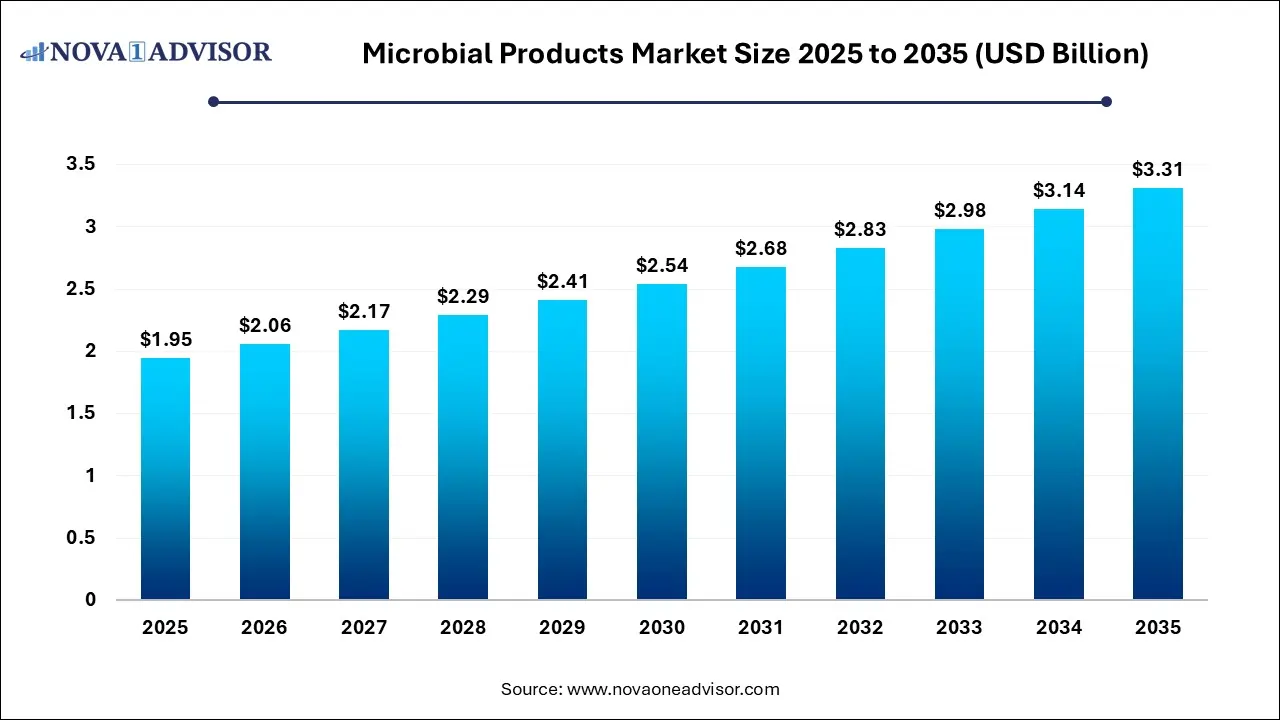
The global microbial products market size was estimated at USD 1.95 billion in 2025 and is projected to hit around USD 3.31 billion by 2035, growing at a CAGR of 5.44% during the forecast period from 2026 to 2035.
Market Overview
The Microbial Products Market has evolved into a critical segment of the global biotechnology and pharmaceutical industries. Microbial products are substances derived from microorganisms such as bacteria, fungi, and viruses, and they are extensively utilized in pharmaceuticals, diagnostics, industrial biotechnology, healthcare, agriculture, and research applications. These products include enzymes, vaccines, antibiotics, nutrients, chemotherapeutic agents, and polysaccharides that support a broad range of commercial and medical functions.
The growing importance of microorganisms in modern healthcare and industrial processes has significantly increased the demand for microbial products. Pharmaceutical manufacturers rely heavily on microbial fermentation and microbial engineering technologies to produce therapeutic compounds, vaccines, antibiotics, and biologics. Microbial-derived enzymes and metabolites are also increasingly used in diagnostics, genetic engineering, and precision medicine.
One of the major growth factors for the market is the increasing prevalence of infectious diseases and chronic disorders worldwide. Healthcare systems are investing heavily in advanced therapeutic products, including microbial-based drugs and vaccines, to improve disease prevention and treatment outcomes. The global experience during pandemic outbreaks highlighted the importance of rapid vaccine development and scalable microbial manufacturing systems. Consequently, governments and pharmaceutical companies have expanded investments in microbial biotechnology infrastructure.
The rise of synthetic biology and genetic engineering is also reshaping the market landscape. Scientists can now manipulate microbial strains to enhance productivity, improve metabolic pathways, and create novel therapeutic compounds. Advanced microbial engineering technologies have accelerated the development of next-generation biologics, recombinant proteins, and biosimilars. This has opened new commercial opportunities for microbial products across biotechnology and pharmaceutical applications.
Additionally, industrial biotechnology is contributing substantially to market growth. Microbial enzymes and fermentation technologies are increasingly used in food processing, waste management, agriculture, biofuel production, and environmental sustainability initiatives. Companies are replacing chemical-intensive industrial processes with microbial-based alternatives to reduce environmental impact and improve operational efficiency.
Research institutions and academic laboratories are another major contributor to market expansion. Increasing genomic research, microbiome studies, and drug discovery programs require sophisticated microbial products and culture systems. Universities and biotechnology centers worldwide are investing in microbial genomics, molecular biology, and synthetic biology research to develop innovative healthcare solutions.
Technological advancements in fermentation systems, microbial screening, and high-throughput genomic sequencing have further accelerated market development. Automation and digitalization are improving microbial production efficiency while reducing manufacturing costs. These advancements are expected to enhance scalability and support long-term growth in the Microbial Products Market.
Market Outlook
- Market Growth Overview: The global microbial products market is expected to grow significantly between 2025 and 2034, driven by innovations in therapeutic products, vaccines, and drug developments, growing regulatory support and industrial demand, and sustainable agricultural and environmental demand.
- Sustainability Trends: Sustainability trends involve bio-based chemicals and feedstocks, circular bioeconomic integration, and green microbiology principles.
- Major Investors: Major investors in the market include BASF SE, Novozymes (Novonesis), DuPont (now IFF), Chr. Hansen, and DSM, alongside pharmaceutical giants like Merck & Co., Pfizer, and Sanofi.
How is AI Transforming the Microbial Products Market
Artificial intelligence is transforming the Microbial Products Market by accelerating microbial discovery, improving production efficiency, and optimizing drug development processes. AI-powered platforms are increasingly used to analyze complex microbial datasets, genomic sequences, and metabolic pathways, enabling researchers to identify promising microbial strains more efficiently than traditional laboratory methods.
One of the most important applications of AI is in microbial genomics and strain engineering. Machine learning algorithms can analyze vast genomic databases to predict microbial behavior, metabolic performance, and therapeutic potential. This significantly shortens research timelines and reduces development costs for microbial-based drugs and vaccines.
AI is also revolutionizing antibiotic discovery. Pharmaceutical companies are utilizing deep learning models to identify new antimicrobial compounds capable of combating resistant bacterial strains. Traditional antibiotic discovery often required years of screening and experimentation, whereas AI systems can rapidly predict molecular interactions and prioritize promising candidates for laboratory testing.
In vaccine development, AI-assisted modeling is helping researchers design microbial vaccines with improved efficacy and stability. During infectious disease outbreaks, AI tools can rapidly analyze pathogen evolution, helping manufacturers accelerate vaccine formulation and production strategies. AI-driven simulations additionally improve bioprocess optimization by monitoring fermentation conditions, nutrient consumption, and microbial growth patterns in real time.
For example, biotechnology companies are increasingly implementing AI-powered bioreactor monitoring systems that automatically adjust temperature, pH, oxygen levels, and nutrient supply to maximize microbial productivity. These smart manufacturing systems improve consistency and reduce waste during large-scale production.
AI also supports predictive maintenance and quality control in microbial manufacturing facilities. Advanced analytics can identify deviations in production parameters before failures occur, minimizing downtime and ensuring compliance with regulatory standards.
Another emerging application involves microbiome research. AI systems can analyze interactions between human microbiota and disease progression, helping scientists identify new microbial therapeutic opportunities. This is particularly important in precision medicine, where microbial products may be tailored to individual patient profiles.
As AI adoption continues to expand across biotechnology and healthcare sectors, the Microbial Products Market is expected to witness significant improvements in innovation speed, manufacturing efficiency, and therapeutic discovery.
Microbial Products Market Report Scope
| Report Coverage | Details |
| Market Size in 2026 | USD 2.06 Billion |
| Market Size by 2035 | USD 3.31 Billion |
| Growth Rate From 2026 to 2035 | CAGR of 5.44% |
| Base Year | 2025 |
| Forecast Period | 2026 to 2035 |
| Segments Covered | By Type, By Source, By End-Users, By Applications, By Region |
| Market Analysis (Terms Used) | Value (USD Million/Billion) or (Volume/Units) |
| Regional Scope | North America; Europe; Asia Pacific; Central and South America; the Middle East and Africa |
| Key Companies Profiled | Key players profiled in the report are Amgen Inc., Merck & Co.,Inc., Valent BioSciences Corp., GlaxoSmithKline plc, Pfizer Inc., bioMérieux SA, Ajinomoto Co.Inc., Sanofi S.A, Novartis AG, NovaDigm Therapeutics, Kyowa Hakko Bio Co., Ltd. and others. |
Market Driver
Increasing Demand for Biopharmaceuticals and Vaccines
The increasing global demand for biopharmaceuticals and vaccines is one of the primary drivers of the Microbial Products Market. Pharmaceutical companies are increasingly relying on microbial systems for the production of therapeutic proteins, antibiotics, recombinant vaccines, and biologics. Microorganisms offer scalable and cost-effective manufacturing capabilities, making them highly valuable for modern drug development.
The rise in infectious diseases, chronic illnesses, and emerging viral outbreaks has intensified the need for advanced vaccine technologies. Governments and healthcare organizations worldwide are investing heavily in vaccine research, manufacturing infrastructure, and immunization programs. Microbial fermentation systems are central to vaccine production because they enable rapid large-scale manufacturing.
Biopharmaceutical companies are also focusing on precision medicine and targeted therapeutics, many of which involve microbial-derived compounds. Recombinant DNA technology and microbial engineering are enabling the development of highly specialized therapies with improved efficacy and reduced side effects.
Furthermore, aging populations and increasing healthcare expenditure are boosting demand for advanced therapeutics globally. This has encouraged pharmaceutical manufacturers to expand microbial production facilities and invest in innovative fermentation technologies, thereby driving market growth.
Market Restraint
Stringent Regulatory and Manufacturing Challenges
Stringent regulatory requirements and complex manufacturing processes represent major restraints for the Microbial Products Market. Microbial products intended for pharmaceutical and healthcare applications must comply with rigorous quality, safety, and efficacy standards established by regulatory authorities such as the FDA, EMA, and WHO.
The development and commercialization of microbial therapeutics often involve lengthy clinical trials, extensive documentation, and strict manufacturing validation procedures. These regulatory processes significantly increase development timelines and operational costs, particularly for small and medium-sized biotechnology companies.
Manufacturing microbial products also presents technical challenges. Maintaining microbial strain stability, preventing contamination, and ensuring consistent product quality require highly controlled production environments and sophisticated bioprocess systems. Even minor deviations in fermentation conditions can impact product yield and therapeutic performance.
Another challenge involves antimicrobial resistance and biosafety concerns associated with microbial manipulation. Regulatory agencies impose strict biosafety protocols for genetically modified microorganisms, increasing compliance complexity for manufacturers.
Additionally, limited infrastructure and skilled workforce availability in certain developing regions hinder market expansion. High capital investment requirements for fermentation facilities and advanced laboratory equipment further restrict market entry for smaller organizations.
Market Opportunity
Expansion of Synthetic Biology and Precision Medicine
The rapid expansion of synthetic biology and precision medicine presents substantial opportunities for the Microbial Products Market. Synthetic biology enables scientists to redesign microorganisms for highly specialized industrial and medical applications, creating enormous potential for innovative microbial therapeutics and bioengineered products.
Advanced gene-editing technologies such as CRISPR are allowing researchers to manipulate microbial genomes with unprecedented precision. This facilitates the production of novel antibiotics, therapeutic proteins, vaccines, and personalized microbial therapies tailored to specific patient needs.
Precision medicine is another major opportunity area. Researchers are increasingly studying the human microbiome and its relationship with disease progression. Microbial products designed to modulate gut microbiota or target specific biological pathways could revolutionize treatment approaches for gastrointestinal disorders, metabolic diseases, and autoimmune conditions.
Biotechnology companies are also exploring microbial biosynthesis for sustainable manufacturing of chemicals, biofuels, and biodegradable materials. This aligns with global sustainability initiatives and creates additional commercial opportunities beyond healthcare applications.
As governments and private investors continue funding synthetic biology research, companies capable of developing innovative microbial engineering platforms are expected to gain significant competitive advantages in the coming years.
Segmental Insights
By Type
How did the enzymes segment account for the largest share in the Global Microbial Products market?
The enzymes segment is driven by the transformative shift in industrial biotechnology, offering superior scalability and cost-effectiveness through rapid, high-yield fermentation. Their remarkable stability across diverse pH and temperature ranges, enhanced by genetic engineering, allows for tailored applications in everything from food processing to eco-friendly detergents.
How did the nutrients segment expect to hold the fastest-growing Global Microbial Products market in the coming years?
The nutrients segment is driven by the rapid diversification into plant-based and non-dairy options, catering to evolving consumer dietary preferences. The innovations, such as nanotechnology, have vastly improved the bioavailability and efficiency of these natural functional ingredients. The shift toward clean-label products and microbially derived nutrients is redefining the standards for sustainable and effective nutrition.
By Source
How did the bacterial segment account for the largest share in the Global Microbial Products market?
The bacterial segment is driven by the high-yield industrial fermentation and breakthroughs in strain optimization that outperform traditional alternatives. As global demand shifts toward eco-friendly crop protection and efficient industrial processing, bacterial applications remain the primary driver of market growth. Consequently, continued investment in microbial research is cementing their role as essential components of the modern bio-economy.
How did the fungi segment expect to hold the fastest-growing Global Microbial Products market in the coming years?
The fungi segment is driven by the rapidly transforming agricultural landscape, with strains like Trichoderma and mycorrhizae proving essential for nutrient uptake and soil health. Their unique ability to boost crop yields has led to widespread adoption in high-value farming, while their versatility fuels innovation in plant-based food fermentation.
By Application
How did the pharmaceutical and biotechnological industries segment account for the largest share in the Global Microbial Products market?
The pharmaceutical and biotechnological industries segment is driven by the massive transition from small-molecule drugs to complex biologics and vaccines. This shift necessitates advanced microbial bioprocessing and high-yield expression systems to produce monoclonal antibodies and therapeutic proteins at scale. The increased R&D funding and strict regulatory quality controls for environmental monitoring are accelerating the adoption of innovative microbial identification and production technologies.
How did the research and academic institutions segment expect to hold the fastest-growing Global Microbial Products market in the coming years?
The research and academic institutions segment is driven by the adoption of next-generation sequencing (NGS), which has revolutionized the field, enabling rapid, low-cost analysis of microbial genomes and fueling the demand for specialized research kits. By exploring "microbial dark matter" and secondary metabolites, these institutions are driving critical breakthroughs in drug discovery and biofuels.
By End User
How did the bacterial segment account for the largest share in the Global Microbial Products market?
The bacterial segment is driven by the immense versatility in providing high-performance biopesticides and growth stimulants for sustainable agriculture. Its rapid growth rates and cost-effective production make it the preferred choice for industrial enzymes and pharmaceutical testing. Driven by global shifts toward organic farming and advanced fermentation technology, bacteria have secured a commanding lead over other microbial sources.
How did the fungi segment expect to hold the fastest-growing Global Microbial Products market in the coming years?
The fungi segment is driven by its vital tools for restoring soil health and enhancing nutrient uptake under environmental stress. Their increasing role as bio-control agents offers a sustainable alternative for managing pathogens in high-value fruit and vegetable crops. As recognized plant growth-promoting fungi (PGPF), they significantly improve crop yields, germination rates, and overall seedling vigor.
By Regional
How did the North America region account for the largest share in the Global Microbial Products market?
North America’s heavy investment in advanced research and development and robust infrastructure for pharmaceutical and microbiome research. The region’s rapid shift toward sustainable agriculture and organic practices has spiked demand for microbial bio-fertilizers and pest control solutions. The supportive regulatory funding and high consumer interest in probiotic therapeutics accelerate the commercialization of innovative microbial products.
U.S. Global Microbial Products Market Trends
The U.S. has widespread adoption of sustainable bio-inputs. The region’s economic strength is further bolstered by a booming probiotics sector and a double-digit growth rate in microbial-based pharmaceutical therapeutics. The wide shift toward cleaner, microbial alternatives to traditional chemicals reflects a deep-rooted commitment to environmental sustainability.
How did the Asia Pacific region hold the fastest-growing Global Microbial Products Market in the forecast period?
Asia Pacific’s heavy investments in biomanufacturing and a soaring demand for probiotics and antibiotics. Pro-organic government policies and a focus on soil fertility are significantly accelerating the adoption of microbial solutions in the agricultural sector. The rising industrialization and food safety concerns have triggered a shift toward sophisticated, automated microbial testing and modern laboratory infrastructure.
China Global Microbial Products Market Trends
China’s shift toward bio-inputs is establishing microbial pesticides and fungicides as essential compliance tools for modern agriculture. The region is a burgeoning hub of innovation, leveraging unique microbial strains from extreme environments to advance biotechnology and antibiotic production.
Key Players in the Global Microbial Products Market
- Amgen Inc.
Amgen leverages advanced biotechnology to develop and manufacture innovative therapeutic proteins, enzymes, and vaccines, serving as a leader in microbial-based human health products.
- Merck & Co., Inc.
Merck operates as a diversified global health leader, contributing significantly to the microbial products market through the discovery and production of vaccines, antibiotics, and biologics.
- Valent BioSciences Corp
Valent BioSciences focuses on sustainable agricultural practices by specializing in the development and manufacturing of microbial biopesticides and biofertilizers. Their products, based on mycorrhizal fungi and other microorganisms, improve crop yields and quality, representing a critical contribution to the biological agricultural market.
Segments Covered in the Report
This report forecasts revenue growth at country levels and provides an analysis of the latest industry trends in each of the sub-segments from 2021 to 2035. For this study, Nova one advisor, Inc. has segmented the microbial products market.
By Type
- Enzymes
- Polysaccharides
- Nutrients
- Chemotherapeutic Agents
- Antibiotics
- Vaccines
By Source
- Bacterial
- Viral
- Fungi
By End-Users
- Pharmaceutical Industries
- Biotechnological Industries
- Hospitals and Clinics
- Diagnostic Labs
- Research
- Academics
By Applications
- Pharmaceutical
- Diagnostic
- Biotechnology
By Region
- North America
- Europe
- Asia Pacific
- Latin America
- Middle East and Africa (MEA)
FAQ's

Proceed to Buy
Instant PDF delivery on confirmation

Microbial Products Market Size to Exceed USD 3.31 Billion by 2035
 Request Customization
 Download Sample

Get a Sample of this Report
Microbial Products Market