

Ovulation Test Market Size, Share, and Trends 2026 to 2035
 Status Published
 Category Healthcare


Content
Ovulation Test Market Summary
The global ovulation test market size was estimated at USD 3,051.15 million in 2025 and is projected to hit around USD 5,727.43 million by 2035, growing at a CAGR of 6.5% during the forecast period from 2026 to 2035.
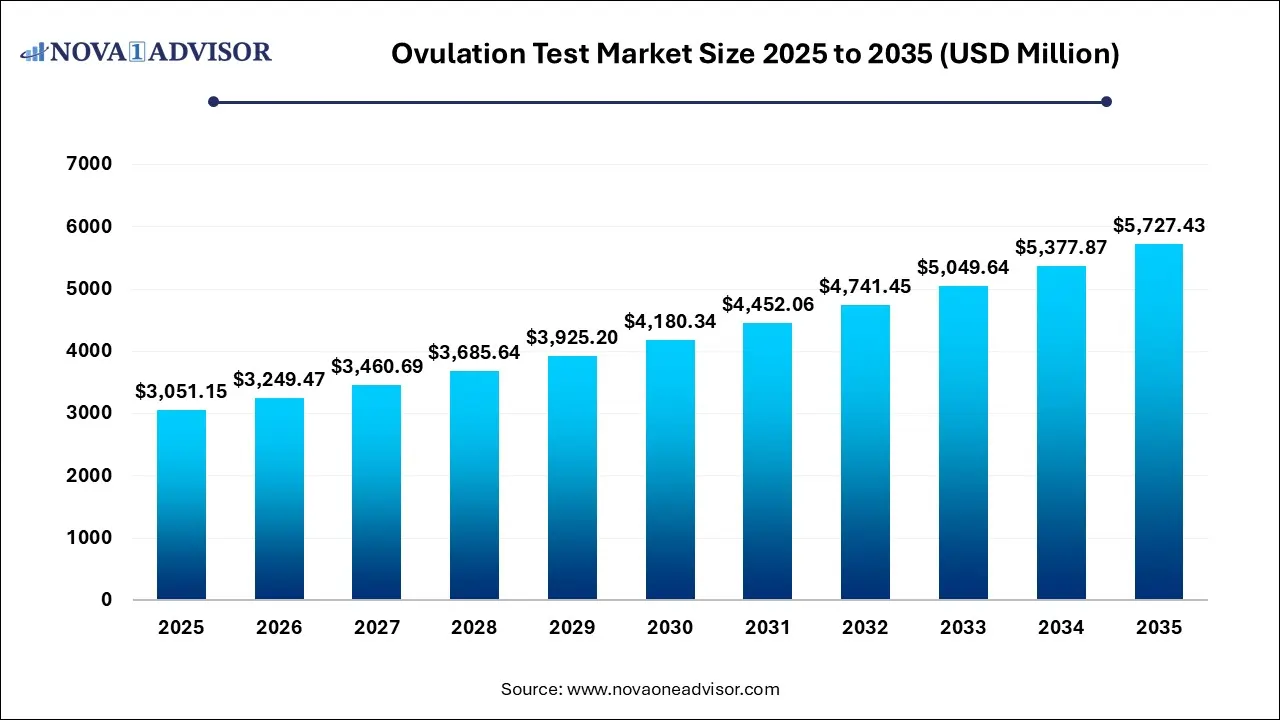
Market Key Takeaways
- The ovulation test market is witnessing steady expansion driven by rising fertility awareness and delayed pregnancies worldwide.
- Digital ovulation kits and wearable fertility tracking devices are rapidly gaining adoption due to accuracy and convenience.
- Increasing prevalence of fertility disorders such as Polycystic Ovary Syndrome is significantly boosting demand.
- Online retail channels are emerging as the fastest-growing distribution segment due to privacy and accessibility benefits.
- Asia Pacific is projected to be the fastest-growing regional market due to increasing healthcare awareness and rising disposable incomes.
- AI-powered fertility tracking solutions are reshaping the competitive landscape with personalized insights and predictive analytics.
Market Overview
The ovulation test market has evolved from simple hormone detection kits to advanced fertility tracking ecosystems integrating digital technologies and connected devices. Ovulation tests are primarily used to detect the surge in luteinizing hormone (LH), which signals the most fertile window in a woman’s menstrual cycle. These tests are widely used by women of reproductive age, couples trying to conceive, and healthcare professionals seeking to assist patients with fertility planning.
The growing trend of delayed pregnancies, particularly in urban populations, is significantly contributing to the expansion of this market. Women increasingly prioritize education and careers, leading to a rise in maternal age at first childbirth. This demographic shift has heightened the need for reliable fertility monitoring tools. Additionally, increasing awareness of reproductive health through social media, healthcare campaigns, and digital platforms has further accelerated adoption.
From a technological standpoint, the market is transitioning toward digital ovulation tests and wearable fertility monitors that provide real-time insights. These innovations not only improve accuracy but also enhance user experience by integrating mobile applications and data tracking features. For instance, wearable devices that continuously monitor basal body temperature and hormonal changes are becoming increasingly popular among tech-savvy consumers.
Healthcare infrastructure improvements, particularly in emerging economies, are also supporting market growth. Fertility clinics and diagnostic centers are increasingly recommending ovulation tests as part of fertility treatment protocols. Furthermore, the rise of telehealth services has enabled remote consultation and guidance, encouraging more women to use ovulation testing products.
Market Outlook
- Market Growth Overview: The global ovulation test market is expected to grow significantly between 2025 and 2035, driven by the rising infertility rate and delayed pregnancy, technological advancements and digitalization, and growing health consciousness and self-care.
- Sustainability Trends: Sustainability trends involve eco-friendly and reusable devices, biodegradable components, and digitalization and app integration.
- Major Investors: Major investors in the market include Swiss Precision Diagnostics GmbH, Church & Dwight Co., Inc., and Proov (Proov Fertility).
How is AI Transforming the Ovulation Test Market
Artificial intelligence is playing a transformative role in the ovulation test market by enabling predictive, personalized, and data-driven fertility tracking solutions. Traditional ovulation tests provide binary results—indicating whether ovulation is imminent or not. However, AI-powered platforms go beyond this by analyzing multiple data points, including hormonal levels, cycle history, lifestyle factors, and physiological signals.
AI algorithms integrated into fertility apps can predict ovulation windows with higher precision by learning from user-specific patterns. For example, wearable fertility devices collect continuous data such as skin temperature and heart rate variability. AI processes this data to identify subtle changes that may indicate ovulation, even in irregular cycles. This is particularly beneficial for women with conditions like Endometriosis or hormonal imbalances.
Another key application of AI is in improving diagnostic accuracy. Smart ovulation tests equipped with image recognition technology can analyze test strip results more accurately than manual interpretation. This reduces user error and enhances reliability. Additionally, AI-driven chatbots and virtual assistants are being integrated into fertility platforms to provide personalized guidance, reminders, and recommendations.
AI is also facilitating integration with broader reproductive health ecosystems. For instance, fertility tracking data can be shared with healthcare providers for better clinical decision-making. This connectivity enables a more holistic approach to fertility management, bridging the gap between home-based testing and professional medical care.
Ovulation Test Market Report Scope
| Report Coverage | Details |
| Market Size in 2026 | USD 3,249.47 Million |
| Market Size by 2035 | USD 5,727.43 Million |
| Growth Rate From 2026 to 2035 | CAGR of 6.5% |
| Base Year | 2025 |
| Forecast Period | 2026 to 2035 |
| Segments Covered | Application, Product Type, Distribution Channel, End User |
| Market Analysis (Terms Used) | Value (USD Million/Billion) or (Volume/Units) |
| Regional Scope | North America; Europe; Asia Pacific; Central and South America; the Middle East and Africa |
| Key Companies Profiled | Procter & Gamble (US), Church & Dwight Co., Inc. (US), Bayer AG (DE), Roche Diagnostics (CH), Clearblue (GB), Easy@Home (US), Pregmate (US), Wondfo Biotech Co., Ltd. (CN) |
Market Driver
Rising Prevalence of Fertility Issues
One of the most significant drivers of the ovulation test market is the increasing prevalence of fertility-related issues globally. Factors such as sedentary lifestyles, stress, poor dietary habits, and environmental pollution have contributed to a rise in reproductive health disorders. Conditions like Polycystic Ovary Syndrome and thyroid imbalances can disrupt ovulation, making it difficult for women to conceive.
In addition, delayed childbearing has emerged as a critical factor influencing fertility rates. As women age, the quality and quantity of eggs decline, increasing the need for precise fertility tracking. Ovulation tests provide a cost-effective and accessible solution for identifying fertile windows, thereby improving the chances of conception. This has led to widespread adoption among couples planning pregnancies.
Moreover, increasing awareness campaigns by healthcare organizations and governments have encouraged proactive fertility management. Educational initiatives highlighting the importance of early detection and monitoring have significantly boosted the demand for ovulation tests.
Market Restraint
Accuracy Limitations and Misinterpretation
Despite technological advancements, ovulation tests still face limitations in accuracy, particularly in cases of irregular menstrual cycles or hormonal imbalances. Traditional urine-based tests rely on detecting LH surges, which may not always correspond to actual ovulation. This can lead to false positives or missed fertile windows.
User error is another critical concern. Incorrect usage, improper timing, or misinterpretation of results can reduce the reliability of ovulation tests. For instance, variations in hormone levels due to stress or medical conditions can produce inconsistent results, leading to confusion and frustration among users.
Additionally, the presence of multiple competing technologies, such as fertility apps and clinical diagnostic methods, can create skepticism regarding the effectiveness of ovulation tests. This lack of confidence may hinder market growth, particularly among first-time users.
Market Opportunity
Growth of Digital Health and Wearable Technologies
The integration of digital health technologies presents a significant opportunity for the ovulation test market. Wearable devices and smart fertility monitors are transforming how users track their reproductive health. These devices offer continuous monitoring and real-time insights, enabling more accurate predictions compared to traditional methods.
The increasing penetration of smartphones and mobile applications has further enhanced accessibility. Fertility tracking apps allow users to log data, receive personalized recommendations, and track trends over time. This digital ecosystem creates opportunities for companies to develop comprehensive fertility solutions that combine hardware, software, and analytics.
Emerging markets also present untapped potential. As awareness of reproductive health increases in regions such as Asia Pacific and Latin America, the demand for affordable and user-friendly ovulation tests is expected to rise. Companies that focus on localized strategies and cost-effective solutions are likely to gain a competitive edge.
Segmental Insights
By Product Type
How did the digital ovulation segment account for the largest share in the Global Ovulation Test market?
The digital ovulation segment is driven by the transition toward digital and IoT-enabled ovulation kits, which marks a significant shift in at-home diagnostics from simple detection to comprehensive fertility management. By integrating Bluetooth connectivity and multi-hormone tracking, these platforms eliminate the ambiguity of manual interpretation while providing high-resolution data for proactive healthcare.
How did the ovulation test segment expect to hold the fastest-growing Global Ovulation Test market in the coming years?
The ovulation test segment is driven by a global surge in fertility awareness and the industrialization of at-home diagnostics, which offer a private, clinical-grade alternative to traditional hospital visits. As healthcare infrastructure expands in emerging markets like the Asia-Pacific region, these smart technologies are becoming the primary tool for managing complex hormonal conditions such as PCOS. The integration of IoT and predictive algorithms provides a scalable, consumer-centric framework that empowers users with unprecedented control over their reproductive timelines.
By Distribution Channel
How did the online retail segment account for the largest share in the Global Ovulation Test market?
The online retail segment is driven by the shift toward e-commerce, and digital health platforms have fundamentally transformed fertility management into a discreet, data-driven consumer experience. By integrating subscription models and IoT-enabled devices, online retail provides a seamless bridge between high-tech diagnostics and the growing demand for at-home healthcare privacy. The ability to leverage competitive pricing and peer reviews ensures that users can access premium technology with greater financial and clinical confidence.
How did the pharmacy segment expect to hold the fastest-growing Global Ovulation Test market in the coming years?
The pharmacy segment is driven by the growing incidence of the global retail expansion that provides immediate, private access to diagnostics, allowing consumers to manage complex fertility windows without traditional clinical intervention. By fostering strategic partnerships and stocking specialized products for conditions like PCOS, pharmacies have solidified their role as the primary bridge for personalized reproductive health.
By Technology
How did the hormone detection segment dominate the Global Ovulation Test market?
The hormone detection segment, driven by high-precision standard for at-home fertility tracking, offering users a reliable 12-to-36-hour predictive window. This technological shift, coupled with the integration of AI-driven mobile apps, provides a private and sophisticated alternative to traditional clinical visits. As global awareness of conditions like PCOS grows, the demand for these accessible, high-accuracy tools continues to scale across diverse demographics.
How did the mobile application integration segment expect to hold the fastest-growing Global Ovulation Test market in the coming years?
The mobile application integration segment is driven by the centralization of multi-hormone data and basal body temperature within a single interface; these platforms eliminate the ambiguity of traditional testing while offering tailored clinical insights. This shift is driven by a tech-savvy demographic that prioritizes privacy and non-invasive, at-home solutions for managing complex reproductive timelines.
By End User
How did the women aged 20-30 segment dominate the Global Ovulation Test market?
The women aged 20-30 segment is driven by the integrated technologies that provide the high-resolution data and immediate accessibility required for modern, personalized family planning. Its preference for the privacy and convenience of e-commerce has accelerated the transition from traditional retail to a digital-first diagnostic ecosystem.
How did the couples trying to conceive segment expect to hold the fastest-growing Global Ovulation Test market in the coming years?
The couples trying to conceive segment is driven by a demographic trend toward delayed pregnancy and a rising need for private, at-home management of complex conditions, such as PCOS. Strategic e-commerce expansion and high-impact partnerships, such as the Proov and Quest Diagnostics collaboration, are further industrialising access to advanced hormonal tracking. These integrated technologies provide a scalable, user-centric infrastructure that empowers couples to optimize conception timelines with unprecedented clinical precision.
By Regional
How did the North America region account for the largest share in the Global Ovulation Test market?
North America’s shift toward delayed pregnancy and proactive fertility management is driving the rapid adoption of high-precision, Bluetooth-enabled monitoring devices across the region. The sophisticated healthcare infrastructure and the presence of industry leaders like Clearblue and Proov, who are integrating AI-driven apps to manage complex conditions such as PCOS.
U.S. Global Ovulation Test Market Trends
The U.S. critical need for privacy and the industrialization of specialized testing for complex conditions, such as PCOS, which traditional kits often fail to address. By integrating telehealth connectivity and sustainable product designs, it is moving beyond simple detection toward a comprehensive, life-cycle approach to fertility management.
How did the Asia Pacific region hold the fastest-growing Global Ovulation Test Market in the forecast period?
Asia Pacific’s rising infertility rates and a strategic shift toward delayed parenthood is driving an unprecedented demand for high-precision fertility tracking across the Indian market. This growth is accelerated by the rapid expansion of e-commerce platforms and the adoption of digital kits, which have democratised access to advanced diagnostics in urban centres
China Global Ovulation Test Market Trends
China’s rapid transition toward AI-integrated digital devices has established a high-precision standard for fertility management, driven by the increasing need to monitor complex conditions like PCOS. This technological evolution is anchored by China’s market leadership and the strategic expansion of e-commerce and retail pharmacy networks across the Asia-Pacific region.
Key Players in the Global Ovulation Test Market
- Swiss Precision Diagnostics (SPD) GmbH
As a dominant market leader holding a top position, SPD utilizes its flagship brand, Clearblue, to drive the global ovulation test market through high-accuracy, digital, and technologically advanced home testing devices.
- Church & Dwight Co. Inc.
Church & Dwight contributes significantly to the market as a top player, leveraging its well-established brand portfolio to offer accessible home-based fertility testing solutions.
- Prestige Brands Holdings Inc.
Prestige Brands Holdings contributes by supplying reliable over-the-counter ovulation kits, reinforcing market growth through specialized, consumer-focused health products.
Recent Developments
- March 2025 – Clearblue launched an advanced digital ovulation test with enhanced AI-based cycle prediction features.
- January 2025 – Modern Fertility expanded its fertility product portfolio with a new hormone tracking kit.
- November 2024 – Femometer introduced a wearable fertility tracking device integrated with a mobile app.
- September 2024 – Mira announced the launch of a real-time hormone monitoring system for home use.
Segments Covered in the Report
This report forecasts revenue growth at country levels and provides an analysis of the latest industry trends in each of the sub-segments from 2021 to 2035. For this study, Nova one advisor, Inc. has segmented the ovulation test market.
By End User
- Women of Reproductive Age
- Couples Trying to Conceive
- Healthcare Professionals
- Fertility Clinics
By Application
- Fertility Tracking
- Contraception
- Hormonal Imbalance Detection
- Menstrual Cycle Regulation
By Product Type
- Digital Ovulation Test
- Urine Test Strips
- Saliva Test Kits
- Wearable Devices
By Distribution Channel
- Online Retail
- Pharmacy
- Supermarket
- Specialty Stores
By Region
- North America
- Europe
- Asia Pacific
- Latin America
- Middle East and Africa (MEA)
FAQ's

Proceed to Buy
Instant PDF delivery on confirmation

Ovulation Test Market Size to Hit USD 5,727.43 Million by 2035
 Request Customization
 Download Sample

Get a Sample of this Report
Ovulation Test Market